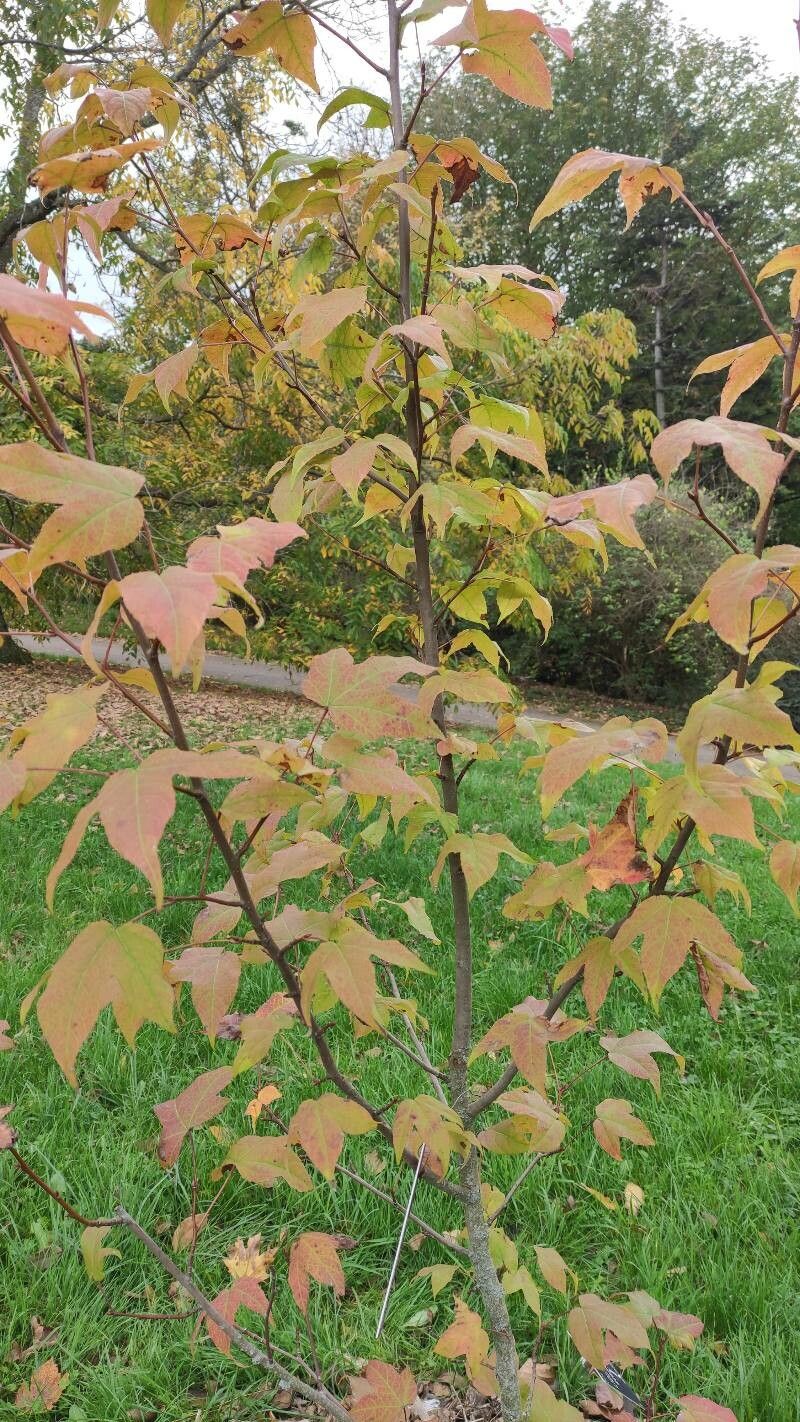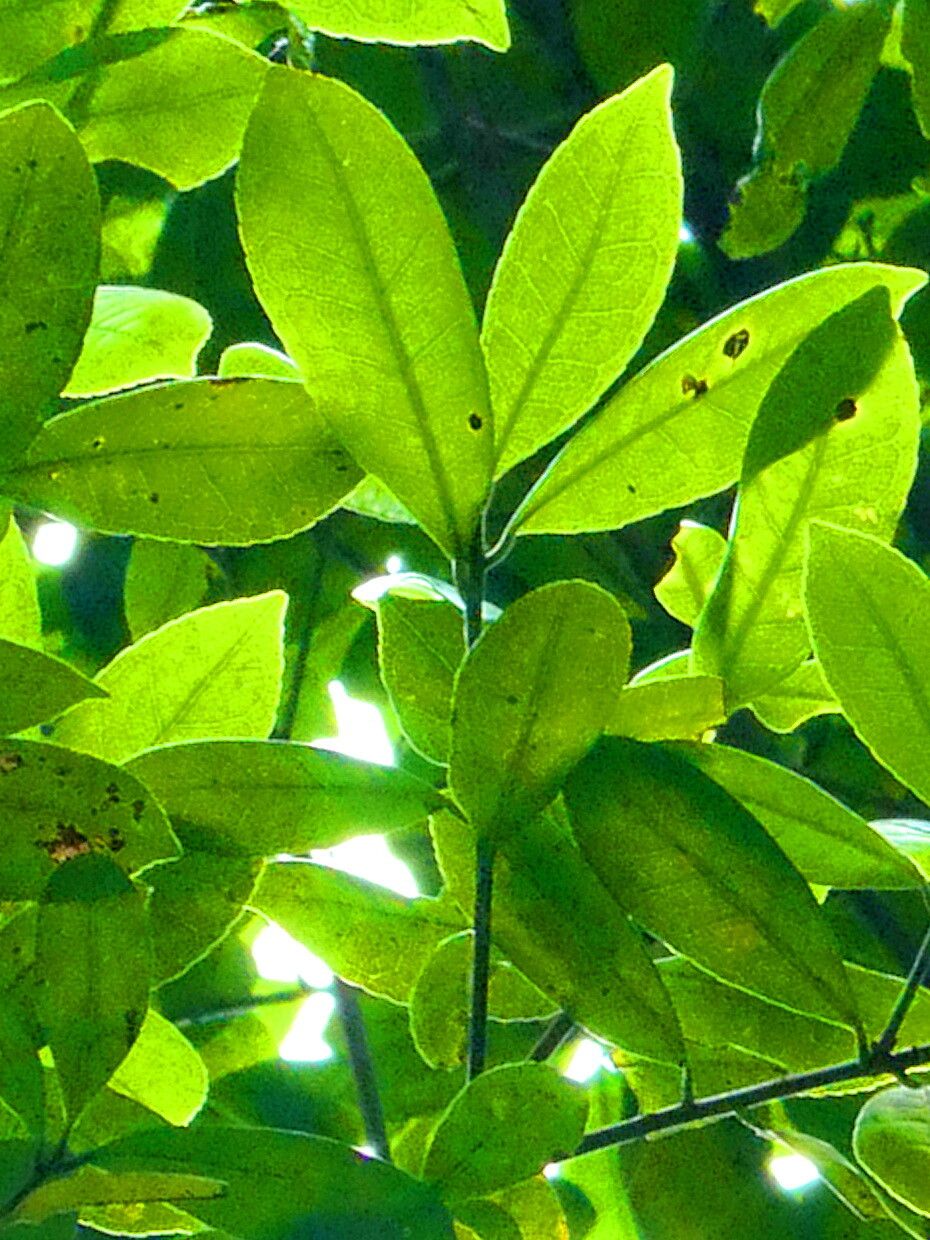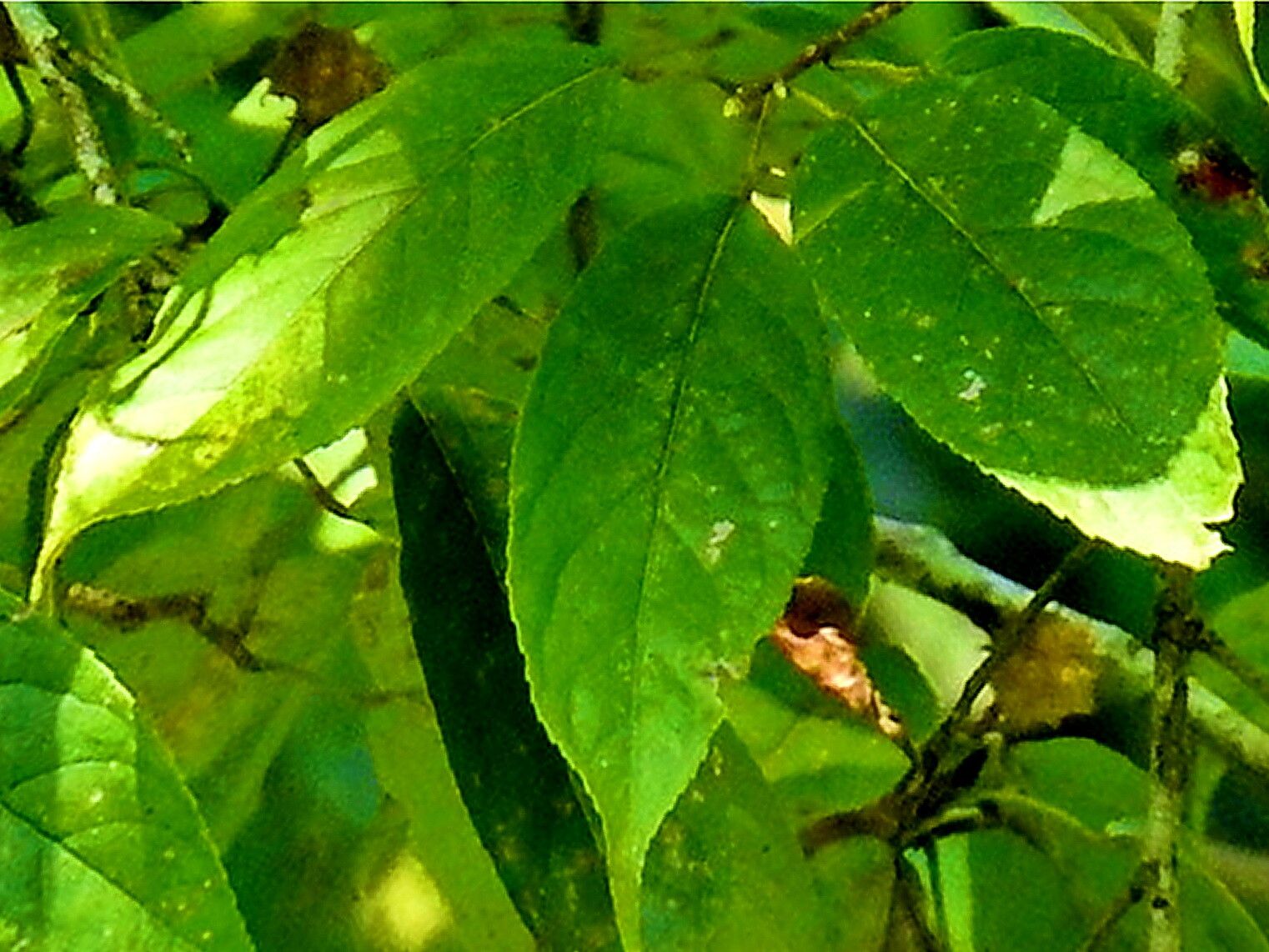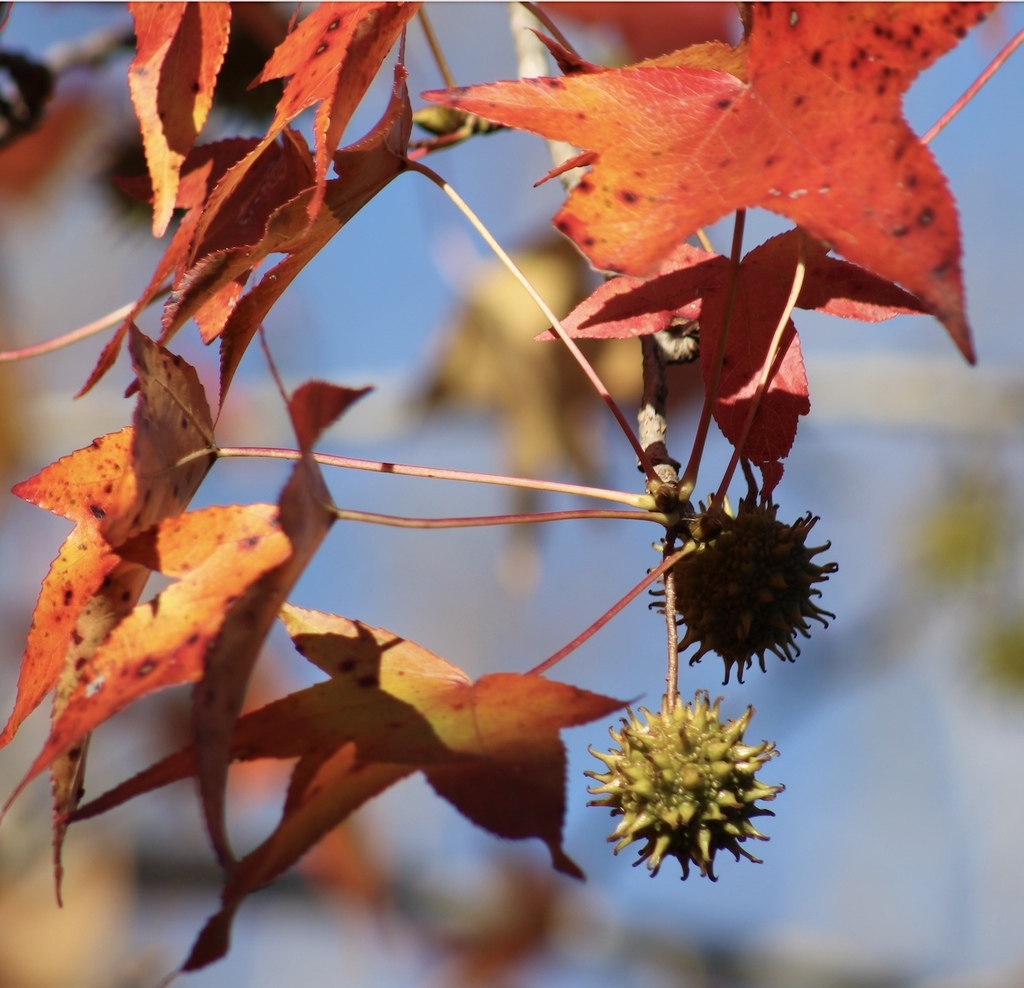
Liquidambar styraciflua, commonly known as the sweetgum tree, is a deciduous tree native to North America. This tall and slender tree can reach heights of up to 100 feet and diameters of up to 6 feet. The bark of the sweetgum tree is deeply furrowed and grayish-brown in color.
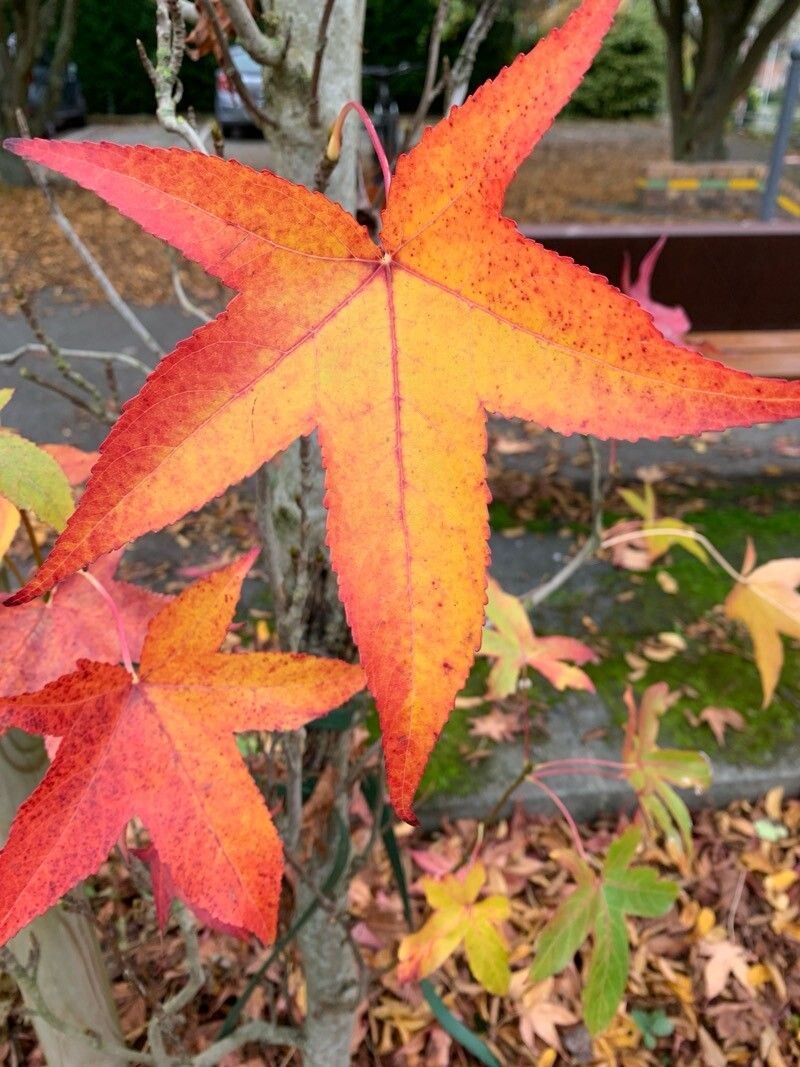
The leaves of Liquidambar styraciflua are star-shaped with five pointed lobes, turning brilliant shades of red, orange, yellow, or purple during autumn. The small flowers are greenish-yellow, with male flowers arranged on long spikes and female flowers growing on shorter spikes.
The fruit produced by the sweetgum tree is a hard capsule containing numerous seeds surrounded by a sticky, resinous substance that has been used for medicinal purposes for centuries.
Those who manage to catch them will receive good luck and blessings. Watching American sweetgum leaves fall with a loved one also brings good fortune. FUN FACT · FROM THE LIBRARY
Sweetgum trees prefer moist soils but can tolerate drought conditions once established. They are commonly used as ornamental trees because of their attractive autumn foliage. Additionally, they have commercial value; their wood is used for making furniture, flooring, and veneers.
Overall, Liquidambar styraciflua offers both aesthetic and economic benefits, making it an important species within its native range.
The Sweetgum tree, known scientifically as Liquidambar styraciflua, is remarkable for its ability to produce clear natural resins. Occasionally, these resins are tinged with red or yellow. When the trunk of the tree is damaged, it releases a resin with a sweet and pleasant fragrance, which is how the tree earned its name.
Sweetgum has strong disease resistance and is generally not susceptible to illnesses. In terms of care, this plant is fairly low-maintenance. When grown outdoors it needs only minimal watering, and larger specimens typically do not require pruning. Smaller plants, however, should be pruned after they have finished blooming. Sweetgumt is appropriate for anyone with outdoor space, such as a garden or deck, and does not require much experience in plant care.
How to keep Liquidambar Styraciflua.
Light
Sweetgum does best in locations that receive ample sunlight throughout the day, though it can tolerate sites with somewhat reduced light. Too little light can hinder its growth and result in thin foliage, while too much can lead to leaf scorch. Coming from a sunny native habitat, all stages of its development require similar light intensity.
Water
Sweetgum trees are native to moist forests and thrive in humid environments, although they have a moderate tolerance for drought. To keep these trees healthy, water them every 1-2 weeks, ensuring the soil remains consistently damp. Being deciduous, sweetgum trees need more frequent watering during the growing season to promote foliage growth.
Humidity
This plant will thrive in moderate humidity, which is probably the level in your home. However, misting it a few times a week can be very beneficial. Make sure the room has good ventilation.
Temperature
In its natural habitat, sweetgum does best at temperatures of 10 to 38 ℃ (50 to 100.4℉). During hot summer periods, offering partial shade is recommended to avoid leaf scorch. In cold winter conditions, mulch can be helpful to keep the soil warm.
Fertilizer
To encourage healthy growth, fertilize your Sweetgum in early spring. Regular feeding improves overall health, producing vigorous growth, better tolerance of challenging conditions, and greater resistance to diseases and pests. Keep a specific fertilization schedule for your Sweetgum to ensure foliage that is vibrant, richly colored, and lush in appearance.
Pruning
To promote healthy growth and enhance the vibrant autumn foliage of the sweetgum tree, it's best to prune it in early spring. Begin by removing any dead or diseased wood, and thin out crowded branches to improve air circulation. It's important to keep pruning to a minimum to avoid stressing the tree and to preserve its structural integrity.
Pot & Repot
Repot sweetgum trees every 2 to 3 years to promote healthy growth. This provides fresh soil to support nutrient absorption and root development.
Botanical profile.
- Plant Type
- Tree
- Life Cycle
- Perennial
- Genus
- Liquidambar
- Family
- Altingiaceae
- Hardiness Zone
- 6-11
- Mature Height
- 14.94 m to 46.02 m
- Mature Spread
- 14.94 m
- Leaf Color
- Green, Red, Orange, Purple, Yellow, White, Variegated
- Leaf Type
- Deciduous
- Flower Color
- Yellow
- Flower Size
- 2.54 cm to 3.81 cm
- Bloom Time
- Mid spring, Late spring
- Planting Time
- Spring, Summer, Autumn, Winter
- Harvest Time
- Early spring, Mid summer, Late summer, Fall, Winter
- Native Area
- Belize, Honduras, Mexico, Guatemala, Georgia, El Salvador, Nicaragua
Other names.
Reader questions.
When should I water my Sweetgum?
Proper and timely watering is vital for the health and growth of Sweetgum, contributing to its optimal growth, vibrant leaf color, and disease resistance. To determine when to water Sweetgum, check the soil moisture by inserting a finger into the soil up to the second knuckle; if dry, it's time to water. Observing the plant's leaves can also provide cues; drooping or discoloration such as yellowing or browning indicates a need for water. Soil cracking signals extreme dryness requiring immediate watering. However, watering should be done mindfully to avoid stunted growth from under-watering or risks associated with over-watering like root rot.
When is it not a good idea to put fertilizer on my Sweetgum?
There are a few specific times of the year when you should avoid fertilizing your Sweetgum tree. The first is during the early and mid-winter months when the tree is dormant and does not require any feeding. It is also not recommended to fertilize during late spring and summer, as this is when the weather is typically hotter and drier. These conditions can be harsh on the tree, and fertilizing at this time may have a negative impact. To prevent any problems, it is best to stick to a fertilization schedule that focuses on early spring and early fall for feeding.
How many hours of sunlight does Sweetgum need each day to grow healthy?
To ensure healthy growth, Sweetgum should ideally be exposed to 3-6 hours of sunlight every day. This is the minimum requirement, as most plants tolerant of partial sunlight can also thrive in full sunlight. However, since they need less light for photosynthesis, these plants are more adaptable compared to those that need either full sunlight or partial shade.
Do I need to change the temperature for Sweetgum at different growing stages?
According to research, Sweetgum trees show stunted growth when exposed to prolonged periods of high temperatures, particularly when their axillary buds and main shoots are developing. To promote healthy growth after germination or transplanting, it is recommended to maintain consistent and cooler temperatures, ideally around 65℉ (18℃).
How should I water my Sweetgum?
Watering Sweetgum effectively involves ensuring the soil is evenly moist but not saturated, using a soak and dry method. Water thoroughly until excess drains out, and then let the top few inches of soil dry before watering again. Use a watering can with a long spout to target the soil near the plant base and avoid wetting the foliage, which could increase fungal disease risk. A moisture meter can help monitor soil moisture levels accurately. Focus on the soil around the base, avoid overwatering, increase watering during hot, dry periods, and consider mulching to help retain soil moisture.
How should I give my Sweetgum tree plant food?
To fertilize your Sweetgum with granular fertilizer, simply sprinkle the fertilizer on the soil at the right time. The slow-release nature of granular fertilizer will slowly release nutrients into the soil. It's generally recommended to lightly water your Sweetgum before applying the fertilizer. Using liquid fertilizer is also an option, but it is less commonly used. To apply liquid fertilizer, mix it with water and pour it onto the soil around the base of your Sweetgum. Sometimes, it can be useful to do a soil test beforehand to check if any pH adjustments will be needed.
What kind of sunlight does Sweetgum tree need?
Sweetgum trees thrive in areas with full or partial sunlight. They prefer direct morning light for optimal performance. However, during the hot summer months, it's important to shield them from the strong afternoon sun. Too much exposure to intense, afternoon sun in temperate environments can scorch the leaves, causing harm to the tree's overall appearance and health.
How do I keep Sweetgum warm without a heat pad?
If you plan to plant Sweetgum outside in the ground, you won't need heating pads because it can handle the cold. However, if you have it in a pot outdoors, bring it inside a heated house during winter and put it in a sunny window.
How much water does Sweetgum really need?
Sweetgum's deep taproot and spreading lateral roots mean it requires deep watering to ensure water reaches the entire root system. The amount of water varies based on the plant's size and the pot, but generally, 2 to 3 liters per session is suitable for a mature plant. Signs of proper hydration include lush, vibrant leaves, and healthy growth, without signs of waterlogging or soil moisture issues. Avoid over and under-watering to ensure the plant's health and resilience, adjusting watering based on soil dryness and adjusting for seasonal changes.
Why is it important for me to put fertilizer on my Sweetgum tree?
No matter what type of Sweetgum you have, fertilizing regularly is important for the plant's overall health. Providing the right nutrients leads to stronger growth and helps the Sweetgum withstand tough conditions and resist diseases and pests. Maintaining the foliage is crucial since it is a beautiful feature of the Sweetgum. To achieve this, sticking to a specific fertilization schedule for your Sweetgum is essential. This will result in vibrant, lush leaves.
Can the sun harm Sweetgum trees? How can you keep Sweetgum trees safe from the sun and heat?
Indoor sweetgum plants can be harmed by direct sunlight if moved outside. To avoid sunburn, it's best to slowly transition the pots from shade to a brighter area. However, even well-adjusted plants can suffer from extreme heat. During a heatwave, it's important to keep the soil consistently moist to help the plants withstand the high temperatures. To protect sensitive sweetgum plants during extreme weather, consider moving them to a shaded location or using a shade cloth.
What is the best temperature for Sweetgum?
Sweetgum thrives best in temperatures between 65~80℉(18~27℃). During the main growing phase, it can tolerate temperatures as high as 95℉(35℃) and as low as 15℉(-10℃). This species is able to survive freezing winters as it is tolerant of low temperatures. The ideal temperature range is 65~80℉(18~27℃), with the highest tolerable temperature being 85~95℉(30~35℃), and the lowest being -5~15℉(-20~-10℃) or below.