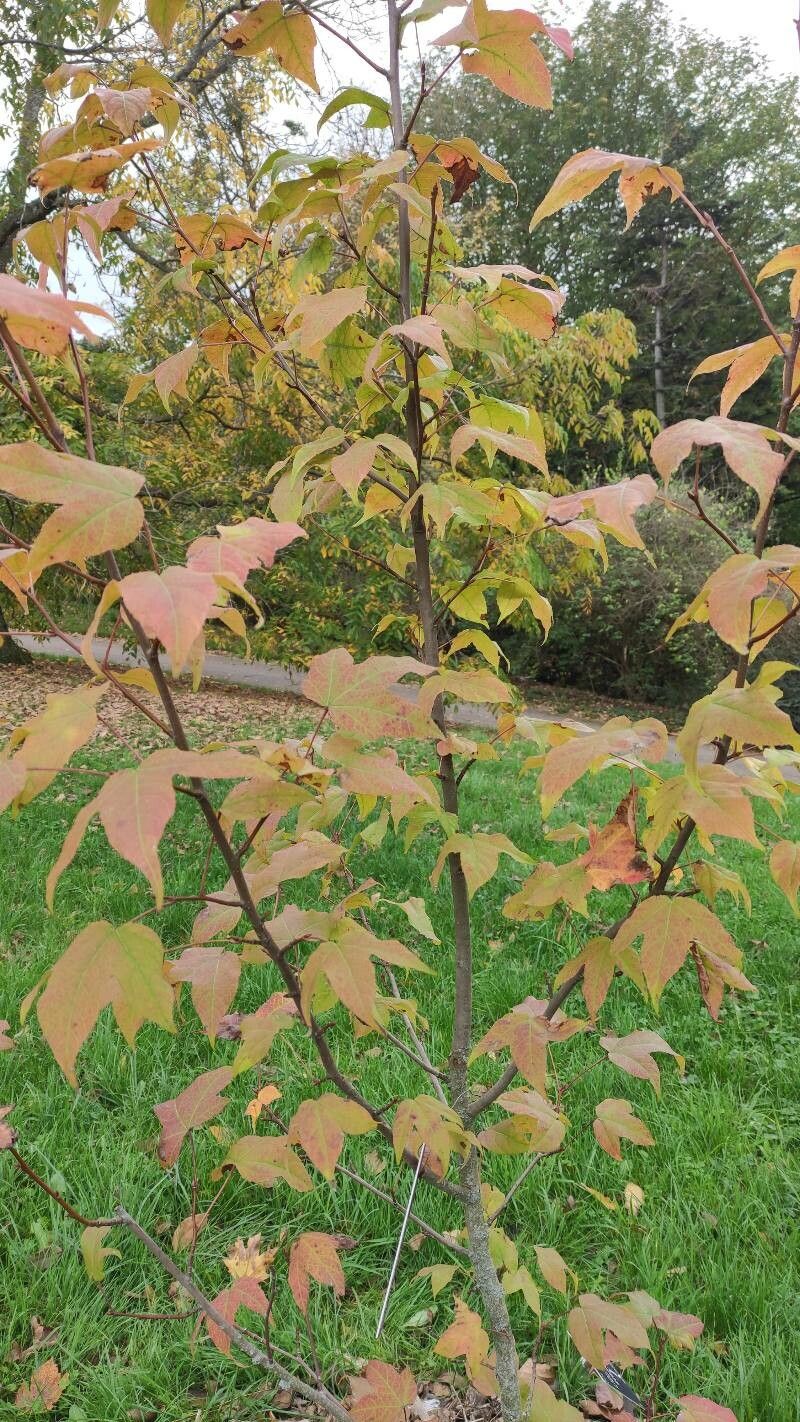
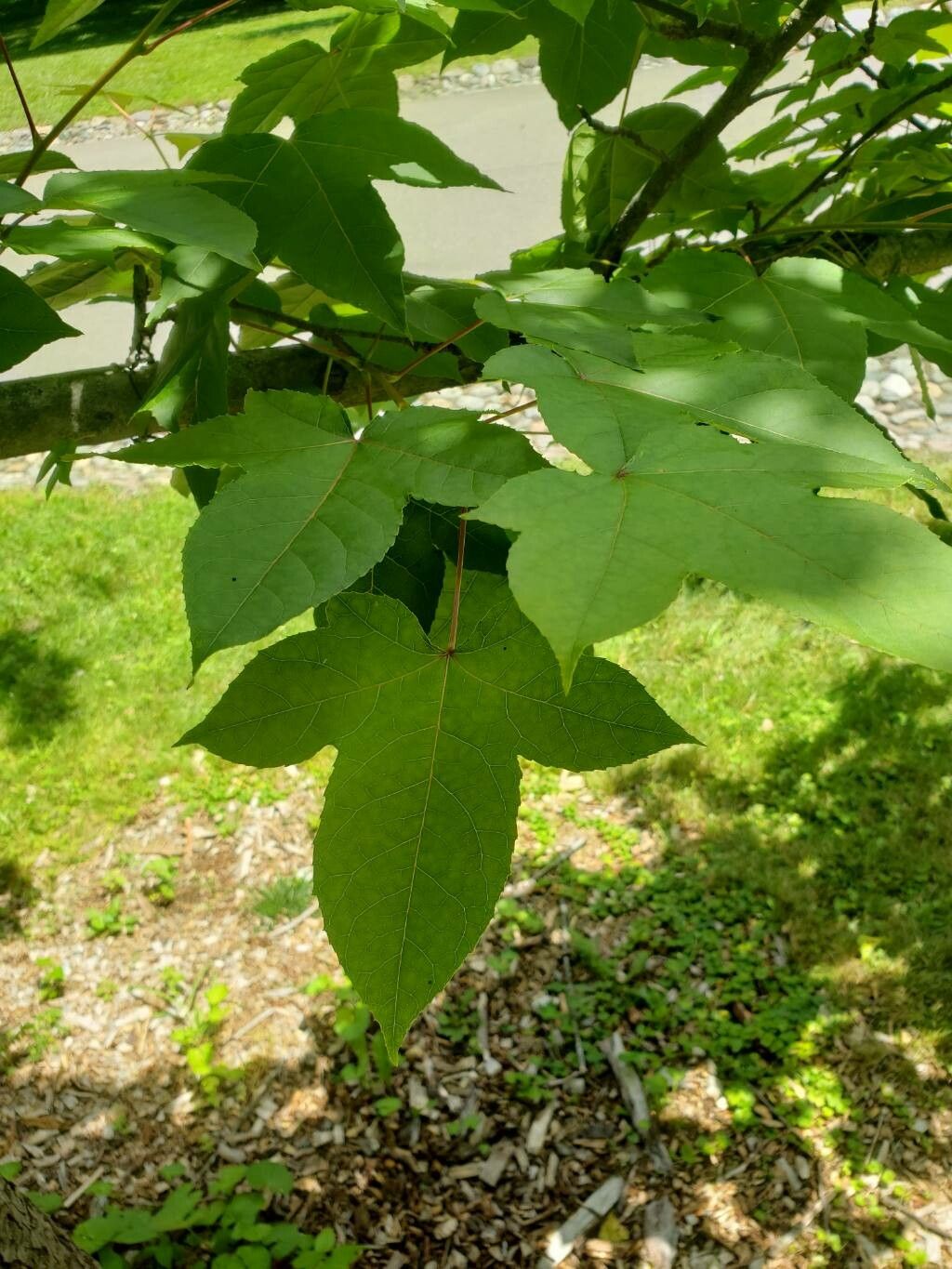
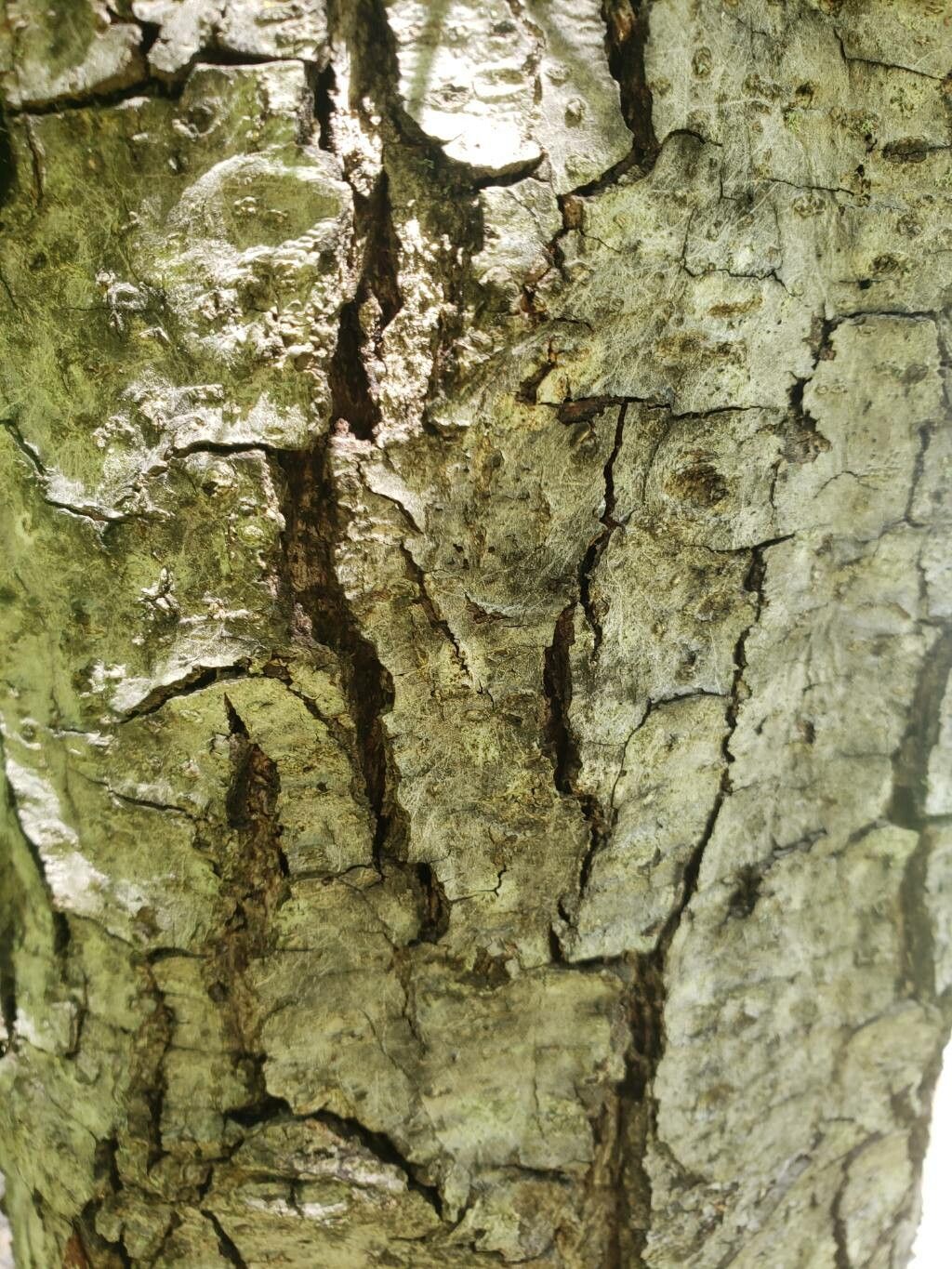
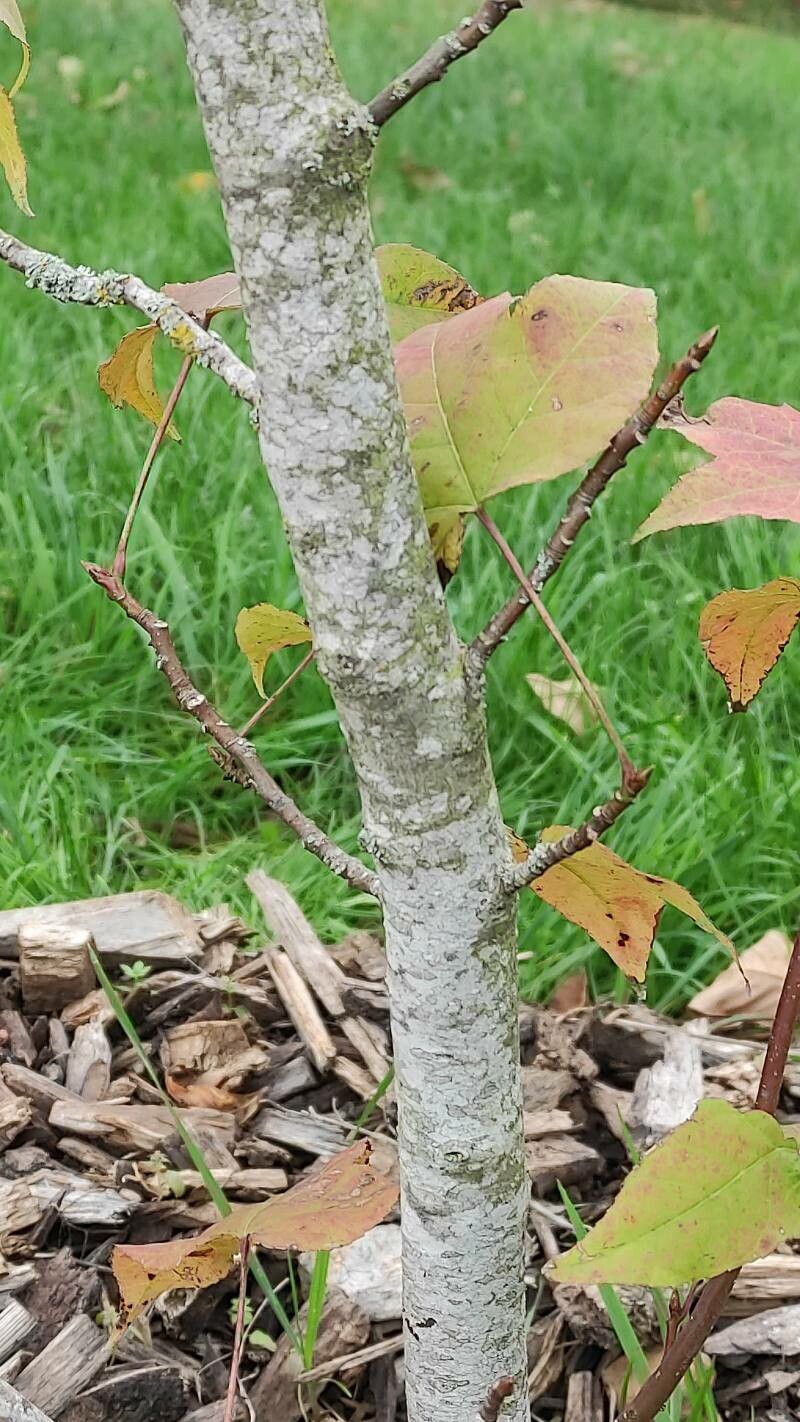
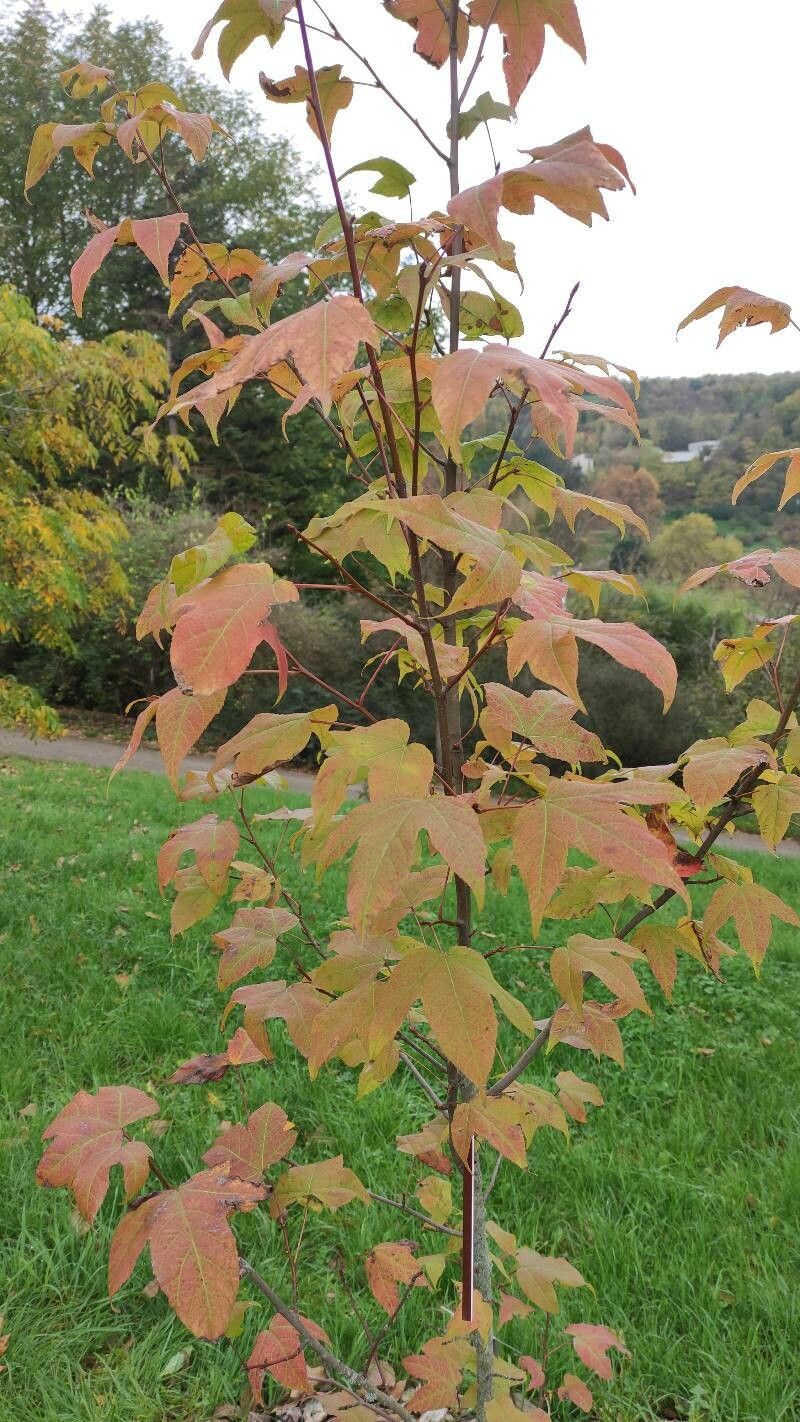
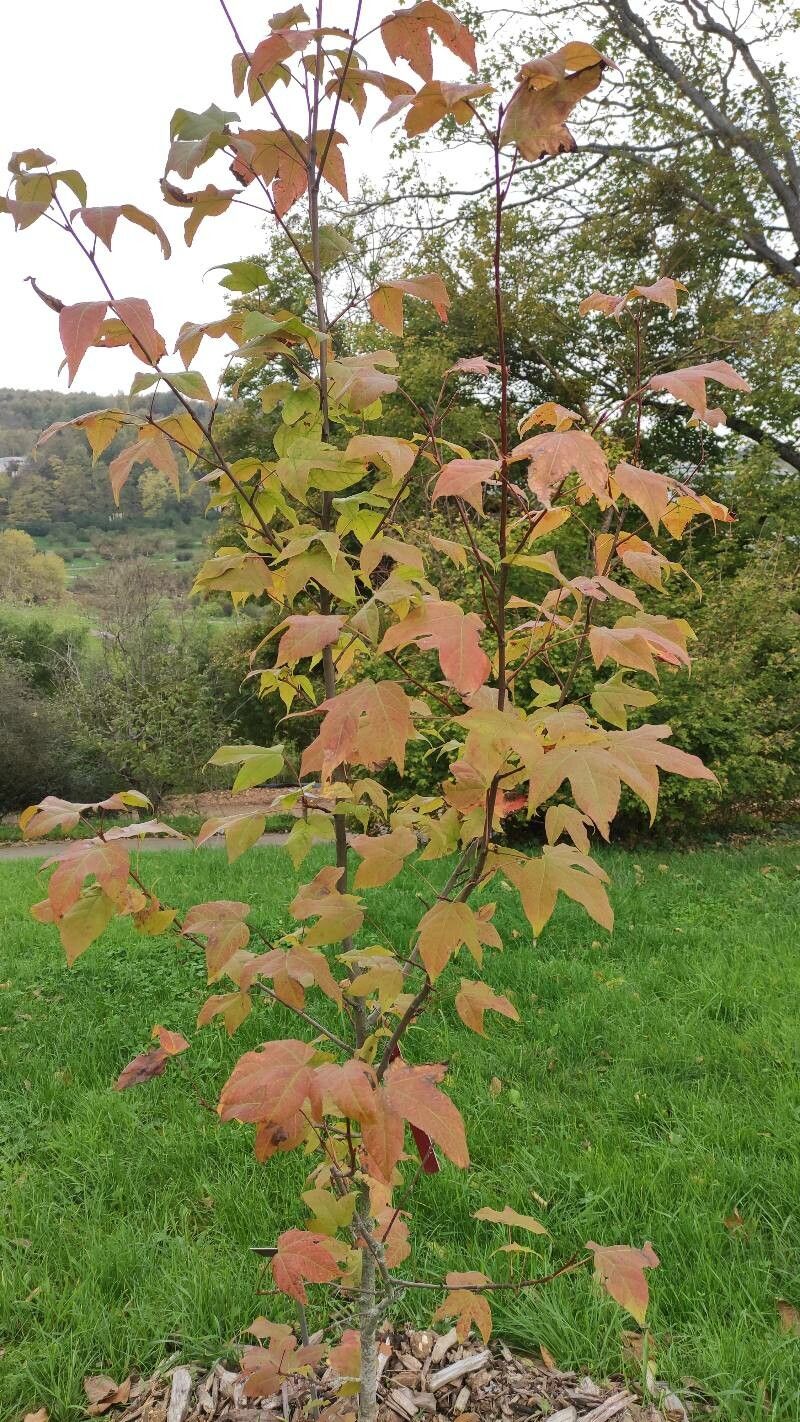
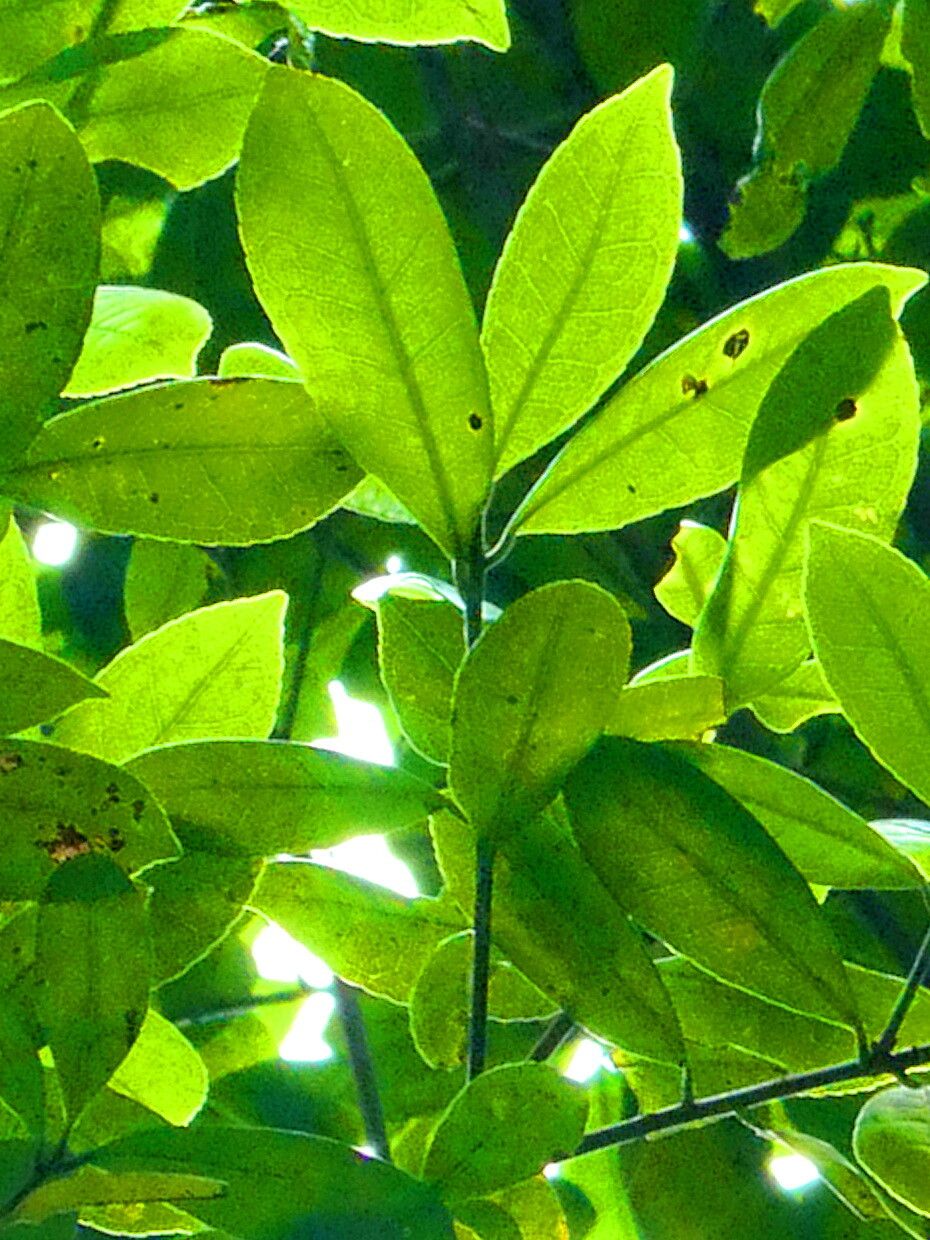
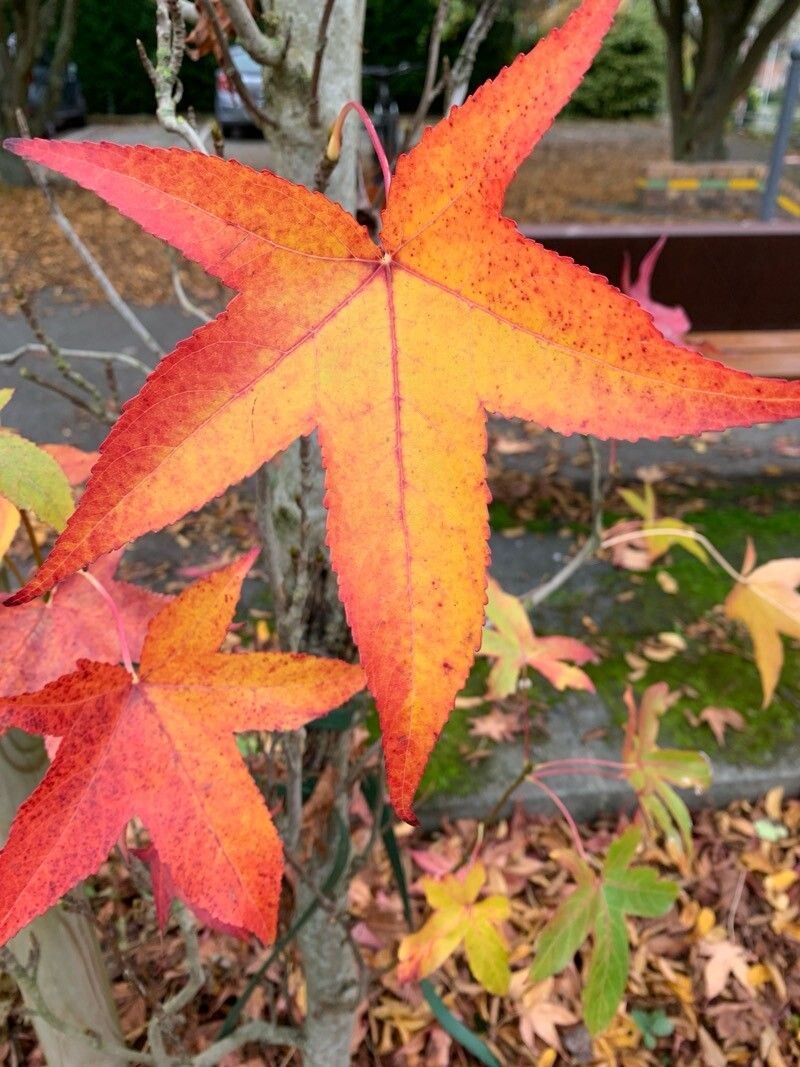
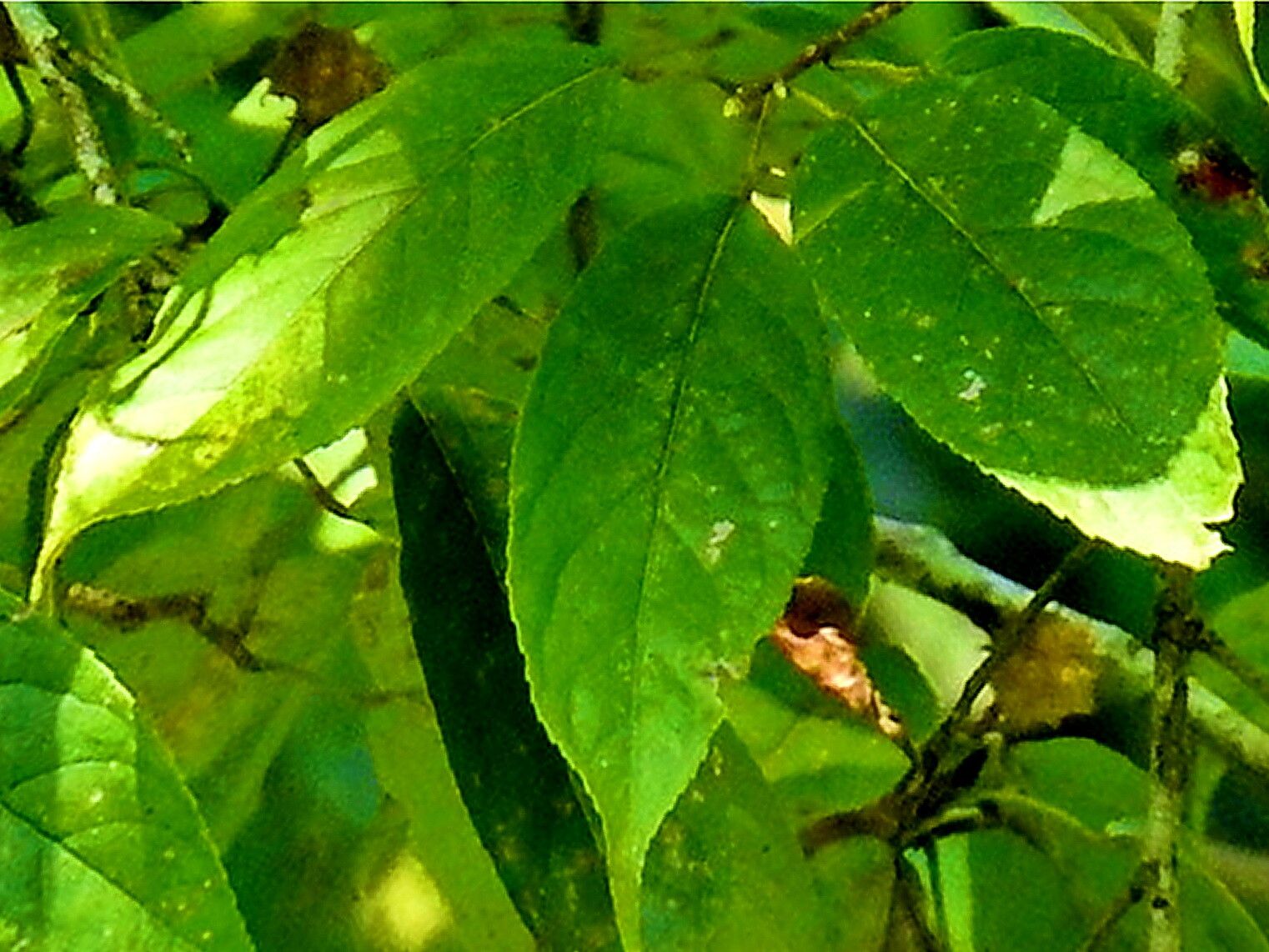
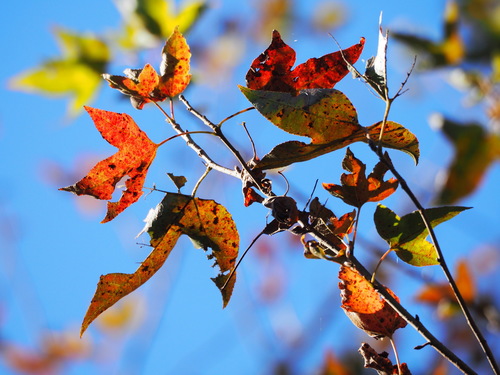
Liquidambar acalycina, Chang's sweetgum, is a species of flowering plant in the family Altingiaceae native to southern China. Growing to 30–50 ft (9.1–15.2 m) tall and 20–30 ft (6.1–9.1 m) broad. It is a medium-sized deciduous tree with three-lobed maple-like leaves that turn red in autumn before falling. It is monoecious, meaning both male and female flowers appear on the same plant. The flowers are insignificant, yellow/green in colour, and are followed by small gum-balls that persist on the tree until winter. The wood exudes a sweet-smelling resin when pierced, giving the tree its common name.
Chinese Sweet Gum shows strong resistance to disease and is typically not susceptible to illnesses. As for care, the plant is fairly low-maintenance. When grown outdoors it needs only minimal watering, and larger plants usually do not require pruning. Smaller plants, however, should be trimmed after they finish blooming. Chinese Sweet Gumt is well suited for anyone who has outdoor space, like a garden or a deck, and it does not demand extensive care experience.
How to keep Liquidambar Acalycina.
Light
Chinese Sweet Gum is native to open habitats, like sunny meadows and forest edges, which offer abundant light. It thrives in Full Sun but will also tolerate Partial Sun, showing good adaptability to different light conditions.
Water
The Chinese Sweet Gum thrives best in areas with occasional moisture and can withstand moderate drought. It's important to water it every 1-2 weeks, maintaining a balanced level of moisture. To prevent root rot, the tree prefers well-draining soil. It is generally grown outdoors during its active growing season.
Temperature
Chinese Sweet Gum is highly adaptable to a variety of climate conditions, whether in blazing summers or freezing winters. That said, it requires a specific temperature range for optimal growth. If temperatures become too high, the plant can experience heat and humidity stress that may lead to its death. In areas where temperatures approach the lower limit of its cold tolerance, taking insulating measures to protect the plant is important.
Fertilizer
Fertilize your Chinese Sweet Gum in early spring to encourage healthy growth. Regular feeding improves overall health, producing vigorous growth, better tolerance of harsh conditions, and increased resistance to pests and diseases. Keep a consistent fertilization schedule for your Chinese Sweet Gum to preserve vibrant, deeply colored foliage and a lush appearance.
Pruning
Pruning Chinese Sweet Gum in early spring is beneficial for promoting health and maintaining shape, as it allows for the removal of dead or diseased branches. Thinning out crowded branches improves air circulation and light penetration. Regular pruning helps to maintain the tree's structure and prevent overcrowding, enhancing its ornamental appeal.
Pot & Repot
To promote healthy growth and maintain optimal conditions, Chinese Sweet Gum should be repotted every two to three years.
Botanical profile.
- Plant Type
- Tree
- Life Cycle
- Perennial
- Genus
- Liquidambar
- Family
- Altingiaceae
- Hardiness Zone
- 6-9
- Mature Height
- 9.14 m to 15.24 m
- Mature Spread
- 6.1 m to 7.92 m
- Leaf Color
- Red, Purple, Green
- Leaf Type
- Deciduous
- Flower Size
- 0.51 cm to 0.76 cm
- Bloom Time
- Mid spring, Late spring
- Planting Time
- Spring, Summer
- Harvest Time
- Late summer, Early fall, Mid fall
- Native Area
- China
Other names.
Reader questions.
What are the sunlight requirements for Chinese Sweet Gum (Liquidambar acalycina)?
The Chinese Sweet Gum, or Liquidambar acalycina, thrives under specific sunlight conditions. For optimal growth, it requires 'Full sun' which means the plant should receive above 6 hours of sunlight daily. Alternatively, it can also grow under 'Partial sun', getting about 3 to 6 hours of sunlight each day. It's important to observe the way sunlight moves through your garden, choosing locations that offer a good mix of light and shade. This careful selection ensures the plants remain healthy and happy.
What is the botanical name of the Chinese Sweet Gum?
The botanical name of the Chinese Sweet Gum is Liquidambar acalycina. It is a species recognized for its distinctive features and contributions to its native ecosystem.
Are there any warnings related to sunlight exposure for Chinese Sweet Gum plants?
Yes, when growing Chinese Sweet Gum (Liquidambar acalycina), it's crucial to monitor the sunlight exposure the plants receive closely. The warning to heed is to watch how sunlight gracefully moves through your garden and choose spots that provide the perfect balance of light and shade for your plants. This attention to detail ensures the plants' happiness and promotes their healthy growth. By understanding the nuances of your garden's light exposure, you can make informed decisions that benefit your Chinese Sweet Gum plants.