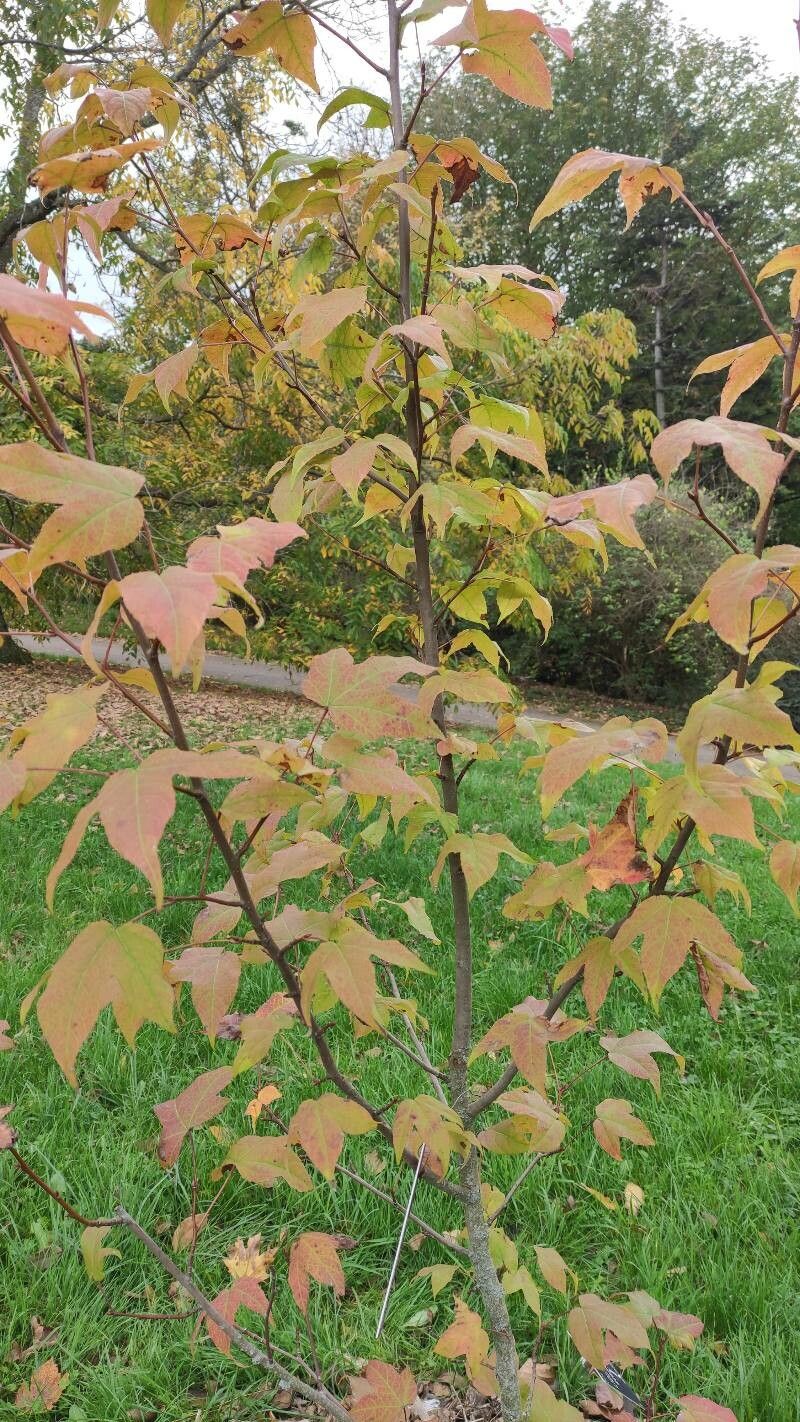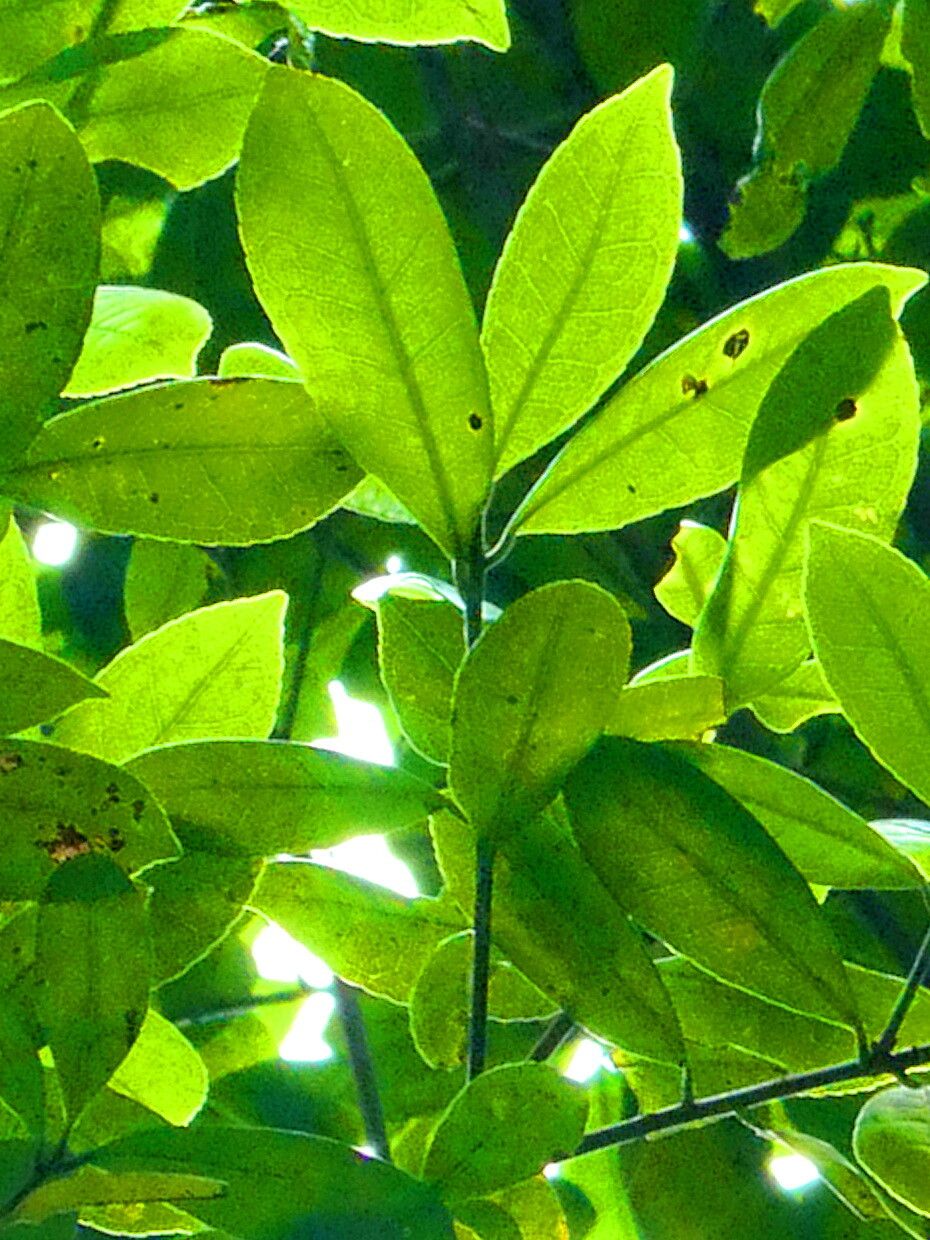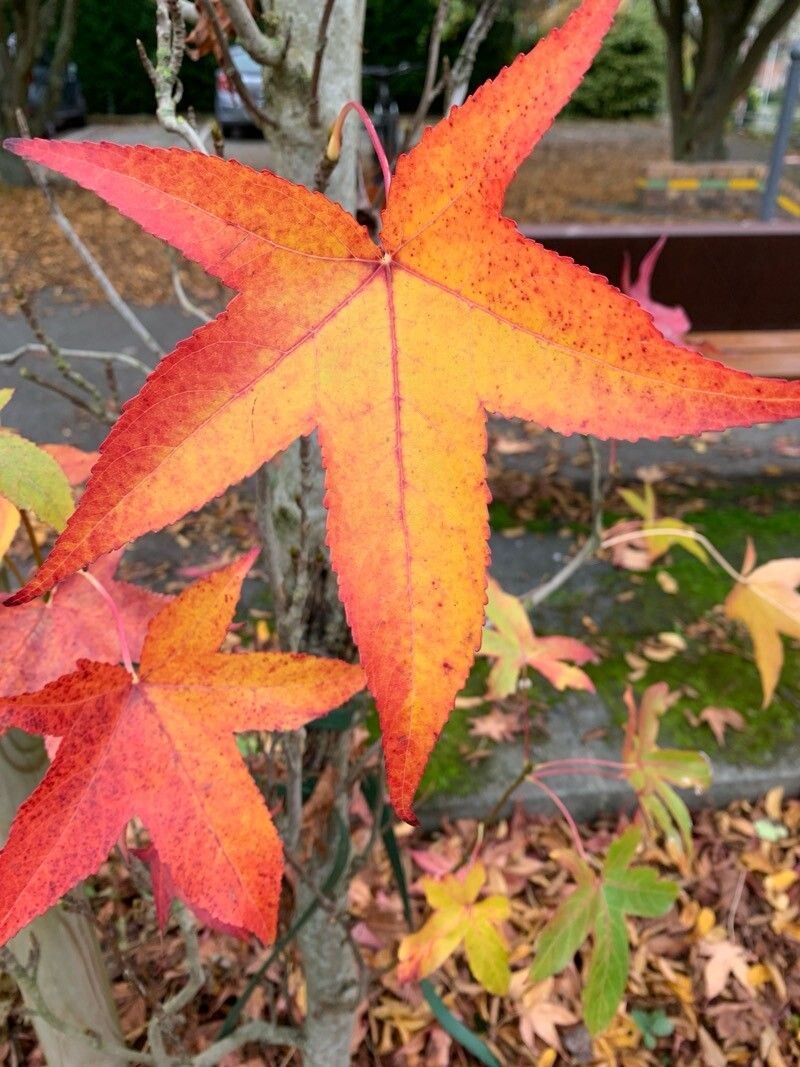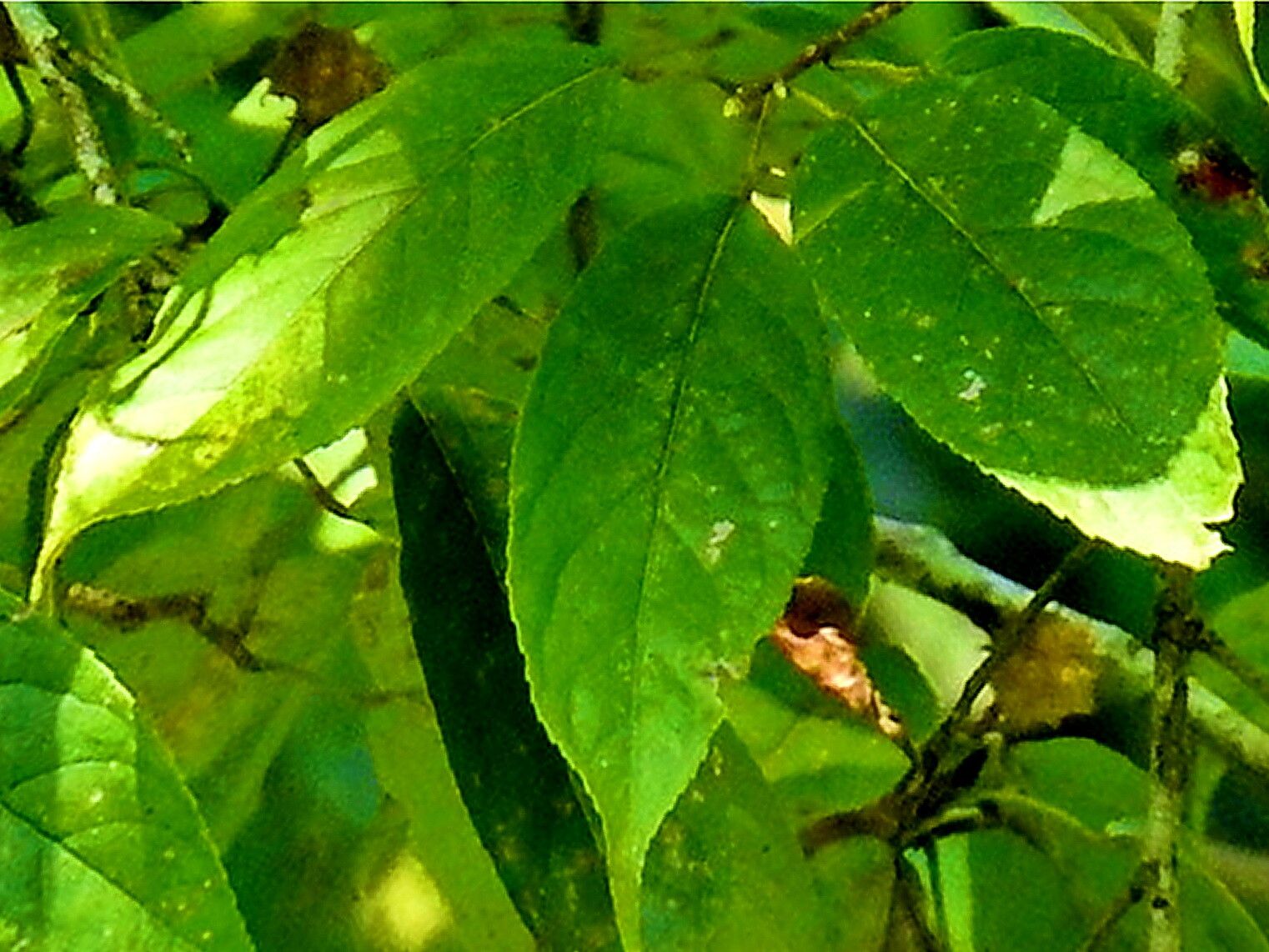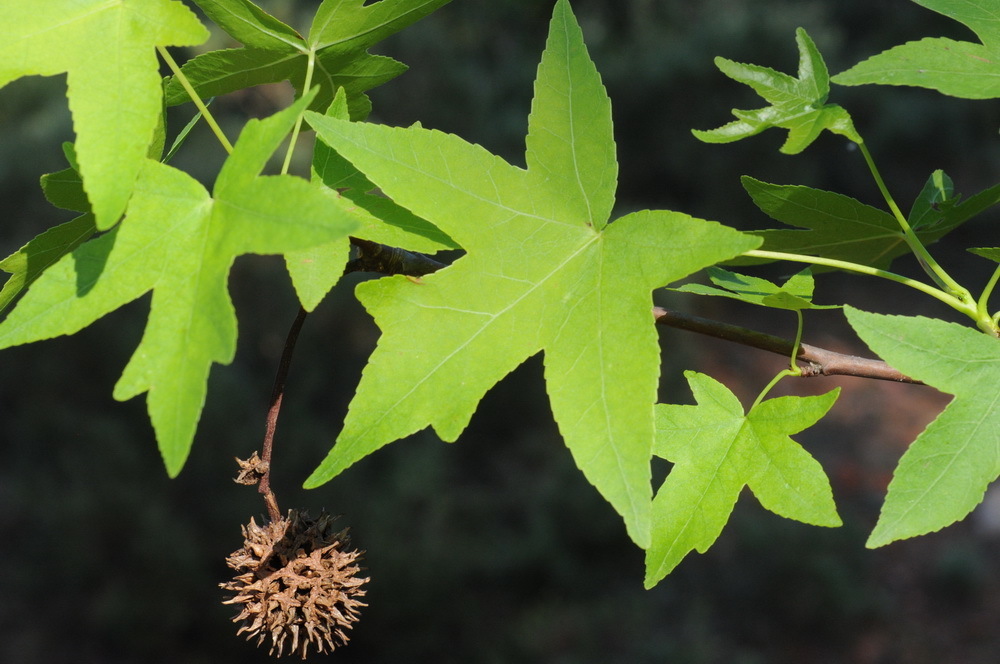
Liquidambar orientalis, commonly known as Oriental sweetgum, is a deciduous tree belonging to the Altingiaceae family. Native to the eastern Mediterranean region, it can grow up to 20 meters tall. Young trees exhibit a pyramidal shape, which matures into a more rounded form over time. The leaves of Liquidambar orientalis are alternate, simple, and palmately lobed with serrated edges. They are dark green during the summer months but turn yellow or red in autumn before falling off. The bark of this tree is grayish-brown with deep furrows that become more pronounced with age. Although the wood is hard and durable, it is not commonly used for commercial purposes. In the spring, Liquidambar orientalis produces small greenish-yellow flowers arranged on long spikes or racemes. These flowers develop into small fruit capsules containing numerous seeds surrounded by a sticky resinous substance. In traditional medicine, various parts of the plant have been used for their medicinal properties, including the treatment of respiratory problems, digestive disorders, and skin diseases. Overall, the Liquidambar orientalis has ornamental value due to its attractive autumn foliage. It is an excellent choice for landscaping, especially when planted along streets or in parks where its beauty can be widely appreciated.
Oriental sweet gum is fairly resistant to disease and typically does not suffer from many illnesses. Regarding maintenance, this species is fairly easy to care for. When grown outdoors it needs little watering, and mature specimens usually do not require pruning. Young or smaller plants, however, should be trimmed once they have finished blooming. Oriental sweet gum is appropriate for anyone who has an outdoor area, like a garden or a deck, and it does not demand extensive gardening experience.
How to keep Liquidambar Orientalis.
Light
Oriental sweet gum comes from open habitats, such as sunlit meadows and forest edges, which provide abundant light. It thrives in Full Sun but can also tolerate Partial Sun, adapting well to a range of sunlight conditions.
Water
The Oriental sweet gum flourishes in moist, temperate regions and prefers consistent humidity. To keep it healthy, water it every 1-2 weeks. As an outdoor plant, it adapts to seasonal rainfall, so you'll need to adjust your watering schedule to match the natural conditions in different climate zones.
Temperature
Oriental sweet gum is quite adaptable to temperature, tolerating higher heat and wide temperature fluctuations. In hot weather, it's important to watch watering and provide appropriate shade to prevent sunburn. However, its resistance to low temperatures is relatively weak; it can endure some cold, but excessively low temperatures can result in frost damage.
Fertilizer
Timing is critical when fertilizing Oriental sweet gum. Apply fertilizer in early spring and repeat monthly through early summer. Fertilizer encourages attractive blooms and supplies energy during both dormant and active growth periods.
Pruning
The Oriental sweet gum tree is known for its star-shaped leaves and vibrant autumn colors. To maintain its shape and remove any damaged branches, it is best to prune the tree in early spring. Be careful not to over-prune, as this can affect its flowering. Always use clean, sharp tools to minimize stress on the tree, which encourages healthy growth and robust foliage through regular pruning.
Pot & Repot
To promote healthy growth and development, the Oriental sweet gum should be repotted every 2 to 3 years.
Botanical profile.
- Plant Type
- Tree
- Life Cycle
- Perennial
- Genus
- Liquidambar
- Family
- Altingiaceae
- Hardiness Zone
- 7-10
- Mature Height
- 6.1 m to 9.14 m
- Mature Spread
- 6.1 m
- Leaf Color
- Yellow, Red, Green, Orange
- Leaf Type
- Deciduous
- Flower Color
- Green
- Flower Size
- 2.54 cm
- Bloom Time
- Mid spring, Late spring
- Planting Time
- Spring, Summer
- Harvest Time
- Late summer, Early fall, Mid fall
- Native Area
- Turkey