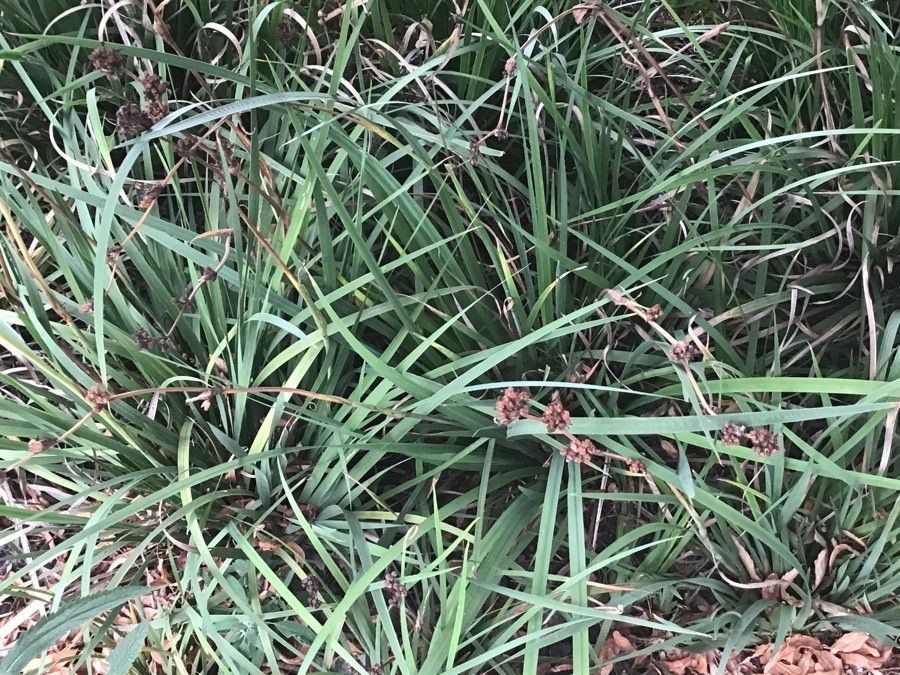
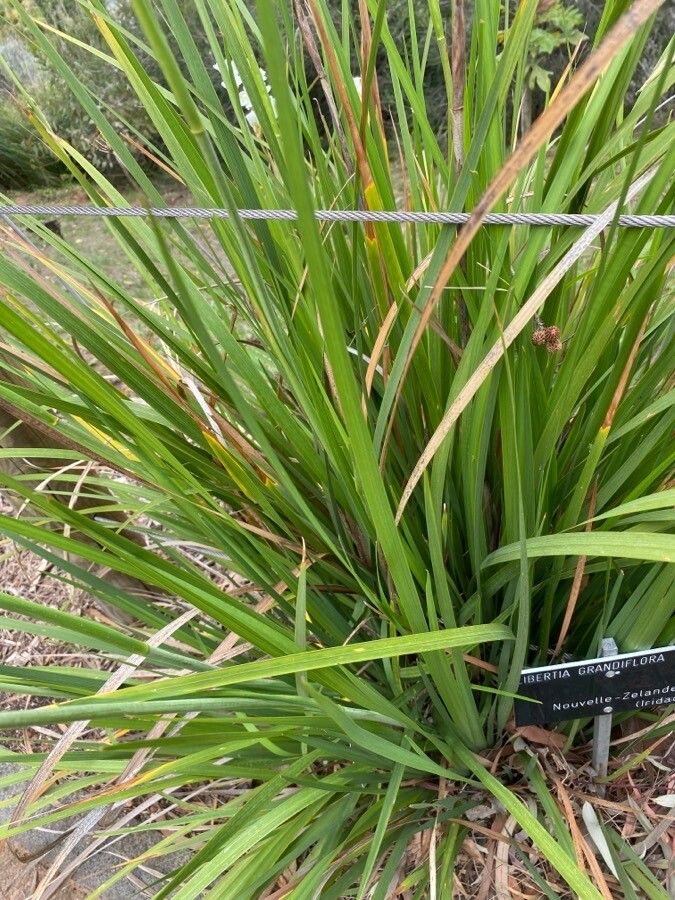
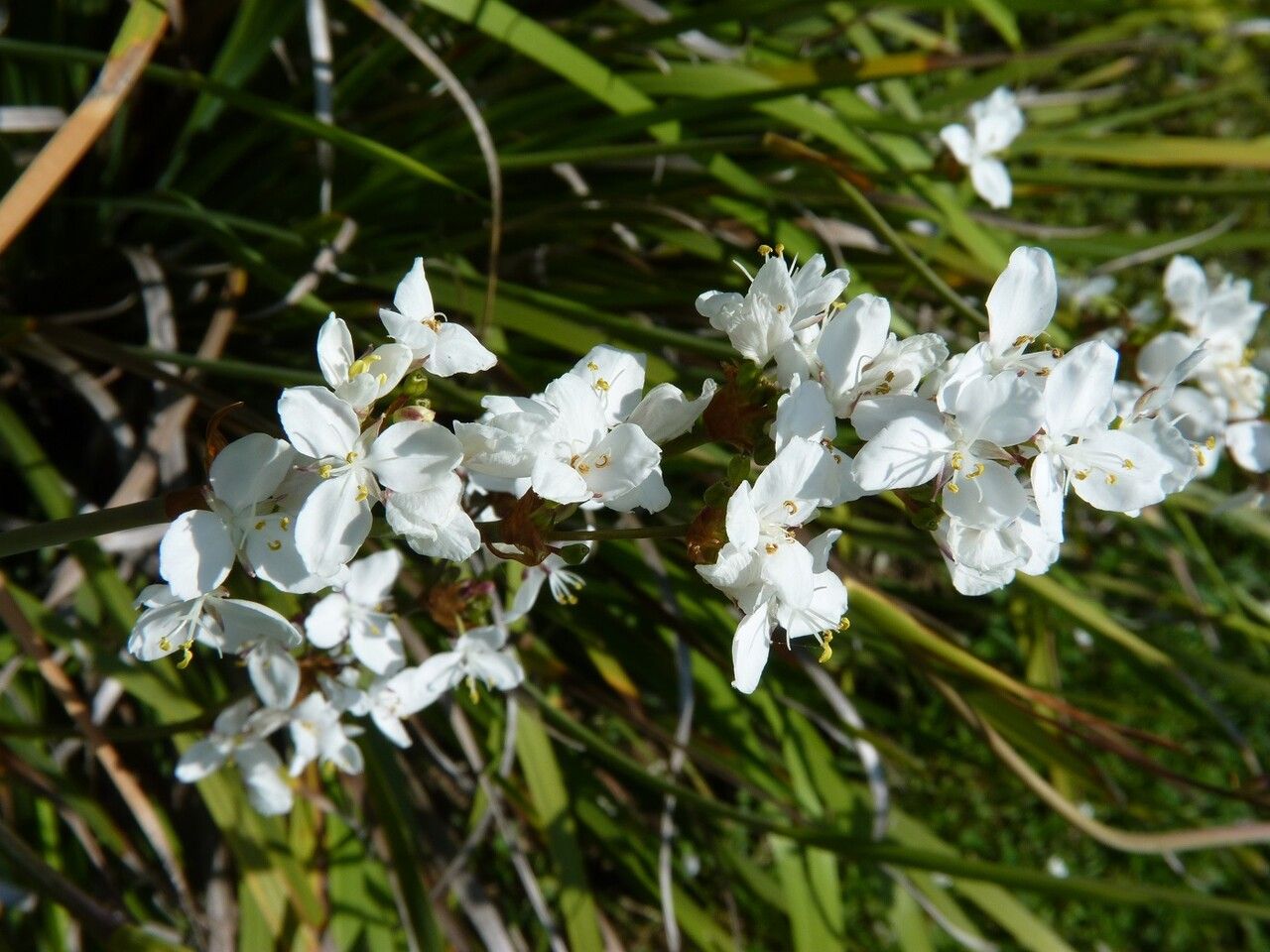
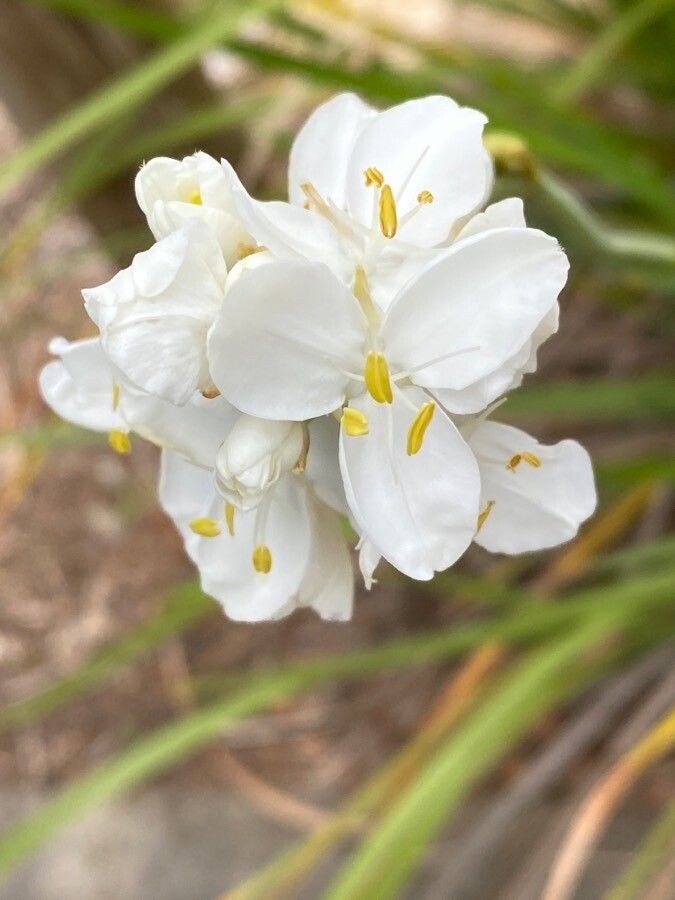
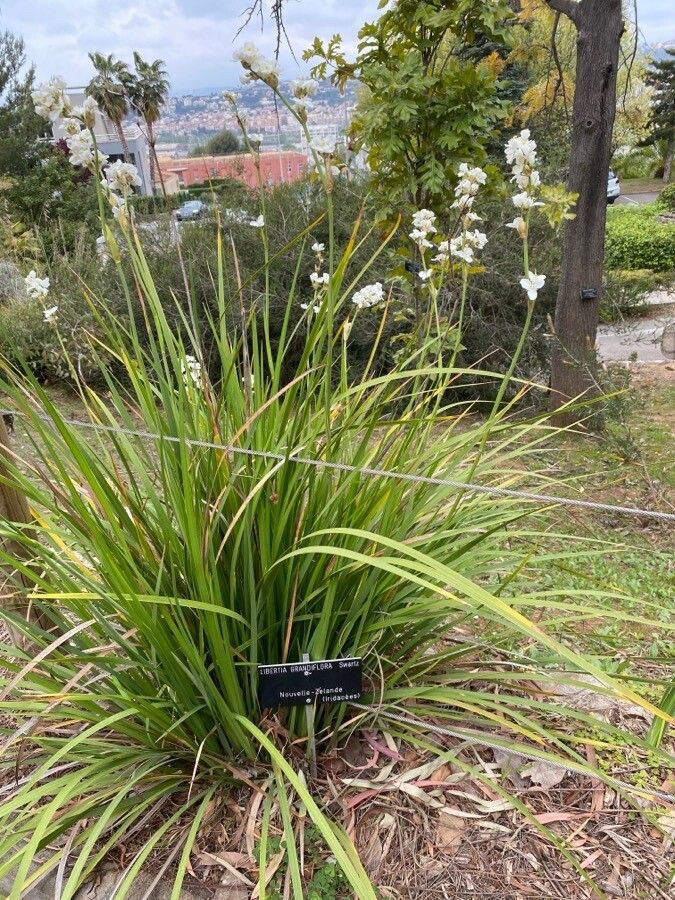
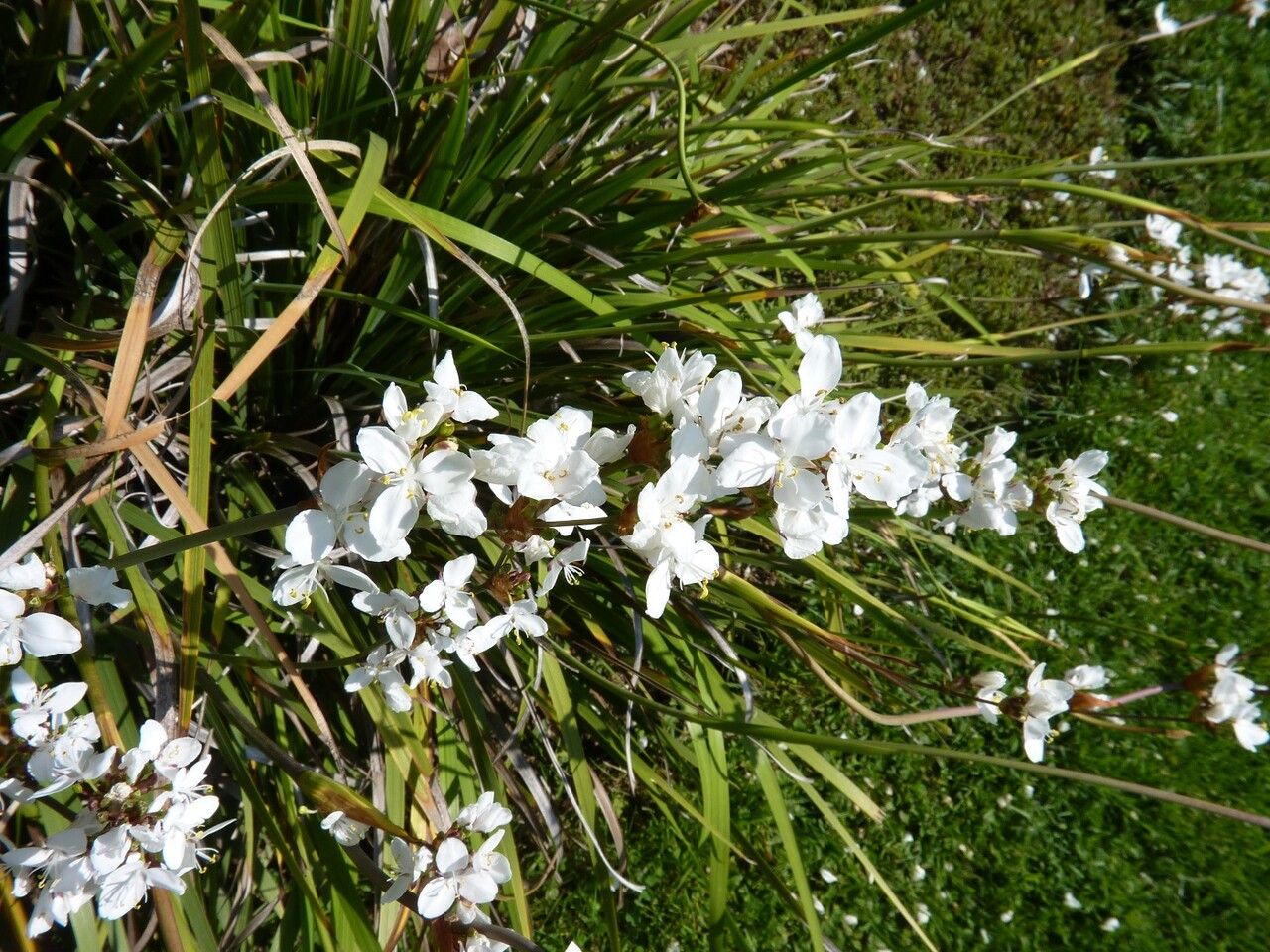
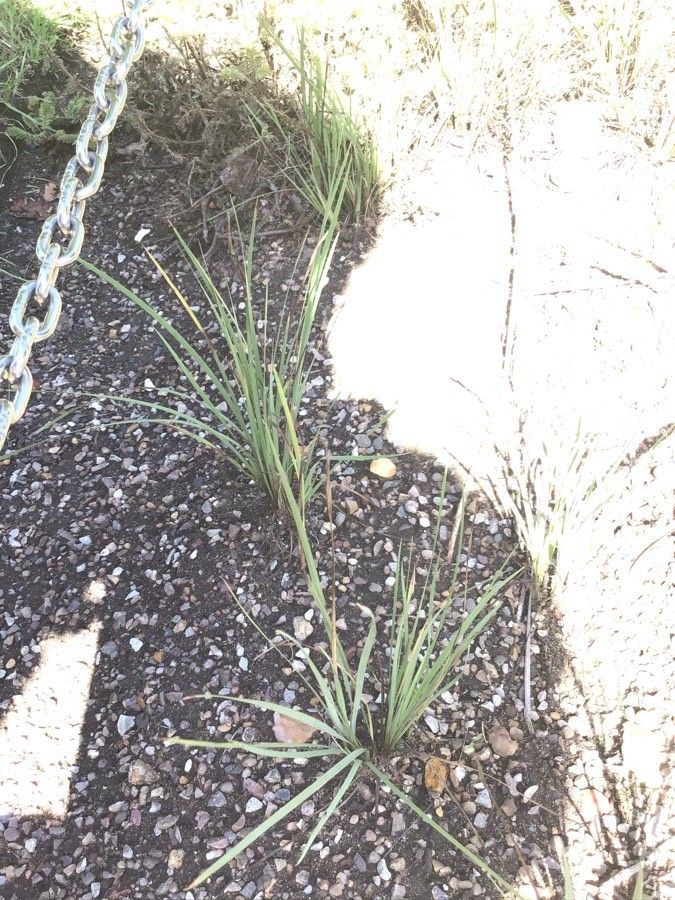
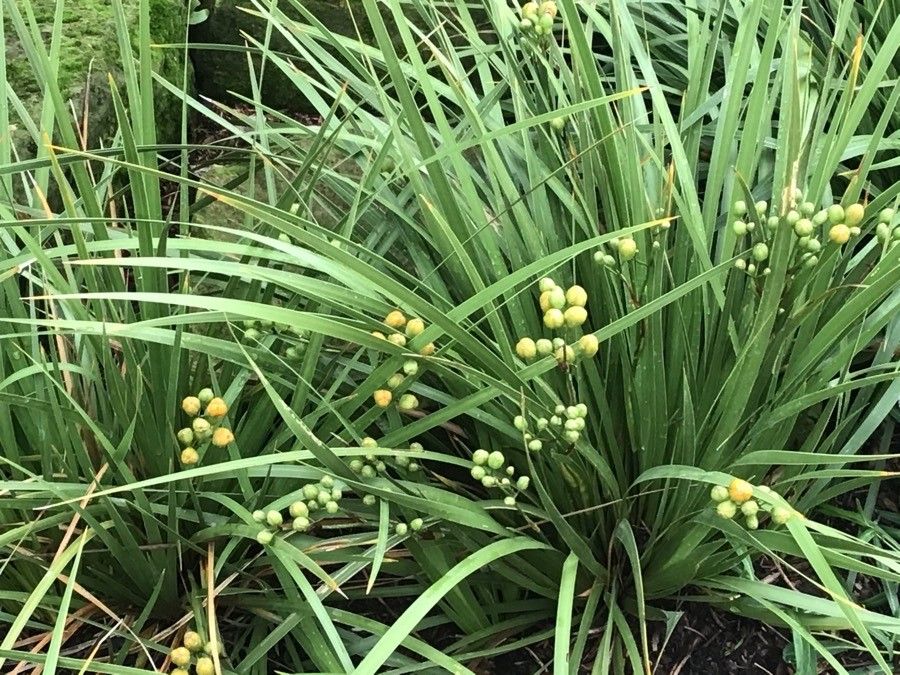
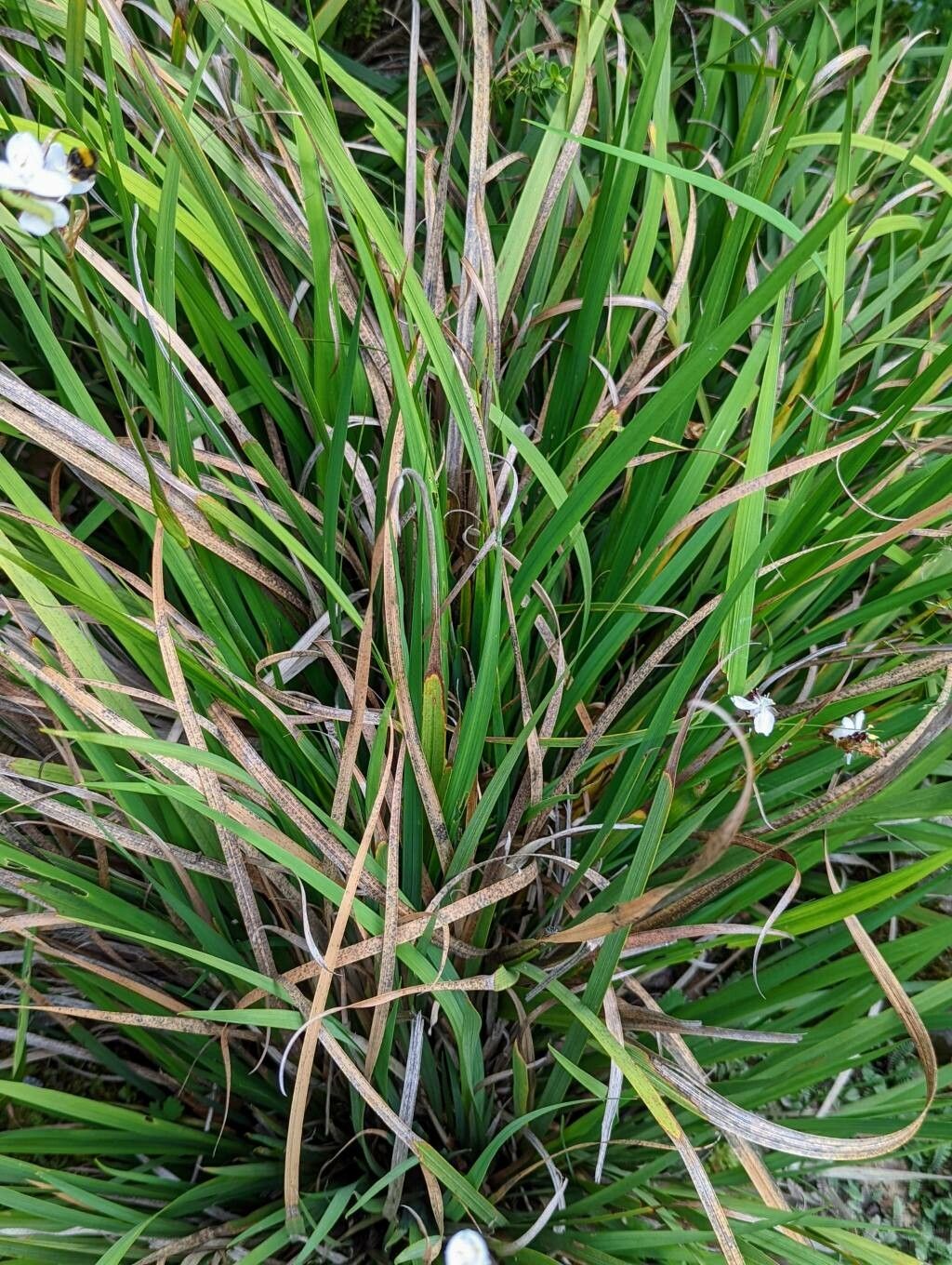
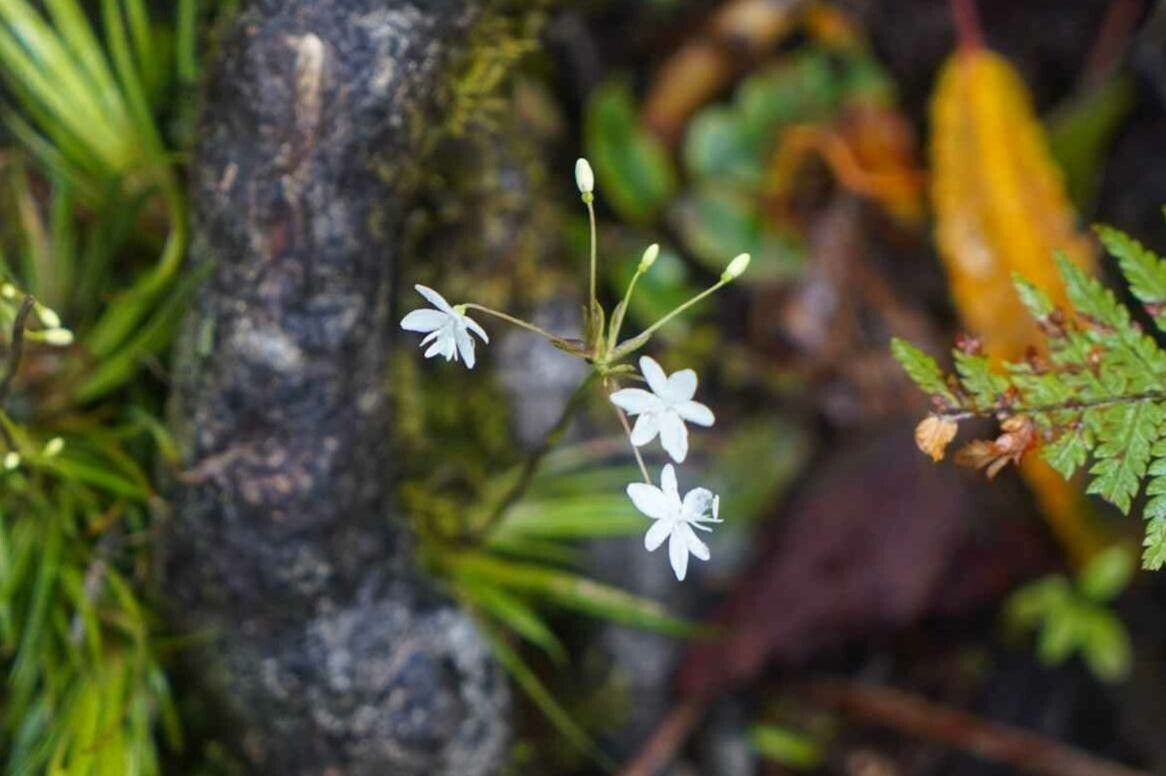
Libertia grandiflora, the tukauki or mikoikoi, is a flowering plant in the family Iridaceae. The species is endemic to New Zealand. It is a clump-forming herbaceous perennial growing to 90 cm (35 in) tall by 60 cm (24 in) broad, with leathery linear leaves and panicles of white flowers in spring, followed by seed capsules. The Latin grandiflora means large flowered.In cultivation this plant requires a sunny, sheltered location and protection from winter frosts. It has gained the Royal Horticultural Society's Award of Garden Merit.
The Chilean iris is fairly disease-resistant and generally not prone to illness. However, it can be vulnerable to pests and diseases present in its surroundings. Such infections are usually mild. Regarding care, the plant needs moderate maintenance. Regular pruning is required to preserve a good appearance and promote healthy growth. Fertilizing can also help encourage flowering. The Chilean iris is suitable for anyone with outdoor space, such as a garden or patio, and does not demand much gardening experience. It may need more care when grown indoors.
How to keep Libertia Grandiflora.
Light
Chilean-iris is a sun-loving, perennial, herbaceous plant native to open habitats, commonly found in meadows and grasslands. It prefers full sun but can also tolerate partial sun conditions.
Temperature
Chilean-iris can tolerate a wide range of temperatures, but its range may still be restricted by particular combinations of moisture and heat. It performs best in warm summer climates with sufficient rainfall or watering. Extended periods of cloudy, rainy weather or prolonged high temperatures increase the chance of Chilean-iris dying. In winter, adequate protection from cold can raise the plant's survival rate.
Fertilizer
The best time to fertilize a Chilean-iris is in early spring, as it comes out of dormancy and begins active growth. Fertilizing supplies essential nutrients needed for healthy development. Even though Chilean-iris requires relatively little feeding, applying fertilizer once a year can improve its survival and encourage better, longer-lasting blooms.
Pruning
The New Zealand iris is known for its striking sword-like foliage and delicate white flowers. To keep the plant healthy, prune it from early to late spring to remove any dead leaves and manage its size. Be careful to avoid heavy pruning. Regular maintenance not only enhances blooming but also supports healthy growth. For detailed care instructions specific to different species of New Zealand iris, refer to horticultural guides.
Botanical profile.
- Plant Type
- Herb
- Life Cycle
- Perennial
- Genus
- Libertia
- Family
- Iridaceae
- Hardiness Zone
- 7-10
- Mature Height
- 91 cm
- Mature Spread
- 61 cm
- Leaf Color
- Green
- Leaf Type
- Evergreen
- Flower Color
- White
- Flower Size
- 2.03 cm to 3.05 cm
- Bloom Time
- Mid spring, Late spring
- Planting Time
- Spring, Summer, Autumn
- Harvest Time
- Mid summer, Late summer
Other names.