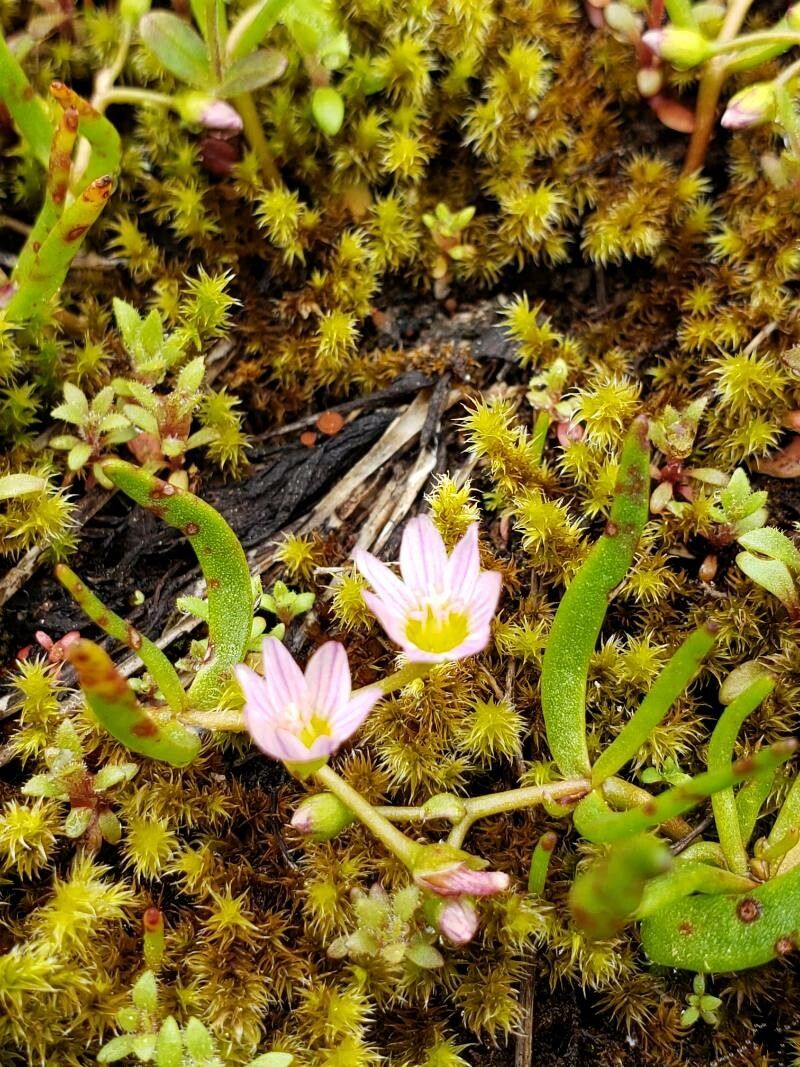
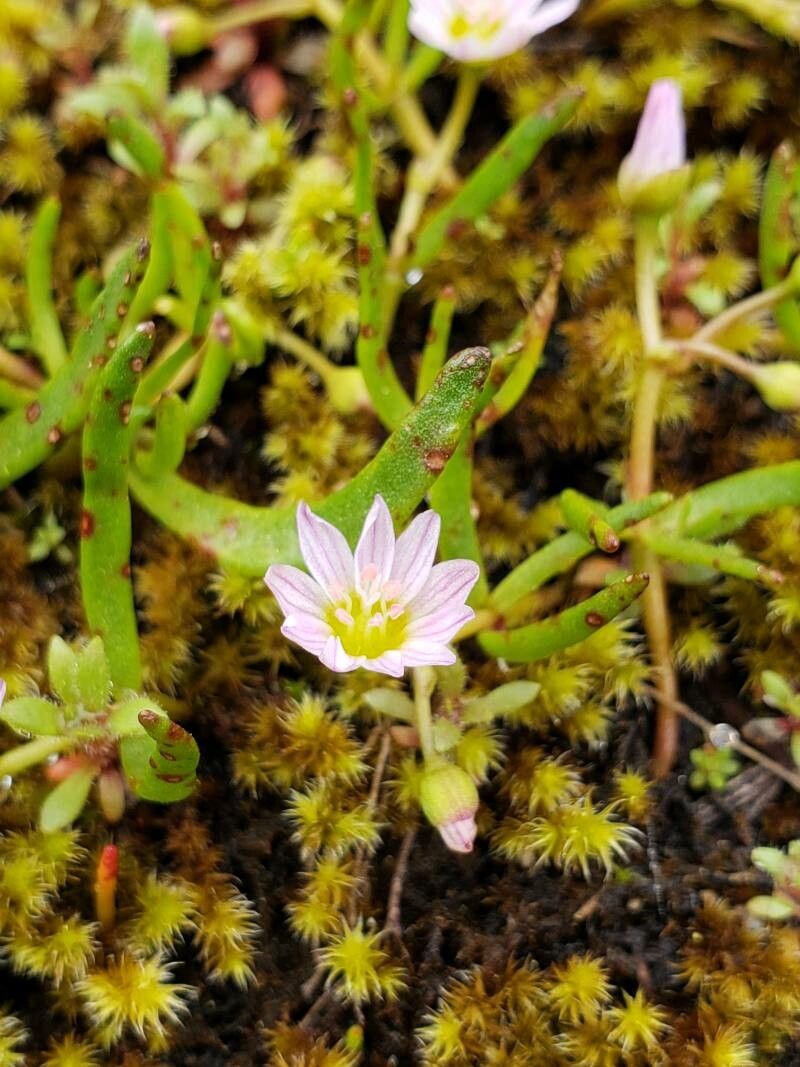
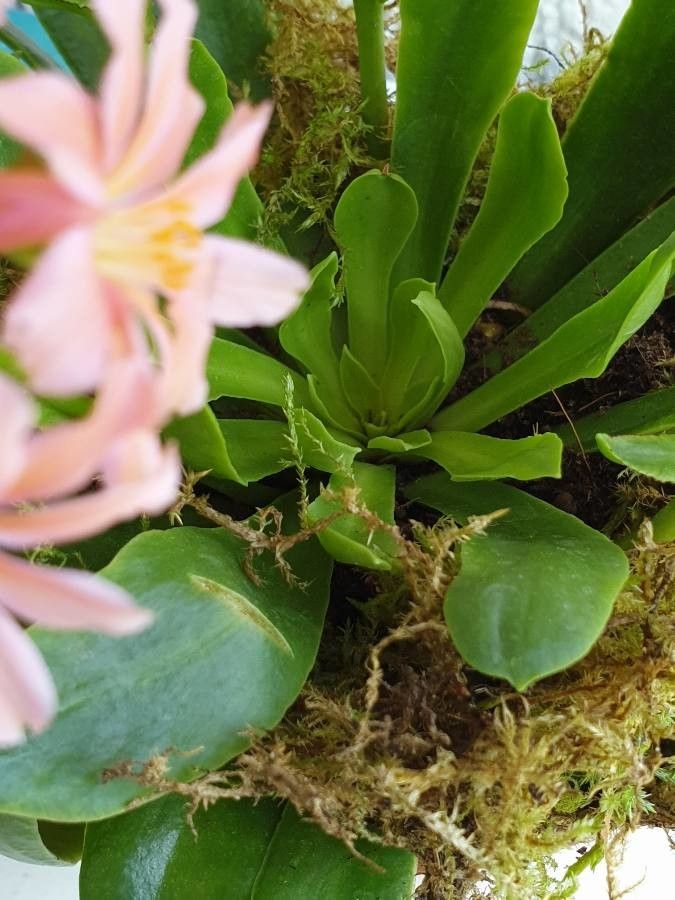
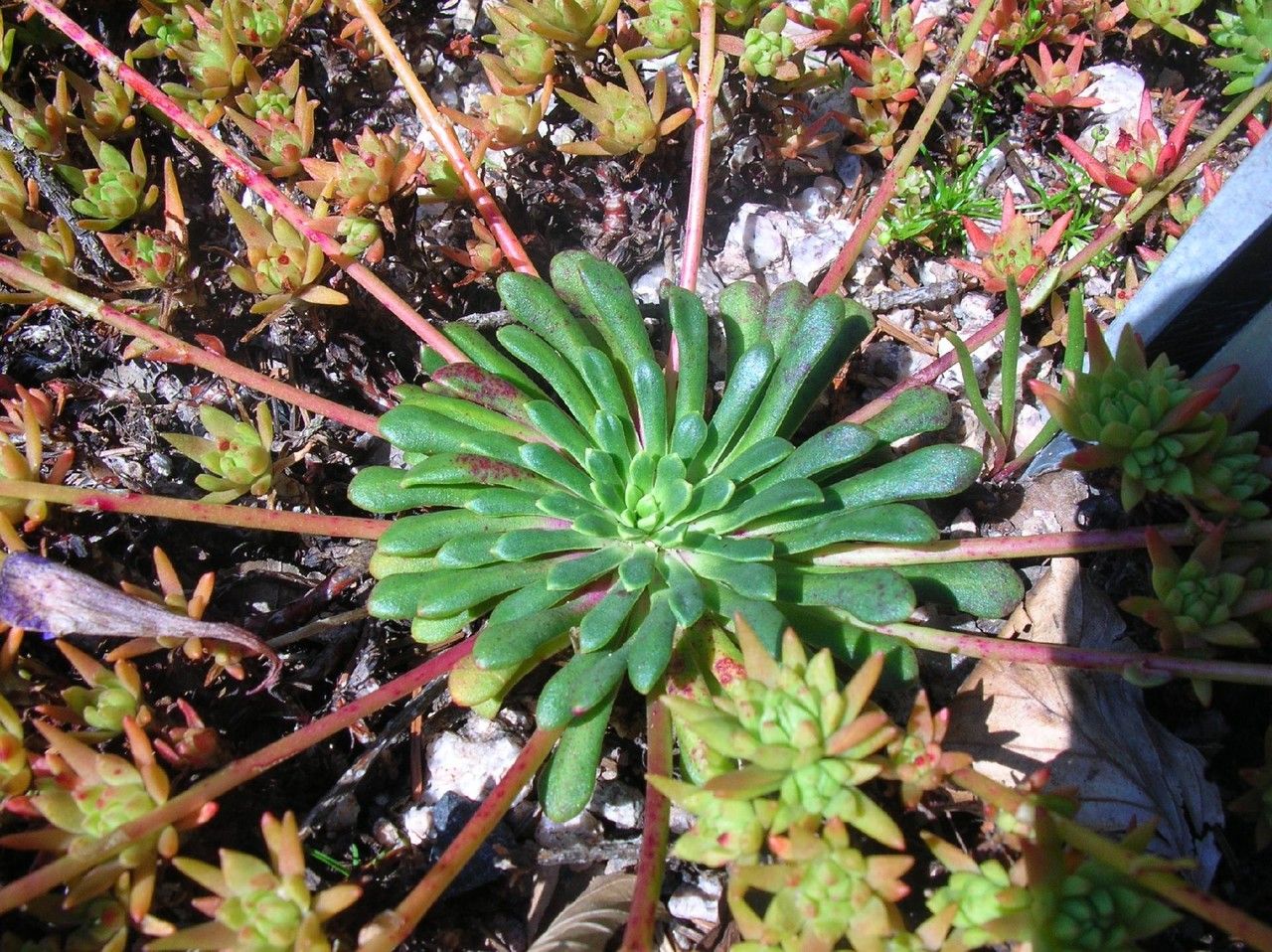
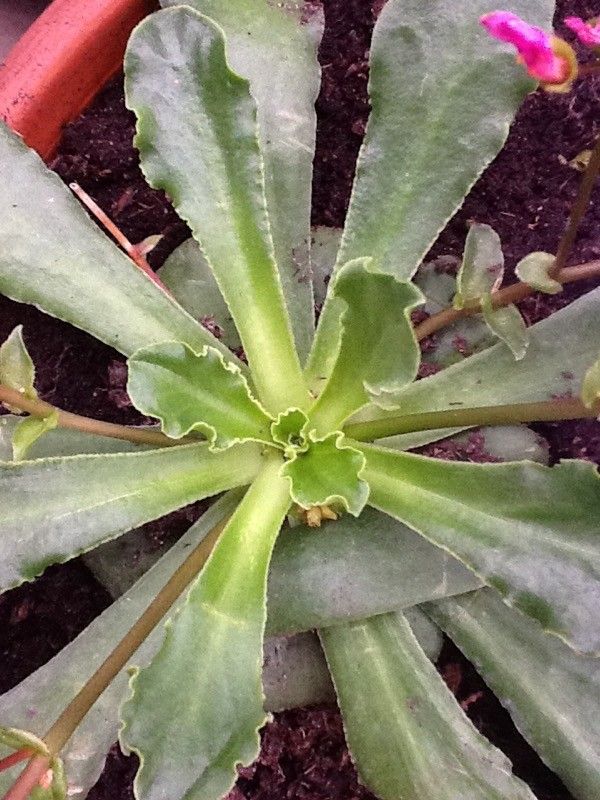
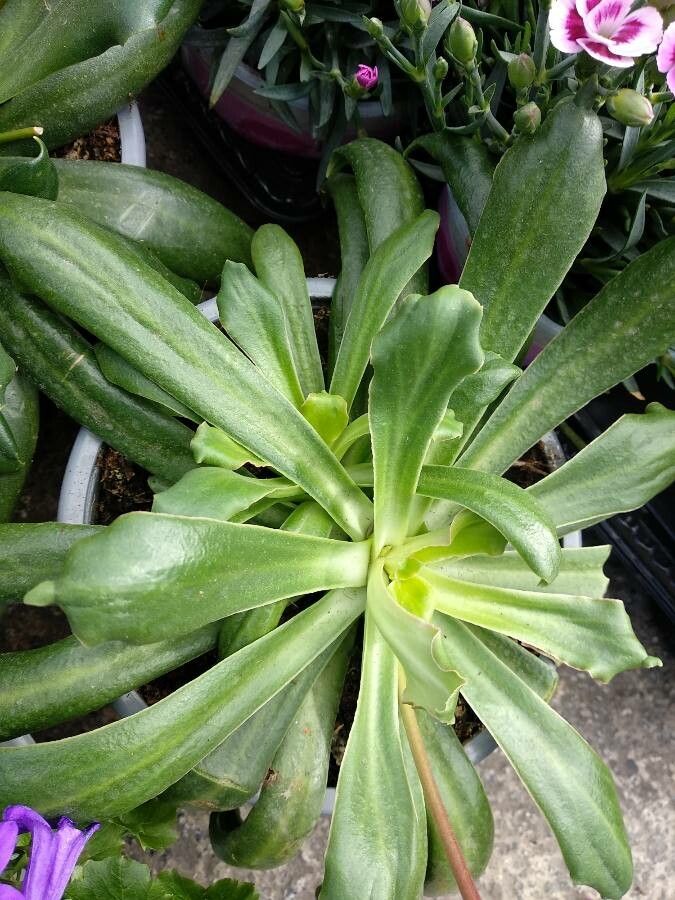
Lewisia pygmaea is a species of flowering plant in the family Montiaceae known by the common name alpine lewisia and pygmy bitterroot. It is native to western North America from Alaska and Alberta to California and New Mexico, where it grows in many types of moist, rocky mountain habitat, such as gravel beds and sandy meadows. This is a highly variable species with a wide distribution, and it often hybridizes with other Lewisia species, making identification difficult. In general, this is a petite perennial herb growing from a taproot and caudex unit, and producing a basal rosette of several leaves 2 to 8 centimeters long. The leaves are narrow but thick and fleshy, blunt-tipped, and linear to lance-shaped. The inflorescence is usually made up of a few very short stems each bearing one or more flowers which appear to be sitting on or within the basal leaf rosette. Each flower has 5 to 9 white, pink or red petals which may or may not have dark veining or striping. The petals are 4 millimeters to 1 centimeter long.
Alpine bitterroot has moderate resistance to disease and can be prone to problems like leaf spot. Its vulnerability to insect pests varies by variety, but most cultivars are relatively poorly resistant to pests. For care, Alpine bitterroot requires regular watering and fertilizing, along with frequent removal of yellow leaves. It is important to address pests and diseases as they occur and to harvest the plant at the appropriate time. Alpine bitterroot is appropriate for someone who can allocate some time and energy to routine care.
How to keep Lewisia Pygmaea.
Light
Alpine bitterroot comes from habitats with plentiful sunlight, such as open fields and sunny meadows. It favors full sun, though it can also endure partial sun.
Water
Alpine bitterroot, a plant native to rocky alpine regions, thrives in well-draining soil with minimal water. It requires weekly watering and is drought-resistant, entering dormancy to conserve moisture when necessary. Typically grown outdoors, alpine bitterroot is well-adapted to make efficient use of the scarce resources characteristic of its mountainous origins.
Temperature
Alpine bitterroot prefers moderate temperatures, similar to what people commonly find comfortable. It does best in conditions that are neither too hot nor too cold. The main problem with high temperatures is the risk of sunburn, so providing some shade in summer is recommended to prevent excessive heat. When temperatures fall, Alpine bitterroot goes dormant. If continuous growth is desired, winter temperatures need to be kept higher. Frost can damage the plant and should be avoided.
Fertilizer
Alpine bitterroot plants do well with one or two applications of organic fertilizers that contain potassium and phosphorus. Apply the fertilizer prior to planting, work it into the soil, and water thoroughly. Usually a single application is enough, though a second application may be made after seedlings are established. Do not use too much fertilizer, as overuse can damage the plants.
Pruning
Alpine bitterroot is known for its compact growth and vibrant blooms, requiring minimal pruning. The best time to prune is from early to late spring, which helps remove dead stems and faded flowers. This process promotes healthy blooms and prevents overcrowding. Additionally, regular checks for disease are important to ensure robust growth and to enhance the plant's overall health and appearance.
Pot & Repot
To maintain healthy alpine bitterroot plants, repot them every 2-3 years using fresh soil. In the spring, select a pot just slightly larger than the root ball. After repotting, place the plant in bright, indirect light and water it sparingly. This will help the plant acclimate, encourage healthy blooming, and prevent root rot.
Botanical profile.
- Plant Type
- Herb
- Life Cycle
- Perennial
- Genus
- Lewisia
- Family
- Montiaceae
- Hardiness Zone
- 4-8
- Mature Height
- 1 cm to 8 cm
- Mature Spread
- 10 cm
- Leaf Color
- Green
- Leaf Type
- Deciduous
- Flower Color
- Pink, White
- Flower Size
- 1.02 cm to 2.03 cm
- Bloom Time
- Mid spring, Late spring
- Planting Time
- Spring, Summer, Autumn
- Harvest Time
- Early summer, Mid summer
Other names.
Reader questions.
How should I water my Alpine bitterroot plant?
The Alpine bitterroot is quite specific about its water requirements. Not only does it want a certain amount of water, but it also insists on a particular method of watering. If you don't follow the correct technique, your tomatoes may be at risk. To effectively water the Alpine bitterroot, it is best to apply the water directly to the soil in a slow and gentle manner. Avoid pouring all the water into the soil at once, as well as using overhead watering. While watering slowly, make sure to water deeply to ensure that the entire soil where your Alpine bitterroot grows is adequately moist.
Why should I put fertilizer on my Alpine bitterroot?
Alpine bitterroot is a fast-growing plant that requires a lot of energy to produce the root vegetables we love. In addition to sunlight, oxygen, and water, Alpine bitterroot species also need nutrients to grow and develop roots. Although garden soil usually contains these nutrients due to the decomposition of natural organic matter, there are situations where the nutrients may not be sufficient to support optimal growth of Alpine bitterroot. In such cases, fertilizer can provide the necessary boost for Alpine bitterroot to thrive.
What will happen if the Alpine bitterroot plant gets too much sunlight?
Alpine bitterroot plants can experience sunburn from intense sunlight, especially when combined with high temperatures and inadequate water. The afternoon sun is particularly likely to cause damage. Sunburned leaves on the top of the plant, exposed to the most sun, can develop faded patches ranging from light brown to white. Newly transplanted plants are particularly susceptible to this issue when transitioning from a shadier location to full sun. Gradual transitioning or providing a barrier can help prevent sunscald in young plants. While mature Alpine bitterroot plants usually have larger leaves that protect the fruits from strong sunlight, the fruits themselves can still be damaged if exposed to intense sunlight. It is important to avoid over-pruning the protective leaves to ensure the fruits are not burned.
How can I keep Alpine bitterroot safe from very hot or very cold weather outside?
If you have an Alpine bitterroot plant planted outdoors, it's difficult to move it indoors. However, you can help it survive unexpected extreme temperatures by providing cover. One option is to create a shade tent using stakes and cloth to block out direct sunlight. Similarly, you can protect the plant from extreme cold and chilly winds by building a small greenhouse using garden stakes and clear or translucent plastic. If you have greenhouse plastic like polycarbonate, that's ideal. Remember to remove the greenhouse once temperatures at night warm up to 40℉(10℃).
How many times should I water my Alpine bitterroot?
Overall, Alpine bitterroot requires plenty of water during the growing season. To fulfill this water requirement, it is recommended to water consistently and frequently in spring and summer. At the start of the growing season, watering Alpine bitterroot once or twice a week is sufficient. As the season advances, increase the frequency of watering. Depending on the weather, you may need to water it twice a day or more during summer. Once your Alpine bitterroot has completed its main growth stages, you can reduce the watering to around once a week until the end of the growing season.
When should I fertilize my Alpine bitterroot for the best results?
To prepare your soil for planting, it is recommended to apply natural fertilizer. There is no specific deadline to follow, but ensure you have enough time to mix the fertilizer into the soil and water it thoroughly before planting the seeds or seedlings. Typically, one application of fertilizer is sufficient for the entire season to support the growth of Alpine bitterroot. However, if desired, you can apply an additional round of fertilizer once the seedlings have established themselves to further increase their yield. Take caution not to overuse fertilizer, as this may harm the plants.
How much sunlight does the Alpine bitterroot plant need to grow?
To grow and produce fruit, Alpine bitterroot generally requires at least 6 to 8 hours of daily sunlight as a general guideline.
What temperature is best for Alpine bitterroot?
To keep your Alpine bitterroot happy, it is important to maintain the ideal temperature range. This range will prevent any issues with cold or hot damage to the foliage. However, if you notice a change in leaf colors, it may be a sign that the Alpine bitterroot isn't thriving. Ensure the temperature stays between 70-85℉(21-30℃), but don't worry if it occasionally goes slightly above or below this range.
How can I know if I'm giving enough water to my Alpine bitterroot plant?
Both underwatering and overwatering can cause issues for your Alpine bitterroot, and they can both display similar symptoms. For instance, both overwatering and underwatering can lead to foliage discoloration and wilting. When your Alpine bitterroot is underwatered, you will notice its leaves curling and drooping initially, with a decrease in leaf vigor. Since this plant requires a high amount of water for both its flowers and overall development, underwatering can also result in stunted growth. On the other hand, overwatering is more likely to cause diseases like rot and can create unpleasant smells emanating from the soil. Symptoms of underwatering tend to appear faster than those of overwatering. Additionally, if you observe standing water or excessively damp soil, it is a strong indication of overwatering.
When is the best time to not give fertilizer to my Alpine bitterroot?
To ensure effective fertilization, remember to avoid applying fertilizer when the soil is dry. After fertilizing, make sure to water your plants thoroughly as this helps deliver the nutrients properly. If you prioritize the growth of foliage over the root crops, then high-nitrogen fertilizers might be suitable for you. However, take care not to let fertilizer come into contact with the base of the plant, leaves, or stems as it can potentially damage them.
What kind of sunlight does Alpine bitterroot need?
To successfully grow alpine bitterroot, make sure to choose a spot that receives unobstructed direct sunlight. Avoid locations where trees, fences, or buildings can block the sunlight. Remember that the speed of the plant's growth determines how much sunlight it requires, with faster-growing plants needing more hours of sunlight. For optimal photosynthesis, it's recommended to expose the plant to morning sun.
Does the Alpine bitterroot plant require varying temperatures during different seasons?
Alpine bitterroot generally thrives in its preferred temperature range throughout the year. However, care for this plant varies depending on the seasons. In the warmest months, it benefits from added shade and a gentle breeze to manage the heat. Conversely, during cooler months in regions where temperatures dip below 40℉(10℃) at any point, it may need to be relocated away from cold windows and doors.