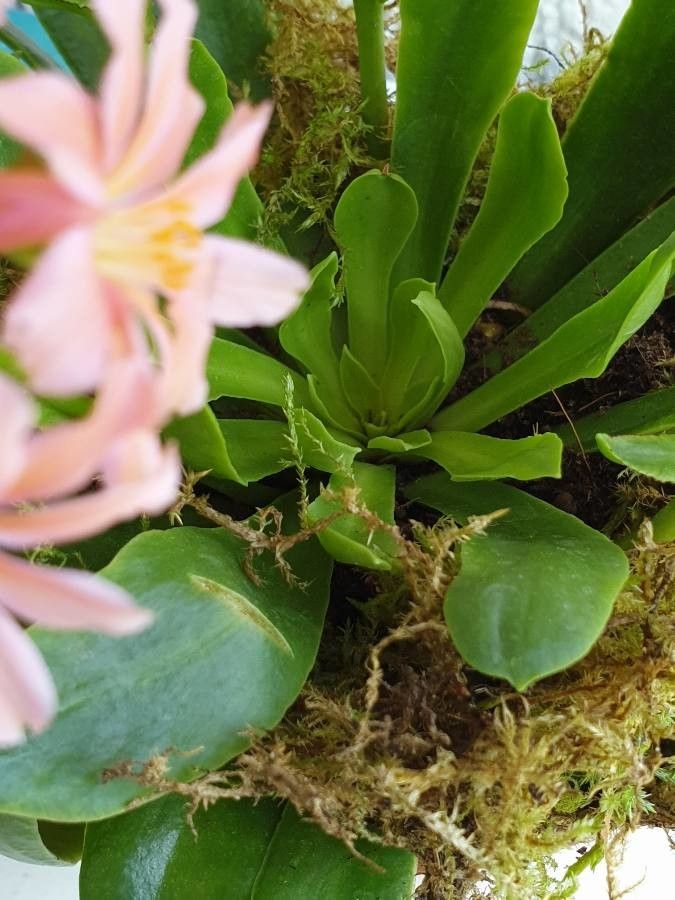
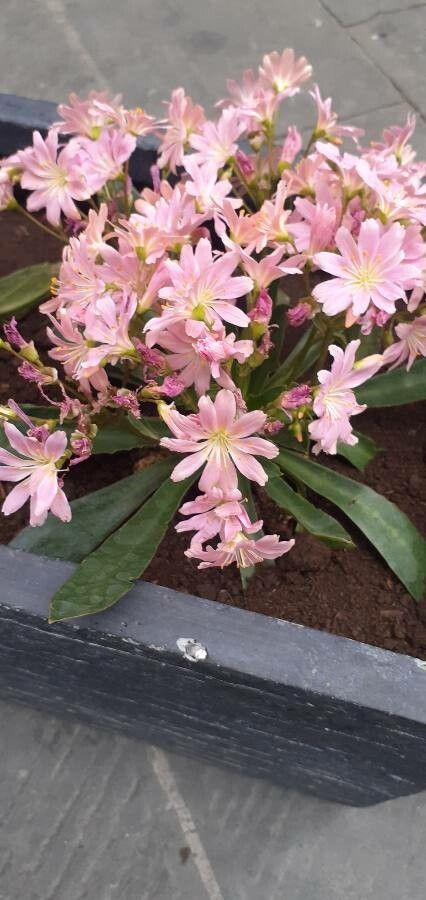
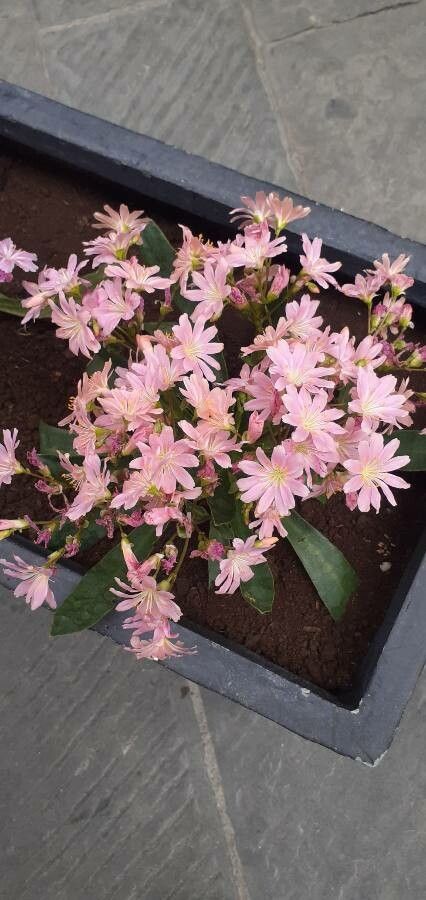
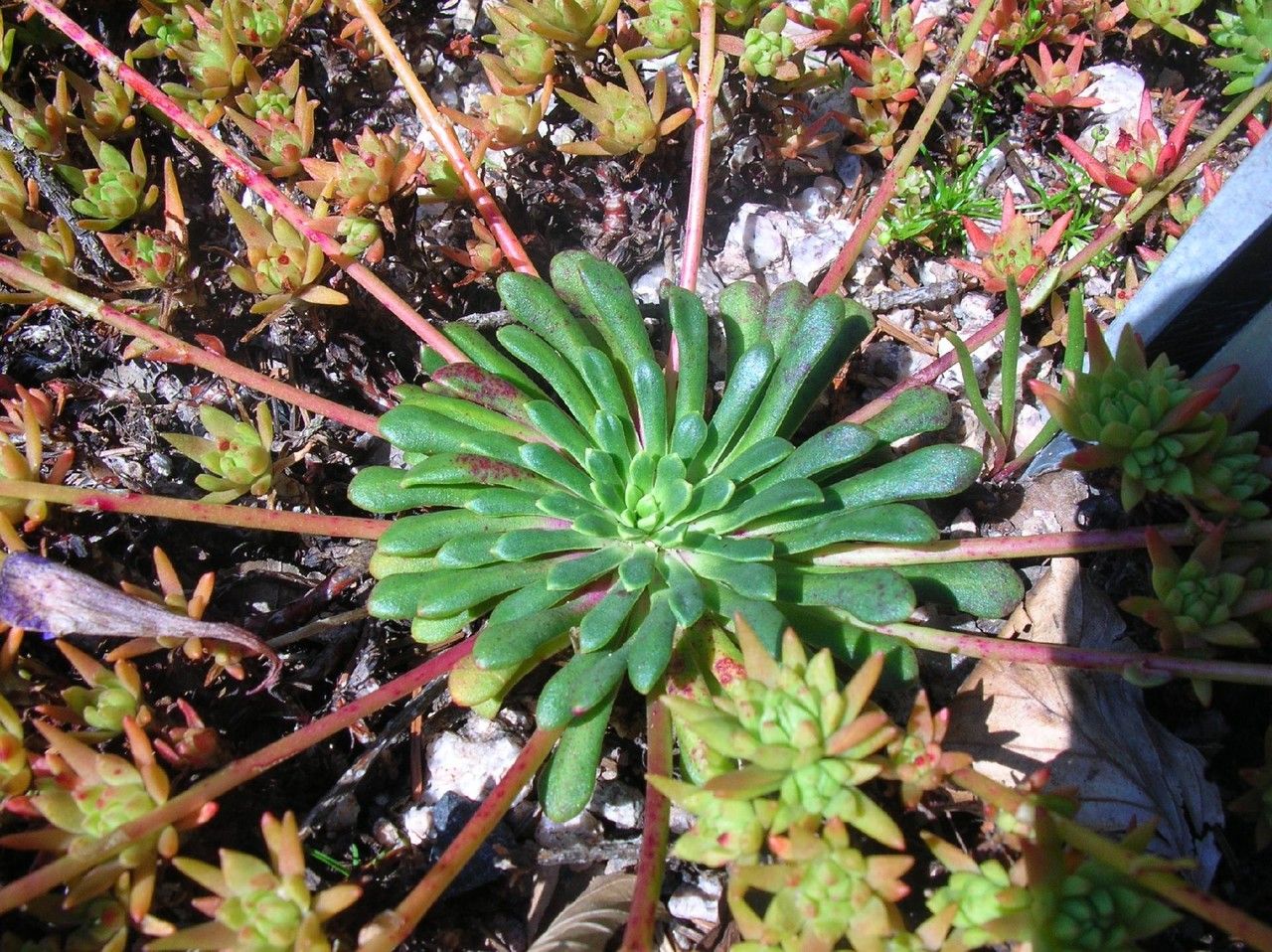
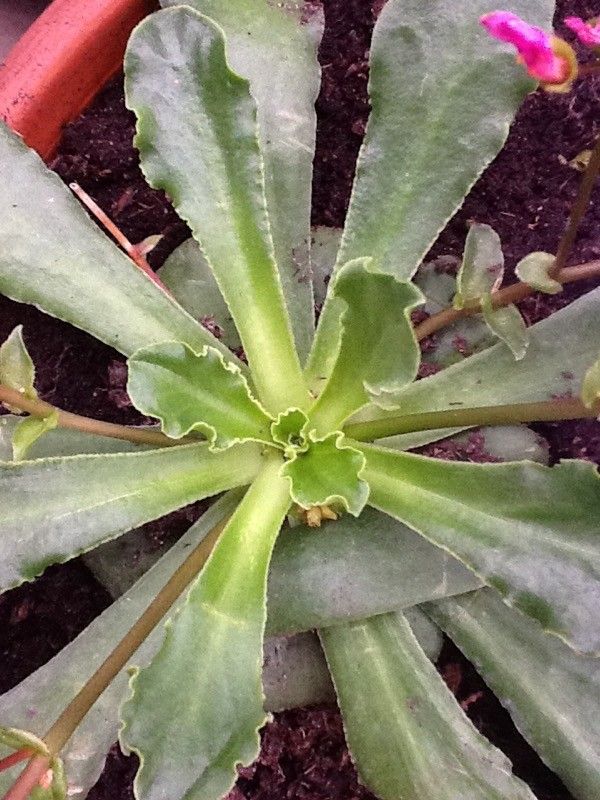
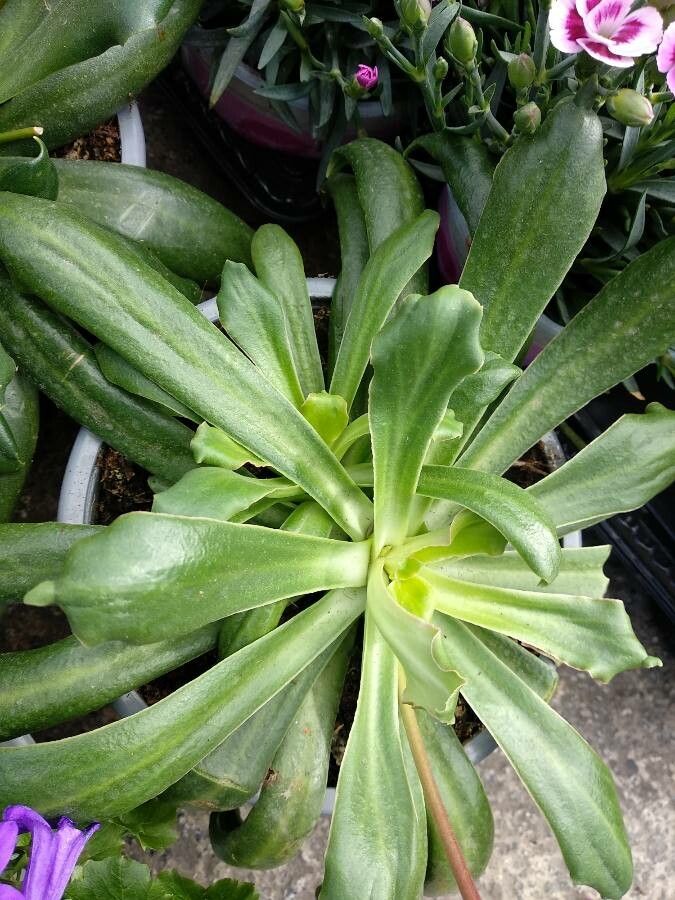
Lewisia brachycalyx is a species of flowering plant in the family Montiaceae, known by the common name short-sepal bitter-root or shortsepal lewisia. It is native to the mountains of the southwestern United States and Baja California, where it grows in moist habitat such as meadows. It is a deciduous perennial growing from a short thick taproot and caudex unit. It produces a basal rosette of thick, fleshy, blunt-tipped narrow leaves up to 8 centimeters long. The inflorescence is under 4 centimeters tall, taking the form of a cluster of several flowers sitting atop the leaf rosette. Each flower has 5 to 9 shiny white or pink petals about 2 centimeters long. At the center are many stamens and stigmas clumped together. The Latin specific epithet brachycalyx means “having a short calyx”.This plant is hardy down to −10 °C (14 °F) but requires well-drained, acid to neutral pH soil in full sun. It becomes dormant after flowering in the summer. It is a suitable subject for an alpine garden where it can be given the conditions that best replicate its natural habitat. It has gained the Royal Horticultural Society’s Award of Garden Merit.The genus Lewisia was moved in 2009 from the purslane family (Portulacaceae) with adoption of the APG III system, which established the family Montiaceae.
Shortsepal lewisia has moderate disease resistance but is more vulnerable to high humidity and overwatering. It also becomes more prone to illness if it receives insufficient light and is overwatered. In terms of care, Shortsepal lewisia is drought-tolerant and can withstand long periods without water. It needs little fertilizer and only occasional pruning. These characteristics make it appropriate for people at any skill level, especially those who prefer to spend less time on plant care and who may sometimes be away from home for extended periods. It is a suitable option for anyone who does not want to devote a lot of time to plant care but still wants a low-maintenance plant.
How to keep Lewisia Brachycalyx.
Water
Shortsepal lewisia is an ideal plant for arid climates because of its drought tolerance, needing water only every one to two weeks. As an evergreen perennial, it can adapt to a range of weather conditions, making it suitable for both indoor and outdoor growth.
Temperature
Shortsepal lewisia performs best in warm conditions and needs higher temperatures during the growing season to encourage growth and metabolic activity. It favors abundant sunlight, suitable moisture levels, and good air circulation. However, it is prone to damage from very low temperatures and from overwatering. It’s also important to maintain balance and avoid excessively high heat and overly dry conditions.
Fertilizer
Shortsepal lewisia requires only small amounts of fertilizer one to two times per year during the active growing season. Avoid fertilizing in winter or summer while the plant is dormant. Cut back on fertilizer for repotted plants and wait a couple of months after repotting before fertilizing. Fertilizing helps maintain healthy growth and promotes flowering.
Pruning
The Shortsepal Lewisia is a plant with succulent leaves that produces flowers ranging in color from pink to white. To keep it healthy, prune the plant in early spring. This involves removing dead leaves and shaping the plant, which helps improve airflow and reduces the risk of disease. Make sure to use sterilized tools to prevent infections. For more detailed guidance, refer to horticultural resources.
Botanical profile.
Other names.
Reader questions.
What are the sunlight requirements for Shortsepal lewisia?
Shortsepal lewisia (Lewisia brachycalyx) thrives in conditions where it can receive partial sun, which equates to about 3-6 hours of sunlight per day. It's important to observe how sunlight moves through your garden throughout the day, choosing locations that provide a good balance of light and shade. This careful selection ensures your Shortsepal lewisia plants remain happy and healthy.