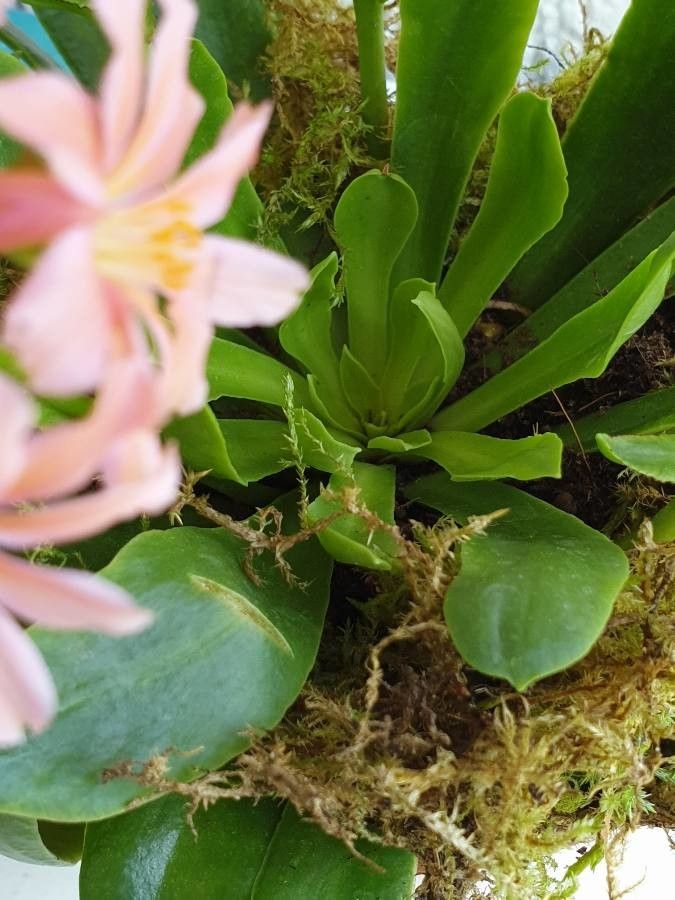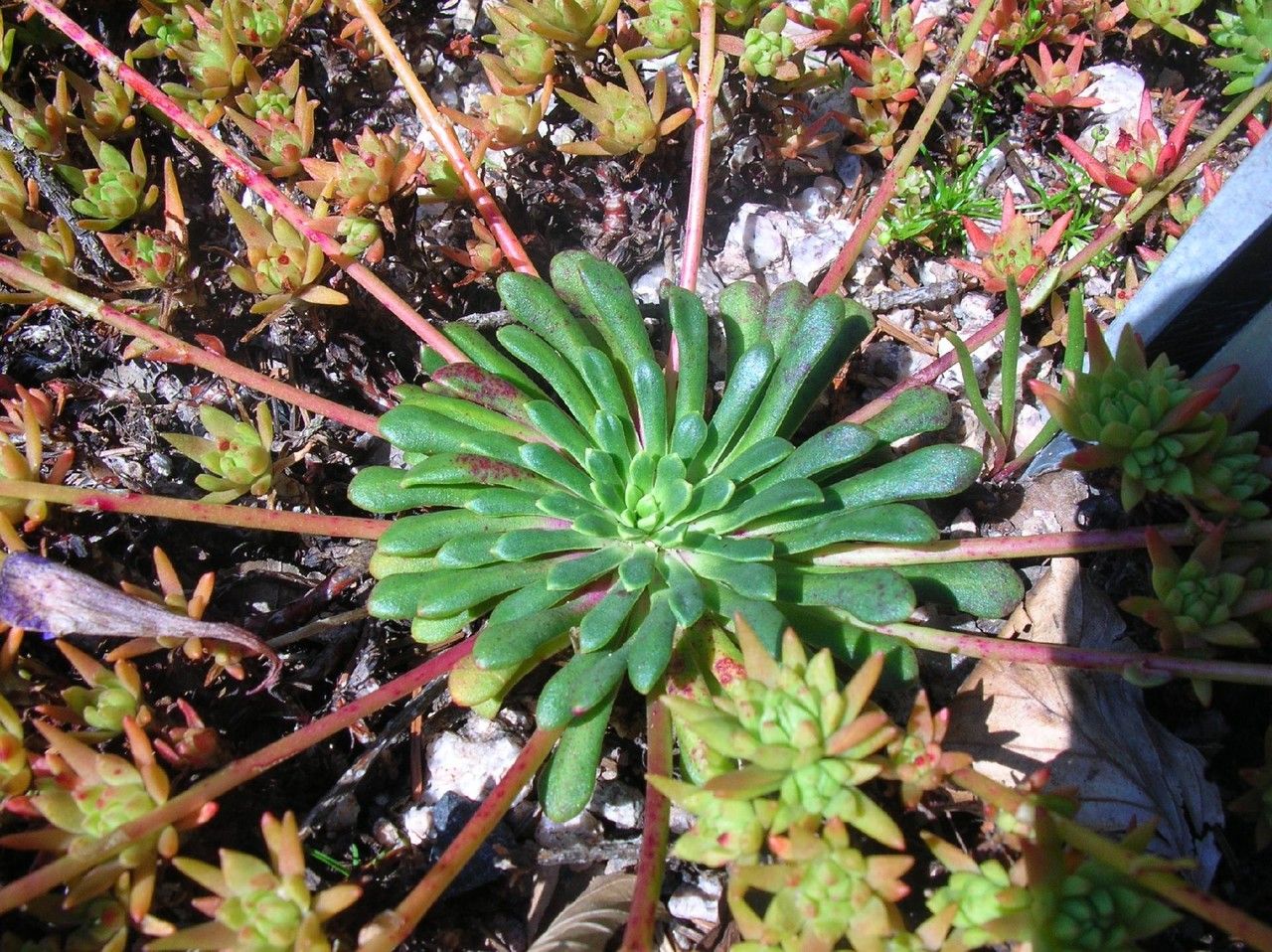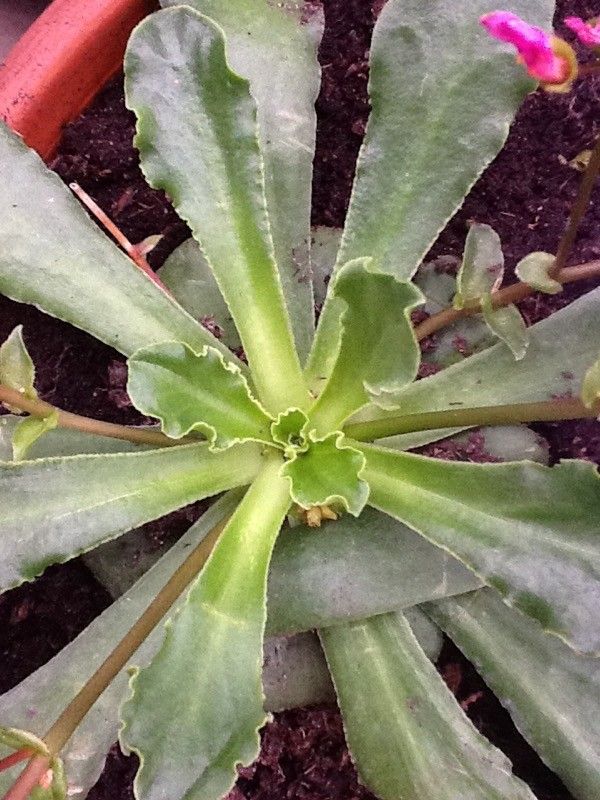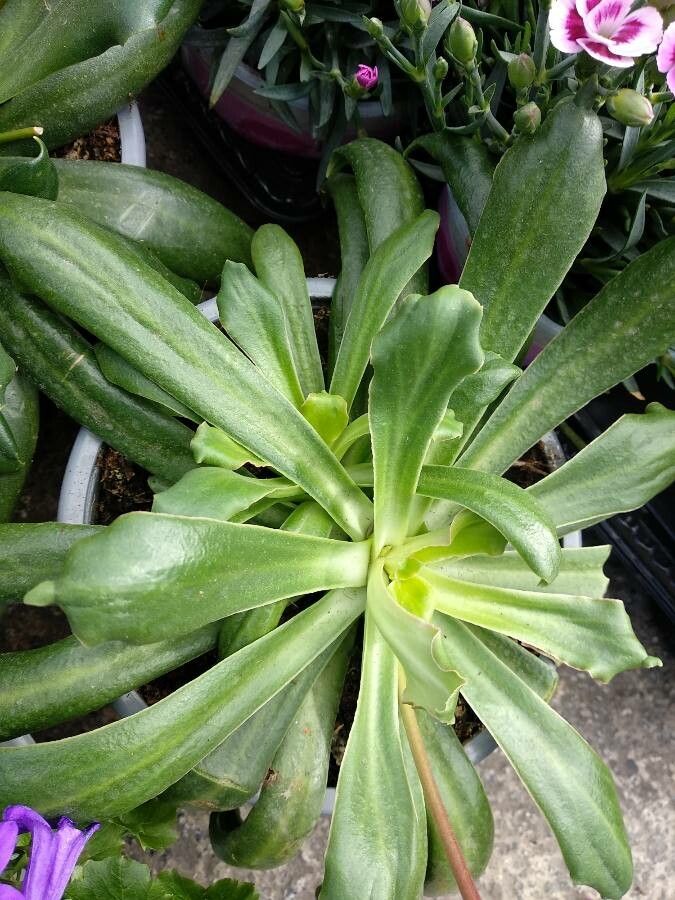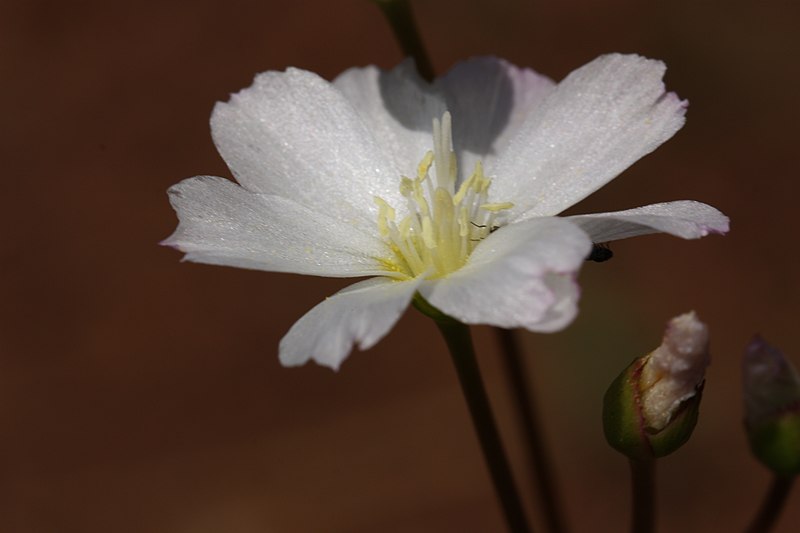
Lewisia oppositifolia is a rare species of flowering plant in the family Montiaceae known by the common name opposite-leaf lewisia. It is native to the Klamath Mountains of Josephine County, Oregon, and Del Norte County, California, where it is a local serpentine endemic generally found in moist areas. This is a perennial herb growing from a small taproot and caudex unit. It produces a basal rosette of several lance-shaped, blunt-tipped fleshy leaves up to 11 centimeters long. There are sometimes smaller leaves located on the lower stem. The inflorescence is made up of one or more erect stems up to about 20 centimeters long, each bearing 1 to 6 flowers. The flower has 8 to 11 white to pale pink petals with blunt or jagged tips, each between 1 and 2 centimeters long. At the center are several stamens with pale anthers. This plant has a limited distribution and it is threatened by human activity in the area, such as logging.
Oppositeleaf lewisia has moderate resistance to disease but can be susceptible to issues such as leaf spot. Its susceptibility to insect pests varies by variety, though most kinds are less resistant to pests. For care, Oppositeleaf lewisia requires regular watering and fertilizing, along with frequent removal of yellow leaves. It is important to control pests and diseases as they appear and to harvest the plant promptly. Oppositeleaf lewisia is suitable for people who can commit some time and energy to routine care.
How to keep Lewisia Oppositifolia.
Temperature
Oppositeleaf lewisia prefers moderate temperatures, similar to the range most people find comfortable. It does best in conditions that are neither too hot nor too cold. The chief concern with high temperatures is the danger of sunburn, so providing some shade in summer is advisable to prevent excessive heat. When temperatures fall, Oppositeleaf lewisia goes dormant. If continuous growth is desired, it is necessary to keep winter temperatures higher. Frost can damage the plant and should be avoided.
Botanical profile.
- Plant Type
- Herb
- Life Cycle
- Perennial
- Genus
- Lewisia
- Family
- Montiaceae
- Hardiness Zone
- 3-8
- Mature Height
- 5 cm to 20 cm
- Leaf Type
- Evergreen