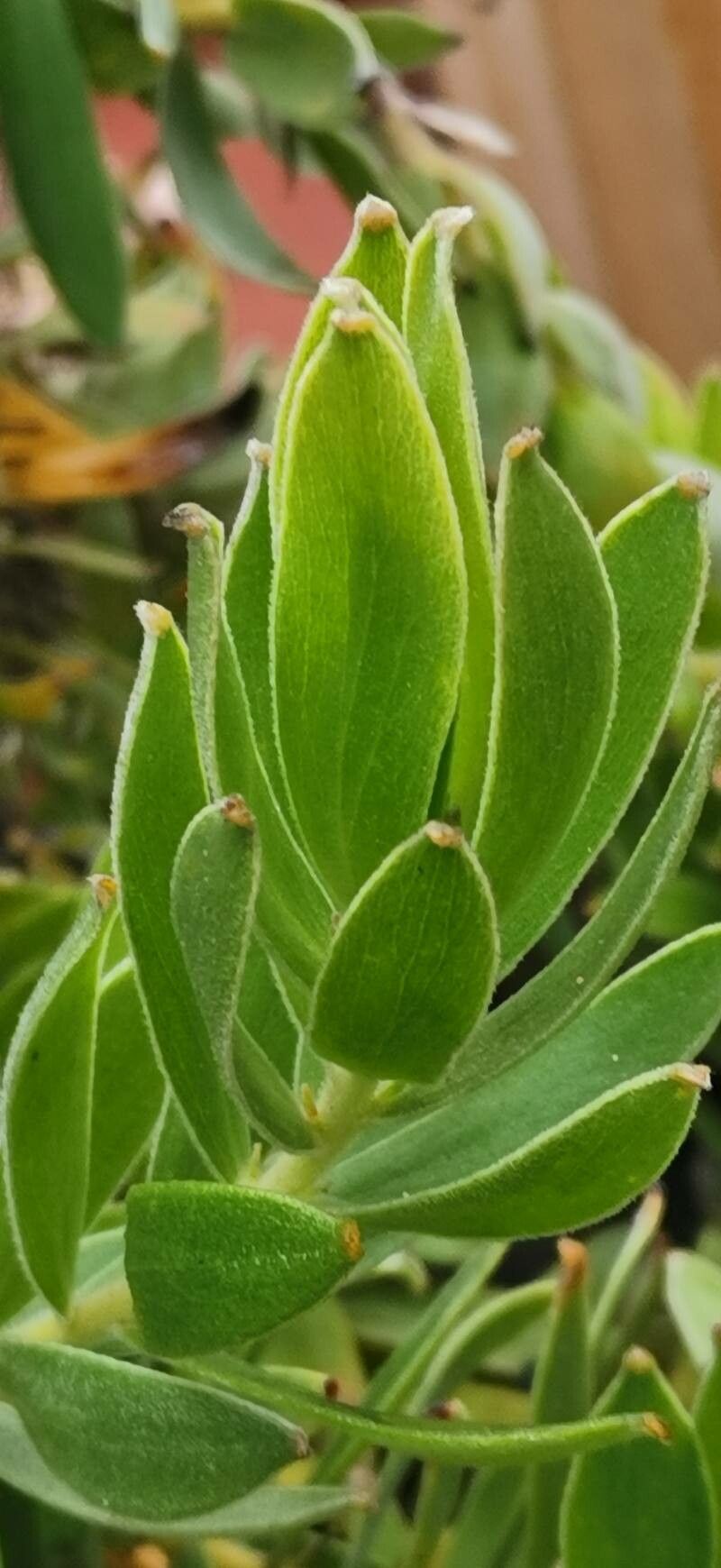
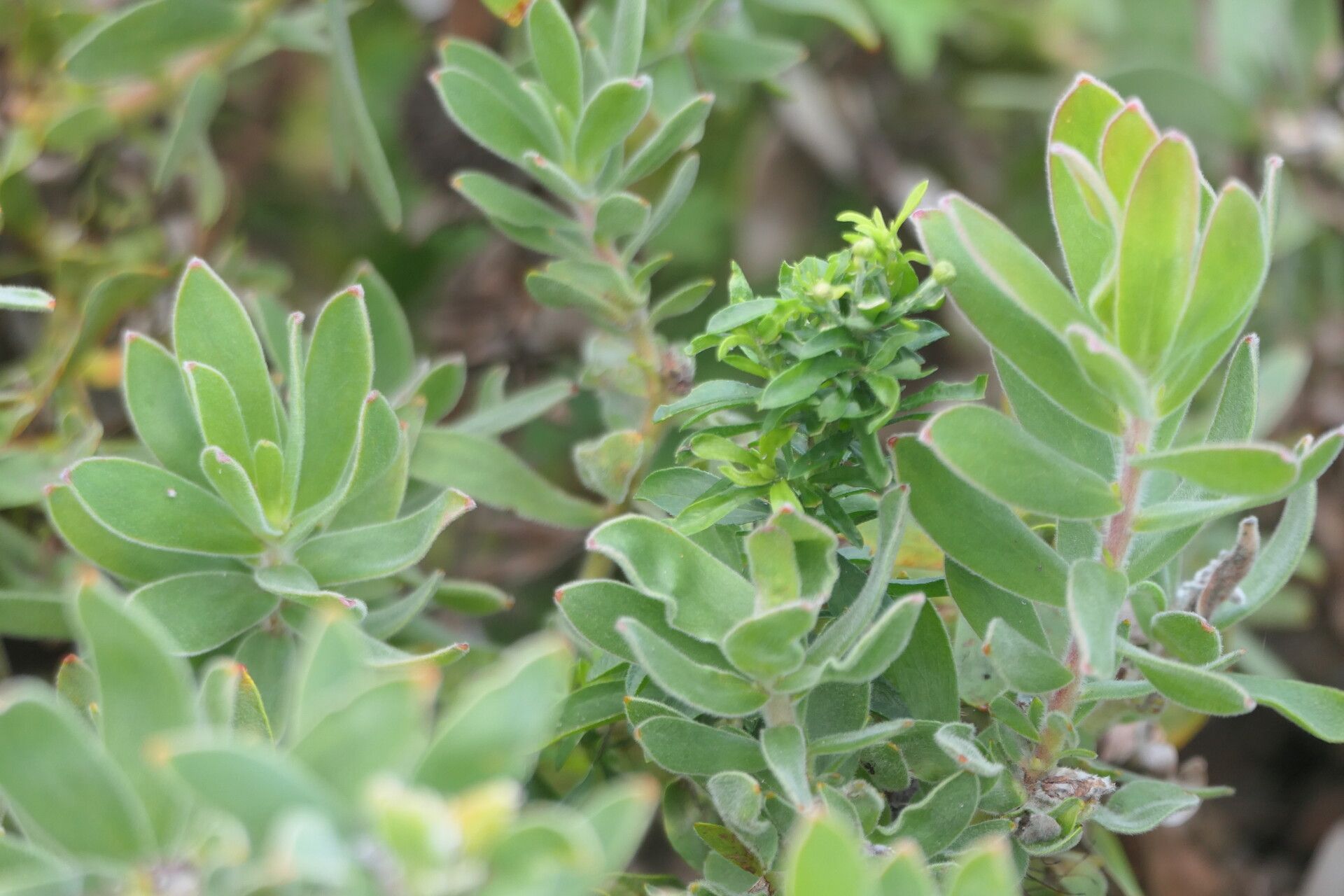
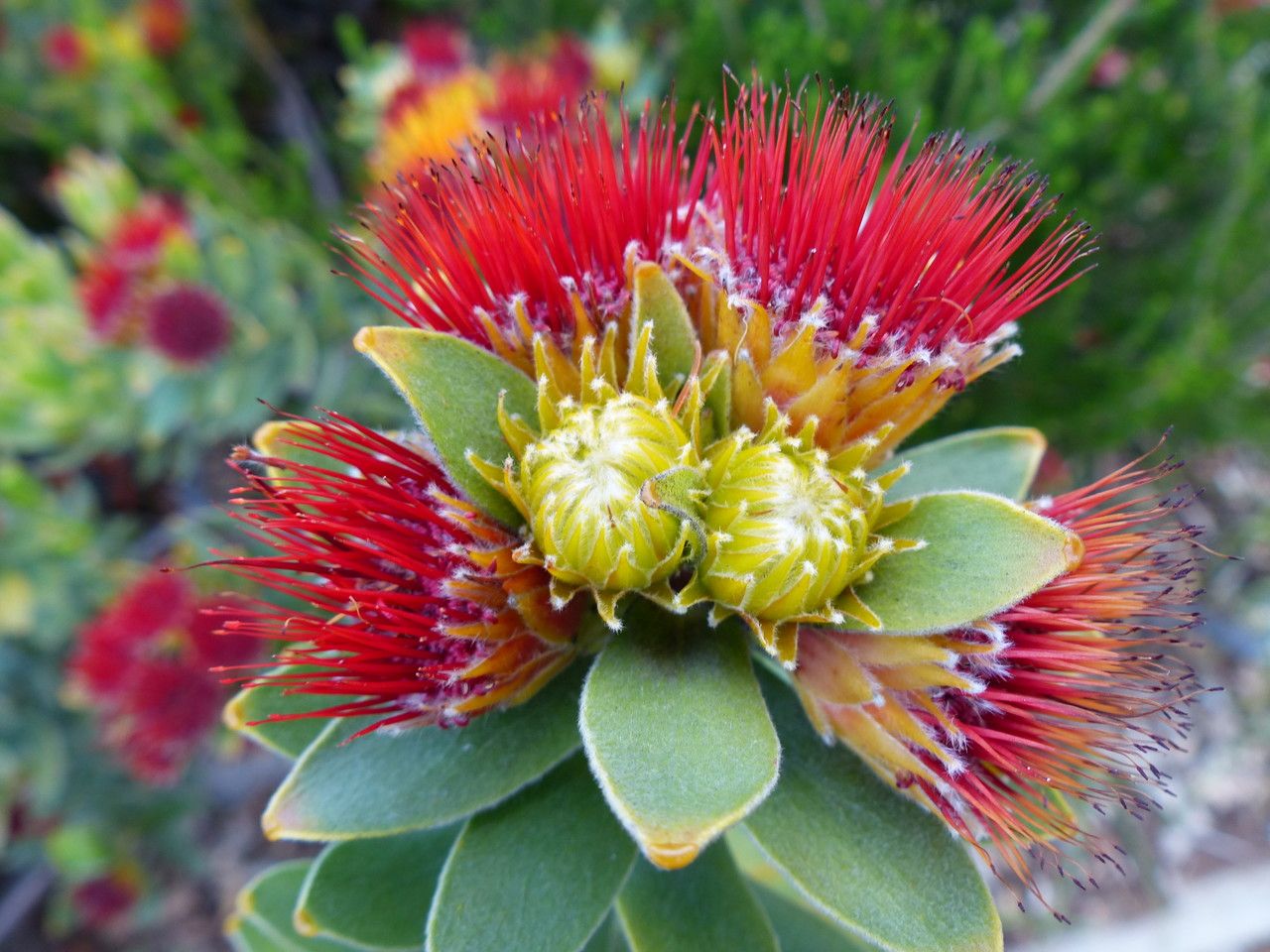
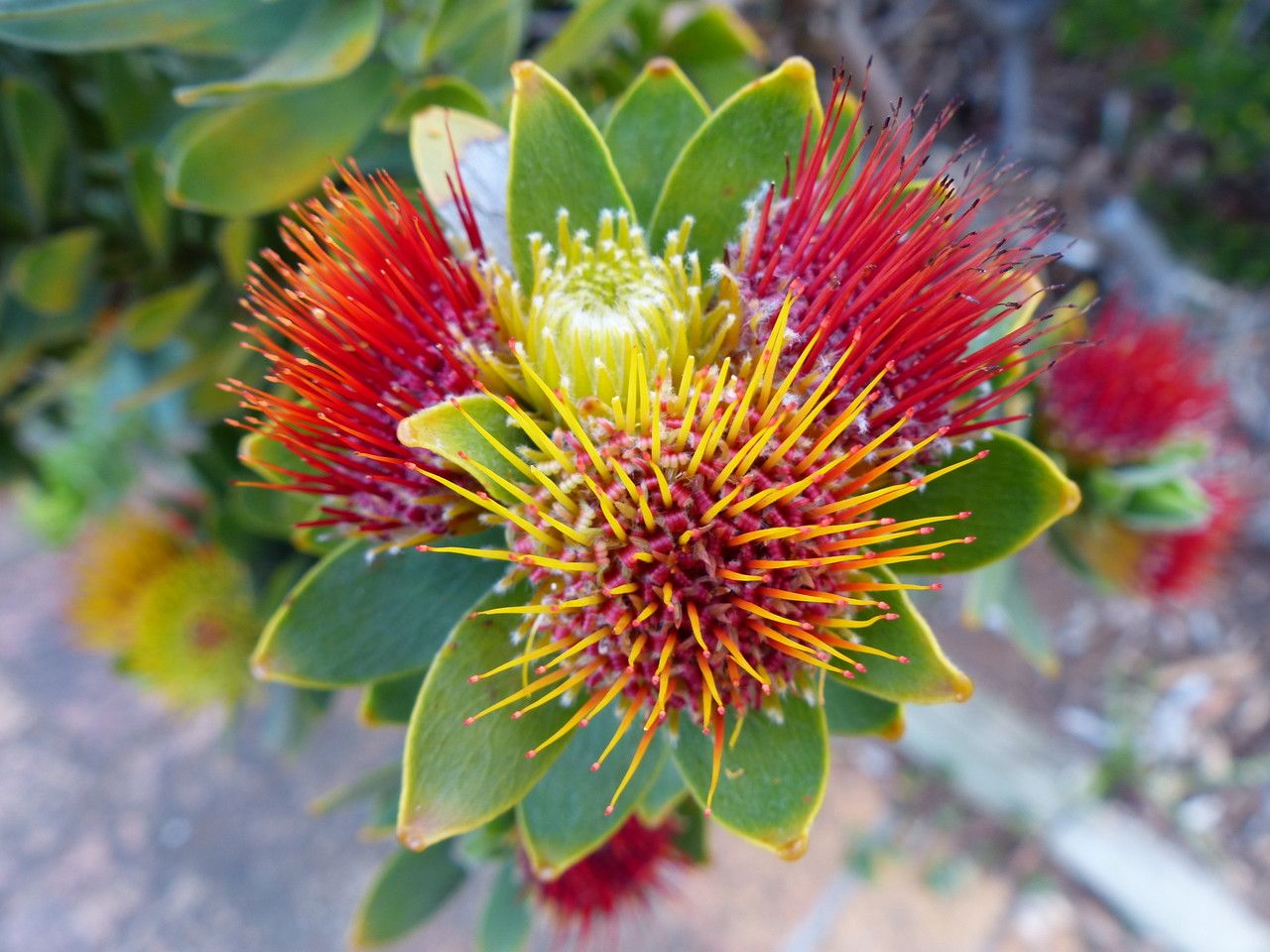
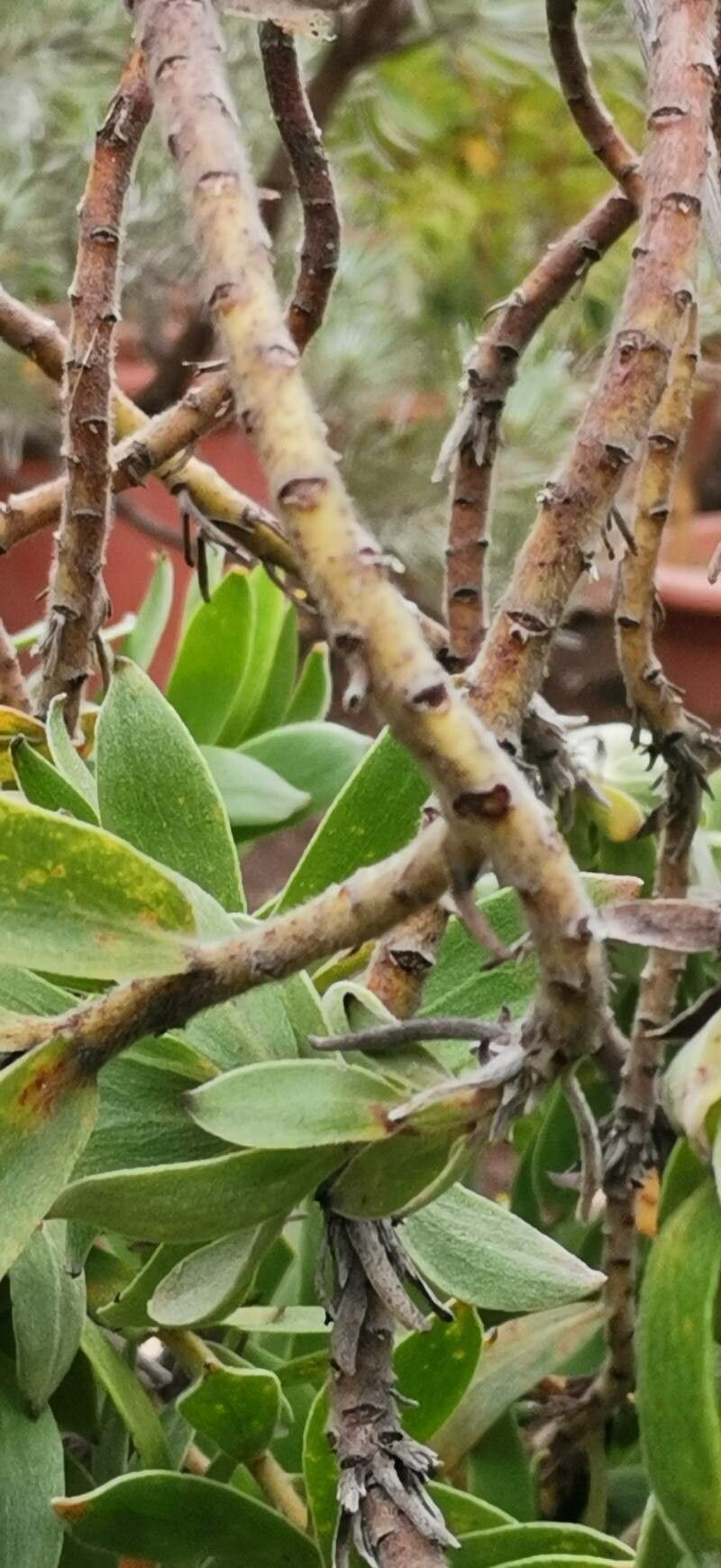
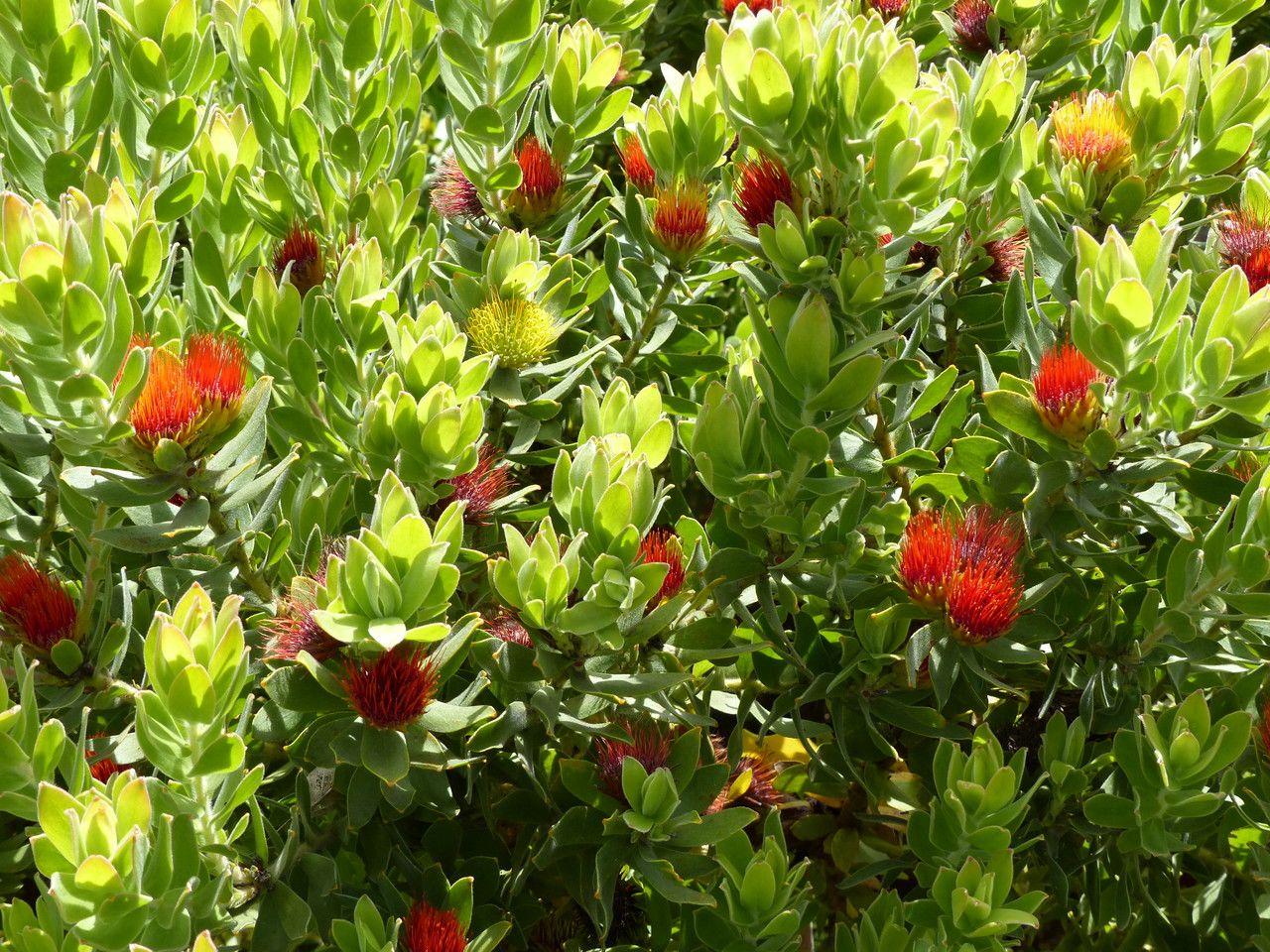
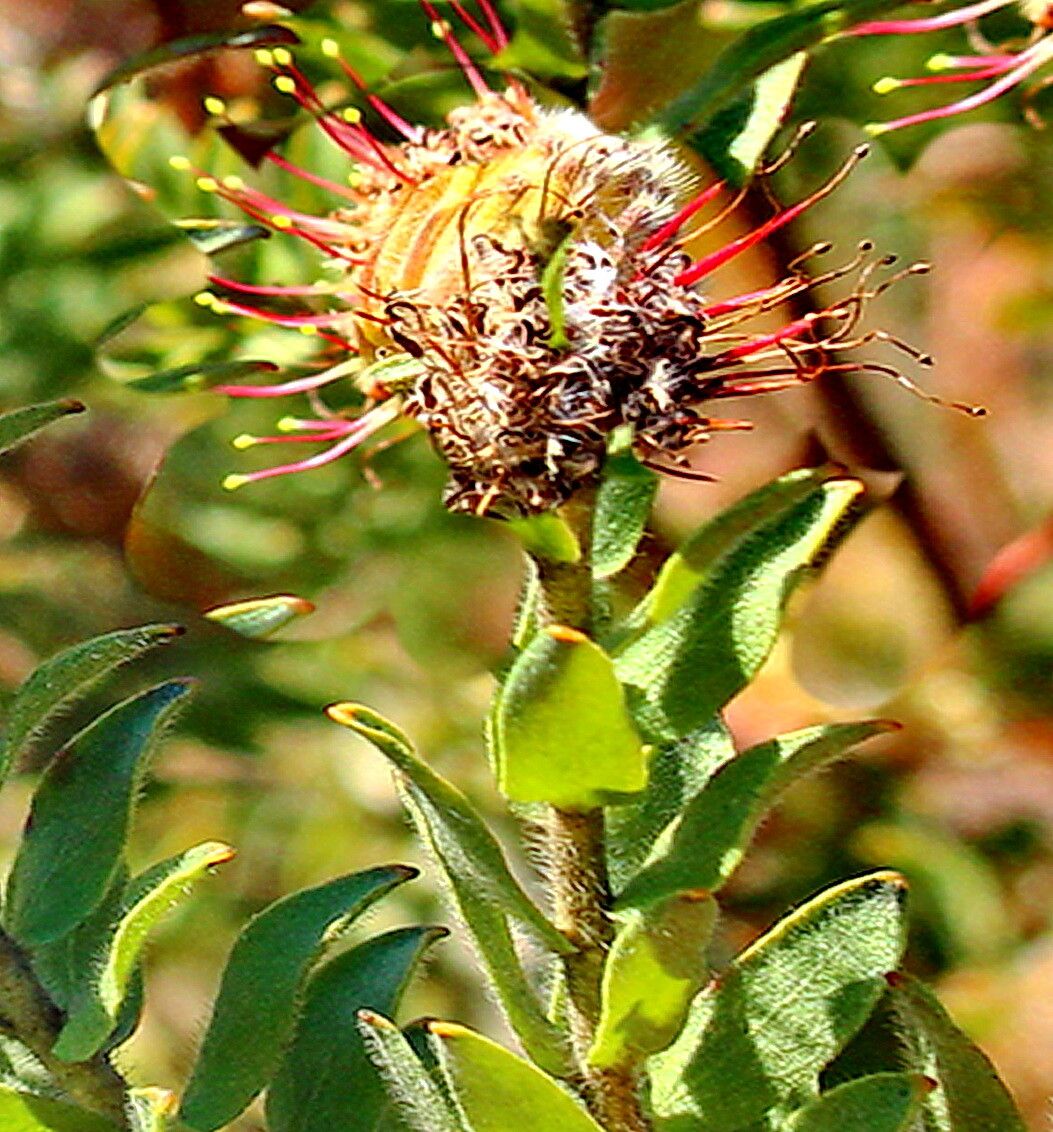
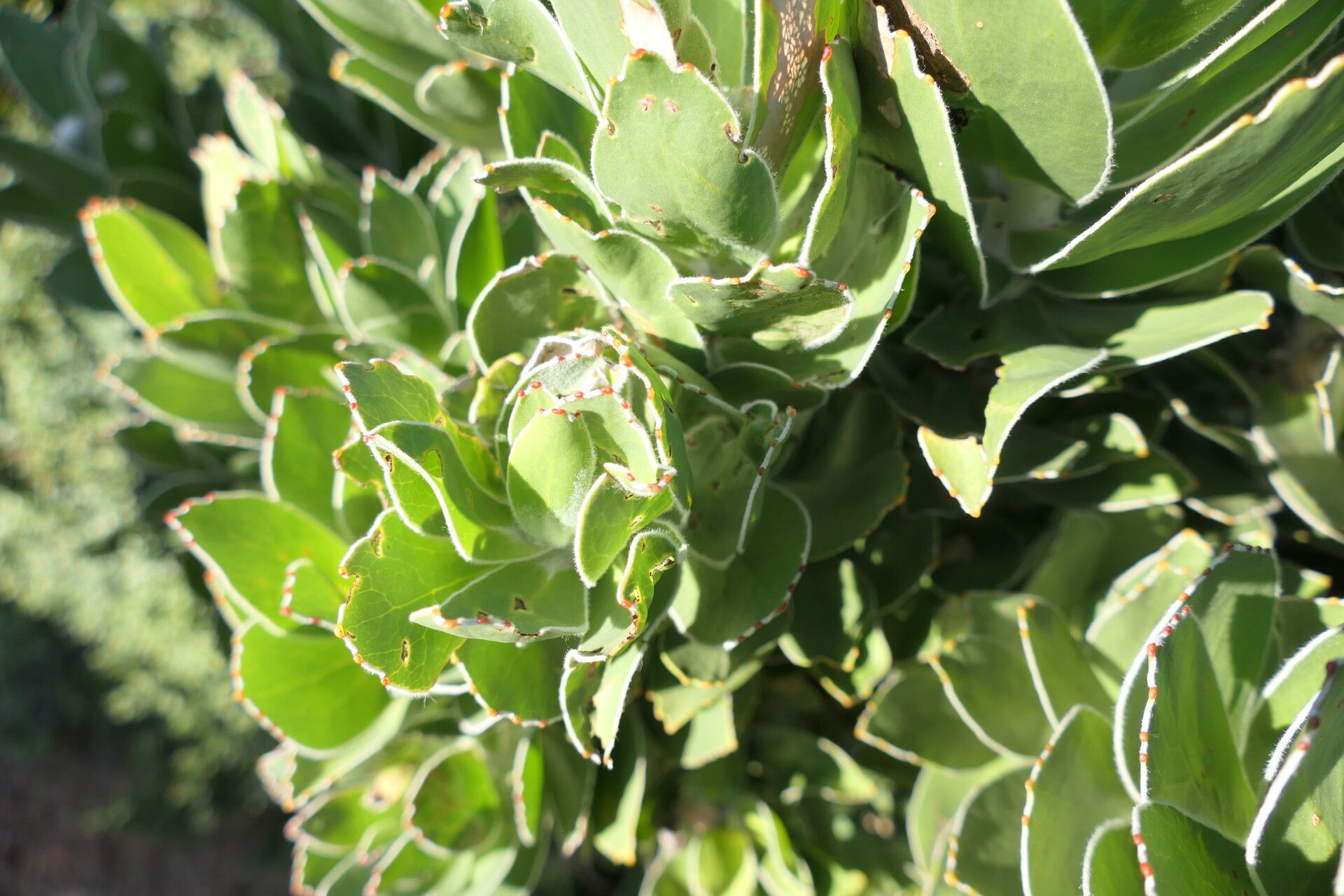
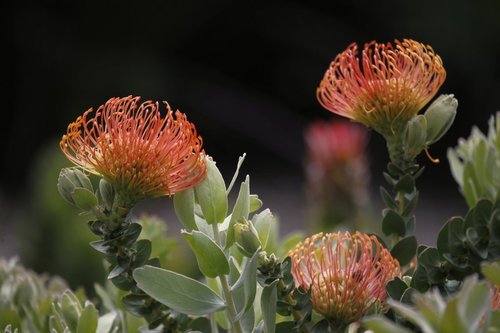
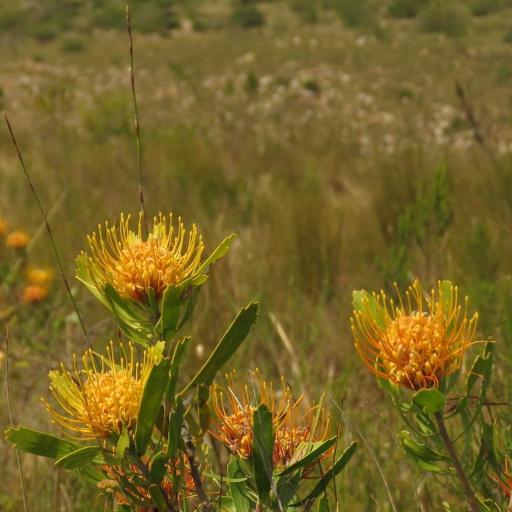
Leucospermum oleifolium is an erect shrub of about 1 m (3.3 ft) high and 1½ m (5 ft) across that is assigned to the family Proteaceae. It has spreading branches, densely set with initially felty, entire, oval, olive-colored leaves of about 3½ cm long and 1½ cm (0.6 in) wide, with a bony tip that sometimes has two to five blunt teeth, with a blunt base and conspicuous veins. The flowers and their long thread-like styles are initially sulfur yellow, but soon become orange and finally turn brilliant crimson. The flower heads are about 4 cm (1.6 in) in diameter, crowded at the tip of the branches with a maximum of five that start flowering in turn. This provides for a colour spectacle from August till December. It is called by various names in South Africa such as Overberg pincushion, flame pincushion, mix pincushion and tuft pincushion. It naturally occurs in fynbos in the Western Cape province of South Africa.
Mix pincushion shows good resistance to disease and is generally not susceptible to illnesses. Regarding care, this plant is fairly low maintenance. When grown outdoors it needs minimal watering, and larger plants usually do not require pruning. Smaller plants, however, should be pruned after they have bloomed. Mix pincushion is suitable for anyone with an outdoor area, such as a garden or deck, and does not need much experience in plant care.
How to keep Leucospermum Oleifolium.
Light
Mix pincushion is native to open habitats, like sunny meadows and forest edges, which offer abundant light. It does best in Full Sun but can also tolerate Partial Sun, adapting well to various sunlight conditions.
Water
Once established, the mix pincushion plant is drought-tolerant. However, it requires immediate watering after planting and regular watering during the first two years. If the soil is loamy, water the plant 2-3 times per week. In dry conditions, sandy soils or potted plants need daily watering. Always water at the base of the plant to prevent diseases.
Temperature
Mix pincushion displays strong adaptability to temperature, capable of withstanding higher heat and broader temperature fluctuations. In hot conditions, attention should be paid to watering and providing appropriate shade to prevent sunburn. Conversely, Mix pincushion has fairly poor cold tolerance. While it can endure a certain amount of chill, excessively cold conditions can result in frost damage.
Fertilizer
To encourage healthy growth, apply fertilizer to your Mix pincushion in early spring. Regular feeding boosts overall health, leading to vigorous growth, greater tolerance of harsh conditions, and increased resistance to pests and diseases. Follow a consistent fertilization schedule for your Mix pincushion to keep the foliage bright, deeply colored, and lush in appearance.
Pruning
The mix pincushion is an evergreen shrub recognized for its vibrant, pincushion-like flowers. To maintain its health and encourage growth, it's best to prune this shrub in early spring. Focus on removing any dead branches, which will enhance air circulation and increase light exposure to the plant. Be cautious not to prune too heavily, as this can reduce the number of blooms. Consistent, careful pruning will result in a healthier and more floriferous plant.
Botanical profile.
- Plant Type
- Shrub
- Life Cycle
- Perennial
- Genus
- Leucospermum
- Family
- Proteaceae
- Hardiness Zone
- 9-11
- Mature Height
- 91 cm
- Mature Spread
- 1.52 m
- Leaf Color
- Gray, Dark Gray
- Leaf Type
- Evergreen
- Flower Color
- Orange, Yellow
- Flower Size
- 7.62 cm to 10.16 cm
- Bloom Time
- Fall
- Planting Time
- Summer, Winter
- Harvest Time
- Winter
- Native Area
- South Africa
Other names.