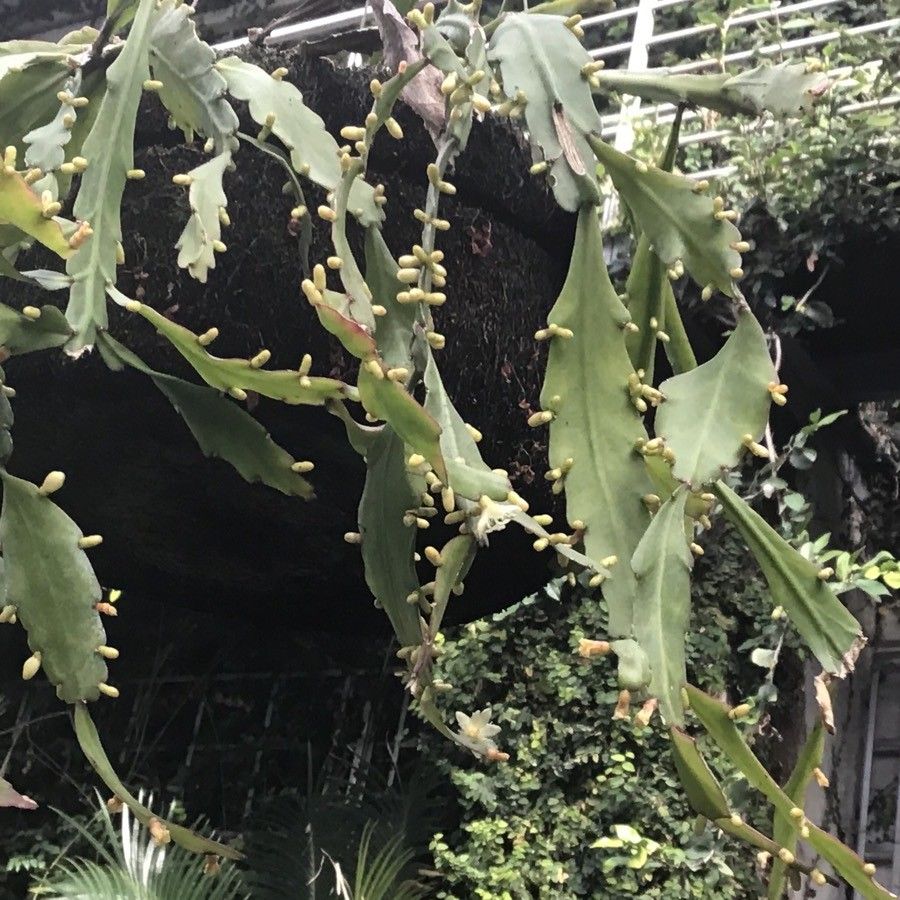
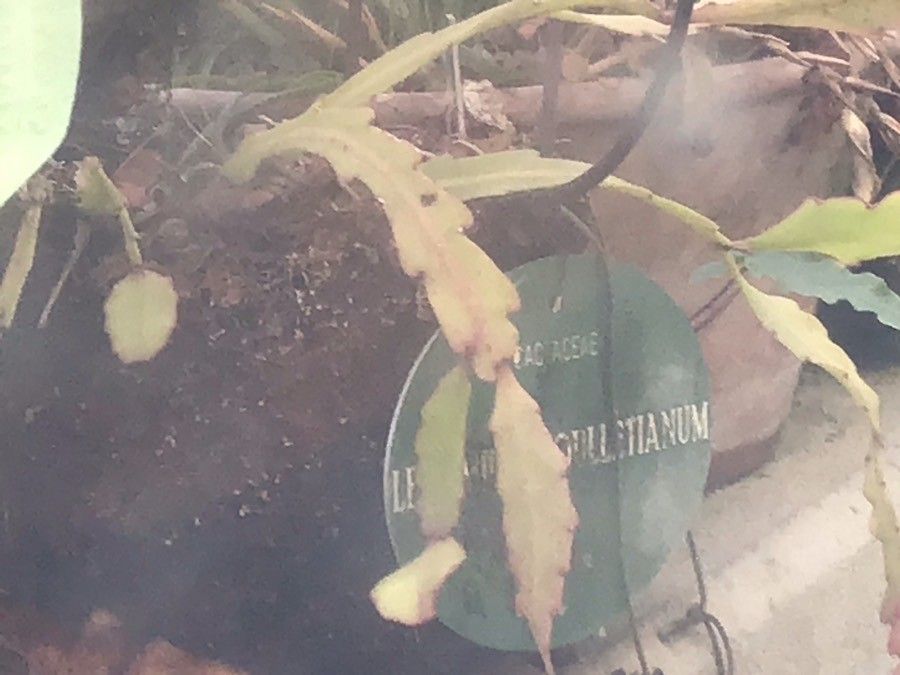
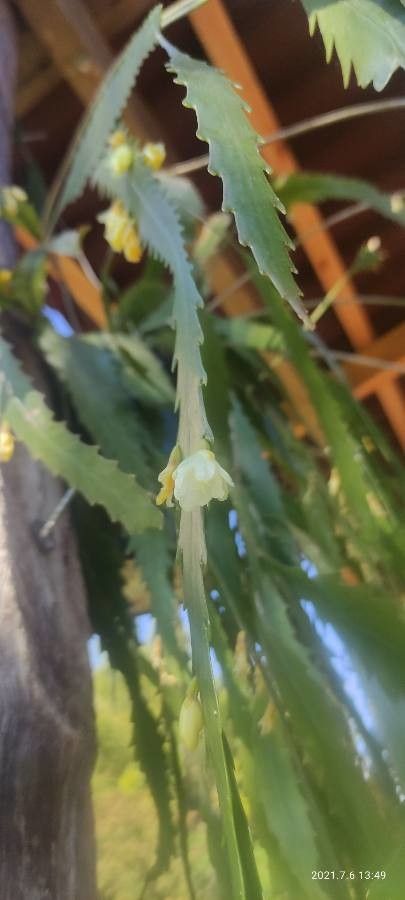
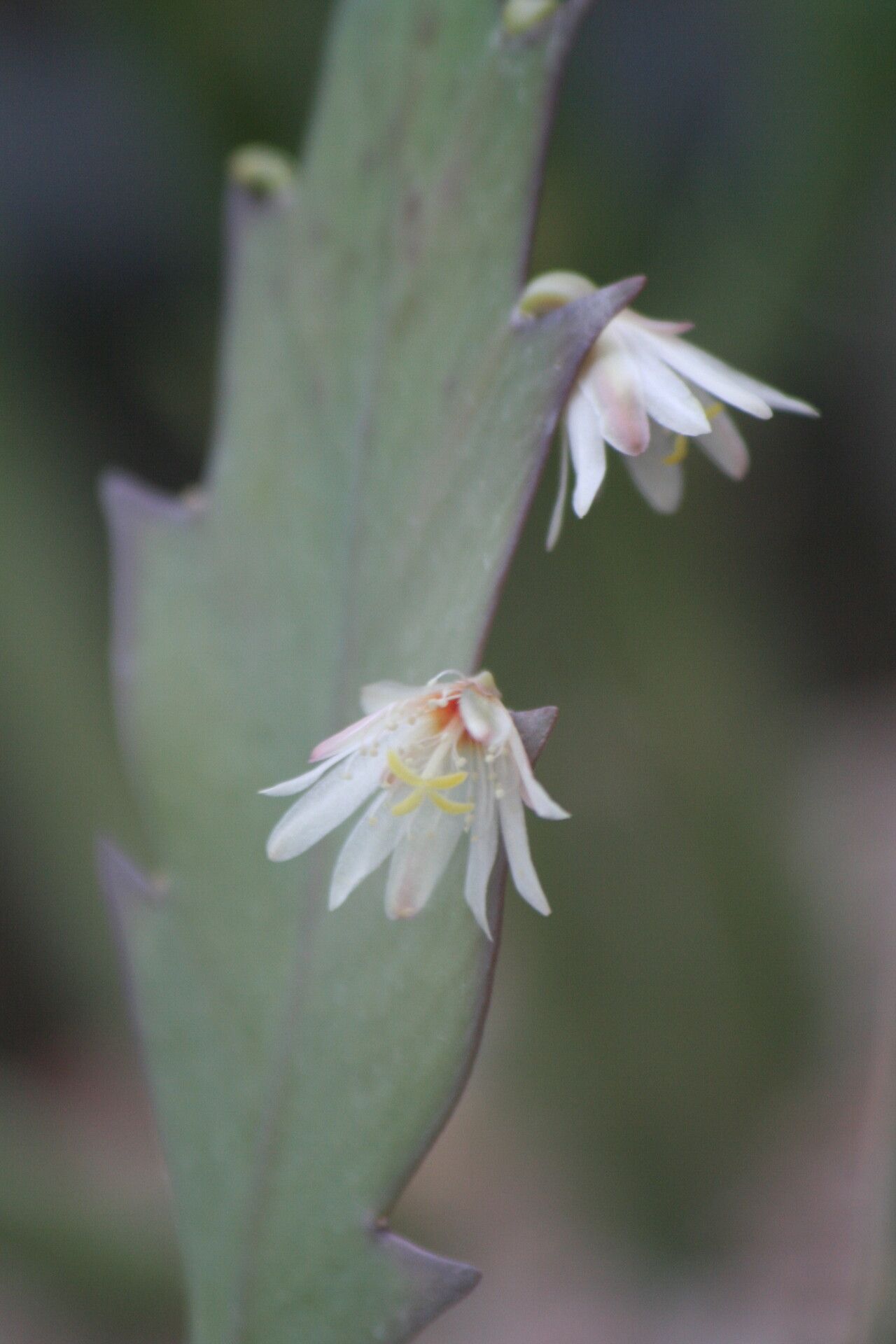
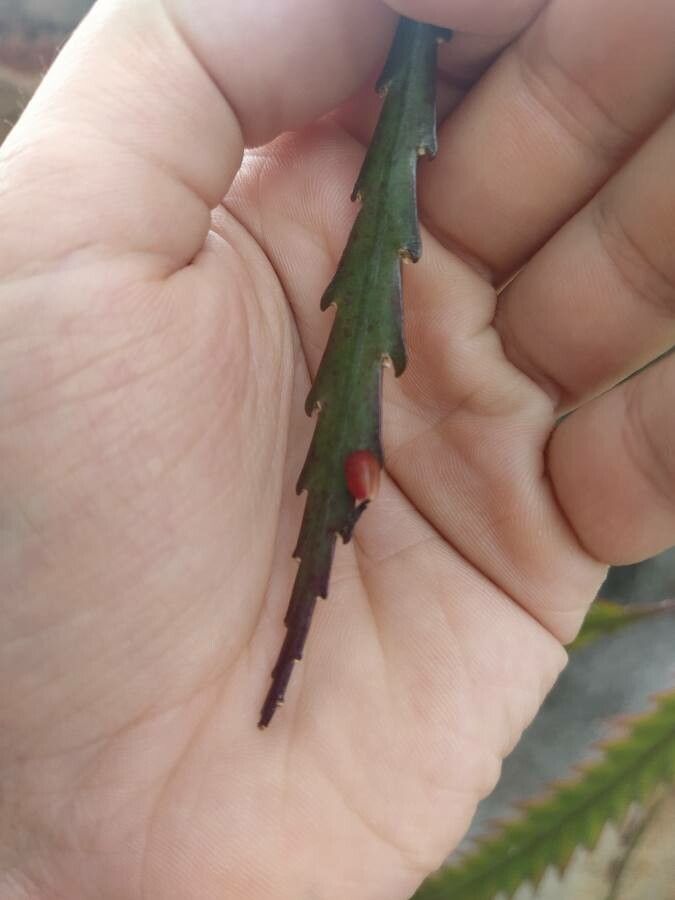
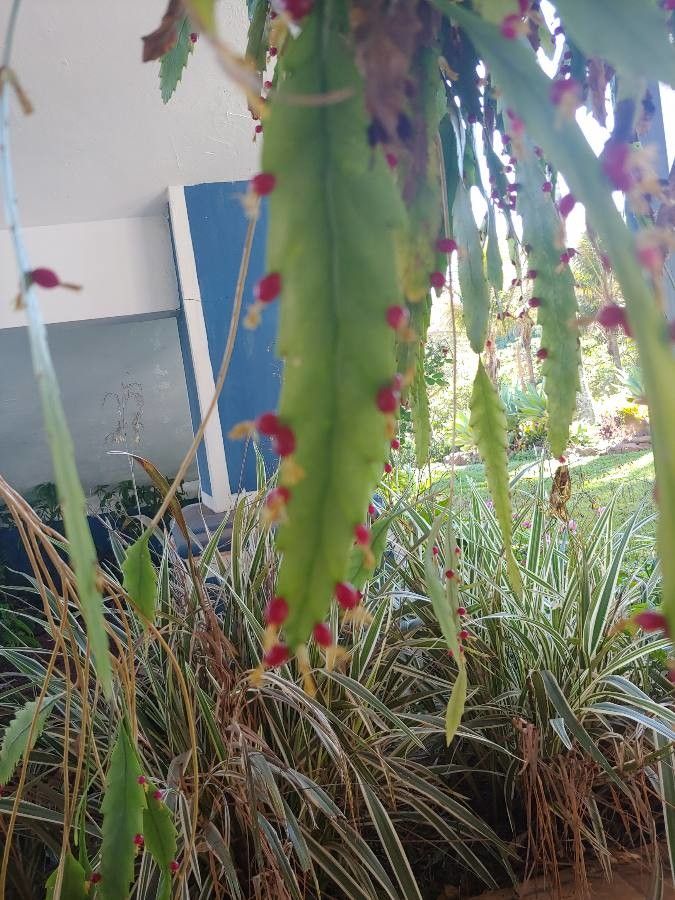
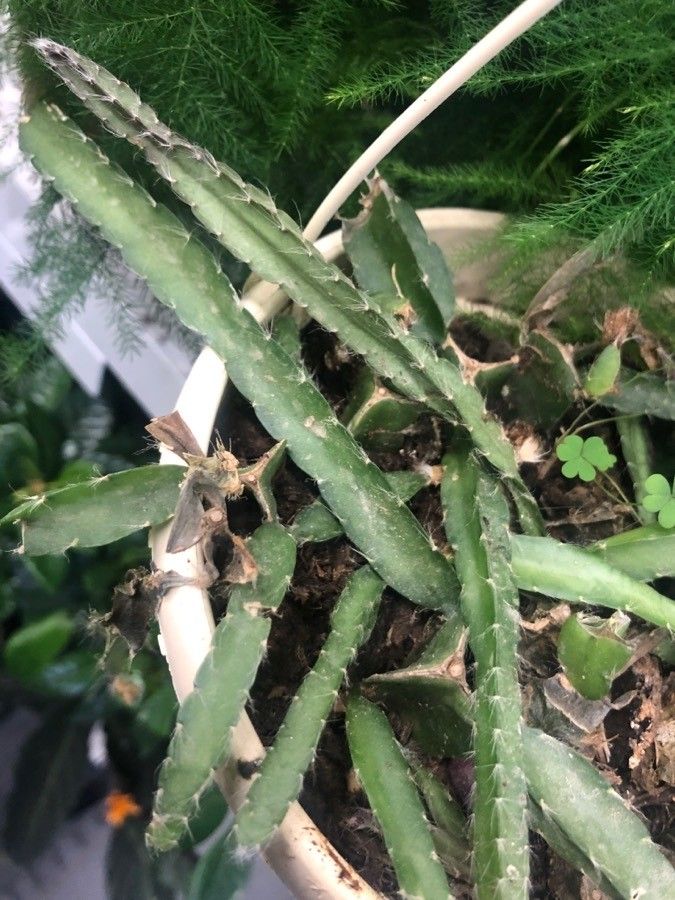
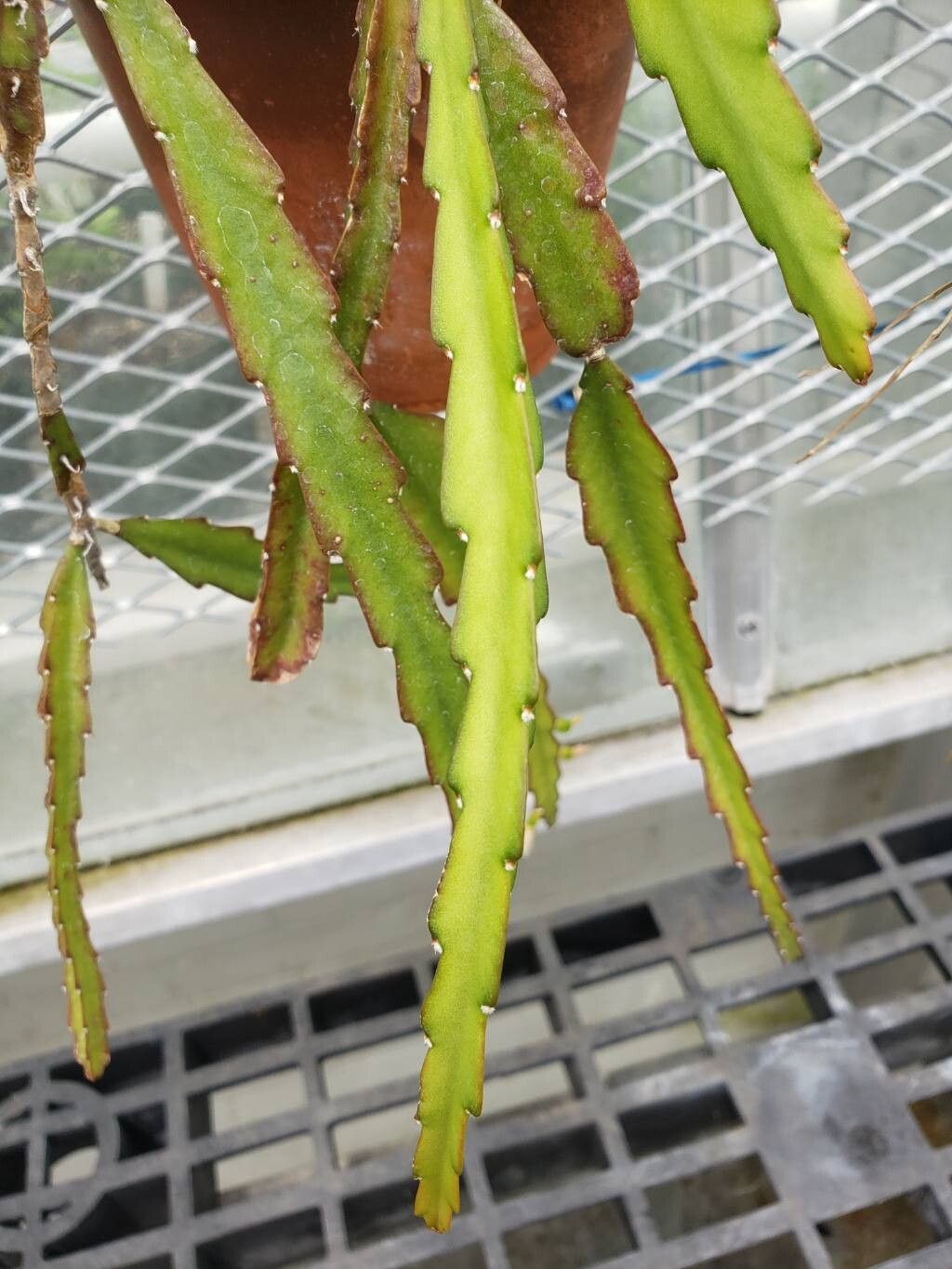
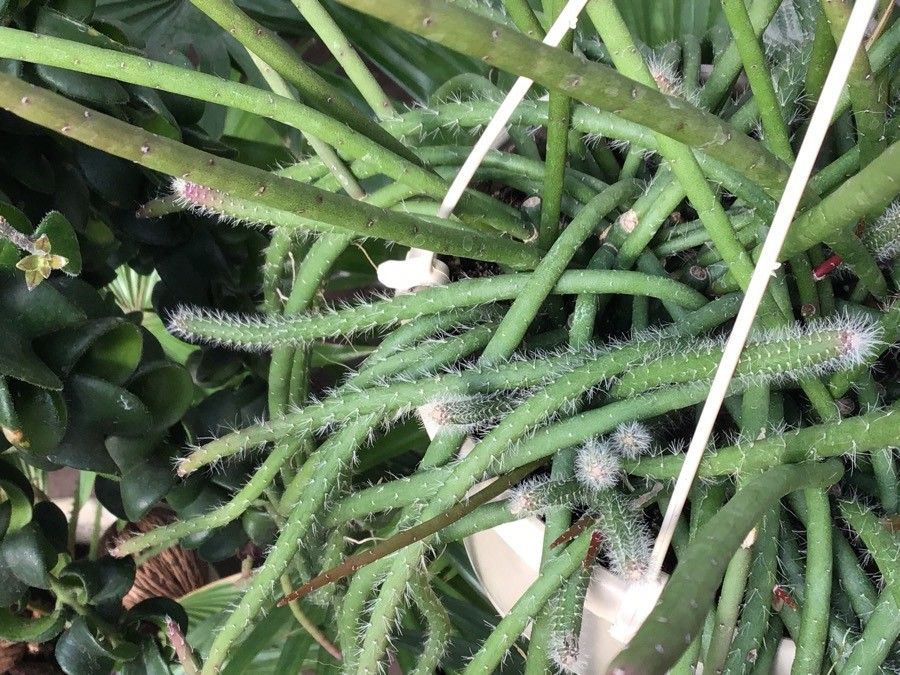
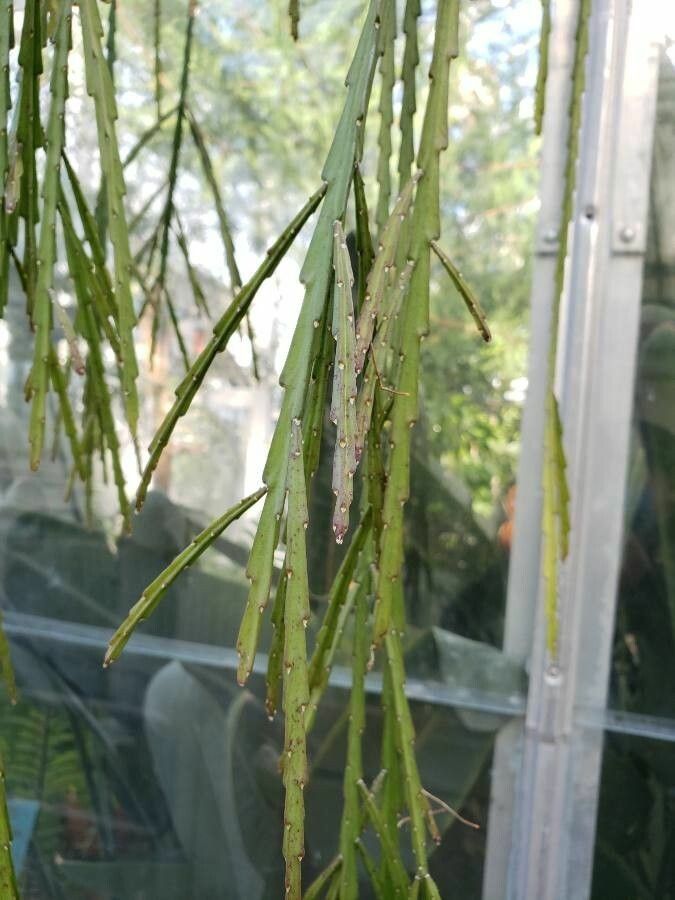
Lepismium houlletianum is a species of plant in the family Cactaceae. It is found in Argentina, Brazil, and possibly Bolivia. Its natural habitats are subtropical or tropical moist lowland forest and subtropical or tropical moist montane forest. It is threatened by habitat loss.
The Snowdrop cactus is fairly disease-resistant and generally remains healthy under normal care without becoming ill easily. It can, however, be vulnerable to mealybugs; these pests may cause some damage but usually are not a major problem. Regarding care, the Snowdrop cactus tolerates drought and does not require frequent watering. It can endure long stretches without water and needs little fertilizer. Still, it is very prone to root rot if kept in poor lighting and given too much water. In summary, the Snowdrop cactus is a good choice for people who prefer spending less time on plant care, but its basic needs should still be met. It is especially suitable for those who are often away for long periods and might forget to water regularly.
How to keep Lepismium Houlletianum.
Light
The snowdrop cactus is native to habitats with dappled light, such as forest understories or rocky locations that offer natural shade. It prefers partial sun but can also tolerate full sun.
Water
The Snowdrop cactus thrives in a humid, tropical environment with consistent moisture, demonstrating moderate tolerance to drought. To keep it healthy, water the cactus every three weeks. As an epiphyte, it benefits from higher humidity levels, making it well-suited for terrariums or bathrooms where moisture is plentiful.
Temperature
Snowdrop cactus prospers in warm conditions and requires relatively high temperatures during the growing season to encourage growth and metabolic activity. It prefers plenty of sunlight, appropriate moisture, and good airflow. However, it is vulnerable to damage from very low temperatures and from overwatering. It is important to maintain a balance and also avoid temperatures that are too high or conditions that are too dry.
Fertilizer
For the Snowdrop cactus, light applications of fertilizer once or twice a year during the growing season are adequate. Do not fertilize in winter or summer when the plant is dormant. Use less fertilizer on repotted plants and wait a couple of months after repotting before fertilizing. Fertilizing helps maintain healthy growth and encourages blooming.
Pruning
The snowdrop cactus requires minimal pruning. However, it is important to remove any withered flowers and branches. This helps direct nutrients to the healthy parts of the plant, promoting overall vitality.
Pot & Repot
Repot Snowdrop cactus during spring or summer, choosing a pot slightly larger than the current one that offers good drainage. Use a sandy or gritty cactus mix that drains well. Handle the plant carefully to avoid its spines. Allow the cactus to dry out before repotting to help prevent root rot. After repotting, wait about a week before watering so the roots can heal.
Botanical profile.
- Plant Type
- Succulent
- Life Cycle
- Perennial
- Genus
- Lepismium
- Family
- Cactaceae
- Hardiness Zone
- 10-12
- Mature Height
- 30 cm to 61 cm
- Mature Spread
- 30 cm to 49 cm
- Leaf Color
- Green, Dark Green
- Leaf Type
- Evergreen
- Flower Color
- White
- Flower Size
- 2.03 cm to 3.05 cm
- Bloom Time
- Mid spring, Late spring, Early summer
- Planting Time
- Summer, Autumn
- Harvest Time
- Summer
Other names.