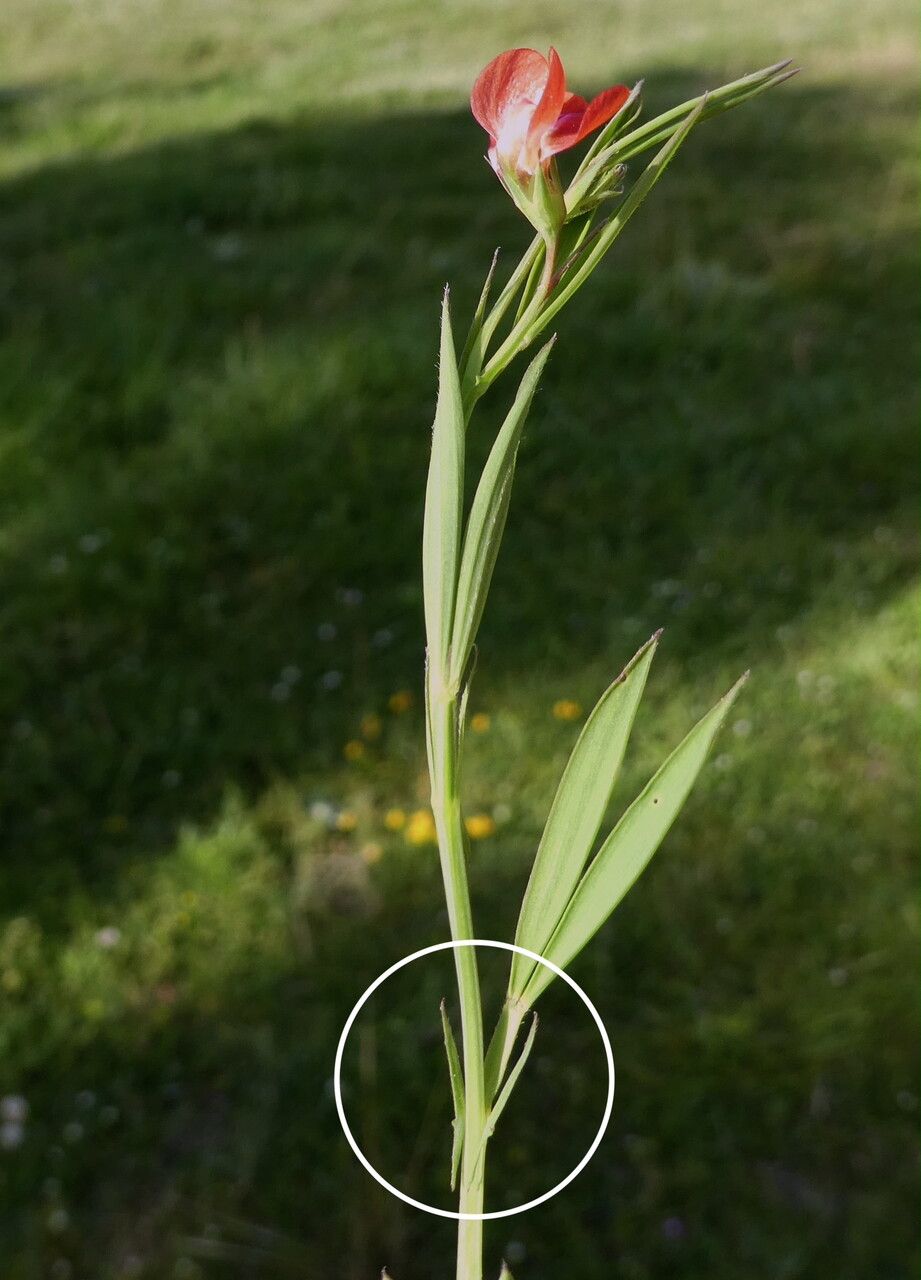
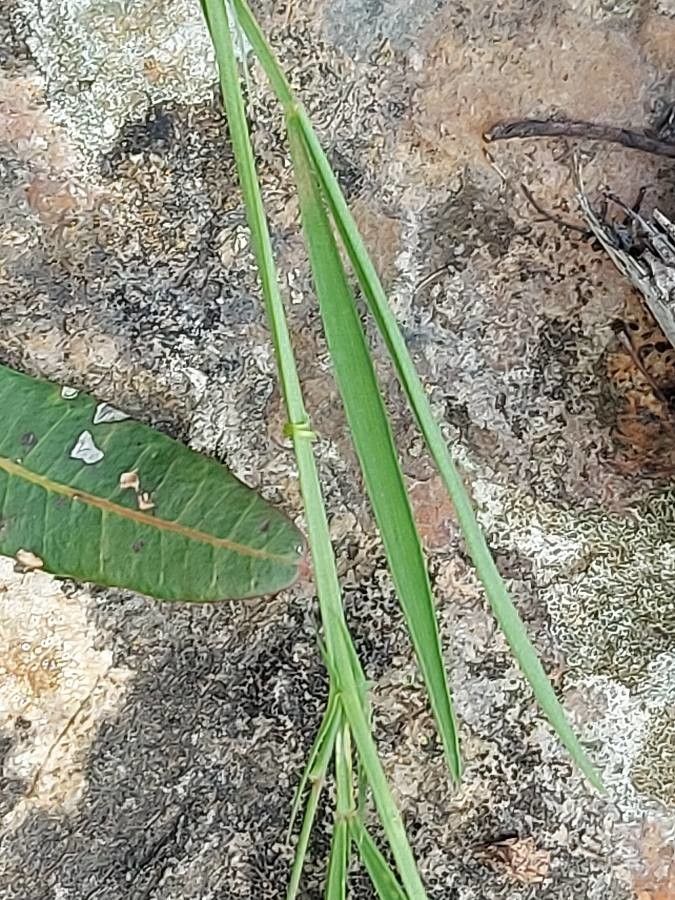
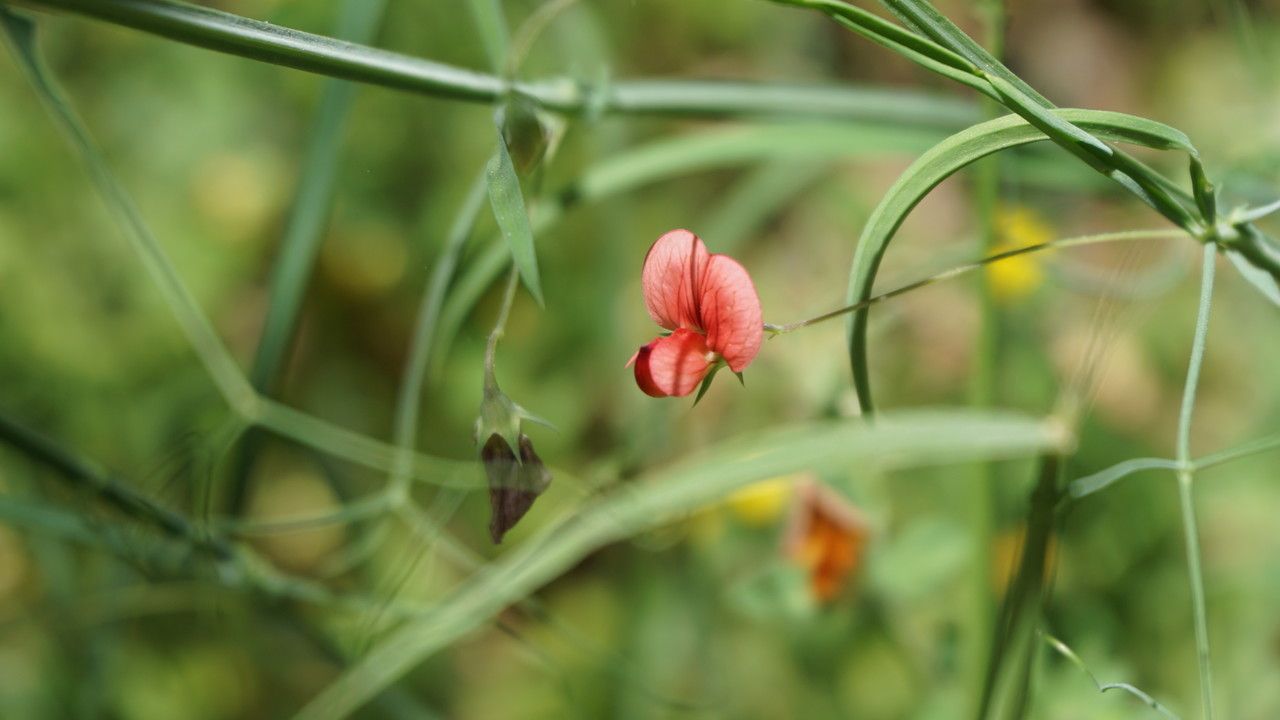
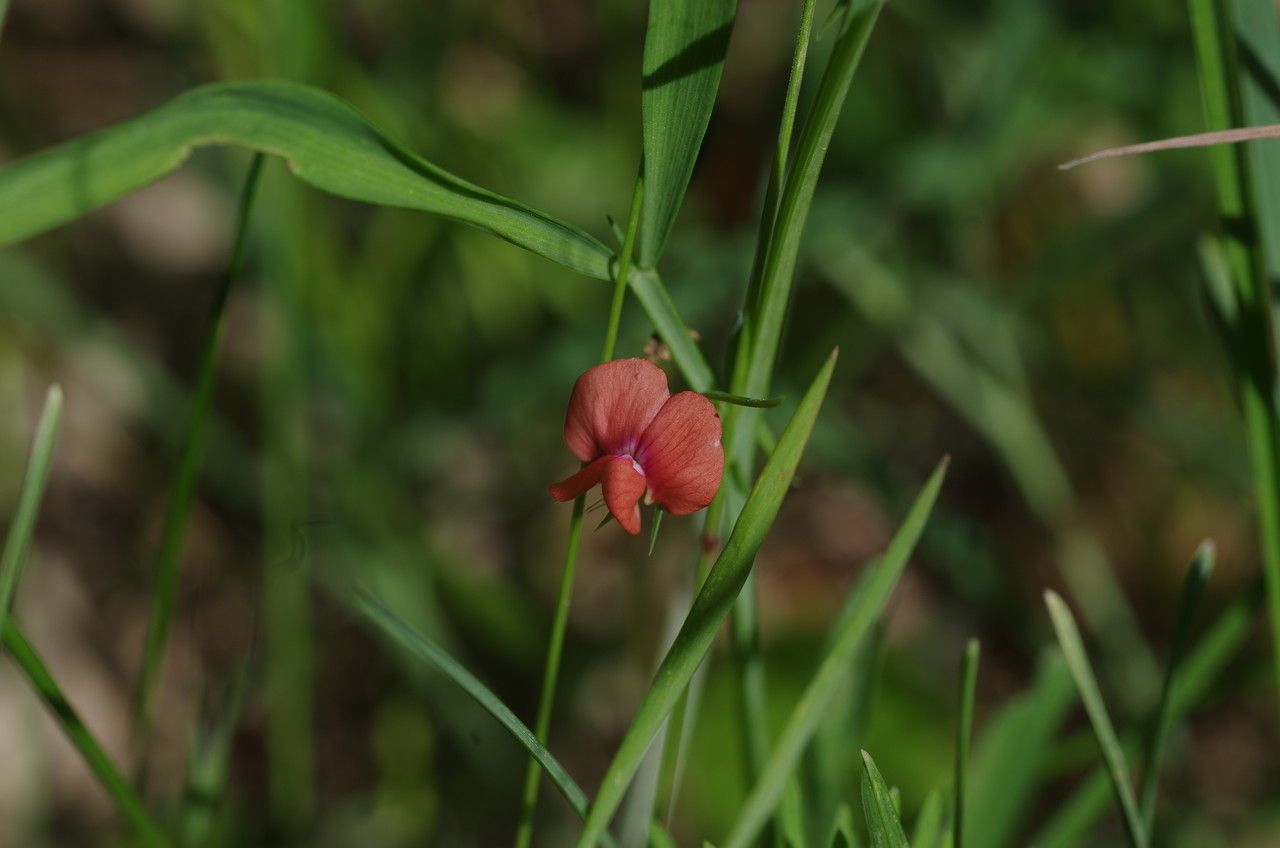
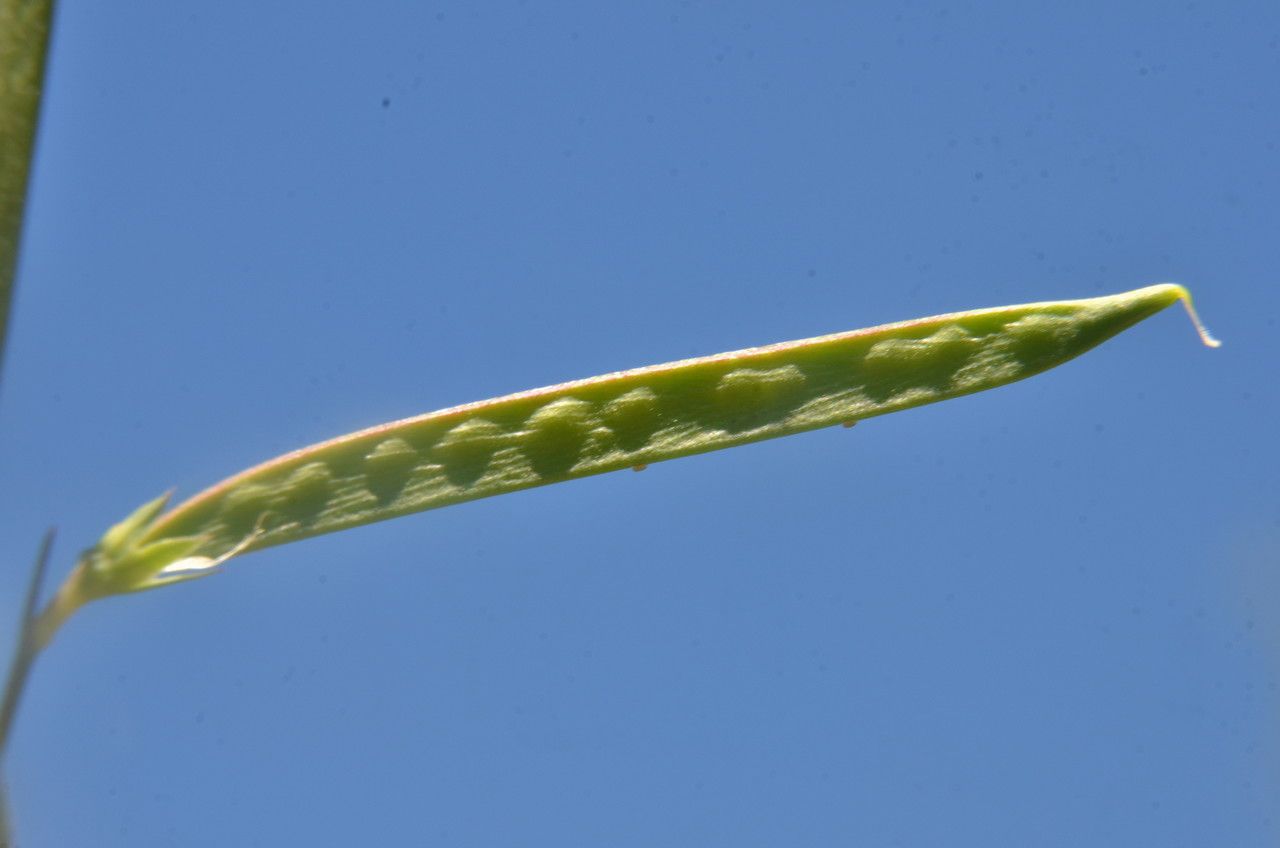
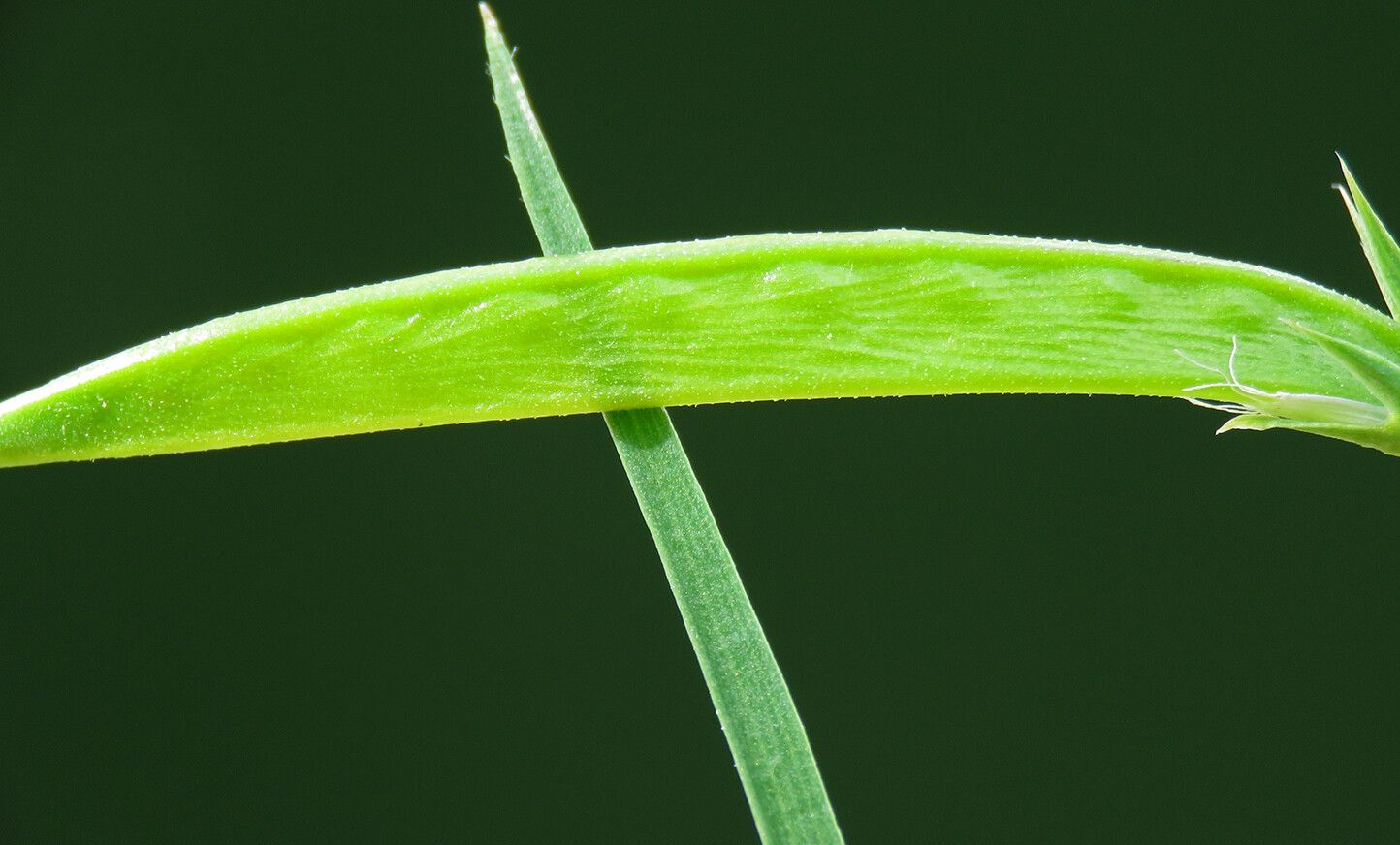
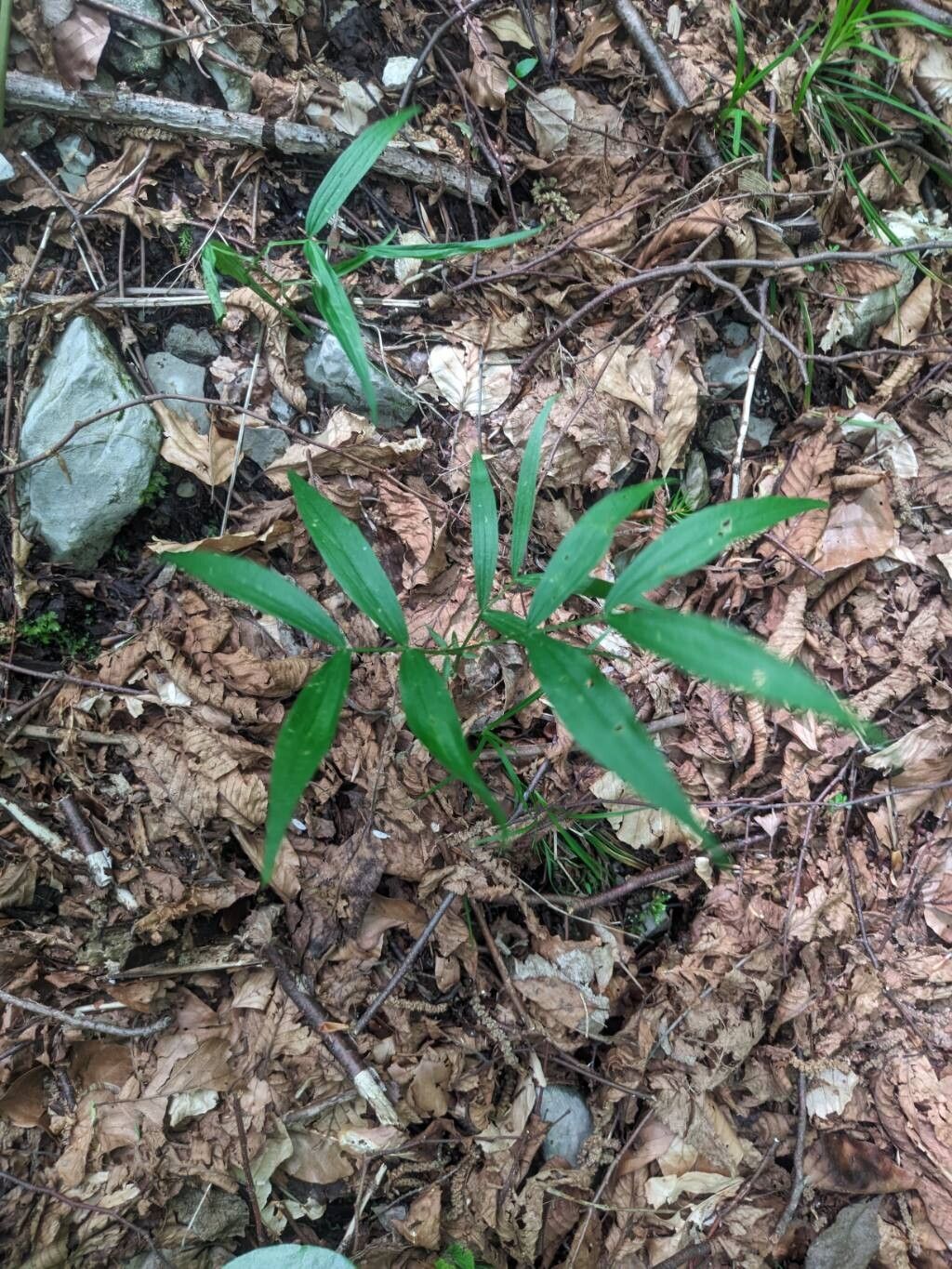
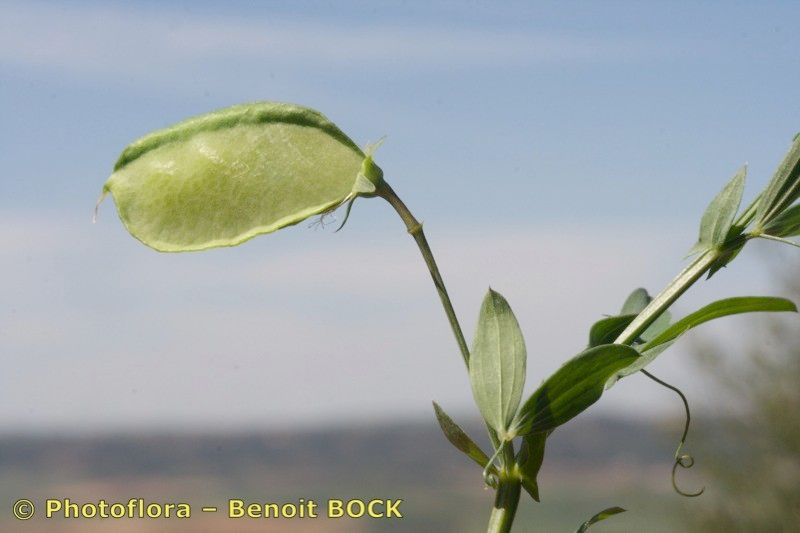
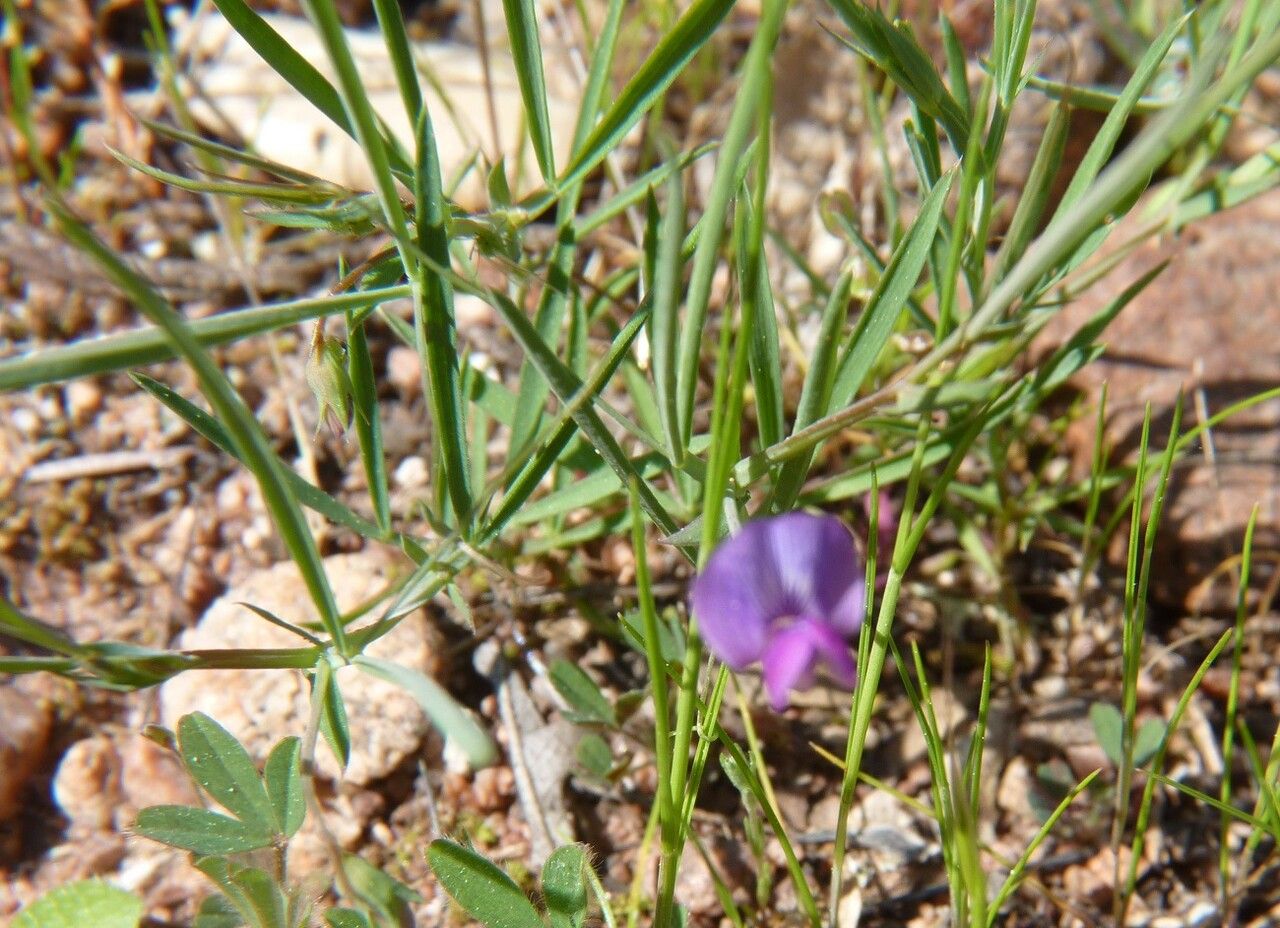
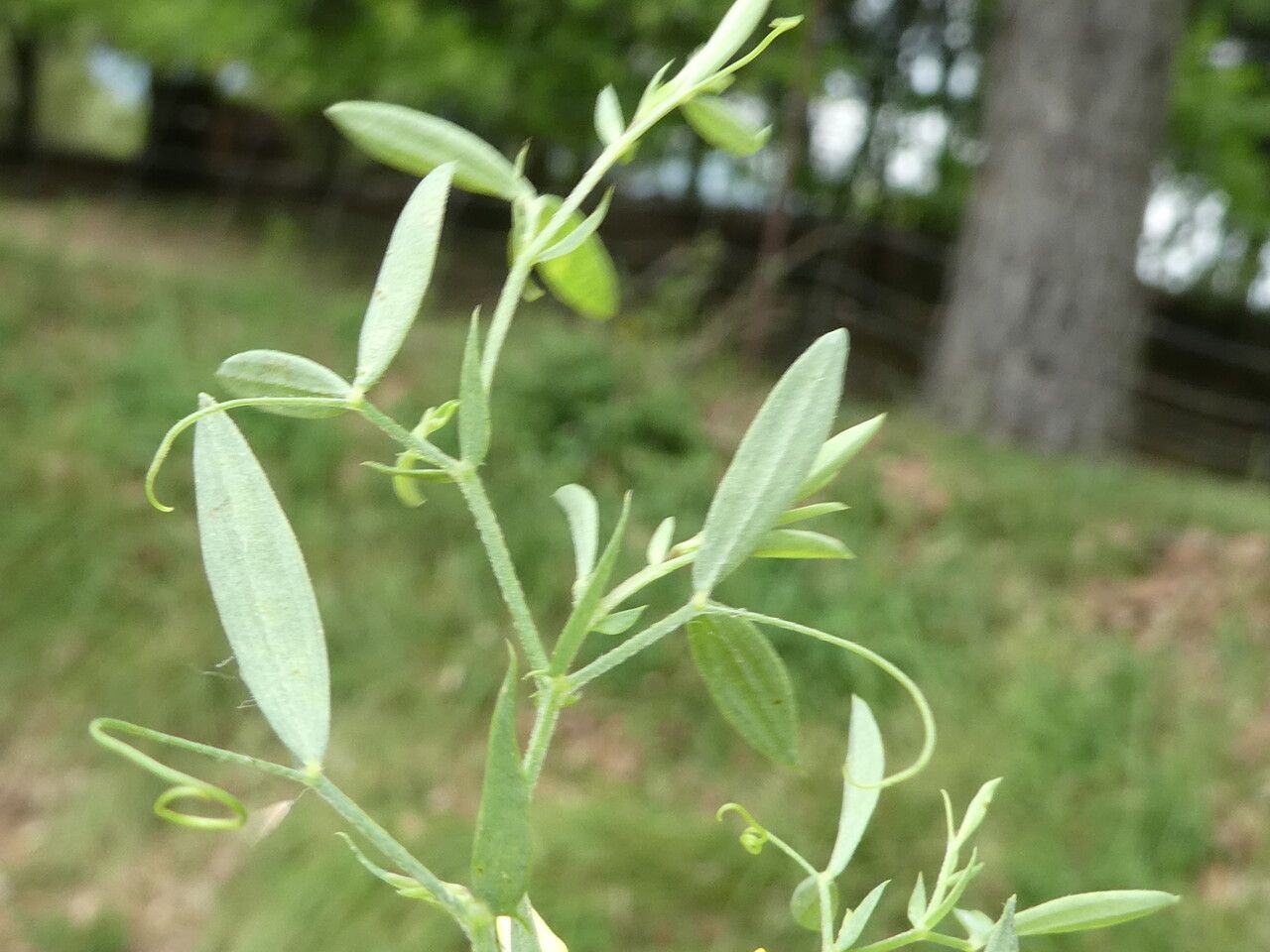
Lathyrus sphaericus is a species of wild pea known by the common names grass pea and round-seeded vetchling. It is native to Eurasia and much of Africa, and it is known on other continents as an introduced species. It can grow in many types of habitat, including disturbed areas. This is an annual herb producing a slender stem and bearing leaves each made up of two long, narrow, grasslike leaflets up to 6 centimeters long and a coiling, climbing tendril. The inflorescence is made up of one pea flower on a stalk one or two centimeters long ending a in a bristle. The flower is roughly a centimeter long and deep orange-red or dull red in color. The fruit is a hairless legume pod marked with longitudinal stripes.
Grass pea is fairly resistant to disease and typically not prone to illness. Still, it can be affected by pests and diseases present in its environment. Such infections are generally mild. Regarding care, this plant needs moderate maintenance. It should be pruned regularly to keep a tidy appearance and support healthy growth. Applying fertilizer can also help encourage flowering. Grass pea is appropriate for anyone with an outdoor area, like a garden or patio, and does not demand extensive care experience. It may need more attention if grown indoors.
How to keep Lathyrus Sphaericus.
Light
The grass pea does best when it gets sunlight for most of the day, a condition it prefers because of the climates of its native range. It can also tolerate periods of milder sun for healthy growth. Too little sun can stunt its development, while too much can be harmful.
Water
Grass pea thrives in consistently moist conditions, making moderate hydration and evenly moist soil essential for its growth. To prevent issues such as drought or waterlogging, weekly watering is crucial. This plant is mostly cultivated outdoors, where it benefits from natural rainfall. By aligning its growth cycle with seasonal precipitation, grass pea makes optimal use of available water resources.
Temperature
Grass pea can tolerate a wide range of temperatures, but its range may still be restricted by different combinations of moisture and heat. It grows best in warm summer conditions with sufficient rainfall or irrigation. Extended periods of overcast, rainy weather, as well as prolonged high temperatures, can raise the chance of Grass pea dying. In winter, protecting the plant from cold can boost its survival rate.
Fertilizer
Grass pea responds well to regular, dilute fertilizer applications to encourage healthy leaf development. Fertilize Grass pea about once a month during the summer. Nitrogen is important for foliage, and adding nitrogen-rich sources helps Grass pea thrive.
Pruning
Grass pea benefits from selective pruning, which involves removing dead stems and thinning out crowded shoots to improve air circulation. Prune from early to late spring to enhance blooming and reduce the risk of disease. Use clean, sharp tools to promote vigorous regrowth and maintain a tidy appearance.
Botanical profile.
- Plant Type
- Herb, Vine
- Life Cycle
- Annual
- Genus
- Lathyrus
- Family
- Fabaceae
- Hardiness Zone
- 6-9
- Mature Height
- 2.13 m to 3.05 m
- Mature Spread
- 15 cm to 30 cm
- Leaf Color
- Green, Blue
- Leaf Type
- Deciduous
- Flower Color
- Red
- Flower Size
- 1.02 cm
- Bloom Time
- Mid spring, Late spring, Early summer
- Planting Time
- Spring, Summer, Autumn, Winter
- Harvest Time
- Summer
- Native Area
- Egypt, Turkey, Sweden, India, Slovakia, Montenegro, Pakistan, Slovenia, Morocco, Croatia, Kenya, Uganda, Tanzania, Russia, Iraq, Ethiopia, Romania, Portugal, Nepal, France, Tajikistan, Tunisia, Cyprus, Bulgaria, Armenia, Greece, Lebanon, Serbia, Syria, Italy, Spain, Switzerland, Denmark, Iran, Albania, Azerbaijan, Algeria, Hungary, Congo (DRC), Turkmenistan
Other names.
Reader questions.
What are the sunlight requirements for Grass Pea?
Grass Pea requires a significant amount of sunlight to thrive, preferring exposure to most of the day's sun from its native habitats. For optimal growth, it can adapt to varying levels of sunlight, including full sun (above 6 hours of sunlight) and partial sun (about 3-6 hours of sunlight). It's vital to monitor the sunlight in your garden, aiming for a balance of light and shade to ensure the health and happiness of your plants. Inadequate sunlight can stunt the plant's growth, while too much sunlight can be harmful.
What is the botanical name of Grass pea?
The botanical name of Grass pea is Lathyrus sphaericus.
How can artificial lighting be used for Grass Pea indoor growth?
When natural sunlight is insufficient, especially during winter or in less sunny indoor spaces, artificial lighting becomes crucial for the optimal growth of indoor plants like Grass Pea. LED lights are recommended for their ability to mimic the specific wavelengths of light needed by plants. Full sun plants require 30-50W/sq ft, partial sun plants need 20-30W/sq ft, and full shade plants need 10-20W/sq ft of artificial light. The light source should be placed 12-36 inches above the plant and turned on for 8-12 hours per day to mimic natural daylight hours, promoting faster and healthier growth.
What are the symptoms of insufficient or excessive light exposure in Grass Pea?
Grass Pea exhibits various symptoms in response to insufficient light, including smaller new leaves, leggy or sparse growth, quicker leaf drop, delayed or halted growth, paler new leaves, and symptoms of overexposure such as chlorosis, sunscald, leaf curling, wilting, and leaf scorching. These symptoms indicate the plant's struggle with adapting to the available light conditions, necessitating adjustments to ensure proper light exposure for health and growth.
What are the solutions for Grass Pea struggling with light exposure?
To support Grass Pea in either indoor or outdoor settings, gradually increase sunlight exposure to at least 6 hours daily for those indoors, using a south-facing window or providing additional artificial light as needed. For outdoor plants, slowly move them to sunnier locations weekly, avoiding sudden changes that could lead to sunburn. Minimize obstructions to sunlight by pruning or transplanting plants to brighter locations with ample sunlight and good drainage. While parts of the plant affected by insufficient sunlight may not recover, new growth should flourish under improved light conditions.