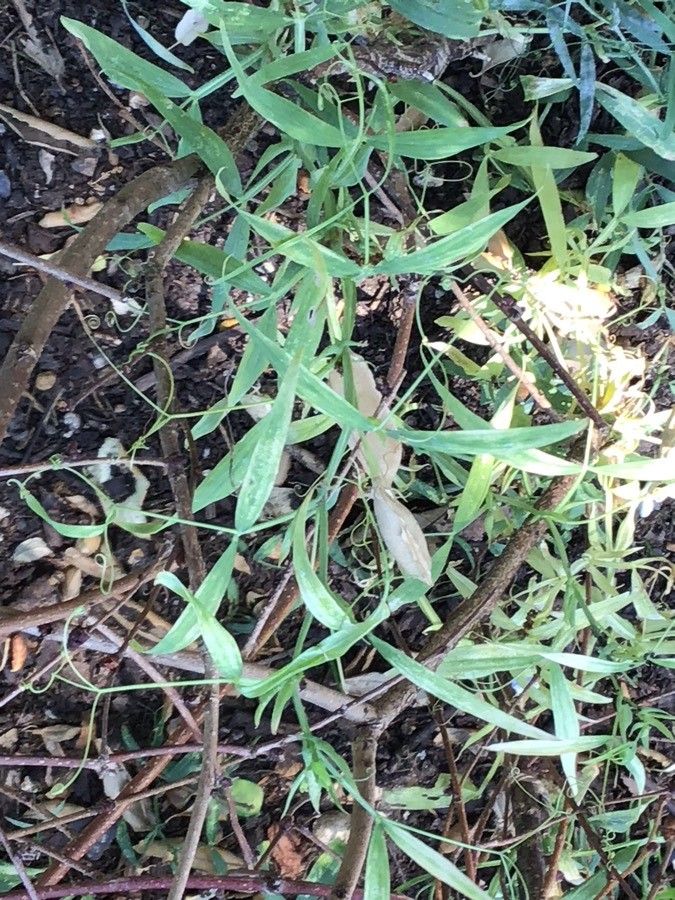
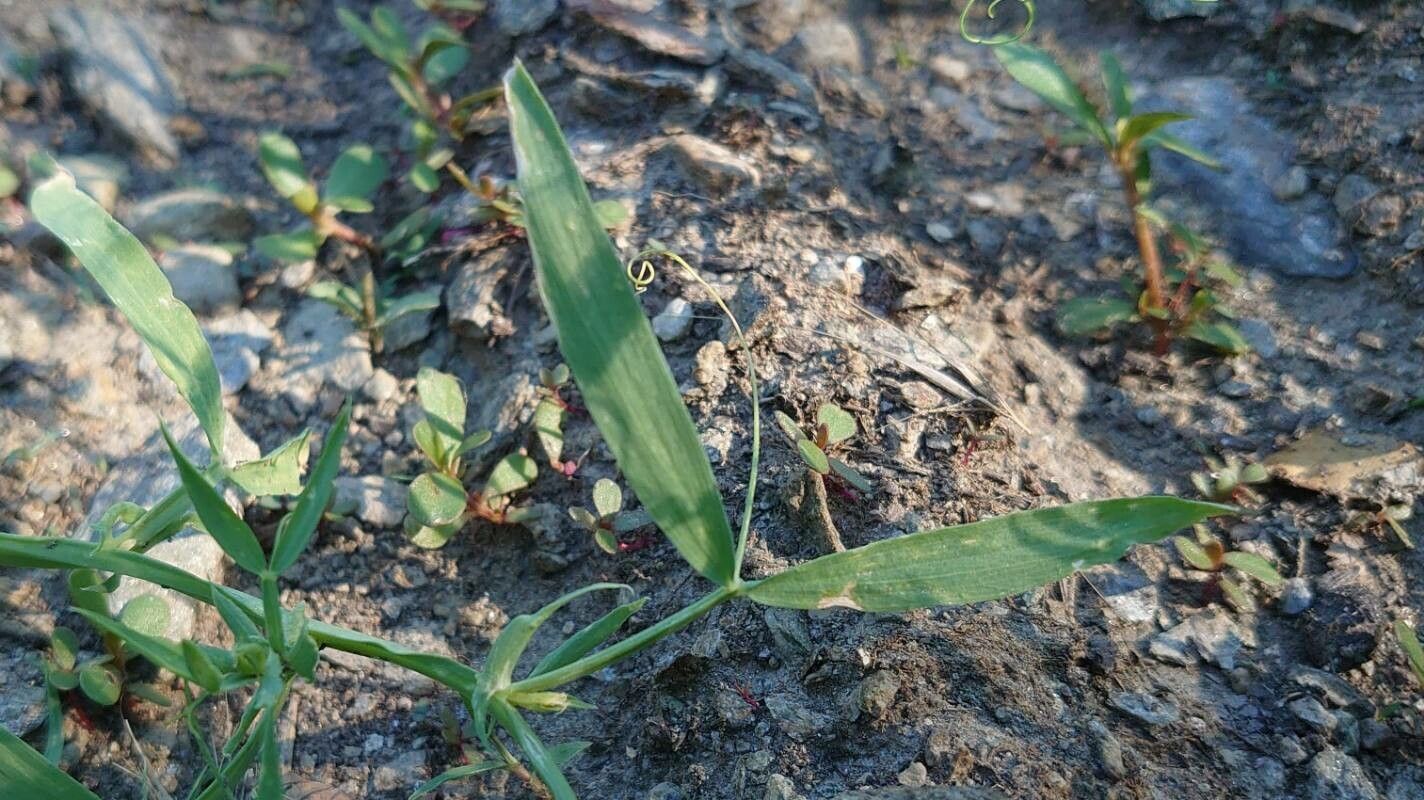
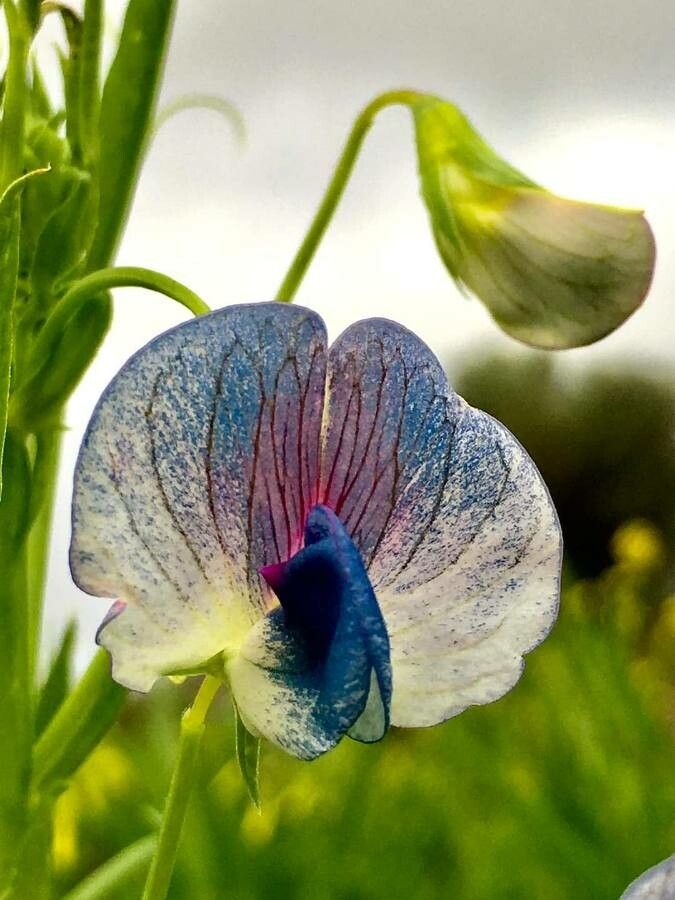
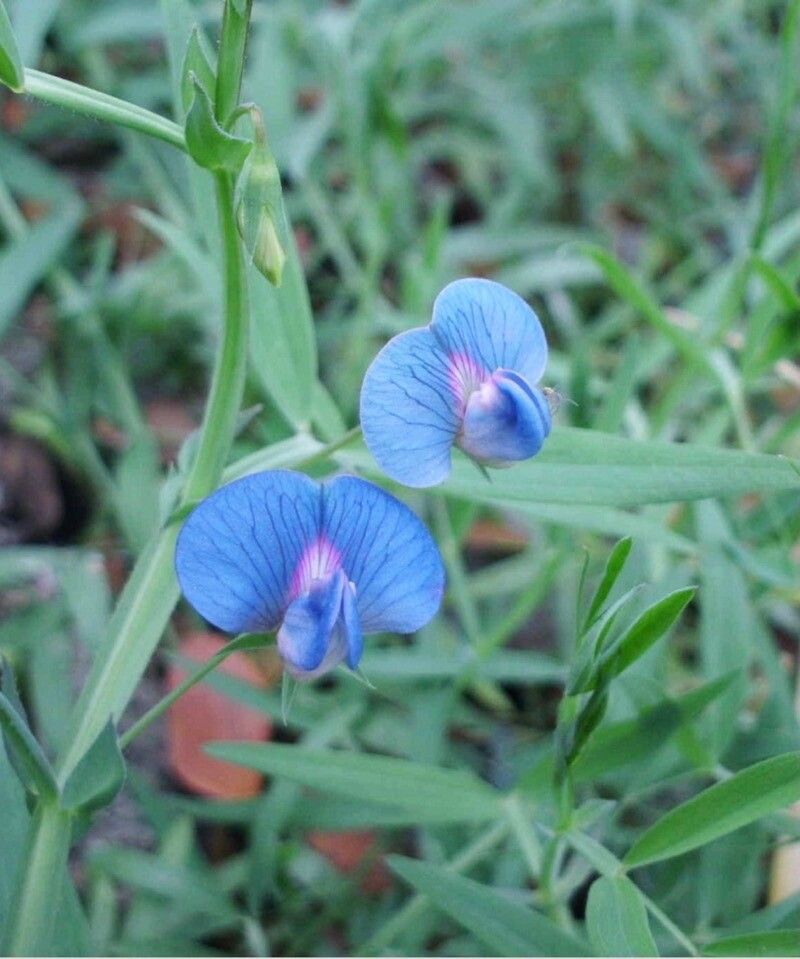
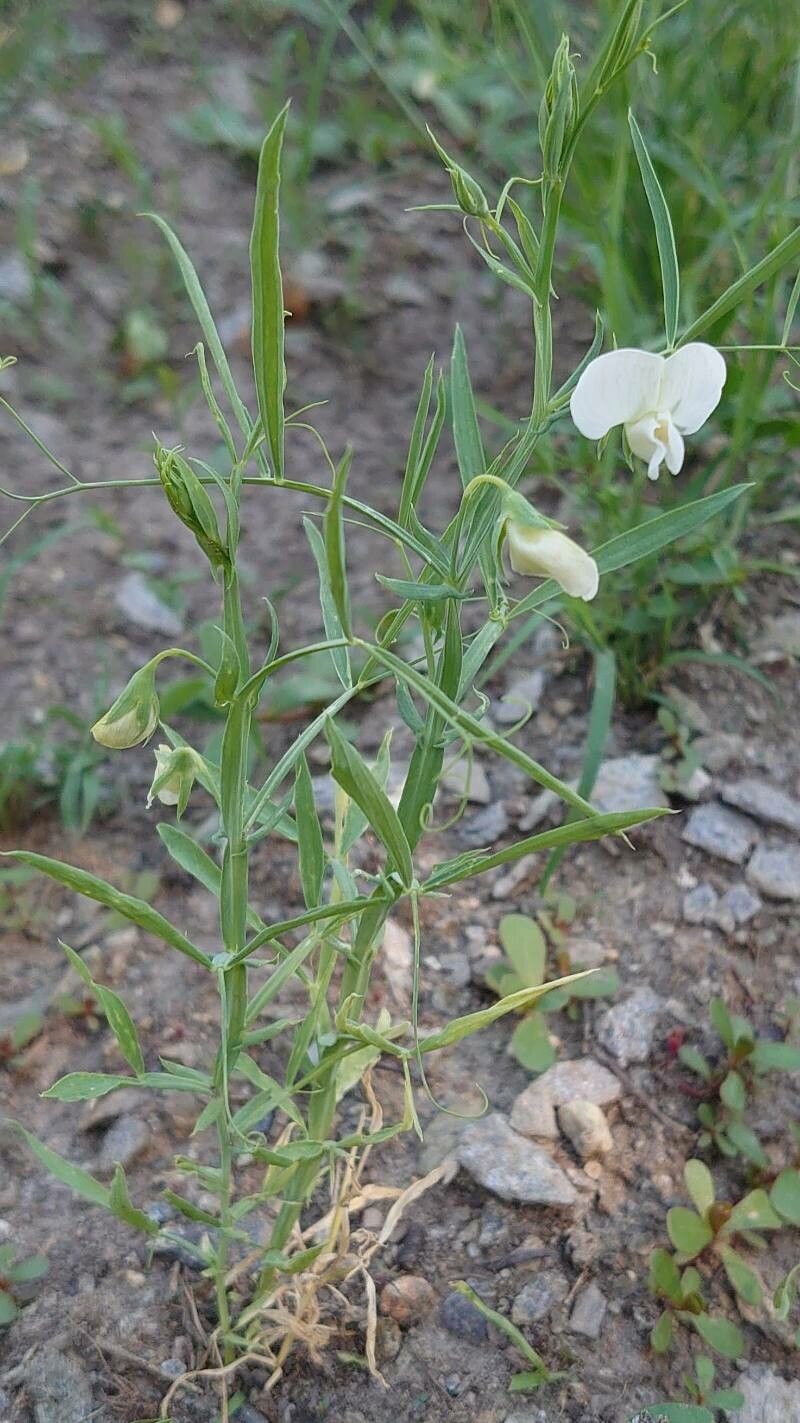
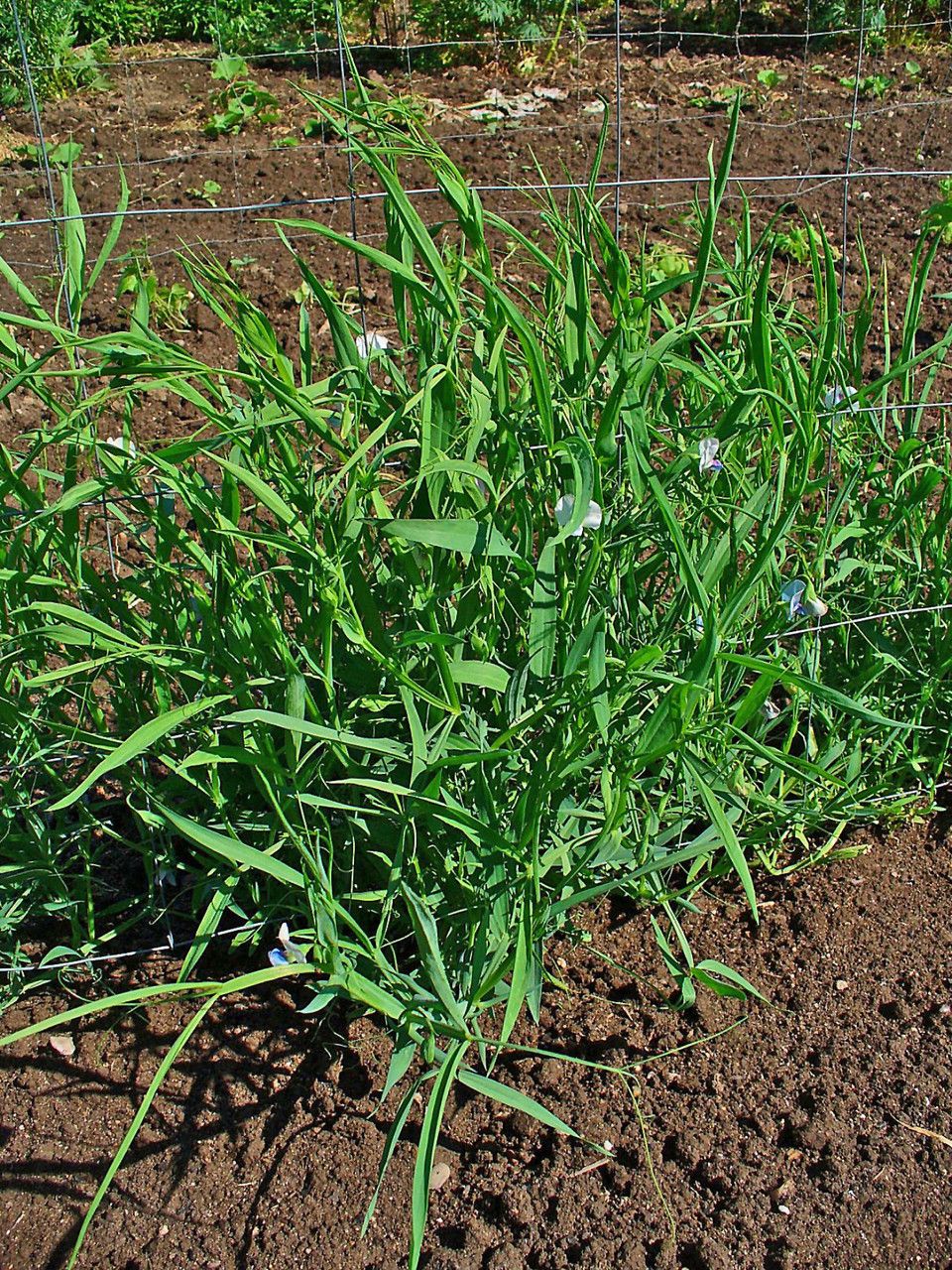
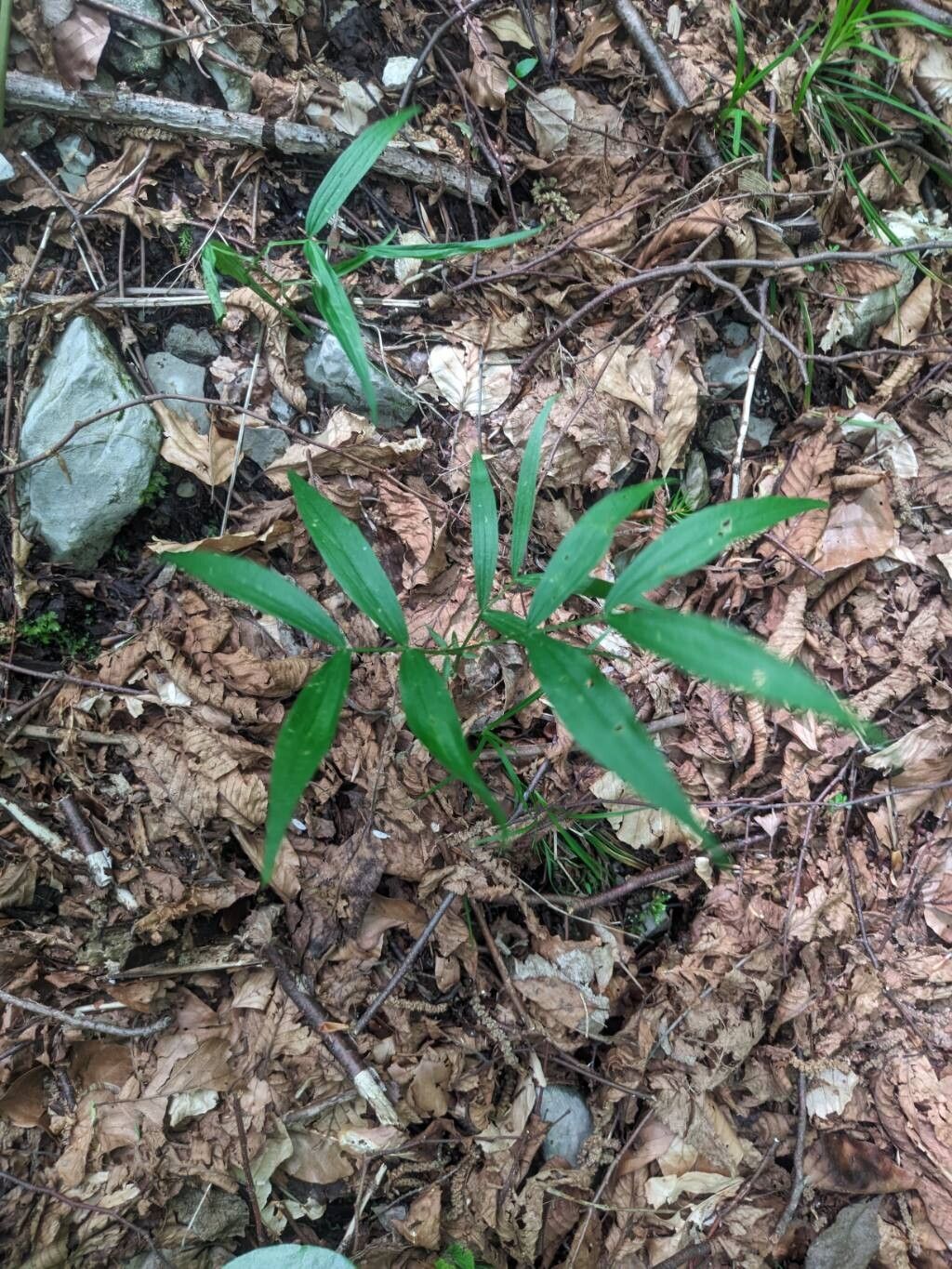
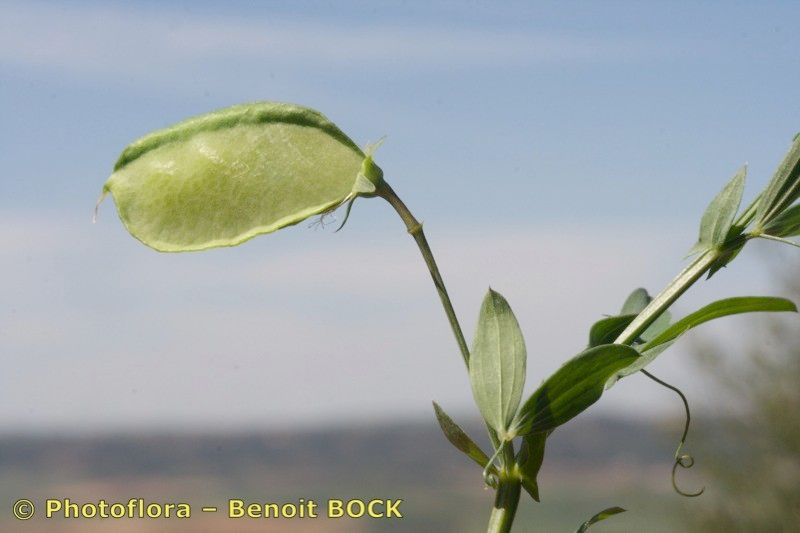
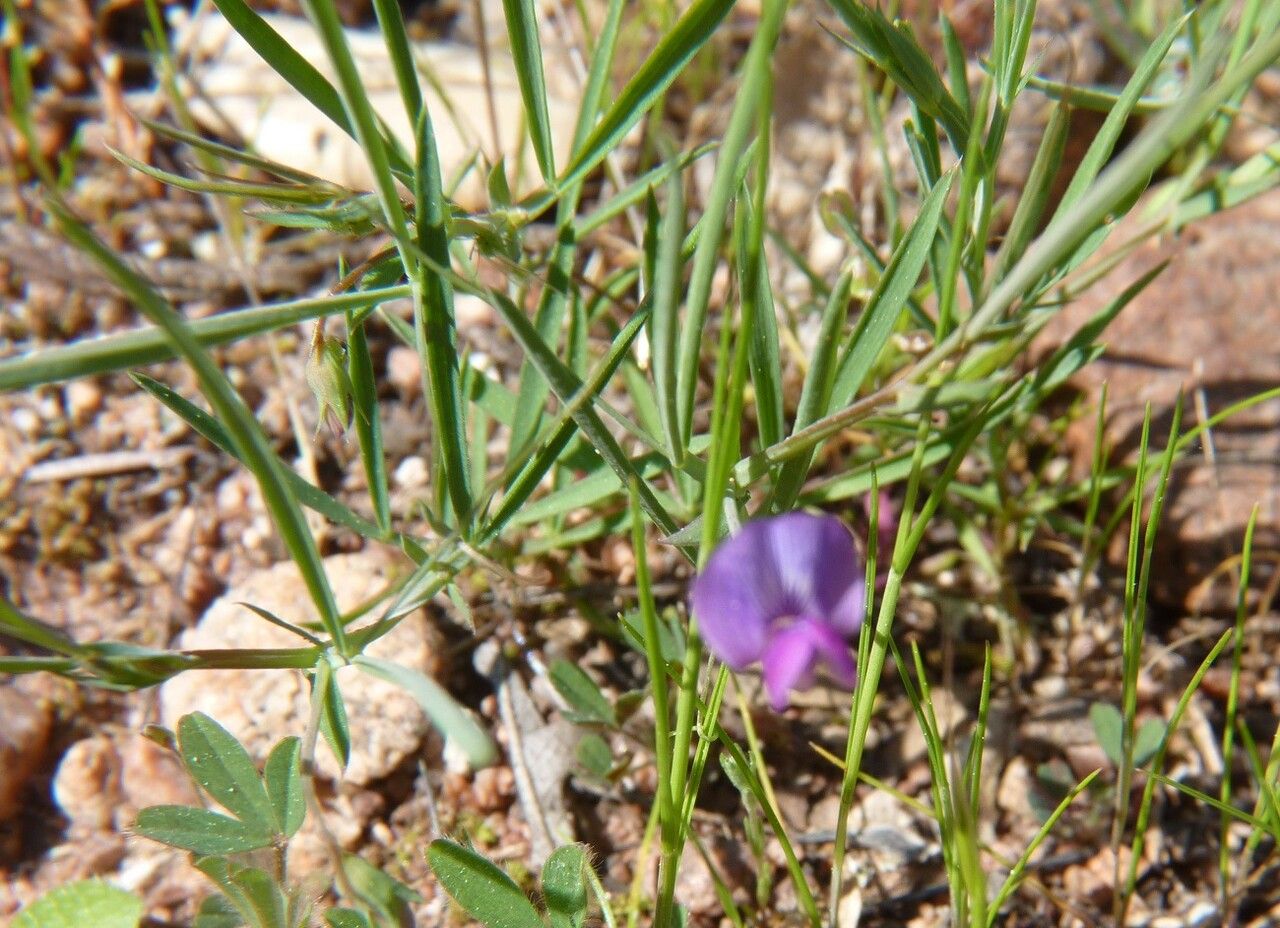
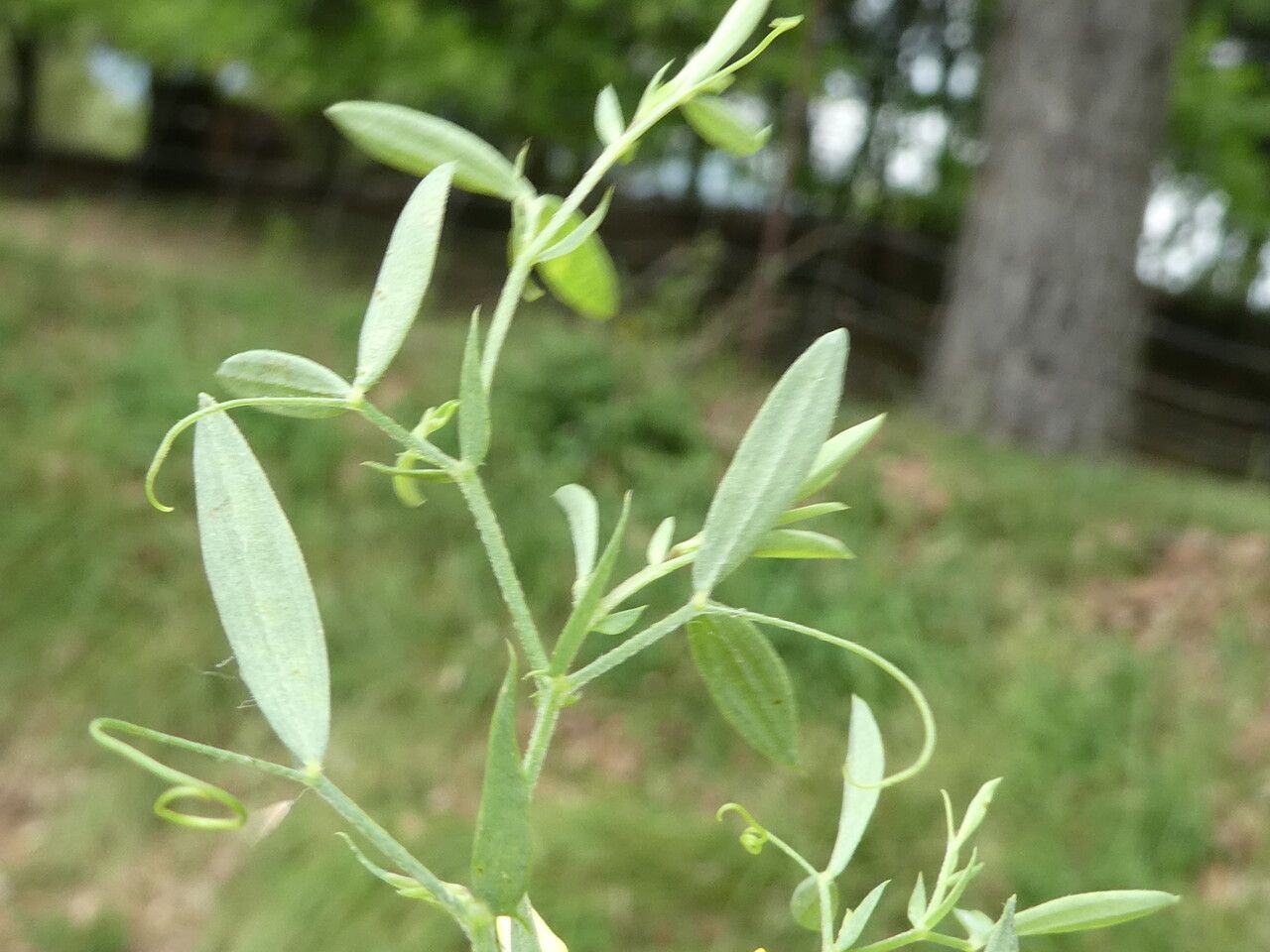
Lathyrus sativus, also known as grass pea, cicerchia, blue sweet pea, chickling pea, chickling vetch, Indian pea, white pea and white vetch, is a legume (family Fabaceae) commonly grown for human consumption and livestock feed in Asia and East Africa. It is a particularly important crop in areas that are prone to drought and famine, and is thought of as an 'insurance crop' as it produces reliable yields when all other crops fail. The Serra de'Conti Cicerchia is included in the Ark of Taste. The seeds contain a neurotoxin that causes lathyrism, a neurodegenerative disease, if eaten as a primary protein source for a prolonged period.
Grass pea has moderate resistance to disease but can still be prone to illnesses such as leaf spot. Its vulnerability to insect pests varies by variety, although most types are comparatively less resistant to pests. For care, Grass pea requires regular watering and fertilization, along with frequent removal of yellow leaves. It is important to manage pests and diseases as soon as they appear and to harvest the plant promptly. Grass pea is suitable for people who can spare some time and energy for routine care.
How to keep Lathyrus Sativus.
Light
The grass pea flourishes with abundant light, closely reflecting the unrestricted sunlight typical of its native environment. Sufficient light greatly improves its growth and overall health. Insufficient light can impair its development. Conversely, excessive light can also cause stress and potentially damage the plant.
Water
Grass pea thrives in Mediterranean climates and has moderate drought tolerance. For optimal growth, it requires weekly watering and prefers well-drained conditions. While it can adapt to indoor environments, it needs adequate moisture during its active growing season to support healthy foliage and flowering.
Humidity
This plant will thrive in moderate humidity, which is probably the level in your home. However, misting it a few times a week can be very beneficial. Make sure the room has good ventilation.
Temperature
Grass pea grows well in moderate temperatures, doing best between 68 and 95 °F (20 to 35 ℃). In its native range it favors the warmth of late spring through early fall.
Fertilizer
For optimal development, Grass pea requires three fertilizer applications: a pre-planting application, one applied one month after seedling emergence, and a final application 1 to 1.5 months after the second. Some Grass pea types benefit from extra fertilizer at planting to support rapid growth.
Pruning
Prune the grass pea plant when its branches reach 15 cm to encourage lateral growth and produce more flowers. Regularly deadhead the plant to conserve nutrients for future bud production. Use stakes or nets that are at least 2 meters tall to support the climbing growth of grass peas, which can reach 1 to 2 meters in height over a season. Without support, the plant typically grows up to 0.8 meters.
Botanical profile.
- Plant Type
- Herb, Vine
- Life Cycle
- Annual, Biennial
- Genus
- Lathyrus
- Family
- Fabaceae
- Hardiness Zone
- 6-9
- Mature Height
- 20 cm to 76 cm
- Mature Spread
- 20 cm
- Leaf Color
- Green
- Leaf Type
- Deciduous
- Flower Color
- White, Blue, Pink, Purple
- Flower Size
- 2.54 cm to 5.08 cm
- Bloom Time
- Late spring, Early summer, Mid summer
- Planting Time
- Spring
- Harvest Time
- Late summer, Early fall, Mid fall
- Native Area
- Afghanistan, Iraq, Turkey, Tajikistan, Syria, India, Egypt, Iran, Cyprus, Yemen, Turkmenistan, Lebanon
Other names.
Reader questions.
How should I water my Grass pea plant?
The Grass pea is particular about both the amount of water it gets and how it is watered. Incorrect watering techniques can harm your tomatoes. The ideal method is to gently and slowly apply water directly to the soil. Avoid pouring water all at once or watering from above. While watering slowly, make sure to water deeply to keep the soil moist throughout the area where the Grass pea is growing.
Why do I have to put fertilizer on my Grass pea?
Not all plants require fertilizers because they can naturally obtain the nutrients they need. However, in the case of Grass pea, fertilization is done to enhance the yield in each harvest. Like other plants, Grass pea utilizes nutrients to facilitate growth and various internal processes that yield edible seeds. Nutrients are essential for plants to thrive, including growing, flowering, performing photosynthesis, and eventually producing seeds or fruits. Insufficient nutrients can result in reduced tillering, smaller seed size, and lower protein content in the final product.
What are the sunlight requirements for grass pea plants?
Grass pea plants thrive under conditions that closely mimic their native habitat's unrestricted light access. Full sun, defined as above 6 hours of sunlight daily, is ideal for their growth and health, significantly boosting their development. Partial sun, which is about 3-6 hours of sunlight, can also support their growth, but watch how sunlight moves through your garden to choose spots that offer the perfect balance of light and shade, ensuring the plants' happiness.
What are the ideal growing conditions for Grass pea?
Grass pea thrives in moderate temperatures that most people find comfortable, specifically in a range that is neither too hot nor too cold. It is important to protect the plant from high temperatures to prevent sunburn, and during the summer, providing some shade can help manage excessive heat. In contrast, during winter or in cooler temperatures, Grass pea enters a dormant state. To encourage continuous growth, maintaining temperatures above 20°C is beneficial. The plant should be protected from frost, as exposure can damage it. When temperatures approach -5°C (25°F) during winter, it's advisable to bring the Grass pea indoors or provide protection by setting up a temporary greenhouse or using materials such as plastic film or fabric to wrap the plant.
What should I do if I give my Grass pea too much or too little water?
If you notice that you have given your Grass pea too much water and you are worried about the potential for disease, you should take action right away. The best course of action for an overwatered Grass pea is usually to remove it from its current spot where it is growing. Once you have taken the plant out of the ground, let its roots dry out a bit before replanting it in a new location with well-draining soil. If you are growing your Grass pea in pots, you might also consider moving it to a pot with more or bigger drainage holes. On the other hand, if you realize that you have not been watering your plant enough, all you need to do is increase the frequency of watering.
When should I fertilize my Grass pea?
Spring is generally the best time to fertilize Grass pea. To ensure healthy growth, it is recommended to have three major fertilizer treatments during the growing season. The first treatment should be done before planting the seeds, followed by a second treatment about a month after the seedlings emerge. A final treatment should be applied approximately 1 to 1.5 months after the second treatment. Additionally, certain types of Grass pea would benefit from a fertilizer boost at the time of planting. Nutrients are essential for all stages of the growth cycle. Since some types of Grass pea can reach their harvest stage in as little as a month, it is crucial to provide enough nutrients to help them grow to their full size as quickly as possible.
How important is light for grass pea's growth and what happens with incorrect light exposure?
Light is essential for the grass pea's development, emulating the generous amount of light in its natural environment, which significantly contributes to its growth and health. Insufficient light may hinder its growth, while too much light could stress and potentially harm the plant. Artificial lighting can be a vital solution for indoor plants, especially when natural sunlight is inadequate. LED lights, offering customizable wavelengths, can provide 30-50W/sq ft for full sun plants, 20-30W/sq ft for partial sun plants, and 10-20W/sq ft for full shade plants. Ensure to place the light source 12-36 inches above the plant for 8-12 hours per day to mimic natural daylight as closely as possible.
How does Grass pea react to low temperatures, and what are the solutions?
Grass pea has a moderate tolerance to low temperatures and thrives best within a temperature range of 20°C to 35°C. It is crucial to keep the plant above 0°C during winter. Should the temperature fall below -5°C, the leaves may darken, and severe cold can lead to water-soaked necrosis, wilting, and the leaves gradually turning brown. To protect the plant from cold damage, it is advisable to trim away the frost-damaged parts, move the plant indoors to a warmer environment, or set up a makeshift greenhouse. When indoors, placing the plant near a south-facing window ensures ample sunlight. You can also use supplemental lighting if natural light is insufficient.
How frequently should I give water to my Grass pea?
Grass pea needs a lot of water during its growing season. To fulfill this requirement, you should water it regularly from the beginning of spring until the end of summer. In the early stages of growth, watering once or twice a week is sufficient. As the season advances, increase the frequency of watering. In the summer, you may need to water twice a day or more, depending on the weather. Once the Grass pea has gone through its main growth phases, decrease the watering to once a week until the end of the growing season.
When is the best time to not use fertilizer on my Grass pea?
To keep Grass pea healthy and strong, it is important to feed it regularly. However, there are risks associated with over-fertilizing or fertilizing at the wrong time. It is advised to avoid fertilizing when the soil is extremely dry or during extreme temperatures. Additionally, it is crucial to prevent fertilizers from coming into direct contact with seeds as this can inhibit germination. Furthermore, it is recommended to check if the fertilizer is safe for direct contact with the plant, as it may cause damage to leaves and fruits. Some fertilizers are only suitable for use in the soil near the plants and should not be applied over actively growing plants.
What symptoms indicate that a grass pea plant is getting too little or too much light?
Grass pea plants display several symptoms under incorrect lighting conditions, both for too little and too much light. For insufficient light, symptoms include smaller new leaves, leggy or sparse growth, faster leaf drop, a slowdown or halt in new growth, and pale or irregularly colored new leaves. Excessive sunlight can lead to chlorosis (leaves turning yellow due to chlorophyll breakdown), sunscald (damage from intense sunlight exposure), leaf curling (a defense mechanism to minimize water loss), wilting, and leaf scorching (brown, dry, and crispy leaf edges). Observing these symptoms can help determine the need to adjust the plant's light exposure.
What should be done if Grass pea experiences high temperatures?
During summer, it is essential to keep Grass pea's temperature below 35°C to avoid inhibiting its growth. Should the temperature exceed 38°C, the plant may slow in growth, display lighter leaf coloration, and become susceptible to sunburn. To mitigate damage from high temperatures, trim away the sunburned and dried-up parts of the plant and relocate it to a cooler spot, ideally one that provides shade during the intense afternoon sun. It is also beneficial to water the plant in the morning and evening to maintain soil moisture and support the plant's well-being.