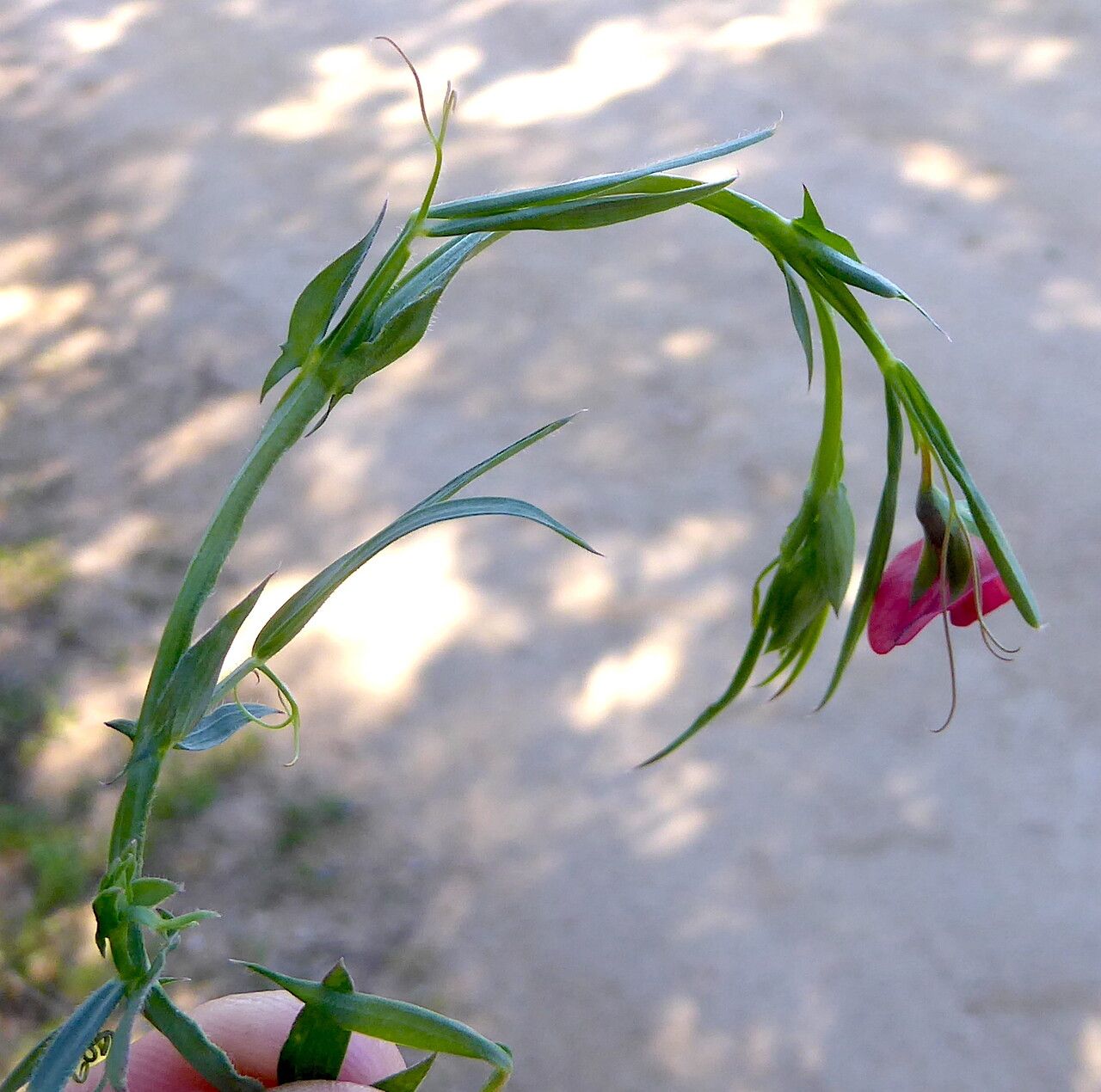
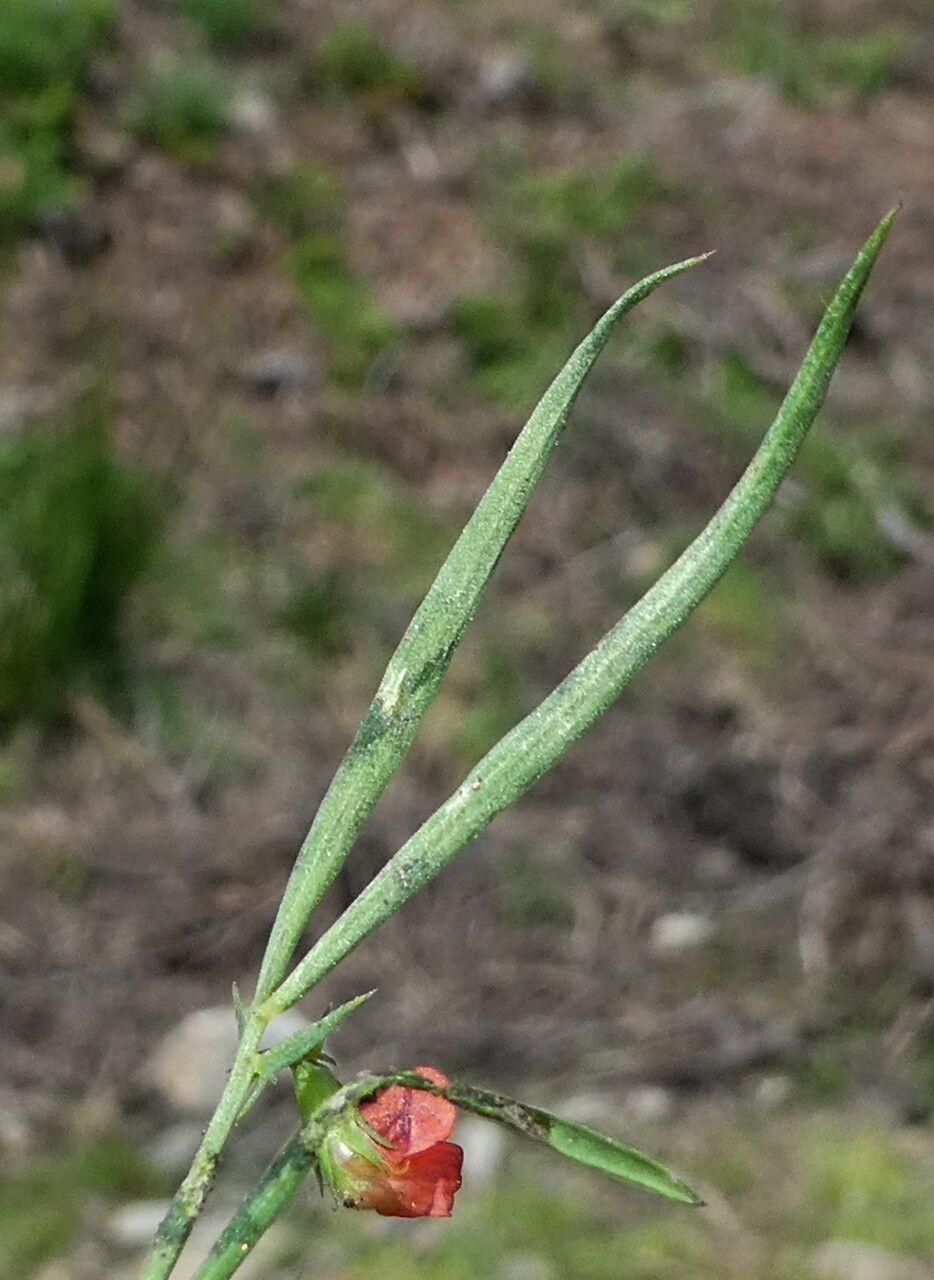
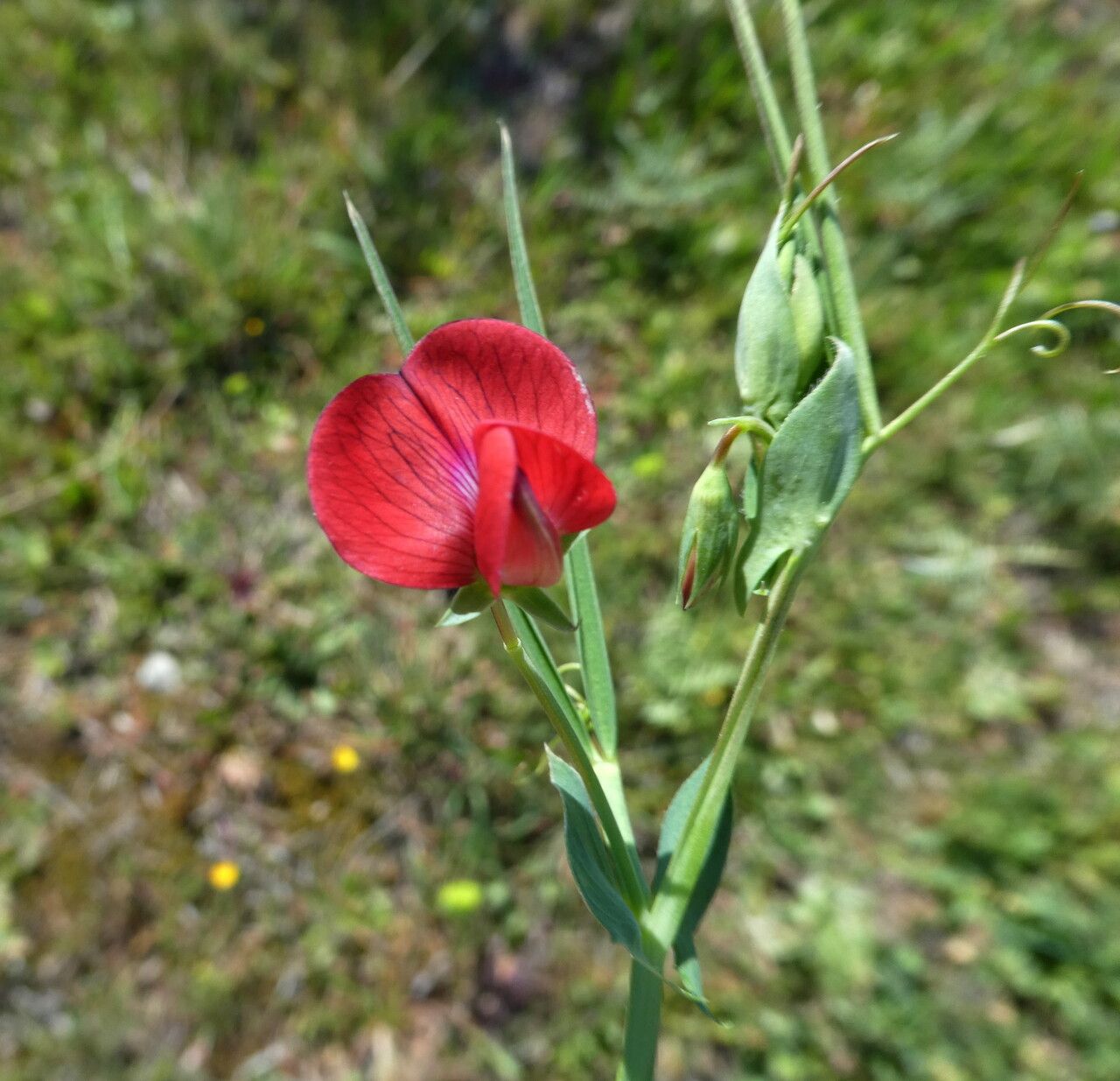
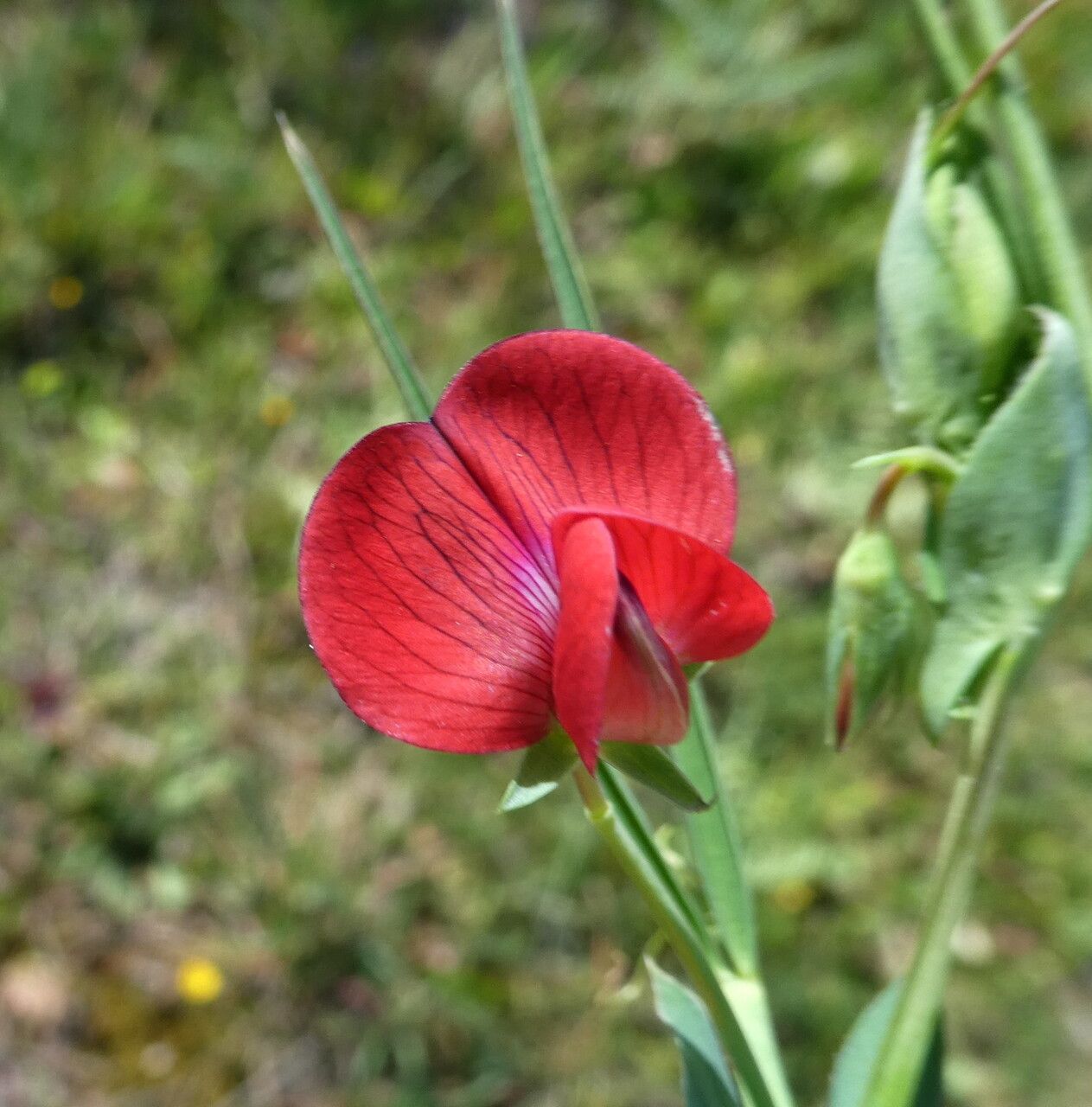
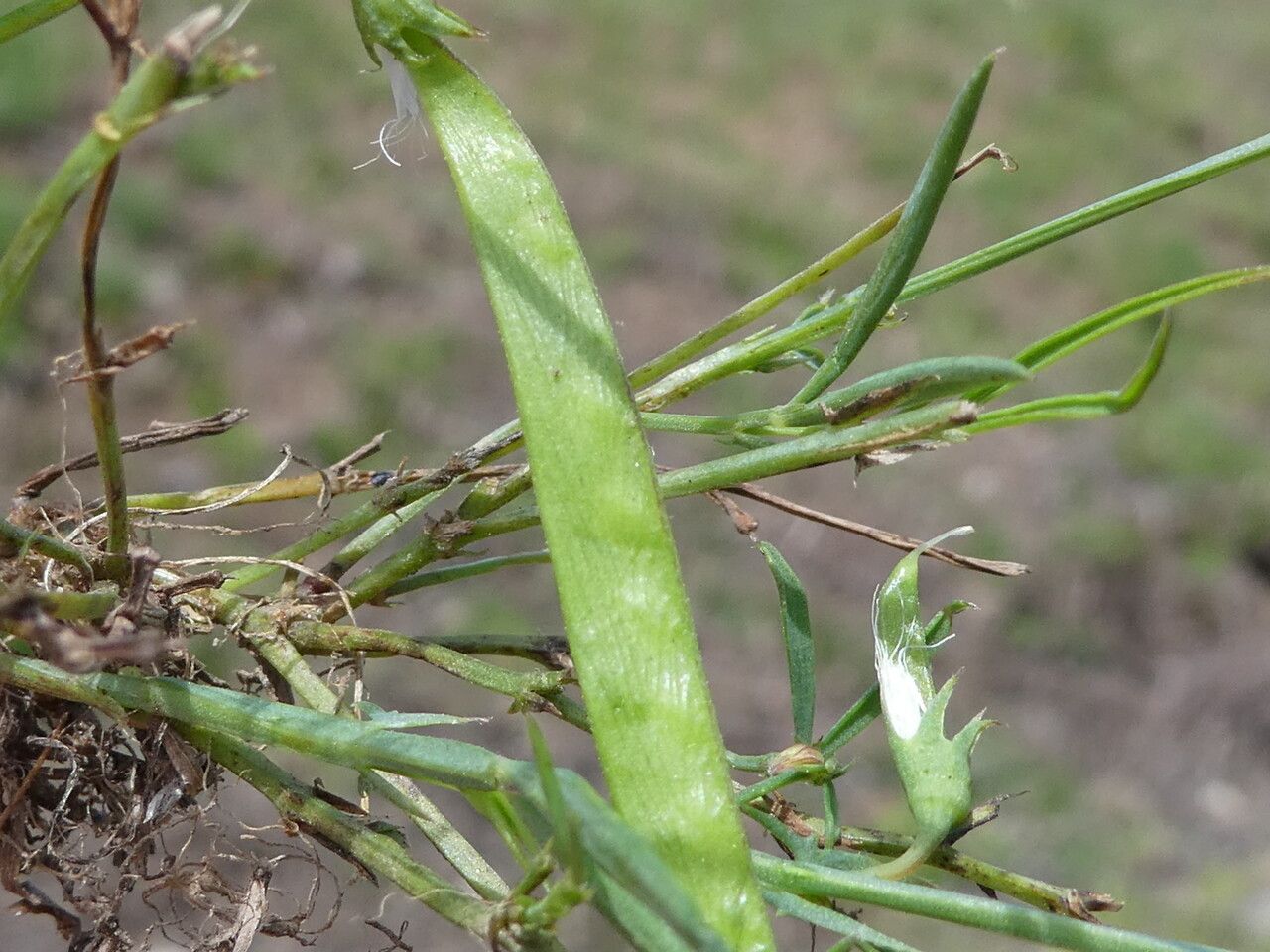
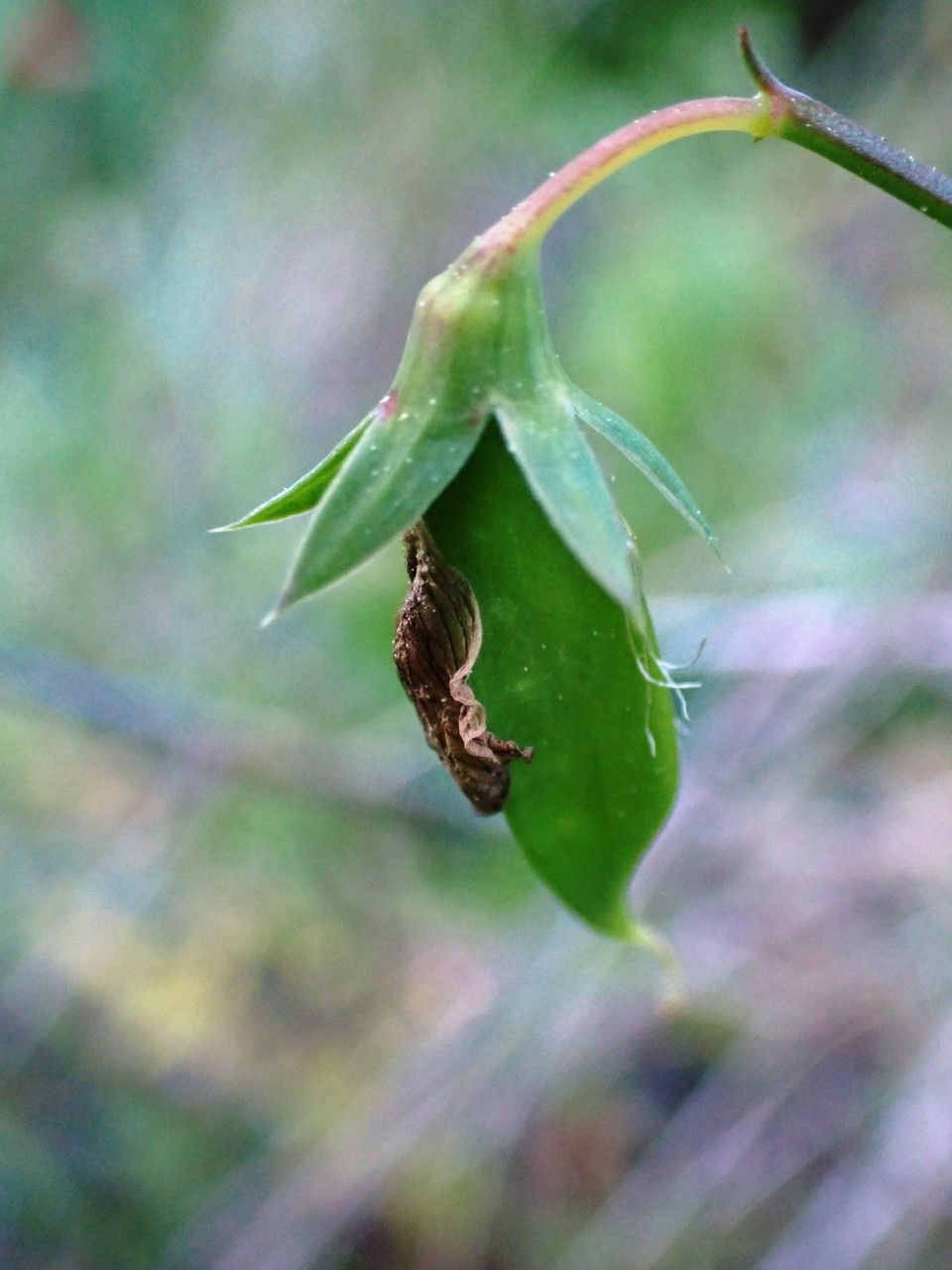
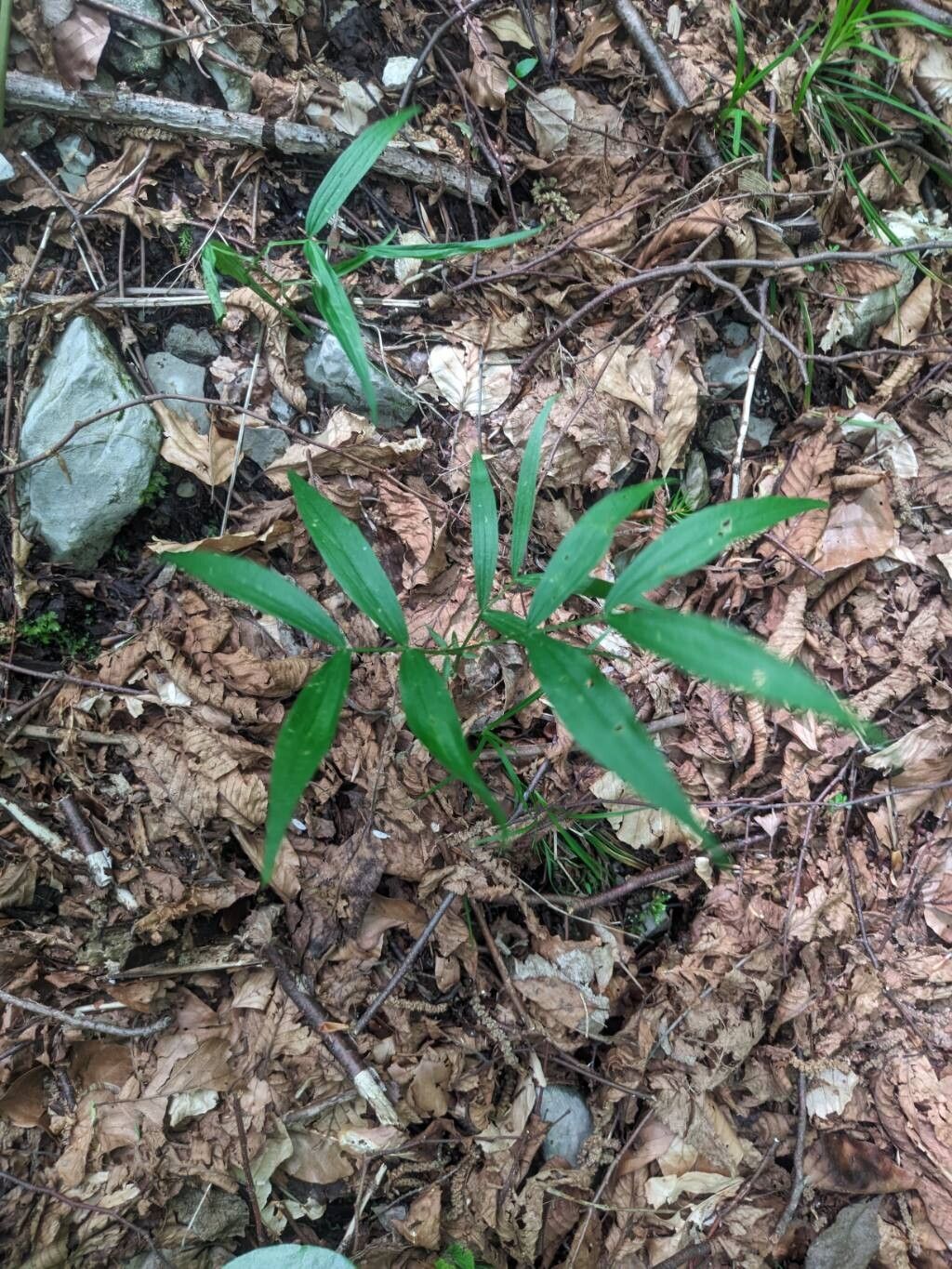
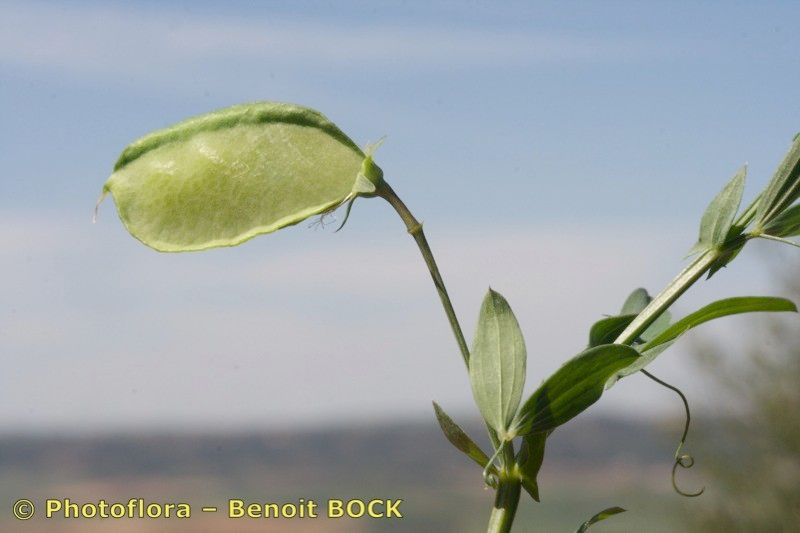
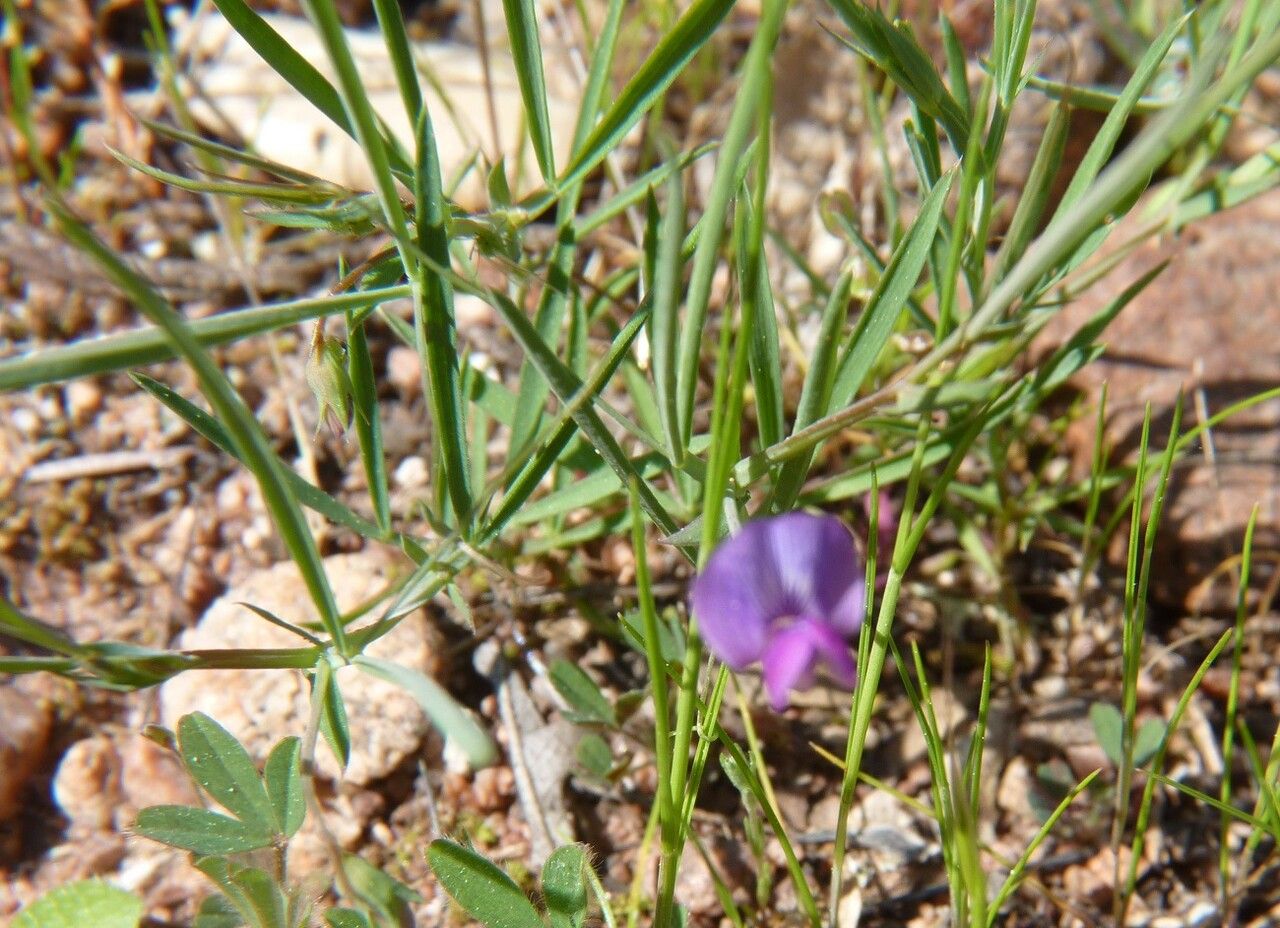
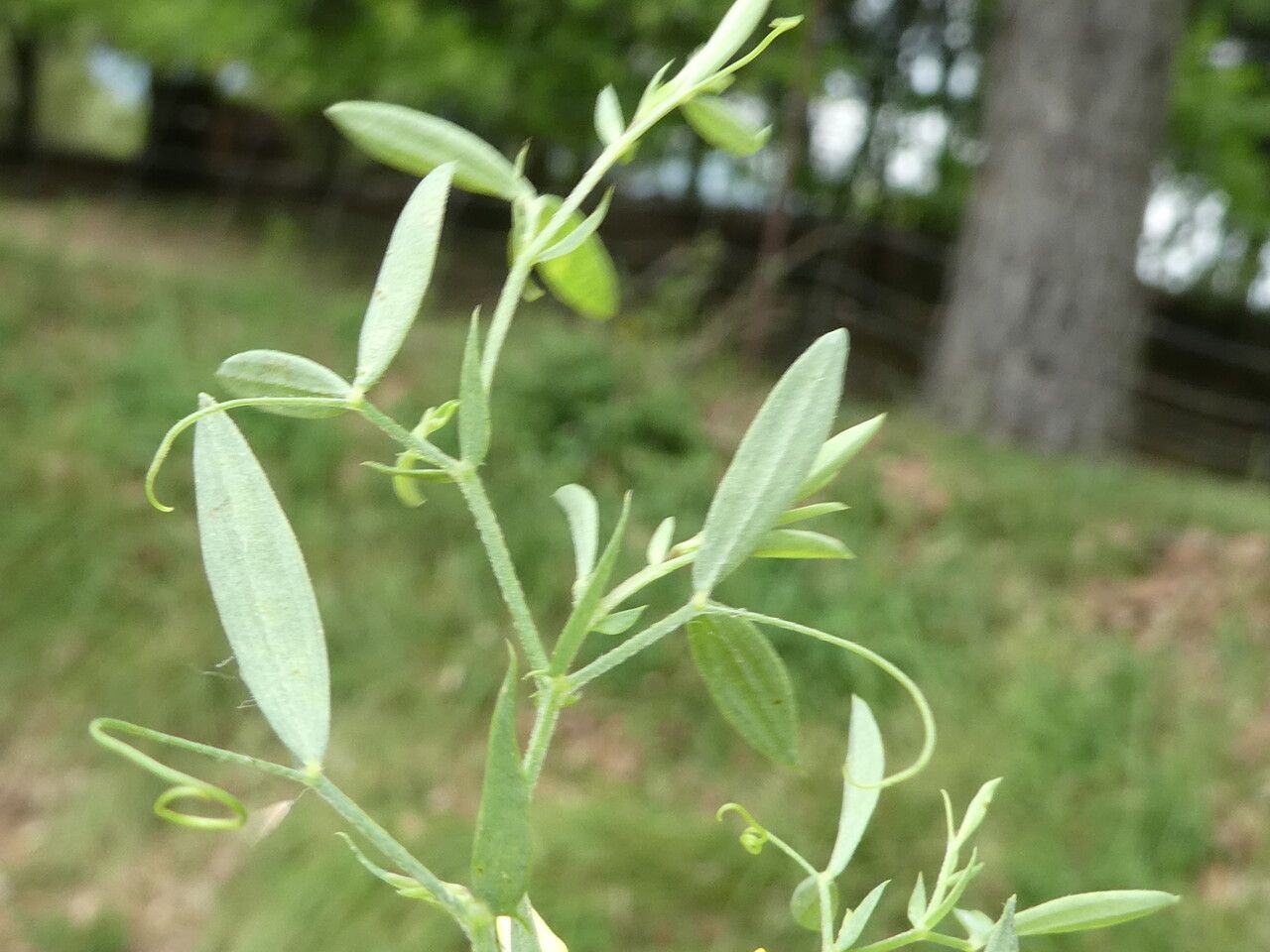
Lathyrus cicera is a species of wild pea known by the common names red pea, red vetchling and flatpod peavine. It is native to Europe, North Africa, and the Middle East, and it is known from other places as an introduced species. This is a hairless annual herb producing a slightly winged stem. The leaves are each made up of two leaflike linear leaflets 3 to 6 centimeters (1.2 to 2.4 in) long. They also bear branched, curling tendrils. The inflorescence holds a single pea flower 1 to 1.5 centimeters (0.39 to 0.59 in) wide which is a varying shade of red. The fruit is a hairless dehiscent legume pod. This is one pea species known to cause lathyrism; nevertheless, as cicerchia it figured among the comestibles enjoyed by the fortunate Milanese, listed at length by Bonvesin de la Riva in his "Marvels of Milan" (1288).
Red vetchling is fairly disease-resistant and generally not vulnerable to illnesses. Still, it can be affected by pests and diseases present in its environment. Such infections are generally mild. Regarding care, this plant needs moderate maintenance. It should be pruned regularly to preserve a neat appearance and healthy growth. Fertilizing can also encourage blooming. Red vetchling is appropriate for anyone with an outdoor area, like a garden or patio, and does not demand extensive care experience. It may need more attention when cultivated indoors.
How to keep Lathyrus Cicera.
Light
Red vetchling prefers full sun and flourishes when it receives a generous amount of sunlight each day. Its native habitat has prepared it for those conditions. Although the plant can live without any shade, too little or too much sun may impede its healthy growth and change leaf color and its blooming habit.
Water
Red vetchling is native to the Mediterranean regions, where it flourishes in well-drained soils and exhibits moderate drought tolerance. This outdoor plant needs to be watered weekly and can adapt well to seasonal rainfall. Its growth cycle aligns with periods of higher precipitation, which reduces the need for frequent irrigation.
Temperature
Red vetchling originates from temperate climates and prefers temperatures between 68 and 100.4°F (20 to 38°C). It is a hardy plant that can tolerate small departures from its preferred temperature range. During harsh seasons, adjustments may be needed to ensure appropriate growing conditions.
Fertilizer
When most of Red vetchling's blooms have opened to full size, resume fertilizing. Around the time of peak bloom, apply fertilizer once every three to four weeks, as weather permits. Then, once Red vetchling begins producing fewer new blooms, stop fertilizing; there is no need to fertilize when the plant can no longer produce additional blooms.
Pruning
This plant features pinkish-red flowers and climbing stems. To promote growth and flowering, prune your red vetchling from early to late spring. Regular thinning helps improve air circulation and the vigor of the blooms. Make sure to use clean, sharp tools to prevent disease, and consult reliable sources for additional care tips.
Botanical profile.
- Plant Type
- Herb, Vine
- Life Cycle
- Annual
- Genus
- Lathyrus
- Family
- Fabaceae
- Hardiness Zone
- 2-11
- Mature Height
- 20 cm to 30 cm
- Mature Spread
- 20 cm to 40 cm
- Leaf Color
- Green
- Leaf Type
- Deciduous
- Flower Color
- Red, Pink
- Flower Size
- 1.02 cm to 1.52 cm
- Bloom Time
- Mid spring, Late spring, Early summer
- Planting Time
- Spring, Summer
- Harvest Time
- Summer
- Native Area
- Libya, Egypt, Turkey, Montenegro, Pakistan, Slovenia, Morocco, Croatia, Uzbekistan, Russia, Iraq, Romania, Portugal, France, Saudi Arabia, Tajikistan, Tunisia, Cyprus, Bulgaria, Armenia, Greece, Ukraine, Lebanon, Serbia, Afghanistan, Syria, Kyrgyzstan, Kazakhstan, Italy, Spain, Switzerland, Iran, Azerbaijan, Algeria, Hungary, Turkmenistan
Other names.
Reader questions.
How should I water my Red vetchling plant?
To water Red vetchling, you have various options like using a garden hose with a spray nozzle, a watering can, or any common watering tool. This plant is not particular about the type of water it receives, whether it's rainwater, tap water, or filtered water. It's advisable to avoid watering this plant from above as it can harm the leaves, flowers, and potentially result in disease. A drip irrigation system is often the best way to water Red vetchling since it delivers water evenly and directly to the soil. If you have a container-grown Red vetchling, you can still use a similar approach but change the tools you use. Simply apply water directly to the soil using a cup, watering can, or your tap.
What are the sunlight requirements for Red Vetchling?
Red Vetchling requires full sun or partial sun environments to thrive. Specifically, full sun means the plant should receive above 6 hours of sunlight daily, while partial sun refers to about 3-6 hours of sunlight. It's crucial to observe the movement of sunlight in your garden to find the ideal spots that offer a balanced exposure to light and shade, ensuring the optimum growth of your plants.
What is the native climate for Red vetchling, and what are its temperature preferences?
Red vetchling is native to temperate climates and prefers temperatures between 68 to 100.4°F (20 to 38°C). It is a robust plant capable of tolerating minor deviations from its preferred temperature range. However, adjustments might be necessary during harsh seasons to ensure optimal growth conditions. Red vetchling has strong cold resistance, implying that elaborate frost protection measures are generally not required. In the event that winter temperatures are anticipated to drop below -40°C, cold protection should be provided by covering the plant with soil or straw. Additionally, abundant watering before the first autumn freeze to maintain moist soil is recommended to prevent drought and water scarcity throughout winter and early spring.
What should I do if I give my Red vetchling too much or too little water?
To prevent underwatering, simply water your Red vetchling more regularly when you notice it lacks moisture. Overwatering can be a more serious problem, as it can lead to diseases and the decline of the plant. To avoid overwatering, choose a suitable growing location with sunlight to dry the soil and good drainage to prevent waterlogging. If your potted Red vetchling is overwatered, consider transferring it to a new pot with loose soil and efficient drainage.
How does the amount of sunlight affect Red Vetchling's growth?
The right amount of sunlight is essential for the healthy growth of Red Vetchling, a sun-loving plant native to environments with ample sunlight exposure. While it can grow without any shade, incorrect sunlight levels can adversely affect its growth, influencing leaf color and the blooming cycle. Inadequate light can lead to various symptoms including smaller new leaves, leggy growth, faster leaf drop, and even halted growth, among others. Conversely, excessive sunlight can cause symptoms like chlorosis, sunscald, leaf curling, wilting, and leaf scorching.
What should be done if Red vetchling experiences temperatures below its cold tolerance level?
Red vetchling is cold-tolerant and thrives best with temperatures above 20°C, although it should be kept above 0°C during winter. However, in conditions where the temperature falls below -40°C, the plant might not show immediate damage during winter, but a decrease in sprouting or a complete lack of sprouting may occur in spring. The remedy is to remove any parts of the plant that fail to sprout when spring arrives.
How often do I need to water my Red vetchling plant?
Red vetchling requires regular watering throughout the growing season. In spring, water the plant once per week. As it gets warmer, increase watering to two to three times per week, but be careful not to overwater. Keep the soil moist but not wet, regardless of how often you water. Watering a potted Red vetchling is slightly different. Potted soil can dry out faster, so water container-grown plants a few times per week, compared to once per week for plants in the ground.
How can artificial lighting support Red Vetchling's growth indoors?
When natural sunlight is insufficient, especially during winter or in less sunny spaces, artificial lights become crucial for maintaining optimal growth in Red Vetchling. The right type of artificial light, such as LED lights, can provide the necessary wavelengths of light. Full sun plants should have 30-50W per square foot, partial sun plants 20-30W per square foot, and full shade plants 10-20W per square foot. The light source should be placed 12-36 inches above the plant, and the light duration should mimic natural daylight hours, with most plants requiring 8-12 hours of light per day.
How does Red vetchling react to high temperatures, and what are the solutions?
During the summer, it's important to ensure Red vetchling's environment remains below 38°C. Temperatures exceeding 43°C may result in the leaves becoming lighter, curling, becoming prone to sunburn, and, in severe cases, the whole plant might wilt and dry out. Solutions include trimming away the sunburned and dried parts of the plant, relocating it to a shaded area, especially from the midday and afternoon sun, or providing shade with a cloth. To keep the soil moist, water the plant during cooler times of the day, such as morning and evening.
How much water does my Red vetchling plant need?
There are a few ways to decide how much water to give your Red vetchling. Some gardeners rely on their instincts and check the soil moisture by feeling it. They suggest watering until the top six inches of soil feel moist. Alternatively, you can use a specific measurement. Generally, it's recommended to give your Red vetchling about two gallons of water per week, adjusting for heat and how quickly the soil dries. However, following rigid guidelines may result in overwatering if your plant needs less water. When growing Red vetchling in a container, you need a different approach. You should water until all dry soil layers become moist. To check, insert your finger into the soil for moisture. You can also watch for a slight trickle of water from the pot's drainage holes.
What symptoms indicate inadequate light exposure in Red Vetchling?
Symptoms of inadequate light exposure in Red Vetchling include smaller new leaves, leggy or sparse growth, faster leaf drop, slower or no new growth, lighter-colored new leaves, and symptoms related to excessive sunlight like chlorosis, sunscald, leaf curling, wilting, and leaf scorching. These symptoms reflect the plant's struggle to adapt to insufficient or excessive light, significantly affecting its health and growth.
How do I know if I am watering my Red vetchling plant enough?
Avoiding overwatering your Red vetchling can be challenging due to a few factors. Firstly, these plants have deep roots that require weekly moistening of the soil. However, Red vetchling is easily prone to root rot, which can lead to browning of the plant. While underwatering is not common for Red vetchling, they can endure some time without additional watering. Nevertheless, if you neglect to water them for too long, they will start to wilt and display dry leaves.