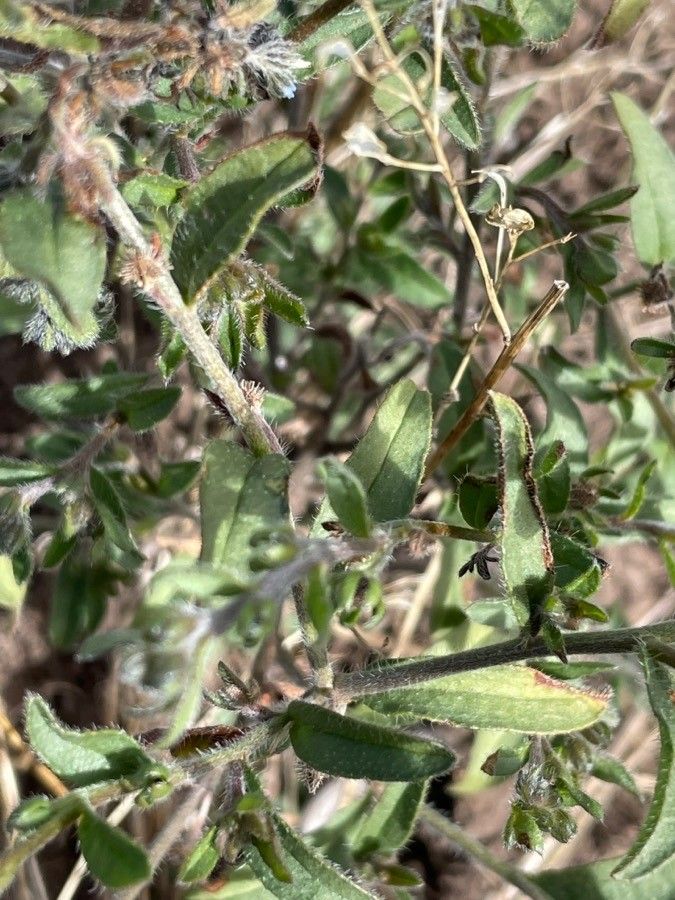
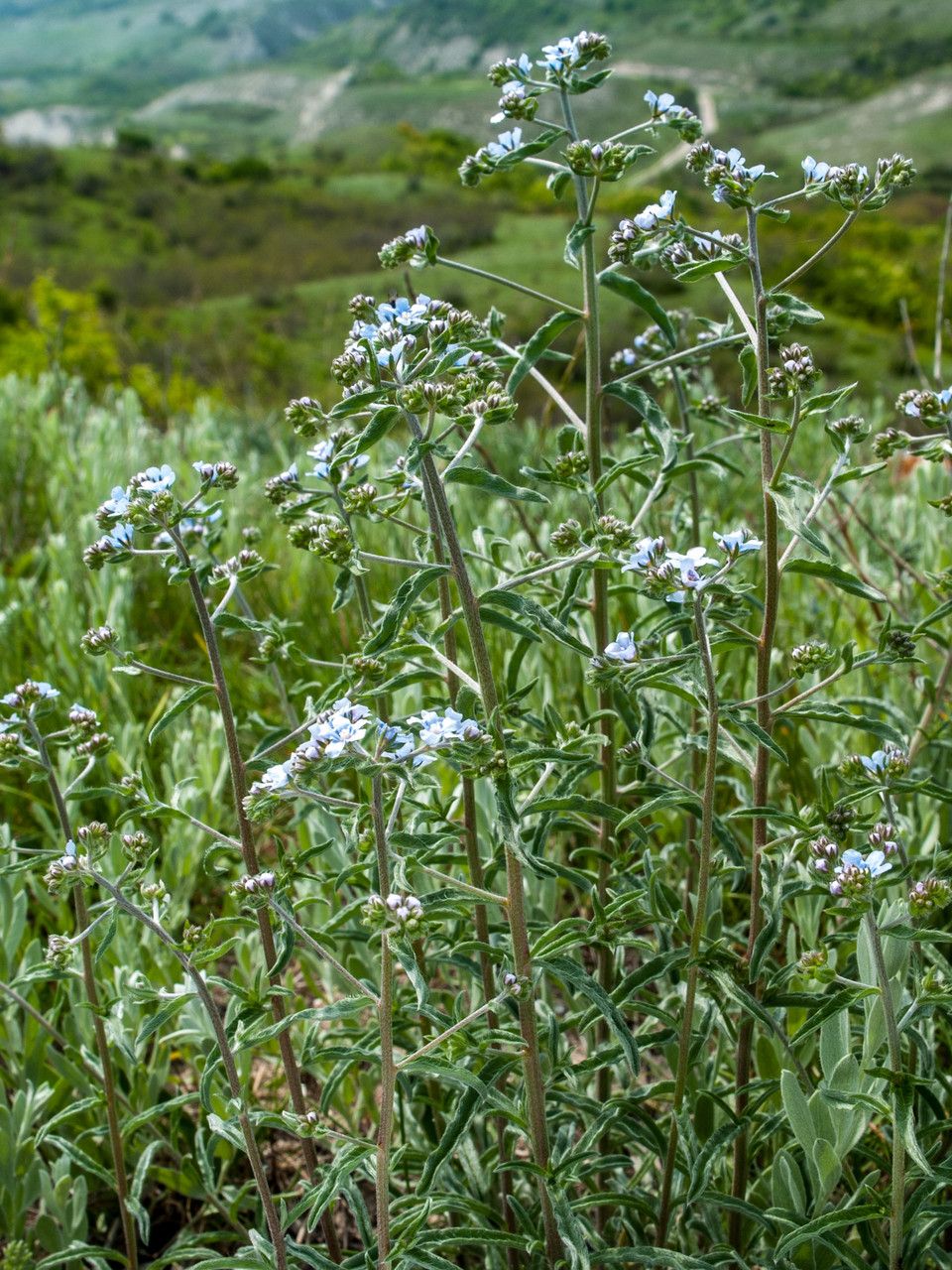
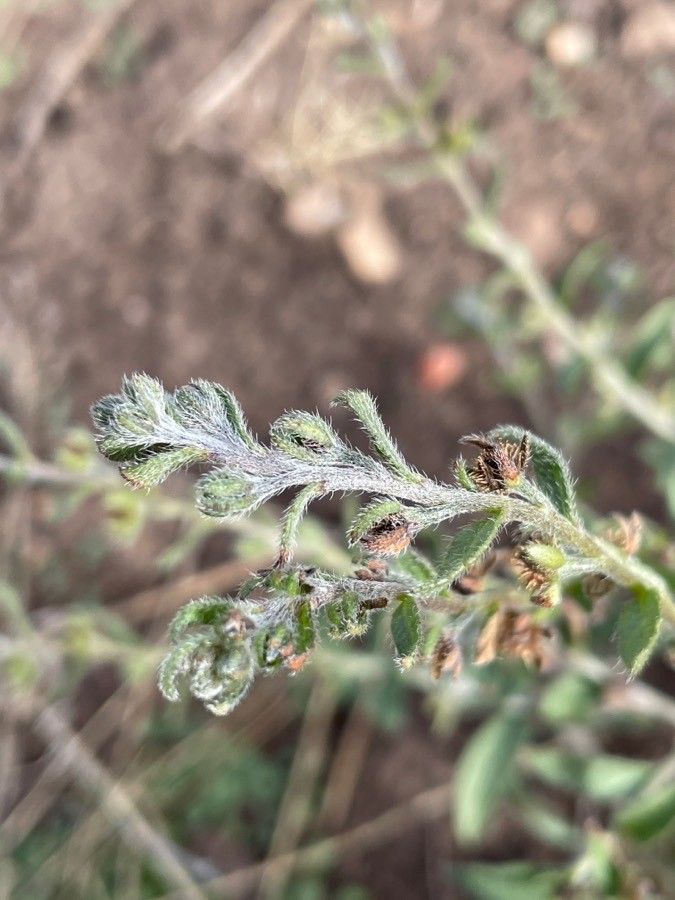
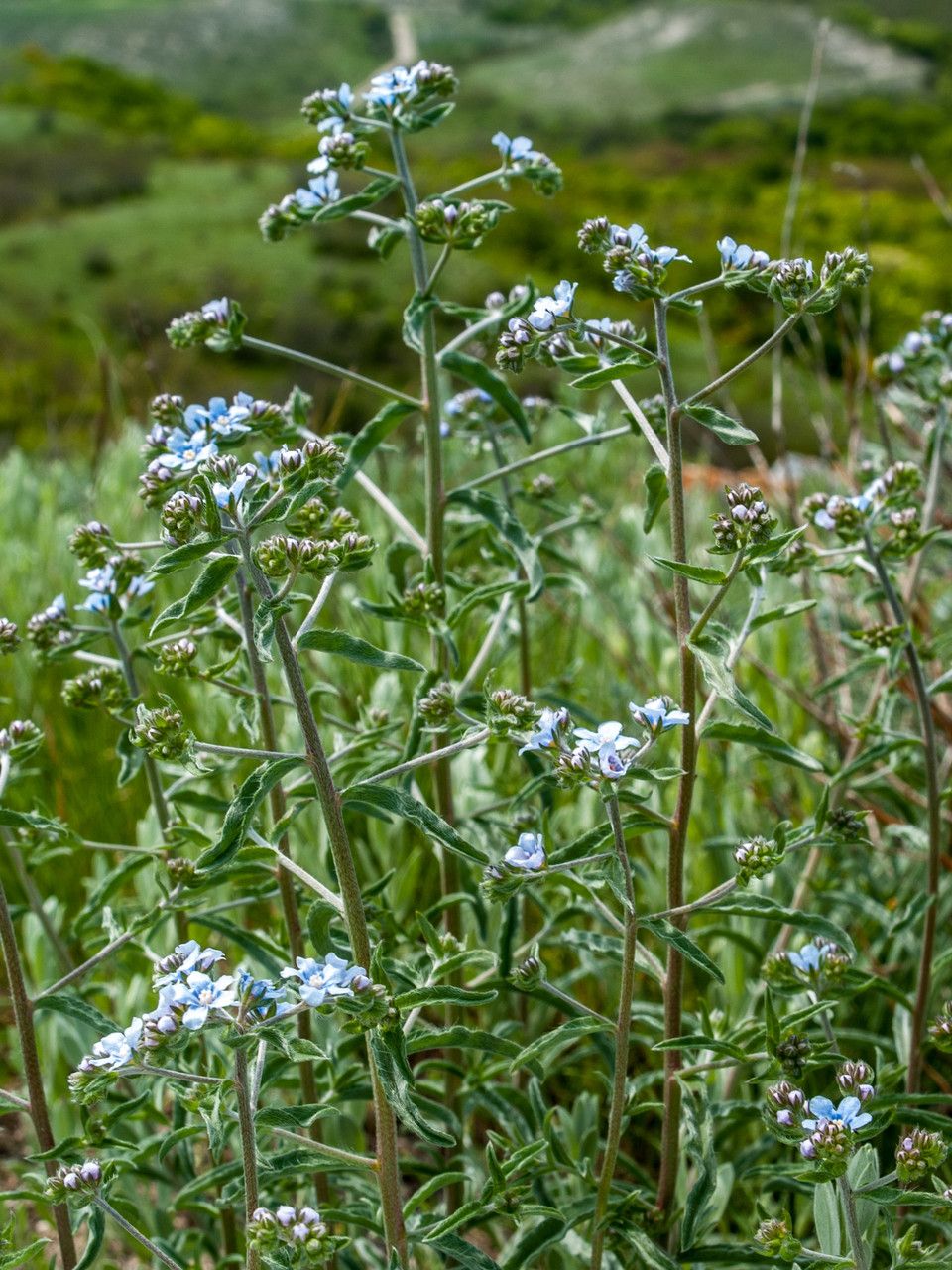
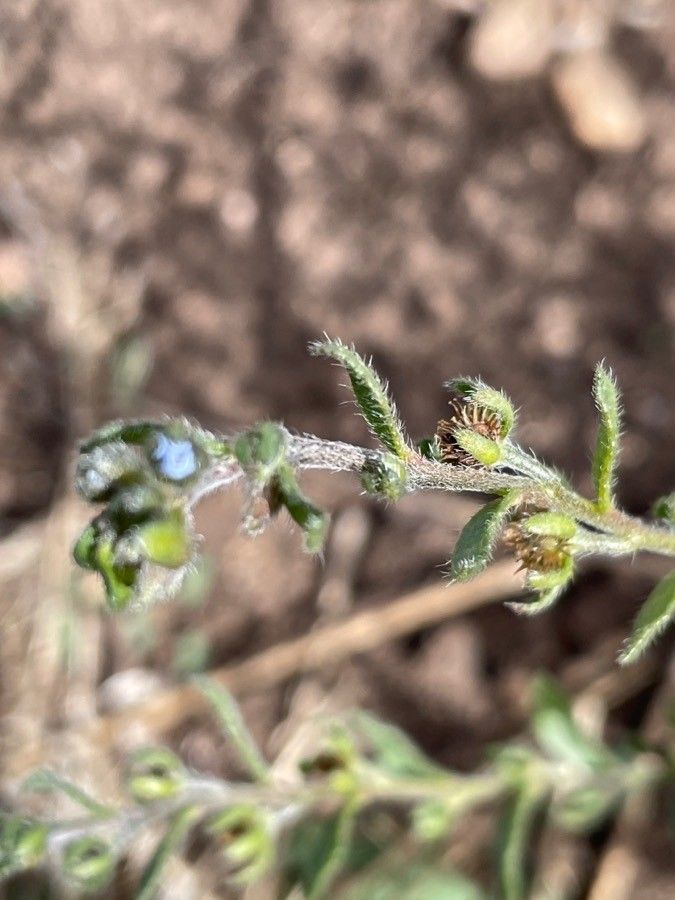
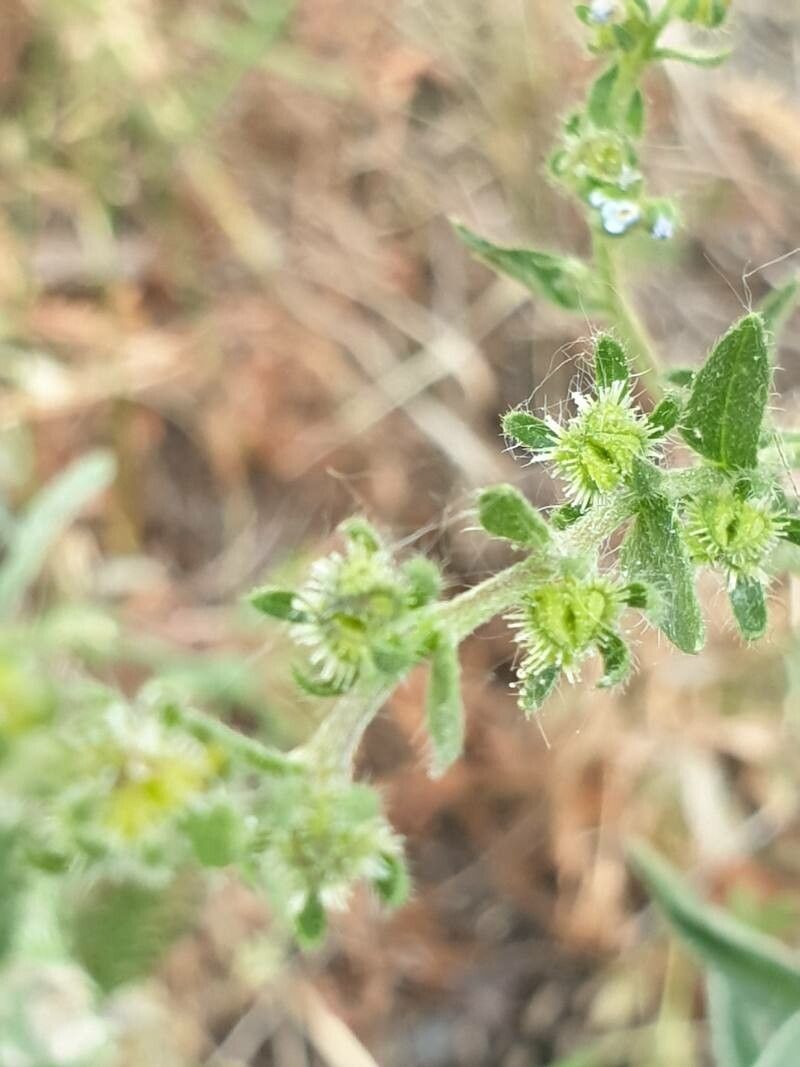
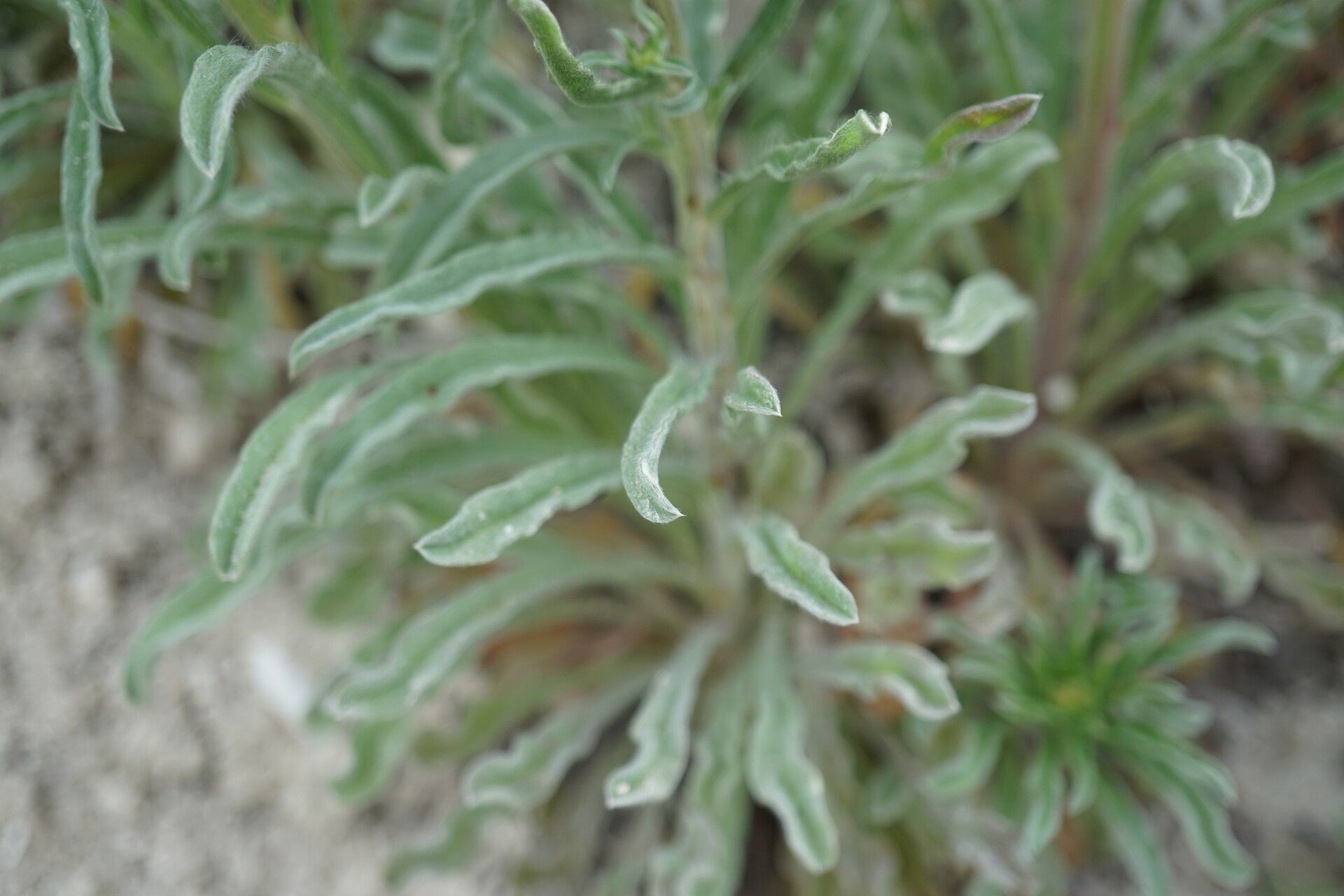
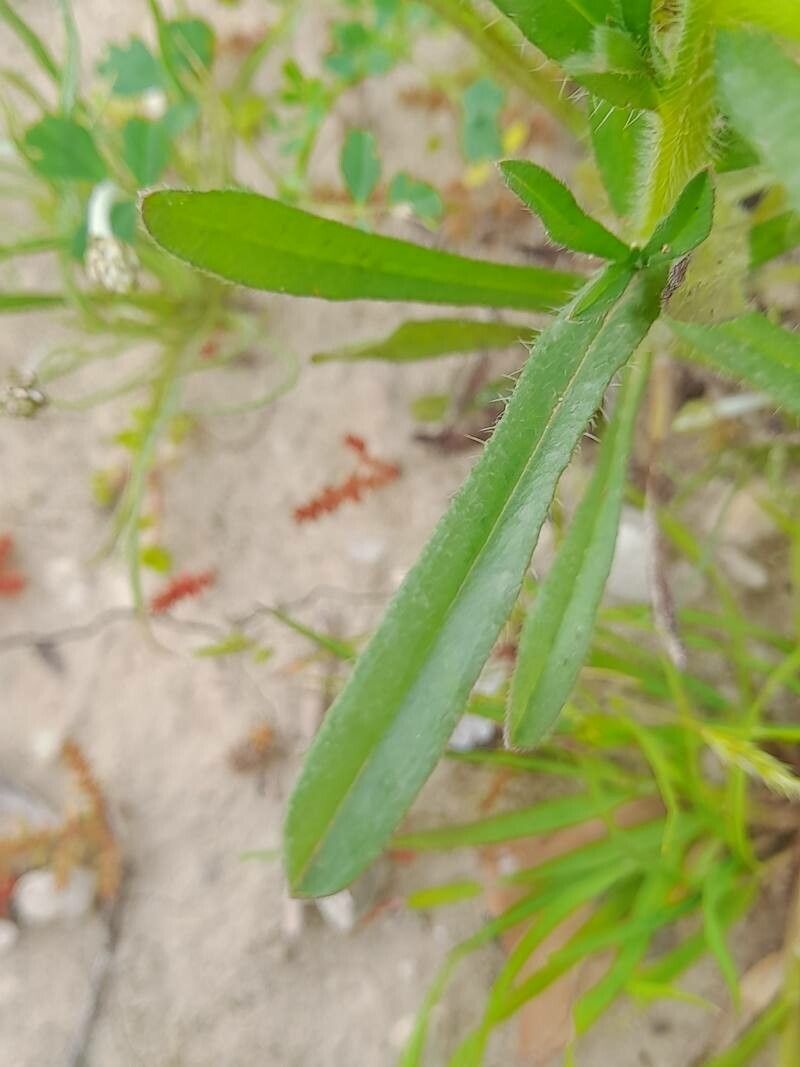
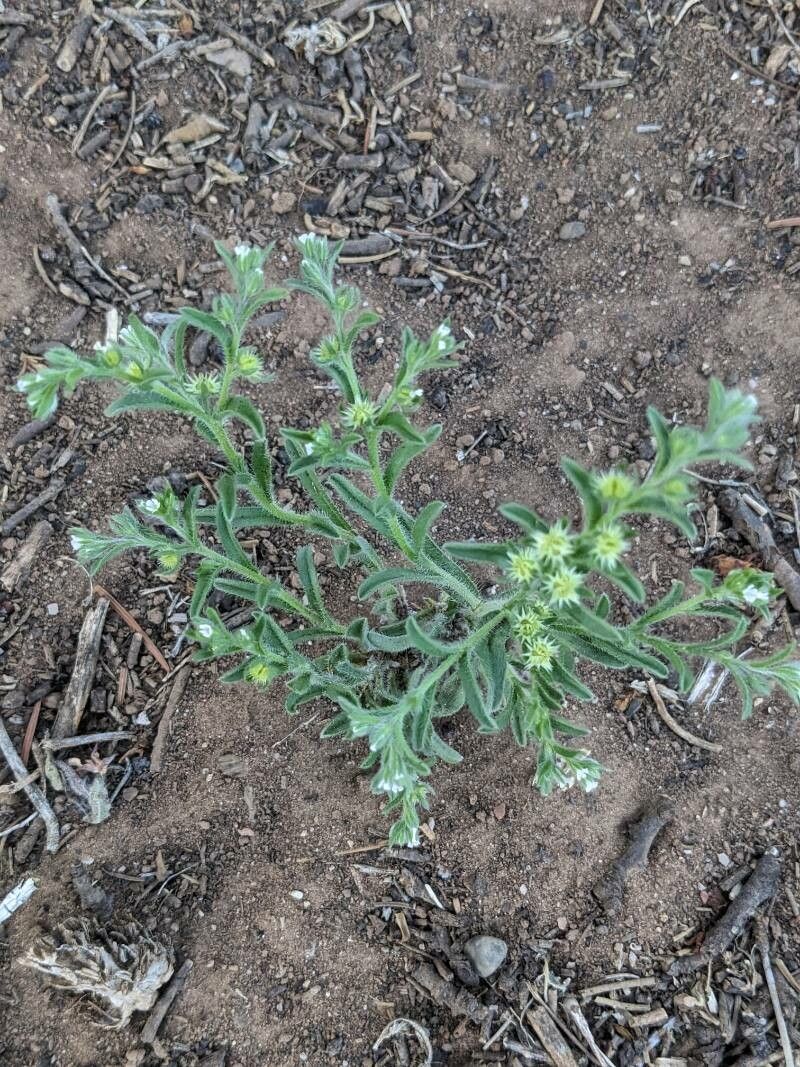
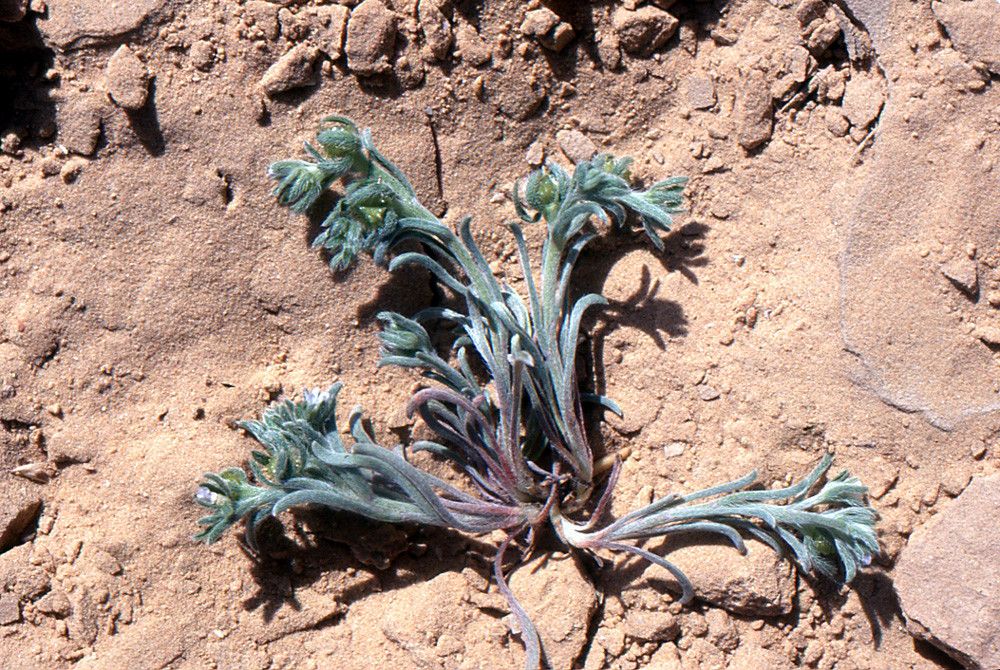
Lappula squarrosa is a species of flowering plant in the borage family known by several common names, including European stickseed, bur forget-me-not, bluebur, and bristly sheepbur. It is native to Europe and Asia, where it is common, and it is an introduced species in much of North America and Africa. It is well known as a noxious weed where it is naturalized and also in many parts of its native range. This is an annual herb producing an erect stem often with sprays of many long, bending branches, its form varying in different regions and climates. The plant may approach a meter in height. The stems are lined with linear to oval leaves up to 5 centimeters long and coated in whitish hairs, and the herbage emits a scent generally considered unpleasant. The inflorescence is a long, leafy raceme of tiny flowers near the ends of the branches. Each flower is 2 to 4 millimeters wide with five light blue corolla lobes. White-flowered plants are occasionally seen. The fruit is a cluster of four nutlets which are coated in hooked prickles. The seeds are dispersed when the prickles get caught on animal coats and human clothing, and when they are moved by wind.This plant grows easily in a wide range of habitat types, including agricultural fields, roadsides, gravel beds, and rocky waste places. It thrives in overgrazed pastures.
European stickseed has strong resistance to diseases and is generally not prone to them. Still, it can be vulnerable to the pests and illnesses found nearby. Such infections are typically mild. Regarding upkeep, this plant needs a moderate amount of care. It should be pruned on a regular basis to preserve its appearance and encourage healthy growth. Applying fertilizer can also support better flowering. European stickseed is appropriate for anyone with outdoor areas like a garden or a patio, and it does not demand much prior gardening experience. It may need additional attention when cultivated indoors.
How to keep Lappula Squarrosa.
Light
European stickseed comes from bright, open habitats and performs best in full sun. It tolerates partial shade but prefers direct sunlight for optimal growth. This plant, which appears as an annual or biennial, is recognized for its sun-loving character.
Water
European stickseed, native to arid regions, is well-adapted to thrive with minimal moisture and demonstrates excellent drought tolerance. To maintain its hydration balance during the active growing season in temperate zones—where water resources might be limited—weekly watering is recommended. This schedule mimics the sporadic rainfall typical of its native habitat.
Temperature
European stickseed is native to temperate areas and prefers a temperature range of 68 to 95°F (20 to 35℃). Seasonal adjustments should be made to recreate this natural environment, especially during hot summer days or cold winter seasons.
Fertilizer
European stickseed benefits from regular, weak applications of fertilizer to encourage healthy leaf growth. Fertilize European stickseed about once a month during the summer. Nitrogen is important for foliage, and adding nitrogen-rich sources helps European stickseed thrive.
Pruning
To maintain healthy European stickseed plants, it is beneficial to prune them from early to late spring. Important techniques include removing dead stems, thinning overcrowded areas, and cutting back the plants to encourage bushier growth. This practice not only enhances the shape and health of the plants but also prevents seed dispersal and helps control their spread in the garden.
Botanical profile.
- Plant Type
- Herb
- Life Cycle
- Annual, Biennial
- Genus
- Lappula
- Family
- Boraginaceae
- Hardiness Zone
- 1
- Mature Height
- 20 cm to 61 cm
- Mature Spread
- 15 cm to 30 cm
- Leaf Color
- Green, Dark Green
- Leaf Type
- Deciduous
- Flower Color
- Blue
- Flower Size
- 0.20 cm to 0.51 cm
- Bloom Time
- Late spring, Early summer, Mid summer
- Planting Time
- Spring, Summer
- Harvest Time
- Mid summer, Late summer, Early fall
- Native Area
- Turkey, Sweden, Austria, Slovakia, Montenegro, Pakistan, Slovenia, Croatia, Belarus, Uzbekistan, Russia, Germany, Estonia, Koppen, Romania, Latvia, France, Tajikistan, Czech Republic, Bulgaria, Armenia, Greece, Ukraine, Serbia, China, Lithuania, Italy, Kazakhstan, Spain, Switzerland, Mongolia, Iran, Albania, Azerbaijan, Hungary, Turkmenistan
Other names.
Reader questions.
How should I water my European stickseed plant?
European stickseed can be watered using a garden hose, a watering can, or any other common watering tool. It is not particular about the type of water it receives, as it can survive on rainwater, tap water, or filtered water. It is generally recommended not to water this plant from above, as it can harm the leaves and flowers and potentially cause disease. A drip irrigation system is often the best method for watering, as it provides even and direct water application to the soil. When watering a container-grown European stickseed, use a cup, watering can, or tap to water the soil directly.
What are the sunlight requirements for European stickseed (Lappula squarrosa)?
European stickseed thrives in full sun environments, requiring above 6 hours of sunlight daily to grow optimally. It can also tolerate partial sun, benefiting from about 3-6 hours of sunlight. Originating from bright, open environments, this annual and biennial plant prefers direct sunlight for optimal growth. It's important to observe your garden's sunlight patterns to choose spots that offer the right balance of light and shade, ensuring the best conditions for your plants.
What is the ideal temperature range for growing European stickseed?
European stickseed, botanically known as Lappula squarrosa, thrives in temperate regions and prefers a temperature range between 68 to 95°F (20 to 35°C). To ensure optimal growth, it's important to adjust care seasonally, particularly during the extremes of hot summers and cold winters, to closely mimic its natural habitat.
What should I do if I give too much or too little water to my European stickseed?
To address underwatering for European stickseed, simply increase the frequency of watering when you notice the plant lacking moisture. On the other hand, overwatering can be more harmful, potentially leading to diseases and plant decline. To prevent this, choose a suitable location with ample sunlight to dry the soil and ensure effective drainage to avoid waterlogged conditions. If your European stickseed is in a pot, transferring it to a different pot with better drainage or adding loose soils can help rectify the situation.
How does artificial lighting support European stickseed growth indoors?
When natural sunlight is insufficient, especially during winter or in less sunny spaces, artificial lighting can provide European stickseed with the necessary light conditions for growth. Choosing the right type of artificial light, such as LED lights, allows you to customize the wavelengths needed for your plant. Full sun plants require 30-50W/sq ft, partial sun plants need 20-30W/sq ft, and full shade plants need 10-20W/sq ft of artificial light. Placement of the light source 12-36 inches above the plant and ensuring a duration of 8-12 hours of light per day can mimic natural sunlight, promoting healthier growth.
Is European stickseed cold-tolerant?
Yes, European stickseed is highly cold-tolerant and does not require additional measures for frost protection during the winter. Nonetheless, it's advisable to water the plant generously before the first freeze in autumn. This practice ensures the soil stays moist and freezes, which helps to prevent drought and water scarcity for the plant throughout the winter and into the early spring.
How frequently should I water my European stickseed plant?
European stickseed requires regular watering throughout the growing season. In the spring, water the plant once a week. As the season progresses and becomes warmer, you may need to increase watering to two or three times a week. However, be careful not to exceed this frequency as it can harm the plant. Regardless of watering frequency, the soil should be kept moist but not wet. When growing European stickseed in a pot, it's important to water more frequently. Potted soil tends to heat up and dry out faster than soil in the ground. Generally, water a container-grown European stickseed a few times per week, compared to a weekly watering for an in-ground plant.
What are signs of insufficient light in European stickseed?
When European stickseed is grown indoors or under inadequate light, it may exhibit several symptoms, including small leaves indicating reduced growth, leggy or sparse growth revealing the plant's struggle to reach light, faster leaf drop as it conserves resources, slower or halted new growth in survival mode, lighter-colored new leaves due to lack of chlorophyll, and various conditions like chlorosis, sunscald, leaf curling, wilting, and leaf scorching reflecting stress from inappropriate lighting conditions.
What should I do if the temperature falls below -45°C?
Although European stickseed is extremely cold-tolerant, it's crucial to maintain winter temperatures above -45°C. Falling below this temperature threshold won't typically display immediate damage, but it might lead to decreased sprouting or even a lack of sprouting come spring. If this occurs, removing the parts that have failed to sprout in the spring is recommended.
How much water does my European stickseed plant need?
Determining how much water to give your European stickseed can be done in a few different ways. Some gardeners prefer to assess the soil's moisture level by feeling it. If you choose this method, aim to water until you feel the first six inches of soil becoming moist. Another option is to use a specific measurement for watering. Typically, European stickseeds require about two gallons of water per week, taking into consideration factors like temperature and soil dryness. However, strictly adhering to this guideline may result in overwatering if your plant actually requires less water. When growing European stickseed in a container, a different approach is needed. In this case, water until all layers of dry soil are moistened. To test for moisture, simply insert your finger into the soil. Alternatively, you can water until you observe a slight trickle of excess water draining from the pot's holes.
How can I remedy light sufficiency issues for European stickseed?
To ensure European stickseed receives enough light, gradually move plants to sunnier locations to achieve at least 6 hours of direct sunlight daily. For indoor plants that are large or not easily moved, consider artificial lighting, keeping lamps on for at least 8 hours per day. Outdoors, adapt plants to sunlight changes to prevent sunburn. Minimize obstructions by pruning trees or moving plants to sunlit areas. When transplanting smaller plants for better light exposure, do so during their dormant period for minimal stress. It's important to remember that parts of the plant affected by poor light may not recover, but new growth can be healthy with proper light adjustment.
How does European stickseed react to high temperatures?
European stickseed has a low tolerance for high temperatures. Growth halts when temperatures exceed 35°C, and the plant becomes more prone to rot. To combat this, it's best to trim away any sunburned or dried-out sections. Moving the plant to a shaded area or employing a shade cloth can protect it from the harsh midday and afternoon sun. Additionally, watering the plant in the morning and evening will help keep the soil adequately moist.