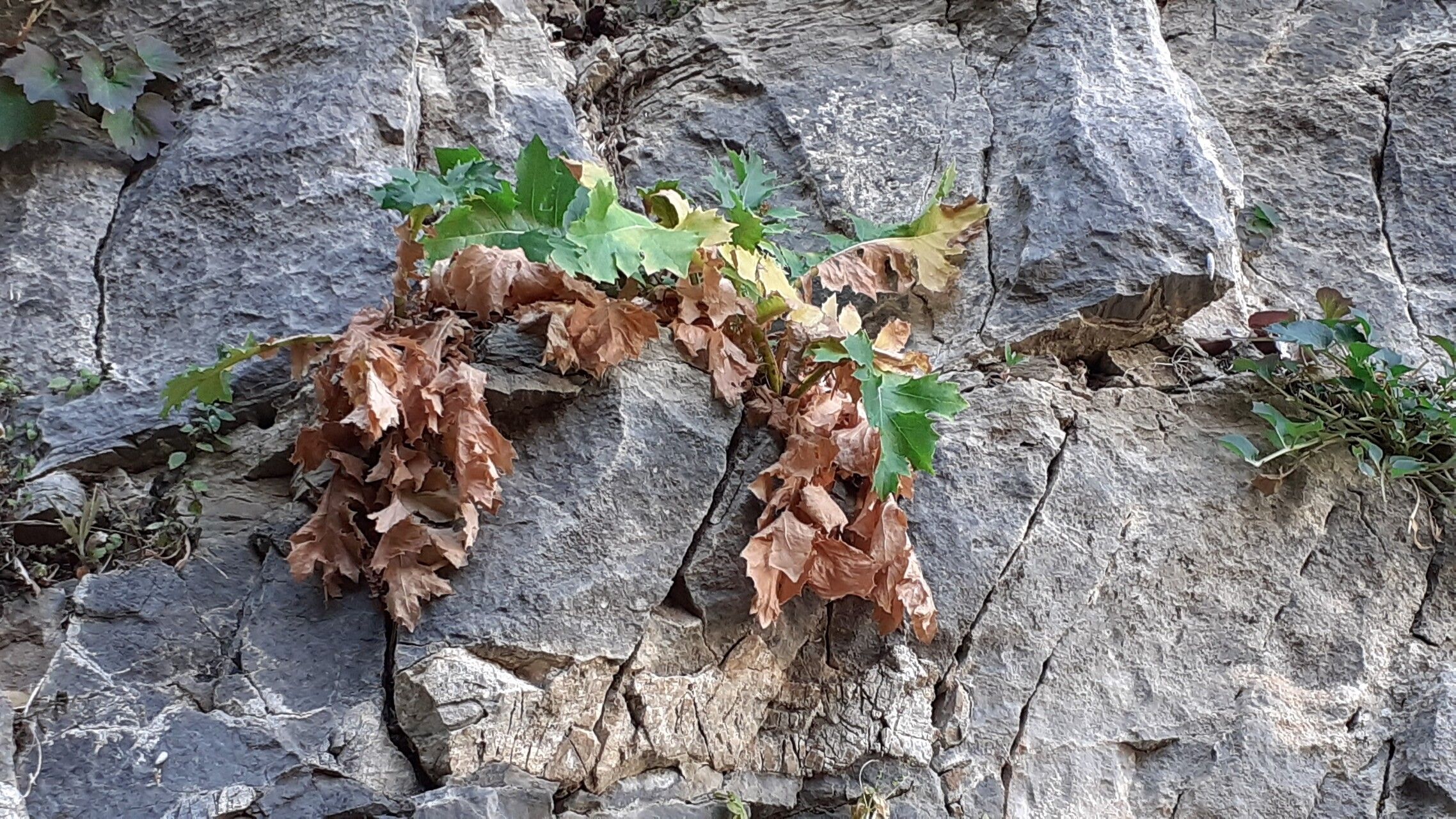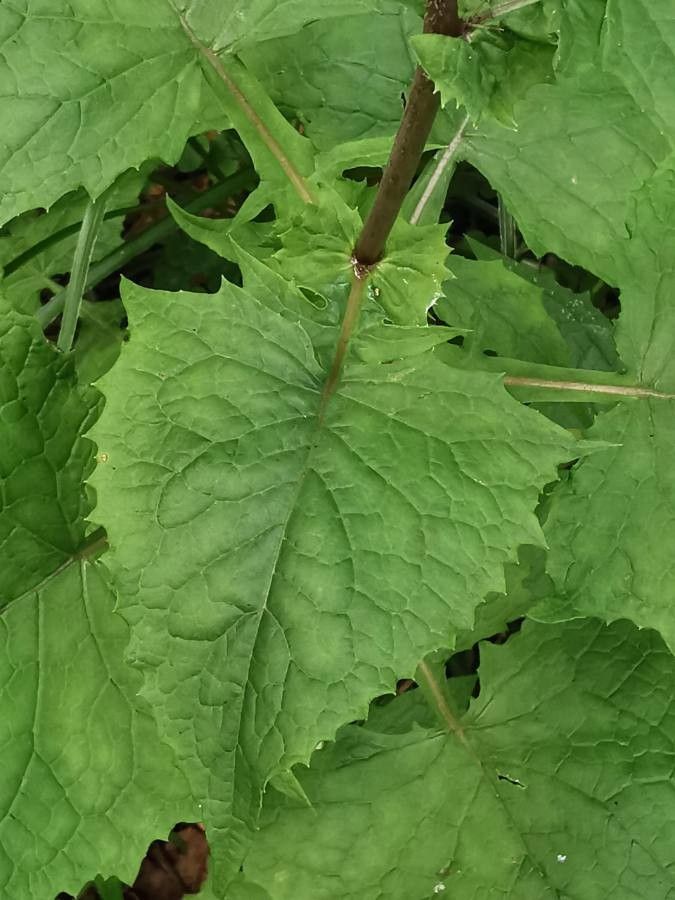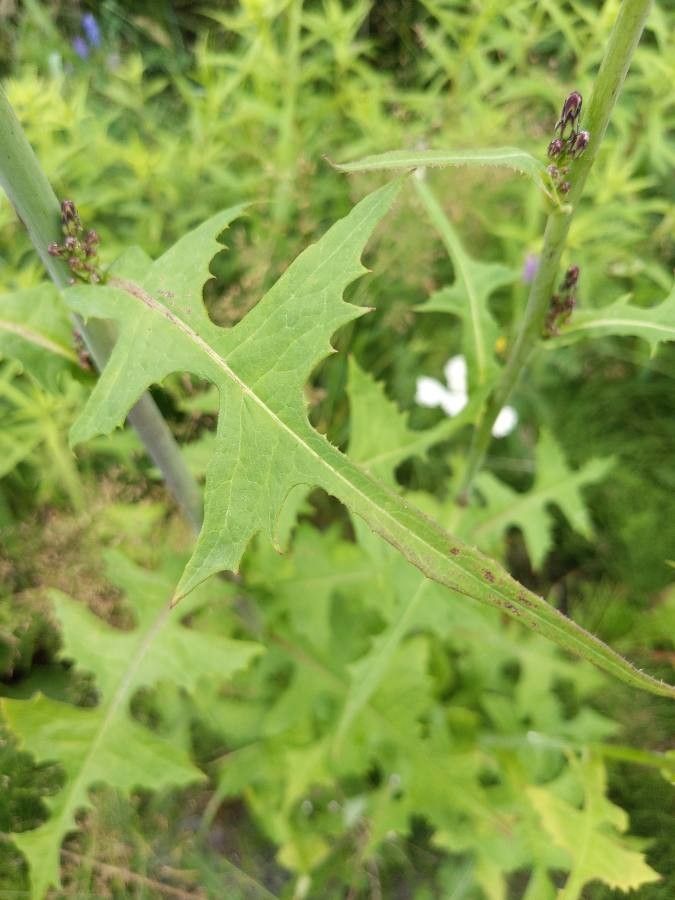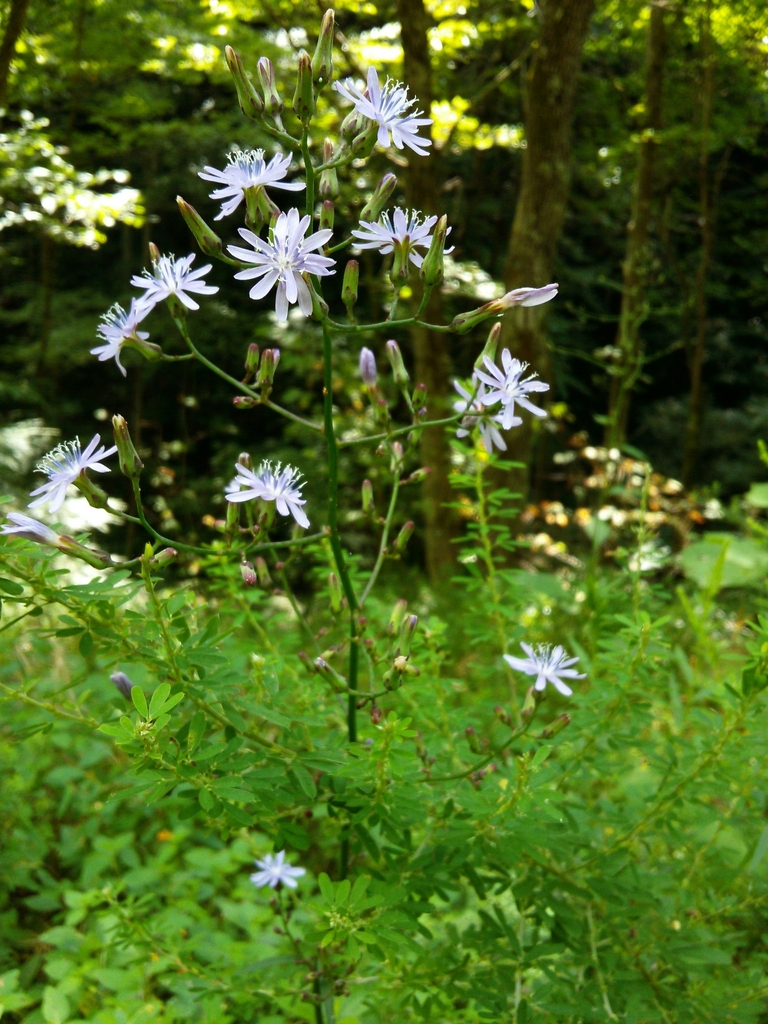
Lactuca floridana, the woodland lettuce, is a North American species of wild lettuce. It is widespread across much of central Canada and the eastern and central United States from Ontario and Manitoba south as far as Texas, Louisiana, and Florida.Lactuca floridana is an annual biennial herb in the dandelion tribe within the daisy family growing from a taproot a height of up to 200 cm (79 in; 6.6 ft). The top of the stem bears a multibranched inflorescence with many flower heads. Each head contains 10–20 blue or white ray florets but no disc florets. The fruit is a brown achene.Lactuca floridana was found to contain 11β,13-Dihydro-lactucin-8-O-acetate hemihydrate.
Woodland lettuce has strong disease resistance and is usually not susceptible to diseases. However, it can be vulnerable to pests and illnesses present in its surroundings. These infections are generally mild. Regarding care, this plant requires a moderate level of maintenance. It should be pruned regularly to keep a good appearance and support healthy growth. Fertilizing can also help encourage flowering. Woodland lettuce is suitable for anyone with an outdoor area, such as a garden or patio, and does not demand extensive gardening experience. It may need more attention when grown indoors.
How to keep Lactuca Floridana.
Light
Woodland lettuce prefers moderate sunlight but can tolerate brighter light conditions. The plant does well under these light levels, and in its native habitat it is accustomed to those variations. Too much sun can impair its vitality, while too little light may slow its growth.
Water
Woodland lettuce thrives best in environments that mimic a forest, with consistently moist conditions. It benefits from weekly watering to keep its leaves healthy. While it can withstand short periods of dryness, it grows best when planted outdoors, where it can take advantage of natural rainfall and seasonal weather patterns.
Temperature
Woodland lettuce is native to temperate regions and does best at temperatures of 68 to 95 °F (20 to 35 °C). As seasons change, use thermal coverings to maintain that range, especially during colder months.
Fertilizer
Woodland lettuce does well with regular, light applications of fertilizer to encourage healthy leaf development. Fertilize Woodland lettuce about once a month during the summer. Nitrogen is essential for leafy growth, so providing nitrogen-rich fertilizers helps Woodland lettuce prosper.
Pruning
Woodland lettuce benefits from pruning, which encourages bushier growth and removes unhealthy parts. The best time to prune is from early to late spring, during its active growth phase. Be careful not to over-prune, as this can reduce the plant's vitality. With proper pruning, woodland lettuce can be a healthy and attractive addition to your garden.
Botanical profile.
- Plant Type
- Herb
- Life Cycle
- Annual, Biennial
- Genus
- Lactuca
- Family
- Asteraceae
- Hardiness Zone
- 3-8
- Mature Height
- 2.13 m
- Mature Spread
- 30 cm to 61 cm
- Leaf Color
- Green
- Leaf Type
- Deciduous
- Flower Color
- Purple, Blue
- Flower Size
- 2.54 cm
- Bloom Time
- Early summer, Mid summer
- Planting Time
- Spring
- Harvest Time
- Mid summer
Other names.
Reader questions.
How should I water my Woodland lettuce?
To water Woodland lettuce, there are various options to choose from. You can use a garden hose with a spray nozzle, a watering can, or any other common watering tool. Woodland lettuce is not too particular about the source of water. It can thrive with rainwater, tap water, or filtered water. However, it is advisable to avoid watering this plant from above as it can harm the leaves and flowers and increase the risk of disease. The best way to water Woodland lettuce is often by setting up a drip irrigation system. This system ensures even and direct application of water to the soil. If you have a container-grown Woodland lettuce, you can still use a similar watering method, but with different tools. Use a cup, watering can, or tap water to directly water the soil of the container-grown lettuce.
What are the sunlight requirements for Woodland Lettuce?
Woodland lettuce (Lactuca floridana) thrives best in moderate sunlight conditions but can adapt to areas with more intense light. It requires about 3-6 hours of sunlight daily, categorized as partial sun, while more than 6 hours is considered full sun. It's important to watch how sunlight moves through your garden to choose the ideal spots that offer a balance of light and shade, ensuring the plant's health and happiness. Excessive sunshine can affect its vitality, and inadequate sunlight may slow down its growth.
What is the native environment of Woodland lettuce?
Woodland lettuce, known botanically as Lactuca floridana, is native to temperate environments. It thrives best in temperatures ranging from 68 to 95 °F (20 to 35 °C). To maintain optimal growth, especially during the changing seasons, it's important to adjust environmental temperatures within this range. This can often be achieved by using thermal coverings in the cooler months to keep the plant warm. Despite its strong cold resistance, measures should be taken to protect it during exceedingly cold winters.
What do I do if I give my Woodland lettuce too much or too little water?
To prevent underwatering Woodland lettuce, simply water it more regularly when you notice it lacking moisture. Overwatering, on the other hand, can be a serious issue as it can lead to diseases and even death for the plant. To avoid this, choose a growing location with plenty of sunlight to dry the soil and good drainage to prevent water from pooling. If you overwater your potted Woodland lettuce, consider transferring it to a new pot with better drainage and loose soil.
How does artificial lighting support plant growth?
When natural sunlight is insufficient, artificial lighting becomes crucial for the growth of indoor plants. It promotes faster, healthier growth by providing adequate light, especially during winter or in less sunny spaces. LED lights are a popular choice as they can be customized to the specific light wavelengths needed by plants. For full sun plants, 30-50 watts per square foot is suitable; partial sun plants require 20-30 watts per square foot, and full shade plants need 10-20 watts per square foot. The light source should be placed 12-36 inches above the plant, mimicking natural sunlight, with the duration mimicking natural daylight hours, typically 8-12 hours per day.
How should Woodland lettuce be protected during winter?
Protecting Woodland lettuce during winter involves a few key strategies, especially if temperatures are expected to drop significantly. Although the plant has a strong resistance to cold, when temperatures are forecasted to fall below its tolerance limit, it is crucial to provide protection. This can be done by covering the plant with insulating materials such as soil or straw. Additionally, before the first freeze of autumn, it's beneficial to water the plant abundantly. This ensures the soil around it remains moist, which can help prevent issues related to drought and water scarcity during the cold winter and early spring months.
How often do I need to water my Woodland lettuce?
To make sure your Woodland lettuce stays healthy, it's important to water it regularly. In the spring, watering once a week should be enough. However, as the weather gets warmer, you may need to increase watering to two or three times a week. But be careful not to exceed this rate, as it can harm the plant. Regardless of how often you water, the soil should always remain moist but not soaked. If your Woodland lettuce is in a pot, you'll need to water it more often because the soil can dry out faster. In most cases, plan to water a potted Woodland lettuce a few times a week, compared to just once a week for a plant in the ground.
What are the symptoms of light deficiency in Woodland Lettuce?
Symptoms of light deficiency in Woodland Lettuce include smaller new leaves compared to mature ones, leggy or sparse growth due to elongated spaces between leaves or stems, faster leaf drop as the plant conserves resources, slower or no new growth as the plant enters survival mode, lighter-colored new leaves indicating a lack of chlorophyll, and various issues like chlorosis, sunscald, leaf curling, wilting, and leaf scorching resulting from inappropriate light conditions. These symptoms reflect the plant's struggle with either too little or too much light.
What are the symptoms of temperature stress in Woodland lettuce?
Woodland lettuce shows different symptoms depending on whether it's exposed to low or high temperatures. In low temperatures, it maintains its cold tolerance well but needs to be kept above its minimum tolerable growing temperature. If temperatures drop below its growth limit, you may not see any noticeable changes immediately, but there could be a decrease in sprouting or even no sprouting at all come spring. High temperatures can also stress the plant, causing the leaves to fade in color, curl, become sunburn, and in severe cases, the plant might wilt and dry out. It's important to keep the plant within its suitable temperature ranges to avoid these stresses.
How much water does my Woodland lettuce require?
Determining the appropriate amount of water for your Woodland lettuce can be approached in a few ways. Some gardeners prefer to assess soil moisture by feeling it. This method suggests watering until the first six inches of soil feel moist. Alternatively, you can use a specific measurement as a guideline. Generally, providing about two gallons of water per week is recommended, considering factors like weather and soil dryness. However, it's important to avoid overwatering if your plant requires less than two gallons per week for any reason. Growing Woodland lettuce in a container requires a different approach. You should water enough to moisten all dry layers of soil. To test for moisture, simply insert your finger into the soil. You can also water until you notice a slight release of excess water through the pot's drainage holes.
How can I address light-related issues for my Woodland Lettuce?
To optimize Woodland Lettuce growth and address light-related issues, consider gradually adapting your plant to changing light conditions by moving it to increasingly sunnier spots each week until it receives the ideal 3-6 hours of direct sunlight daily. If moving the plant is not feasible, use artificial light such as desk lamps or professional plant grow lights for at least 8 hours daily. Outdoor plants should also be moved gradually to avoid sunburn. For small plants, reducing sun obstructions or transplanting during the dormant period can ensure ample light and good drainage. Note that parts of the plant affected by insufficient sunlight might not recover, but new growth should be healthy with improved light exposure.
How can you manage temperature stress in Woodland lettuce?
Managing temperature stress in Woodland lettuce involves proactive care during both cold and hot spells. In spring, if parts of the plant have failed to sprout due to cold stress, these should be removed. During the hot summer months, it is advisable to trim away any parts of the lettuce that have become sunburned or dried up. To protect the plant from excessive heat, moving it to a shaded location or using shade cloth during the midday and afternoon can be beneficial. Ensuring the soil stays moist by watering in the morning and evening is also crucial for its health during periods of high temperature.