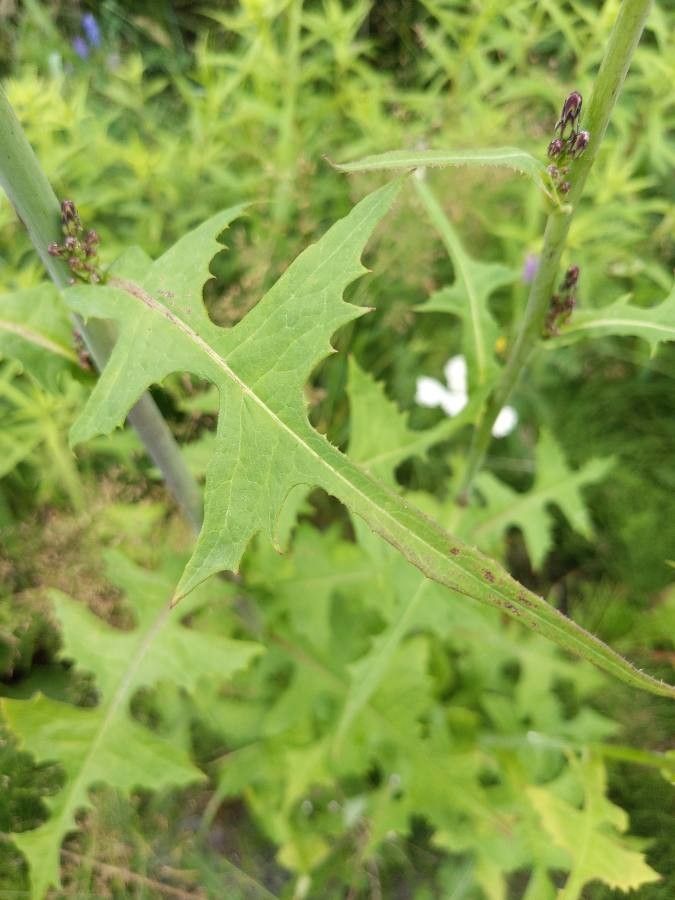
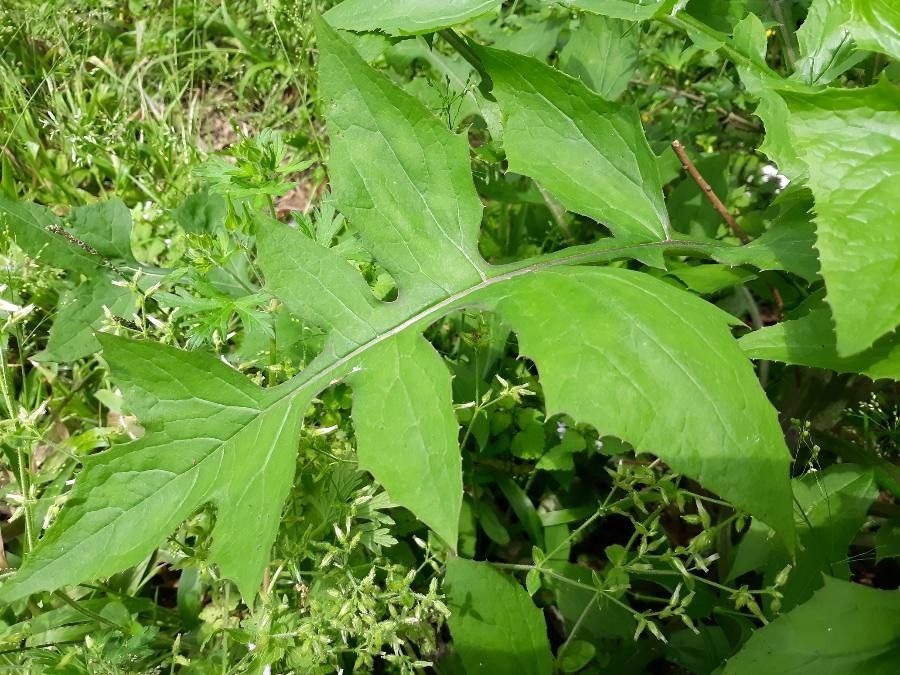
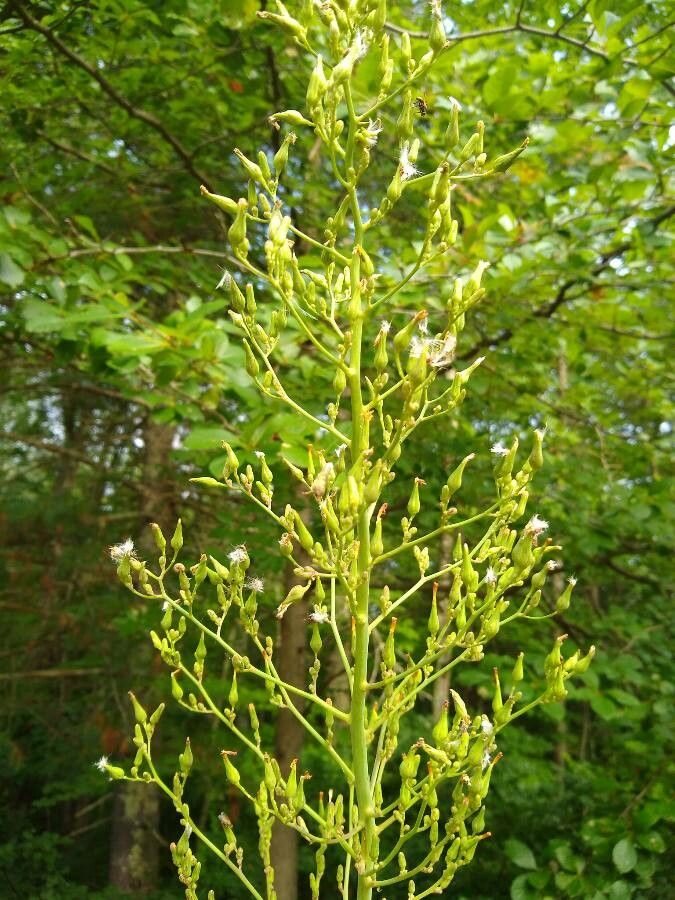
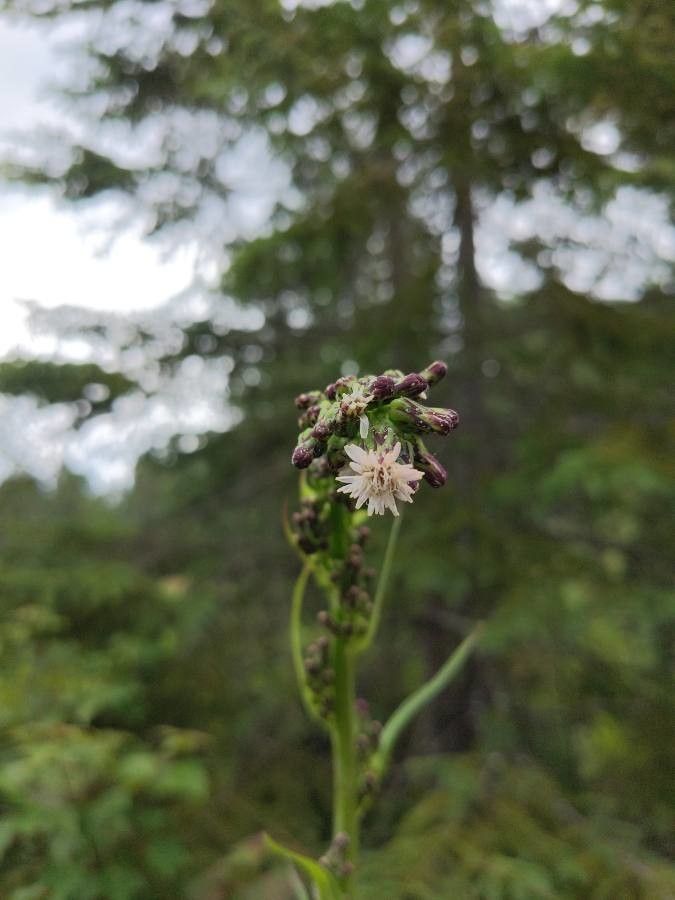
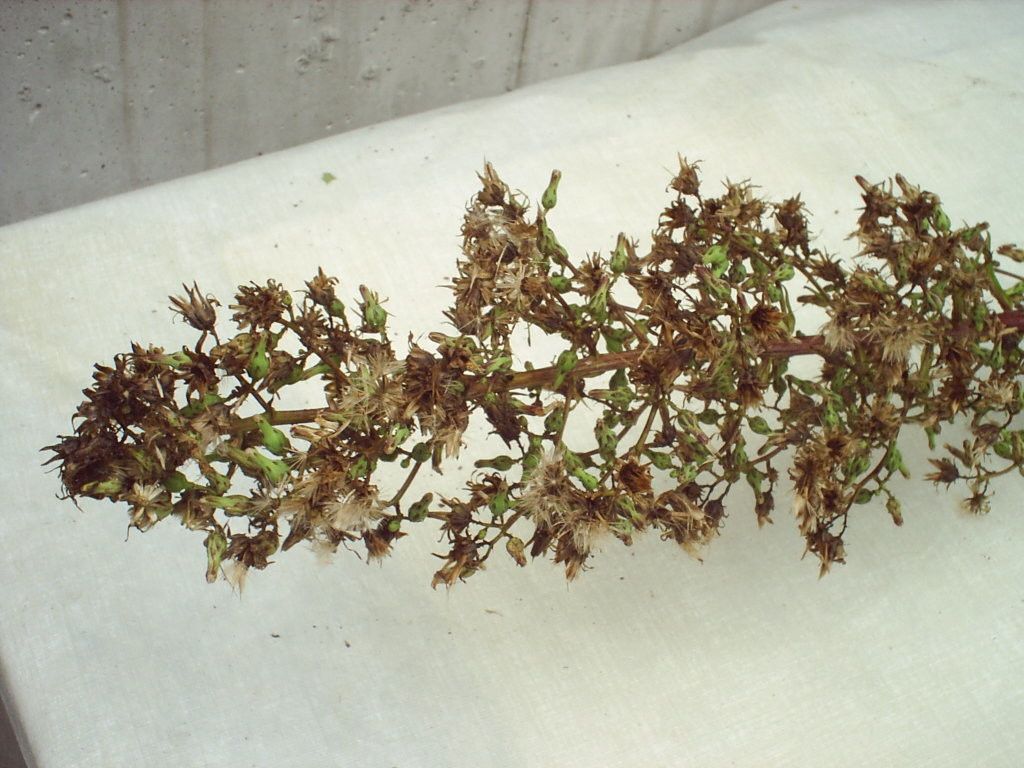
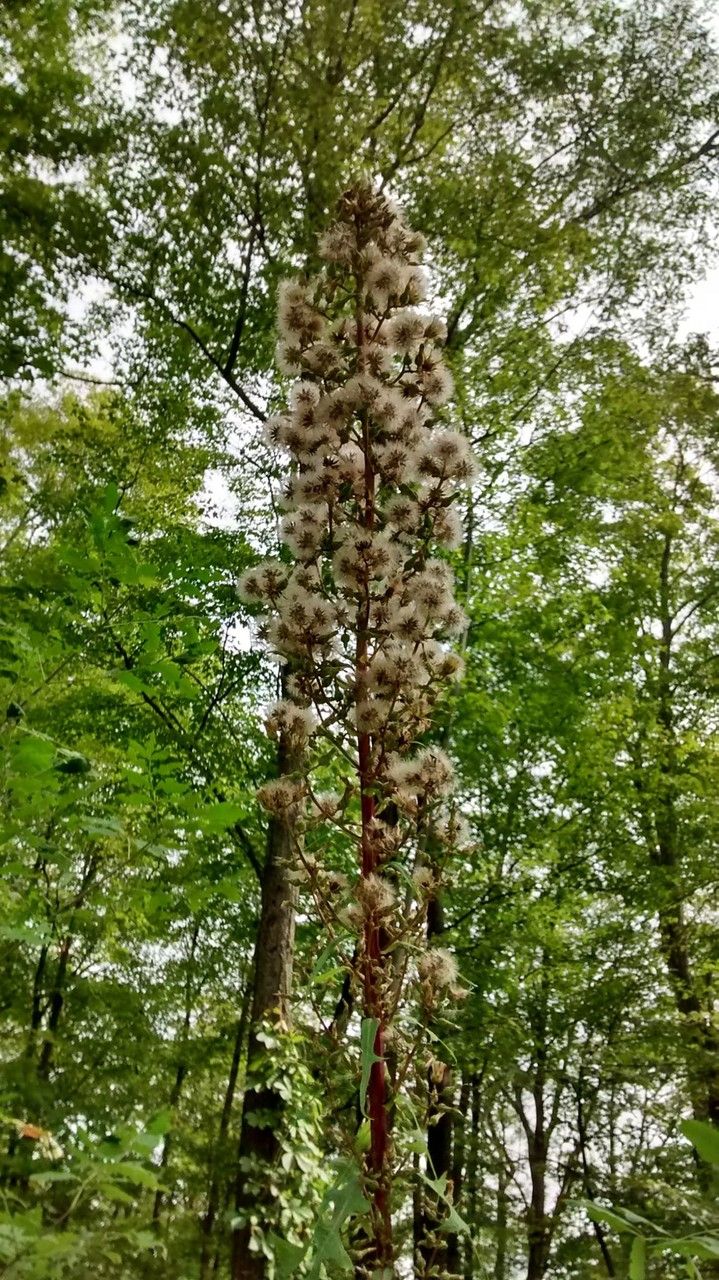
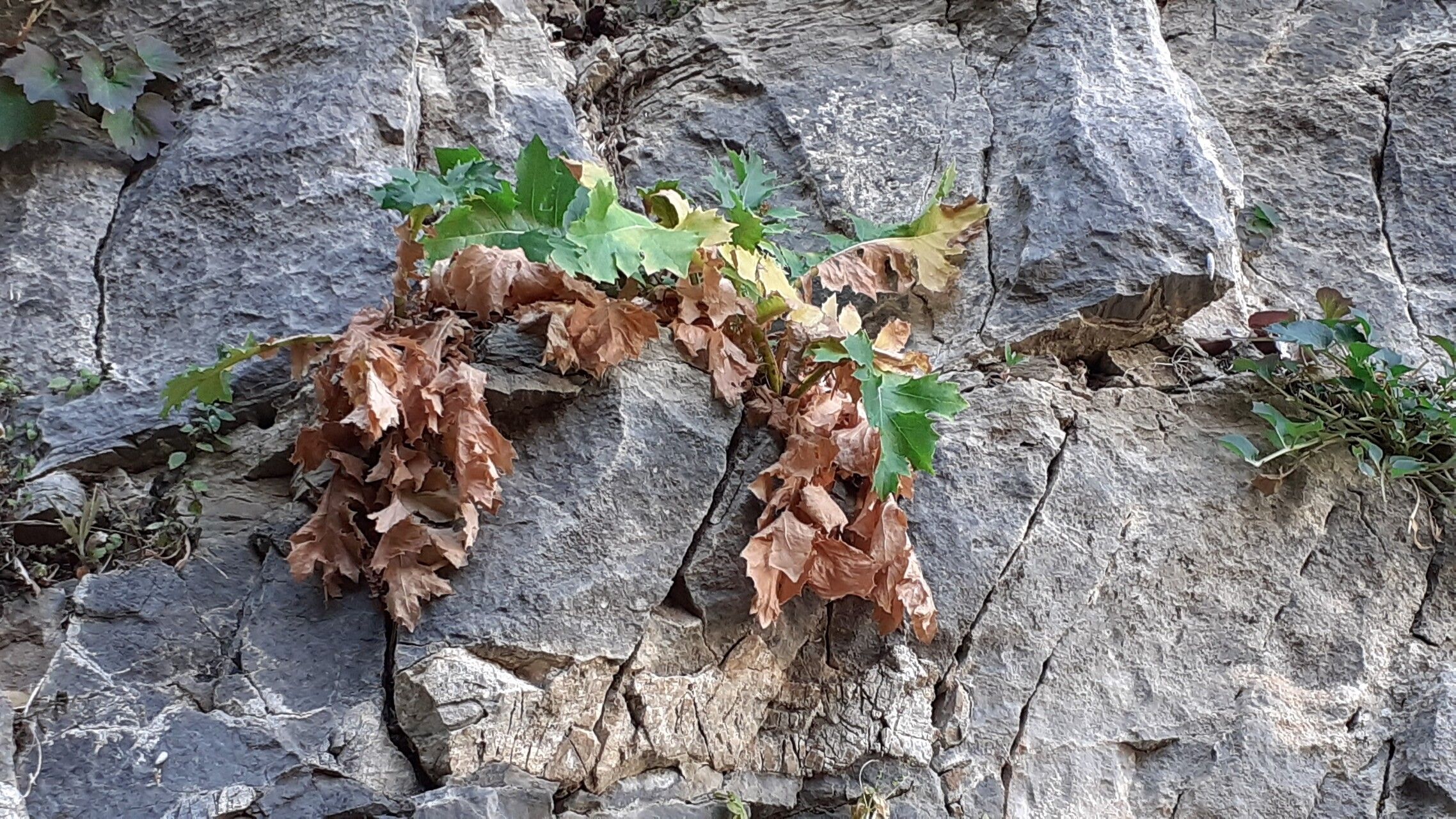
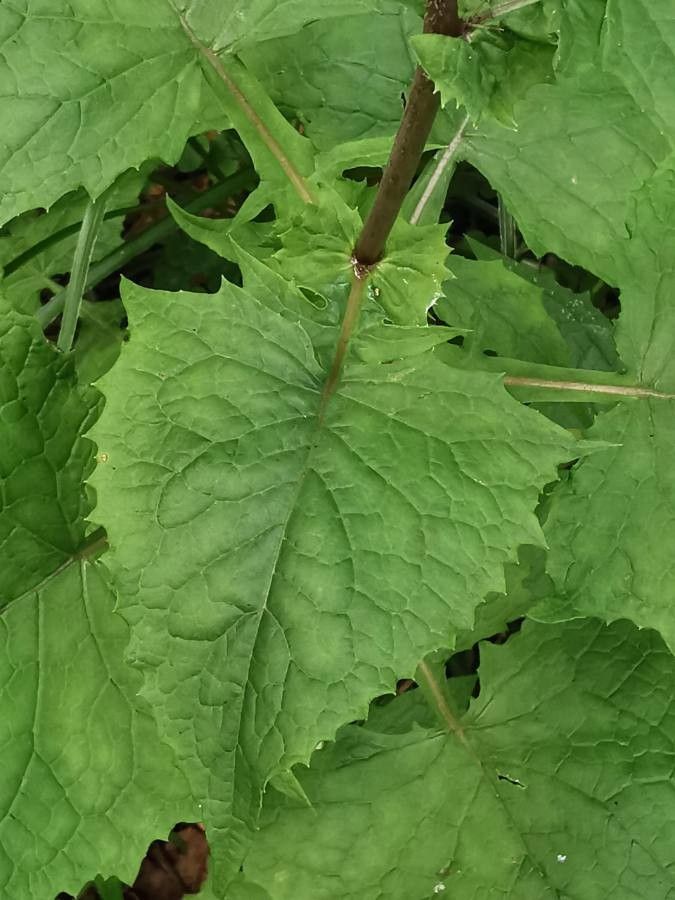
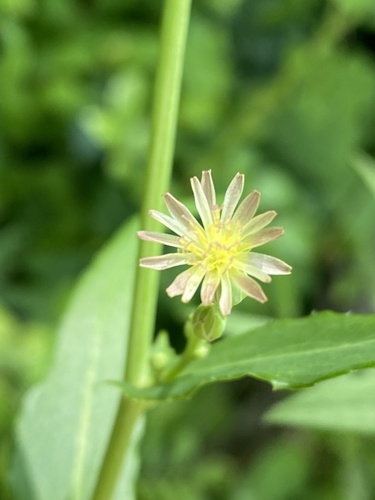
Lactuca biennis is a North American species of wild lettuce known by the common names tall blue lettuce and blue wood lettuce. It is widespread across much of the United States and Canada from Alaska and Yukon south as far as California, New Mexico, and Georgia.Lactuca biennis is a biennial herb in the dandelion tribe within the daisy family growing from a taproot to heights anywhere from one half to four meters (20 inches to over 13 feet). There are deeply lobed, toothed leaves all along the stem. The top of the stem bears a multibranched inflorescence with many flower heads. Each head is just over a centimeter (0.4 inches) wide and has many whitish to light blue ray florets but no disc florets. The fruit is a mottled achene about half a centimeter (0.2 inches) long with a brownish pappus. Lactuca biennis was described botanically in 1794, with the name Sonchus biennis, then transferred to Lactuca in 1940.
Tall blue lettuce is fairly disease-resistant and typically does not suffer from many illnesses. However, it can be vulnerable to pests and diseases present in its environment. Such infections are usually mild. For care, the plant requires moderate maintenance. It should be pruned regularly to keep a good appearance and promote healthy growth. Fertilizing can also help encourage flowering. Tall blue lettuce is appropriate for anyone with outdoor space, like a garden or patio, and does not demand extensive experience in plant care. It may need more attention if grown indoors.
How to keep Lactuca Biennis.
Light
Tall blue lettuce thrives in locations that get sun for most of the day, which promotes healthy growth. It can also tolerate places with fewer hours of sunlight. However, persistent shade or excessive exposure can impede its growth, possibly causing it to stretch or suffer damage to its health.
Water
Tall blue lettuce flourishes in environments where rainfall occurs periodically, as it prefers consistent moisture without becoming waterlogged. For optimal growth, it requires weekly watering and benefits from well-draining soil that replicates its natural habitat. This herbaceous species has moderate drought tolerance, which helps prevent root rot.
Temperature
Tall blue lettuce does best in its native environment when temperatures are between 68 and 95°F (20 and 35℃). It favors a warm climate, and its growth can be stunted in cooler conditions.
Fertilizer
Tall blue lettuce are regarded as heavy nutrient feeders. They require frequent, low-dose applications of nitrogen and potassium fertilizers and occasional additions of phosphorus, micronutrients, sulfur, and magnesium to sustain good growth and bright coloration. Ongoing fertilization throughout the growing season is needed to avoid deficiency symptoms and preserve optimal growth.
Pruning
Tall blue lettuce is characterized by its tall, blue-green leaves and benefits greatly from pruning in the spring. To optimize its growth, remove any damaged leaves and thin crowded sections to improve air circulation and light exposure. This helps minimize the risk of diseases and encourages healthy growth and flowering. Always use clean, sharp tools for effective pruning.
Botanical profile.
- Plant Type
- Herb
- Life Cycle
- Biennial, Annual
- Genus
- Lactuca
- Family
- Asteraceae
- Hardiness Zone
- 5-8
- Mature Height
- 0.61 m to 2.13 m
- Mature Spread
- 61 cm
- Leaf Color
- Green, Blue
- Leaf Type
- Deciduous
- Flower Color
- White, Yellow, Purple
- Flower Size
- 2.54 cm
- Bloom Time
- Early summer, Mid summer
- Planting Time
- Spring
- Harvest Time
- Mid summer
Other names.
Reader questions.
How should I water my Tall blue lettuce?
To properly water the Tall blue lettuce, it is best to use filtered water at room temperature. Tap water may contain harmful particles that can affect the plant's health. It is important to use water that is not too cold because the Tall blue lettuce originates from a warm environment and cold water could cause shock. Instead of overhead watering, it is recommended to apply filtered room temperature water directly to the soil until it is completely soaked. This method helps moisten the roots, allowing them to spread and absorb the necessary nutrients.
What are the sunlight requirements for tall blue lettuce?
Tall blue lettuce requires full sun, which means it should receive above 6 hours of sunlight daily, to ensure its healthy growth. It can also tolerate partial sun, meaning about 3-6 hours of sunlight. However, it's important to carefully observe the sunlight patterns in your garden to place your plants in spots that offer a good balance of light and shade, ensuring they remain happy and healthy.
What is the ideal temperature range for growing Tall blue lettuce?
Tall blue lettuce thrives in its native environment with an ideal temperature range between 68 to 95\u00b0F (20 to 35\u2103). It flourishes in warm climates and may experience stunted growth in cooler conditions. Despite its strong cold resistance, in areas where winter temperatures are expected to dip below -25\u00b0C, it's important to take measures to protect the plant from the cold. This includes covering the plant with soil or straw and watering abundantly before the first freeze to ensure the soil stays moist, aiding in the plant's survival through winter and early spring.
What should I do if I give too much or too little water to my Tall blue lettuce?
Overwatering is the more common issue for the health of Tall blue lettuce. Too much water can cause wilting and yellowing of the stems and leaves. It can also lead to diseases like root rot, mold, and mildew that can kill the plant. Underwatering is less common, but it can cause brittle and brown leaves. It's important to notice the signs of overwatering early because some diseases may not be fixable if you wait too long. Reduce watering immediately if you see signs of overwatering and check the soil for poor drainage. If the plant lacks water, simply increase watering until the signs improve.
How does sunlight affect the growth of tall blue lettuce?
Sunlight greatly influences the growth and health of tall blue lettuce. Ideally, it thrives in areas that are exposed to sunlight for most of the day. In conditions with less sunlight, it still manages to grow but might not reach its full potential. Constant shadow or excessive exposure without protection can negatively impact the plant, potentially causing elongation or damaging its vitality. Therefore, ensuring the right amount of sunlight is crucial for its prosperity.
How does Tall blue lettuce react to low temperatures?
Tall blue lettuce is quite cold-tolerant, showing optimal growth when temperatures are above 20\u00b0C and should ideally remain above 0\u00b0C during winter. If temperatures fall below -25\u00b0C, the plant may not exhibit immediate damage but could face decreased sprouting or fail to sprout altogether come springtime. To counteract such issues, it's recommended to remove any parts of the plant that have not sprouted as the weather warms up in spring.
How many times should I water my Tall blue lettuce?
If your Tall blue lettuce is in a pot, the best way to know if it needs water is to check the soil by sticking your finger in it. If the top layer is dry, you should add water. If you have your Tall blue lettuce planted outdoors, you can use the same finger test. Once the top few inches of soil are dry, it's time to water. Typically, in spring and early fall, you'll need to water this plant about once a week. When it's very hot, you may have to water twice a week or more. However, it's worth mentioning that mature and well-established Tall blue lettuce is known to be quite resilient and can tolerate dry conditions.
Can artificial lighting be used for growing tall blue lettuce indoors?
Yes, artificial lighting can be a viable alternative for growing tall blue lettuce indoors, especially when natural sunlight is limited, such as in winter or less sunny spaces. For optimal growth under artificial lights, choose LEDs as they can be customized to suit your plants' needs. Full sun plants need 30-50W/sq ft, partial sun plants 20-30W/sq ft, and full shade plants 10-20W/sq ft of artificial light. Position the light source 12-36 inches above the plant and mimic natural daylight hours, which is typically 8-12 hours per day, to promote healthier and faster growth.
What should be done if Tall blue lettuce is exposed to high temperatures?
During the summer months, it's crucial to ensure that Tall blue lettuce is kept below 35\u00b0C to prevent heat stress. If temperatures surpass 38\u00b0C, the plant's leaves might become lighter, curl, and become susceptible to sunburn, with the risk of the entire plant wilting and drying out in extreme cases. To help the plant recover, trim away any sunburned or dry parts and relocate it to a spot with shade during the midday and afternoon sun, or utilize a shade cloth. Additionally, watering the plant in the morning and evening can help keep the soil moist and reduce stress on the plant.
How much water does my tall blue lettuce plant need?
To properly water your Tall blue lettuce, don't hold back on the amount of water you give. When the top two to three inches of soil are dry, it's time to give it a good and thorough watering. Make sure to water enough to soak the soil completely, allowing excess water to flow through the drainage holes in the pot. If you don't see any excess water draining, it means you haven't watered enough. However, don't let water accumulate in the soil as it can be harmful to the plant. On the other hand, if there is no water draining through the pot, it could be due to poorly draining soil, which is not good for the plant's health. In case the plant is outdoors, 1 inch of rain per week should be sufficient.
What symptoms indicate tall blue lettuce is receiving inadequate light?
When tall blue lettuce doesn't receive enough light, several symptoms may appear, such as smaller new leaves compared to mature ones, leggy or sparse growth, faster leaf drop, slower or halted new growth, lighter-colored new leaves, chlorosis (leaves turning yellow), sunscald, leaf curling, wilting, and leaf scorching. These signs indicate that the light conditions are not optimal and adjustments are necessary to improve the plant's health.
How do I water my Tall blue lettuce at different stages of growth?
The water needs of the Tall blue lettuce can vary depending on its growth stages. In the early years and immediately after transplanting, you should provide more water than usual. During these stages, the lettuce focuses on developing new roots to support future growth, so they require more moisture. As the lettuce matures, its water requirements decrease. Additionally, during the bloom period, the plant may need more water as flower development utilizes a significant amount of moisture.