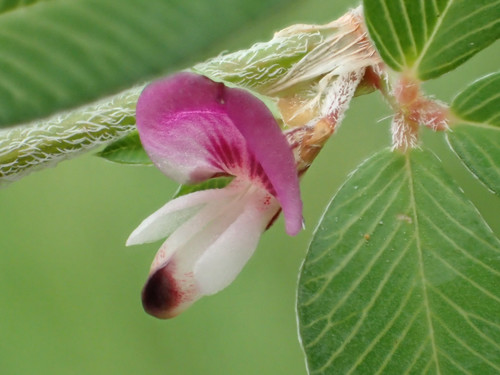
Kummerowia stipulacea, commonly known as Korean clover or Korean lespedeza, is a perennial legume in the family Fabaceae. This plant is native to East Asia and can be found in countries such as China, Japan, Korea, and Taiwan. It has a prostrate growth habit, with stems reaching up to 60 cm in length. The leaves are trifoliate, featuring oval-shaped leaflets that are approximately 1-2 cm long.
Kummerowia stipulacea is an important forage crop for livestock due to its high protein content and palatability. Additionally, it has the ability to fix nitrogen from the atmosphere, making it a valuable component of sustainable agricultural systems.
Beyond its agricultural applications, Kummerowia stipulacea has been utilized in traditional medicine for its anti-inflammatory properties. It has also been used to treat various ailments, including diarrhea and dysentery.
Overall, Kummerowia stipulacea is a versatile plant species with multiple uses, ranging from agriculture to medicine. Its nitrogen-fixing capability is particularly valuable in sustainable farming systems, where it can help reduce the need for chemical fertilizers while enhancing soil health.
Korean clover has good resistance to disease and usually does not suffer from illnesses. However, it can be vulnerable to pests and diseases present in its environment. These infestations are typically not serious. Regarding care, this plant needs moderate maintenance. It should be pruned regularly to keep a neat appearance and healthy growth. Fertilizing can also help encourage flowering. Korean clover is suitable for anyone with outdoor space, such as a garden or patio, and does not demand extensive plant-care experience. It may need more attention when grown indoors.
How to keep Kummerowia Stipulacea.
Light
Korean clover is a plant species that does best when fully exposed to sunlight. The amount of light it receives greatly influences its growth and health. Although it can survive with little sunshine, reduced light may restrict its overall development. Native to open habitats, Korean clover is adapted to a continuous supply of sunlight. Conversely, excessive exposure can cause harm.
Water
Korean clover thrives best in environments with moderate moisture and consistent hydration, without becoming waterlogged. It benefits from weekly watering but can also adapt well to natural rainfall. This makes it a low-maintenance option for gardeners in suitable climate zones.
Temperature
Korean clover can tolerate a wide range of temperatures, but its distribution may still be limited by different combinations of water and heat conditions. It performs best in warm summer climates with sufficient rainfall or irrigation. Extended periods of cloudy, rainy weather or prolonged high temperatures can raise the chance that Korean clover will die. During winter, adequate protection from cold can increase the plant’s survival rate.
Fertilizer
Korean clover responds well to frequent, light applications of fertilizer to encourage healthy leaf development. Fertilize Korean clover about once a month during the summer. Nitrogen is essential for foliage, and supplying nitrogen-rich sources helps Korean clover thrive.
Pruning
Korean clover thrives with regular pruning. This includes thinning cuts in the spring to remove dead stems and encourage new growth. Seasonal pruning helps maintain the plant's shape and height, promotes its health, improves airflow and sunlight penetration, and prevents disease. For the best results, use clean, sharp tools.
Botanical profile.
- Plant Type
- Herb
- Life Cycle
- Annual
- Genus
- Kummerowia
- Family
- Fabaceae
- Hardiness Zone
- 5-9
- Mature Height
- 10 cm to 61 cm
- Mature Spread
- 15 cm
- Leaf Color
- Green, Blue
- Leaf Type
- Semi-evergreen
- Flower Color
- White, Purple
- Flower Size
- 0.76 cm
- Bloom Time
- Mid summer, Late summer, Early fall
- Planting Time
- Spring, Summer
- Harvest Time
- Early fall, Mid fall
- Native Area
- Russia, Japan, Koppen, South Korea, China
Other names.
Reader questions.
How should I water my Korean clover plant?
There are several options for watering Korean clover, including using a garden hose with a spray nozzle, a watering can, or any other common watering tool. Korean clover is not too particular about the type of water it receives and can thrive with rainwater, tap water, or filtered water. It is generally not recommended to water this plant from overhead as it can damage the leaves and flowers and potentially lead to disease. Instead, a drip irrigation system is often the best method for watering Korean clover. These systems distribute water evenly and directly to the soil. When watering Korean clover that is growing in a container, you can use a similar approach but change the tools. Use a cup, watering can, or tap to water directly onto the soil.
How many hours of sunlight does Korean clover need each day to grow well?
In order to thrive, plants require a minimum of 6 to 8 hours of sunlight each day. They particularly enjoy being exposed to the morning light, especially during the summer season. The Korean clover, in particular, thrives in full sun and benefits from as much sunlight as possible. The more light these plants receive, the better they are able to produce food, display stunning blooms, and ensure their survival.
What do I need to do if I give my Korean clover too much or too little water?
To solve the issue of underwatering Korean clover, simply start watering it more regularly when you notice it lacks moisture. However, overwatering can be more problematic, leading to diseases and decline. To avoid this, choose a suitable location with adequate sunlight and good drainage. If your potted Korean clover is overwatered, consider transferring it to a new pot with better drainage and loose soil.
What kind of sunlight does Korean clover require?
The Korean clover thrives in full sunlight, so it's important to avoid overcrowding them to ensure that each plant receives equal sun exposure. It's crucial not to deprive the leaves of sunlight. When planting in pots, it's preferable to place them in windows that receive direct sunlight throughout the year. Partial or filtered light should be avoided as it may result in weak stems and unhealthy flowers. Ideally, the Korean clover should always be exposed to sunlight.
How frequently should I water my Korean clover?
Korean clover requires regular watering throughout the growing season. In spring, water the plant once per week. As the season progresses and it becomes warmer, increase watering to two to three times per week. However, be careful not to exceed this rate, as it can harm the plant. Regardless of watering frequency, keep the soil moist but not wet. Watering Korean clover in a pot is slightly different. The soil in pots can heat up and dry out faster than ground soil. Therefore, water container-grown Korean clover a few times per week, compared to once per week for in-ground plants.
Can the sun negatively affect plants? What can be done to prevent Korean clover from being damaged by sunlight and heat?
When the temperature goes above 90℉(32℃), the Korean clover is at risk of being damaged by extreme heat, especially if it is exposed to long hours of direct sunlight. It is recommended to provide some shade from the afternoon light during the summer months. It's important to remember that the sunlight in summer is stronger and longer compared to winter. If the Korean clover is too stressed from sunlight, it's a good idea to keep them well-watered. Water them when the top 2 inches of soil are dry, and if it's too hot outside, consider moving the plants indoors if they are in containers. It's normal for the leaves to wilt during the day, but they should recover overnight. However, if the Korean clover remains droopy, it means it's losing water quickly and needs to be watered.
How much water does my Korean clover plant require?
Determining how much water to give to your Korean clover can be done in a few different ways. Some gardeners prefer to gauge the moisture level of the soil by feeling it, watering until the first six inches feel moist. Another option is to follow a set measurement, such as giving your Korean clover around two gallons of water per week, taking into consideration the temperature and how quickly the soil dries out. However, sticking strictly to these guidelines may result in overwatering if your plant actually needs less water. When growing Korean clover in a container, a different approach is necessary. In this case, you should water until all layers of dry soil are moistened, which can be determined by checking the soil with your finger. Another indicator is when you see a slight excess water trickling out of the pot's drainage holes.
Should I shield Korean clover from the sun?
The Korean clover thrives in the sun and does not typically need protection from it. In fact, some species of Korean clover are heliotropic and actively seek out sunlight. It is recommended to plant them in south-facing gardens so they can enjoy exposure to the sun from morning to afternoon. However, it is important to note that excessive sun exposure can cause sunburn in some Korean clover plants. To prevent sunburn, you can provide some shade in the afternoon and midday by placing them under a tree or against a wall. It is not advisable to grow Korean clover in shady areas, as it requires ample sunlight for optimal growth and production. It is always best to provide full sun lighting conditions for Korean clover to achieve the best results.
How do I know if I'm watering my Korean clover enough?
Avoiding overwatering your Korean clover can be tricky because of its specific needs. While these plants have deep roots that require weekly watering, they are also prone to root rot and can turn brown if overwatered. Underwatering is less of a concern as Korean clover can go without watering for some time, but if left too dry, the plant may wilt and develop dry leaves.
What will happen if Korean clover doesn't get enough sunlight?
When the Korean clover does not receive enough sunlight or is not placed in full sun locations, it will experience a slowdown in the photosynthetic process. This lack of sunlight causes the stems to become leggy as they become thin and long in their search for more light. In addition, they will not bloom or produce seeds in shady conditions. Inadequate sunlight can also lead to the death of older leaves, lighter coloration in new leaves compared to old foliage, and smaller new growth. While Korean clover loves the sun, it can wilt if exposed to excessive heat and ultraviolet light during extreme summer months. It is advisable to protect them with a green shaded net, especially in the summer, to prevent scorching of leaves and flowers. When kept indoors, use a fan to help reduce heat.
How do I water my Korean clover during different seasons?
As the seasons change, the water needs of your Korean clover will also change. In spring, you should water it once a week. However, as the summer heat arrives, you'll need to increase the watering frequency to about three times per week, especially if it's growing in a container. Containers tend to dry out faster in warm weather. In autumn, as the temperature cools down and the sun's intensity decreases, your Korean clover may require less water, even though it's still blooming.
Does Korean clover need specific attention to sunlight at different stages of its growth?
Korean clover plants require more light when they are growing compared to when they are fully mature. The younger plants need sufficient light, but they may not be used to sudden exposure to full sunlight, especially if they were grown in a nursery. These younger plants can be more sensitive to the intense summer sun, so it is important to gradually and slowly increase their exposure to light.