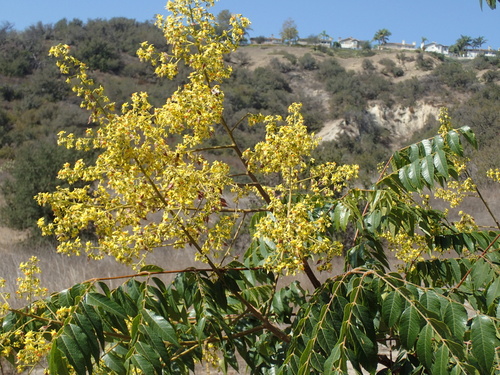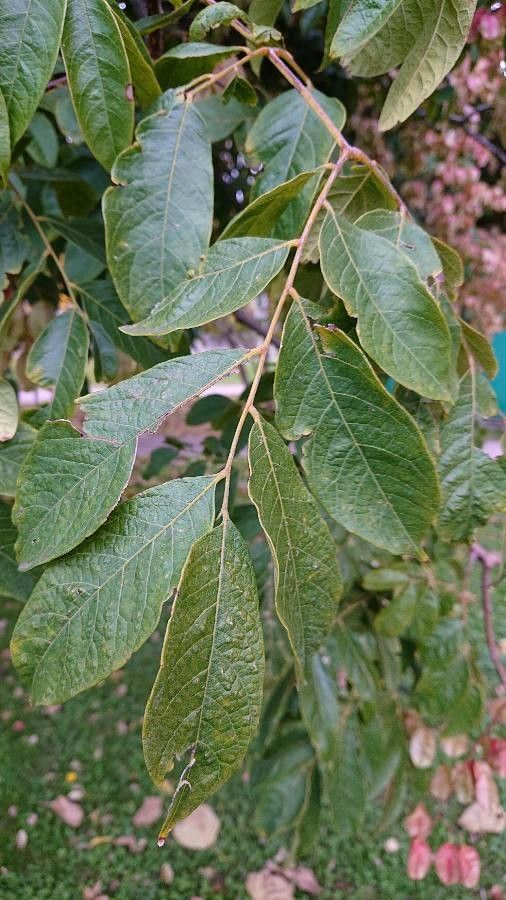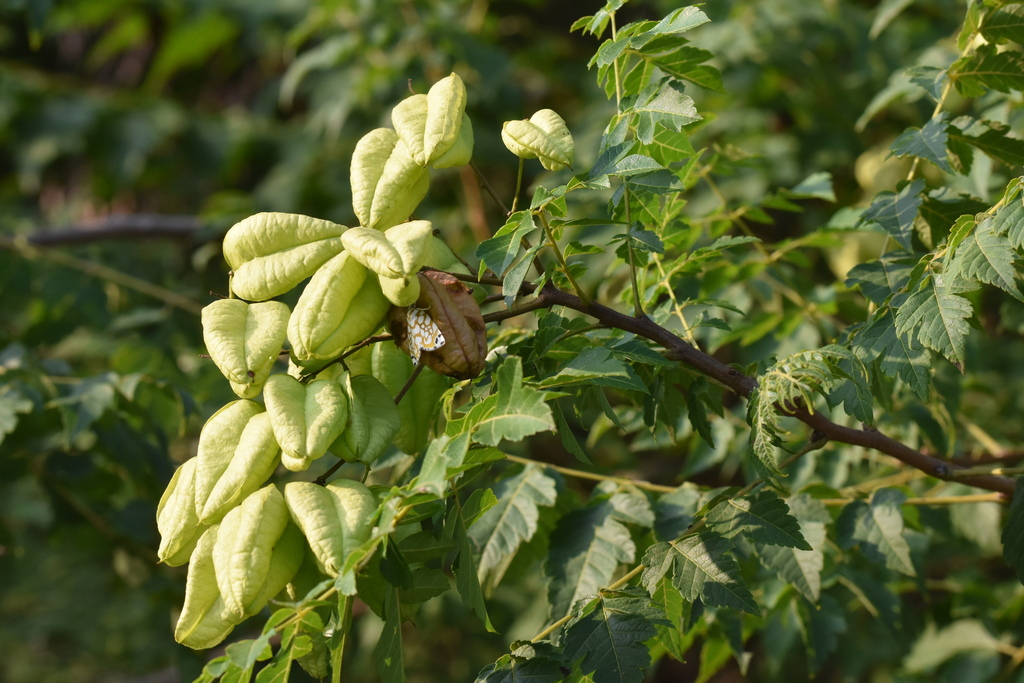
Koelreuteria paniculata, commonly known as the Golden Rain Tree, is a deciduous tree native to eastern Asia. It is a popular ornamental tree, celebrated for its attractive foliage and showy yellow flowers that bloom in the summer. The leaves are pinnate and can grow up to 18 inches long with serrated edges. The flowers are arranged in large panicles that can reach up to 12 inches long, followed by papery capsules containing small seeds resembling Chinese lanterns.
The Golden Rain Tree thrives in full sun or partial shade and well-drained soil. It is tolerant of drought, heat, pollution, and salt spray, making it an ideal choice for urban landscapes or coastal areas. This fast-growing tree can reach heights of up to 40 feet with a spread of about 30 feet.
Beyond its ornamental value, Koelreuteria paniculata has been used in traditional Chinese medicine for its medicinal properties, including fever reduction and pain relief.
In the bustling streets of late autumn, amidst the landscape of trees shedding their leaves, the goldenrain tree stands out with its distinctive sight. While its leaves stay green, the tree is densely adorned with fruit resembling millions of tiny bells, showcasing a palette of light yellow, light green, and pink hues. FUN FACT · FROM THE LIBRARY
Overall, Koelreuteria paniculata is a striking ornamental tree with unique features that make it an excellent addition to any landscape design, while also offering traditional medicinal benefits.
Goldenrain Tree: This plant adds elegance and charm to the landscape throughout the year. In the spring and summer, its rare yellow flowers bloom, creating a beautiful display. During autumn and winter, its fruit resembles paper lanterns hanging from the branches, adding a unique touch to the scenery. The delightful sight of these yellow flowers in bloom makes the view truly lovely. Because of its decorative beauty, this plant is aptly named the goldenrain tree.
Golden raintree is fairly resistant to disease and usually not susceptible to illnesses. As for care, this plant is relatively low-maintenance. When grown outdoors it needs little watering, and larger specimens typically do not need pruning. Smaller plants, however, should be pruned after they finish blooming. Golden raintree is suitable for anyone with outdoor space, such as a garden or deck, and does not require much care experience.
How to keep Koelreuteria Paniculata.
Light
The golden raintree requires plentiful sunlight to thrive. Light from morning until evening promotes its growth, although it can tolerate less bright conditions if needed. Native to sunny regions, a lack of light can cause slower growth and fewer blooms. Conversely, too much light does not significantly harm it.
Water
The goldenrain tree, native to East Asia, thrives in temperate climates with moderate moisture. It prefers to be watered every 1-2 weeks but can adapt to dry conditions. Typically grown outdoors, this deciduous plant sheds its leaves seasonally, which reduces its water requirements during dormancy.
Humidity
This plant will thrive in moderate humidity, which is probably the level in your home. However, misting it a few times a week can be very beneficial. Make sure the room has good ventilation.
Temperature
The golden raintree tree prefers temperatures between 41 and 95 ℉ (5 to 35 ℃) in its native growth environment. While it can tolerate a broad range of temperatures, it develops best in warm but not scorching conditions. In colder months, mulching around the tree is recommended to help keep the soil adequately warm.
Fertilizer
To encourage healthy growth, fertilize your Golden raintree in early spring. Regular feeding improves overall health, leading to vigorous growth, better tolerance of harsh conditions, and increased resistance to pests and diseases. Keep to a consistent fertilization schedule for your Golden raintree to maintain foliage that is vibrant, deeply colored, and lush.
Pruning
The goldenrain tree showcases vibrant yellow flowers and attractive seed pods. To maintain its health and shape, prune the tree in early spring. Focus on removing dead or crowded branches to improve air circulation. Regular pruning helps prevent disease, strengthens the tree's structure, and enhances its ornamental appeal and longevity.
Toxicity
The foliage on this tree is considered toxic to hoofed herbivores. It is best to keep this tree out of the reach of animals such as cattle and horses.
Further reading →
The toxicity and danger assessments provided are for reference only. We do not assure their accuracy, so it's crucial not to depend on them. Seek professional advice when necessary for accurate guidance.
Botanical profile.
- Plant Type
- Tree
- Life Cycle
- Perennial
- Genus
- Koelreuteria
- Family
- Sapindaceae
- Hardiness Zone
- 5-9
- Mature Height
- 7.01 m
- Mature Spread
- 10.36 m
- Leaf Color
- Green, Blue, Yellow, Bronze
- Leaf Type
- Deciduous
- Flower Color
- Yellow
- Flower Size
- 0.51 cm to 1.02 cm
- Bloom Time
- Mid summer
- Planting Time
- Spring, Autumn
- Harvest Time
- Mid summer, Late summer
- Native Area
- Koppen, Vietnam, South Korea, China
Other names.
Reader questions.
How should I water my Goldenrain tree in the best way?
To promote excellent root development, it's recommended to place a garden hose at the base of the plant. Avoid spraying the leaves directly, especially if they are outdoors and exposed to direct sunlight, as they will require more watering. Bubblers can be used to moisture the roots of each plant, while soaker hoses are ideal for watering the entire garden or bed when adding or removing plants, helping to push the roots deeper. After watering, make sure to drain any excess water and allow the soil to dry before watering again. To prevent diseases, it's best to water at ground level. On a sunny day, consider spraying the entire bush with water. Whether the plant is potted or in-ground, please remember that the Goldenrain tree prefers deep watering rather than light sprinkling.
What will happen if I fertilize my Goldenrain tree too much?
Feeding a Goldenrain tree carries the risk of overfertilization. This risk increases if you feed the plant at the wrong time, feed it too frequently, or forget to water the soil beforehand. Signs of overfertilization include browning leaves and stunted growth. However, excessive fertilizer can also cause the tree to grow rapidly, resulting in weak and breakable new growth. This weak wood can negatively affect the overall form and structure of the Goldenrain tree.
What are the sunlight requirements for a Goldenrain tree?
The Goldenrain tree thrives best in full sun, needing above 6 hours of sunlight daily to flourish optimally. It can also tolerate partial sun, which is about 3-6 hours of sunlight. Adequate exposure to sunlight from sunrise to sunset nourishes its growth, though it can survive in less radiant environments if necessary. Originally from regions with abundant sunlight, a lack of sufficient sun may slow its growth and reduce its flower production. Excessive light, conversely, doesn't significantly harm it.
What are the ideal temperature conditions for the Goldenrain tree?
The Goldenrain tree, or Koelreuteria paniculata, thrives in temperatures ranging from 41 to 95°F (5 to 35°C). It demonstrates strong cold resistance and grows best in environments that are warm but not excessively hot. However, it's important to note that even though the Goldenrain tree can survive a wide range of temperatures, optimal growth is observed within these specified limits. During colder seasons, adding mulch around the tree can help maintain soil warmth, which is beneficial for the tree's health. Additionally, while special frost protection measures are not usually necessary, if temperatures are expected to drop below -25°C, taking steps to protect the tree by wrapping its trunk and branches with non-woven fabric or cloth is advisable. Ensuring the soil remains moist going into the freezing period can aid the tree's survival through winter and early spring by preventing drought and water scarcity.
What should I do if I give the Goldenrain tree too much or too little water?
If you overwater a Goldenrain tree, its leaves may turn yellow, drop off, and wilt. The plant will look dull and unhealthy, with mushy stems. In these situations, it's best to adjust your watering schedule when possible. Wilting can also be a sign of under watering, characterized by crispy and dry leaves. If the soil is dry and simply watering is not enough, give the tree a full watering. While it will help the tree recover, it may still have dry, yellow leaves for a few days due to root damage. Once it returns to normal, the yellowing will stop. When you have a Goldenrain tree indoors, always check the moisture levels in the pot. Avoid overwatering, and if you see black spots, let the soil dry in the pot for a few days. Overwatering can cause root rot, so if you notice discolored and slimy roots, consider transferring the tree to a different pot. Prevent root rot by avoiding overly soggy soil. When planting a Goldenrain tree outdoors, make sure the soil is not too dry. If it is, provide adequate watering to help the plant recover.
Why is it necessary to add fertilizer to my Goldenrain tree?
No matter what kind of Goldenrain tree you have, regularly fertilizing it will promote better overall health. When your tree receives the right nutrients, it will grow stronger and have a greater ability to survive challenging conditions and combat diseases and pests. The foliage of your Goldenrain tree is particularly beautiful, so it's important to keep it in good condition. To achieve this, follow a consistent fertilization schedule tailored to your specific tree. This will encourage the growth of vibrant, lush leaves.
How does artificial lighting support indoor Goldenrain trees?
Indoor Goldenrain trees require sufficient lighting for optimal growth, especially when natural sunlight is inadequate, such as during winter or in less sunny spaces. Artificial lights, such as LED lights which can be customized to provide specific wavelengths, offer a crucial solution. For full sun plants, 30-50W/sq ft of artificial light is needed, partial sun plants require 20-30W/sq ft, and full shade plants need 10-20W/sq ft. The light source should be placed 12-36 inches above the plant to mimic natural sunlight, and most plants need 8-12 hours of light per day.
How do I care for a Goldenrain tree in low temperature conditions?
Goldenrain trees are notably cold-tolerant and perform best when temperatures are kept above 5°C. It is crucial to protect the tree from temperatures falling below -20°C and especially critical when temperatures dip below -25°C. In such extreme cold, while the tree may not exhibit immediate adverse effects during winter, come spring, branches can become brittle and dry, potentially leading to a failure in new shoot emergence. To mitigate this, in spring, it is advised to prune any dead branches that failed to produce new leaves, helping the tree to recover and maintaining its health and appearance.
How frequently should I water my Goldenrain tree?
The Goldenrain tree prefers deep and infrequent watering, especially when planted in pots. It's best to soak them in a gallon of water each time to account for the limited water storage in pots. In cold regions, watering every 3 to 5 days is necessary. Water the tree early in the morning when the soil is dry, whether it's indoors or outdoors. You can also check the soil inside to determine if watering is needed - if the top 2-3 inches of soil is dry, it's time for a full watering. During hot days, check the moisture daily as the pot's soil can dry out quickly. If you have a garden, irrigation of the soil is required as well. In hot climates, watering once a week is recommended. Only water when you notice that about 2-3 inches of soil have become too dry. Be mindful of rainwater on the plant and avoid adding to it to prevent root rot. If there is significant rainfall, additional watering may not be necessary. The Goldenrain tree typically grows during spring and fall. When outdoors, adding a 3-4 inch deep layer of mulch can help conserve water. Sandy soil tends to drain faster, so more frequent watering is needed. Conversely, clay soil requires less frequent watering, allowing the plant to dry out for 2-3 days without developing root rot. For better tracking, mark the watering dates on a calendar. If you notice the leaves drooping, it may be an indication that you should water the tree soon.
When should I fertilize my Goldenrain tree?
To keep your Goldenrain tree healthy and promote growth, it's best to fertilize it in late winter or early spring. This will provide the tree with the necessary nutrients once the weather gets warmer. If you live in a warm climate, an additional fertilizer feeding in early fall can be beneficial. This will add nutrients to the soil that your tree will use for the next growing season and help it withstand the cold winter without foliage damage. Fertilizing earlier in the season will also give the new branches enough time to grow strong for the winter.
What are the symptoms of insufficient light in Goldenrain trees?
Goldenrain trees may exhibit symptoms of light deficiency when placed in suboptimal lighting conditions, including smaller new leaves, leggy or sparse growth, faster leaf drop, halted growth, paler new leaves due to insufficient chlorophyll, chlorosis leading to yellow leaves, sunscald resulting in damaged plant tissue, leaf curling as a defense mechanism against excessive light, wilting from loss of water through transpiration, and leaf scorching characterized by brown, dry edges on leaves.
How should I care for the Goldenrain tree during high temperature conditions?
During the summer months, it's important to ensure that the Goldenrain tree's surrounding temperature does not exceed 35°C. Exposure to temperatures above 38°C can result in the leaves becoming lighter in color, along with dry, withered tips, increasing the plant's susceptibility to sunburn. To combat these issues, you should trim away the sunburned and dried parts to promote healthy growth. Moving the plant to a shadier location or using a shade cloth can provide protection against the harsh midday and afternoon sun. Additionally, maintaining soil moisture through watering in the morning and evening is crucial for the plant's wellbeing in high temperatures.