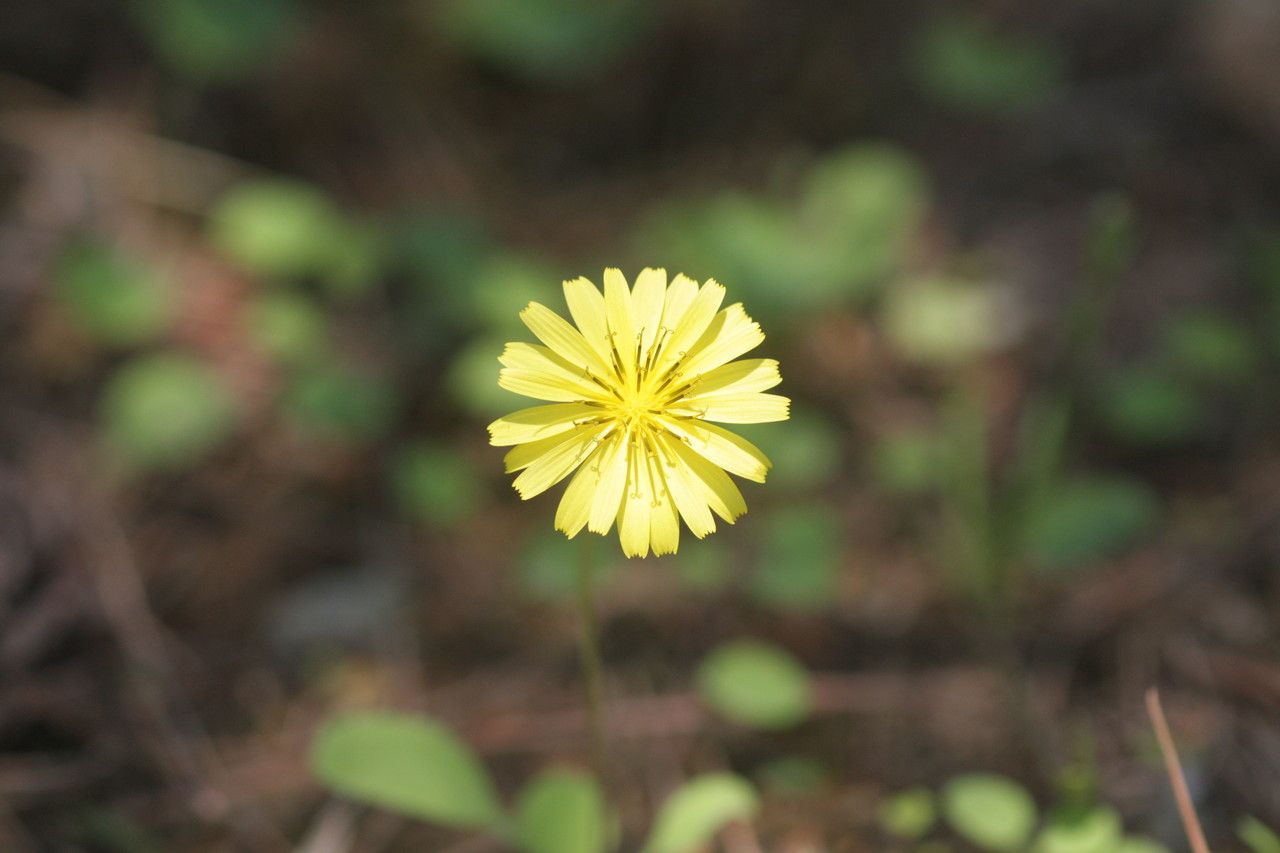
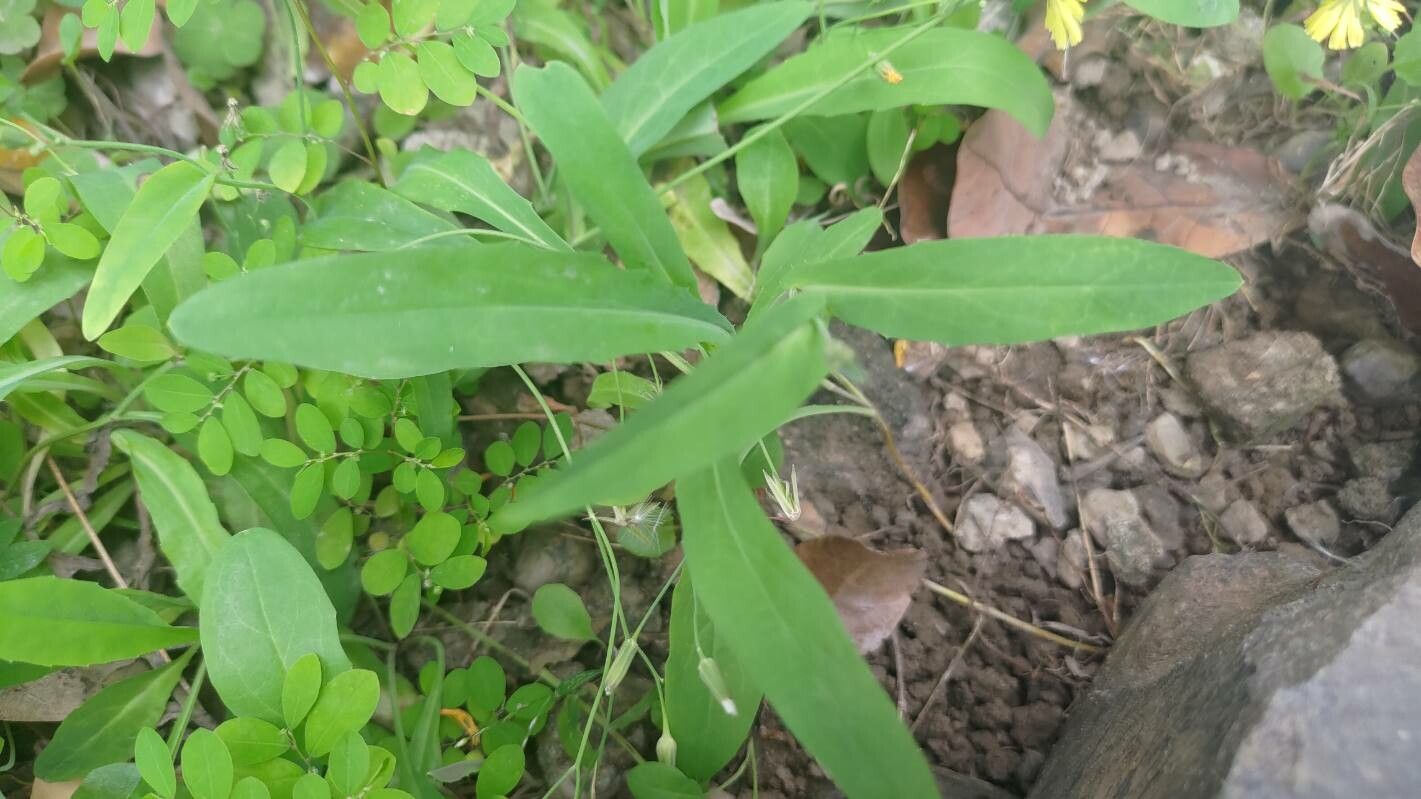
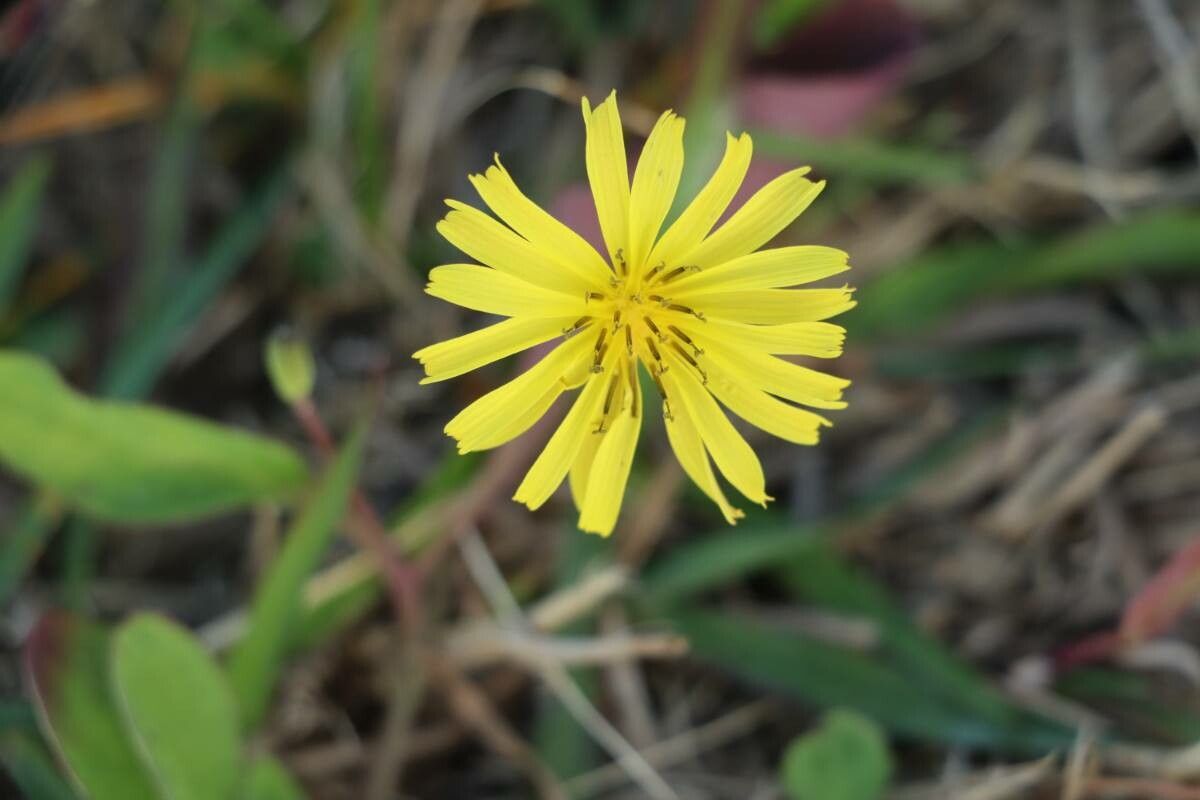
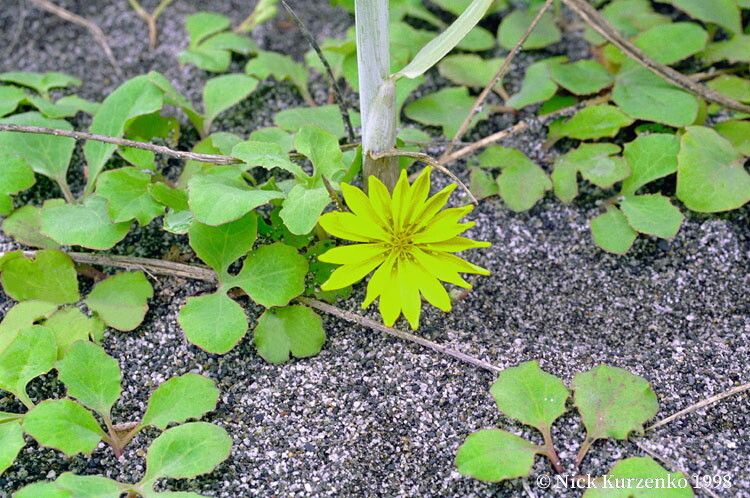
Ixeris stolonifera, commonly called creeping lettuce, is a species of flowering plant in the family Asteraceae. It is native to east Asia, where it is found in China, Japan, and Korea. It is a common and widespread species in Japan.
Its natural habitat is on open mountain slopes, often is rocky areas with shallow soil. However, it is also found in disturbed areas such as cultivated fields and abandoned ground. It has naturalized locally in the northeastern United States.Ixeris stolonifera is a low, stoloniferous perennial, with flowering scapes growing to approximately 15 cm (5.9 in) tall. It produces yellow heads of flowers in spring. It can be confused with the similar-looking Ixeris japonica, but I. stolonifera is distinguished by its smaller inflorescences, smaller fruits, and more ovate-orbicular leaves.
Creeping lettuce has moderate resistance to disease but can be prone to problems like leaf spot. Its vulnerability to insect pests varies by variety, although most types tend to be less resistant to pests. For care, Creeping lettuce needs consistent watering and fertilizing, along with frequent removal of yellow leaves. It is important to manage pests and diseases as they appear and to harvest the plant promptly. Creeping lettuce is appropriate for people who can devote some time and effort to regular maintenance.
How to keep Ixeris Stolonifera.
Light
The creeping lettuce grows best in abundant sunlight but can still develop in partial shade. Its native habitats are typically awash with ample light. Every stage of its growth benefits from generous sunlight. However, without sufficient light its growth can be stunted, while overexposure can lead to withering.
Water
Creeping lettuce thrives in moist environments and needs consistent weekly watering for optimal growth. Although it is resilient to over-watering, its lush appearance depends on maintaining steady moisture levels. During the active growing season, natural rainfall helps support its growth, but proper irrigation is still essential for vibrant health.
Temperature
Creeping lettuce originates from temperate regions and prefers cooler conditions. Its ideal temperature range is 32 to 69.8 °F (0 to 21 ℃). Depending on the warmth of your location, seasonal adjustments may be necessary to keep temperatures within that range.
Fertilizer
To maximize the yield and flavor of Creeping lettuce, provide sufficient nitrogen throughout the entire growth cycle, including before planting and at harvest. Plants kept well watered and properly fertilized produce plentiful, healthy leaves and reduce bitterness. Before planting, enrich the soil with organic matter such as compost or manure, ideally 2 to 8 weeks beforehand.
Pruning
Creeping lettuce is a low-growing perennial characterized by its creeping stems and bright yellow flowers. To promote healthy growth and improve its appearance, prune the plant from early to late spring. Regularly remove any damaged leaves and dead flowers to encourage longer blooming periods. According to gardening experts, proper pruning leads to healthier and more vigorous growth.
Botanical profile.
- Plant Type
- Herb
- Life Cycle
- Perennial
- Genus
- Ixeris
- Family
- Asteraceae
- Hardiness Zone
- 1-2
- Mature Height
- 5 cm to 8 cm
- Mature Spread
- 91 cm
- Leaf Color
- Green, Dark Green
- Leaf Type
- Semi-evergreen
- Flower Color
- Yellow
- Flower Size
- 1.02 cm to 2.03 cm
- Bloom Time
- Late spring, Early summer, Mid summer
- Planting Time
- Spring, Summer, Autumn
- Harvest Time
- Summer
- Native Area
- Koppen, Japan, South Korea, China
Other names.
Reader questions.
How should I water my Creeping lettuce?
To properly water the Creeping lettuce, it is best to use filtered water at room temperature. Tap water may contain harmful particles that can negatively affect the plant. The water should be at room temperature or slightly warmer because the Creeping lettuce is accustomed to a warm environment, and cold water can be a shock to its system. It is also recommended to refrain from overhead watering as it can result in foliage problems. Instead, it is advised to directly apply filtered room temperature water to the soil until it is completely soaked. This method benefits the plant by keeping the roots moist and aiding in their spread throughout the soil to gather essential nutrients.
What kind of sunlight does Creeping lettuce require?
Creeping lettuce requires full sun daily, with a minimum of six hours of sunlight to stay healthy. While most perennials also need six hours of sunlight, plants like the Orange Daylily or Giant Coreopsis can survive on three hours of sun each day. However, in less sunny conditions, these perennial flowering plants may not thrive as well as they would with more sunlight.
What temperature is best for Creeping lettuce?
Creeping lettuce thrives in cooler weather and has an ideal temperature range for optimal growth. To ensure its health, try to maintain the temperature between 65~75℉(18~25℃) when growing Creeping lettuce. Although it can tolerate higher and lower temperatures, it's best to keep the growing area within a few degrees of this range. If you can't achieve this exact temperature, don't worry – Creeping lettuce will continue to grow, but there may be some damage or reduced growth. The upper range should not exceed 75~85℉(25~30℃), as higher temperatures can slow down growth or even kill the plant. On the lower end, Creeping lettuce can withstand temperatures as low as 5℉(-15℃). It's essential to prioritize cooler environments for Creeping lettuce to thrive.
What should I do if I give my Creeping lettuce too much or too little water?
Creeping lettuce can suffer if it is either overwatered or underwatered, but overwatering is usually the bigger problem. When this plant gets too much water, its stems and leaves might droop and turn yellow. Overwatering for a long time can also cause diseases like root rot, mold, and mildew, which can be fatal. Underwatering is less common because creeping lettuce can tolerate some drought. However, it can still happen, and you'll see the leaves become brittle and brown. It's important to catch signs of overwatering early for creeping lettuce. Some diseases from overwatering, like root rot, can't be fixed if you wait too long. If you spot early signs of overwatering, reduce your watering right away. Check the soil to see if it drains poorly, and replace it with well-draining potting mix if needed. If you see signs of underwatering, simply water more often until the plant recovers.
Does sunlight harm Creeping lettuce? How can I shield Creeping lettuce from the sun and heat damage?
In warm climates, some Perennial Flowering Plants may struggle with excessive heat and suffer from sun damage. They can wilt, dry out, or even experience growth problems if they are consistently exposed to the intense afternoon sun. However, not all plants require protection from the light afternoon sun. For those that are harmed by intense afternoon exposure, it is recommended to provide them with some shade in warmer climates. Gardeners can achieve this by planting these plants in areas that do not receive direct heat during the afternoon, such as under trees or behind bushes.
Does Creeping lettuce need different temperatures during each stage of growth?
In order to maintain a healthy appearance, it is crucial to regulate the temperature in the early stages of growing Creeping lettuce. Keep your growing space within the range of 65~75℉ (18~25℃), but lean towards the cooler side. Be careful not to go below -5℉ (-20℃) as extremely cold temperatures can hinder growth. While cold temperatures are not as harmful as hot temperatures, excessively high temperatures during the budding stage can prevent Creeping lettuce from flowering.
How often do I need to water my Creeping lettuce?
To determine if your Creeping lettuce needs water when it's potted, simply stick your finger into the soil. If the top two to three inches of soil feel dry, it's time to water. The same goes for Creeping lettuce grown outdoors in the ground. Once the first few inches of soil have dried out, it's time to water. Typically, watering once a week is sufficient in the spring and early fall. However, during very hot weather, you may need to water twice or more per week. It's worth noting that mature, well-established Creeping lettuce is quite drought-tolerant.
Should I keep the Creeping lettuce out of the sun?
Certain perennial plants require ample sunlight to reach their maximum bloom. However, in warmer climates, some of these plants actually benefit from less sun. For instance, individuals residing in hotter regions might find it beneficial to shade their flowering perennials during the intense afternoon sun, especially during summer months. Although many perennial flowering plants prefer partial shade in the hottest climates, there are exceptions. Take the Giant Coreopsis, for example, as it is not bothered by excessive sun exposure. These plants can flourish even when placed in the full sun during scorching weather.
Here are three tips for keeping Creeping lettuce cool.
Here are some tips for growing Creeping lettuce indoors: Tip #1: Choose the coldest room for growth: When growing Creeping lettuce indoors, select the coldest room in your home. This room is usually on the side of your house that doesn't receive harsh sunlight during the middle of the day. However, ensure that the room still gets a sufficient amount of sunlight. Lack of sunlight can hinder the growth of Creeping lettuce. Tip #2: Control temperature for proper flowering: Creeping lettuce thrives during the spring and early summer seasons. However, high temperatures can negatively impact its flowering stage. Fluctuations in temperature can cause the development of non-flowering buds instead of flowering buds. To ensure proper flowering, maintain a temperature range of 65-75℉ (18-25℃). Tip #3: Protect from frost: Although Creeping lettuce can tolerate lower temperatures as low as -5℉ (-20℃), it is vulnerable to significant frost. Exposure to cold temperatures during late fall or winter can lead to frost damage. Look out for signs such as wilting and discoloration, which will eventually turn brown or black as the affected parts die. To preserve the plant, prune any parts showing these colors.
How much water does my Creeping lettuce require?
To water your Creeping lettuce effectively, don't be afraid to give it a good amount of water. Make sure that the top few inches of soil are dry before watering, and then give it a thorough soak. You want to add enough water to fully saturate the soil, and if you see excess water flowing out of the drainage holes at the bottom of the pot, that's a good sign. If you don't see any excess water draining, it means you haven't watered enough. However, be careful not to let water accumulate in the soil as that can harm the plant. On the other hand, if water isn't draining properly from the pot, it could indicate poorly draining soil, which is not good for the plant's health. If you're growing the plant outside, about 1 inch of rain per week should be enough.
What will happen if Creeping lettuce does not get enough sunlight?
If your Creeping lettuce doesn't receive enough sunlight, you'll see signs of its unmet needs. The plants won't produce as many blooms as they would under full sun exposure. While some plants may develop dry spots on their leaves, most will still manage to bloom despite the inadequate sunlight. However, the flowers will be smaller and less full.
Does Creeping lettuce require varying temperatures throughout different seasons?
To ensure optimal growth, it is important to maintain a consistent temperature in your growing area throughout the year. If you reside in a region with extreme winters or hot summers, consider moving your plants indoors. This provides the opportunity to create an ideal environment for Creeping lettuce by keeping them in a cool room. However, if you choose to keep your plants outside, closely monitor the temperature. In areas with exceptionally high summer temperatures, make sure the plants are not exposed to temperatures above 85℉ (30℃). Excessive heat quickly dehydrates and damages Creeping lettuce, leading to their eventual demise.