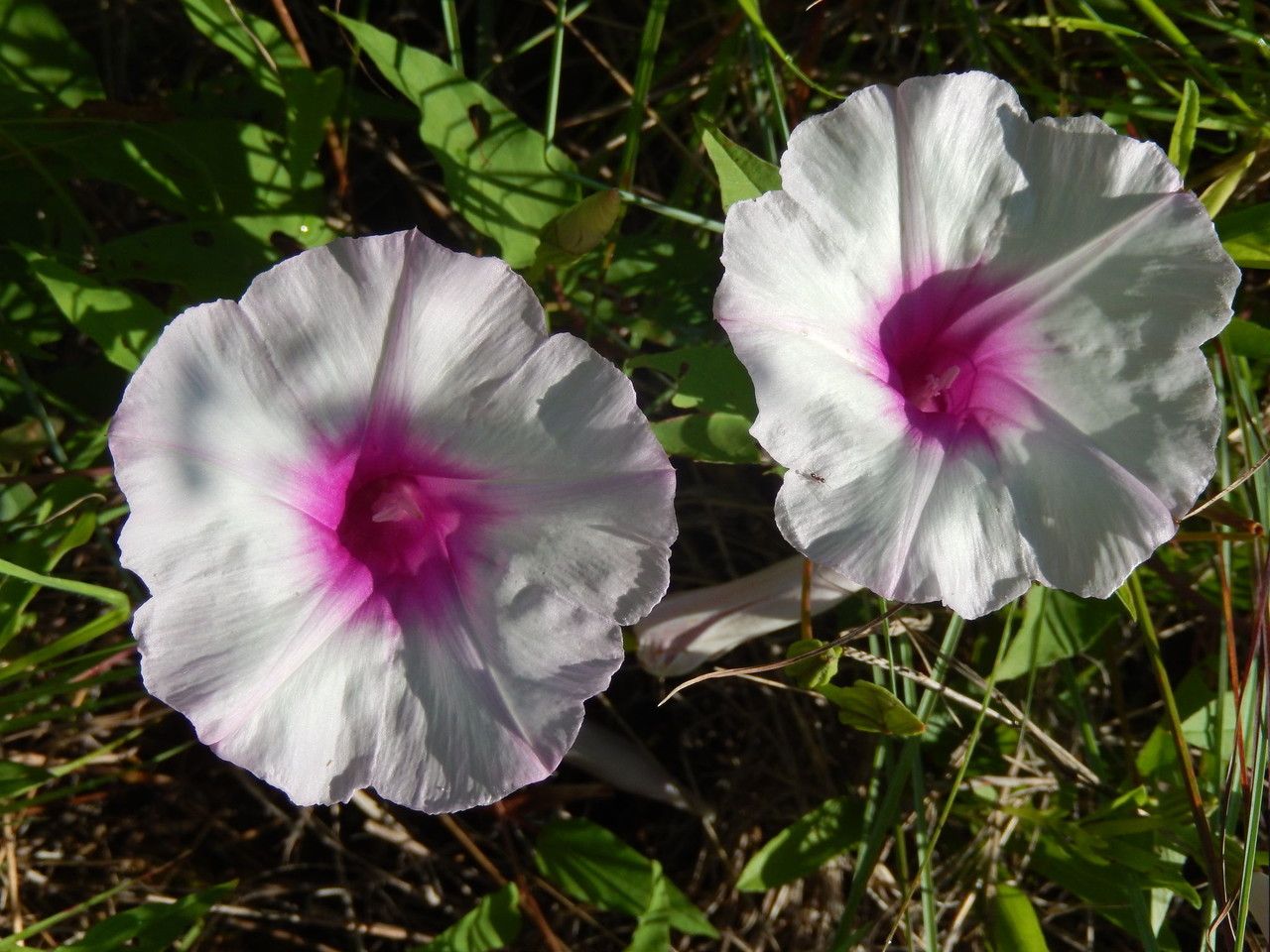
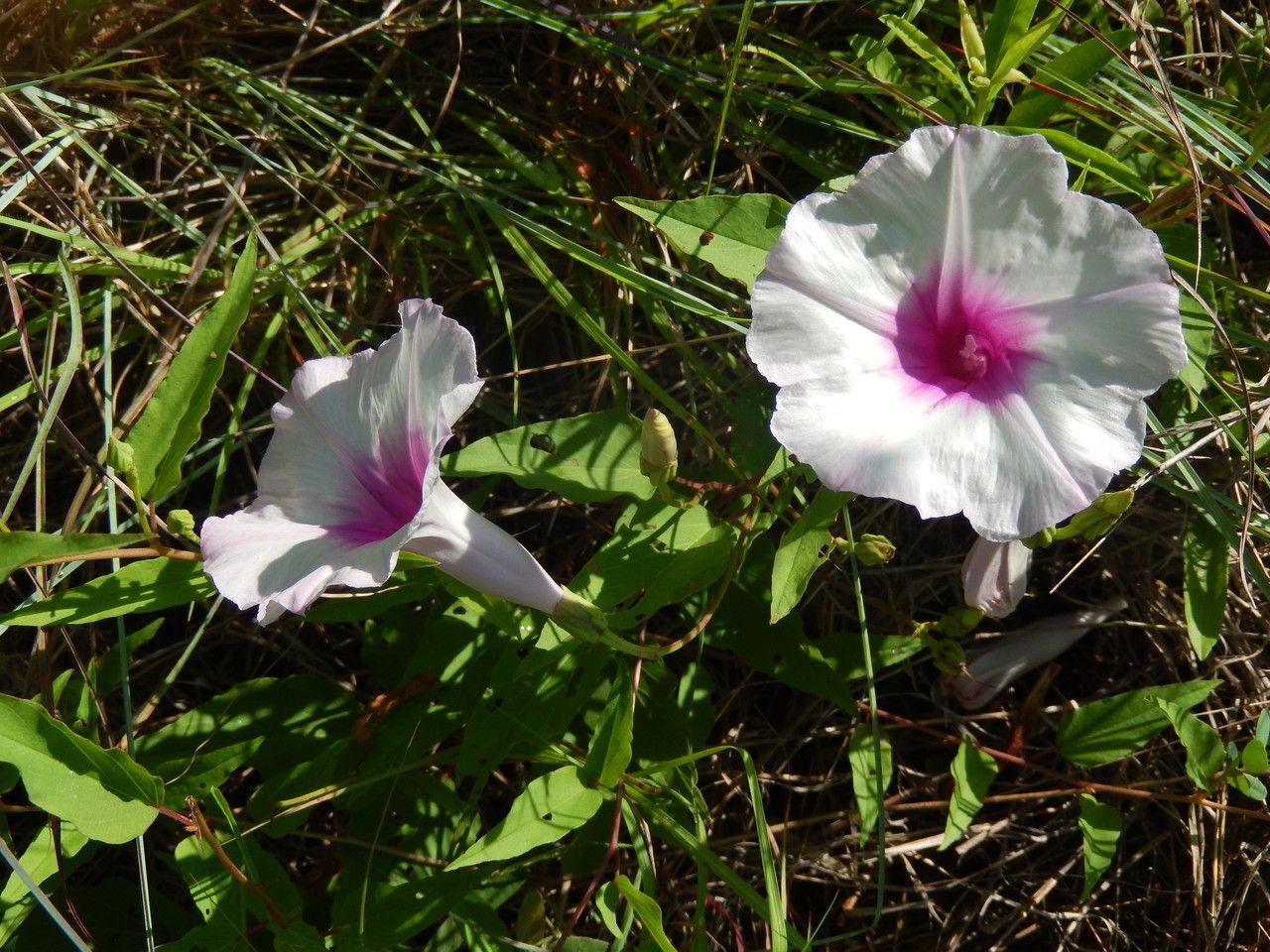
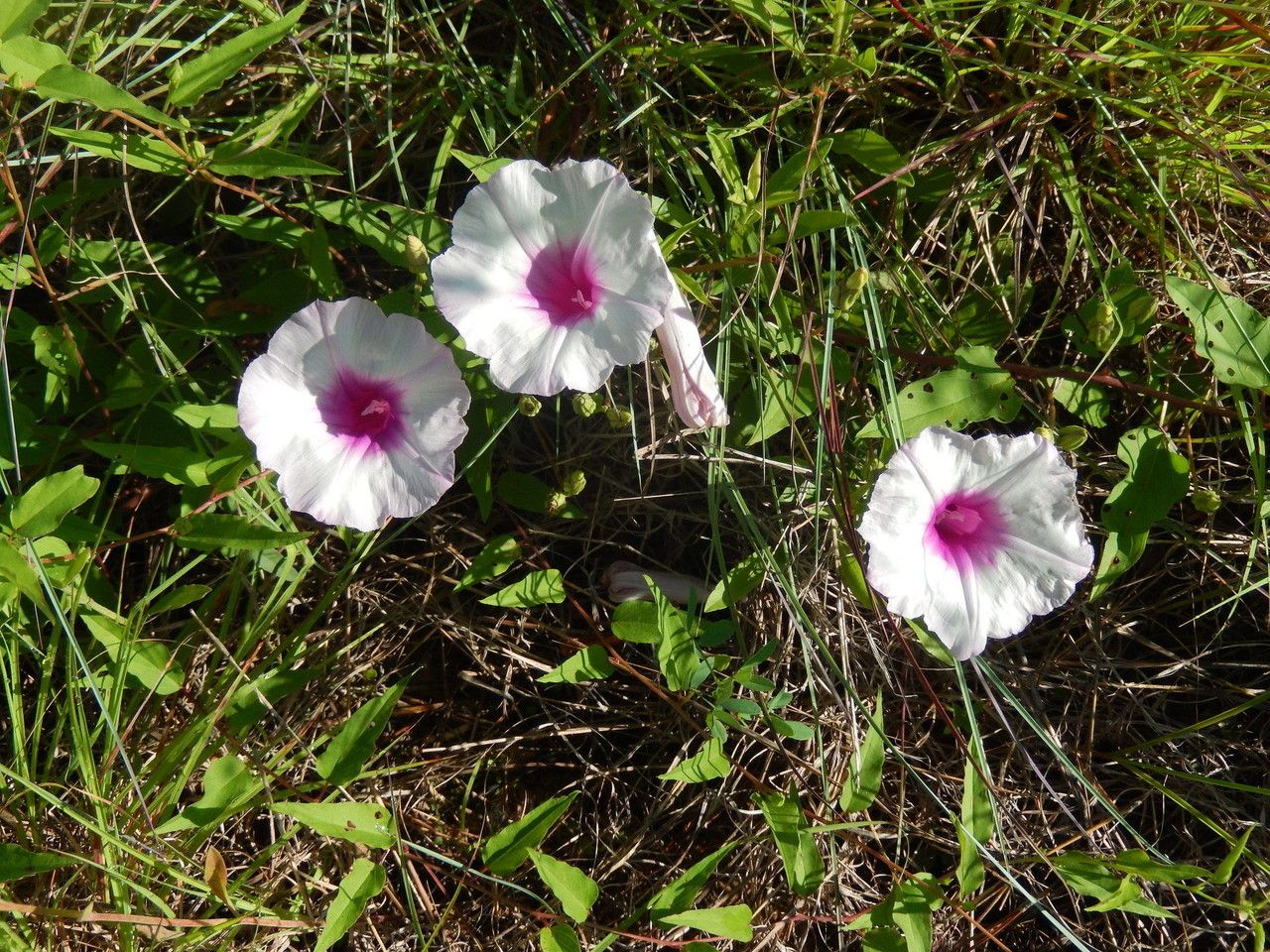
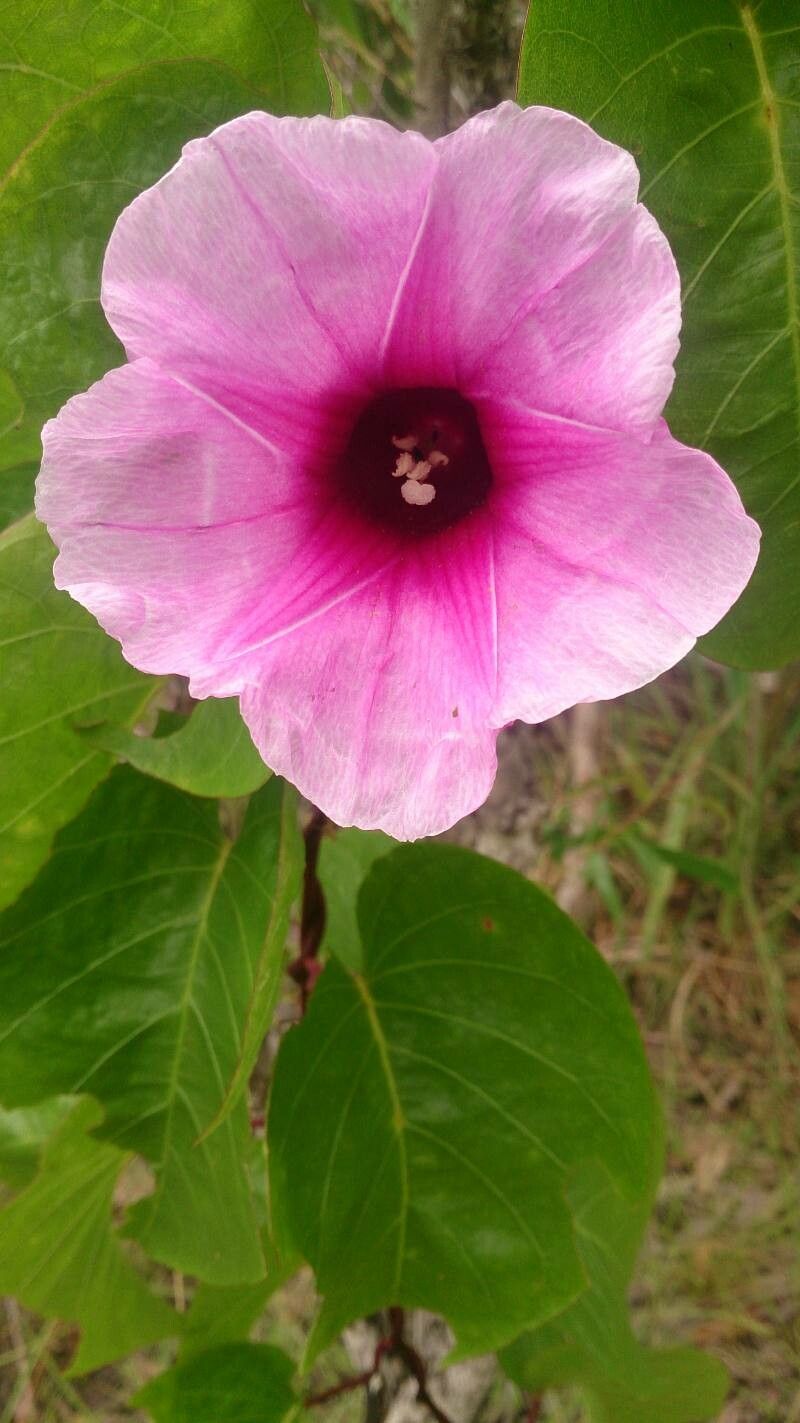
Ipomoea shumardiana, commonly known as Shumard's morning glory, is a perennial vine in the Convolvulaceae family. Native to the southeastern United States, it thrives in a variety of habitats, including woodlands, prairies, and along roadsides.
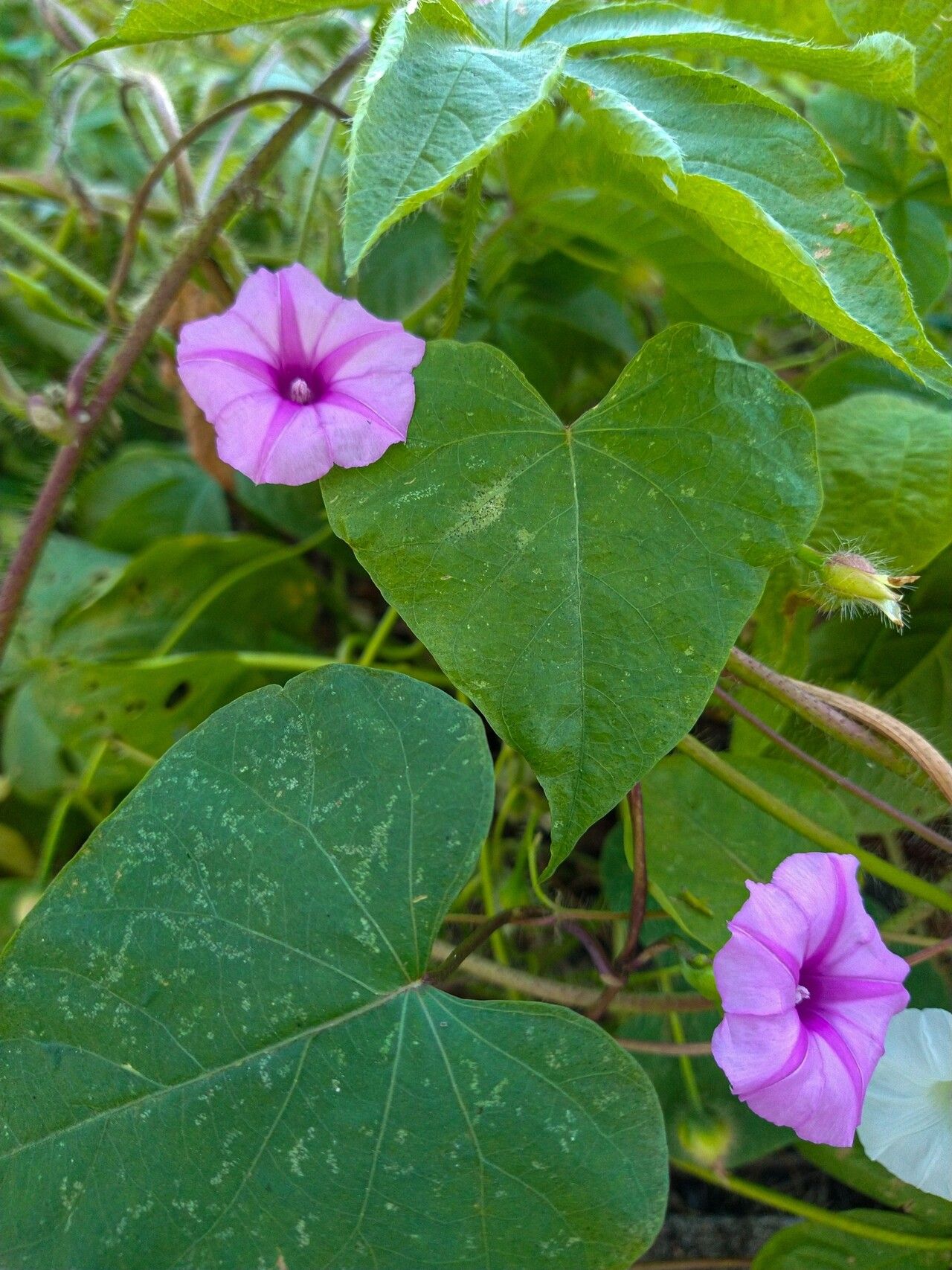
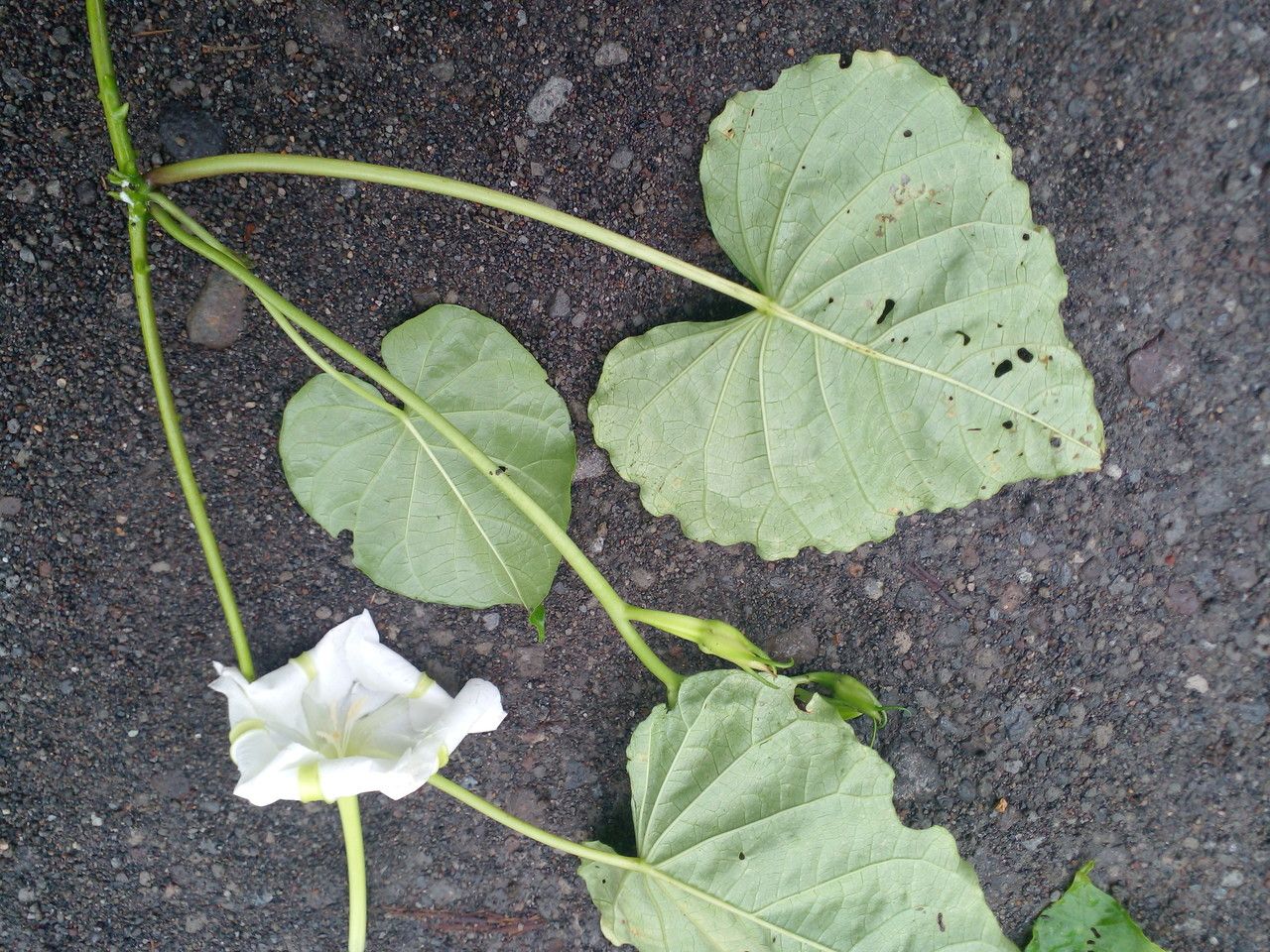
The plant features heart-shaped leaves that are green and can grow up to 6 inches long. It produces trumpet-shaped flowers that have a pinkish-purple hue with a white throat. The flowers bloom from mid-summer through fall, attracting pollinators such as bees and butterflies.
Ipomoea shumardiana prefers full sun to partial shade and well-drained soil, though it can tolerate some drought conditions once established. It is relatively easy to grow from seeds or cuttings.
This plant also possesses medicinal properties and has traditionally been used to treat various ailments such as fever, headaches, and stomach problems.
Overall, Ipomoea shumardiana is an attractive vine with beautiful flowers that add color to any garden or landscape setting. Additionally, it offers medicinal benefits for those who use it traditionally for various ailments.
Pinkthroat morning glory has strong resistance to disease and is usually not prone to illnesses. However, it can be vulnerable to pests and diseases present in its environment. These infections are typically not serious. For care, this plant requires a moderate level of maintenance. It should be pruned regularly to preserve an attractive appearance and support healthy growth. Fertilizing can also help encourage flowering. Pinkthroat morning glory is well suited for anyone with outdoor space, such as a garden or patio, and does not demand extensive gardening experience. It may need additional care when grown indoors.
How to keep Ipomoea Shumardiana.
Light
Originating from open habitats, the Pinkthroat morning glory is a perennial herbaceous plant that flourishes in grasslands and meadows. It thrives best under full sunlight but can also withstand conditions of partial sunlight.
Temperature
Pinkthroat morning glory is a plant that originates from areas with a tropical climate, characterized by warmth and high humidity. Due to its origins, the plant has adapted excellently to handle high heat and moisture levels. It isn't fond of rapid shifts in temperature and prefers consistent thermal conditions. It's crucial to maintain a constant temperature because indoor temperature fluctuations can be harmful to the plant. It typically cannot withstand chilly conditions and requires elevated temperatures for proper growth. The plant may halt growth or potentially die if the surrounding temperature falls excessively.
Fertilizer
It is vital for the health and aesthetics of Pinkthroat morning glory to be properly fertilized. Apply fertilizer to Pinkthroat morning glory during summer, continuing on a monthly basis for the entire season. Nutrients bolster growth and uphold the structure of the plant. The flowering display of Pinkthroat morning glory benefits from fertilization, helping to produce the most impressive blooms.
Botanical profile.
- Plant Type
- Vine, Herb
- Life Cycle
- Perennial
- Genus
- Ipomoea
- Family
- Convolvulaceae
- Hardiness Zone
- 9-11
- Mature Height
- 2.13 m to 3.96 m
- Mature Spread
- 0.91 m to 2.13 m
- Leaf Color
- Green, Dark Green
- Leaf Type
- Deciduous
- Flower Color
- Pink, Purple
- Flower Size
- 5.08 cm to 7.62 cm
- Bloom Time
- Summer, Early fall, Mid fall
- Planting Time
- Summer
- Harvest Time
- Late summer, Fall, Early winter
- Native Area
- Mexico
Other names.