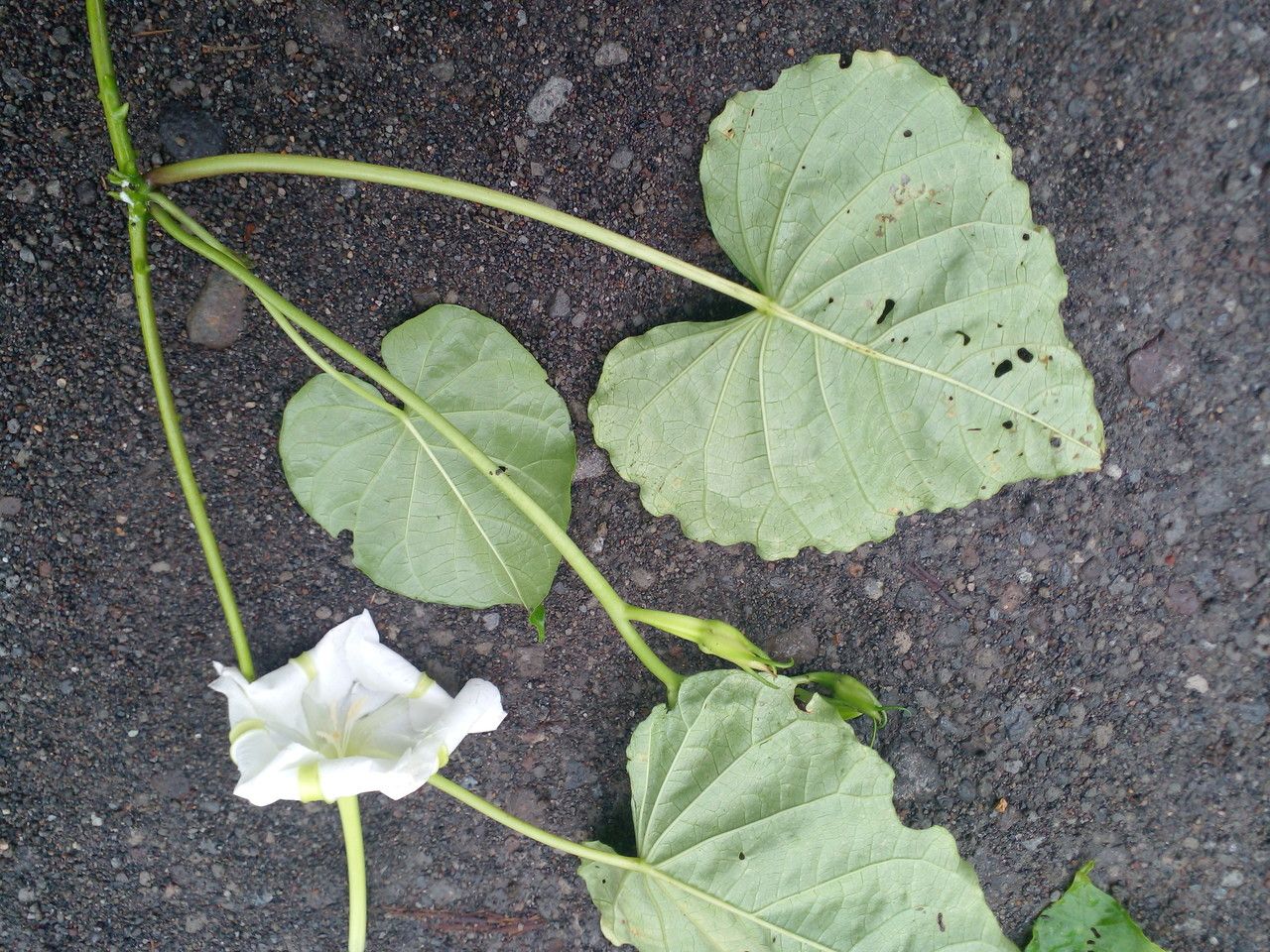
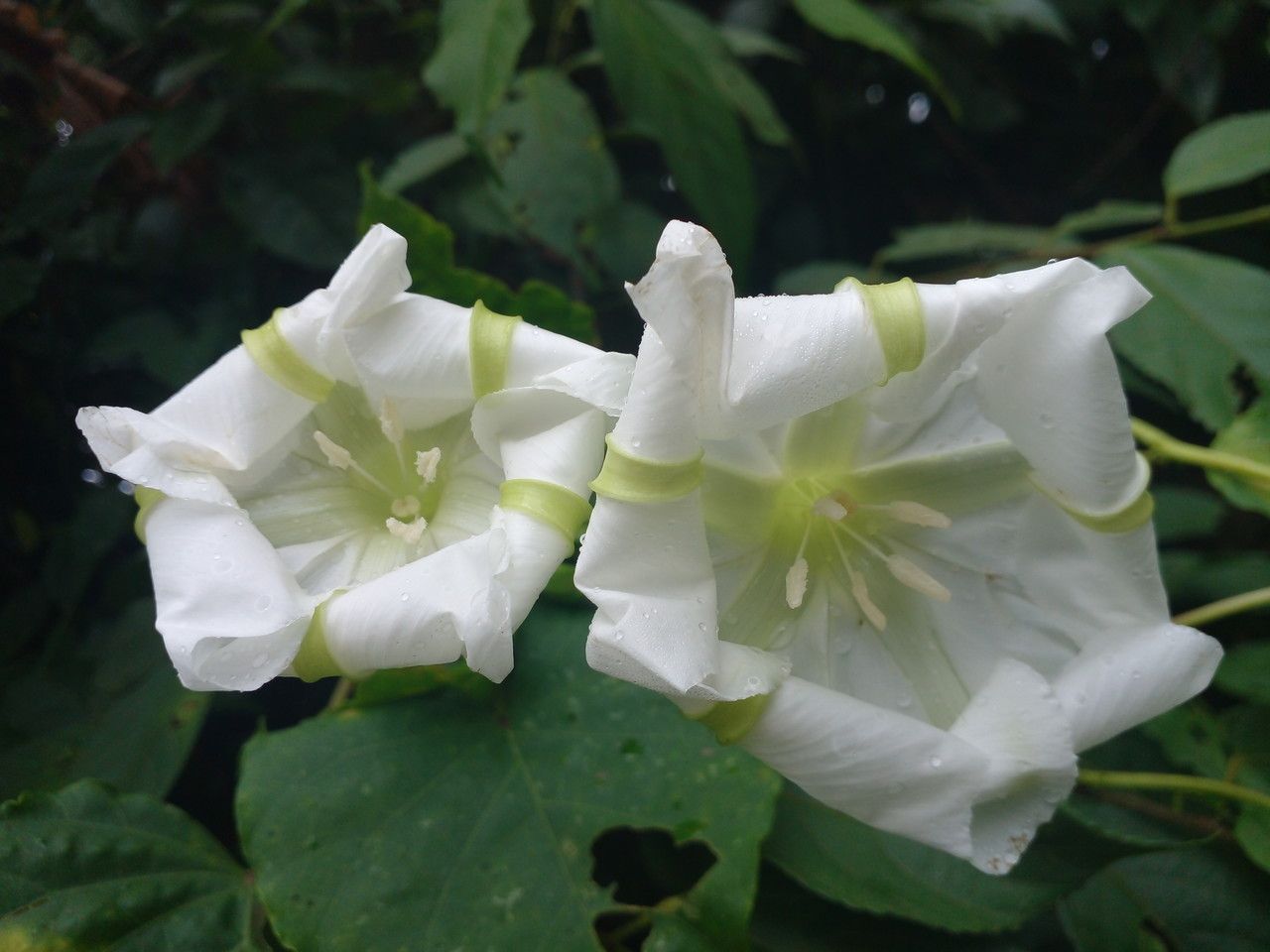
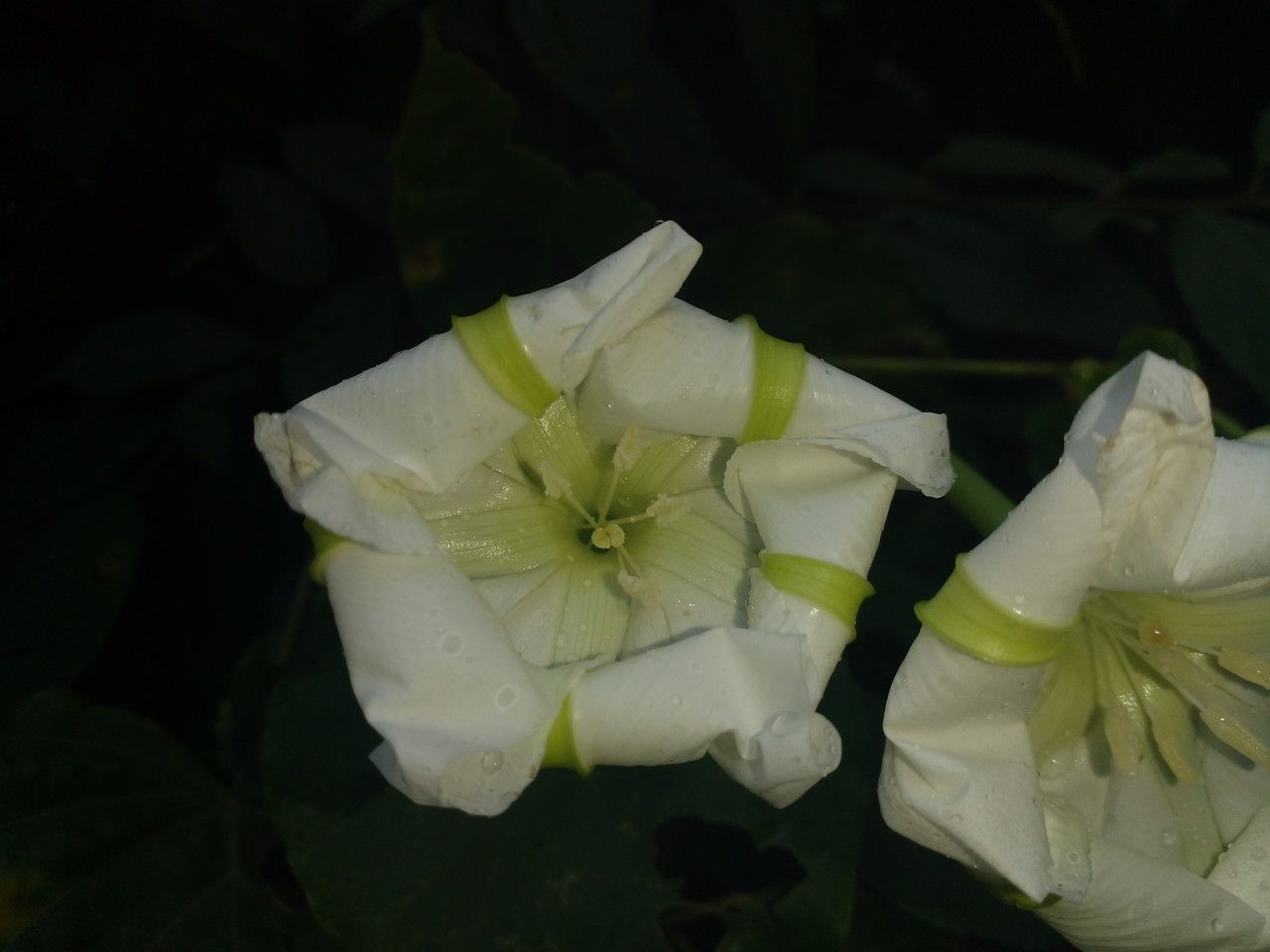
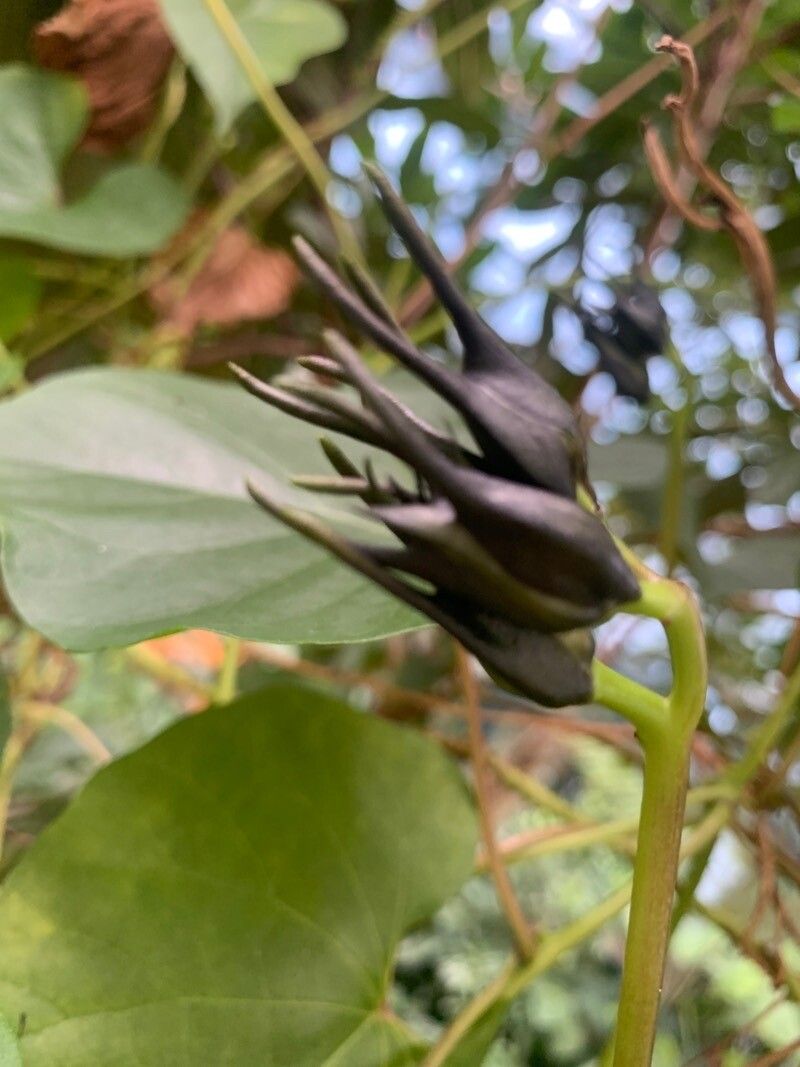
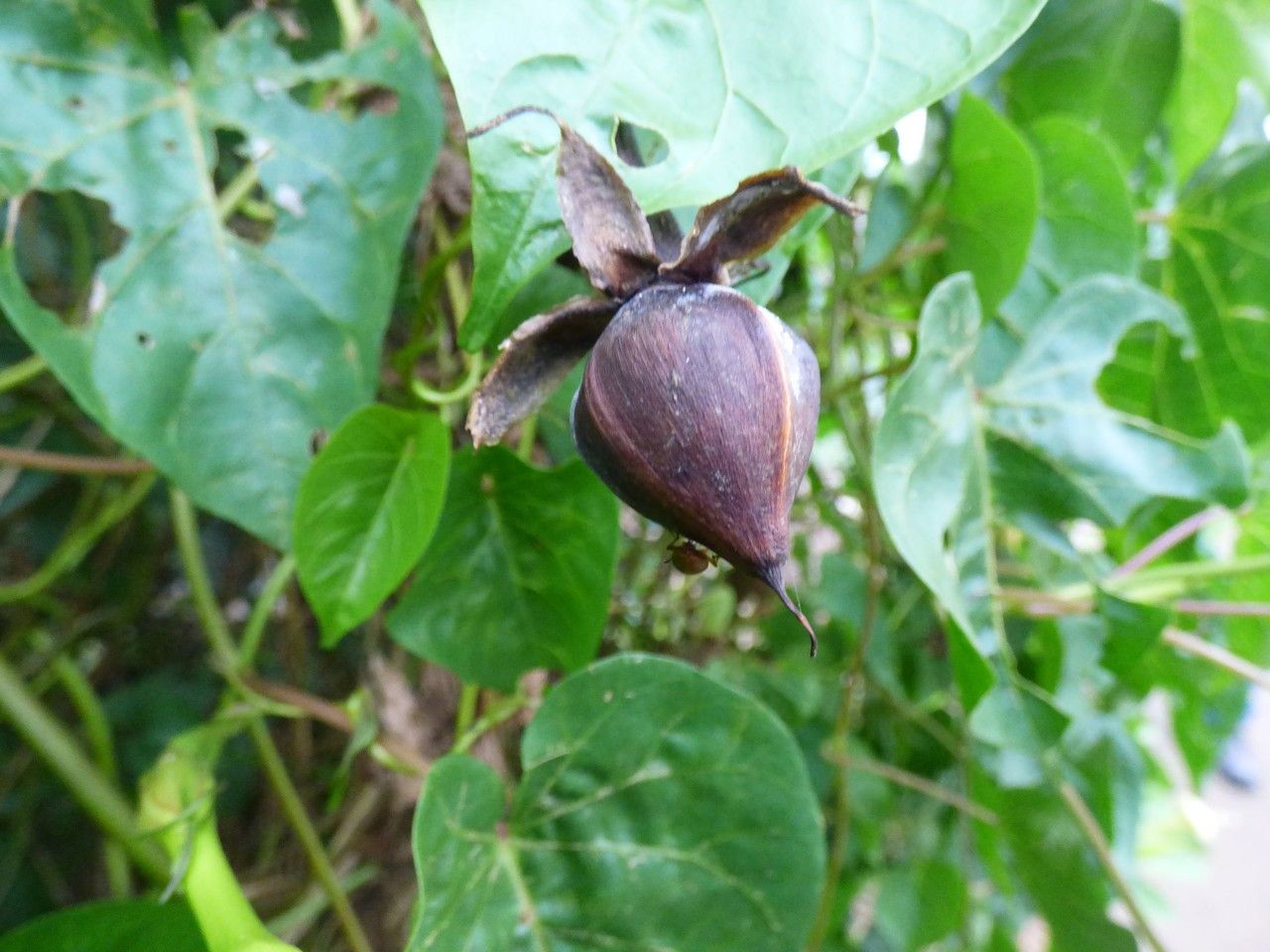
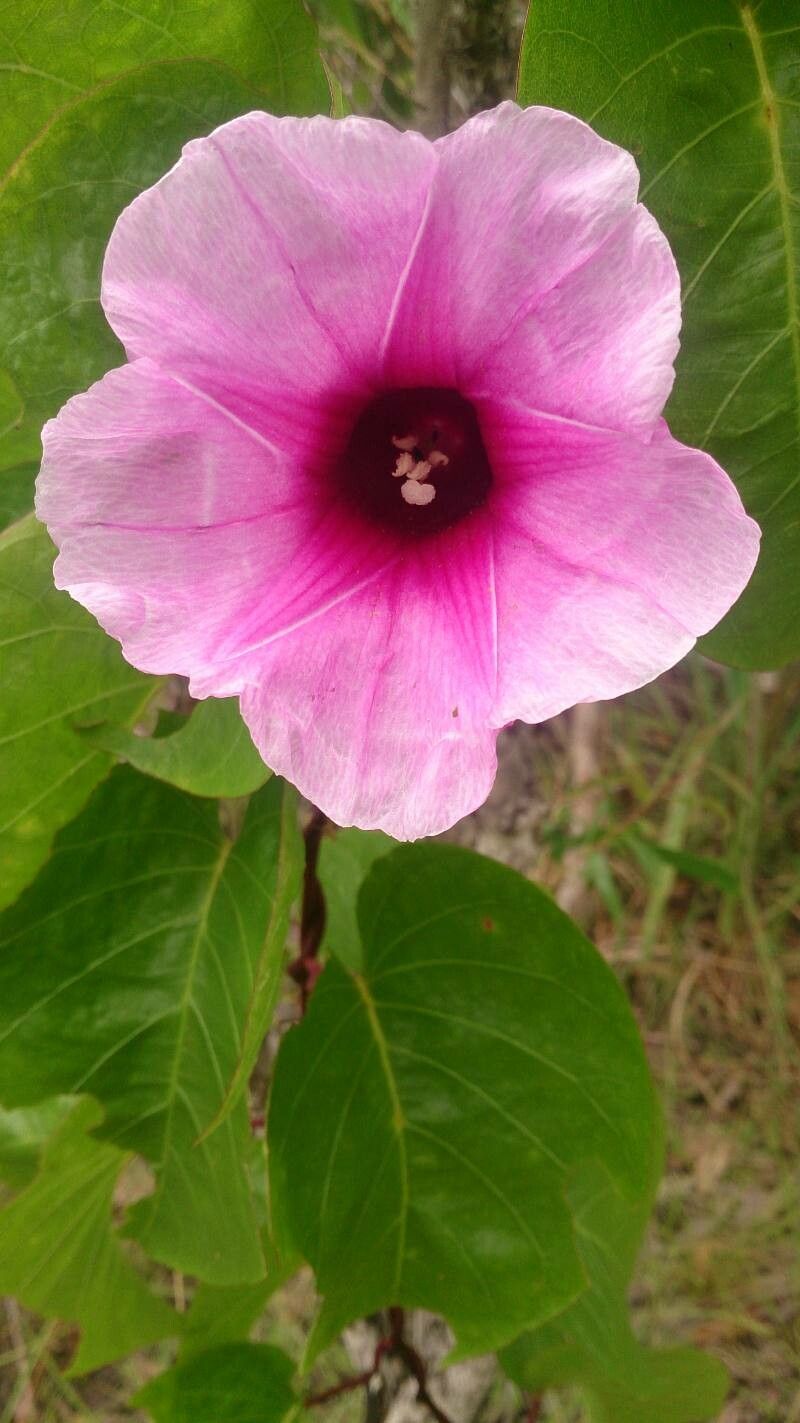
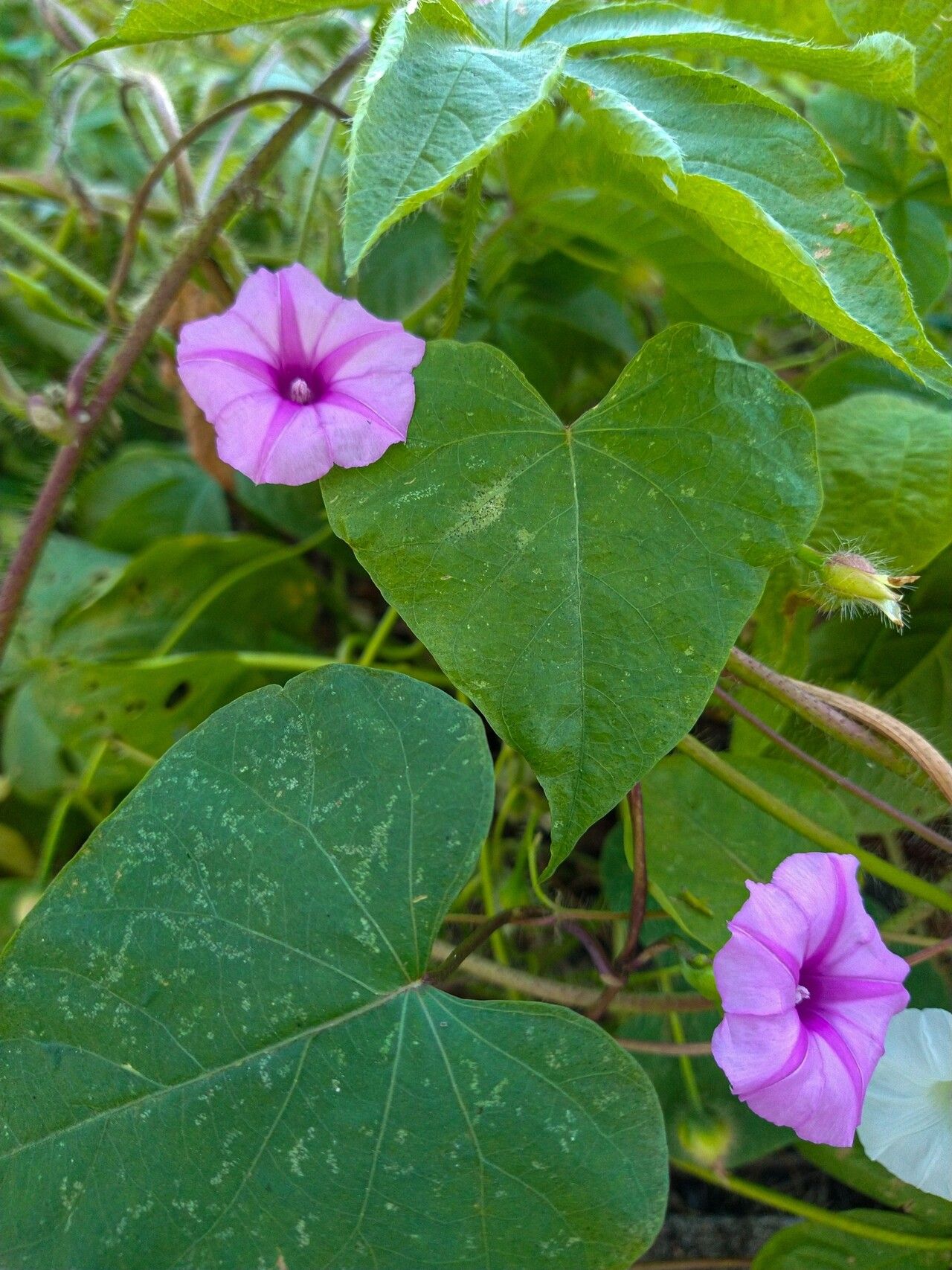
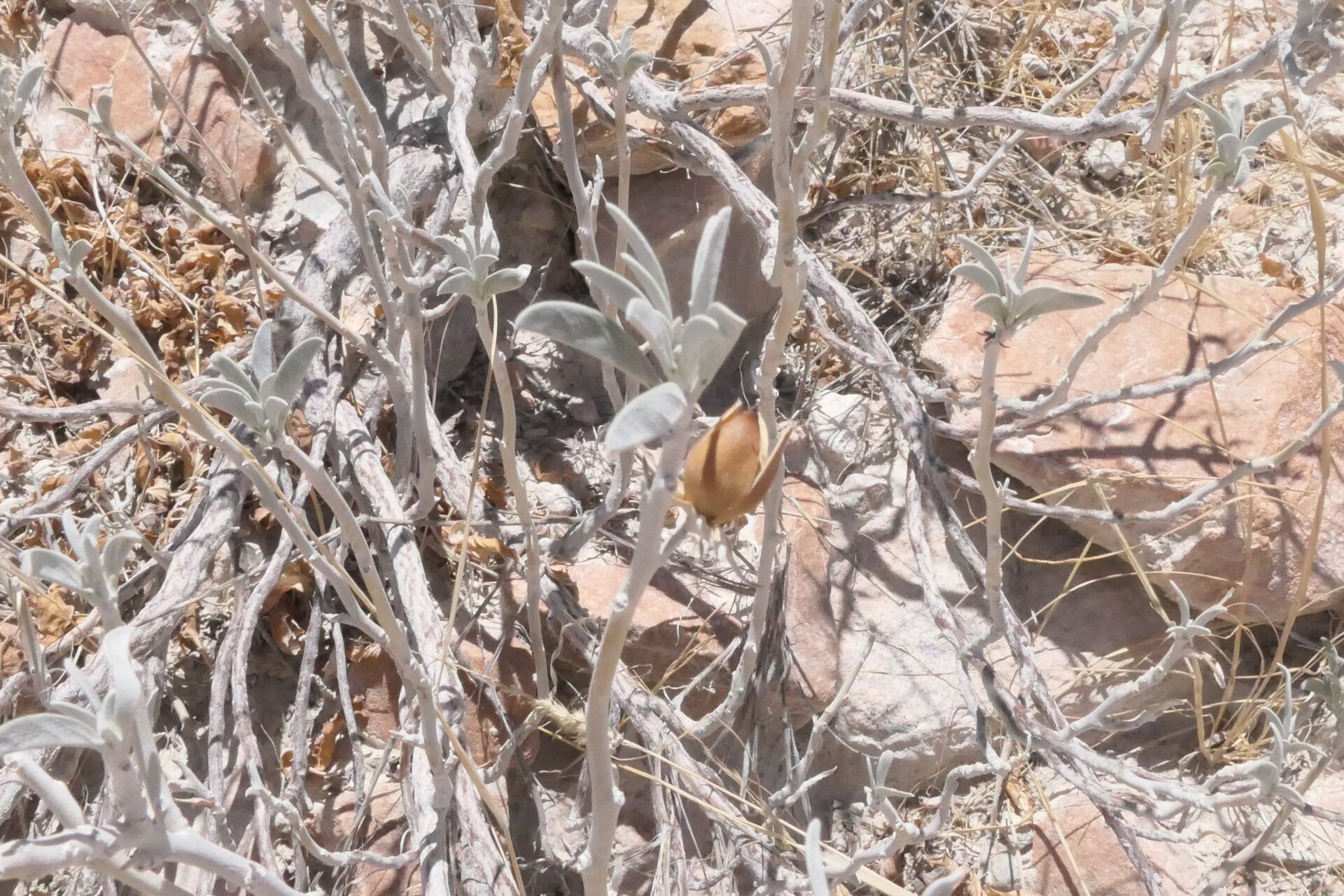
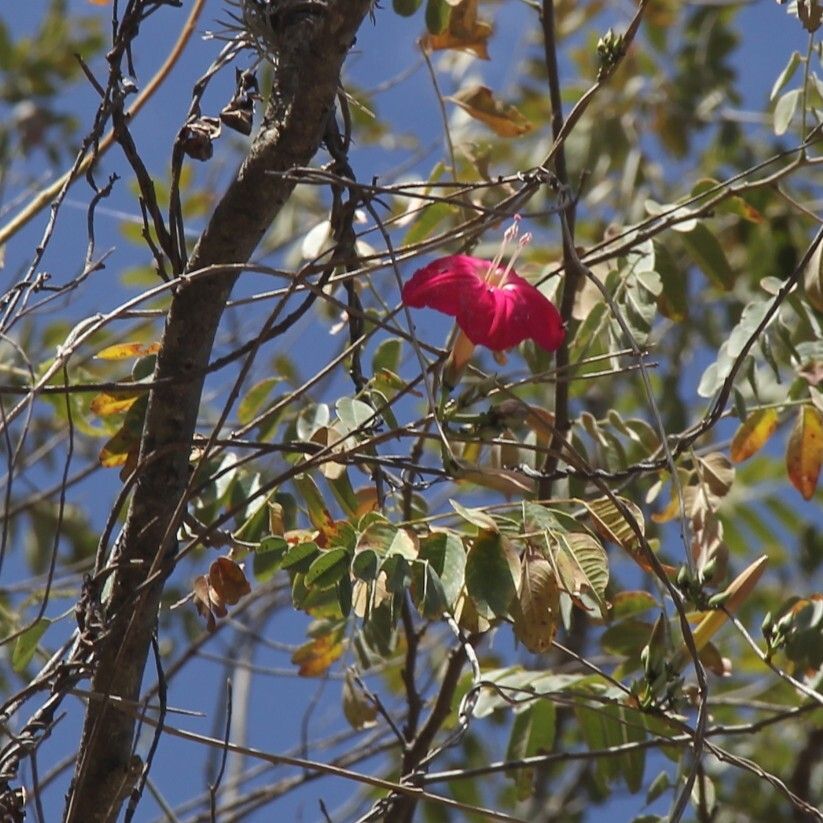
Ipomoea alba, commonly known as moonflower or tropical white morning glory, is a species of flowering plant in the family Convolvulaceae. It is native to the tropical and subtropical regions of the Americas, including South and Central America. This fast-growing vine can reach up to 15 feet in length and produces large, white flowers that bloom at night.
The moonflower's blooms are fragrant and open at nightfall, attracting pollinators such as moths. The plant features heart-shaped leaves with pointed tips that can grow up to 6 inches long.
Ipomoea alba thrives in full sun but can tolerate partial shade. It requires well-draining soil and regular watering during the growing season but should be allowed to dry out between waterings during dormancy.
Historically, the moonflower has been used for medicinal purposes by indigenous peoples for centuries. Its roots have served as a diuretic, while its leaves have been valued for their sedative properties.
Overall, Ipomoea alba is an attractive ornamental vine that enhances any garden or landscape with its large, fragrant blooms that open at nightfall.
Sweet potato has moderate resistance to disease but can be susceptible to issues like leaf spot. Its vulnerability to insect pests depends on the variety, although most are less resistant to pests. In terms of care, sweet potato needs regular watering and fertilization, and yellow leaves should be pruned frequently. It is important to control pests and diseases when they appear and to harvest the plant in a timely way. Sweet potato is appropriate for those who have some time and energy to commit to regular care.
How to keep Ipomoea Alba.
Light
Sweet potato does best with plenty of light, achieving optimal growth when exposed to continuous sunlight. It can, however, also grow in places that are shaded for part of the day. Too little light may cause the leaves to droop, while too much can result in leaf scorch.
Water
The moonflower flourishes in tropical environments with high humidity and frequent rainfall. It thrives in consistently moist soil and should ideally be watered twice a week. As an outdoor plant, it blooms at night, a process influenced by evening dew and the surrounding moisture levels.
Temperature
Sweet potato is well-suited to warm conditions, usually flourishing at temperatures from 68 to 100 °F (20 to 38 ℃). It performs best in its native tropical environment and can tolerate a range of temperatures, but seasonal changes should be closely monitored to protect the plant's health.
Fertilizer
To maximize the yield and flavor of sweet potato, provide sufficient nitrogen throughout the entire growing cycle, including before planting and at harvest. Well-watered, fertilized plants produce plentiful, healthy leaves and reduce bitterness. Before planting, amend the soil with organic matter such as compost or manure, ideally 2 to 8 weeks prior.
Pruning
Moonflower is a climbing vine known for its large, fragrant flowers that bloom at night. To encourage growth and abundant blooms, it's best to prune the plant in early spring or late winter. Start by removing any dead or damaged stems, and then trim the vine to maintain its shape. This will promote healthier blooms and help prevent fungal problems.
Pot & Repot
Repot the sweet potato in early spring into a container only slightly larger than the current pot that provides adequate drainage. Use a well-draining potting mix and position the root ball at the same level as it was previously. Gently loosen any roots that are root-bound. After repotting, water well and place the plant in a warm, shady spot. Regular pruning helps control size and encourages new growth.
Botanical profile.
- Plant Type
- Vine, Herb
- Life Cycle
- Perennial, Annual, Biennial
- Genus
- Ipomoea
- Family
- Convolvulaceae
- Hardiness Zone
- 8-12
- Mature Height
- 1.83 m to 3.05 m
- Mature Spread
- 2.44 m to 3.05 m
- Leaf Color
- Green, Yellow, Red, Purple
- Leaf Type
- Evergreen
- Flower Color
- White, Pink, Purple
- Flower Size
- 3.05 cm to 4.06 cm
- Bloom Time
- Early summer, Mid summer
- Planting Time
- Spring
- Harvest Time
- Mid summer, Late summer
- Native Area
- Belize, Indonesia, Honduras, Mexico, Guatemala, Ecuador, Costa Rica, Panama
Other names.
Reader questions.
How should I water my Moonflower?
To properly water the Moonflower, it is best to use filtered water that is at room temperature. This is because tap water may contain harmful particles that can affect the plant's health. Additionally, the water should be at room temperature or slightly warmer since the Moonflower is accustomed to warm environments and cold water can be shocking for it. It is important to avoid overhead watering as it can lead to issues with the foliage. Instead, gently apply the filtered room temperature water directly to the soil until it is thoroughly soaked. This helps to provide moisture to the roots and allows them to spread through the soil, ensuring they can absorb the necessary nutrients.
Why should I add nutrients to my Moonflower?
Fertilizer and soil nutrients are like fuel for your Moonflower, helping it to grow and stay healthy. Plants in general use nutrients from the soil to create new plant material and keep their existing parts in good condition. For the Moonflower, fertilization is especially important to optimize its flower display. Since the flowers are the main attraction of this plant, gardeners usually strive to ensure they appear in the best form possible. Fertilizing your Moonflower is a reliable method to help it produce beautiful blooms.
What are the sunlight requirements for Moonflower (Ipomoea alba)?
Moonflower requires full sun, characterized by over 6 hours of sunlight daily, for optimal growth. It can also thrive under partial sun, with about 3-6 hours of sunlight. Observing how sunlight moves through your garden helps in selecting spots that ensure a balance of light and shade, conducive to the plant's health.
What is the ideal climate for Moonflower?
The Moonflower thrives in a warm climate, preferring temperatures between 68 to 100°F (20 to 38°C). It is native to tropical environments characterized by high humidity and temperature. During the colder months, it's important to keep the plant indoors or in a greenhouse where temperatures remain above 50°F (10°C), as Moonflower is extremely sensitive to cold. Any exposure to temperatures approaching 32°F (0°C) can be detrimental to the plant. For optimal growth during winter, maintaining the temperature above 68°F (20°C) is beneficial. In autumn, it's advisable to bring outdoor-grown Moonflower plants indoors, placing them near a bright window but away from direct heat sources to avoid harm.
What can I do if I give my Moonflower too much water or not enough water?
Both overwatering and underwatering can harm the health of your Moonflower, but overwatering is more common. Too much water can cause wilting, yellowing leaves, and diseases like root rot, mold, and mildew that can kill the plant. While underwatering is less likely, it can make the leaves brittle and brown. It's important to recognize the signs of overwatering early to prevent irreversible damage. If you notice these signs, reduce your watering schedule and check the soil's drainage. Replace poorly draining soil with a loose, well-draining potting mix. If your Moonflower shows signs of not getting enough water, simply increase your watering frequency.
When should I fertilize my Moonflower for best results?
The Moonflower has two main phases throughout the year. The first phase, called the dormant phase, happens during winter and involves minimal new growth. The second phase, known as the active growth phase, occurs in spring and fall when the plant requires the most fertilization. It's recommended to start fertilizing your Moonflower in the spring and continue doing so once a month throughout spring and most of the summer. As fall approaches, you can start reducing the frequency of fertilization.
How does sunlight affect the growth of Moonflower?
Moonflower flourishes under the full radiance of the sun but can endure moderate sun exposure, akin to its native habitat. However, too much shade can stunt growth, and excessive sunlight can lead to a scorched effect on the plant. It's crucial to find a balance to ensure the plant's happiness and health.
How does low temperature affect Moonflower and what should I do?
Moonflower is not tolerant of low temperatures, favoring conditions where the temperature is consistently above 68°F (20°C). Exposure to temperatures below 32°F (0°C), and especially below -5°F (-20°C), can cause the leaves to lighten in color. Following frost damage, the affected leaves may turn brown or black, exhibiting symptoms of wilting and drooping. To mitigate this, frost-damaged parts should be trimmed off, and the plant should immediately be moved to a warmer environment indoors. It's best positioned near a south-facing window to ensure it receives ample sunlight. However, placing the plant near heaters or air conditioning vents should be avoided to prevent air from becoming excessively dry.
How frequently should I water my Moonflower?
If your Moonflower is in a pot, the best way to tell if it needs water is to stick your finger in the soil. If the top two to three inches of soil are dry, then it's time to water it. If you're growing the Moonflower outside in the ground, you can use the same method to test the soil. Once the top few inches are dried out, it's time to give it some water. In the spring and early fall, watering about once a week is usually enough. But when it gets really hot, you might need to water it twice a week or even more. However, mature Moonflowers that are well-established can actually handle dry conditions pretty well.
When is it not a good time to fertilize my Moonflower?
If you want to help your Moonflower grow without causing root burn, it's important to fertilize your plant when it is actively growing in the spring and summer. These are the times when extra nutrients are needed. However, in the fall and winter, when your plant goes into its dormancy stage, you should stop fertilizing.
How can artificial lighting support Moonflower growth indoors?
Indoor Moonflower plants require adequate lighting, especially in low sunlight conditions or during winter. Artificial lights, particularly LEDs, are beneficial as they can be adjusted to provide specific light wavelengths needed by plants. For full sun plants, 30-50W/sq ft is recommended, partial sun plants require 20-30W/sq ft, and full shade plants need 10-20W/sq ft. Lights should be placed 12-36 inches above the plant and turned on for 8-12 hours per day to mimic natural sunlight.
How does high temperature affect Moonflower and what is the solution?
During the summer months, it's important to ensure that Moonflower is exposed to temperatures below 100°F (38°C). If the temperature rises above 109°F (43°C), the leaves might start to lighten in color, making the plant more vulnerable to sunburn. Should this occur, trimming away the sunburned and dried parts of the plant is necessary. Finding a shaded location that protects the plant from the harsh midday and afternoon sun will help prevent further damage. To maintain adequate moisture levels in the soil, watering the plant in the morning and evening is advised.