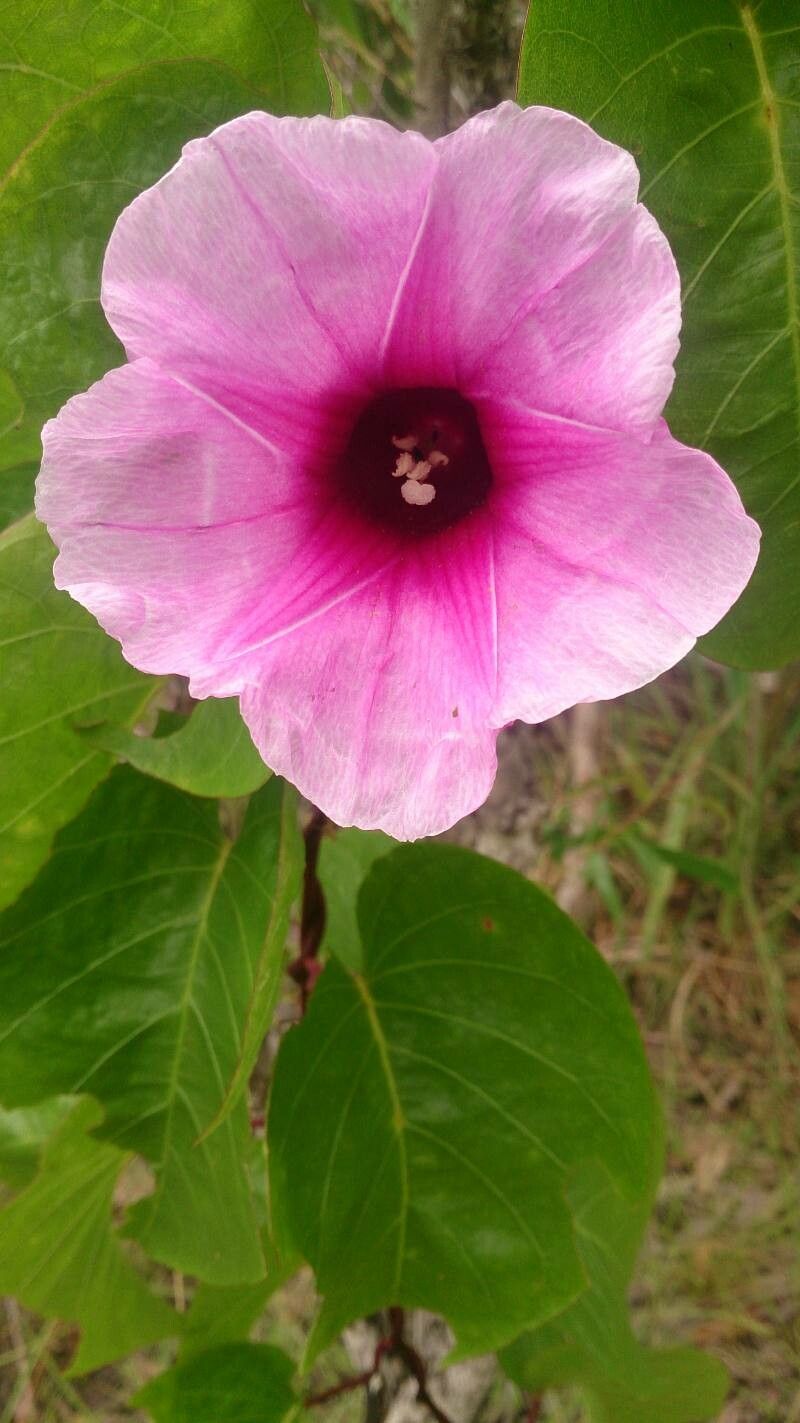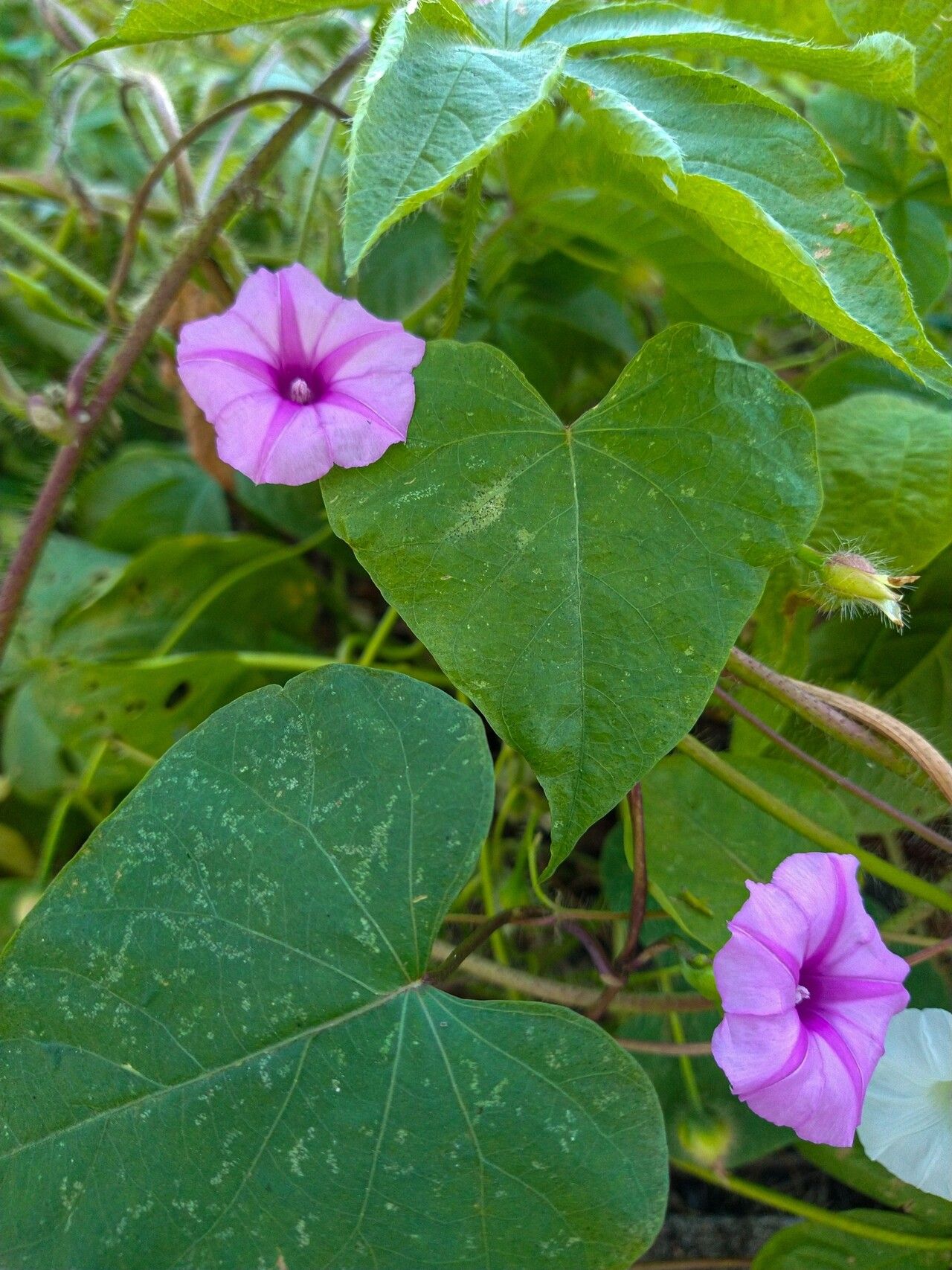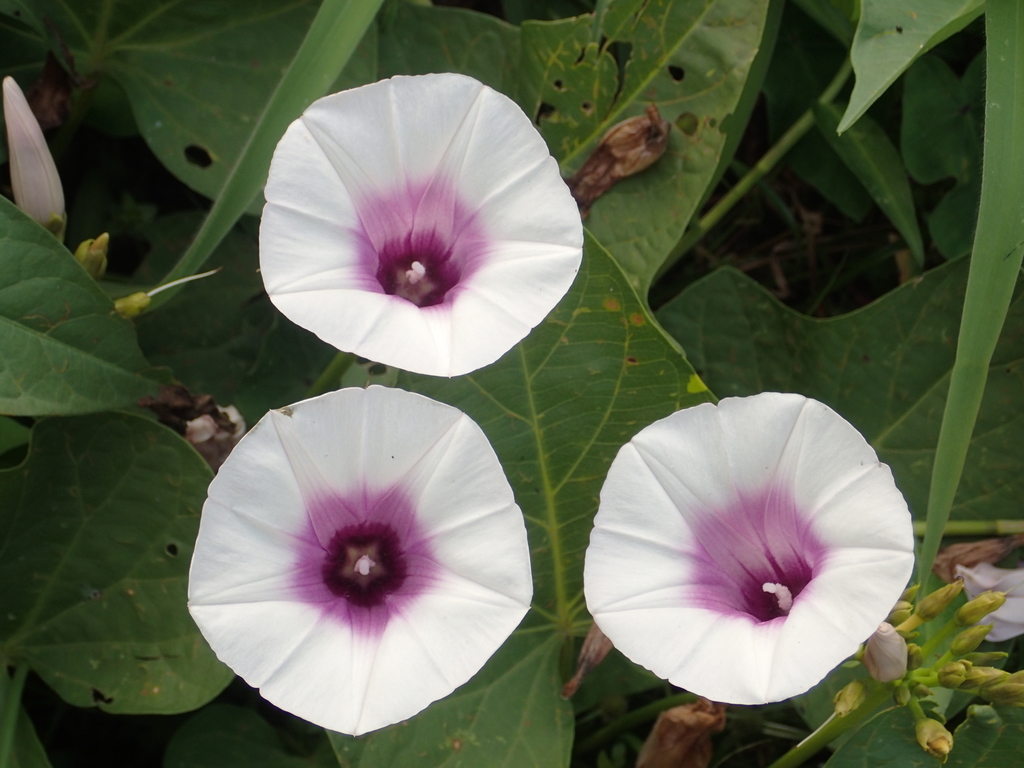
Ipomoea batatas, commonly known as the sweet potato, is a perennial vine that belongs to the morning glory family. Native to Central and South America, it is now widely cultivated in tropical and subtropical regions around the world. The plant features heart-shaped leaves that are typically green but can also appear in purple or variegated forms. The sweet potato itself is a starchy root vegetable that comes in various colors, including orange, yellow, purple, and white. Sweet potatoes are an important food crop for many countries because of their high nutritional value and versatility in cooking. They are rich in vitamins A and C, fiber, potassium, and antioxidants, which contribute to good health. In addition to being a food source for humans, sweet potatoes are also used as livestock feed. They have been traditionally used for medicinal purposes, such as treating digestive disorders and reducing inflammation. Overall, the Ipomoea batatas plant holds significant economic importance due to its nutritional value, utility as both a food crop and livestock feed, medicinal properties, and the ornamental appeal of its leaves. These factors make it an important plant species globally.
Sweetpotato: Botanically speaking, the sweetpotato is not closely related to the potato, although they share a similar name. The indigenous Taino people originally called the sweetpotato "batata." When the Spanish encountered this plant, they combined "batata" with the Quechua word "papa" (which means potato) to form the word "patata," which eventually became "potato" in English. Due to its sweet taste, this plant is referred to as sweetpotato.
Sweet potato has moderate resistance to disease but can be susceptible to issues like leaf spot. Its vulnerability to insect pests depends on the variety, although most are less resistant to pests. In terms of care, sweet potato needs regular watering and fertilization, and yellow leaves should be pruned frequently. It is important to control pests and diseases when they appear and to harvest the plant in a timely way. Sweet potato is appropriate for those who have some time and energy to commit to regular care.
How to keep Ipomoea Batatas.
Light
Sweet potato does best with plenty of light, achieving optimal growth when exposed to continuous sunlight. It can, however, also grow in places that are shaded for part of the day. Too little light may cause the leaves to droop, while too much can result in leaf scorch.
Water
The sweet potato vine thrives in warm and moist environments, needing consistent watering and evenly moist soil to stay healthy. For optimal growth, water the vine twice a week, especially during its active growing season. It grows particularly well outdoors in areas with natural rainfall, which supports its robust development.
Humidity
This plant will thrive in moderate humidity, which is probably the level in your home. However, misting it a few times a week can be very beneficial. Make sure the room has good ventilation.
Temperature
Sweet potato is well-suited to warm conditions, usually flourishing at temperatures from 68 to 100 °F (20 to 38 ℃). It performs best in its native tropical environment and can tolerate a range of temperatures, but seasonal changes should be closely monitored to protect the plant's health.
Fertilizer
To maximize the yield and flavor of sweet potato, provide sufficient nitrogen throughout the entire growing cycle, including before planting and at harvest. Well-watered, fertilized plants produce plentiful, healthy leaves and reduce bitterness. Before planting, amend the soil with organic matter such as compost or manure, ideally 2 to 8 weeks prior.
Pruning
The sweet potato vine is a fast-growing plant that benefits from regular pruning in the spring, either early or late in the season. Pruning helps the plant become bushier, improves air circulation, and keeps it healthy. Make sure to sterilize your pruning tools to prevent the spread of disease. Regular pruning also enhances the ornamental appeal of the vine and encourages vigorous new growth.
Pot & Repot
Repot the sweet potato in early spring into a container only slightly larger than the current pot that provides adequate drainage. Use a well-draining potting mix and position the root ball at the same level as it was previously. Gently loosen any roots that are root-bound. After repotting, water well and place the plant in a warm, shady spot. Regular pruning helps control size and encourages new growth.
Botanical profile.
- Plant Type
- Vine, Herb
- Life Cycle
- Perennial, Annual, Biennial
- Genus
- Ipomoea
- Family
- Convolvulaceae
- Hardiness Zone
- 8-12
- Mature Height
- 1.83 m to 3.05 m
- Mature Spread
- 2.44 m to 3.05 m
- Leaf Color
- Green, Yellow, Red, Purple
- Leaf Type
- Evergreen
- Flower Color
- White, Pink, Purple
- Flower Size
- 3.05 cm to 4.06 cm
- Bloom Time
- Early summer, Mid summer
- Planting Time
- Spring
- Harvest Time
- Mid summer, Late summer
- Native Area
- Belize, Indonesia, Honduras, Mexico, Guatemala, Ecuador, Costa Rica, Panama
Other names.
Reader questions.
When Should I Water My Sweet Potato Vine?
Timely watering of the sweet potato vine is key for its health, aiming to avoid both drought and waterlogging situations. To determine when to water, feel the soil; if the top 1 to 2 inches are dry, it's time to water. Signs that your plant needs water include drooping or wilting leaves, brown leaf tips, and slowed growth. However, be mindful as both under-watering and over-watering can lead to negative outcomes such as stress, stunted growth, or root rot. Always check the soil moisture and observe the plant's condition to guide your watering schedule.
Why should I add fertilizer to my Sweet potato vine?
Sweet potato vine, grown for its edible leaves, has specific nutritional needs. Nitrogen is the most important nutrient for foliage growth, but it can be challenging for the vine to obtain enough nitrogen from the soil. To ensure a satisfying harvest, many gardeners choose to supplement the vine with additional nitrogen through heavy feeding.
What are the sunlight requirements for sweet potato vine?
Sweet potato vine requires a significant amount of light to thrive optimally. It prefers full sun conditions, which means it should receive more than 6 hours of direct sunlight daily. However, it can also grow under partial sun, with about 3-6 hours of sunlight. It's important to observe the movement of sunlight through your garden to find spots that offer the right balance of light and shade, ensuring the plant's health and happiness.
What is the ideal temperature range for growing Sweet Potato Vine?
Sweet Potato Vine thrives in warmer environments, ideally between 68 to 100°F (20 to 38°C). It is most comfortable in its native tropical setting, although it can adapt to varying temperatures. To ensure the plant remains healthy, it's crucial to monitor seasonal changes closely. During winter, maintaining temperatures above 20°C is beneficial for the plant's growth, with a minimum temperature threshold set above the freezing point to avoid freezing damage. When outdoor temperatures drop to around -5°C (25°F) during winter, it's advisable to bring the Sweet Potato Vine indoors or safeguard it with a temporary greenhouse, or by wrapping the plant with materials like plastic film or fabric.
How Should I Water My Sweet Potato Vine?
Watering your sweet potato vine correctly involves ensuring the soil remains consistently moist but not waterlogged. Preferably, use a watering can with a long spout to water directly at the base and consider bottom watering for deep moisture absorption without over-saturating the surface. A moisture meter can be a helpful tool for monitoring soil water levels effectively. Focus on watering the soil around the base where the roots can easily absorb moisture and avoid wetting the foliage to prevent disease. Be cautious not to over-water to avoid root rot and ensure the soil is never totally dry.
When should I put fertilizer on my sweet potato vine?
During the growing season, there are a few key times when you should apply fertilizer to benefit your Sweet potato vine. First, before planting, you should prepare the ground by amending the soil with nutrient-rich organic material like compost or manure. This should be done at least 2 to 8 weeks before planting. When it's time to plant, you should amend the soil again using the same method. Once your seedlings emerge and are about 2 inches tall, it's time for the next dose of fertilizer. From then on, you can regularly feed your Sweet potato vine with organic matter or commercial fertilizer until harvest, typically every two to three weeks. It's also a good idea to add a layer of compost or manure around the plant for a continuous supply of nutrients.
How does artificial lighting benefit indoor sweet potato vines?
Artificial lighting is crucial for indoor sweet potato vines, especially in environments where natural sunlight is scarce, such as during winter or in less sunny spaces. Adequate lighting under such conditions can promote faster and healthier growth. LED lights are recommended because they can be customized to provide specific wavelengths needed by your plants. For full sun plants, 30-50W/sq ft is needed, for partial sun plants, 20-30W/sq ft, and for full shade plants, 10-20W/sq ft. The light source should be placed 12-36 inches above the plant to mimic natural sunlight, with an exposure duration of 8-12 hours daily, depending on the species.
How does Sweet Potato Vine respond to low temperatures, and what can be done in case of frost damage?
Sweet Potato Vine has a moderate tolerance to low temperatures, performing best within the range of 20°C to 38°C. It's essential to keep it above 0°C during winter. Exposure to temperatures below -10°C can darken the leaves, potentially leading to water-soaked necrosis, wilting, drooping, and eventually, the leaves may turn brown. If frost damage occurs, it's recommended to trim away the frost-damaged parts and move the plant to a warm environment indoors immediately or create a makeshift greenhouse for cold protection. Placing the plant near a south-facing window when indoors ensures ample sunlight, and if natural light is insufficient, supplemental lighting may be used.
How Much Water Does Sweet Potato Vine Really Need?
The amount of water your sweet potato vine requires depends on its growth stage, pot size, and the environment. Mimicking the plant's natural tropical habitat, where the soil remains moist but not soggy, is key. For an efficient watering approach, fill up to 1\/3 of the pot to ensure moisture reaches the roots adequately, especially for large plants. Observe visual cues like wilting or overly damp soil to gauge if the vine is properly hydrated. A consistent, but not excessive, watering routine that allows for deep soil saturation to reach the extensive root system is beneficial for healthy growth.
When is it not a good idea to fertilize my Sweet potato vine?
When using nitrogen-rich fertilizers, be cautious when applying them near vegetable plants that need to focus on fruiting rather than growing foliage. This is because applying nitrogen-rich fertilizers near these plants could result in lots of leaves but very few vegetables. To prevent burning the leaves of your Sweet potato vine, avoid letting any type of fertilizer touch or splash onto them. It's recommended to apply the fertilizer a few inches away from the plant's base. If your Sweet potato vine is unhealthy due to disease, pests, drought, or other reasons, hold off on fertilizing until those issues are resolved. Fertilizer can help healthy plants, but it can be harmful if applied to an unhealthy plant.
What are common symptoms of improper light exposure in sweet potato vines?
Sweet potato vines may exhibit several symptoms when exposed to insufficient or excessive sunlight. Symptoms of light deficiency include leggy or sparse growth, where the spaces between leaves or stems elongate, causing a stretched appearance. New leaves might appear lighter in color or pale, indicating a lack of chlorophyll and essential nutrients. Other symptoms include faster leaf drop, chlorosis, where leaves lose their green color, and sunscald, which damages leaves or stems due to intense sunlight. Excessive light can cause leaf curling, wilting, and leaf scorching, which are defense mechanisms or results of too much sun exposure.
How should Sweet Potato Vine be cared for during high temperatures?
In summer, it's crucial to keep the Sweet Potato Vine's environment below 38°C. Temperatures exceeding 43°C can slow down the plant's growth, lighten the color of its leaves, and increase its susceptibility to sunburn. To manage this, trim away any sunburned or dried-up parts and relocate the plant to a shaded area, especially from the harsh afternoon sun. It's also advisable to water the plant in the morning and evening to maintain soil moisture.