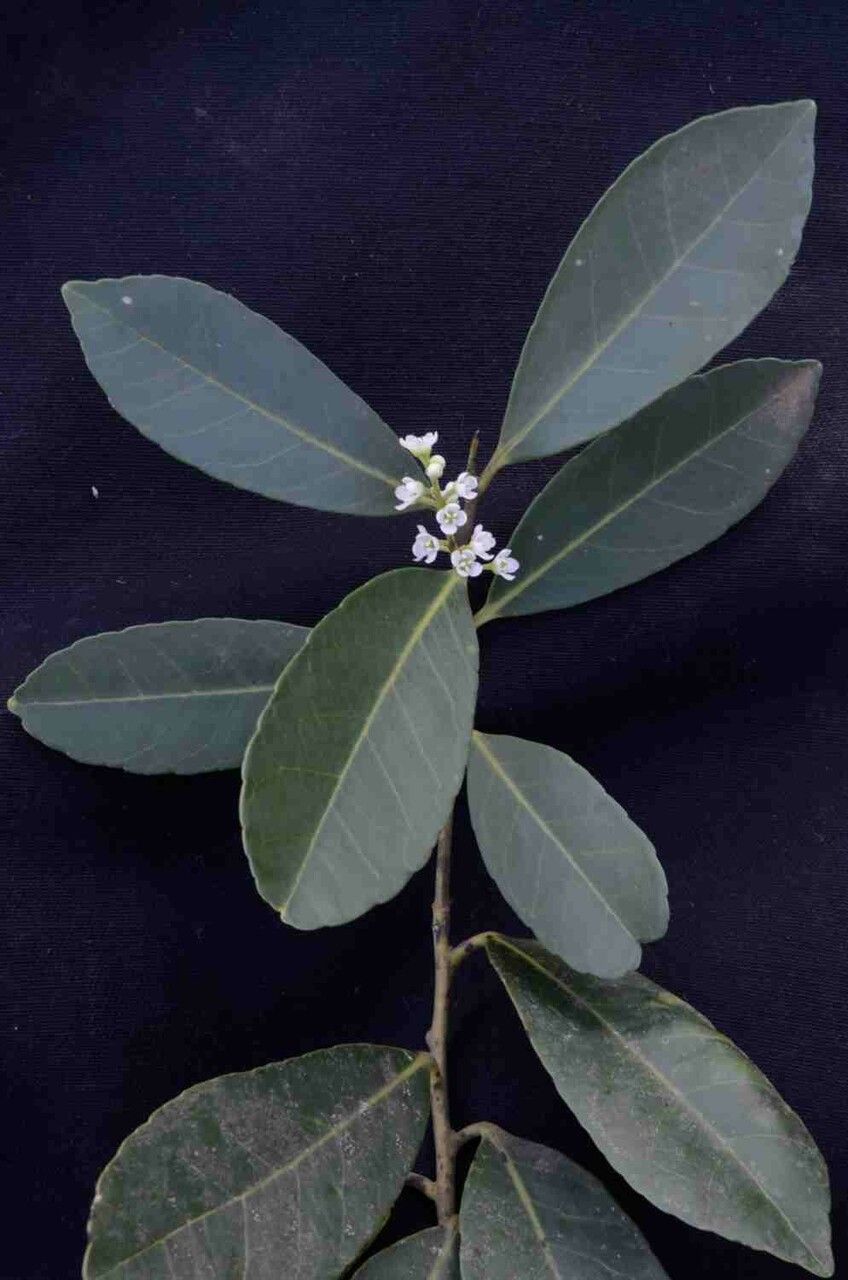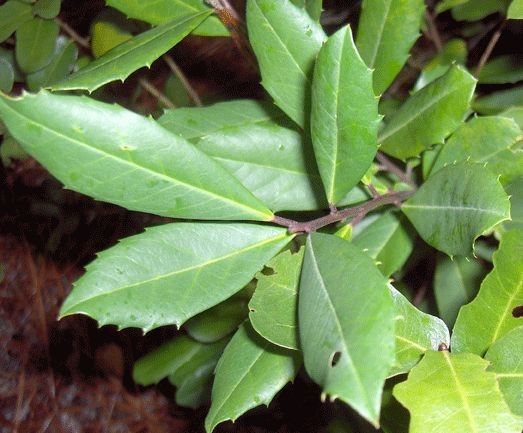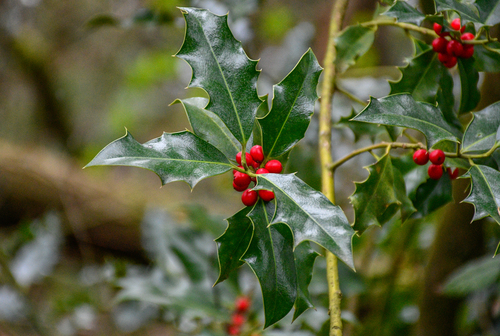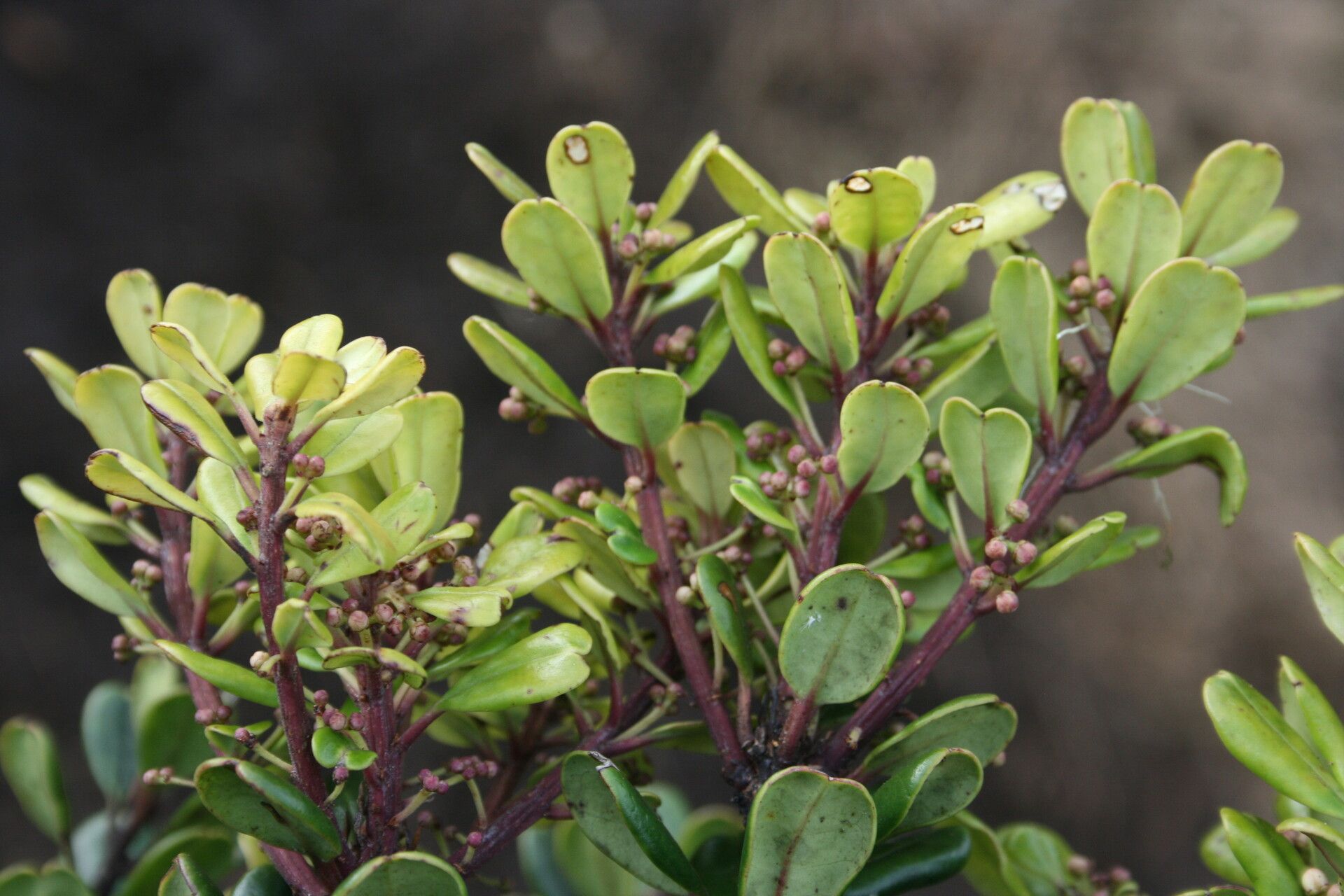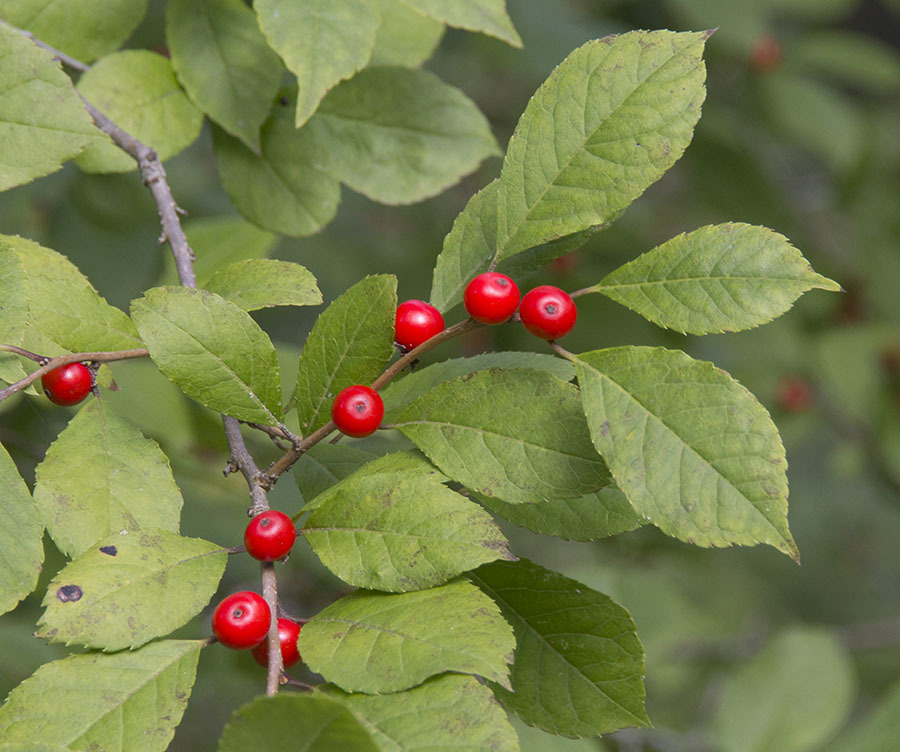
Ilex verticillata, commonly known as winterberry or black alder, is a deciduous shrub native to North America. It typically reaches a height and width of up to 10 feet, boasting a rounded shape. Its dark green, glossy leaves feature serrated edges, and turn yellow in the fall before shedding. The most striking feature of Ilex verticillata is its bright red berries, which appear in the fall and persist throughout winter. These berries serve as a vital food source for birds during the colder months. Ilex verticillata prefers moist soil but can tolerate some drought once established. It thrives best in full sun to partial shade but can also grow in full shade. Due to its attractive foliage and vibrant winter berries, this plant is widely used in landscaping for its ornamental value. It adds color during the winter months when most other plants have lost their leaves or become dormant. In addition to its ornamental use, Ilex verticillata has been utilized medicinally by Native Americans for various ailments, including fever reduction and pain relief. However, it is important to note that ingesting any part of this plant can be toxic if consumed in large quantities. Overall, Ilex verticillata is a beautiful shrub that offers year-round interest, provides important ecological benefits, and has potential medicinal uses.
Common winterberry is a shrub that, at first glance, might seem quite ordinary. However, its real charm lies in its fruit. The fruit resembles small, fiery red balls and clusters together on branches, much like grapes. These vibrant fruits remain on the branches well into the winter, which is why the plant is aptly named common winterberry.
Winterberry is fairly resistant to disease and typically not prone to illnesses. Still, if kept in a poor environment it can become more vulnerable to disease. It also faces few insect pests. Regarding care, the plant has moderate requirements. Providing ample sunlight is important, since insufficient light can make it more susceptible to disease and cause thin, spindly growth. Because it is often grown indoors, it may need to be moved regularly to a well-lit spot. It does not need frequent watering. Overall, Winterberry suits most people, but is particularly appropriate for those who can supply good light conditions.
How to keep Ilex Verticillata.
Light
Winterberry grows best with plenty of light but can tolerate areas with reduced exposure, giving it some flexibility. Frequently found in open wooded areas, it typically experiences a range of sunlight levels. Both too much and too little light can be harmful, causing problems like leaf discoloration or slowed growth.
Water
Common winterberry, originally from wetlands, thrives in high humidity and consistently moist soil. It needs watering every 1-2 weeks and adapts its water intake based on different rainfall patterns during the growing season. This hardy outdoor plant is typically found in temperate regions.
Humidity
This plant will thrive in moderate humidity, which is probably the level in your home. However, misting it a few times a week can be very beneficial. Make sure the room has good ventilation.
Temperature
Winterberry is native to Eastern North America and prefers temperatures of 59 to 95 ℉ (15 to 35 ℃). It is a temperate woody plant able to adjust to variable temperatures. Seasonal temperature adjustments are unnecessary because it tolerates both hot summers and freezing winters.
Fertilizer
Fertilize your Winterberry in early spring to encourage healthy growth. Regular feeding boosts overall health, producing vigorous growth, increased resilience to harsh conditions, and improved resistance to diseases and pests. Keep to a specific fertilization schedule for your Winterberry to preserve vibrant, deeply colored, lush foliage.
Pruning
The common winterberry is a deciduous shrub recognized for its bright red berries. To promote better berry production and improve air circulation, prune it in early spring. Begin by removing any damaged branches and thin out crowded areas. Make sure your cuts are clean and angled to ensure quick healing, as recommended by trusted horticultural sources.
Pot & Repot
When repotting Winterberry, select a pot 1-2 inches (2.5–5.1 cm) larger with good drainage. Use a well-draining potting mix. Repot in spring or fall, making sure the root ball sits slightly below the rim of the flower pot. Water thoroughly after repotting and place the plant in a warm spot with indirect sunlight.
Toxicity
Like all hollies, winterberry is mildly toxic to some animals and people. The berries contain a caffeine-like alkaloid called theobromine which, in large doses, can cause dizziness, elevated pulse, nausea, and diarrhea. Don't use this plant where children, dogs, or cats are likely to eat the berries.
Further reading →
The toxicity and danger assessments provided are for reference only. We do not assure their accuracy, so it's crucial not to depend on them. Seek professional advice when necessary for accurate guidance.
Botanical profile.
- Plant Type
- Shrub
- Life Cycle
- Perennial
- Genus
- Ilex
- Family
- Aquifoliaceae
- Hardiness Zone
- 8-9
- Mature Height
- 0.91 m to 4.88 m
- Mature Spread
- 1.83 m to 3.05 m
- Leaf Color
- Green, Yellow
- Leaf Type
- Deciduous
- Flower Color
- White
- Flower Size
- 0.51 cm
- Bloom Time
- Late spring, Early summer
- Planting Time
- Spring, Autumn
- Harvest Time
- Mid summer, Late summer, Fall, Winter
- Native Area
- Moist swamps and thickets in southeast Canada and Eastern U.S.
Other names.
Reader questions.
How should I water my Common winterberry plant to make sure it gets enough water?
To ensure excellent root development, place a garden hose at the base of your plants. Be careful not to spray the leaves directly. If the plants are outdoors in direct sunlight, the leaves will need more watering. You can use bubblers or soaker hoses to keep the roots moist. When adding or removing plants, use soaker hoses that cover the entire garden to ensure deep root growth. After watering, drain any excess water and allow the soil to dry before watering again. Water at ground level to avoid diseases. On sunny days, you can spray the entire bush with water. Remember, whether potted or in-ground, Common winterberry plants prefer deep watering rather than light sprinkling.
Why should I add fertilizer to my Common winterberry plant?
No matter what type of Common winterberry you have, regular fertilization is crucial for promoting good overall health. Providing the right nutrients will lead to stronger growth and enhance the plant's resilience against difficult growing conditions, as well as its ability to combat diseases and pests. Preserving the attractive foliage of your Common winterberry is important, so it's necessary to establish and follow a regular fertilization schedule tailored to this plant. This will encourage the development of vibrant, deeply colored leaves and a lush appearance.
How many hours of sunlight does Common winterberry need per day to grow well?
To ensure healthy growth, Common winterberry needs a minimum of 3-6 hours of sun per day. This is actually the minimum requirement, but most plants that can tolerate partial sun can also thrive in full sun. Since they need less light for photosynthesis, these plants are more adaptable than those that need full sun or partial shade.
What temperature is best for Common winterberry?
Plants can be affected by colder temperatures because their temperature aligns with the air around them. When plants are exposed to sunlight, they can warm up, but this does not happen in winter. The Common winterberry typically thrives in temperatures ranging from 70 to 85℉ (21 to 30℃). They can withstand temperatures as low as 20 to 30℉ (-6 to 0℃), and even 15℉ (-10℃), but for a limited time as frost damage may occur. It is important to maintain maximum temperatures within the range of 70 to 85℉ (21 to 30℃). Additionally, remember to spray them with water occasionally and provide some shade to prevent wilting.
What should I do if I give Common winterberry plant too much or too little water?
If a Common winterberry is overwatered, its leaves may turn yellow, drop off, and wilt. The plant may also appear dull and unhealthy, with mushy stems. When these signs begin to show, it's best to adjust your watering schedule if possible. Wilting can also indicate under watering, in which case the leaves may become crispy and dry. If the soil is dry and watering alone is not enough, give the plant a thorough watering. Sufficient water will help the Common winterberry recover, but it may still have dry and yellow leaves for a few days due to damage to the root system. Once the plant returns to normal, the yellowing of the leaves will stop. When you have a Common winterberry indoors, always check the moisture levels in the pot and avoid overwatering. Look for signs of black spots, and if present, allow the soil to dry by abstaining from watering for a few days. Overwatering can lead to root rot, so if you observe discolored and slimy roots, consider transferring the plant to a different pot. Prevent root rot by avoiding excessively soggy soil. When planting your Common winterberry outdoors, dig a little deeper. If the soil feels too dry when checking with your fingers, it could indicate under watering. Adequate watering is necessary to aid the plant's recovery.
When should I fertilize my Common winterberry shrub?
To keep your Common winterberry healthy and promote growth, it's important to fertilize at the right times. The first fertilization should be done in late winter or early spring, which provides the necessary nutrients for healthy growth once the weather warms up. If you live in a warm climate region, an additional fertilization during early fall is beneficial. This helps supply the soil with extra nutrients for the following growing season and also increases the winter hardiness of the plant, preventing foliage damage. By fertilizing earlier, the new branches will have enough time to grow and withstand the cold winter.
What kind of sunlight does Winterberry need?
Common winterberry thrives in full or part sun, particularly when it receives direct morning light. However, during the summer, it's important to shield the plant from intense afternoon sun. Too much hot afternoon sun can scorch the leaves and harm the overall health and appearance of the plant, especially in temperate environments.
Do I need to change the temperature for Common winterberry at different stages of growth?
When growing Common winterberry, it is important to do some research to ensure the temperature is appropriate. Some growers choose to lower the plants' thermostat during the growing season to save on HVAC costs. However, it is crucial to understand that temperature can impact flowering, pest control, and plant quality. Common winterberry will stop growing at a certain temperature, which typically occurs during the winter when some species enter a dormant state. As the season changes and the temperature increases, the base temperature for Common winterberry also rises, allowing for faster growth. Species naturally found in warmer climates have higher optimum temperatures compared to those that thrive in cooler climates. Exposing Common winterberry seeds to cooler temperatures can result in decreased uniformity and delays. It may be necessary to lower the temperature during flowering but not at other stages of growth. Additionally, cooler nighttime temperatures require less water, so adjust irrigation accordingly.
How frequently should I give water to my Common winterberry plant?
The Common winterberry plant prefers deep and infrequent watering, especially when planted in pots. Watering them with a gallon of water each time is recommended due to the limited water storage of pots, causing the soil to dry out faster. In cold regions, watering is required every 3 to 5 days. It is best to water the plant early in the morning when the soil is dry, whether it is kept outdoors or indoors. You can also check the soil moisture by examining the top 2-3 inches. If it is dry, then it is time for a full watering. During hot days, it is advisable to check the soil moisture daily as the pot soil can dry out quickly. When it comes to watering plants in a garden, irrigation is necessary. In hot climates, watering once a week is recommended when the top 2-3 inches of soil become too dry. Take into account the amount of rainfall and avoid overwatering to prevent root rot. If there is ample rainfall, additional watering may not be needed. The Common winterberry thrives during spring and fall. When grown outdoors, applying mulch that is 3 to 4 inches deep helps conserve water. Sandy soil requires more frequent watering as it drains faster, while clay soil needs less frequent watering to prevent root rot. To keep track of watering, mark the date on the calendar and pay attention to the leaves drooping, as it could indicate that watering is needed.
When is it best not to use fertilizer on my Common winterberry plant?
To ensure healthy growth for your Common winterberry, it's important to know the right times to fertilize. First, avoid fertilizing during the early and mid-winter months when the plant is dormant and doesn't require feeding. Additionally, it's best to refrain from fertilizing in late spring and throughout the summer due to hotter and drier weather conditions. Fertilizing during this time can lead to a negative response from your Common winterberry. To prevent any issues, stick to a fertilization schedule that focuses on feeding during early spring and early fall.
Can the sun harm Common winterberry? How can I shield Common winterberry from sun and heat damage?
Indoor winterberry plants are prone to sun damage when they are taken outside. To avoid sunburn, it is recommended to slowly transition the plants from a shaded area to a brighter location. However, even plants that are accustomed to the sun can be harmed by intense heat. During a heatwave, it is crucial to keep the soil consistently moist to help the plants withstand the excessive heat levels. To protect sensitive winterberry plants in containers during extreme weather, it is advisable to either move them to shaded areas in the afternoon or place a shade cloth over them.
How do I protect Common winterberry from the cold in winter?
To help the Common winterberry withstand colder temperatures, first, stop fertilizing the plant to prevent new growth and allow the existing ones to become hardy. Then, create structures like cages or trellises to keep them warm. Another option is to use heat mats that can gently warm the soil, maintaining an ideal temperature range for the Common winterberry consistently.