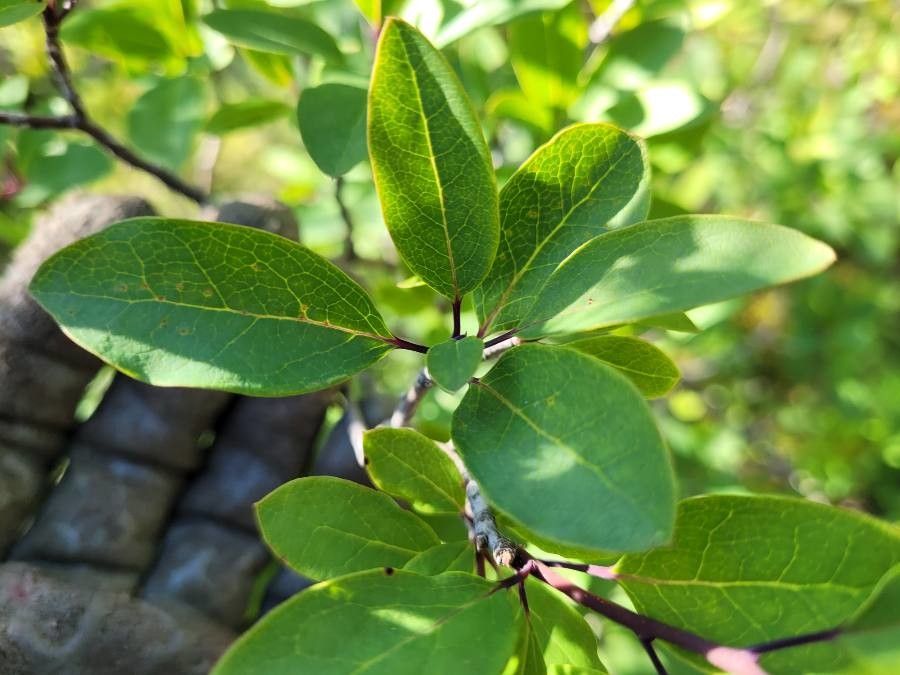
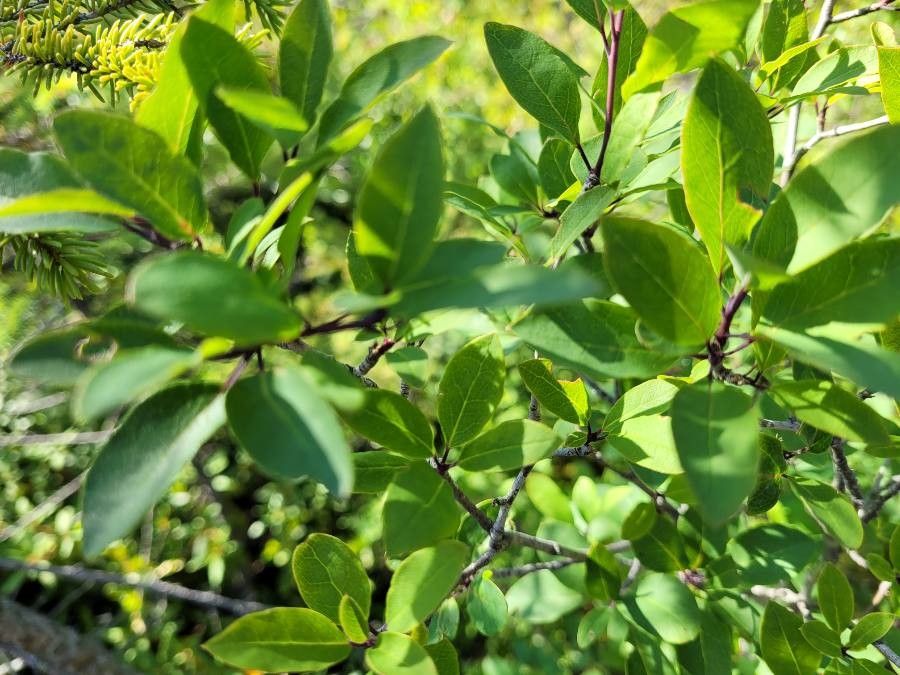
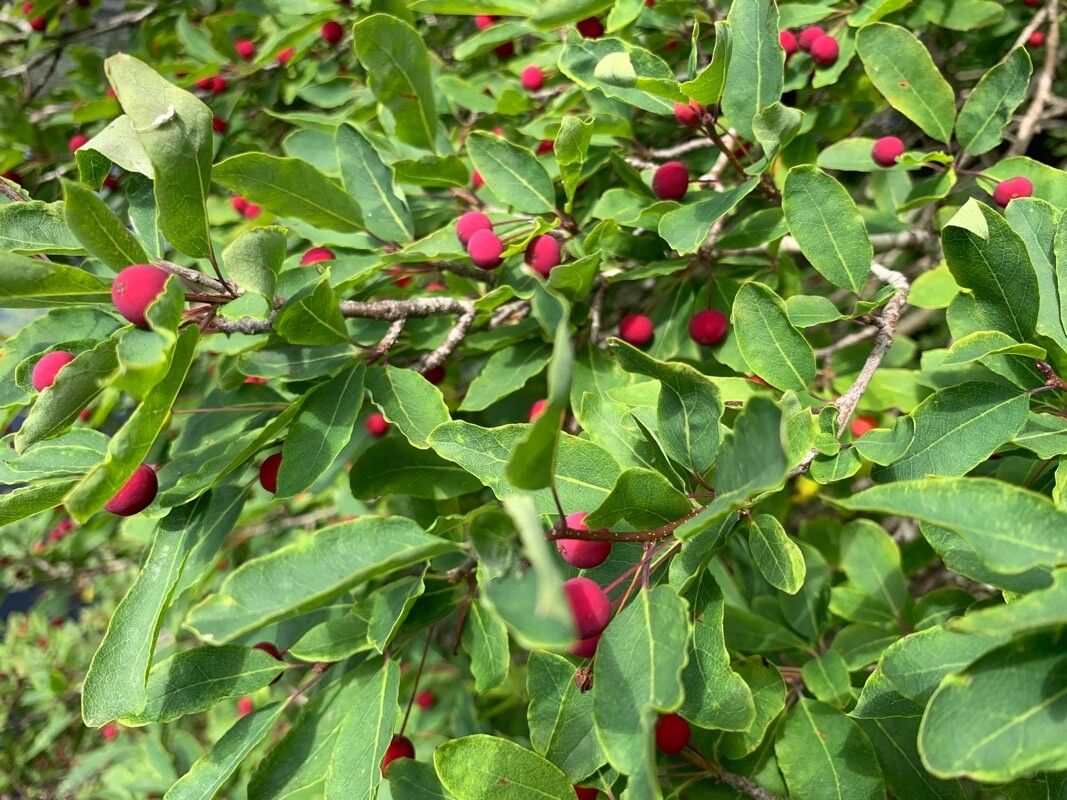
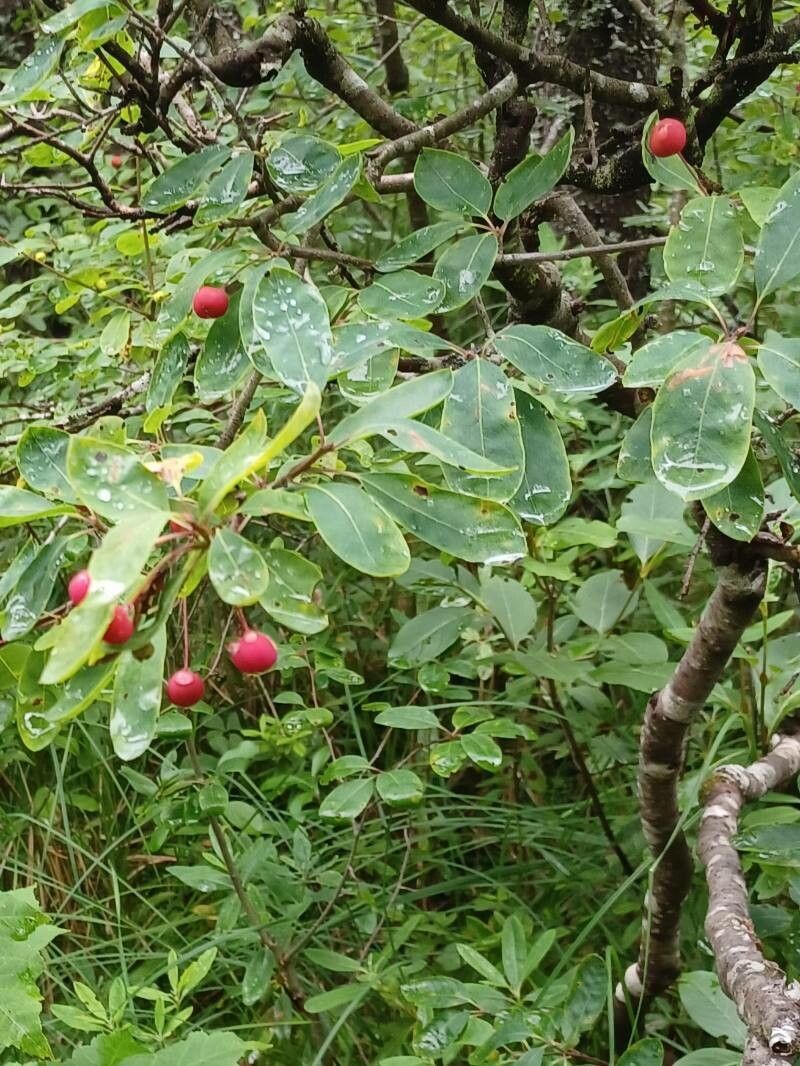
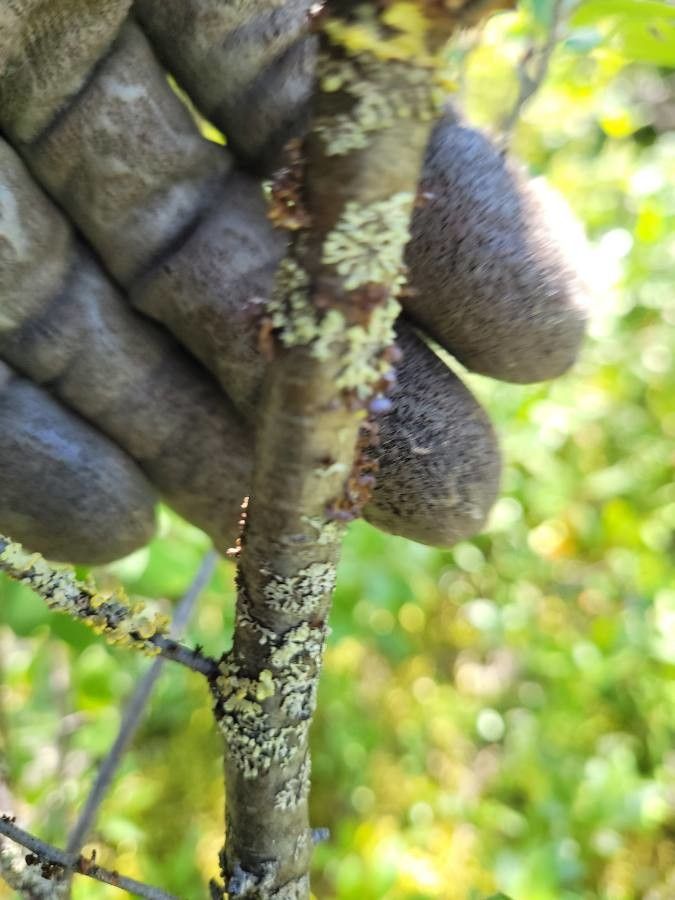
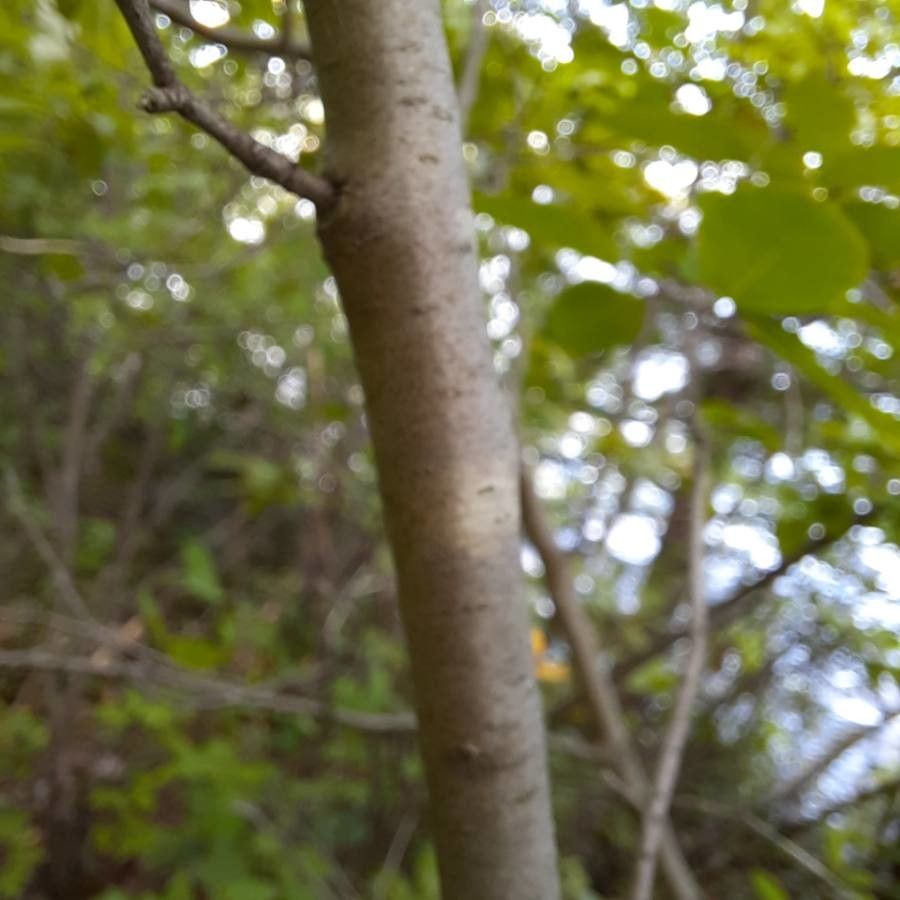
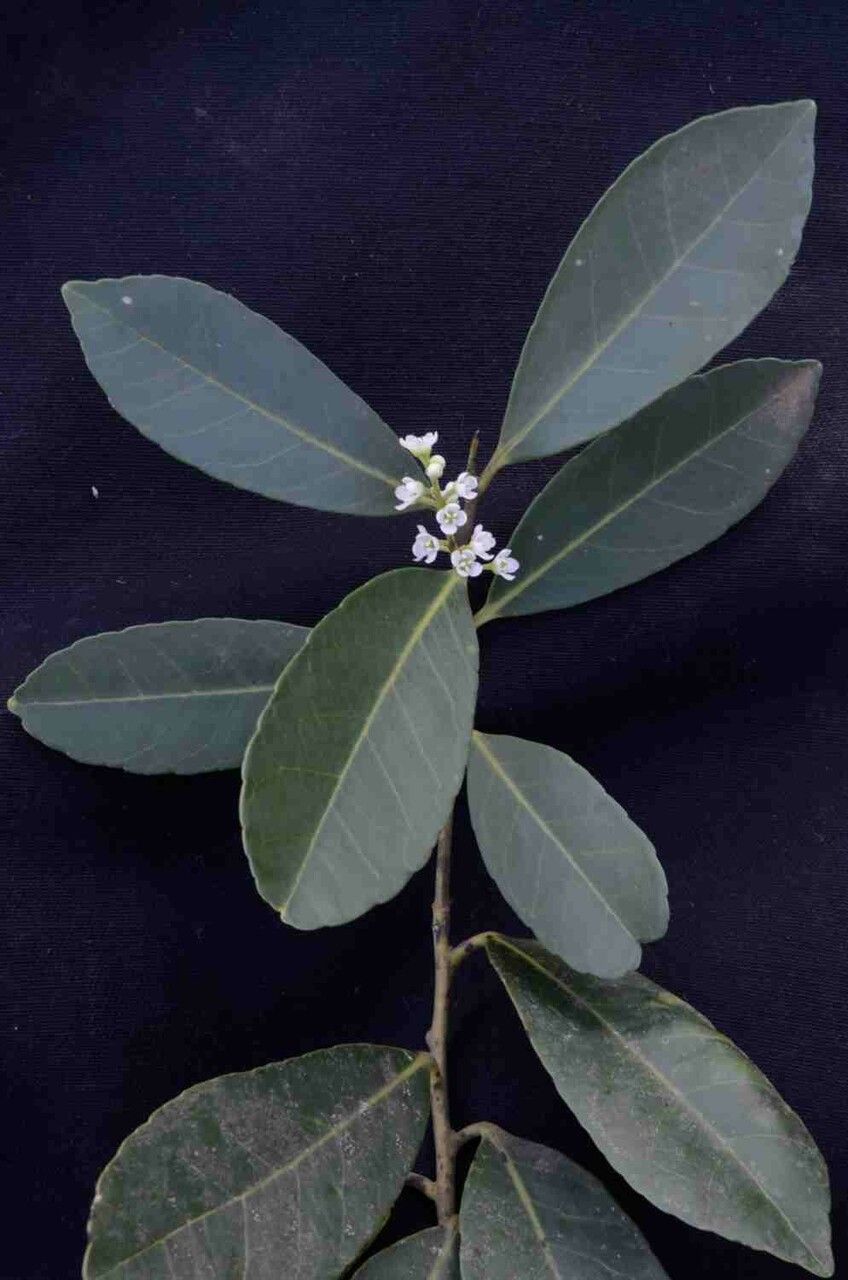
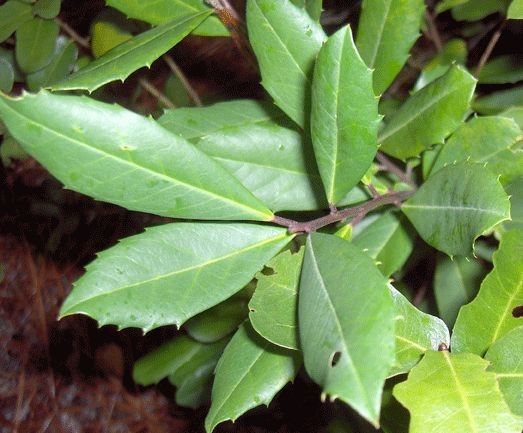
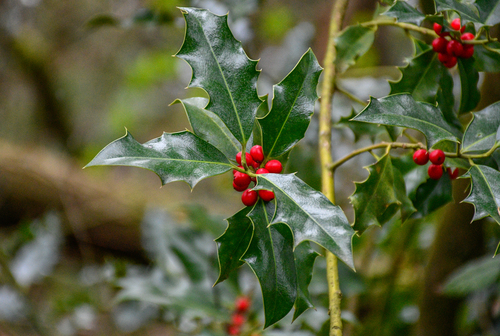
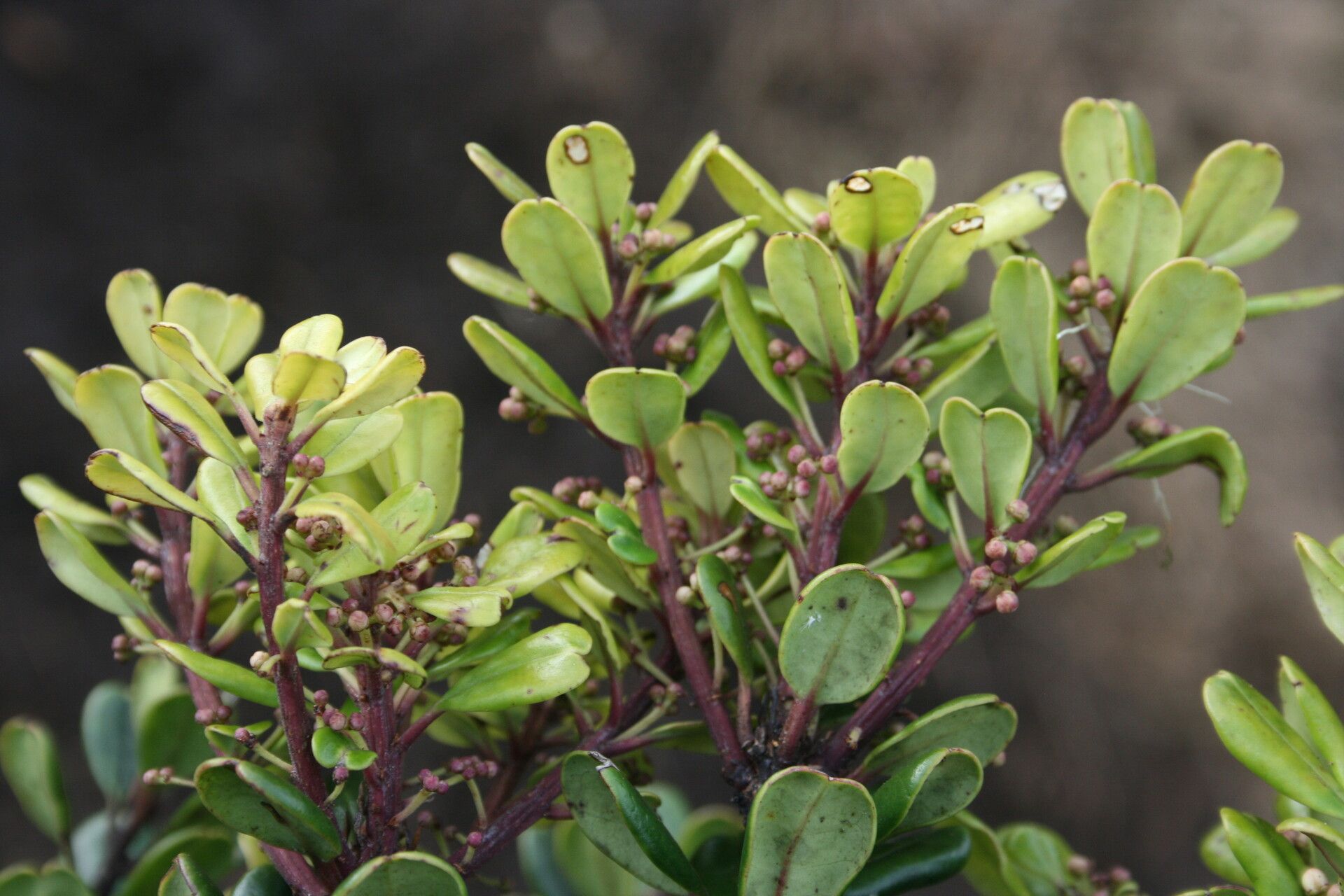
Ilex mucronata, commonly known as the mountain holly or catberry, is a deciduous shrub in the Aquifoliaceae family. Native to eastern North America, it thrives in wetlands, swamps, and along stream banks. This shrub can grow up to 10 feet tall and features a dense branching habit with glossy oval-shaped leaves that have pointed tips. In the fall, the leaves turn yellow before shedding.
In late spring or early summer, the mountain holly produces small white flowers, which are followed by bright red berries in the fall. These berries are a crucial food source for birds during the winter months when other food options are limited.
Historically, Native Americans utilized the mountain holly for medicinal purposes, treating fevers and rheumatism. It has also been valued as an ornamental plant due to its attractive foliage and striking red berries.
Overall, Ilex mucronata is a hardy shrub that offers both aesthetic appeal and ecological benefits, serving as an important food source for wildlife.
Mountain holly resists disease well and is typically not susceptible to illnesses. With respect to care, this plant is fairly low-maintenance. Planted outdoors, it needs little watering, and larger specimens generally do not require pruning. Smaller specimens, however, should be pruned after they finish blooming. Mountain holly is suitable for anyone with an outdoor area, such as a garden or a deck, and does not demand extensive plant-care experience.
How to keep Ilex Mucronata.
Light
Mountain holly does best with abundant sunlight for most of the day. However, it can also thrive with a moderate amount of sun exposure. Too much or too little light can harm the plant. Native to regions with plentiful sunshine, mountain holly is adapted to those environments.
Water
Mountain holly originates from areas with varying moisture levels, giving it a moderate tolerance for drought. To mimic its natural environment, water the plant every 2-3 weeks, reflecting the irregular rainfall it would typically receive. When grown outdoors, mountain holly thrives best in well-draining soil that can handle occasional soaking followed by periods of drying out.
Temperature
Mountain holly is native to habitats with a broad temperature range — from 41 to 77 °F (5 to 25 ℃). For optimal growth, maintain temperatures within this range throughout the year.
Fertilizer
Proper timing matters for fertilizing Mountain holly. Apply fertilizer in early spring and continue monthly until early summer. Fertilizer encourages attractive blooms and provides energy during both dormant and active growth stages.
Pruning
To encourage new branch growth, Mountain Holly should be pruned annually, ideally in late winter or early spring. Begin by removing old, yellow leaves and trimming one-third of the older branches. This will help promote vertical growth, as well as enhance flowering and fruit production. In regions with heavy snowfall, it's also advisable to bundle the remaining branches together to protect them from snow or ice damage.
Botanical profile.
- Plant Type
- Shrub
- Life Cycle
- Perennial
- Genus
- Ilex
- Family
- Aquifoliaceae
- Hardiness Zone
- 4-6
- Mature Height
- 0.91 m to 4.57 m
- Mature Spread
- 0.91 m to 1.83 m
- Leaf Color
- Dark Green
- Leaf Type
- Evergreen
- Flower Color
- White
- Flower Size
- 2.54 cm
- Bloom Time
- Mid spring, Late spring
- Planting Time
- Spring, Summer, Autumn
- Harvest Time
- Late summer, Early fall, Mid fall
Other names.
Reader questions.
How should I water my Mountain holly effectively?
Your Mountain holly is not too picky when it comes to watering. You can use any common watering tool like watering cans, hoses, or even cups. Just make sure to water it directly on the soil and evenly moisten all areas. Using filtered water is helpful as tap water may have harmful particles. It's also best to use water at room temperature or slightly above, as extremely hot or cold water can shock the plant. But overall, the Mountain holly usually responds well to any type of water.
What type of sun exposure is required for Mountain Holly?
Mountain Holly thrives under conditions that provide abundant exposure to sunlight for the majority of the day, making full sun exposure ideal, which is above 6 hours of sunlight. However, it can still flourish with moderate exposure to sunlight, known as partial sun, defined as about 3-6 hours of sunlight. Observing how sunlight moves through your garden is crucial for finding the optimal spots that offer a perfect balance of light and shade, ensuring the happiness and health of your Mountain Holly.
What is the ideal temperature range for Mountain Holly?
Mountain Holly (Ilex mucronata) thrives in environments with a substantial temperature range, ideally between 41 to 77 °F (5 to 25 °C). To ensure optimal growth, it's important to maintain the temperature within this range throughout the year. The plant is highly cold-tolerant and doesn't require additional frost protection measures during winter. Before the first freeze in autumn, it's recommended to water the plant generously. This helps to ensure the soil remains moist and enters a frozen state, which prevents drought and water scarcity for the plant during the winter and early spring.
What should I do if I give my Mountain holly plant too much or too little water?
Outdoor plants, particularly newly planted ones or plant seedlings, can easily experience a lack of watering. It's crucial to remember to consistently water them for a few months when they are still small or recently planted. This is because once the roots are established, Mountain holly can rely on rainfall for the most part. If you have potted Mountain holly plants, overwatering is a common problem. In the event that you accidentally overwater your Mountain holly, it's important to act quickly to correct the situation. First, cease watering the plant immediately to minimize the impact of overwatering. Then, remove the Mountain holly from its pot to check its roots. If no root rot is present, you can put the plant back in its container. However, if you detect signs of root rot, trim the affected roots and consider applying a fungicide to prevent further damage. Finally, repot the Mountain holly in well-draining soil. On the other hand, if you notice that your Mountain holly is underwatered, simply increase the frequency of watering. Rectifying underwatering is usually a straightforward task. When the plant is underwatered, its leaves may droop, dry out, and fall off. However, with sufficient watering, the leaves will regain their fullness quickly. Therefore, it's advisable to adjust your watering routine promptly when you notice signs of underwatering.
How does artificial lighting support indoor Mountain Holly plants?
For Mountain Holly plants kept indoors, where natural sunlight may be insufficient, especially during winter or in less sunny spaces, artificial lighting becomes a vital solution. It supports optimal growth by providing needed light, encouraging faster and healthier growth. The recommended types of artificial light include LED lights, which can be customized for specific plant needs. The required intensity of artificial light varies with plant needs: full sun plants need 30-50W/sq ft, partial sun plants 20-30W/sq ft, and full shade plants 10-20W/sq ft. The correct placement involves positioning the light source 12-36 inches above the plant to mimic natural sunlight and setting the duration to mimic natural daylight hours, typically 8-12 hours per day, for most plants.
What should I do if the temperature falls below Mountain Holly's cold tolerance level?
Mountain Holly is extremely cold-tolerant, with the ability to withstand winter temperatures above -30°C. However, if temperatures drop below this threshold, you might not notice any immediate changes during the winter, but come spring, the branches may become brittle and dry, failing to produce new shoots. The solution for this issue involves pruning away any dead branches that have failed to produce new leaves once spring arrives, allowing for healthy growth to resume.
How frequently do I need to water my Mountain holly?
Most outdoor plants can grow naturally with rainfall. However, if your area doesn't get much rain, you should water your plants every 2 weeks in spring and fall, and more often in summer. In winter, when plants grow slower and need less water, water them sparingly or not at all. Young or newly planted Mountain holly should be watered more frequently to help them establish and become more adaptable to drought. For potted plants, there are two main ways to determine watering frequency for Mountain holly. One way is to have a set watering schedule, typically once a week or every other week. However, this may not consider the specific growing conditions for your plant. Another approach is to check the soil moisture. Wait until the top 2-4 inches of soil have completely dried out before watering again. This method may vary depending on the season, as the plant's water needs are highest in summer.
What are the symptoms of inadequate lighting in Mountain Holly?
Mountain Holly demonstrates several symptoms when exposed to inadequate lighting, including smaller new leaves compared to mature ones, leggy or sparse growth due to longer spaces between leaves or stems, faster leaf drop as a conservation effort, slower or halted growth when in survival mode, lighter-colored new leaves indicating a lack of chlorophyll, chlorosis characterized by yellowing leaves due to excessive sunlight, sunscald with damaged leaves or stems from intense light, leaf curling as a defense against sunlight exposure, wilting from increased water loss, and leaf scorching seen as brown, dry edges on leaves. These symptoms highlight the plant's struggle with suboptimal light conditions.
How does Mountain Holly react to high temperatures, and what are the solutions?
Mountain Holly is not tolerant of high temperatures. When the temperature exceeds 25°C, the plant may experience significant leaf drop, and in severe cases, it might wither and die. To mitigate this issue, trim away the sunburned and dried parts of the plant. It's also advisable to move the plant to a shaded location, especially away from the midday and afternoon sun, or use a shade cloth to create some shade. Watering the plant in the morning and evening will help keep the soil moist and provide some relief from the heat.
How much water does my Mountain holly plant need?
When watering your Mountain holly, you may be surprised to learn that it doesn't always require a lot of water. Instead, if only a few inches of soil have dried out since your last watering, you can support healthy growth by giving it about five to ten ounces of water each time. To determine the amount of water to use, consider the moisture level of the soil. Keep track of how many inches of soil have dried out between waterings. One way to ensure your Mountain holly gets enough moisture is to water it enough to moisten all the dry soil layers since the last watering. If more than half of the soil has dried out, you should consider giving it extra water. In that case, continue adding water until you see excess water draining from the pot's drainage holes. If your Mountain holly is planted in an area where it receives ample rain, it may not need additional watering. When the plant is young or still establishing itself, make sure it receives 1-2 inches of rain per week. As it grows and establishes, it can rely on rainwater alone. However, during hot weather with no rainfall for 2-3 weeks, it is advisable to give the Mountain holly a thorough watering to prevent stress.
What solutions exist for addressing light-related issues in Mountain Holly?
To address light-related issues in Mountain Holly, certain strategies can be employed based on the plant's location. Indoors, it's advisable to gradually move the plant to a sunnier location, aiming for at least 6 hours of direct sunlight daily, and consider using artificial light if moving the plant isn't feasible. Outdoor plants should be moved gradually to sunnier spots, avoiding sudden changes that could cause sunburn. For plants in the ground, reducing obstructions such as pruning trees or transplanting to a sunnier location with good drainage is recommended. It's important to note that affected parts of the plant may not recover, but new growth can be healthy with improved light exposure.
How can I know if I am giving enough water to my Mountain holly plant?
The Mountain holly is more commonly affected by overwatering. There are several signs to watch out for in this situation. Typically, an overwatered Mountain holly will have yellowing leaves and may shed some of them. Additionally, overwatering can cause the plant's overall structure to shrink and can lead to root rot. On the other hand, an underwatered Mountain holly will also start to droop. Its leaves may turn brown and become brittle. Whether you see signs of overwatering or underwatering, you should be ready to take action and restore the health of your Mountain holly.