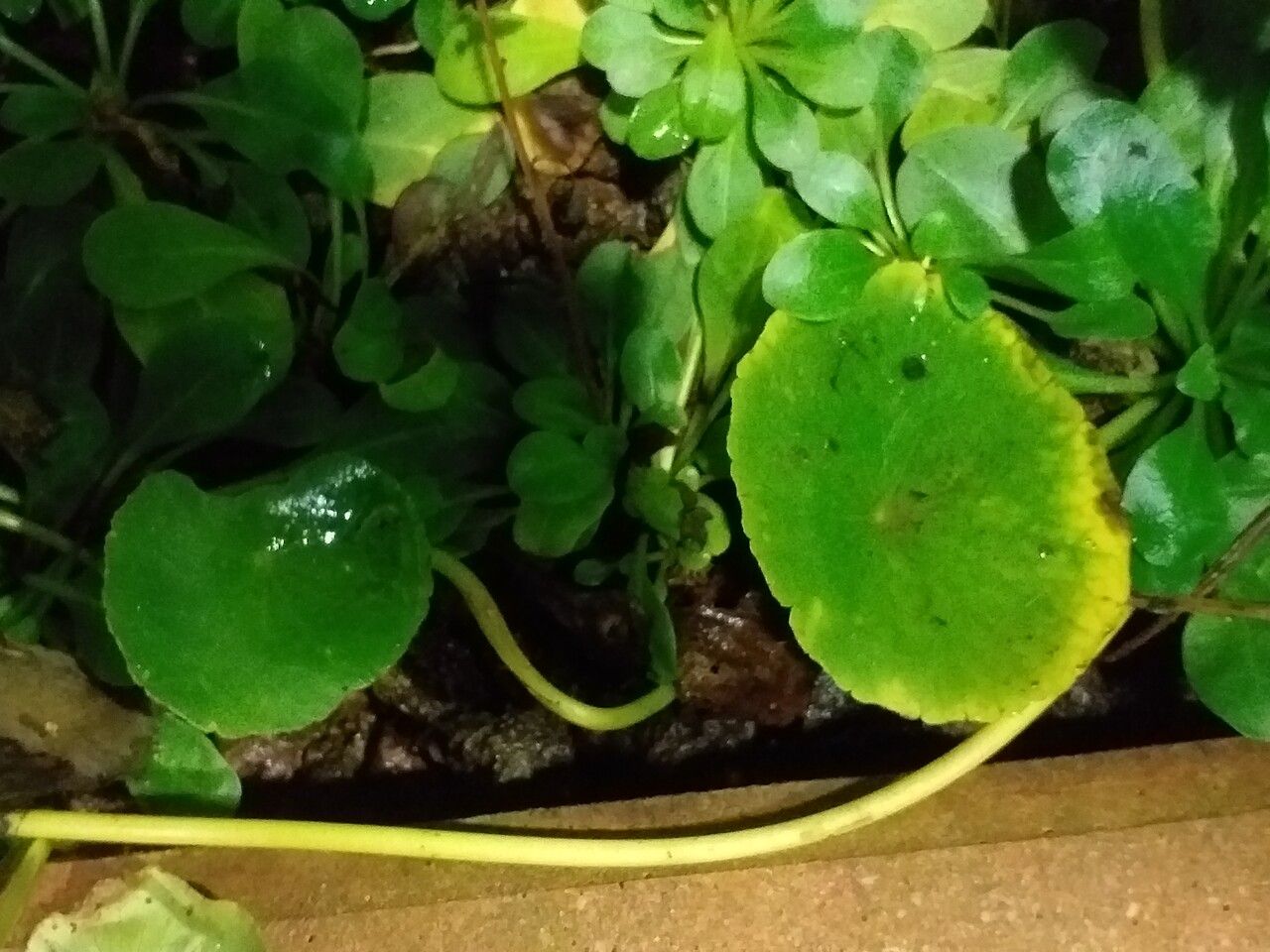
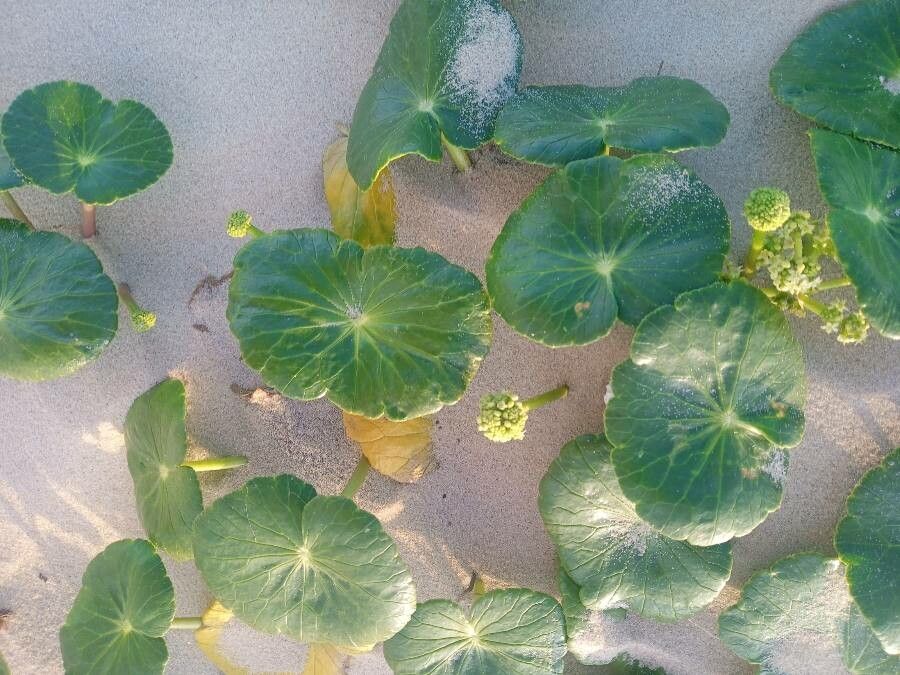
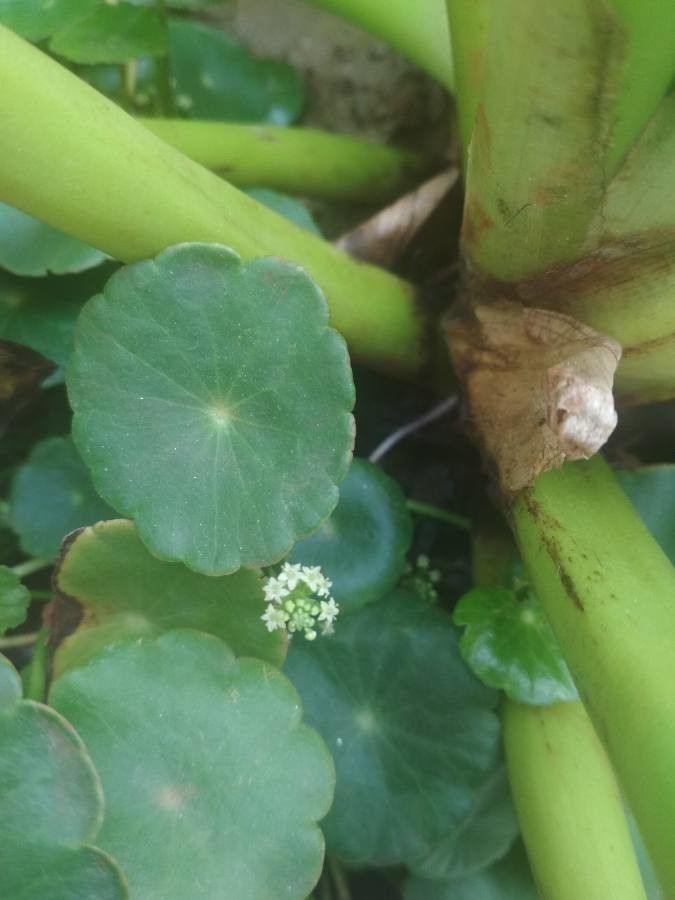
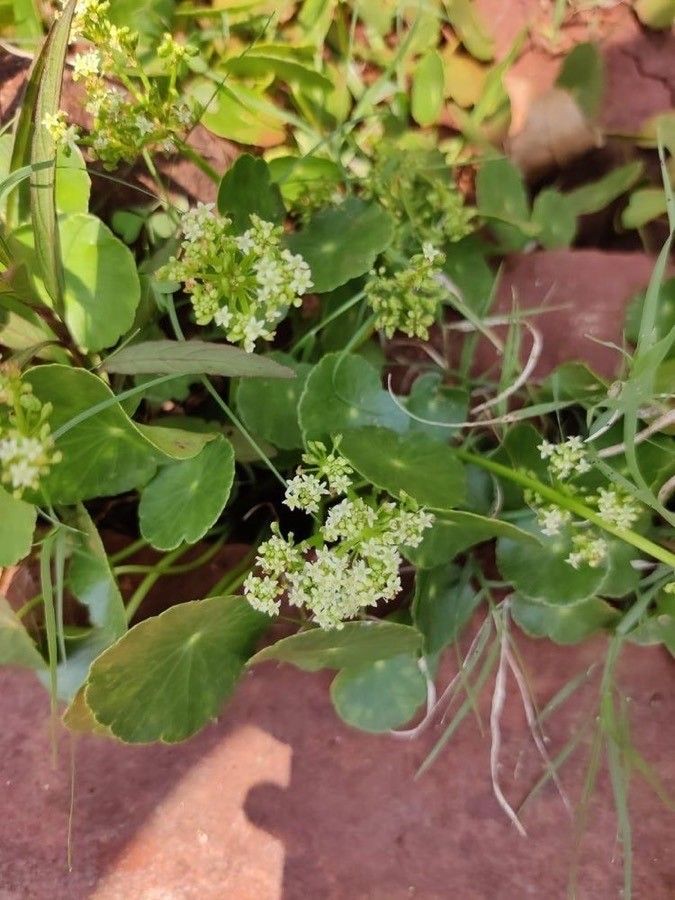
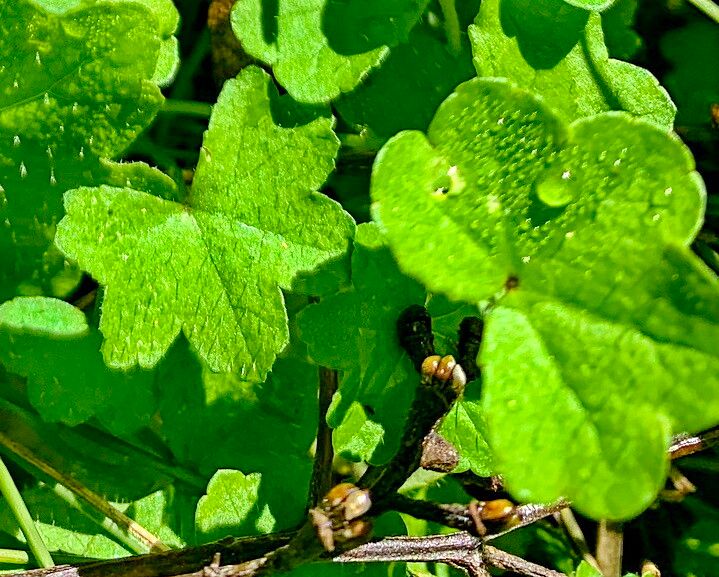
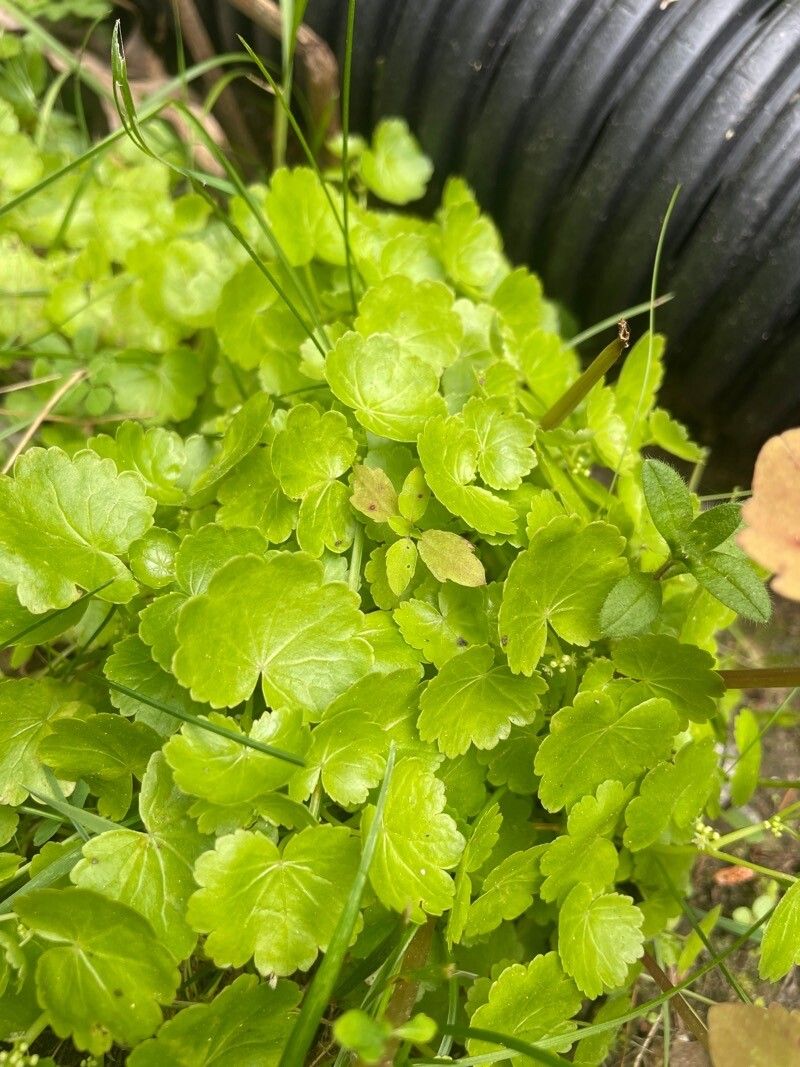
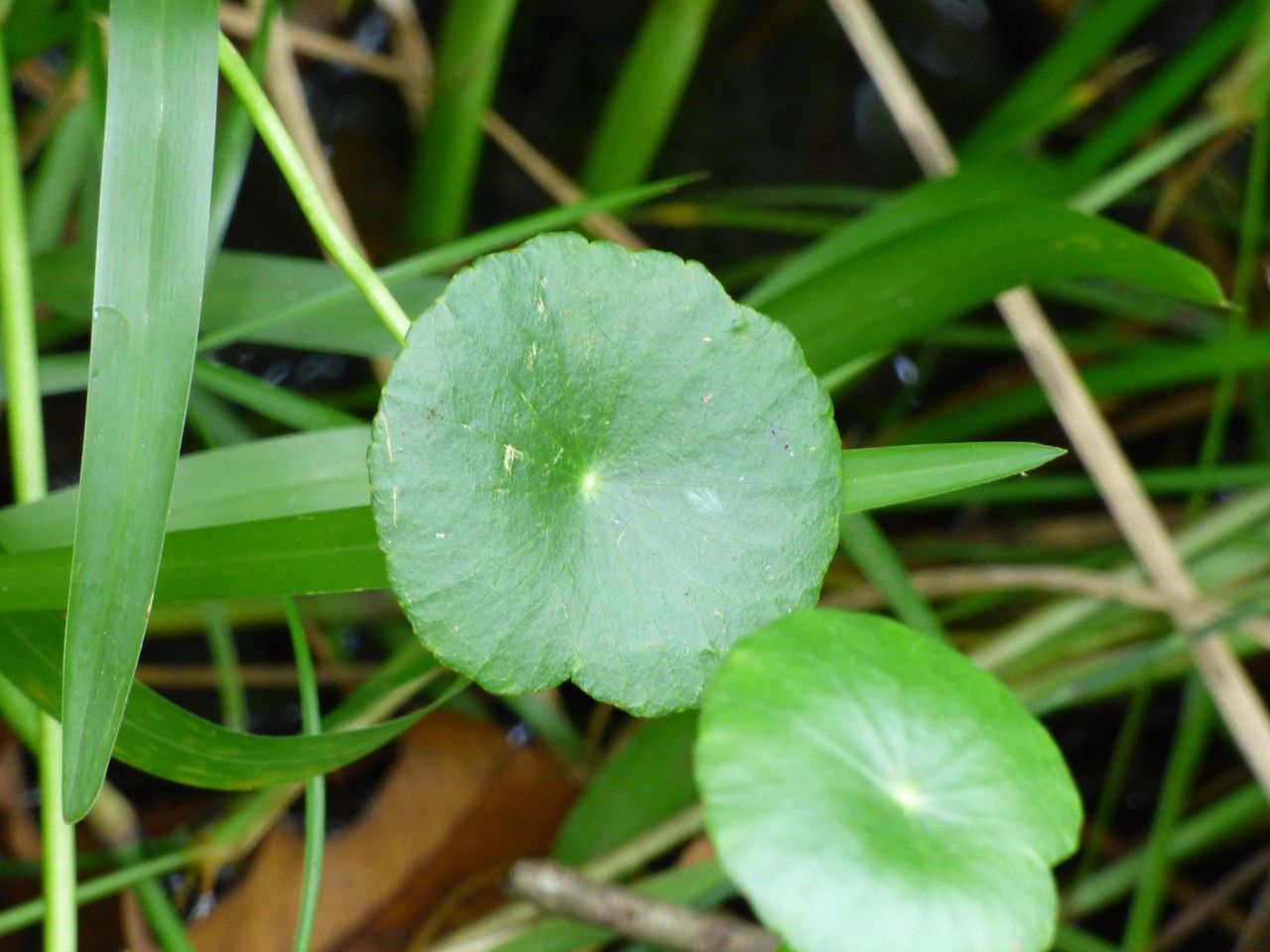
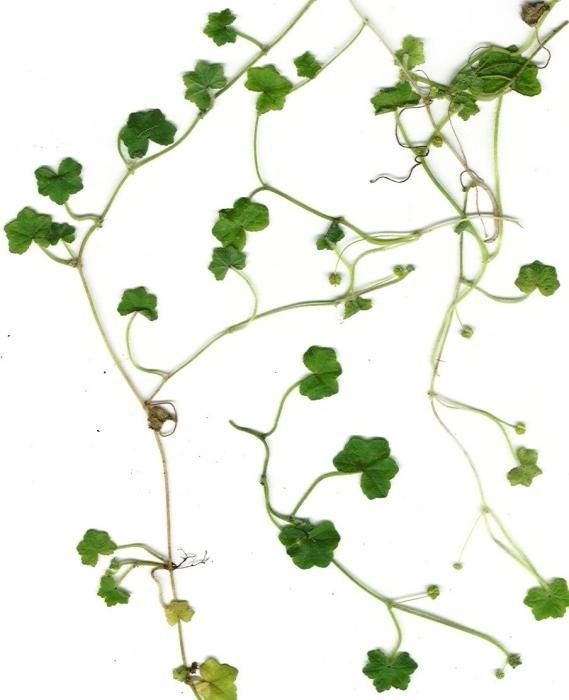
Hydrocotyle umbellata, commonly known as water pennywort, is a perennial aquatic plant belonging to the Araliaceae family. Native to North America, it thrives in the shallow waters of ponds, lakes, and slow-moving streams. This plant exhibits a creeping growth habit, with long stems that can reach up to one meter in length. The leaves are round or kidney-shaped with scalloped edges and are arranged in an umbrella-like pattern at the end of each stem.
Water pennywort produces small, white or greenish flowers that bloom from June to August. These flowers are clustered at the end of each stem and each has five petals.
This aquatic plant plays a crucial role in many freshwater ecosystems. It provides shelter for fish and other aquatic animals, and it helps improve water quality by absorbing excess nutrients from the surrounding environment.
Additionally, Hydrocotyle umbellata has been used medicinally by indigenous peoples for centuries, thanks to its anti-inflammatory properties. In some cultures, it has also served as a food source.
Overall, Hydrocotyle umbellata is an important species both ecologically and culturally, due to its unique characteristics and various uses.
Manyflower Marshpennywort has strong disease resistance and is usually not vulnerable to illnesses. Still, it can be affected by pests and diseases present in its environment. These problems are generally mild. Regarding care, this plant is medium maintenance. It should be pruned regularly to keep a neat appearance and encourage healthy growth. Fertilizing can also help stimulate flowering. Manyflower Marshpennywort is a good choice for anyone with outdoor space such as a garden or patio and does not require extensive care experience. It may demand more attention if grown indoors.
How to keep Hydrocotyle Umbellata.
Light
The manyflower Marshpennywort thrives in unobstructed sunlight, but it can also tolerate areas where sunshine is mixed with shade. Its native habitat reflects these same conditions. Excessive sun can scorch the plant, while too little light can weaken its vigor.
Water
The Manyflower Marshpennywort is a plant that originates from wetlands and thrives in moist environments. It prefers consistent hydration and needs to be watered weekly. While it adapts well to high humidity, it also has moderate tolerance for drought. Natural rainfall boosts its water cycle, promoting lush foliage and a healthy root system.
Temperature
Manyflower Marshpennywort originates from temperate habitats and does best in temperatures between 41 and 95 °F (5 to 35 ℃). In hotter areas, give it shade to mimic the cooler conditions it prefers. Additional watering during hot periods helps it tolerate the heat.
Fertilizer
To promote optimal growth and flowering, fertilize the manyflower marshpennywort every two weeks with a balanced fertilizer during the growing season. During the dormant period, reduce the frequency of fertilization to prevent a buildup of nutrients. Start with half-strength fertilizer applications and adjust the dosage based on the plant's response. This approach helps avoid over-fertilization and root burn.
Pruning
The Manyflower Marshpennywort, known for its circular leaves and creeping growth, requires specific pruning techniques. To promote healthy growth and prevent overcrowding, trim any leggy stems in the spring. Regularly remove dead foliage to encourage new growth, maintain its appearance, and reduce the risk of disease. These practices will enhance the plant's vigor and resilience.
Botanical profile.
- Plant Type
- Herb
- Life Cycle
- Perennial
- Genus
- Hydrocotyle
- Family
- Araliaceae
- Hardiness Zone
- 5-10
- Mature Height
- 10 cm to 20 cm
- Mature Spread
- 0.91 m to 6.1 m
- Leaf Color
- Green
- Leaf Type
- Evergreen, Deciduous
- Flower Color
- White
- Flower Size
- 2.54 cm
- Bloom Time
- Summer, Early fall, Mid fall
- Planting Time
- Spring, Summer
- Harvest Time
- Late summer, Fall, Early winter
- Native Area
- Belize, Honduras, Mexico, Guatemala, Peru, Panama, Jamaica, Colombia, Bahamas, Cuba, Bolivia, Venezuela, Guyana, El Salvador, Nicaragua, Ecuador, Costa Rica
Other names.
Reader questions.
How should I water my Manyflower Marshpennywort plant to make it thrive?
To properly water the Manyflower Marshpennywort, it is recommended to use filtered water at room temperature. Tap water may contain harmful particles, so filtered water is preferred. It is important to use room temperature or slightly warmer water because this plant is accustomed to warm environments, and cold water can be a shock to its system. Avoid watering the plant from above, as this can lead to problems with the foliage. Instead, apply your filtered room temperature water directly to the soil until it is completely saturated. This soaking method is highly beneficial as it nourishes the roots and facilitates their expansion in the soil to absorb essential nutrients.
Why should I put fertilizer on my Manyflower Marshpennywort?
The main structure of the Manyflower Marshpennywort is made up of its leaves. Fertilization is one of the most important ways to ensure that these leaves are both healthy and visually appealing. Proper fertilization results in leaves that have a consistent color and a good texture. Fertilization also has benefits beneath the soil's surface, as it helps the Manyflower Marshpennywort develop new roots and maintain existing ones. This means that fertilization not only keeps the plant healthy in the present, but also helps it absorb nutrients from the soil more effectively in the future.
What are the sun requirements for Manyflower Marshpennywort?
Manyflower Marshpennywort thrives best in conditions that replicate its natural habitat, which involves a mix of direct sunlight and partial shade. It requires full sun, defined as over 6 hours of sunlight daily, but can also adapt to partial sun, receiving about 3-6 hours of sunlight. It’s essential to monitor the movement of sunlight through your garden to find spots that offer a good balance of light and shade, ensuring your Manyflower Marshpennywort grows happily.
What is the native environment for Manyflower Marshpennywort?
The Manyflower Marshpennywort, with its botanical name Hydrocotyle umbellata, is native to temperate environments. It thrives best within a temperature range of 41 to 95 °F (5 to 35 °C). In regions that experience warmer conditions, it is advisable to provide shade to replicate the cooler conditions preferred by this plant. Furthermore, increasing watering during hot periods can help support its temperature tolerance. This versatile plant also possesses strong cold resistance, which means that special frost protection measures are generally not necessary during the winter months. However, in extreme cases where winter temperatures are anticipated to plummet below -25°C, it's crucial to offer some form of cold protection, such as covering the plant with soil or straw, to safeguard it from harsh conditions.
What do I do if I give my Manyflower Marshpennywort plant too much or too little water?
Overwatering and underwatering can harm your Manyflower Marshpennywort, but overwatering is more common. Too much water can make the stems and leaves wilt and turn yellow. Over time, it can also cause diseases like root rot, mold, and mildew, which can kill the plant. Manyflower Marshpennywort is fairly tolerant of drought and underwatering is rare. However, it can still happen, causing brittle and brown leaves. It's important to recognize the signs of overwatering early on. Diseases like root rot may not be fixable if you wait too long. If you see signs of overwatering, reduce watering immediately. Check the soil quality - if it doesn't drain well, replace it with a loose, well-draining potting mix. If you notice signs of underwatering, simply water more regularly until the signs go away.
When should I fertilize my Manyflower Marshpennywort for the best results?
If you grow your Manyflower Marshpennywort outdoors, it will start new growth in early spring. This is a good time to begin fertilizing. Usually, you only need to fertilize once in the spring. However, if you want to maximize growth, you can fertilize multiple times in the spring and early summer. If you choose this option, feed your Manyflower Marshpennywort about once every month to a month and a half.
How does Manyflower Marshpennywort respond to different lighting conditions?
Manyflower Marshpennywort shows a remarkable adaptability to various lighting conditions. In its natural setting, it flourishes under the full gaze of the sun but also tolerates areas where sunlight is filtered through shade. This resilience makes it an interesting plant for gardeners. However, too much direct sunlight might scorch the plant, while insufficient light can lead to a decrease in the plant’s vigor. For indoor plants, artificial lighting can be a viable alternative to natural sunlight, especially in less sunny locations or during winter months. LED lights are a popular choice for indoor plant lighting, as they can be tailored to provide specific wavelengths needed by plants. The amount of artificial light required varies depending on whether the plant prefers full sun, partial sun, or full shade.
How should I care for Manyflower Marshpennywort in low temperatures?
Manyflower Marshpennywort is known for its cold tolerance, thriving best when temperatures stay above 5°C. During the winter season, maintaining the temperature above -20°C is critical, although the plant can withstand temperatures down to -25°C without noticeable changes in winter. However, it's important to be cautious, as falling below -25°C could potentially lead to a decrease in sprouting or even complete absence of sprouting come spring. The recommended solution for such cases involves removing any parts of the plant that have failed to sprout once spring arrives. It is also suggested to water the plant abundantly before the first freeze in autumn to keep the soil moist and prevent drought during the winter and early spring.
How frequently should I water my Manyflower Marshpennywort plant?
To determine if your Manyflower Marshpennywort needs water, follow these guidelines based on whether it is in a pot or grown outdoors. For potted plants, check the soil moisture by dipping your finger into the soil. If the top two to three inches are dry, it's time to water. If your plant is in the ground, use the same method to check for dryness in the top few inches of soil. During spring and early fall, watering once a week is usually adequate. In extremely hot weather, watering may need to be increased to twice or more per week. However, it's worth noting that mature, well-established Manyflower Marshpennywort plants have a remarkable ability to tolerate dry conditions.
When is it better to not put fertilizer on my Manyflower Marshpennywort?
During the late fall and winter, your Manyflower Marshpennywort goes into a dormant phase where it stops producing new growth. It's best not to fertilize it during this time. From spring to summer, if you choose to fertilize, start reducing the fertilization rate as summer approaches because the growth rate of your Manyflower Marshpennywort will also slow down. In general, it's not a good idea to fertilize your Manyflower Marshpennywort when the weather is unusually hot or the soil is extremely dry. Fertilizing in these conditions can stress the plant and cause it to die prematurely.
What symptoms indicate light deficiency or excessive sunlight in Manyflower Marshpennywort?
Symptoms of light deficiency in Manyflower Marshpennywort include small new leaves, leggy or sparse growth, faster leaf drop, and a slowdown or halt in new growth. Leaves may also appear paler and develop irregular color patterns due to insufficient sunlight, indicating a lack of chlorophyll and essential nutrients. Conversely, excessive sunlight can lead to chlorosis, where leaves lose their green color and turn yellow, sunscald, which appears as pale, bleached, or necrotic areas on plant tissues, leaf curling as a defense mechanism against too much sunlight, wilting due to increased water loss, and leaf scorching, characterized by brown, dry, and crispy edges on leaves.
What are the best practices for Manyflower Marshpennywort during high temperatures?
In the summer, it is advisable to ensure that the Manyflower Marshpennywort remains in conditions where the temperature is below 35°C. Exposure to temperatures exceeding 41°C can lead to several issues, including leaves becoming lighter in color, prone to curling, susceptible to sunburn, and in severe instances, the entire plant may wilt and become dry. To mitigate these risks, it’s recommended to trim away the sunburned and dried-up parts of the plant. Relocating the plant to an area that offers shade during the midday and afternoon sun or using a shade cloth can provide the necessary protection. Additionally, watering the plant in the morning and evening helps keep the soil moist and further supports the well-being of the plant during high temperatures.