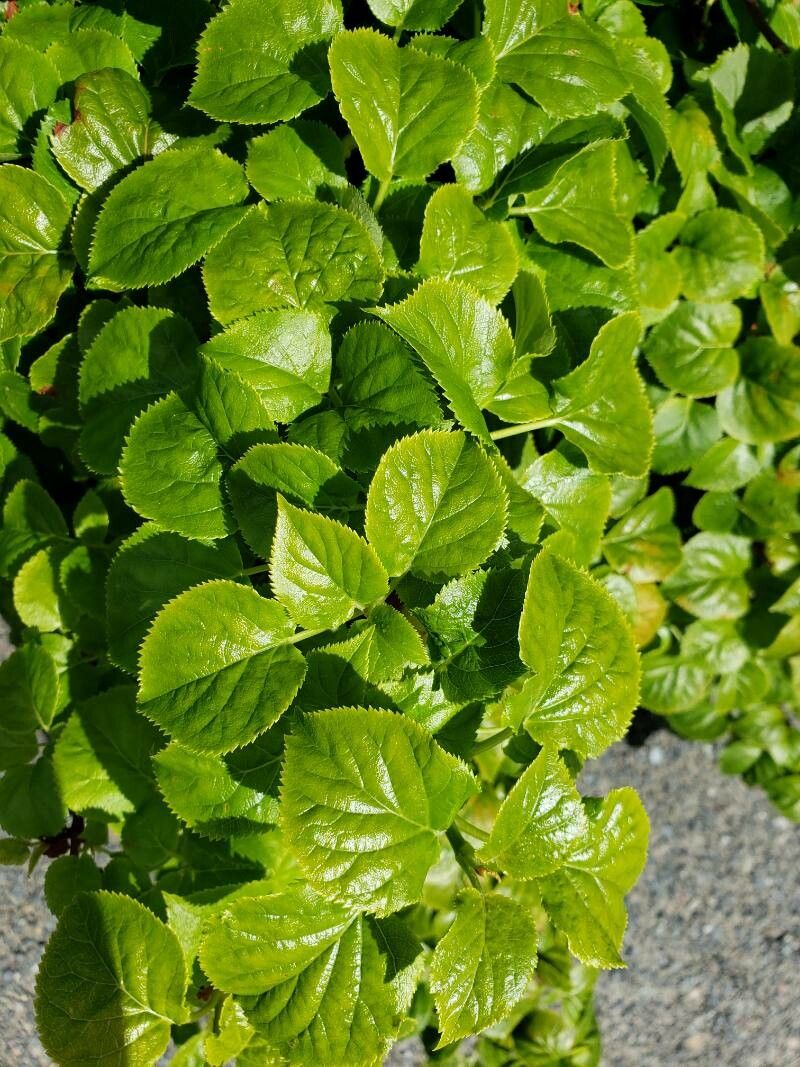
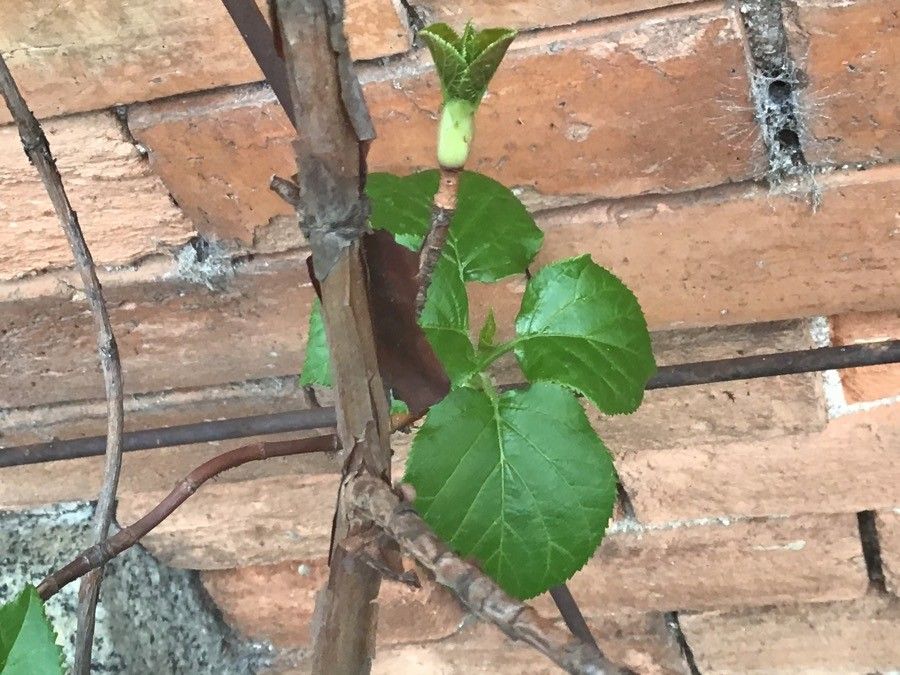
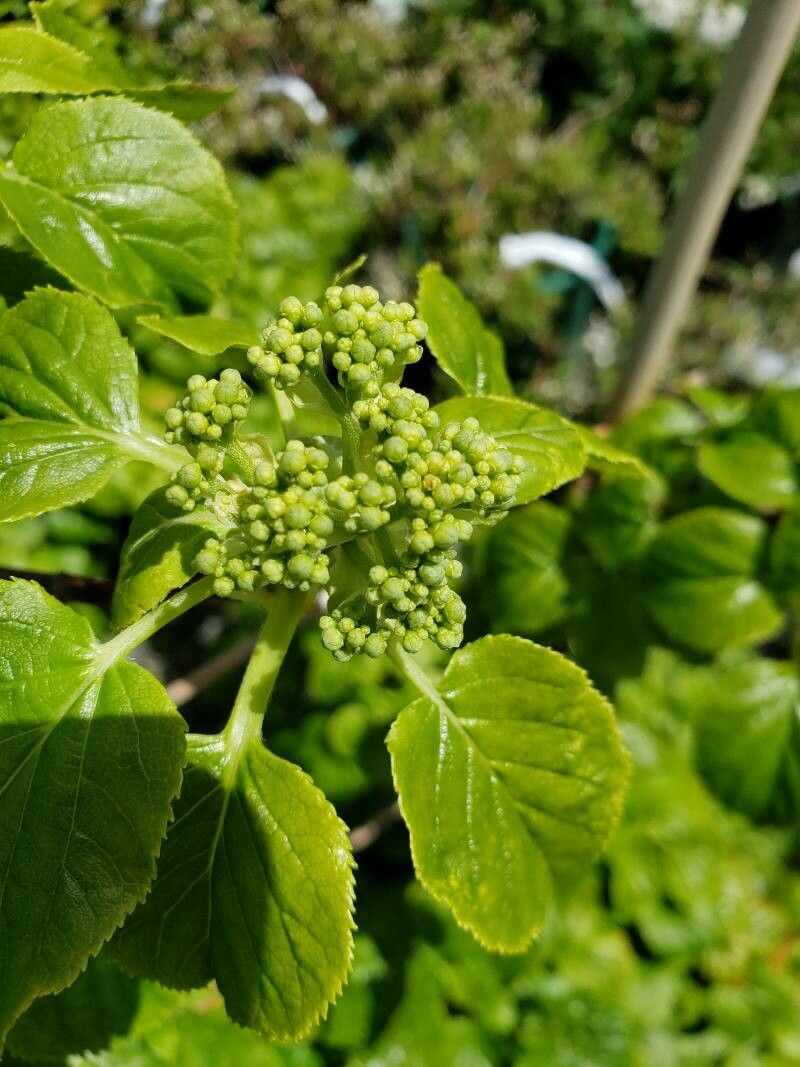
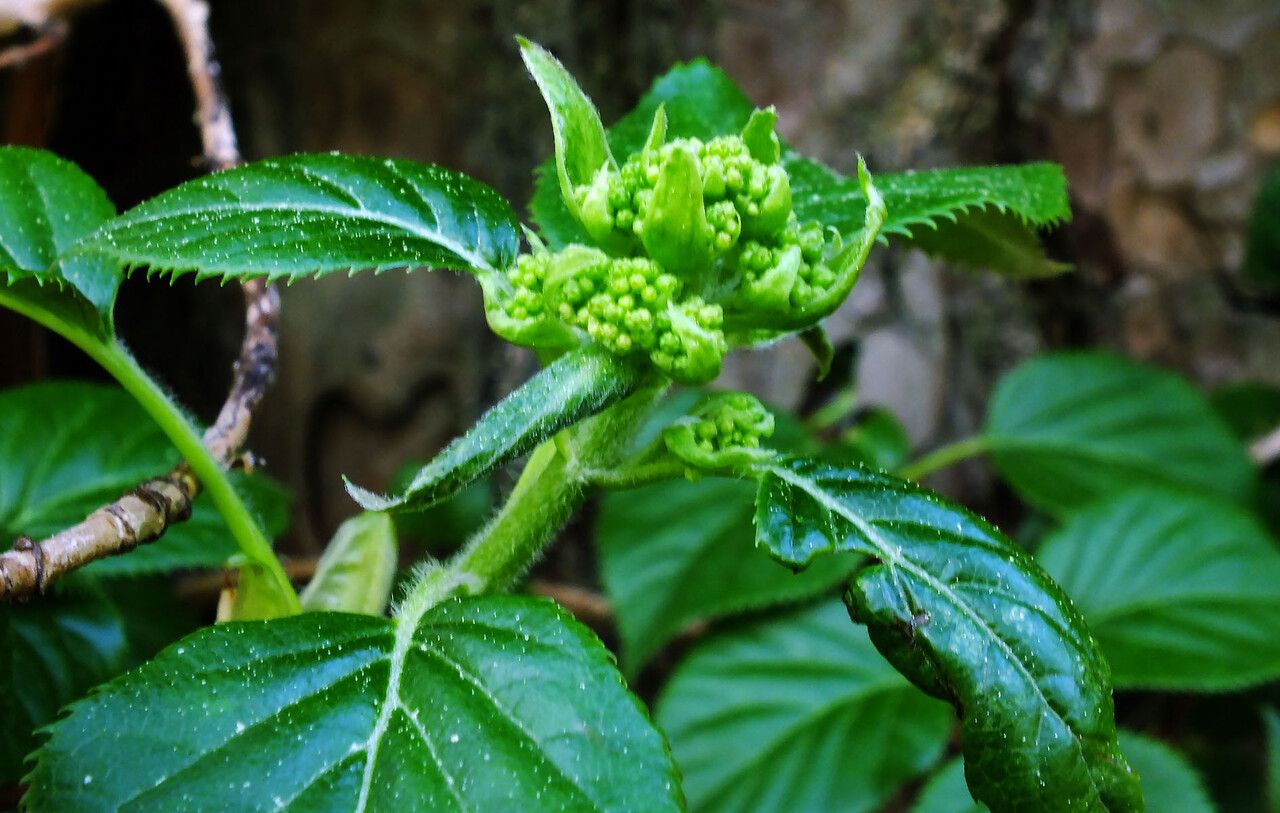
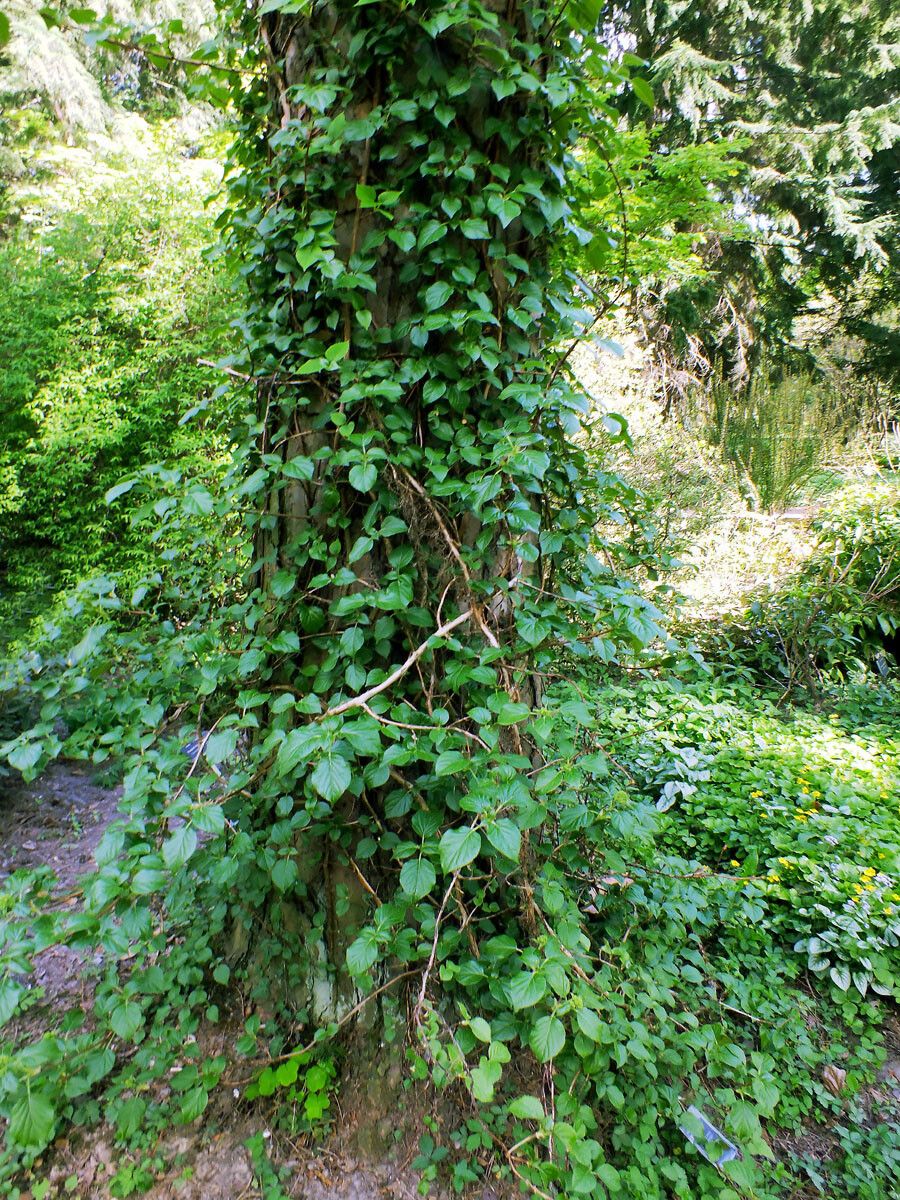
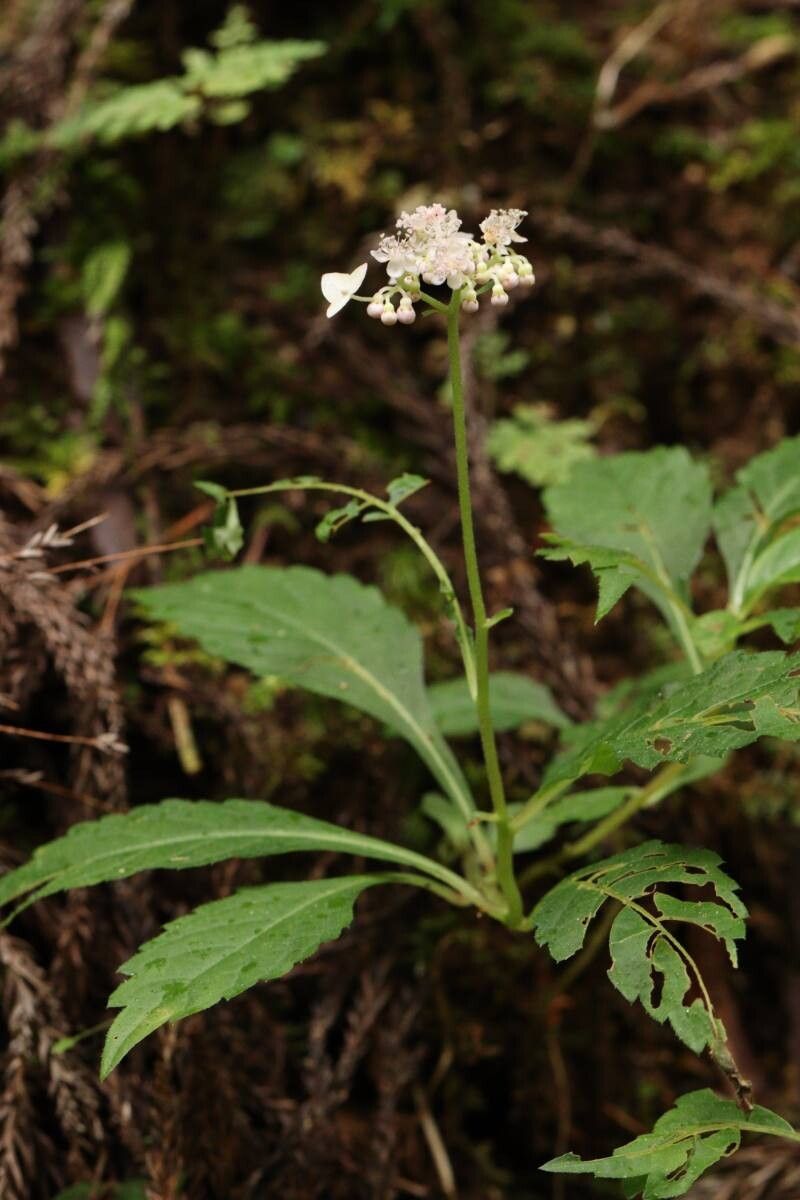
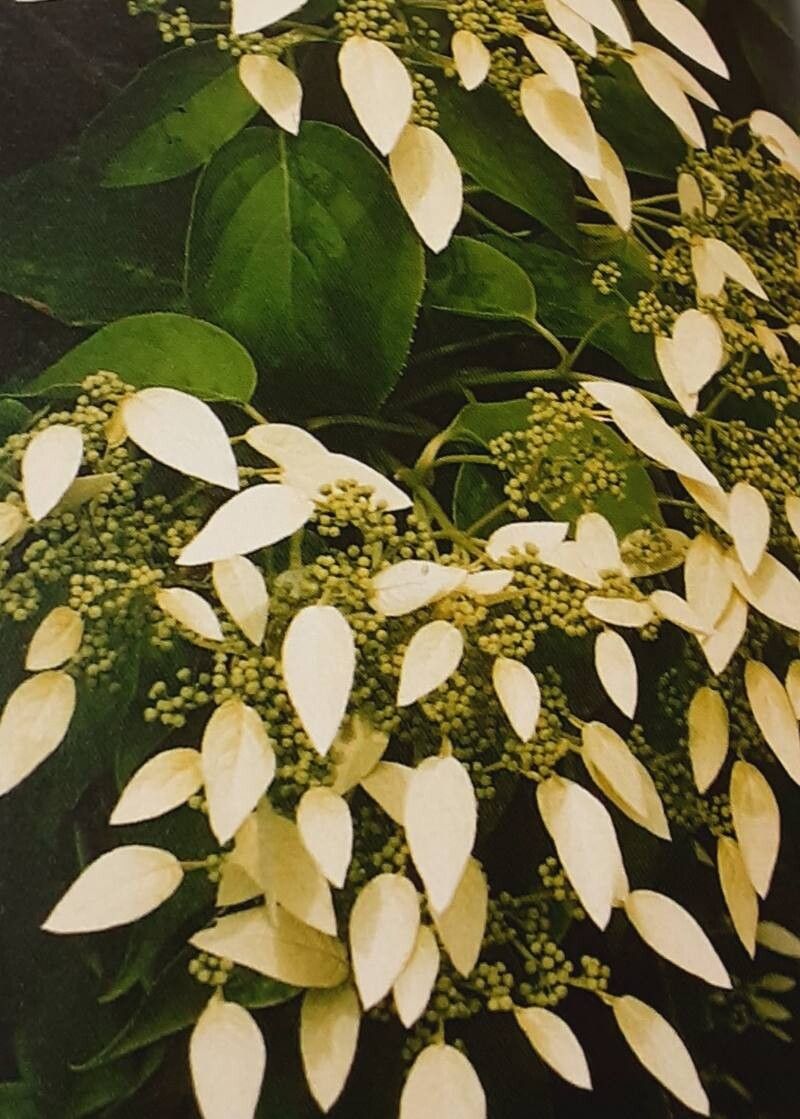
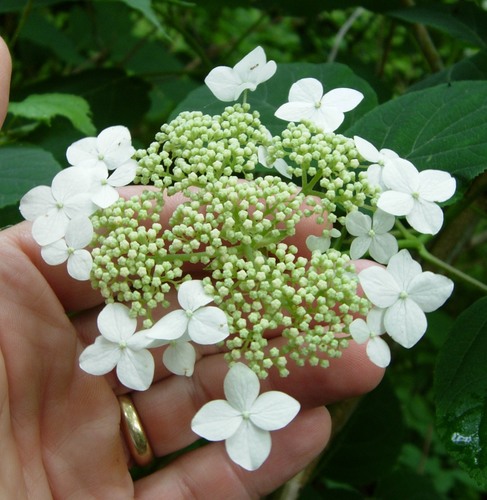
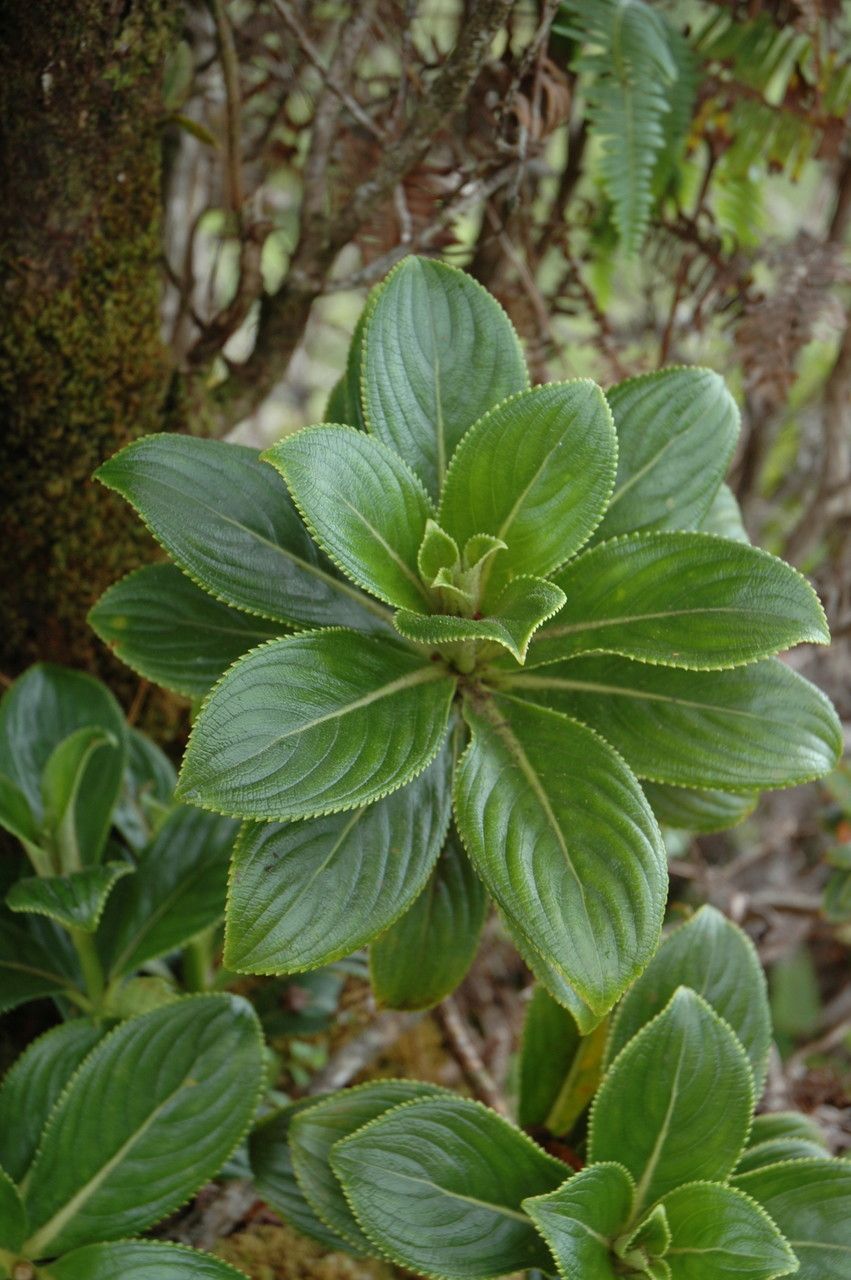
Hydrangea anomala, the Japanese climbing-hydrangea, is a species of flowering plant in the family Hydrangeaceae native to the woodlands of the Himalaya, southern and central China and northern Myanmar. It is a woody climbing plant, growing to 12 m height up trees or rock faces, climbing by means of small aerial roots on the stems. The leaves are deciduous, ovate, 7–13 cm long and 4–10 cm broad, with a heart-shaped base, coarsely serrated margin and acute apex. The flowers are produced in flat corymbs 5–15 cm diameter in mid-summer; each corymb includes a small number of peripheral sterile white flowers 2–3.5 cm across, and numerous small, creamy-white fertile flowers 1–2 mm diameter. The fruit is a dry urn-shaped capsule 3–5 mm diameter containing several small winged seeds. The closely related Hydrangea petiolaris from eastern Siberia, Japan, and Korea, is sometimes treated as a subspecies of H. anomala; it differs in growing larger (to 20 m) and flower corymbs up to 25 cm diameter. The common name Climbing hydrangea is applied to both species.
Climbing hydrangea has strong resistance to disease and is generally not vulnerable to illnesses. In terms of care, this plant is fairly low-maintenance. When grown outdoors it needs little watering, and larger specimens typically do not require pruning. Smaller plants, however, should be pruned after they finish blooming. Climbing hydrangea is suitable for anyone with an outdoor area, such as a garden or a deck, and does not demand much care experience.
How to keep Hydrangea Anomala.
Light
Climbing hydrangea does best with a balance of sun and shade during the day. It tolerates stretches of full sun or complete shade, but prolonged exposure to either can impair its growth. As a climber, it is used to variable light levels in its natural habitat. Excessive sun may scorch the leaves, while inadequate light can slow its growth.
Water
Climbing hydrangeas originate from woodland areas and thrive in environments with consistent moisture, though they do tolerate moderate drought. To mimic their natural habitat, they should be watered every 1-2 weeks. This versatile plant adapts well to both outdoor and indoor settings, with its growth and health significantly influenced by water availability.
Temperature
Climbing hydrangea originates from temperate regions and grows best in temperatures of 41 to 95 °F (5 to 35 ℃). In colder months it should be protected to prevent frost damage.
Fertilizer
It is essential to time the fertilization of Climbing hydrangea properly. You should fertilize it at the beginning of spring and continue on a monthly basis until the early part of the summer. Fertilizer is beneficial in creating beautiful flowers and supplying energy during both inactive and active growth stages.
Pruning
Pruning hydrangeas depends on their blooming type. For bigleaf and oakleaf hydrangeas, it's best to prune in early summer, concentrating on removing dead branches. The 'Endless Summer' variety can be pruned at any time of the year. Smooth and panicle hydrangeas, however, flower on new growth and can be pruned flexibly except during spring budding.
Pot & Repot
Climbing hydrangea needs pots with excellent drainage to thrive. Good drainage ensures proper moisture levels and prevents root rot.
Botanical profile.
- Plant Type
- Vine
- Life Cycle
- Perennial
- Genus
- Hydrangea
- Family
- Hydrangeaceae
- Hardiness Zone
- 5-9
- Mature Height
- 9.14 m to 18.29 m
- Mature Spread
- 1.52 m to 1.83 m
- Leaf Color
- Green
- Leaf Type
- Deciduous
- Flower Color
- White
- Flower Size
- 2.54 cm to 7.62 cm
- Bloom Time
- Early summer, Mid summer
- Planting Time
- Spring, Autumn
- Harvest Time
- Late summer, Early fall, Mid fall
Other names.
Reader questions.
How should Climbing hydrangea be watered?
Using soaker hoses is a great way to keep leaves and flowers moist without getting the rest of the plant wet. To use them, simply lay the hose around the plant and leave it on for 30-45 minutes. Make sure the soil is moist but not saturated. You can also hook up a regular hose and cover it with mulch for added moisture retention. Another option is to use drip feeders to keep the plant consistently hydrated throughout the day. If you have a climbing hydrangea in a pot, it's best to use a watering can. Water the plant until you see water dripping out of the bottom. Using a portable watering can ensures that the water reaches the roots more effectively, promoting better growth.
Why should I use fertilizer on my Climbing hydrangea?
To ensure that your Climbing hydrangea produces beautiful blooms, it is important to fertilize it for a few key reasons. One of the most obvious benefits of fertilization is that it helps the plant create lovely flowers. Fertilizing in early spring is particularly effective in ensuring excellent blooms during that season. Additionally, fertilizer provides your Climbing hydrangea with energy to store in the ground during dormant growth phases. By giving your plant extra nutrients during fall planting or late spring, you can help it store more energy to make use of once active growth resumes.
How much sunlight does Climbing hydrangea need to grow?
To thrive, climbing hydrangea needs 3-6 hours of direct sunlight daily but also requires some shade during the hottest parts of the day to avoid sun damage. Ideally, it should receive morning sunlight, but it can handle some afternoon sun if it's not too hot. For optimal sunlight balance, consider planting climbing hydrangea in a partially shaded area, like under a tree or on the east side of a building.
What temperature is best for Climbing hydrangea?
The Climbing hydrangea thrives best at a temperature range of 65~80℉(18~27℃). During its primary growing phase, it can tolerate temperatures as high as 95℉(35℃) and as low as 15℉(-10℃). This species can also survive freezing winters because it is tolerant of low temperatures. To provide a clearer breakdown of the temperature range, the perfect temperature for this plant is 65~80℉(18~27℃), the highest tolerable temperature is 85~95℉(30~35℃), and the lowest tolerable temperature is -5~15℉(-20~-10℃) or below.
What do I do if I give Climbing hydrangea too much or too little water?
If you have overwatered your Climbing hydrangea, it's important to take a few steps back to prevent further damage. The good news is that Climbing hydrangea is hardy and has a higher chance of surviving. To help the plant recover, allow it to dry out by stopping watering. Plants do not tolerate having their roots sitting in water for too long, so aerating the soil can be beneficial. Some signs of an overwatered plant include premature yellowing and falling leaves, as well as fewer flowers and misshapen buds. In more severe cases, you may notice wilted and brown leaves, which can indicate long-term overwatering and potential root rot. On the other hand, if you notice wilting in your Climbing hydrangea, it may be a sign of underwatering. To check if the soil is too dry, stick your finger into the earth. If it feels dry, this is a sign of dehydration, and you may need to add some water. It's important to regularly check the soil for dryness and follow a consistent watering schedule, typically in the morning. If needed, you can also water the plant in the evening, but be mindful not to overwater.
When should I fertilize my Climbing hydrangea?
Proper timing is important when fertilizing Climbing hydrangea. Applying fertilizer too early when the plant is dormant is ineffective and can be washed away by rainwater, resulting in wasted fertilizer and pollution. To ensure the best results, the first application of fertilizer should be in early spring, and continue to fertilize once a month until early summer.
What will happen if Climbing hydrangea doesn't get enough sunlight?
Climbing hydrangeas can experience adverse effects if they are exposed to excessive direct sunlight. This can result in yellowing, drying, and even burning of the leaves. In addition, the plant may wilt or fail to grow properly. To avoid these issues, it is important to protect the Climbing hydrangea by providing some shade during the peak hours of sunlight. This can be achieved by using a shade cloth or situating the plant near taller vegetation that can offer natural shade.
Do I need to change the temperature for Climbing hydrangea as it grows?
Research indicates that Climbing hydrangea may experience stunted growth when exposed to prolonged periods of higher temperatures, particularly during the development of axillary buds and the growth of main shoots. To foster robust growth after germination or transplanting, it is advisable to maintain consistent and cooler temperatures at around 65℉(18℃).
How frequently should I water Climbing hydrangea?
To ensure the health of the Climbing hydrangea, it is recommended to water it deeply two to three times a week. If you live in a hot climate, you should water it more regularly. The plant's water needs are average and it requires moist but well-drained soil. A helpful indicator for watering is to check the soil - if it is dry around 2-4 inches deep, it is probably time to water. If the plant is planted outdoors, watering it 1-2 times a week is sufficient as it receives additional moisture from rainwater.
When is it not a good idea to fertilize my Climbing hydrangea?
To promote better blooms, it is important to avoid giving Climbing hydrangea a fertilizer with excessive nitrogen. This can result in an abundance of leaves but fewer flowers. Instead, opt for a fertilizer that has a lower proportion of nitrogen compared to other nutrients. It is essential to refrain from fertilizing after early autumn, as this can spur excessive growth right before winter. Similarly, it is not advisable to fertilize Climbing hydrangea during hot and dry periods, as dry soil does not effectively deliver the nutrients. Fertilizing during this time may also stimulate growth that requires more water, which may not be readily available. To achieve optimal results, it is best to apply fertilizer earlier in the season when temperatures are cooler. Lastly, keep in mind that Climbing hydrangea can absorb fertilizer that has been applied to nearby plants or lawns. Thus, exercise caution to avoid unintentionally providing the tree or shrub with a double dosage of fertilizer.
What will happen if Climbing hydrangea gets too much sunlight?
Climbing hydrangea needs sufficient sunlight to thrive. Without enough sunlight, it may grow tall and sparse, with yellow or pale green leaves. This is because the plant is not producing enough chlorophyll. To fix this, consider moving the hydrangea to a sunnier location or trimming nearby foliage to allow more light to reach the plant.
How do I keep Climbing hydrangea warm in cold seasons?
Climbing hydrangea is capable of enduring freezing temperatures when planted directly in the ground, as long as the area does not dip below 15℉(-10℃) during winter. However, if planted in pots or containers, it is essential to shield their roots from the cold weather. This can be done by wrapping the container with a blanket or by bringing it indoors, where it will be entirely sheltered from the elements.