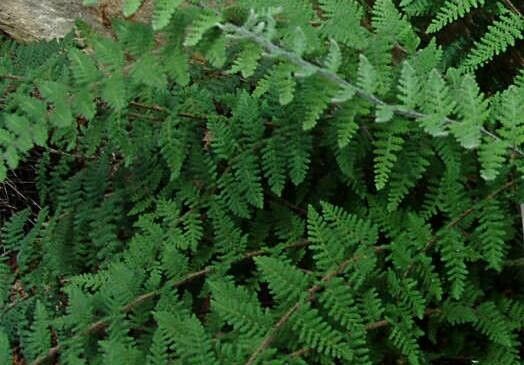
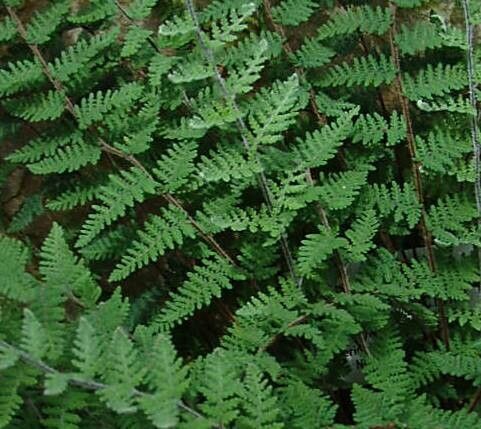
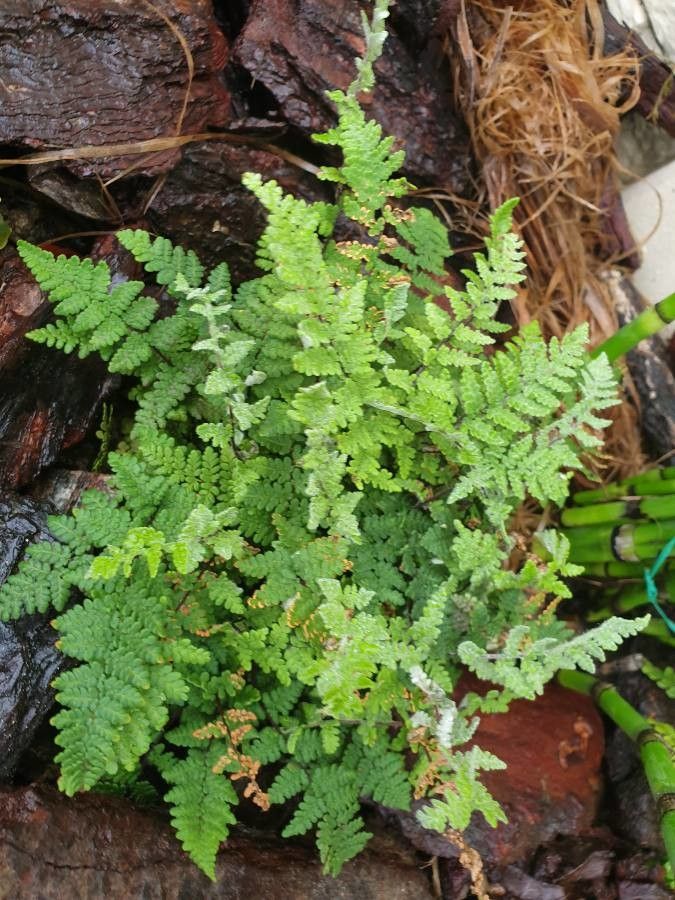
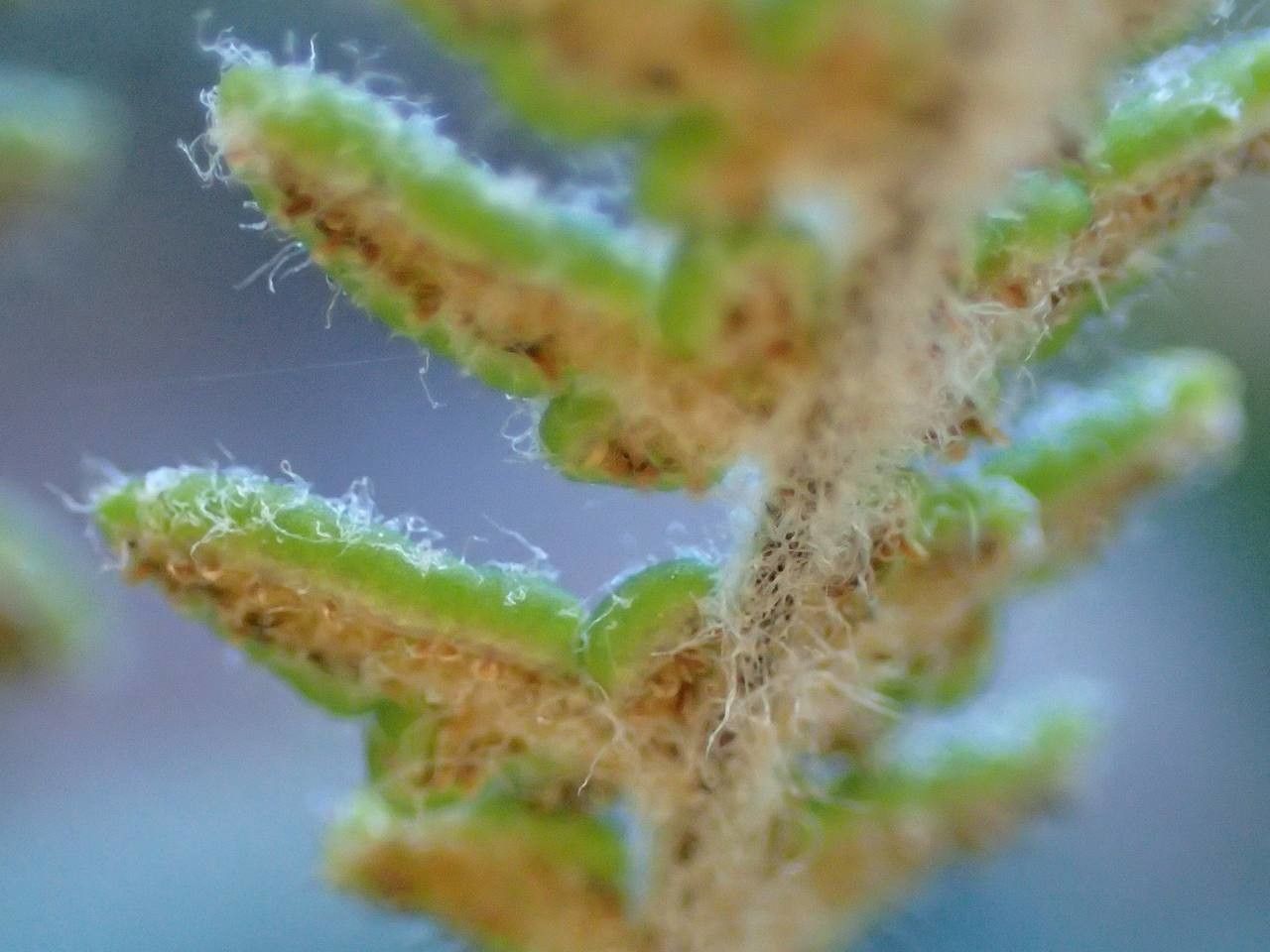
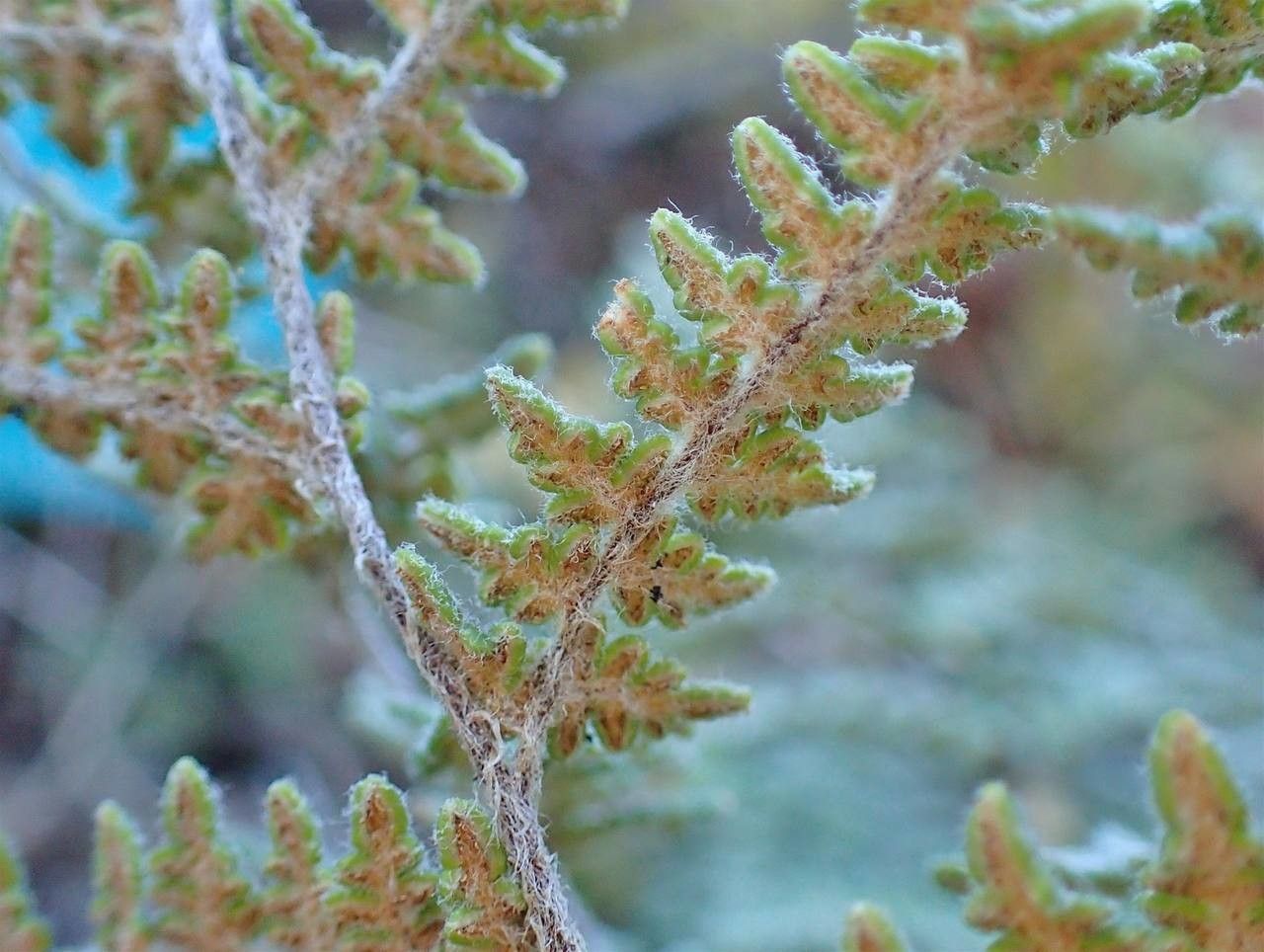
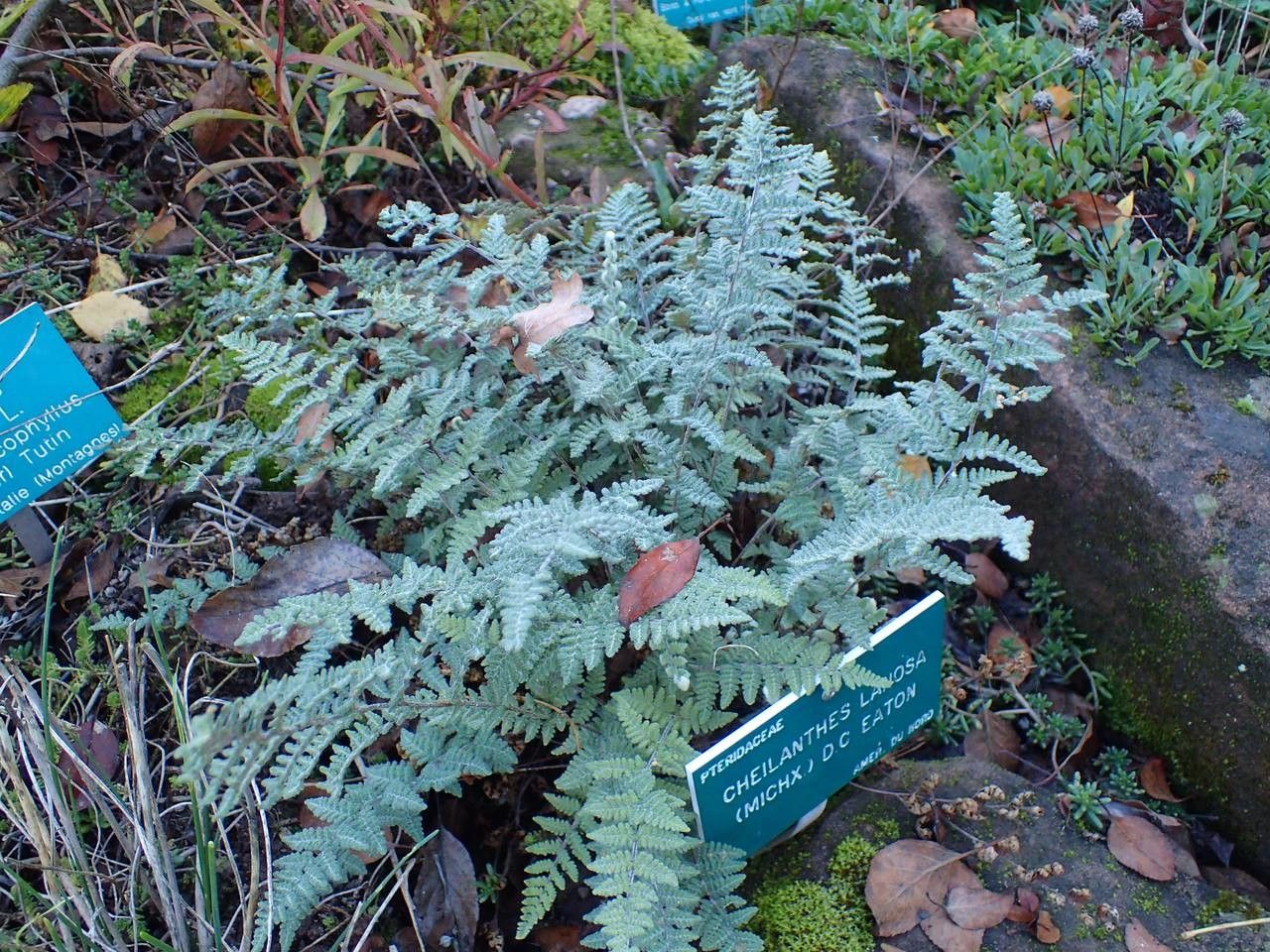
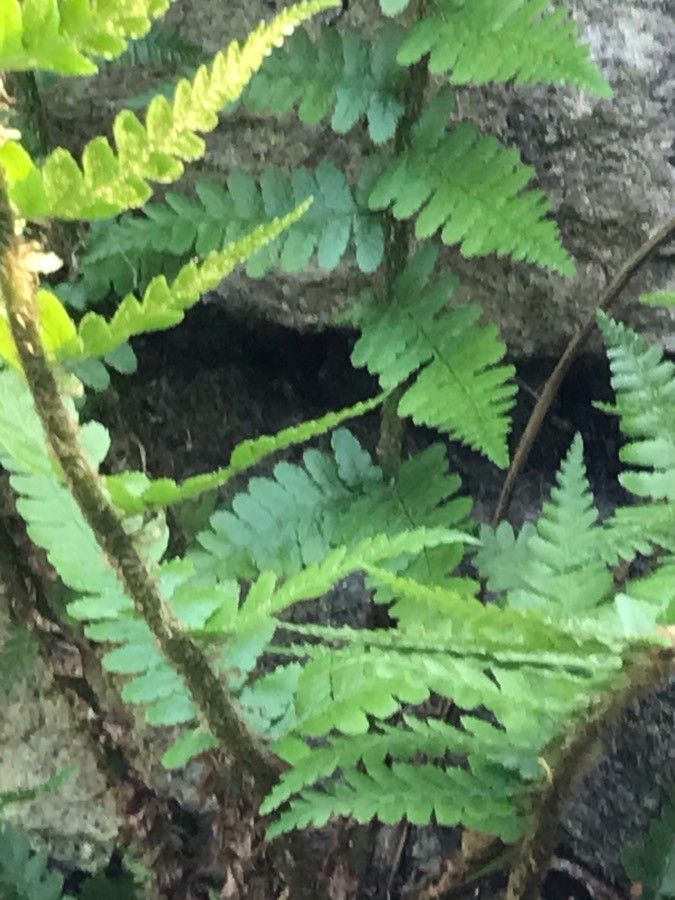
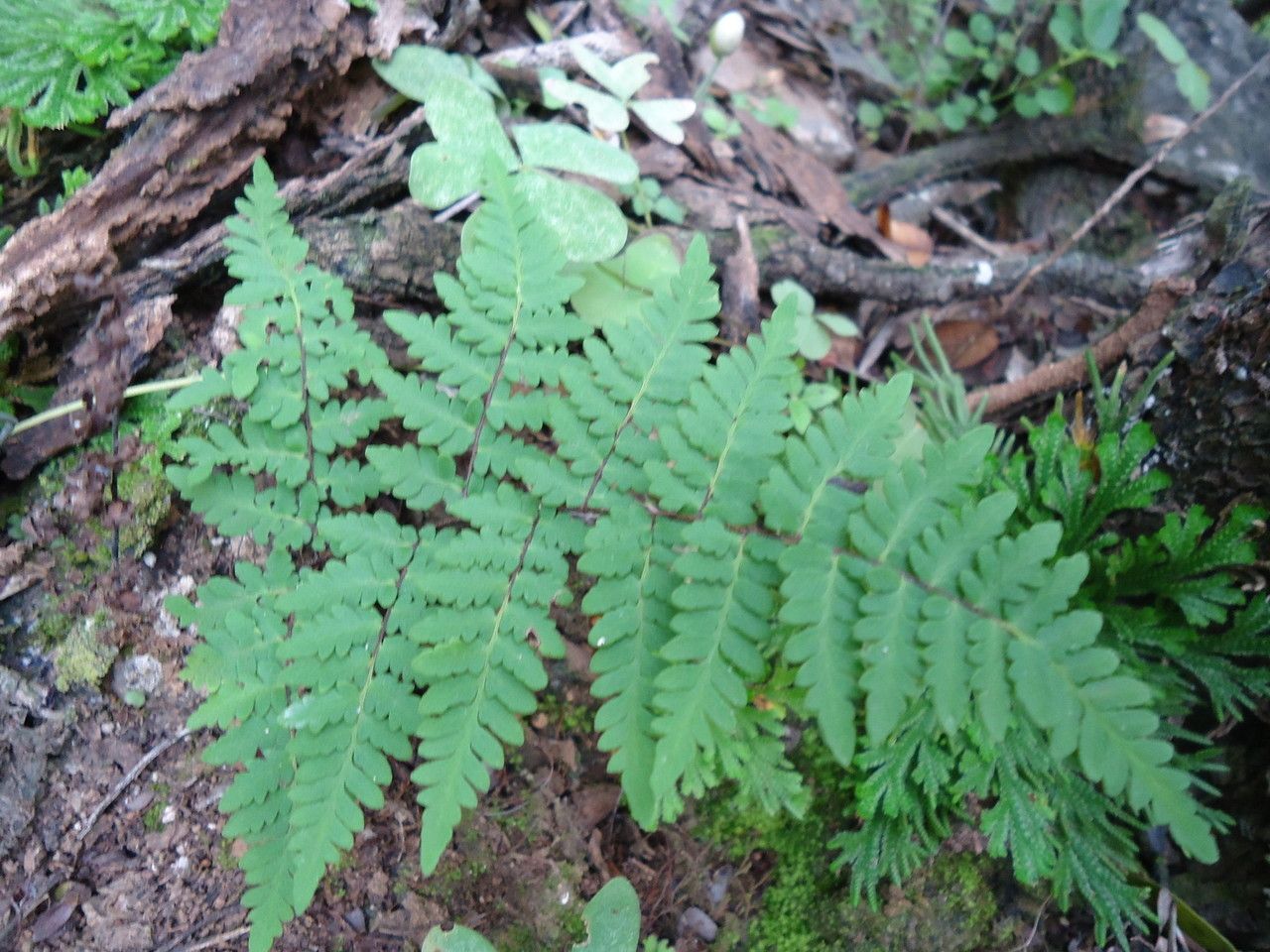
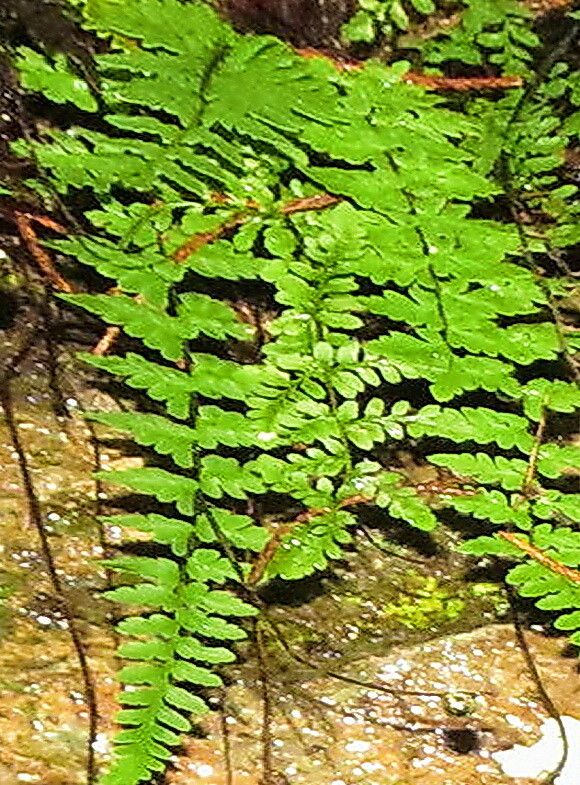
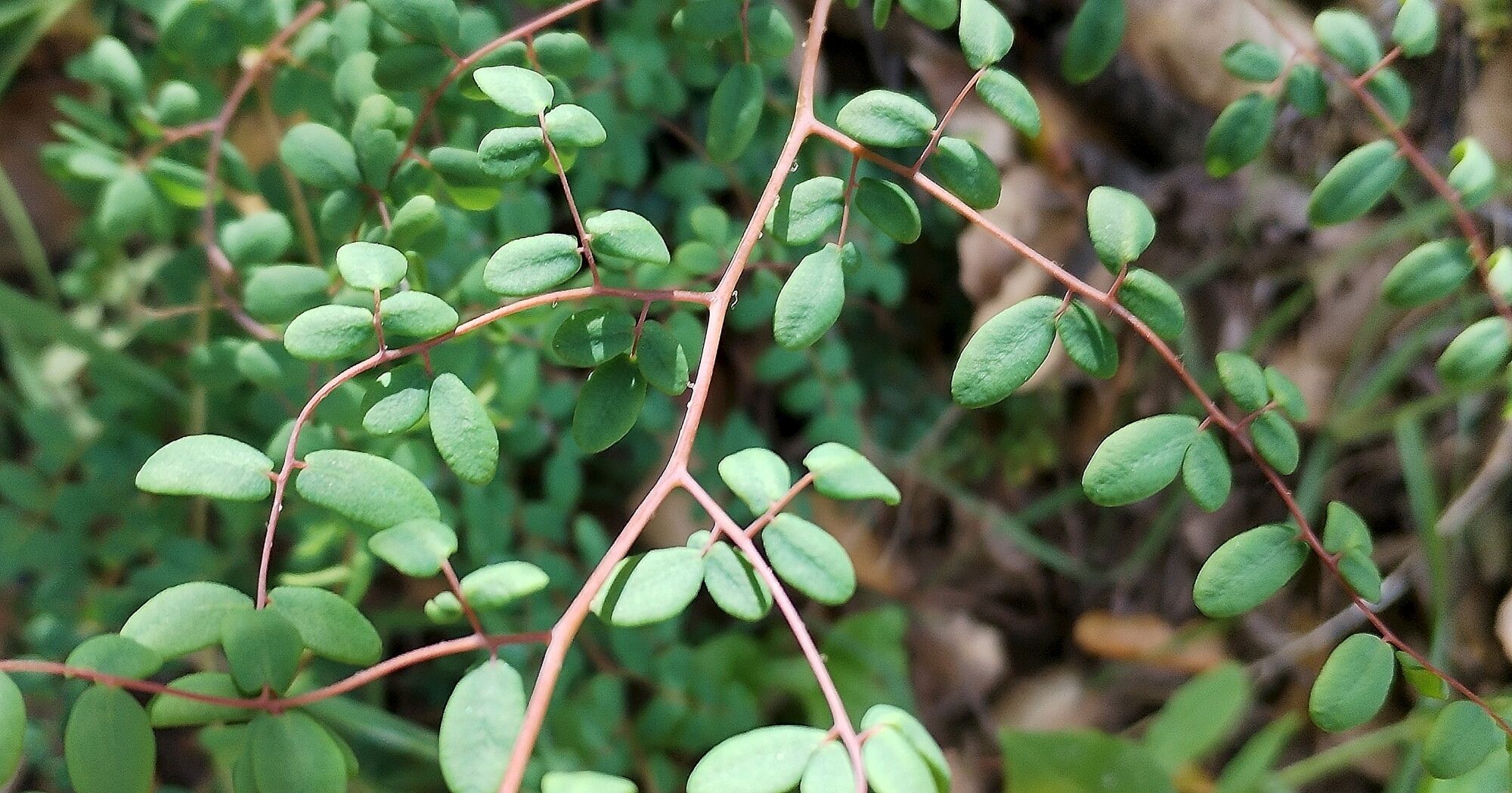
Myriopteris lanosa, the hairy lip fern, is a medium-sized fern of the eastern United States. The leaves are twice-divided into lanceolate or oblong segments, and are sparsely covered in hairs, but lack scales, hence its common name. One of the cheilanthoid lip ferns, it was usually classified in the genus Cheilanthes as Cheilanthes lanosa until 2013, when the genus Myriopteris was again recognized as separate from Cheilanthes. It typically grows in shallow, dry, soil, often in rocky habitats.
Hairy lip fern typically shows good resistance to disease and is affected by relatively few insect pests. Its care is considered difficult because it needs a moist environment and frequent watering. However, the roots can rot if the plant is overwatered or kept in poorly ventilated conditions. Hairy lip fern is appropriate for people with some growing experience, as most individuals can keep it alive for a certain period. Even so, the plant may struggle to thrive and its leaves can dry out and become less healthy over time.
How to keep Hemionitis Lanosa.
Light
The hairy lip fern is native to habitats such as forest understories or rocky areas that offer natural shade. It prefers Full Shade but can tolerate Partial Sun.
Temperature
Hairy lip fern grows well in forest underbrush. It is very sensitive to temperature and humidity; high heat, dry conditions, and strong sunlight all make it uncomfortable. In summer it needs sufficient shading and a humid, high-moisture environment. Generally it does not need special care in winter, but prolonged drought during winter can still be fatal.
Botanical profile.
- Plant Type
- Fern
- Life Cycle
- Perennial
- Genus
- Hemionitis
- Family
- Pteridaceae
- Hardiness Zone
- 5-9
- Mature Height
- 15 cm to 30 cm
- Mature Spread
- 15 cm to 25 cm
- Leaf Color
- Dark Green, Olive
- Leaf Type
- Evergreen
- Planting Time
- Spring, Summer, Autumn
Other names.