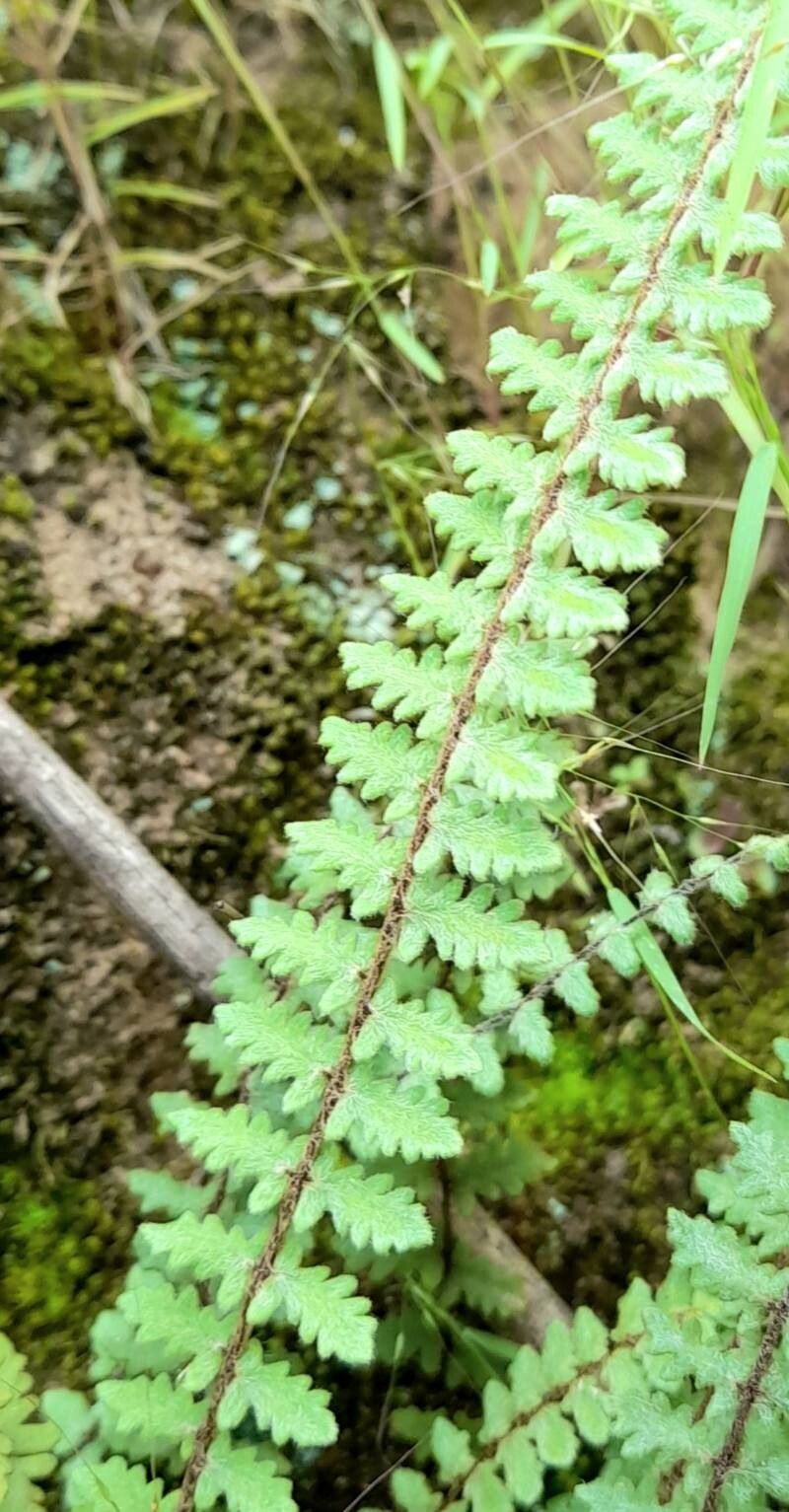
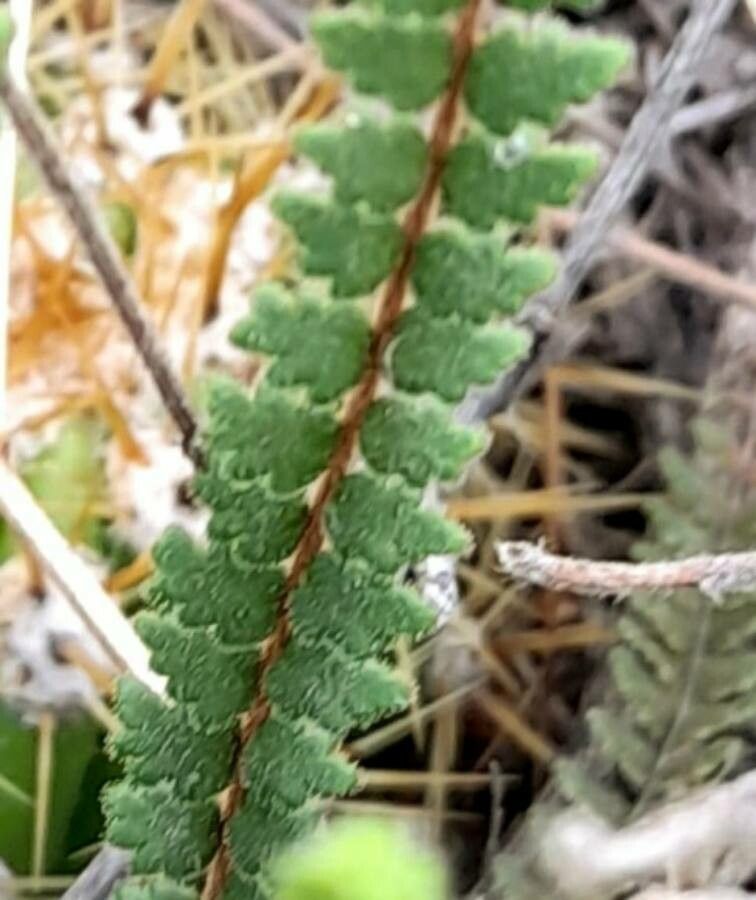
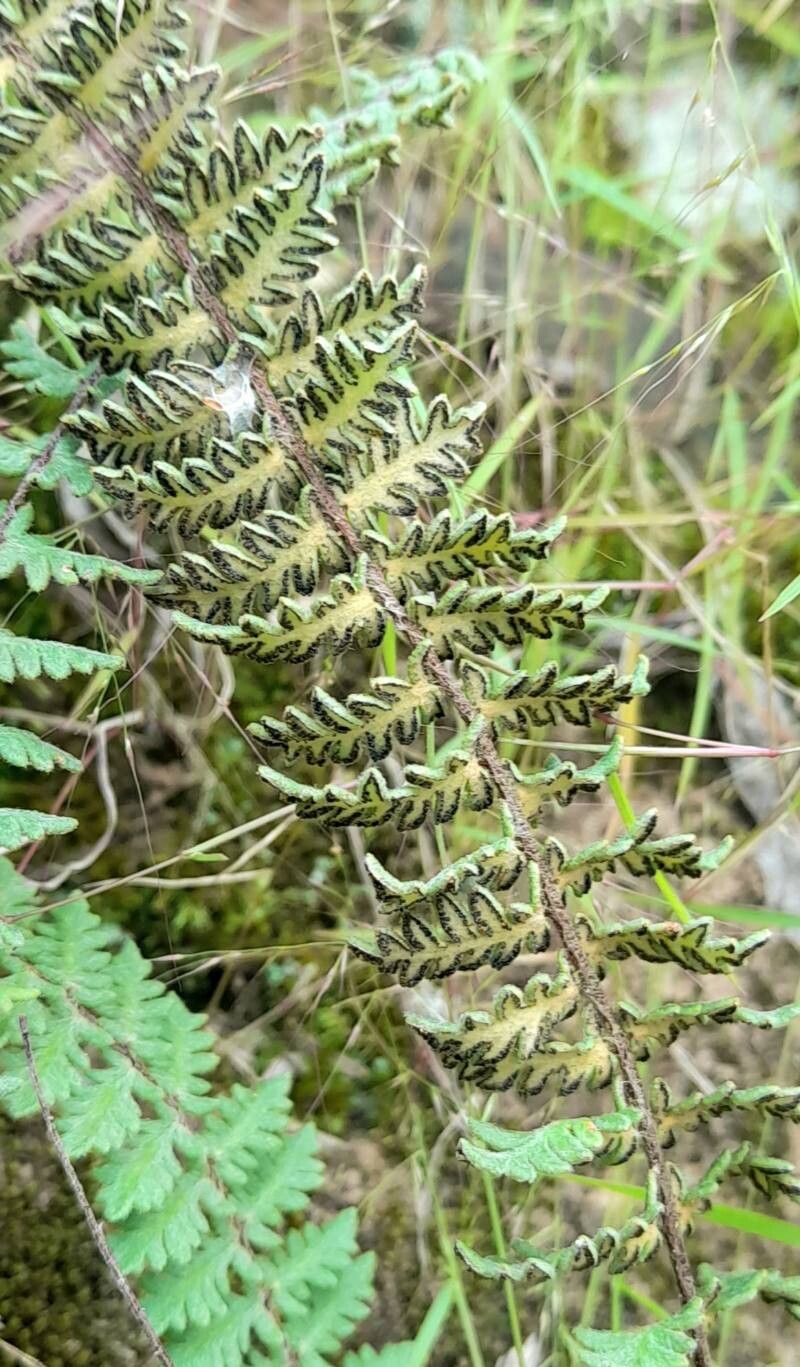
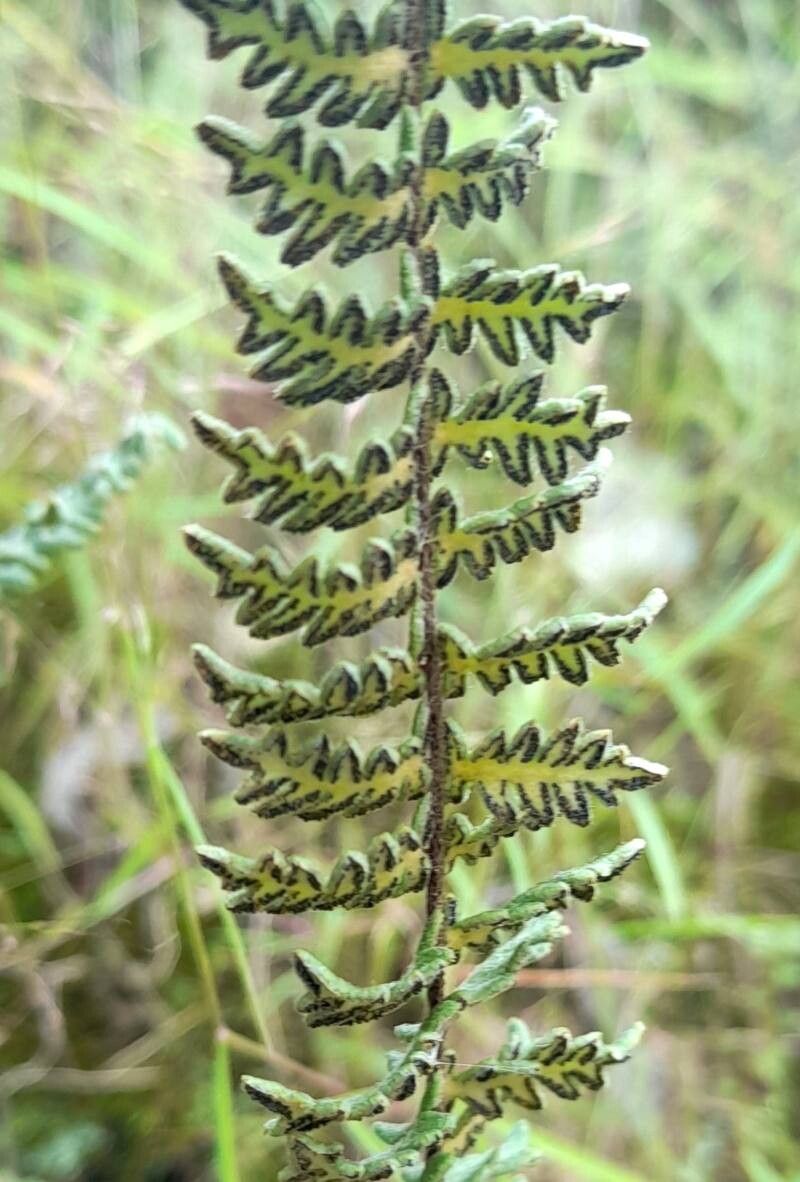
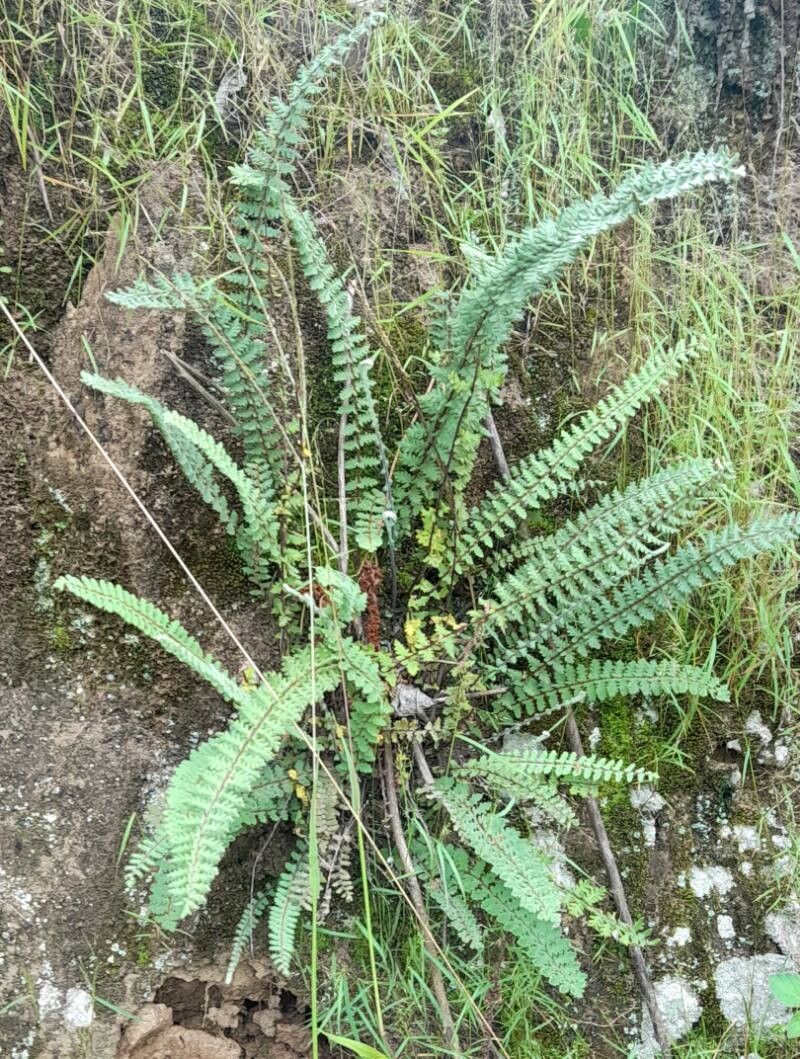
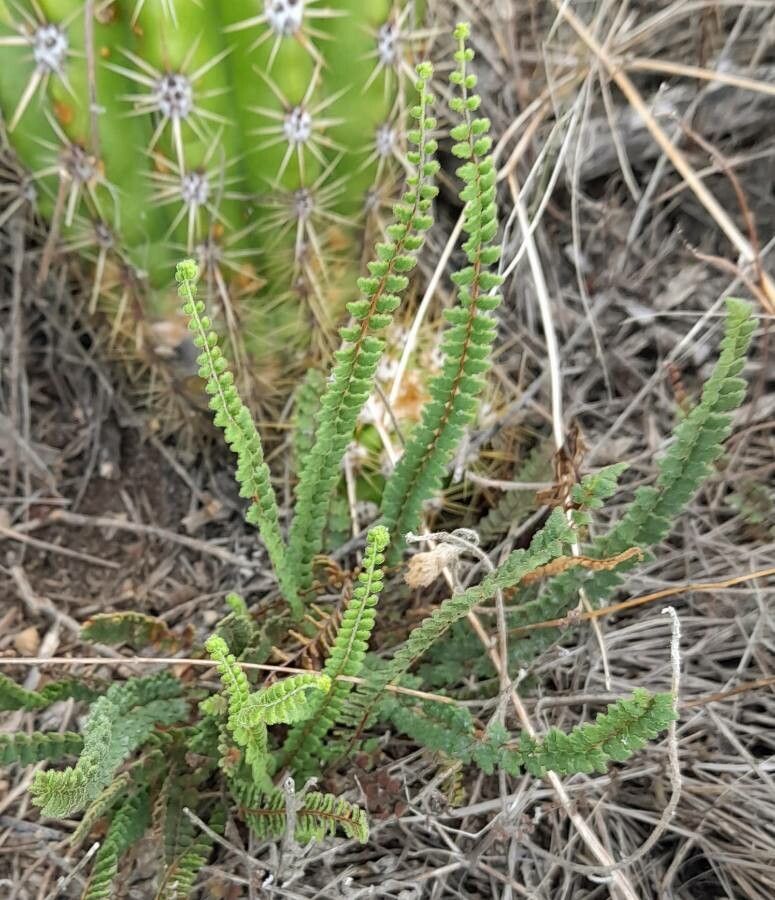
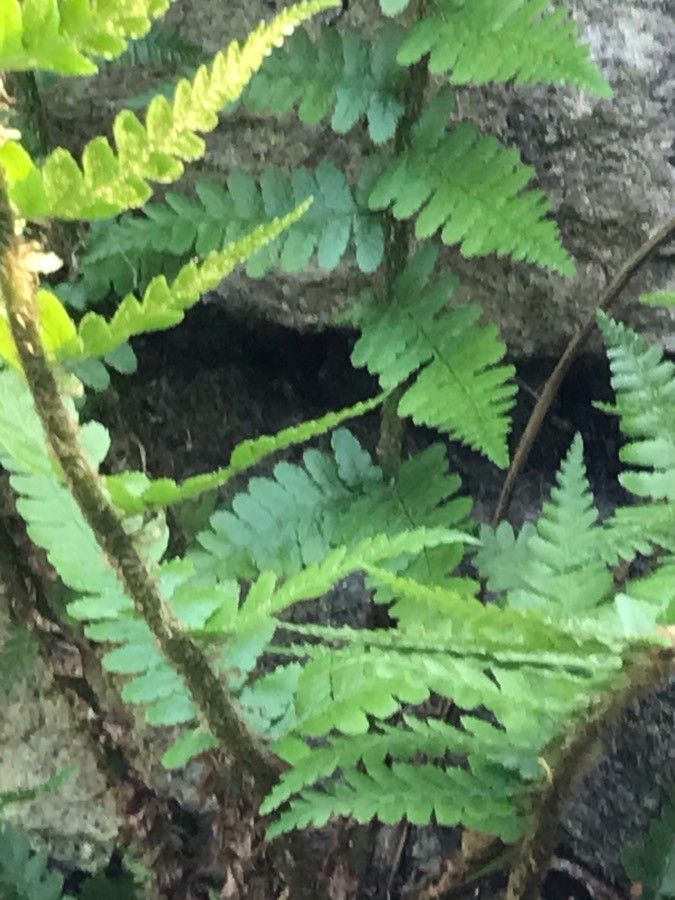
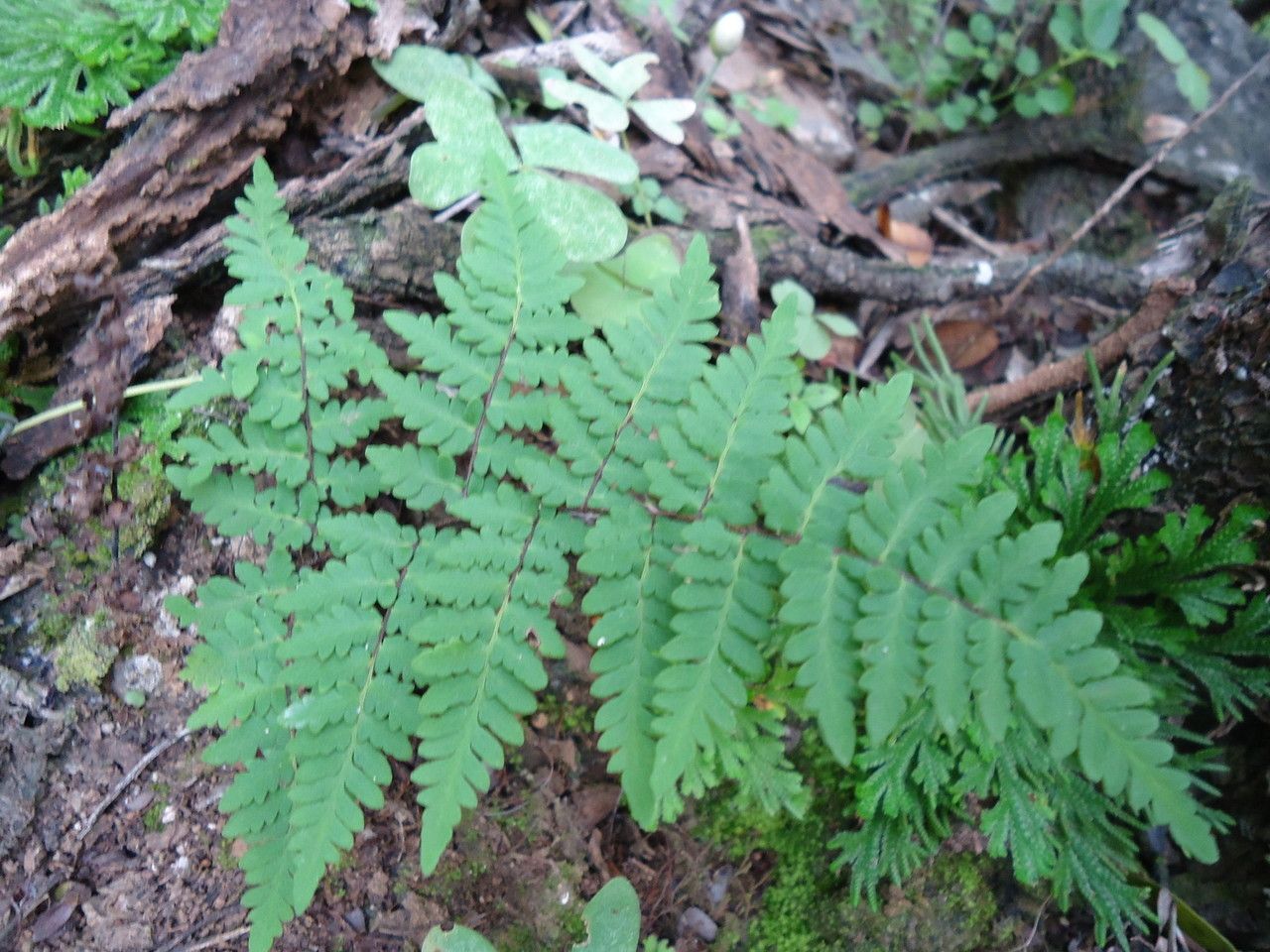
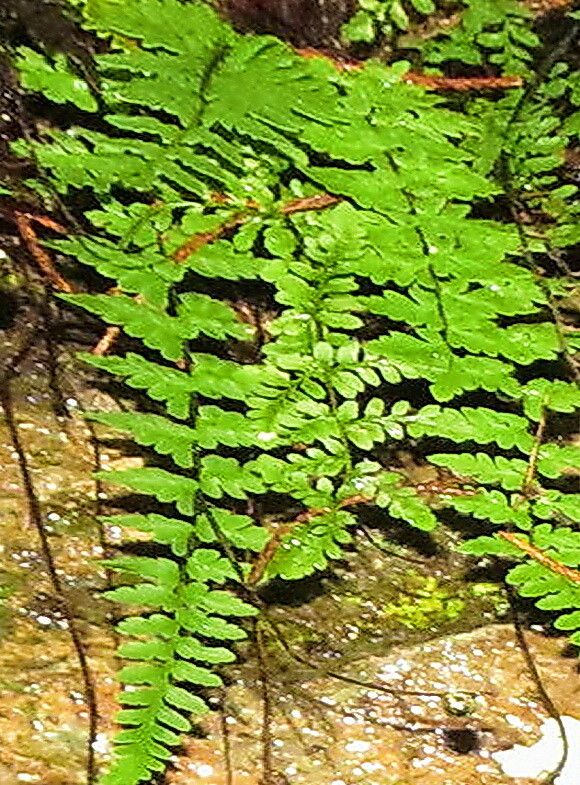
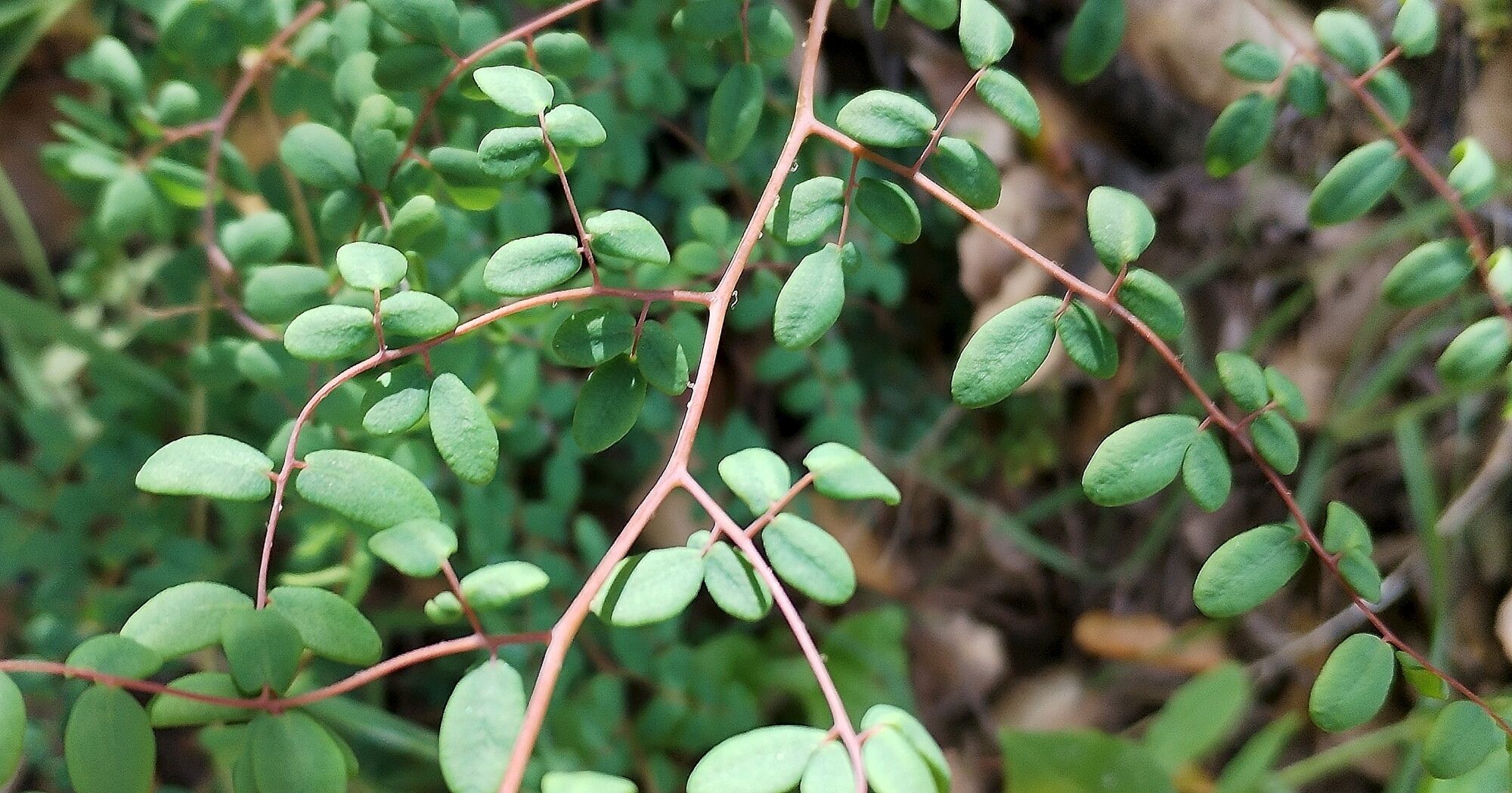
Myriopteris aurea, the golden lip fern or Bonaire lip fern, is a medium-sized fern native to the Americas, a member of the family Pteridaceae. Unlike many members of its genus, which are relatively lacy, its leaf is only dissected into lobed leaflets (pinnae), which are hairy both above and below. One of the cheilanthoid lip ferns, it was classified in the genus Cheilanthes as Cheilanthes bonariensis until 2013, when the genus Myriopteris was again recognized as separate from Cheilanthes. It typically grows on dry, rocky slopes, and ranges from the southwestern United States through Mexico, where it is common and widespread, south and east through Central and South America as far as Chile and Argentina. The common names refer to the color of the hairs on the upper surface of the leaves, and to early collections around Buenos Aires, Latinized as "Bonaire".
The Golden cloak fern is fairly disease-resistant and typically does not suffer from illnesses. However, it can be vulnerable to pests and diseases present in its environment. Such infections are generally mild. Care-wise, the plant requires moderate maintenance. It should be pruned regularly to preserve an attractive appearance and promote healthy growth. Fertilizing can also encourage flowering. The Golden cloak fern is suitable for people with outdoor spaces, such as a garden or patio, and does not demand much care experience. It may need extra care when grown indoors.
How to keep Hemionitis Bonariensis.
Light
Golden cloak fern originates from habitats such as forest understories or rocky areas, where it receives natural shade. It favors partial sun but can adjust to full sun or full shade, showing that it is versatile and hardy.
Temperature
Golden cloak fern can tolerate a wide range of temperatures, but its distribution may still be restricted by various combinations of moisture and heat. It does best in warm summer climates with adequate rainfall or watering. Extended periods of cloudy, rainy weather, as well as prolonged high temperatures, can raise the likelihood of the Golden cloak fern dying. In winter, proper protection from cold can increase the plant's chances of survival.
Fertilizer
One fertilizer application in spring is generally enough for Golden cloak fern, though repeated feedings can maximize growth. Feed every month to a month and a half. Fertilizing improves the leaves’ appearance and function, encouraging even color and a healthy texture. It also promotes root growth and nutrient absorption, supporting the plant’s long-term health.
Botanical profile.
- Plant Type
- Herb
- Life Cycle
- Perennial
- Genus
- Hemionitis
- Family
- Pteridaceae
- Hardiness Zone
- 5-9
- Mature Height
- 10 cm to 61 cm
- Mature Spread
- 15 cm to 25 cm
- Leaf Color
- Green Yellow, Gold
- Leaf Type
- Evergreen
- Planting Time
- Spring, Autumn
- Native Area
- Colombia, Honduras, Mexico, Guatemala, Bolivia, Venezuela, Peru, Nicaragua, Ecuador, Costa Rica, Panama, Jamaica