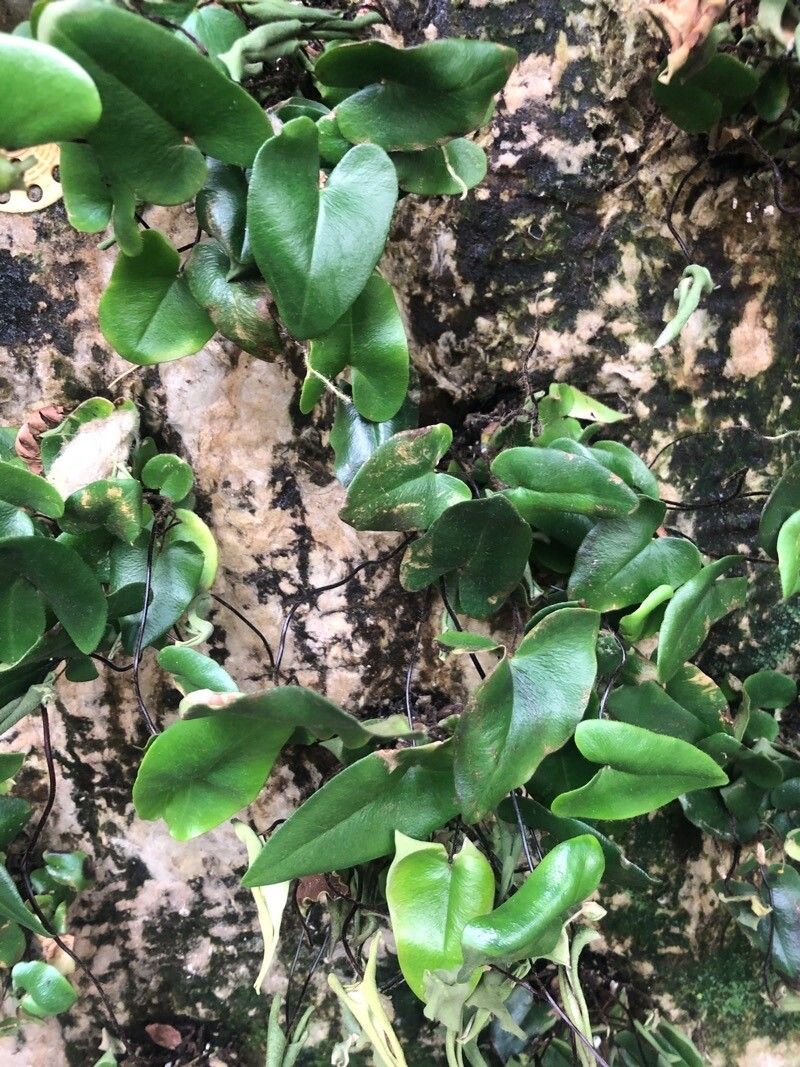
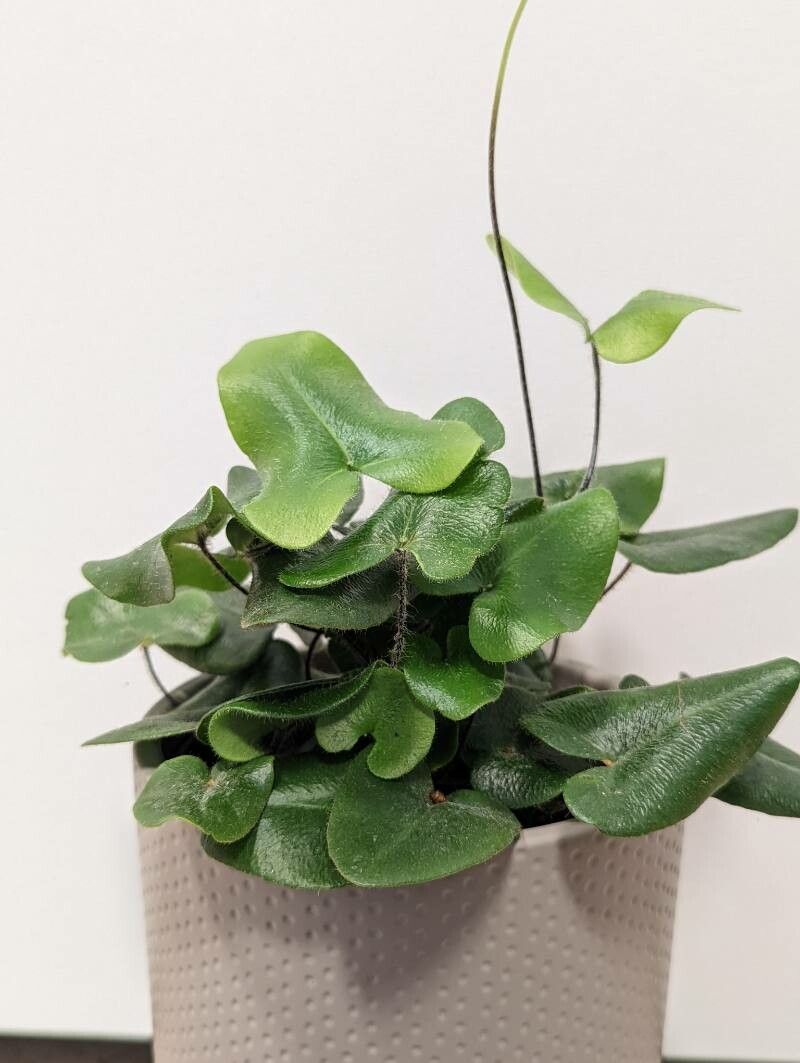
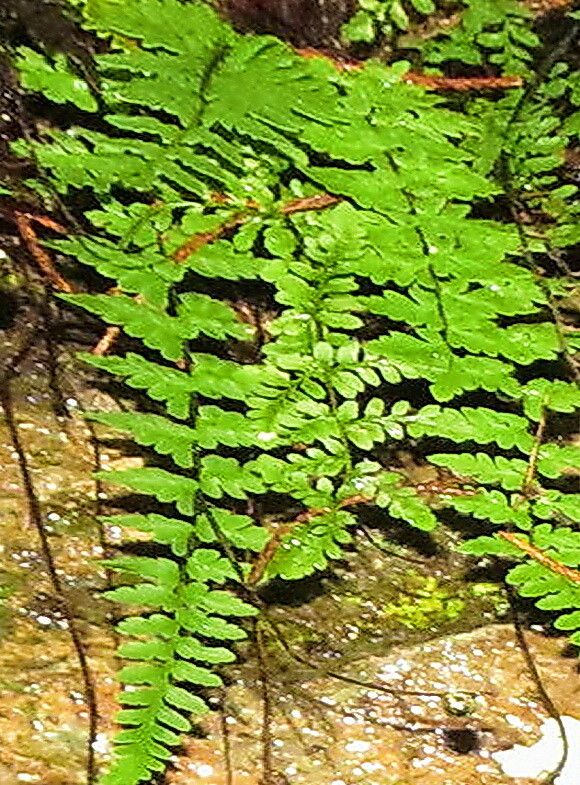
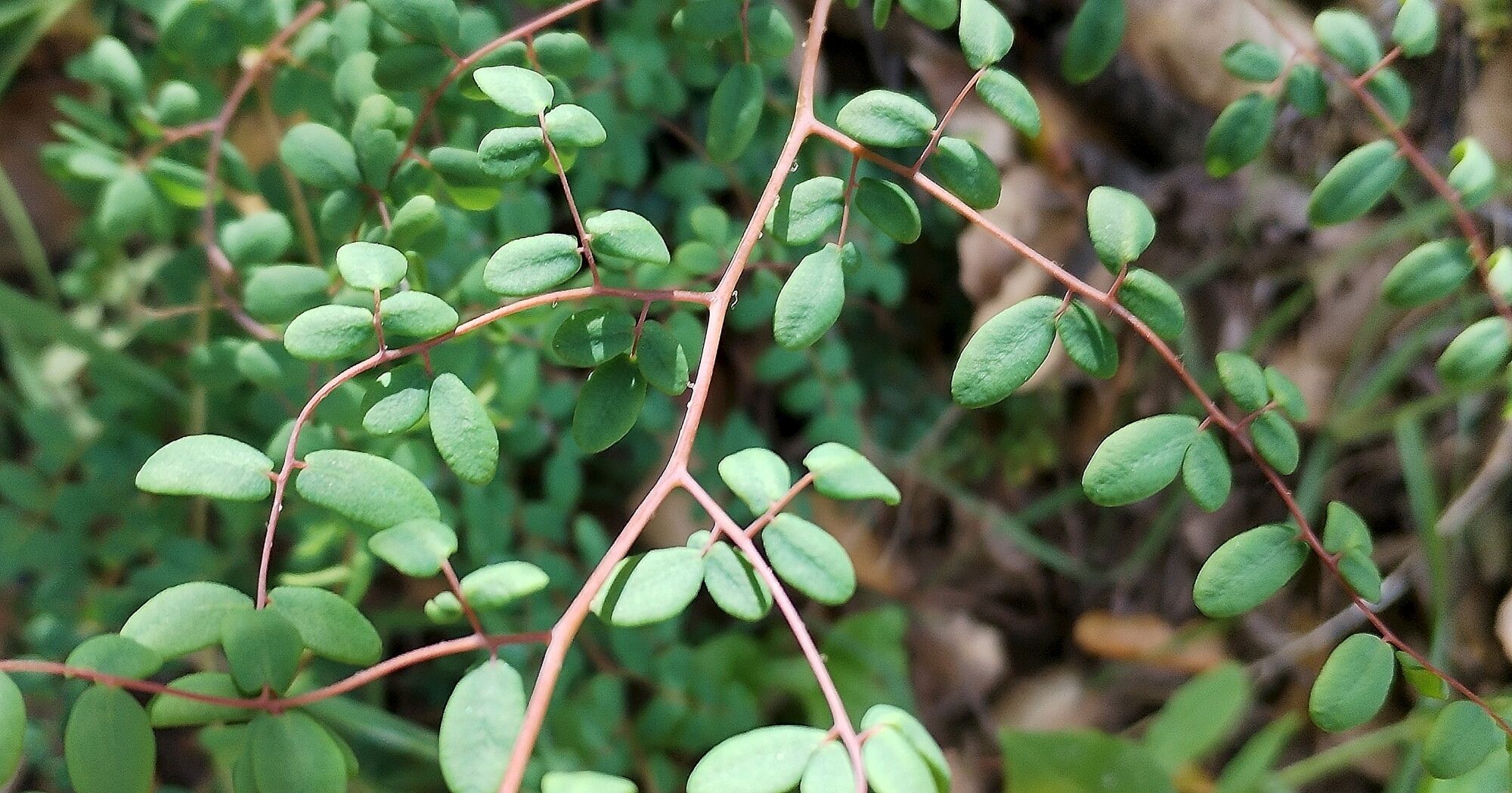
Hemionitis arifolia, commonly known as the Heart Fern, is a small fern species in the Pteridaceae family. It is native to tropical regions of Asia and Africa, often found in moist, shady areas like forests and riverbanks.
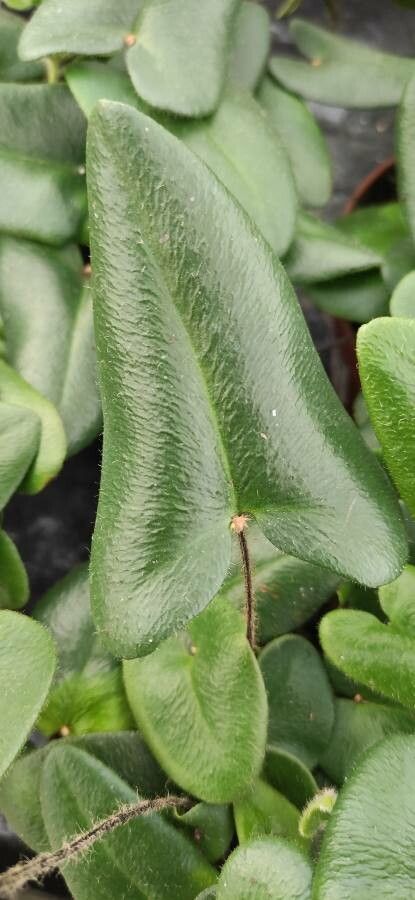
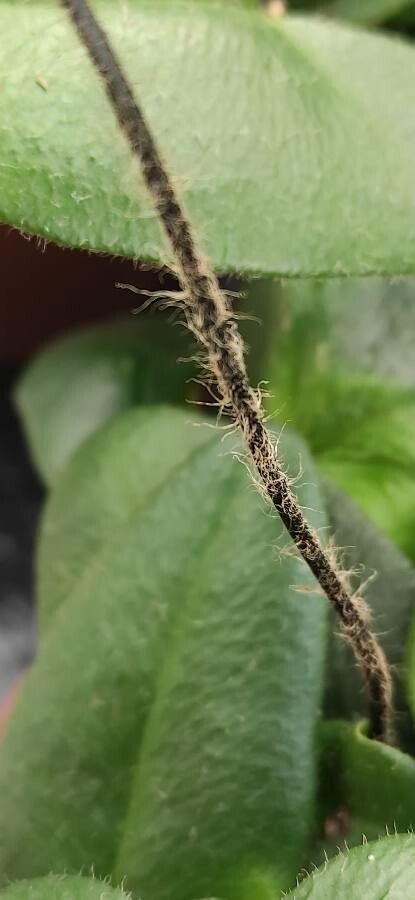
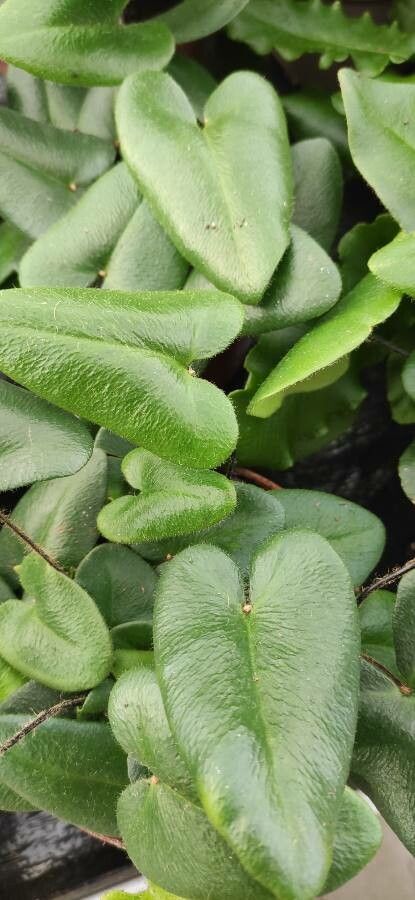
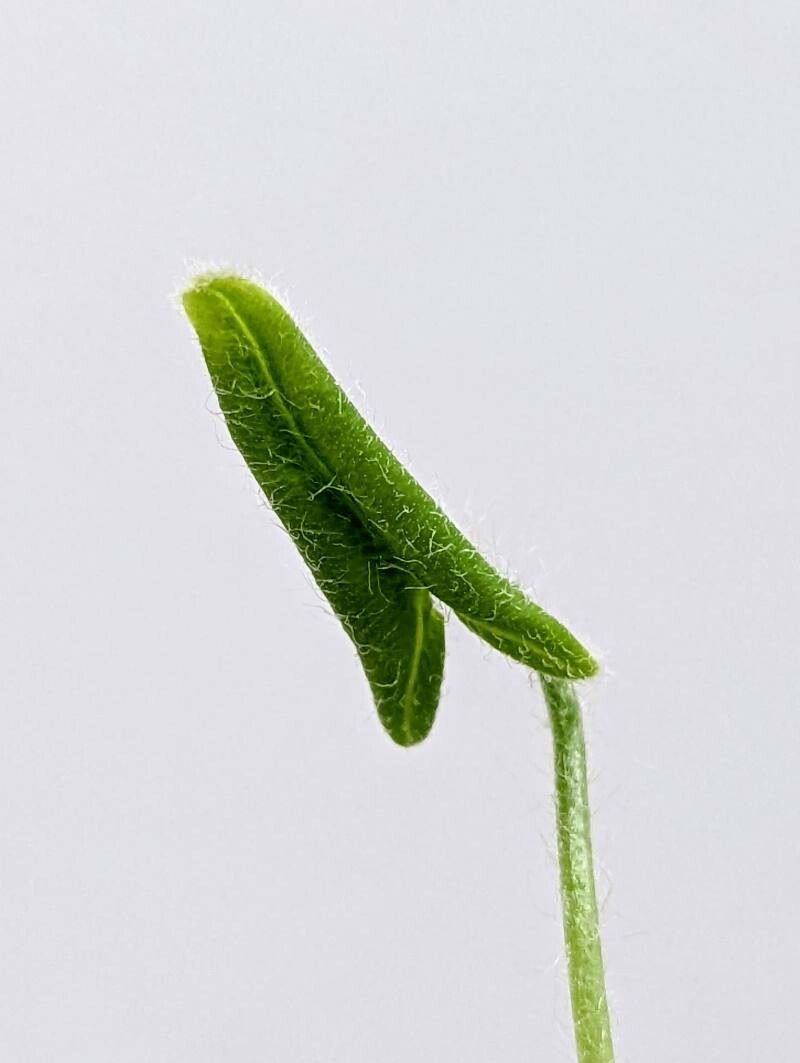
The Heart Fern is notable for its distinctive, heart-shaped fronds that can grow up to 15 cm in length. These fronds are dark green with a glossy texture on their upper surface and a lighter green on the underside. The plant has rhizomes that grow horizontally underground, producing new fronds as they spread.
Caring for the Heart Fern is relatively straightforward. It prefers moist soil but can tolerate periods of drought. The plant thrives in indirect sunlight or partial shade, though it can also endure full sun if provided with sufficient moisture.
Indigenous communities have used the Heart Fern for medicinal purposes, utilizing its anti-inflammatory properties to treat ailments such as fever, coughs, and skin diseases.
In summary, Hemionitis arifolia is an appealing plant that enhances the beauty of both indoor and outdoor gardens, while also offering potential health benefits.
Golden leather fern generally resists disease well and is affected by relatively few insect pests. Its care is considered difficult because it requires a moist environment and frequent watering. However, its roots are prone to rotting if it is overwatered or kept in a poorly ventilated environment. Golden leather fern is suitable for people with some growing experience, since most people can keep it alive for a certain amount of time. Nevertheless, it may struggle to thrive and its leaves can dry out and become less healthy over time.
How to keep Hemionitis Arifolia.
Light
Golden leather fern flourishes when subjected to abundant sunlight all day long. Its original home - wetlands - regularly receive ample sun exposure. Too much sunlight rarely has an adverse effect, but the fern's healthy growth may be hindered if there's insufficient sun.
Water
The Heartleaf Fern, scientifically known as Hemionitis arifolia, benefits from small but frequent watering sessions. It is important to avoid infrequent watering with a large quantity of water, as it can negatively impact the health of the plant. To ensure the well-being of Hemionitis arifolia, it is crucial to maintain a consistently moist environment for its roots. Whether the fern is grown in soil or attached to a piece of tree bark, it requires a steady level of moisture. This is best achieved through regular and frequent watering sessions.
Humidity
This plant needs special care because it loves high humidity levels of 60-80% or more. The best way to achieve this is by placing a humidifier near the plant. Daily misting is also essential! Make sure the room has good ventilation.
Temperature
The Golden leather fern originates from a region where the typical temperature ranges from 68 to 95 °F (20 to 35 ℃). Although it can withstand slightly colder temperatures, it flourishes best in this range. Depending on the season, it might be necessary to adjust indoor temperatures warmer for the plant to grow optimally.
Pruning
Tongue ferns do not need frequent pruning. There is no need to trim your plant unless it has yellow or dead leaves. Be cautious not to cut too much of the plant and to remove any withering leaves.
Toxicity
Animals and humans are not poisoned by tongue ferns. As a result, you may keep it near your dogs and children without concern.
Further reading →
The toxicity and danger assessments provided are for reference only. We do not assure their accuracy, so it's crucial not to depend on them. Seek professional advice when necessary for accurate guidance.
Botanical profile.
- Plant Type
- Fern
- Life Cycle
- Perennial
- Genus
- Hemionitis
- Family
- Pteridaceae
- Hardiness Zone
- 10-10
- Mature Height
- 1.22 m to 1.83 m
- Mature Spread
- 1.22 m to 1.83 m
- Leaf Color
- Green, Blue
- Leaf Type
- Evergreen
- Flower Color
- Red
- Bloom Time
- Spring
- Planting Time
- Spring, Summer, Autumn
- Native Area
- Sri Lanka, Belize, India, Malaysia, Angola, Mexico, Guatemala, Madagascar, Nigeria, Guinea-Bissau, Fiji, Tanzania, Zimbabwe, Jamaica, Benin, Cuba, Sierra Leone, Indonesia, Cambodia, Equatorial Guinea, Liberia, Mozambique, Venezuela, Cameroon, Brazil, Ghana, Congo, Honduras, Peru, South Africa, Philippines, Bangladesh, Panama, China, Colombia, Bahamas, Vietnam, Myanmar, Japan, Togo, El Salvador, Senegal, Singapore, Nicaragua, Guyana, Ecuador, Côte d'Ivoire, Costa Rica, Thailand, Gabon
Other names.