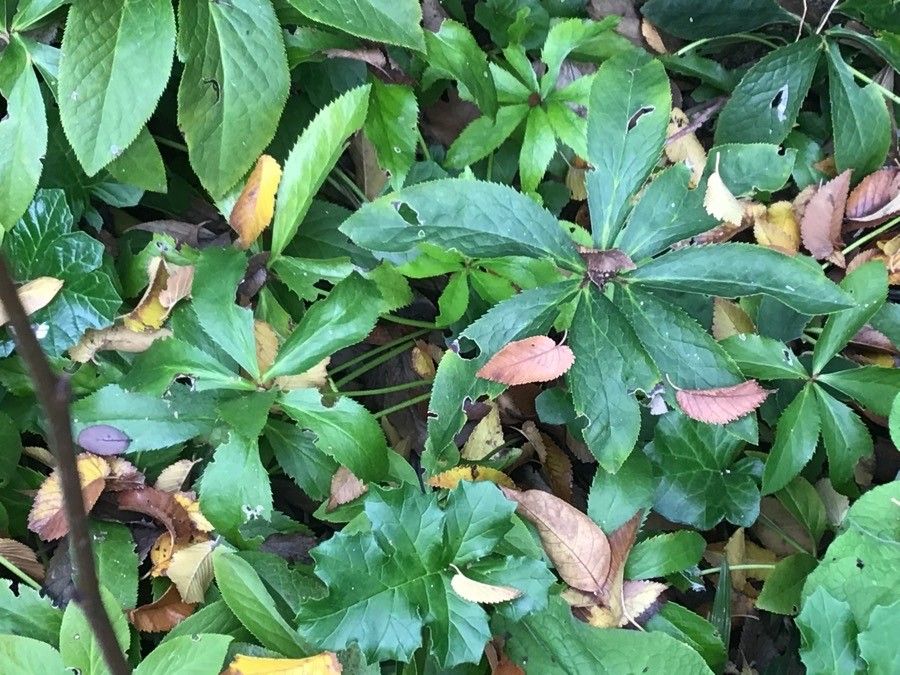
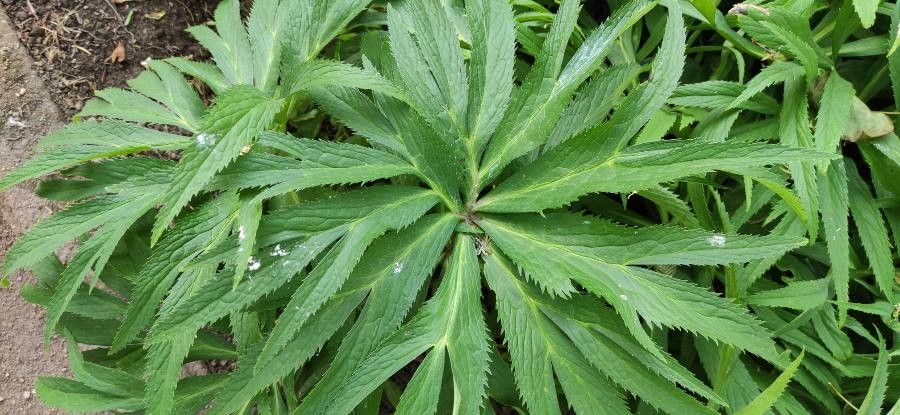
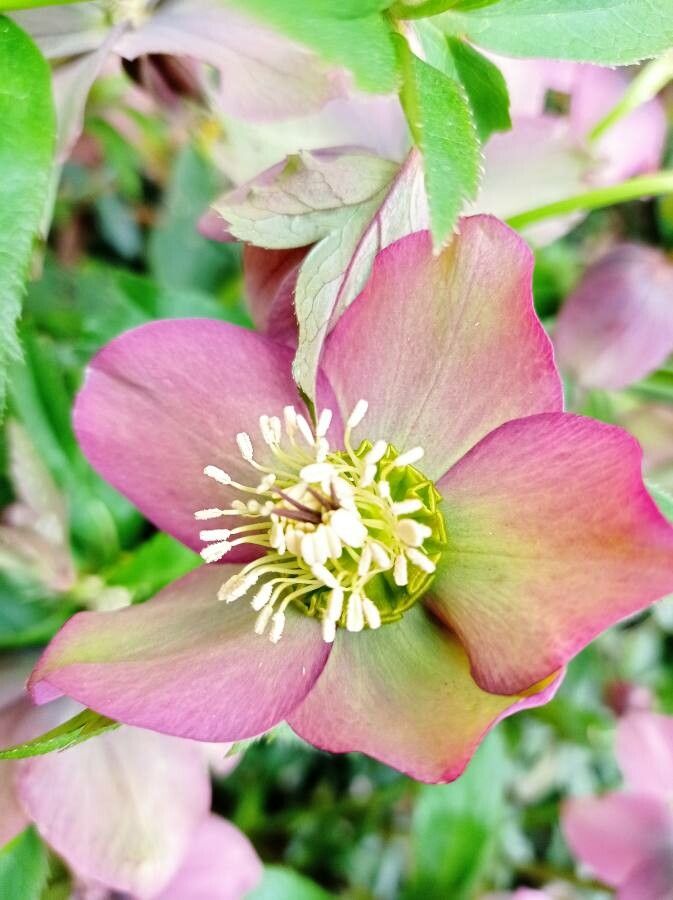
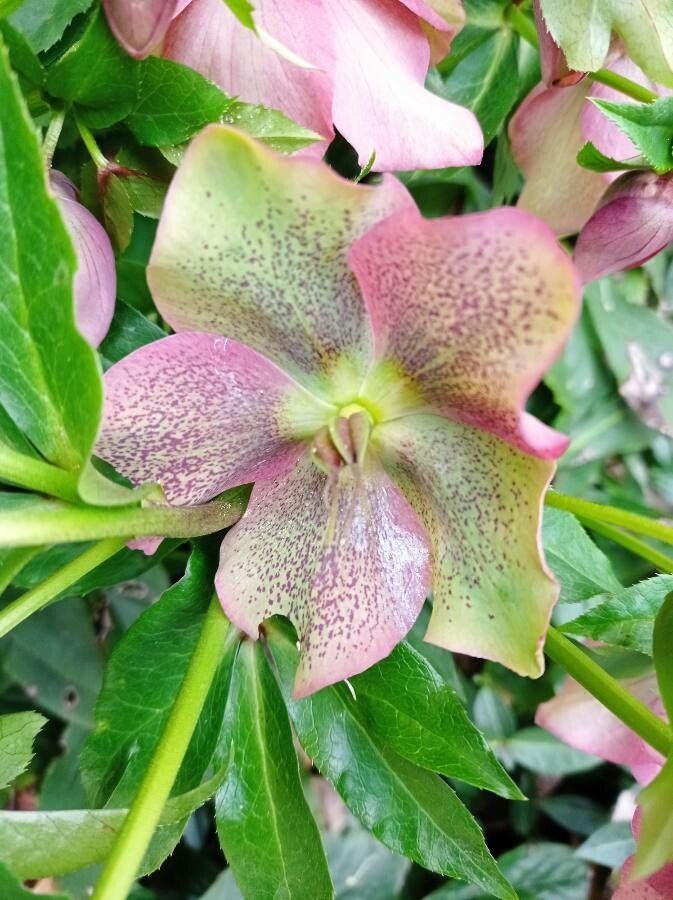
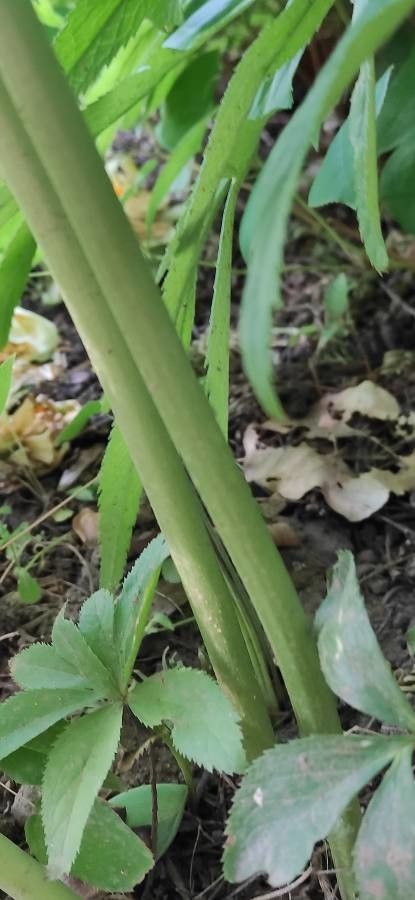
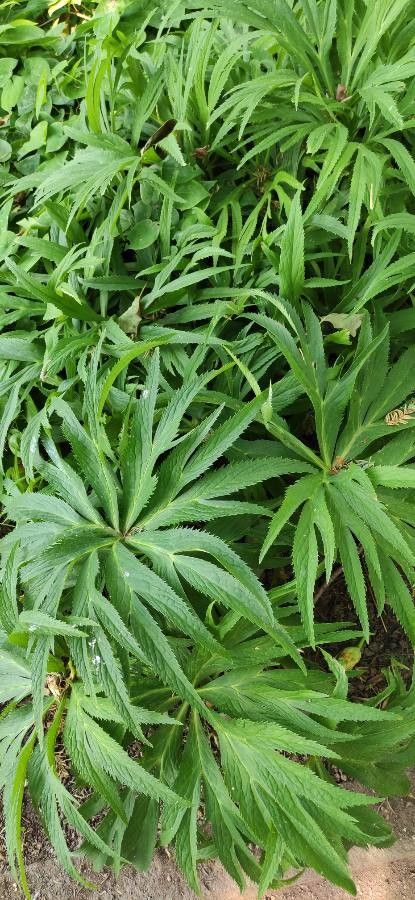
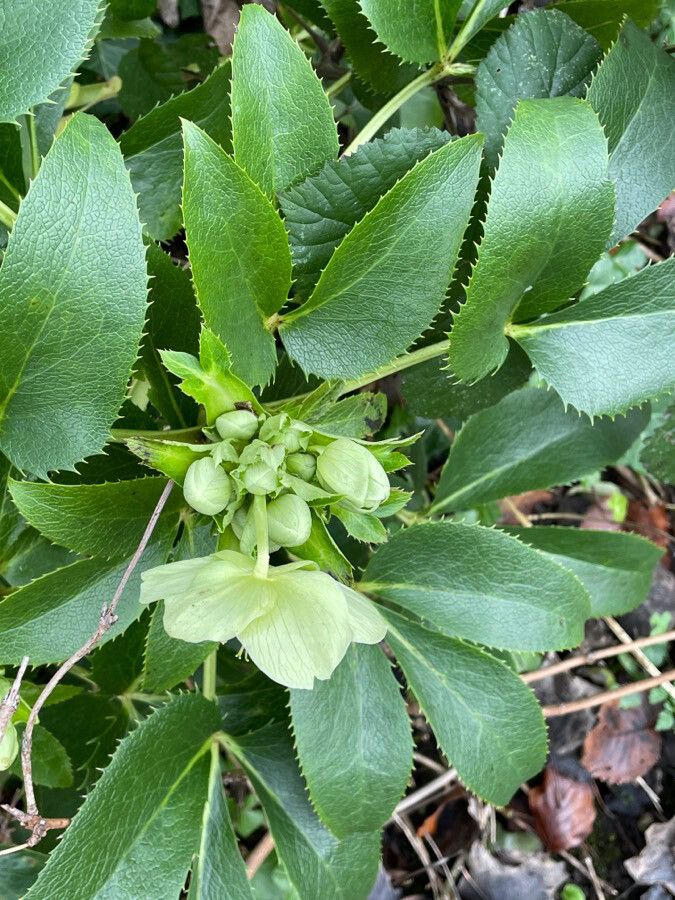
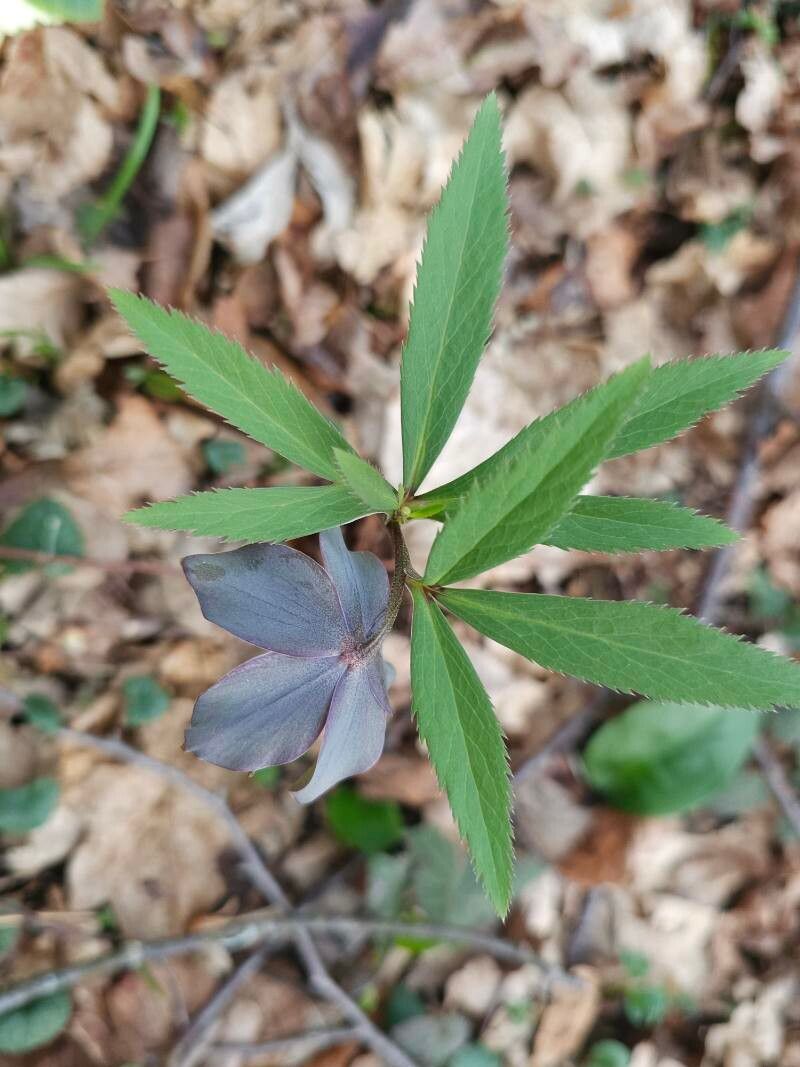
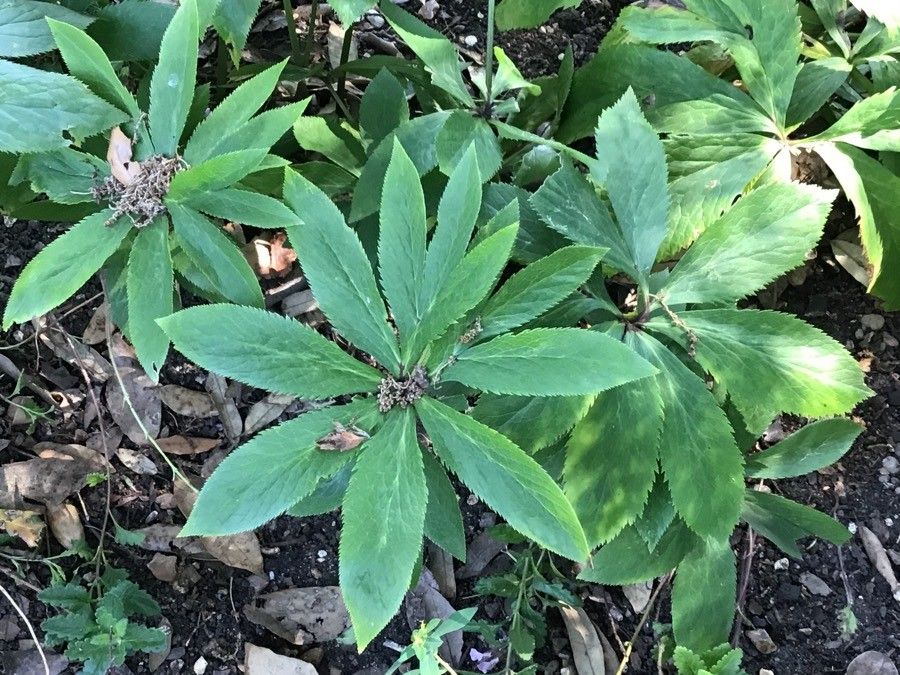
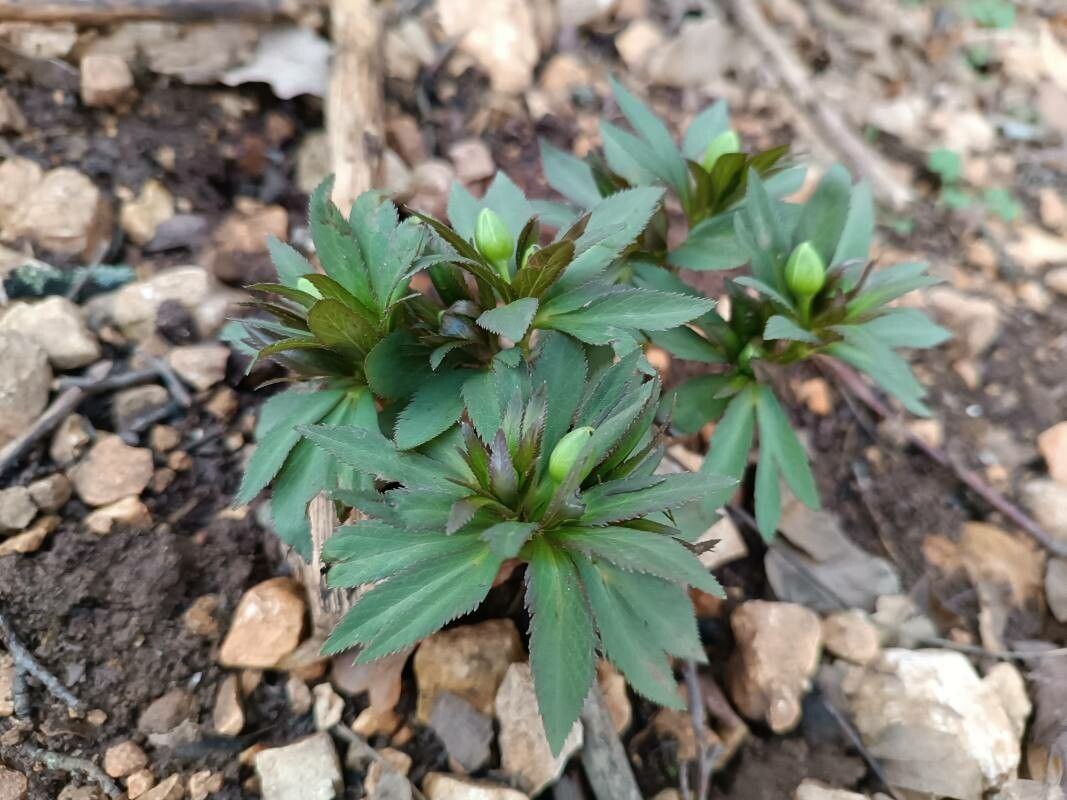
Helleborus purpurascens, commonly known as the Purple Hellebore, is a perennial flowering plant that belongs to the Ranunculaceae family. Native to Europe, it is typically found in woodlands and shady areas. The plant usually grows up to 30 cm in height and features dark green, leathery leaves.
The Purple Hellebore produces striking, bell-shaped flowers in a deep purple hue with yellow stamens. These flowers bloom from late winter through early spring, making it an excellent choice for adding color to your garden during the colder months.
This plant prefers well-drained soil rich in organic matter and thrives in partial shade or filtered sunlight. While it is drought-tolerant once established, Purple Hellebore requires regular watering during its growing season.
Historically, the Purple Hellebore has been used for medicinal purposes due to its toxic properties, which can induce vomiting if ingested. However, it is essential to note that all parts of this plant are poisonous to humans and animals if ingested.
Overall, Helleborus purpurascens is a beautiful addition to any garden, thanks to its stunning blooms and its ability to thrive in shady areas during the colder months of the year.
How to keep Helleborus Purpurascens.
Water
Helleborus purpurascens, a plant native to the woodlands of Eastern Europe, thrives in moist, well-drained soil. It prefers consistent moisture but can tolerate moderate drought once established. Water it every 1 to 2 weeks, allowing the soil to dry out slightly between waterings. Typically grown outdoors, this plant benefits from mulching, which helps retain moisture and mimics its natural forest habitat.
Fertilizer
For Helleborus purpurascens, if the soil has been pre-fertilized, there is no need for spring fertilization. Instead, apply an organic or slow-release fertilizer once a year in late summer. If the soil is of poor quality or the plants are large, apply a low-concentration fertilizer, such as 10-10-10, in the spring. Avoid using high-nitrogen fertilizers while the plants are flowering.
Pruning
Helleborus purpurascens is known for its distinctive foliage and blooms. To promote healthy growth, it's best to prune the plant in early spring. Remove any old or diseased parts to improve its health and increase airflow. Thinning the plant will also enhance its appearance and vigor. Always use clean, sharp tools when pruning to minimize stress on the plant and prevent infections.
Botanical profile.
- Life Cycle
- Perennial
- Genus
- Helleborus
- Family
- Ranunculaceae
- Mature Height
- 40 cm
Other names.