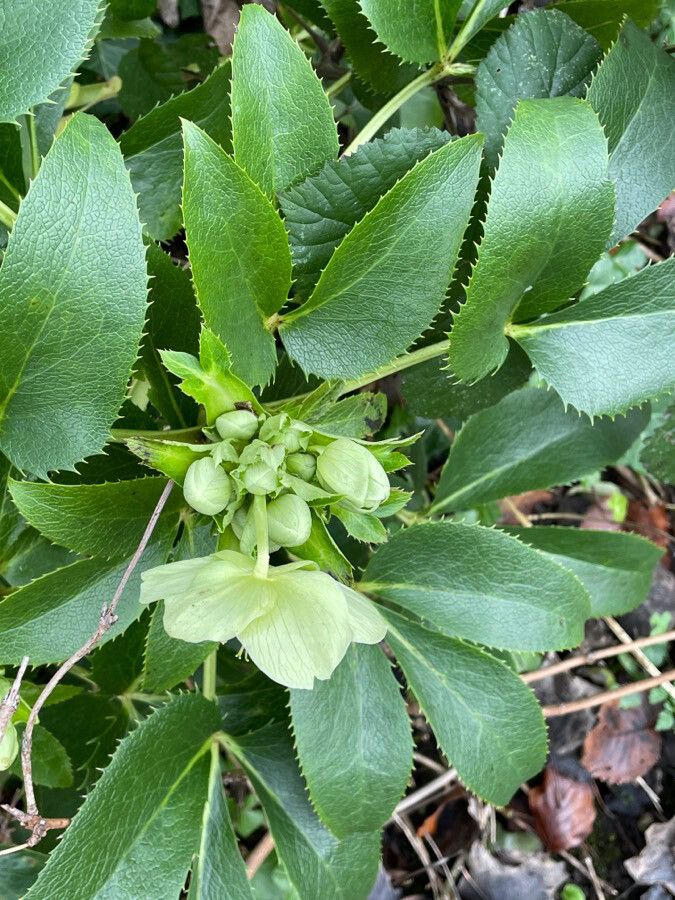
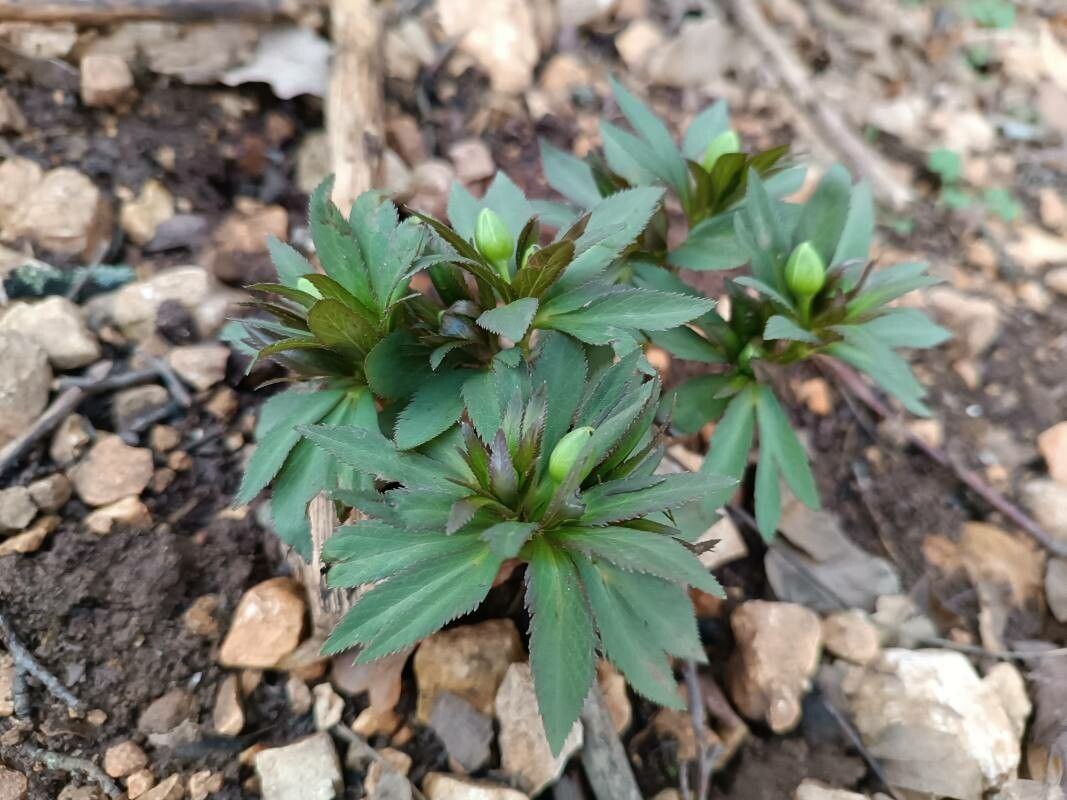
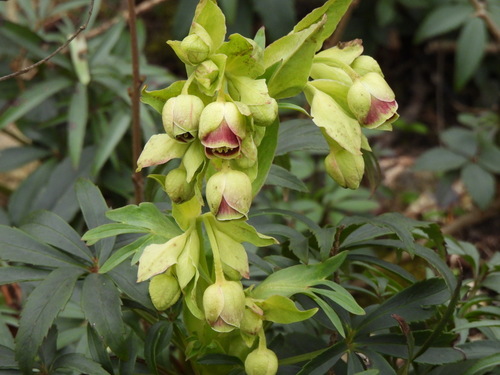
Helleborus argutifolius, commonly known as the Corsican hellebore or holly-leaved hellebore, is a perennial evergreen plant belonging to the buttercup family, Ranunculaceae. Native to Corsica and Sardinia, it has been widely cultivated across Europe and North America.
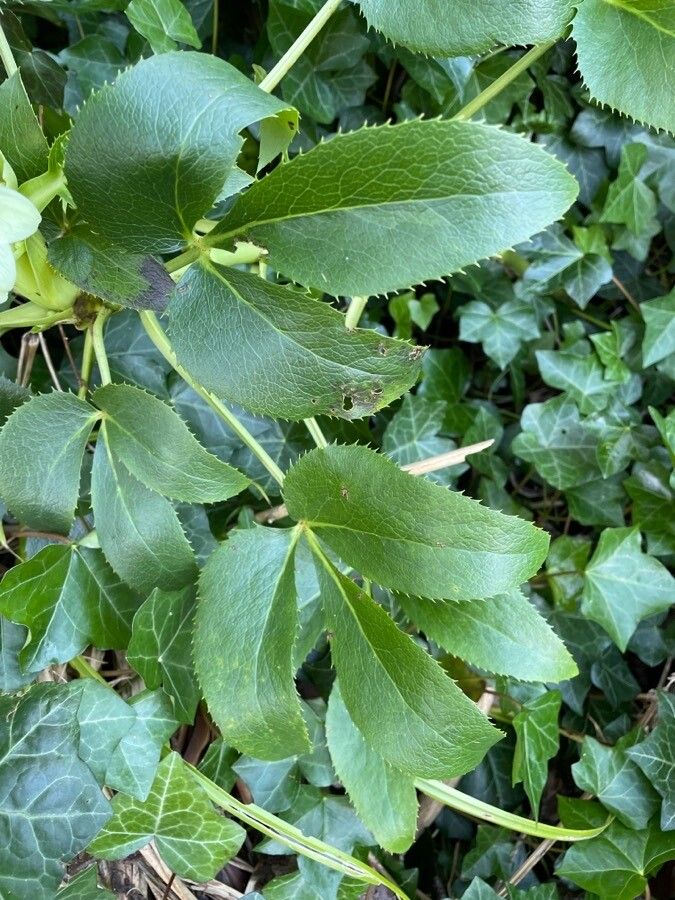
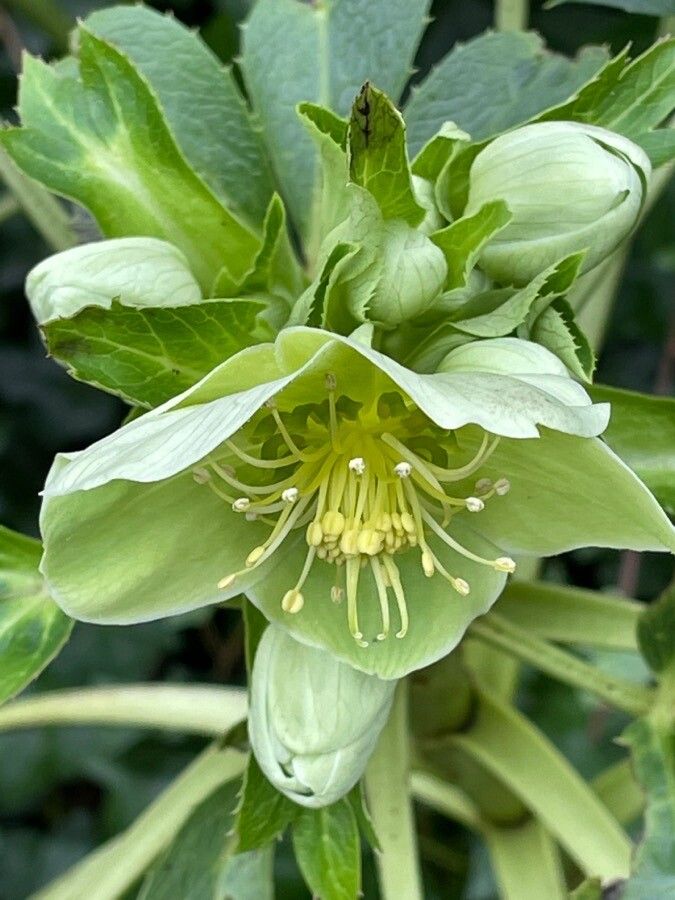
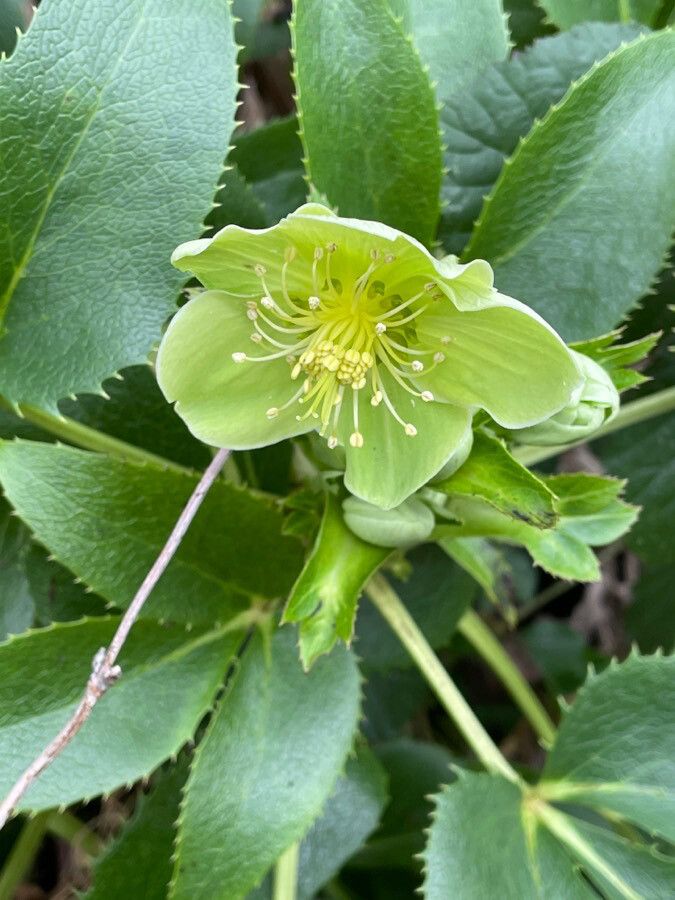
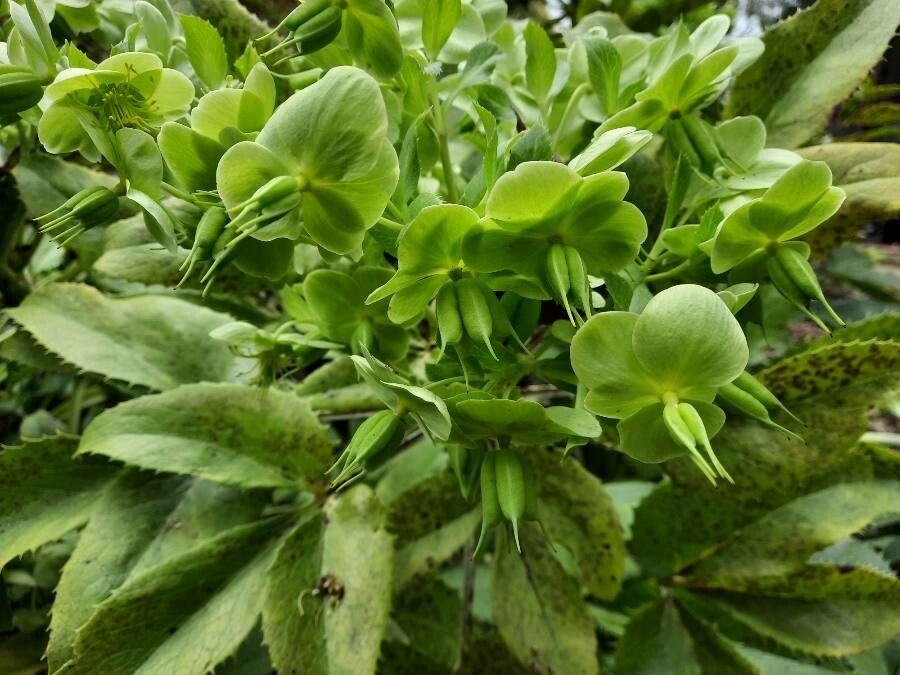
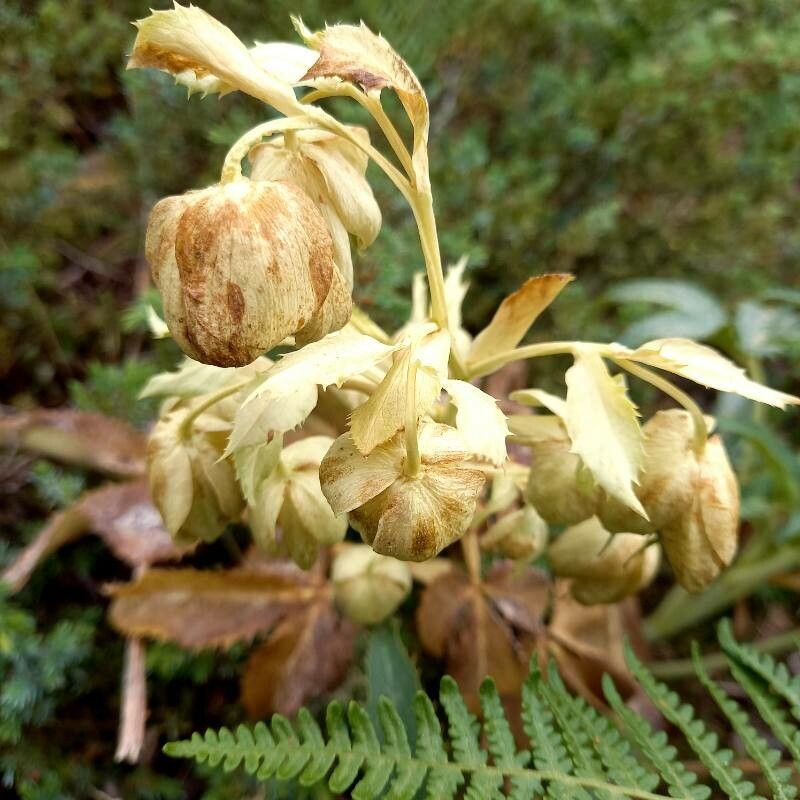
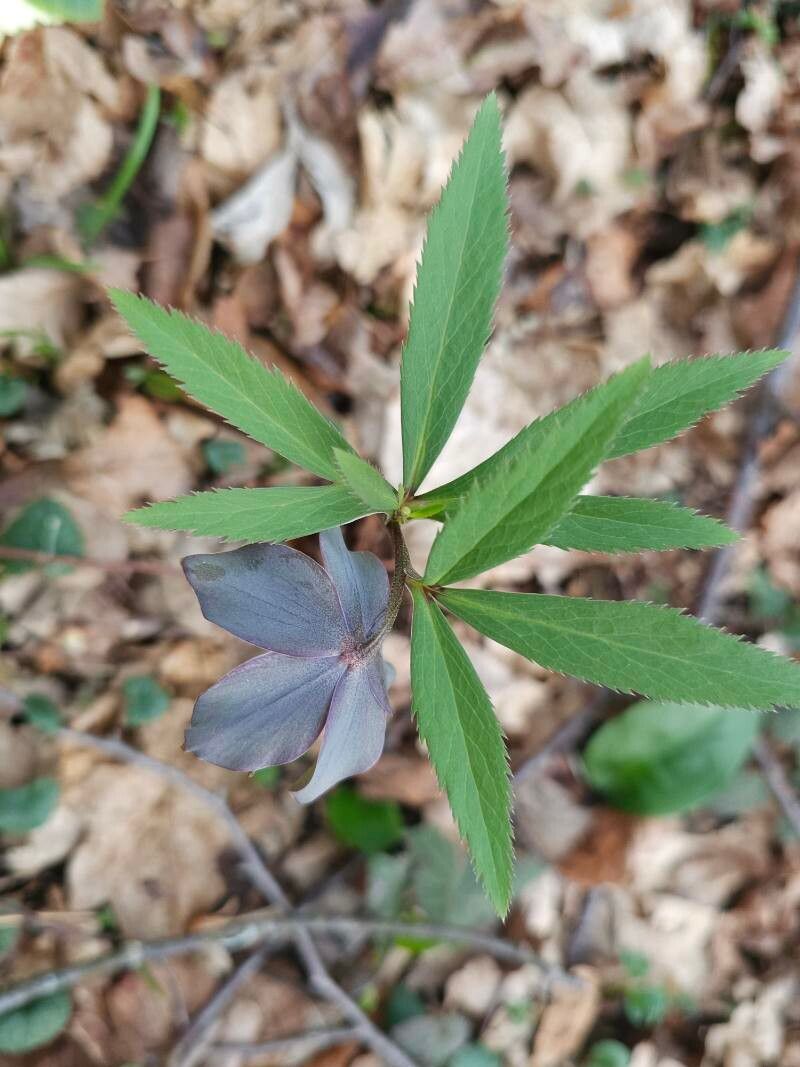
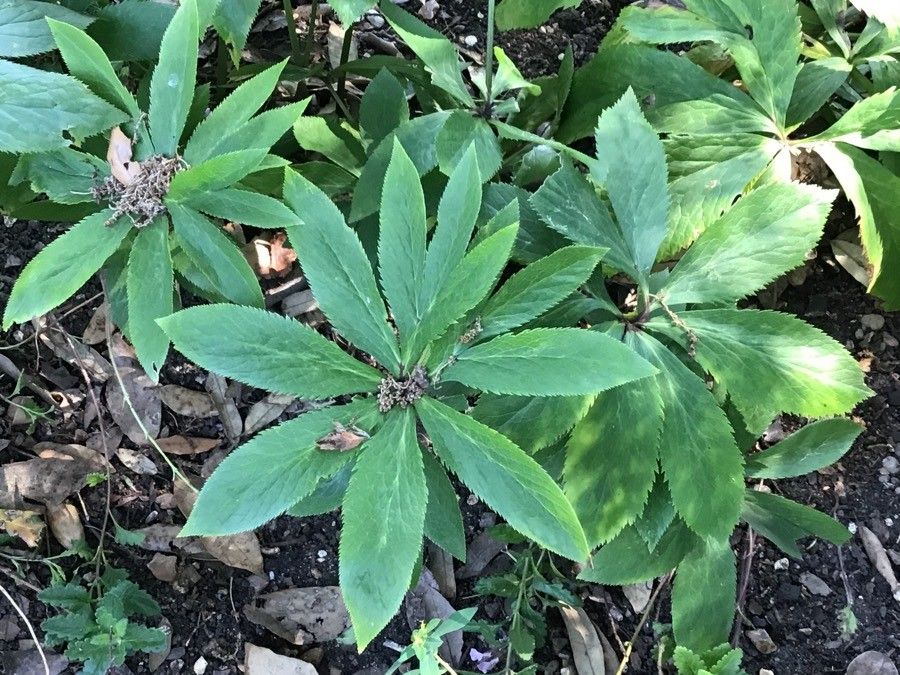
The plant can grow up to 60 cm in height and features large, leathery, dark green, and glossy leaves. These leaves are deeply lobed with sharp teeth along the edges, giving them a distinctive holly-like appearance. The bowl-shaped flowers of Helleborus argutifolius have five petals and vary in color from pale green to yellow-green.
Helleborus argutifolius thrives in well-drained soil with partial shade or full sun exposure. It is a hardy plant, capable of withstanding cold temperatures down to -15°C (5°F), but it is susceptible to root rot if planted in poorly drained soil.
The Corsican hellebore is an excellent choice for gardeners seeking an evergreen perennial with year-round appeal. Its striking foliage provides texture and color year-round, while its flowers add interest in late winter or early spring when few other plants are in bloom. Additionally, it attracts pollinators such as bees during its flowering period.
Overall, Helleborus argutifolius is an attractive garden plant that requires minimal maintenance once established, offering year-round beauty for any landscape design project or home garden setting.
Corsican hellebore is relatively disease-resistant and generally not prone to illnesses. However, it can be affected by pests and diseases present in its environment; these issues are typically mild. As for care, the plant needs moderate maintenance. It should be pruned regularly to preserve a neat appearance and encourage healthy growth. Fertilizing can also help increase flowering. Corsican hellebore is suitable for anyone with outdoor space, such as a garden or patio, and does not require extensive experience in plant care. It may need more attention when grown indoors.
How to keep Helleborus Argutifolius.
Light
The Corsican hellebore plant prefers spots that are not in full sun, though it can tolerate sunny areas. Native to places where light is often filtered, this level of illumination encourages its healthy growth. Both excessive sun and too little light can hinder its development.
Temperature
Corsican hellebore can adjust to a broad span of temperature conditions, but its range may still be restricted by different combinations of moisture and heat. It grows best in warm summer climates with adequate rainfall or watering. Extended periods of cloudy, rainy weather or prolonged high temperatures can raise the chance of Corsican hellebore dying. In winter, suitable protection from the cold can improve the plant's survival chances.
Fertilizer
The best time to fertilize a Corsican hellebore is in early spring, as it comes out of dormancy and begins active growth. Fertilization supplies essential nutrients for healthy development. Although Corsican hellebore has relatively low fertilizer requirements, feeding it annually can improve its survival and encourage better, longer-lasting flowers.
Botanical profile.
- Plant Type
- Herb
- Life Cycle
- Perennial
- Genus
- Helleborus
- Family
- Ranunculaceae
- Hardiness Zone
- 6-9
- Mature Height
- 46 cm to 61 cm
- Mature Spread
- 46 cm to 61 cm
- Leaf Color
- Green, Silver
- Leaf Type
- Evergreen
- Flower Color
- Green
- Flower Size
- 2.54 cm to 7.62 cm
- Bloom Time
- Late winter, Early spring, Mid spring
- Planting Time
- Spring, Summer, Autumn
- Harvest Time
- Late spring, Early summer, Mid summer
Other names.