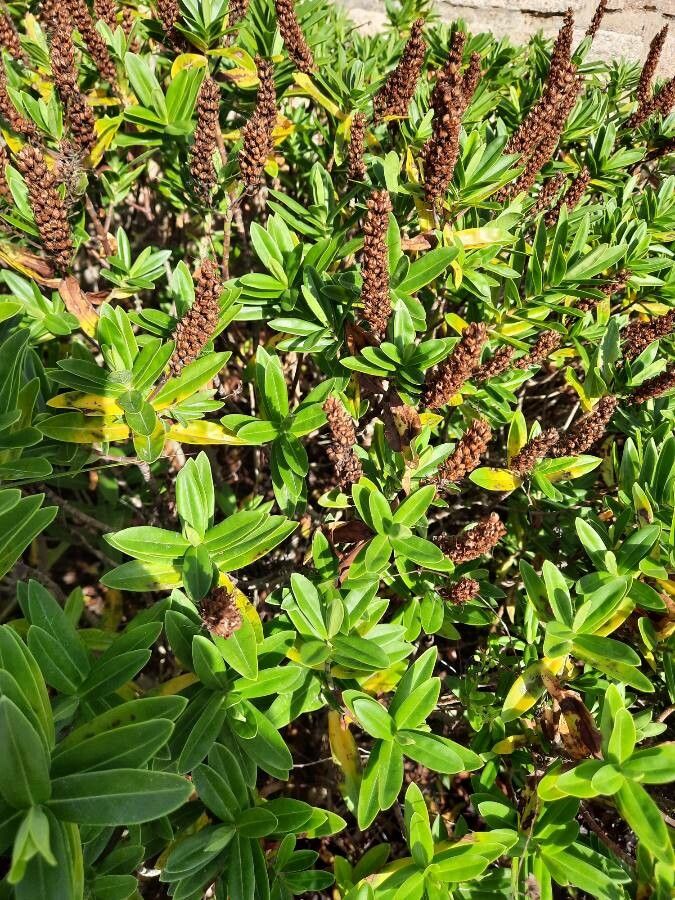
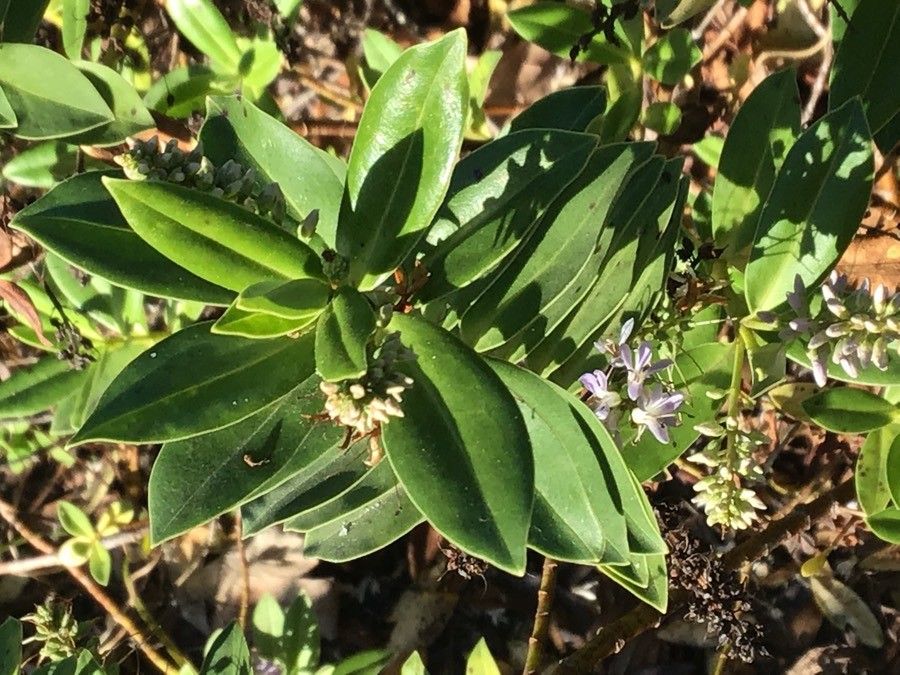
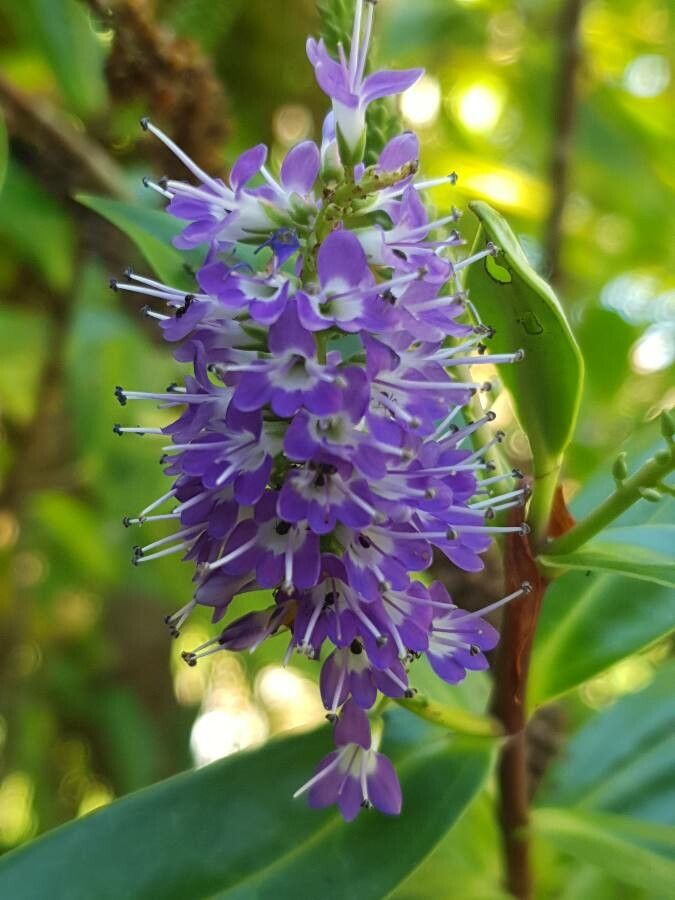
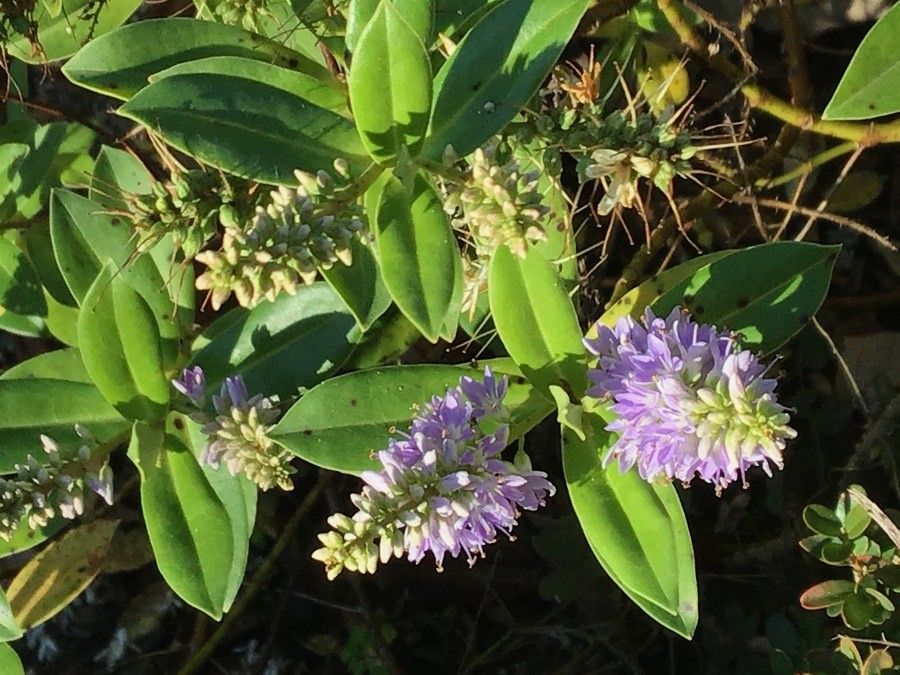
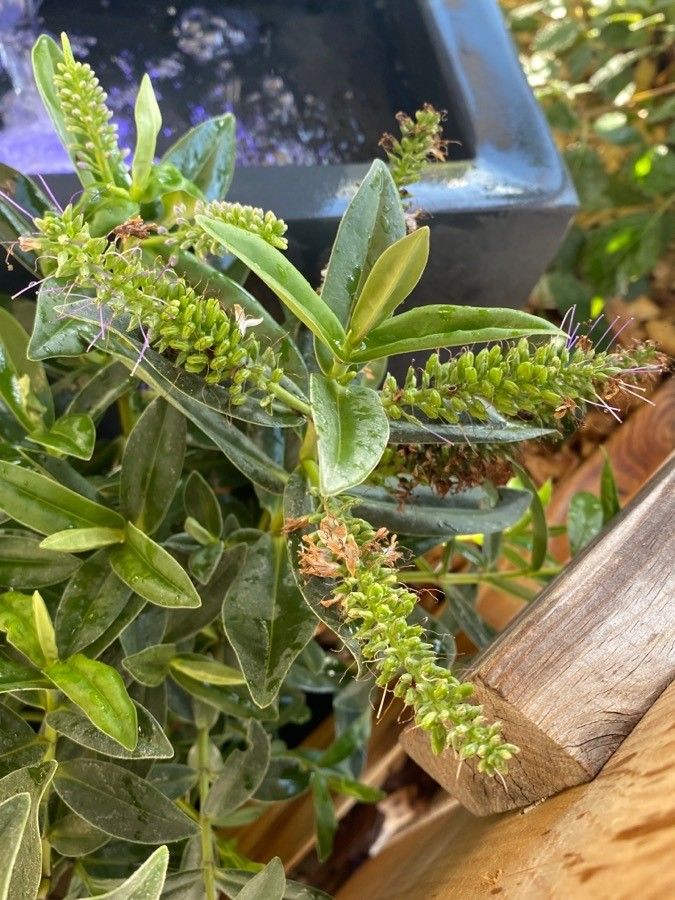
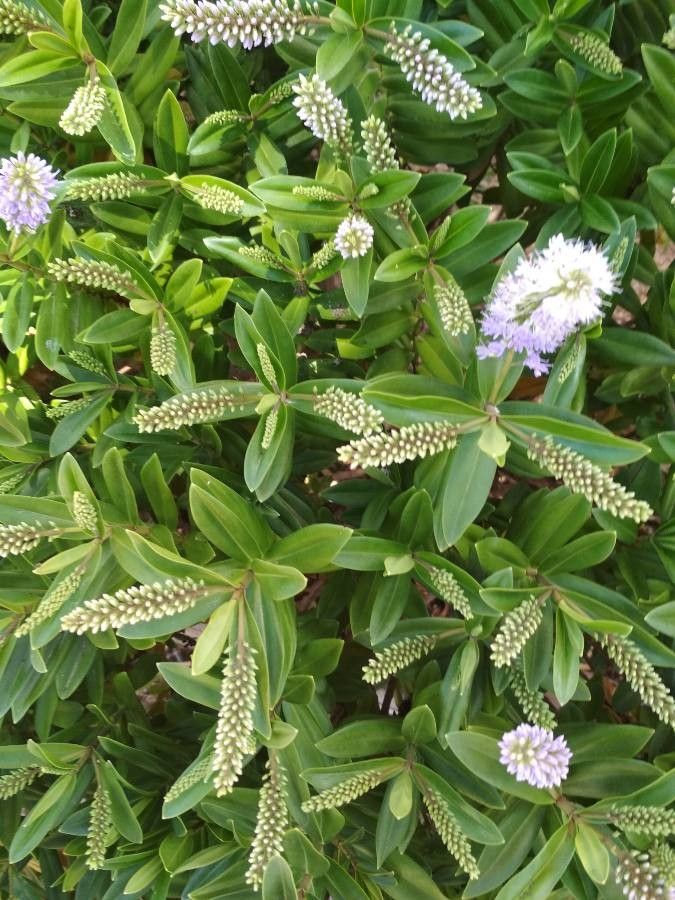
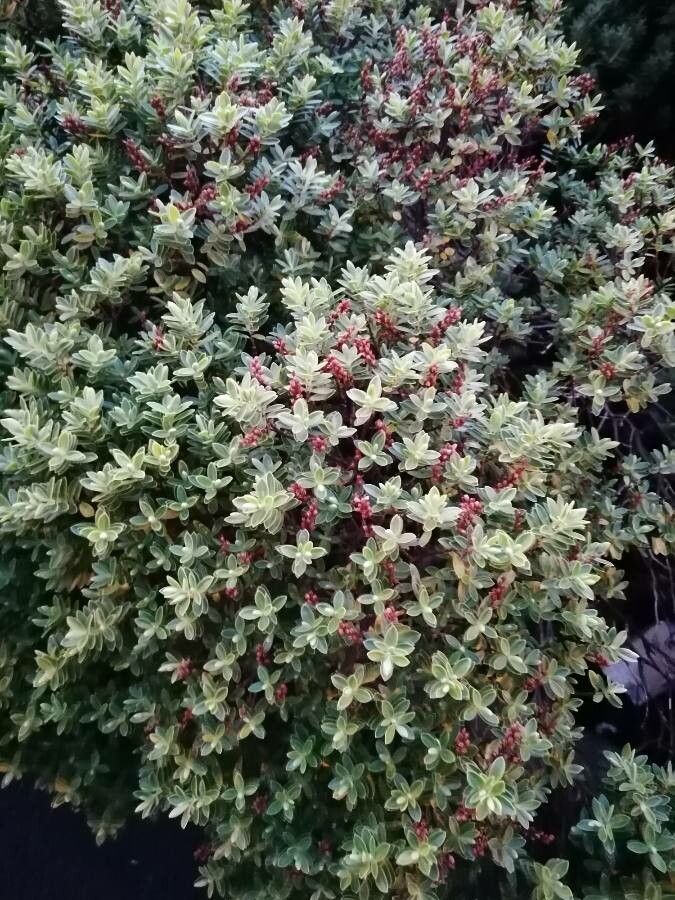
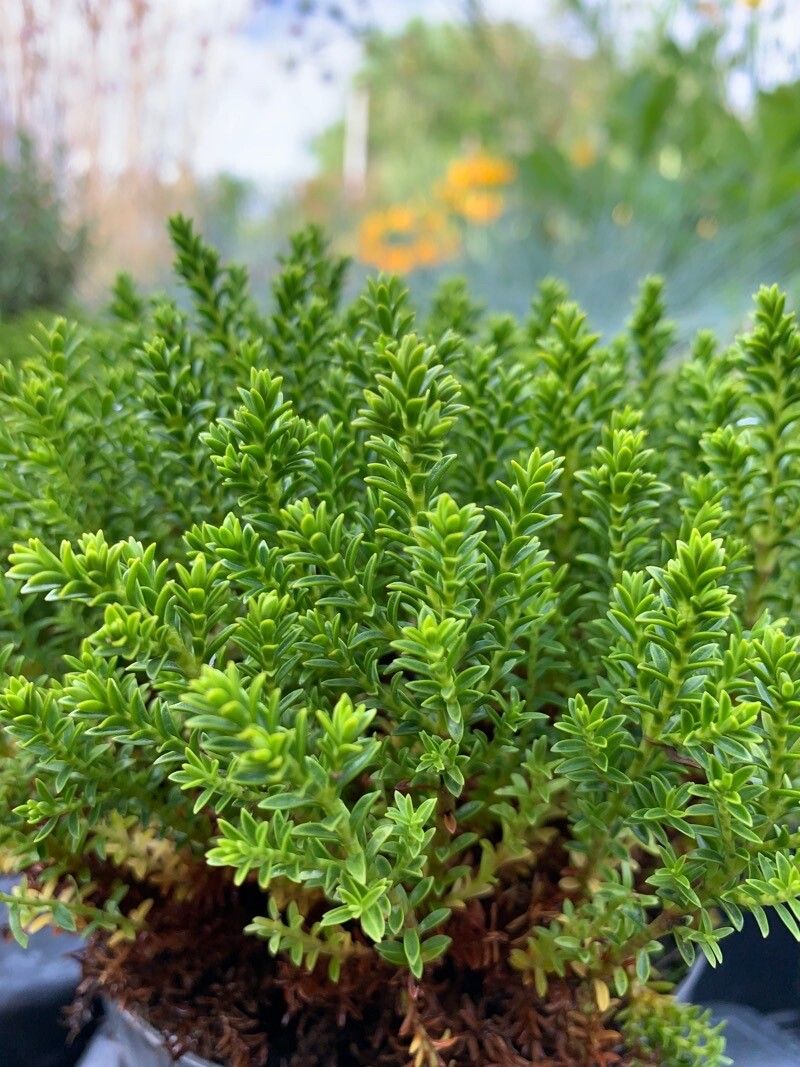
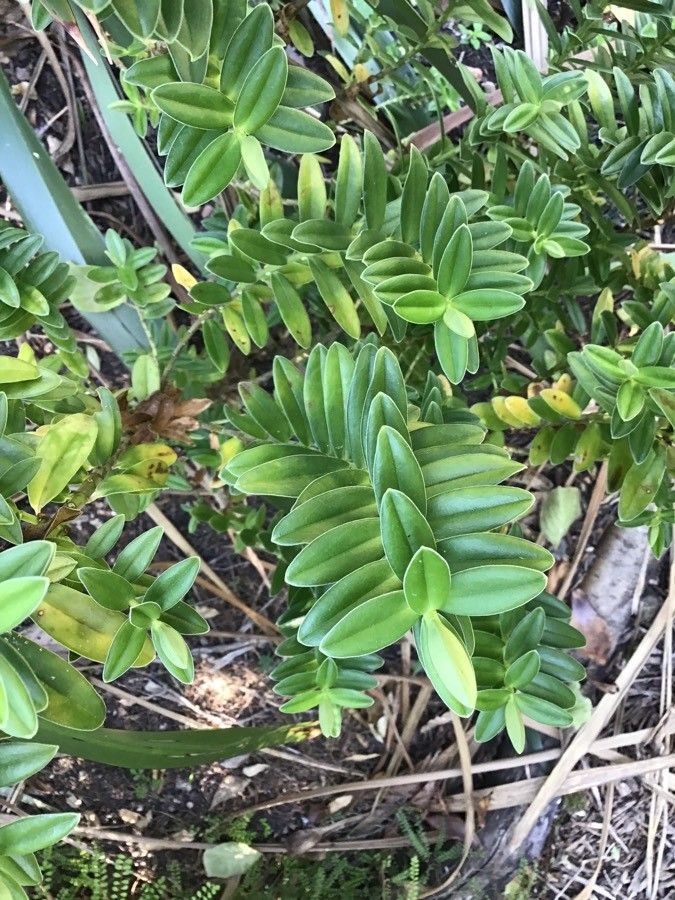
Hebe salicifolia, commonly known as Willow-leaved Hebe, is a small evergreen shrub belonging to the Plantaginaceae family. Native to New Zealand, this plant thrives in various habitats, including rocky outcrops, coastal cliffs, and forest margins.
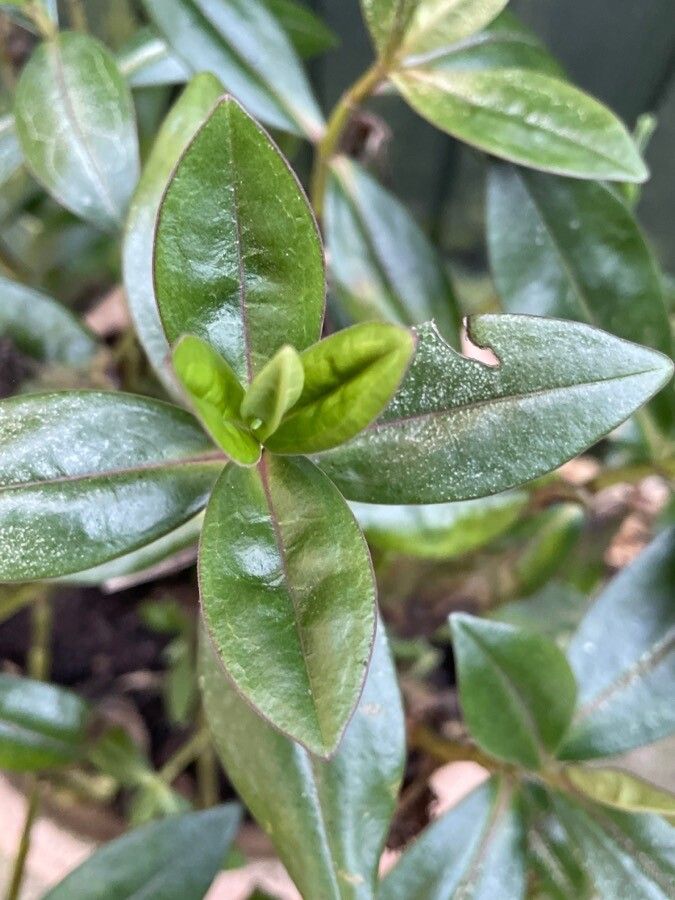
Typically, Hebe salicifolia reaches a height of 1-2 meters. It features narrow, lance-shaped leaves that are dark green and glossy. These leaves are arranged alternately along the stem and can grow up to 10 cm in length.
During the summer, the shrub produces small clusters of white or pale pink flowers at the tips of its branches. These tubular-shaped flowers, with their four petals, attract bees and other pollinators.
Hebe salicifolia is relatively easy to cultivate. It prefers well-drained soil and thrives in either full sun or partial shade. While it needs regular watering during dry periods, it can tolerate some drought once it is established.
This plant is often used as an ornamental addition to gardens due to its attractive foliage and delicate flowers. Beyond its aesthetic appeal, Hebe salicifolia has some medicinal uses. Its expectorant properties make it useful for treating respiratory ailments such as coughs and asthma.
In summary, Hebe salicifolia is a beautiful evergreen shrub that not only enhances the visual appeal of any garden but also offers medicinal benefits when used appropriately.
Koromiko demonstrates good disease resistance and is, overall, not very susceptible to diseases. In terms of care, this plant is relatively low-maintenance. When planted outdoors it requires only minimal watering, and larger plants generally do not need pruning. Smaller plants, however, should be pruned after they have finished blooming. Koromikot is suitable for anyone with an outdoor area, such as a garden or deck, and does not require much prior care experience.
How to keep Hebe Salicifolia.
Light
Koromiko does best when it receives ample sunlight throughout the day, which encourages its growth. Originating from habitats with abundant sun, it can also tolerate periods of moderate sunlight. Both excessive and insufficient light can harm the plant’s health, affecting its leaves and flowers.
Temperature
Koromiko copes well with a variety of climate conditions, whether in sweltering summers or frosty winters. That said, it does have a preferred temperature range for growth. If temperatures become too high, the plant is susceptible to heat and humidity stress, which can lead to its death. In areas where temperatures approach the lower limit of its cold tolerance, it is important to provide insulation to protect the plant.
Fertilizer
The timing of fertilizing Koromiko is important. Apply fertilizer in early spring and continue monthly until early summer. Fertilizer promotes attractive blooms and supplies energy during both dormant periods and active growth.
Botanical profile.
- Plant Type
- Shrub
- Life Cycle
- Perennial
- Genus
- Hebe
- Family
- Plantaginaceae
- Hardiness Zone
- 7-9
- Mature Height
- 4.57 m
- Mature Spread
- 3.05 m
- Leaf Color
- Dark Green
- Leaf Type
- Evergreen
- Flower Color
- White
- Flower Size
- 0.51 cm to 1.02 cm
- Bloom Time
- Summer
- Planting Time
- Spring, Summer, Autumn
- Harvest Time
- Fall
- Native Area
- New Zealand
Other names.