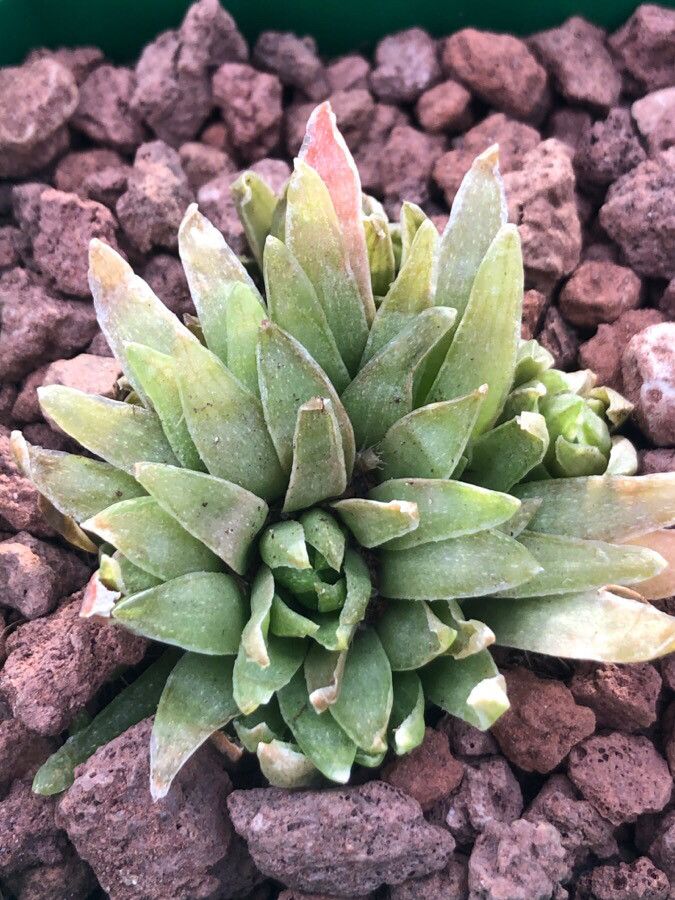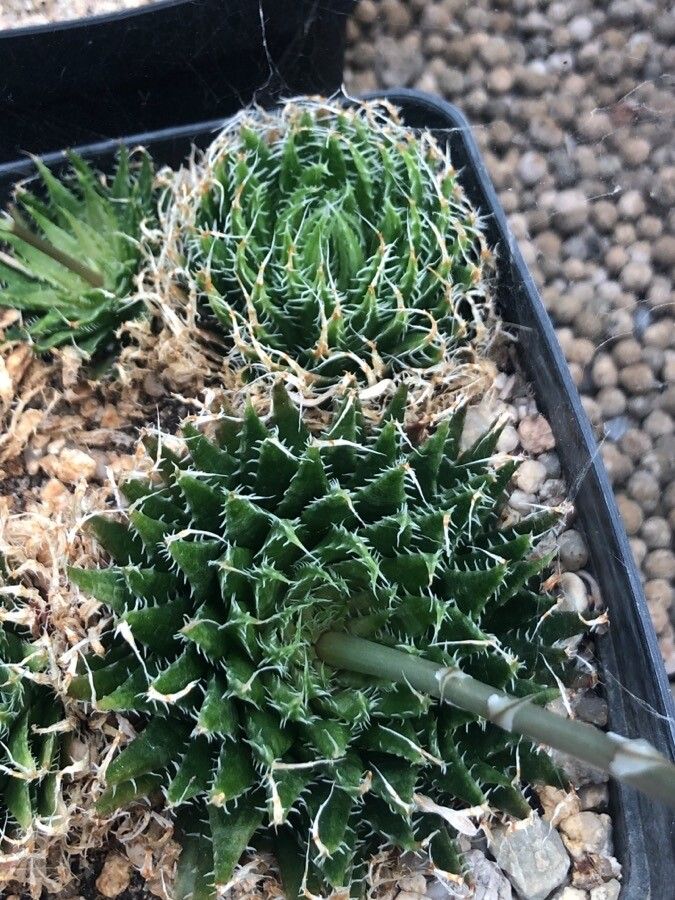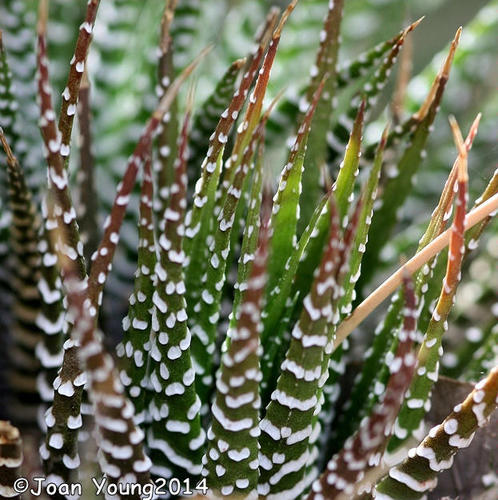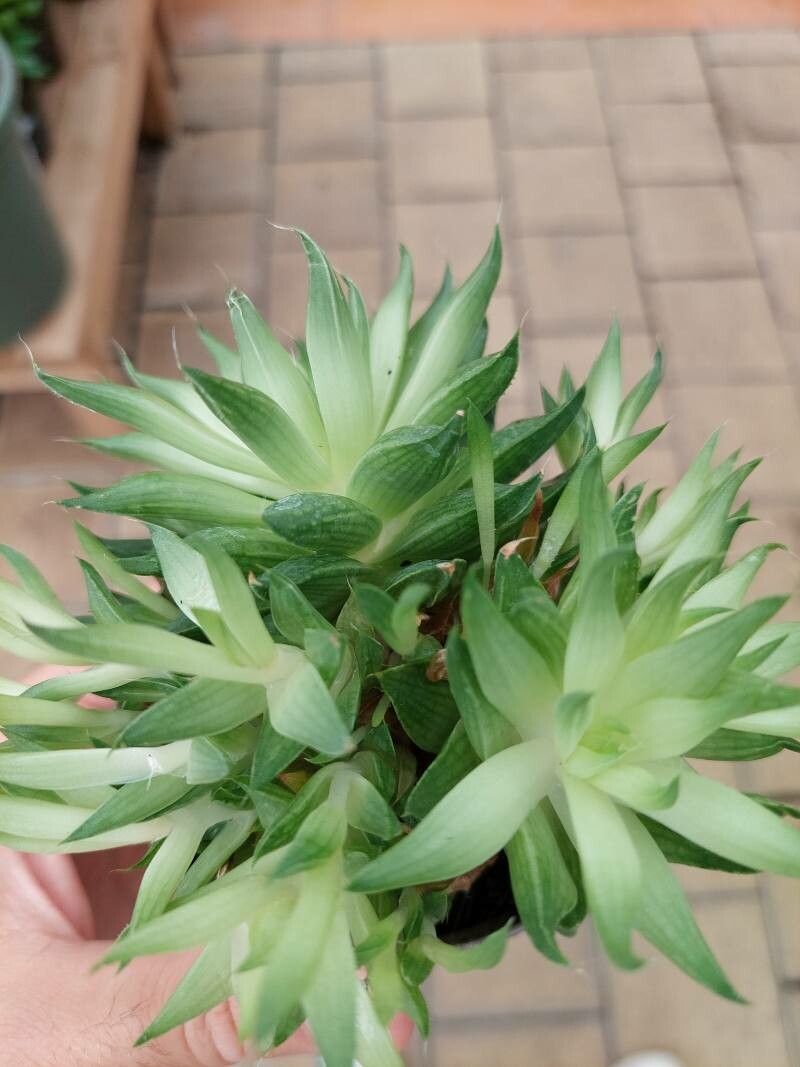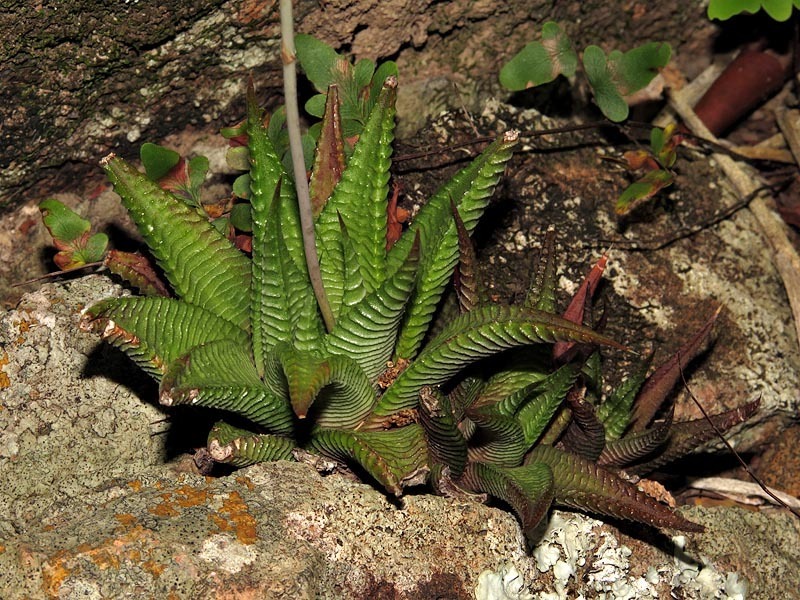
Haworthiopsis limifolia, formerly Haworthia limifolia, is a species of flowering plant in the genus Haworthiopsis, native to southern Africa and first described in 1910.
Fairy washboard has moderate disease resistance and is fairly sensitive to humidity. It becomes vulnerable to disease in high-humidity conditions and is prone to root rot while dormant. In terms of care, Fairy washboard is drought-tolerant but requires more water during the growing season. Watering should be greatly reduced or stopped entirely during the dormant period. Fairy washboard is best for growers with some experience, though it can be tricky to care for, especially during dormancy. It is particularly appropriate for those who can devote time to its care throughout the winter months.
How to keep Haworthia Limifolia.
Light
Fairy washboard prefers intense sunlight and shows its best growth under those conditions. It can also tolerate lower levels of sun. Native to regions with abundant sunlight, the plant is well adapted to such surroundings. If its light exposure is insufficient, growth may be impaired. However, prolonged exposure beyond its tolerance can cause scorching.
Water
The fairy washboard is well-suited to semi-arid environments and is highly drought-tolerant, requiring very little water. To care for it, water approximately once every three weeks, ensuring the soil dries out completely between waterings. Often kept indoors, the fairy washboard needs well-draining soil to prevent root rot from overwatering.
Temperature
Fairy washboard prefers temperate climates, favoring temperatures between 32 and 95°F (0 to 35℃). Native to areas with moderate temperatures, it can tolerate lower temperatures but needs extra care during colder seasons.
Fertilizer
For Fairy washboard, light applications of fertilizer 1-2 times a year during the growing season are enough. Do not fertilize in winter or summer, when the plant is dormant. Use less fertilizer for repotted plants and wait a couple of months after repotting before you start fertilizing. Fertilizing helps maintain healthy growth and promotes blooms.
Pruning
Pruning Haworthia limifolia is a rare occurrence. By pinching off the terminal growth before it gets too lanky, this plant may be kept compact. The Haworthia will grow more slowly but will keep its form. To promote thicker foliage, remove an inch or so of top growth on a regular basis to keep at least two sets of leaves on each stem. Plants with lighter colors and more noticeable patterns are often clipped for general appeal and ease of handling. Haworthias with dark green foliage are sometimes overlooked since they do not become as spindly with age. When clipped, they have a lower tendency to develop too long and spindly. In any event, never trim back more than one-third of the plant at a time, or growth will be hindered. Pruning haworthia that hasn't been trimmed in a while is typically suggested. It might take up to three years for new branches to emerge from previous incisions.
Pot & Repot
When repotting Fairy washboard, pick a pot a bit larger than the current one that has good drainage. Use a gritty, well-draining succulent or cactus mix. Gently remove the plant from its old pot, brush off excess soil, and set it at the same depth. Wait a few days before watering so any root damage can heal. Repot in spring or fall, and place it in a brightly lit area.
Botanical profile.
- Plant Type
- Succulent
- Life Cycle
- Perennial
- Genus
- Haworthia
- Family
- Xanthorrhoeaceae
- Hardiness Zone
- 3-10
- Mature Height
- 30 cm
- Mature Spread
- 8 cm to 15 cm
- Leaf Color
- Green
- Leaf Type
- Evergreen
- Flower Color
- White
- Flower Size
- 2.54 cm
- Bloom Time
- Spring, Winter
- Planting Time
- Spring, Autumn
- Harvest Time
- Spring, Early summer
- Native Area
- South Africa, Eswatini, Mozambique
Other names.
Reader questions.
How should I water my Fairy washboard in the best way?
To water Fairy washboard properly, follow these steps
Why is it necessary to fertilize my Fairy washboard?
Fertilizing Fairy washboard enriches the growing medium with nutrients. While it does retain water and nutrients, applying plant food throughout the growing season promotes healthy growth. Additionally, fertilizing can stimulate mature plants to produce blooms during this time.
What are the sun requirements for Fairy Washboard?
Fairy Washboard (Haworthia limifolia) thrives in conditions that mimic its natural habitat, which is known for intense solar radiation. For optimal growth, the plant requires full sun, meaning it should receive more than 6 hours of sunlight daily. However, it can also adapt to partial sun conditions, where it gets about 3-6 hours of sunlight. It's important to watch how sunlight moves through your garden to choose spots that offer a perfect balance of light and shade, ensuring your plants' well-being.
What are the ideal growing conditions for Fairy Washboard?
Fairy Washboard, or Haworthia limifolia, thrives in warm environments, with optimal temperatures ranging from 25 to 30°C (77 to 86°F). It can adapt to cooler temperatures by reducing watering and potentially using artificial heating. During hot summer months, it's crucial to shield the plant from direct sunlight to avoid heat damage. Winter, the growing season for this plant, requires maintaining temperatures above 20°C for optimal growth. When outdoor temperatures fall below 0°C, it's advisable to move the plant indoors to a well-lit area, adjust watering based on temperature fluctuations, and consider overwintering protection such as a temporary greenhouse or placing it in a sheltered area with ample sunlight.
What should I do if I give too much or too little water to my Fairy washboard?
Overwatering your Fairy washboard is a more common problem compared to underwatering. Overwatering is extremely harmful and can lead to the death of your plant. To prevent overwatering, it is important to let the soil dry completely before watering, especially during dormancy. Now, let's focus on how to fix overwatering issues. If your Fairy washboard shows signs of overwatering, the best solution is to remove it from its current pot. Then, examine the roots and get rid of any that are rotted or affected by moisture-related diseases. Some roots may recover after a simple cleaning. After this, repot your Fairy washboard using soil that has good drainage to avoid future overwatering. Although less likely, underwatering can also occur. If this happens, simply water your plant more frequently, making sure not to overcorrect and overwater it.
When should I fertilize my Fairy washboard?
Fairy washboard plants require a small amount of fertilizer during the growing season. It is recommended to fertilize them 1-2 times a year, specifically in the spring and autumn. Avoid fertilizing in the winter and summer when the plant is dormant. If you have recently repotted your Fairy washboard, use less fertilizer and wait a few months before starting to fertilize again.
How does inadequate or excessive light affect Fairy Washboard?
Fairy Washboard cherishes abundant light exposure for robust growth, tolerating less light when necessary. Inadequate light can hamper the plant's vigor, leading to reduced growth and a paler coloration. Conversely, too much light may cause a burnt look. Its origin habitat's intense solar radiation has shaped this affinity, making sunlight essential for its health and color vibrancy.
How does Fairy Washboard react to extremely cold temperatures?
Fairy Washboard is not tolerant to extremely cold temperatures and prefers the range of 20°C to 38°C. Below 0°C, it requires protection, and exposure to temperatures below -5°C can cause water-soaked necrosis and wilting in the leaves. Mild frost damage may not show immediate symptoms, but within a week, the leaves could wilt significantly and fall off. The recommended solution is to trim the frostbitten areas, move the plant to a warm environment indoors, or set up a makeshift greenhouse to protect it from the cold. If moved indoors, placing the plant near a south-facing window can ensure it receives ample sunlight. It is also important to ensure good airflow in a makeshift greenhouse to prevent plant decay.
How often do I need to water my Fairy washboard?
Fairy washboard is a succulent plant that doesn't require much water. It comes from a hot and dry region, so its water needs are lower than other plants. To properly care for this plant, allow the soil to completely dry out between waterings. This usually takes around two weeks to a month. The frequency of watering depends on the season. During spring and summer, when the plant is growing, the soil may take 2-3 weeks to dry completely. In summer, the soil may dry out faster. However, when the temperature drops below 60 degrees or goes above 85 degrees Fahrenheit, the plant will be dormant or semi-dormant and doesn't need watering. In this case, reduce or stop watering until the temperature is suitable for growth, and then resume watering.
When is it not a good idea to use fertilizer on my Fairy washboard?
Fairy washboard, like other plants, has a dormancy period when applying fertilizer should be stopped. This occurs in both summer and winter, when the plant stops growing. It is also a good practice to avoid fertilizing during the first few months after repotting in the spring.
What is the role of artificial lighting for indoor Fairy Washboard plants?
For indoor Fairy Washboard plants, when natural sunlight is insufficient, particularly during winter or in less sunny spaces, artificial lighting becomes crucial for optimal growth. Good artificial light sources can promote faster, healthier growth, mimicking natural sunlight. LED lights are a popular choice as they can be customized to provide specific wavelengths needed by plants. Full sun plants require 30-50W/sq ft, partial sun plants need 20-30W/sq ft, and full shade plants require 10-20W/sq ft of artificial light. The light source should be placed 12-36 inches above the plant, and most plants need 8-12 hours of light per day.
What should I do if Fairy Washboard is exposed to high temperatures?
Fairy Washboard should be kept below 38°C during the summer months as temperatures above 43°C can trigger dormancy and increase the risk of rotting, especially in high humidity. To mitigate damage in high temperatures, remove any dry and rotten parts of the plant, relocate it to a partially shaded area away from the harsh midday and afternoon sun, and stop watering until the weather cools down. These actions can help prevent heat stress and damage to the plant.