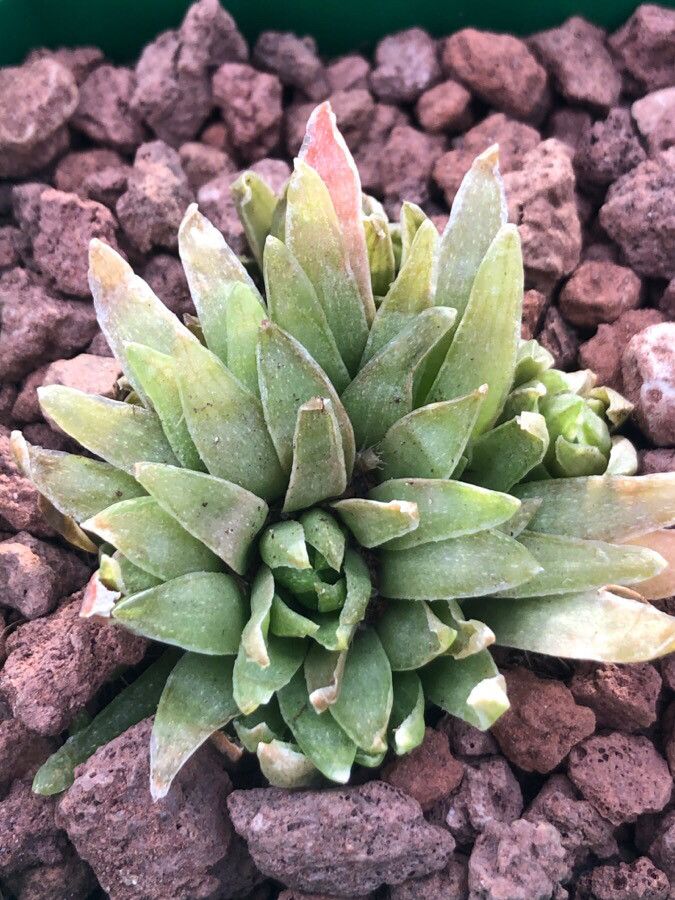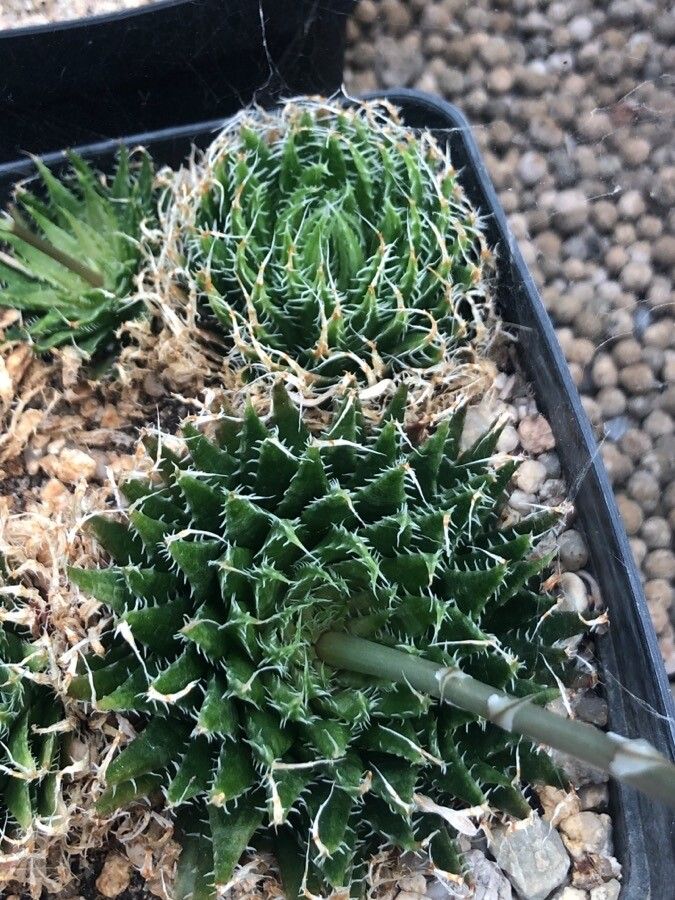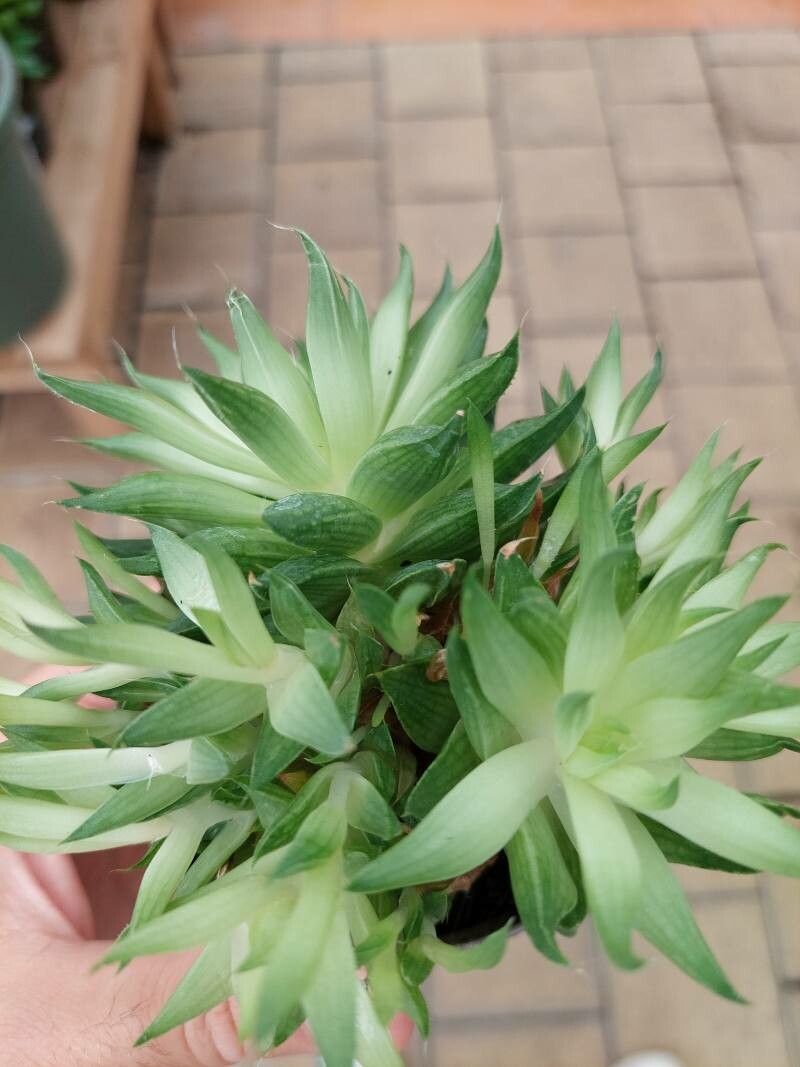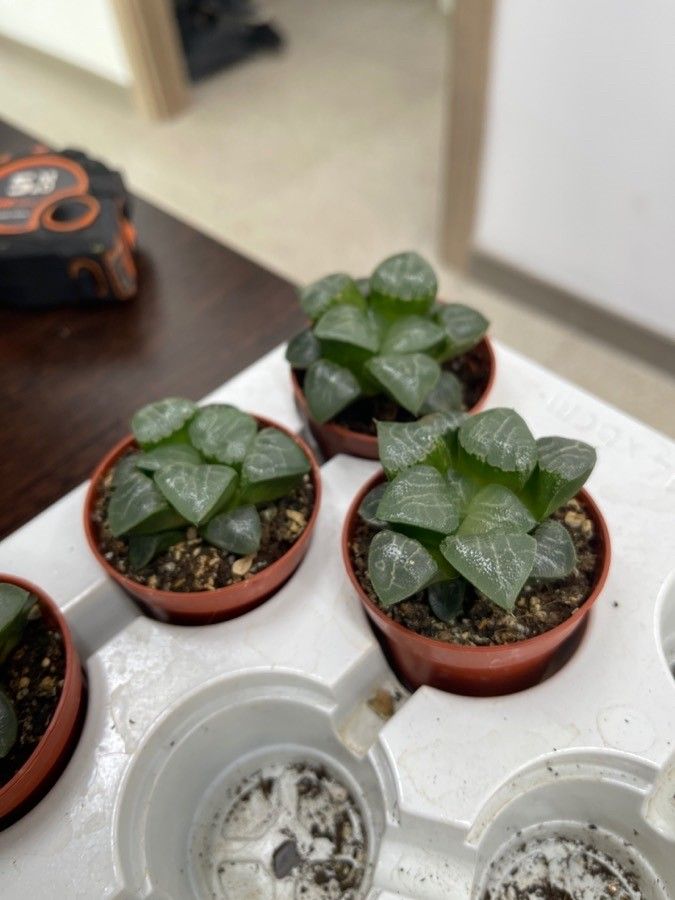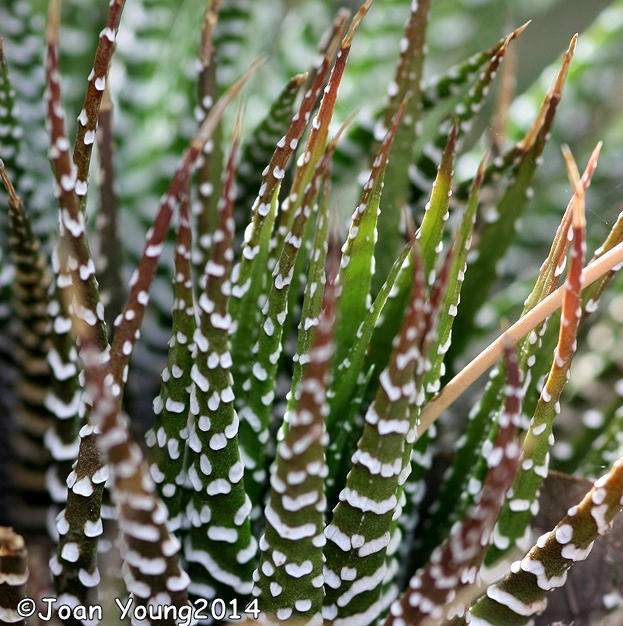
Haworthia attenuata, commonly known as the Zebra plant, is a small succulent belonging to the family Asphodelaceae. Native to South Africa, it is easily recognized by its distinctive white stripes on green leaves. The plant forms rosettes of fleshy, pointed leaves that can grow up to 10 cm (about 4 inches) long and 5 cm (about 2 inches) wide. The upper surface of the leaves is adorned with white stripes, while the lower surface is smooth and purely green.
During the summer months, Haworthia attenuata produces small, tubular flowers on long stems that emerge from the center of each rosette. These flowers are typically white or pink and have a sweet fragrance.
For optimal growth, this succulent prefers bright but indirect sunlight and well-draining soil. While it can tolerate drought conditions, it does need occasional watering during the hot summer months.
Propagation of Haworthia attenuata is straightforward and can be done through offsets or leaf cuttings, making it an excellent choice for both beginners and experienced collectors. Its unique, striking appearance adds an attractive touch to any indoor garden or succulent collection.
Zebra Haworthia has moderate disease resistance but is more sensitive to humidity. High humidity makes it more vulnerable to illnesses, and it is prone to root rot during dormancy. For care, Zebra Haworthia tolerates drought but requires more frequent watering in its growing season. Watering should be greatly reduced or stopped entirely while it is dormant. This plant is best suited to growers with some experience, as it can be challenging to care for, especially during dormancy. It is particularly appropriate for people who can dedicate time to its care over the winter months.
How to keep Haworthia Attenuata.
Light
Zebra Haworthia comes from habitats with dappled light, such as the understory of forests or rocky areas that provide natural shade. It prefers partial sun but can tolerate full sun as well.
Water
Throughout the spring and summer months, water your Zebra Haworthia once the top inch of soil has dried out. In the fall and winter, decrease watering frequency but do not let the soil dry out totally. Never permit water to gather in the rosette, as this can prompt rot.
Humidity
This plant prefers dry conditions, so don't mist it. However, watering it less often can also thrive in higher humidity.
Temperature
Although Zebra Haworthia can tolerate some heat, it grows best in cooler periods and goes dormant in summer. In very hot weather, give it shade to avoid scorching from strong sunlight. Watering should be cut back or stopped during the hottest months to prevent root rot. Winter and spring are the times of vigorous growth, and as long as temperatures do not fall too low, it will continue to grow steadily.
Fertilizer
For Zebra Haworthia, apply light doses of fertilizer once or twice a year during the growing season. Avoid fertilizing in winter and summer when the plant is dormant. Reduce fertilizer for repotted plants and wait a couple of months after repotting before fertilizing. Fertilizing supports healthy growth and encourages blooms.
Pruning
It's not important to prune Zebra Haworthia. The plant doesn't develop quickly, and like numerous aloes, desert flora, and other deciduous plants, pruning doesn't influence development. You can trim leaves if they die, become damaged, or you need to proliferate from leaf cuttings.
Pot & Repot
When repotting a Zebra Haworthia, choose a pot slightly larger than the current one that provides good drainage. Use a gritty, well-draining succulent or cactus mix. Carefully lift the plant from its old pot, brush off excess soil, and plant it at the same depth. Wait a few days before watering to allow any root damage to heal. Repot in spring or fall and place it in a brightly lit spot.
Toxicity
Zebra Haworthia is commonly mistaken for aloe, which is harmful to cats and dogs. While its shape and size are very like aloe, the zebra plant is entirely child- and pet-safe.
Further reading →
The toxicity and danger assessments provided are for reference only. We do not assure their accuracy, so it's crucial not to depend on them. Seek professional advice when necessary for accurate guidance.
Botanical profile.
- Plant Type
- Succulent
- Life Cycle
- Perennial
- Genus
- Haworthia
- Family
- Xanthorrhoeaceae
- Hardiness Zone
- 10-12
- Mature Height
- 20 cm
- Mature Spread
- 30 cm
- Leaf Color
- Dark Green, Light Green
- Leaf Type
- Semi-evergreen
- Flower Color
- White
- Flower Size
- 0.51 cm to 0.76 cm
- Bloom Time
- Summer
- Planting Time
- Spring, Summer, Autumn
- Harvest Time
- Late summer, Early fall, Mid fall
- Native Area
- South Africa