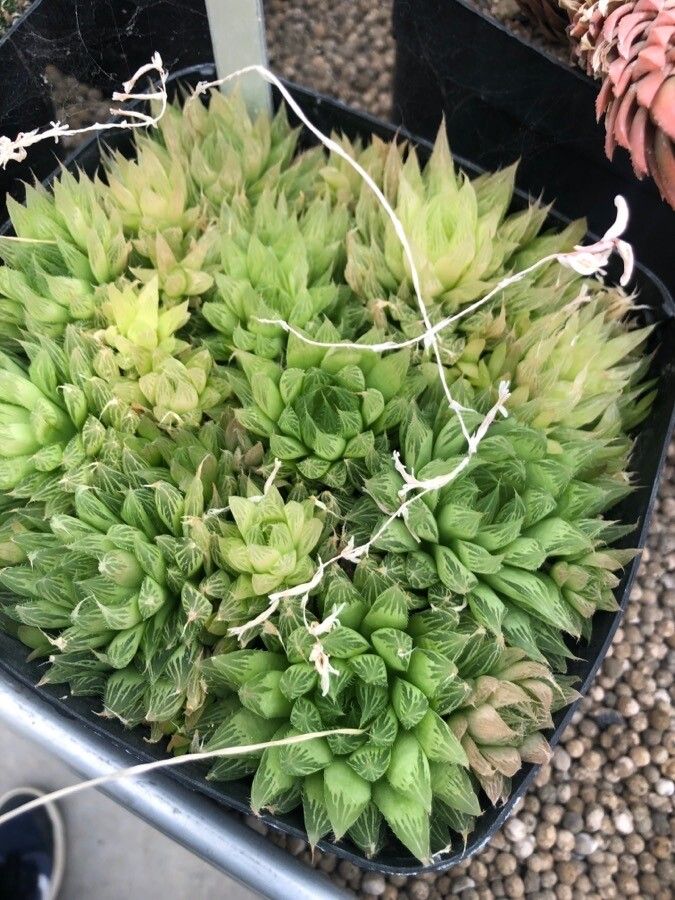
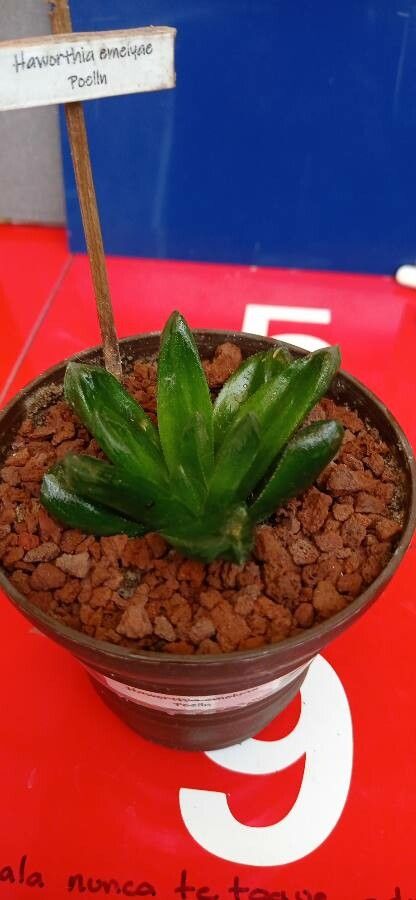
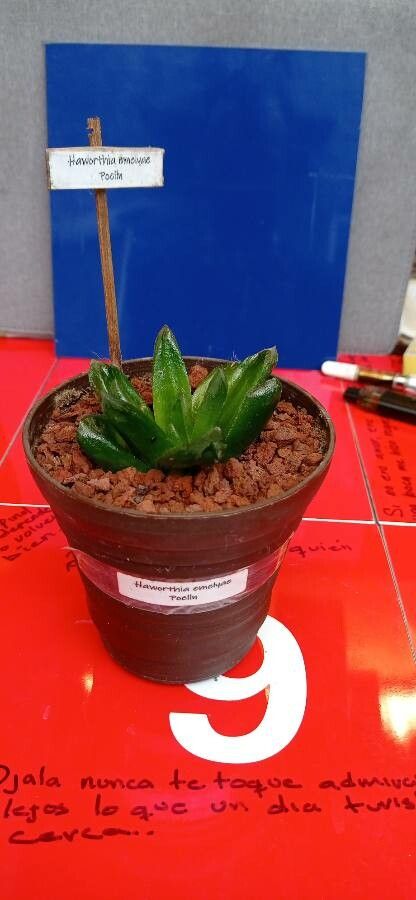
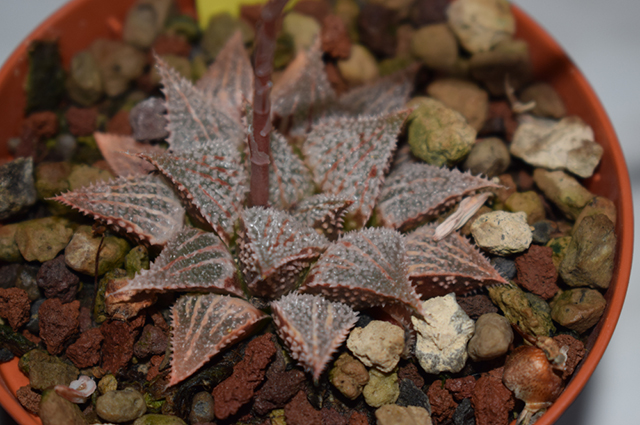
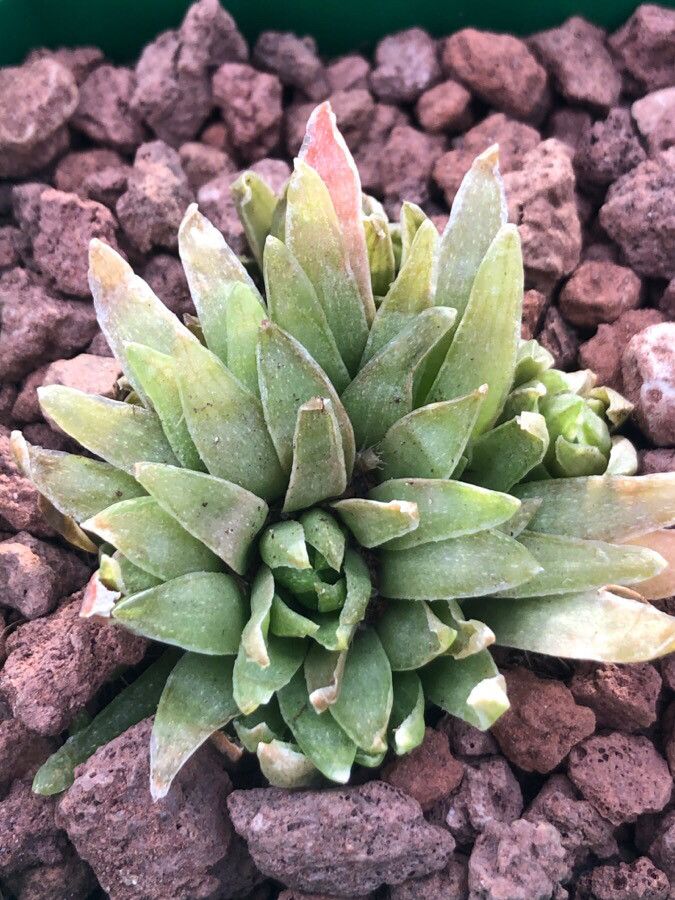
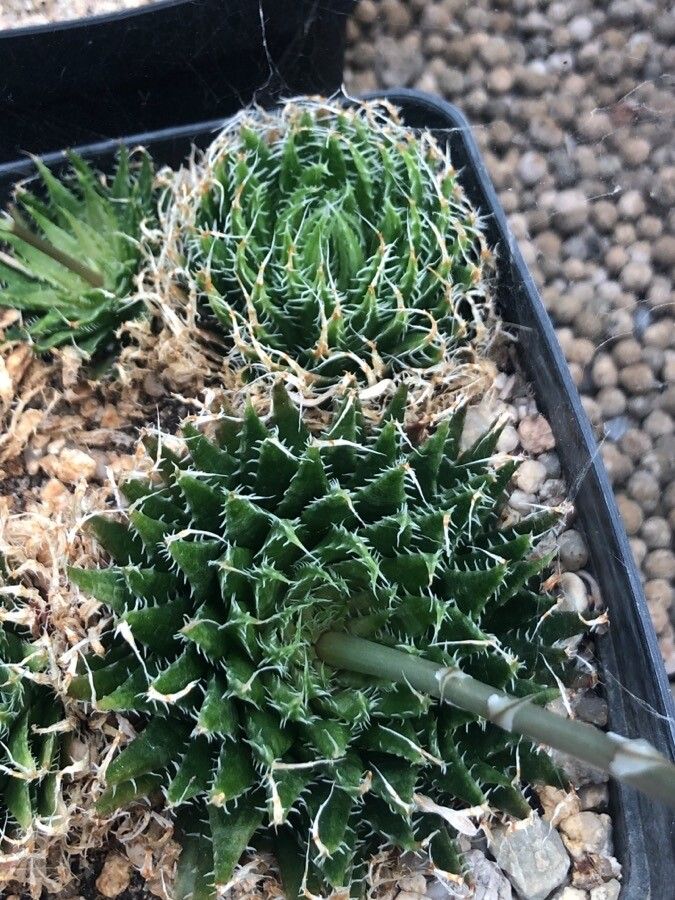
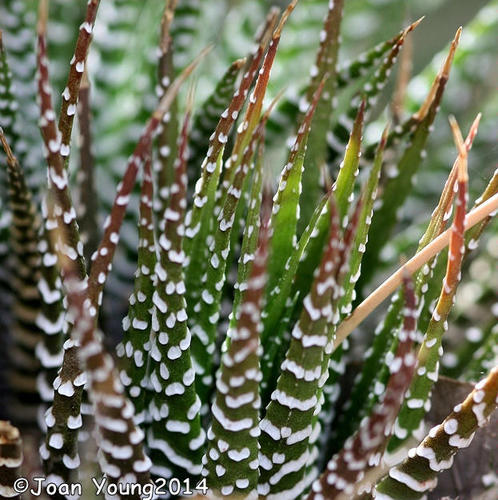
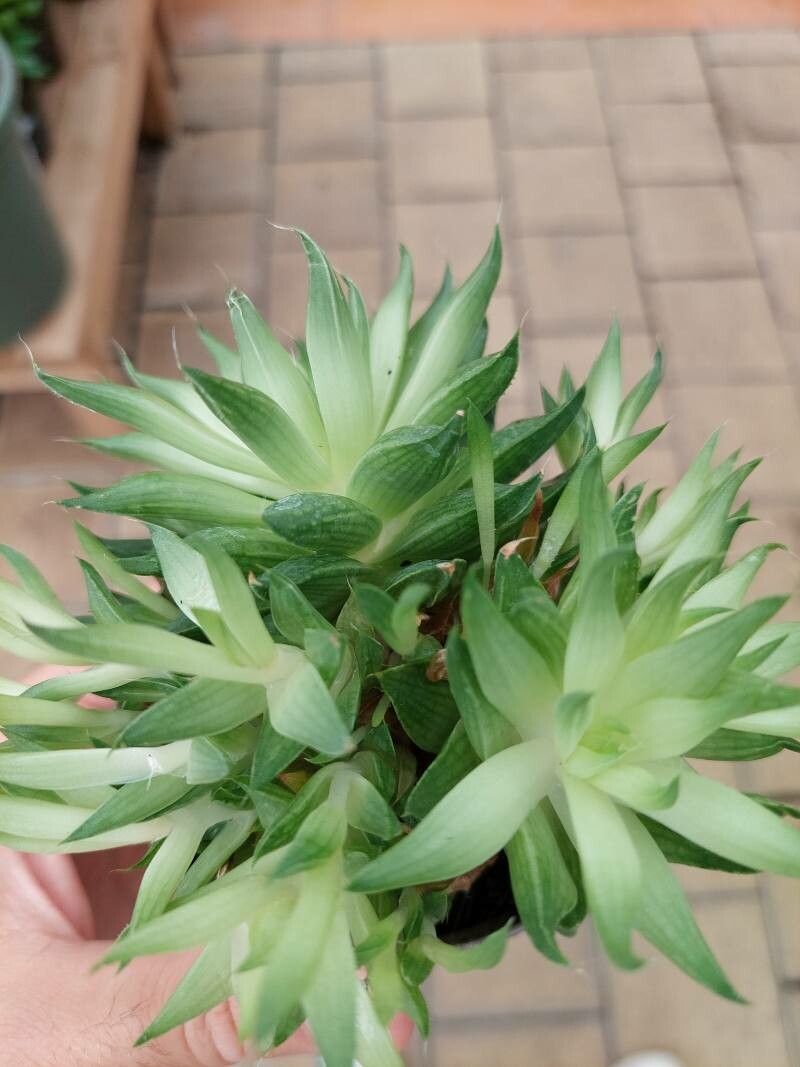
Haworthia emelyae (synonym with Haworthia picta) is a species of the genus Haworthia in the family Asphodelaceae, endemic to the Western Cape Province in South Africa.
Picture Haworthia has moderate disease resistance and is more sensitive to humidity. It is prone to illness when humidity is high and can develop root rot during dormancy. Regarding care, Picture Haworthia tolerates drought but requires more watering in the growing season. Watering should be greatly reduced or stopped entirely during the dormant period. Picture Haworthia is suitable for growers with some experience, though it can be challenging to maintain, particularly during dormancy. It is especially appropriate for people who can dedicate time to its care during the winter months.
How to keep Haworthia Emelyae.
Light
Picture Haworthia comes from habitats with dappled or filtered light, such as the understory of forests or rocky sites that offer natural shade. It prefers partial sun but can also tolerate full sun.
Water
In the spring and summer, water when the top inch of the soil feels dry, but never let the soil become soggy. Reduce watering in the fall and winter to just what is necessary to maintain the leaves lush. Never let water build up inside the rosette because this might cause decay.
Temperature
Although Picture Haworthia can tolerate some heat, it mainly does best and grows during the cooler months and becomes dormant in summer. In hot summer temperatures it should be given shade to avoid scorching from strong sunlight. Watering should be reduced or stopped during the hottest season to prevent root rot. It grows vigorously in winter and spring. Provided the temperature does not fall too low, it will continue to grow steadily.
Fertilizer
For Picture Haworthia, small amounts of fertilizer applied once or twice a year during the active growing season are sufficient. Avoid fertilizing in winter and in summer when the plant is dormant. Cut back on fertilizer for repotted plants and wait a couple of months after repotting before applying fertilizer. Fertilizing helps maintain healthy growth and can encourage flowering.
Pruning
How to Trim a Zebra Plant, Haworthia Fasciata 'Zebra Plants' don't need to be pruned. The succulent grows slowly, and unlike many aloes, cactus, and other succulent plants, trimming has little impact on its rate of expansion. Only when they die or you want to propagate from leaf cuttings do you need to clip the leaves.
Pot & Repot
When repotting a Picture Haworthia, pick a pot slightly larger than the current one that provides good drainage. Use a gritty, well-draining cactus or succulent mix. Carefully remove the plant from its old pot, brush off excess soil, and set it in the new pot at the same depth. Wait a few days before watering so any root damage can heal. Repot in spring or fall and place the plant in a brightly lit spot.
Botanical profile.
- Plant Type
- Succulent
- Life Cycle
- Perennial
- Genus
- Haworthia
- Family
- Asphodelaceae
- Hardiness Zone
- 9-11
- Mature Height
- 20 cm
- Mature Spread
- 30 cm
- Leaf Color
- Dark Green, Light Green
- Leaf Type
- Evergreen
- Flower Color
- White
- Flower Size
- 0.51 cm to 1.02 cm
- Bloom Time
- Summer
- Planting Time
- Summer, Autumn
- Harvest Time
- Late summer, Early fall, Mid fall
- Native Area
- South Africa