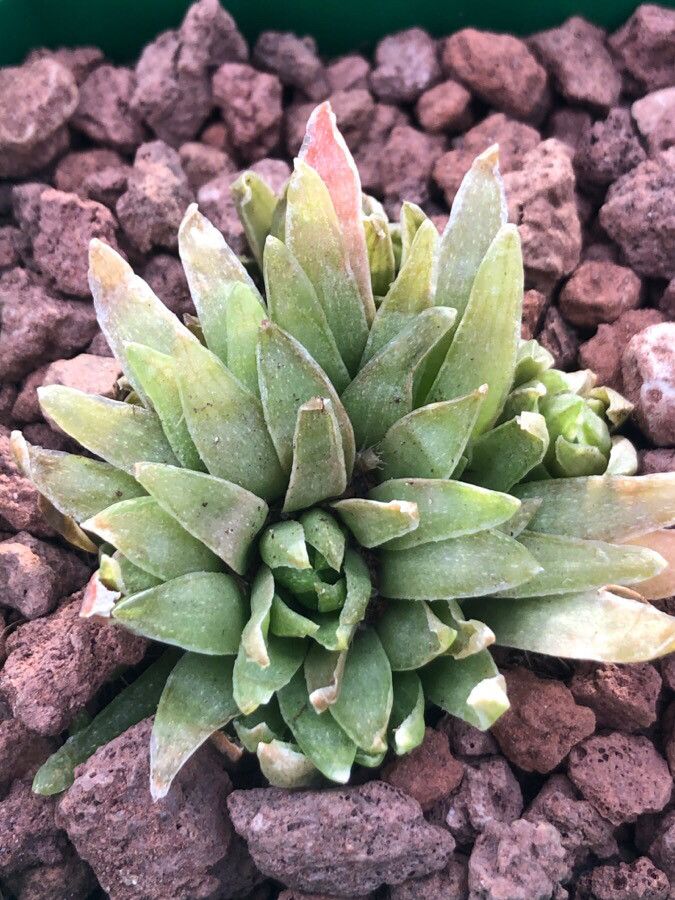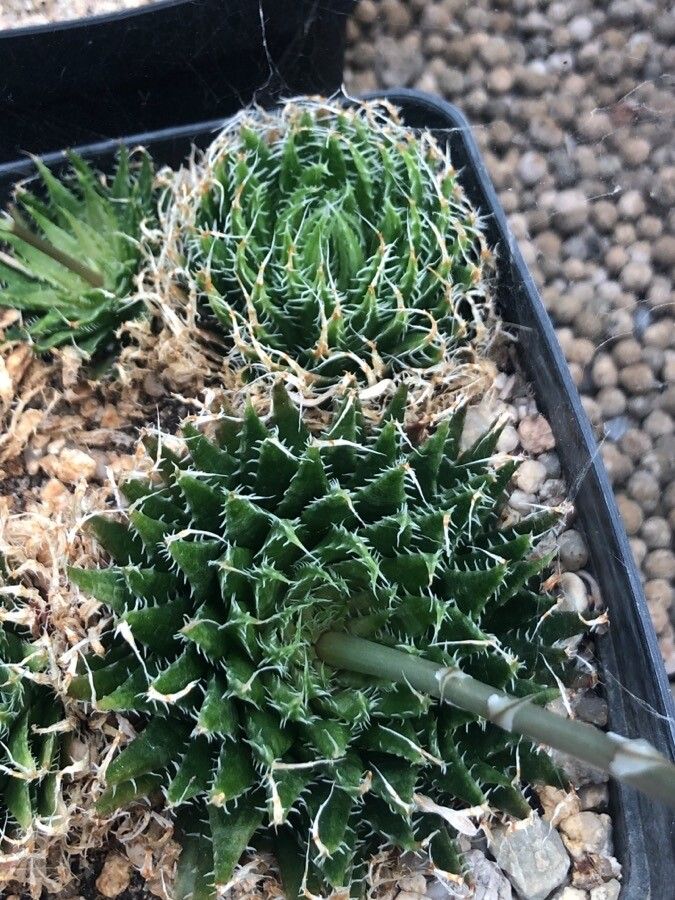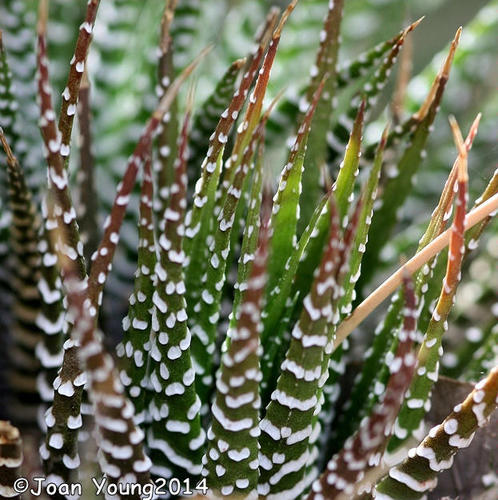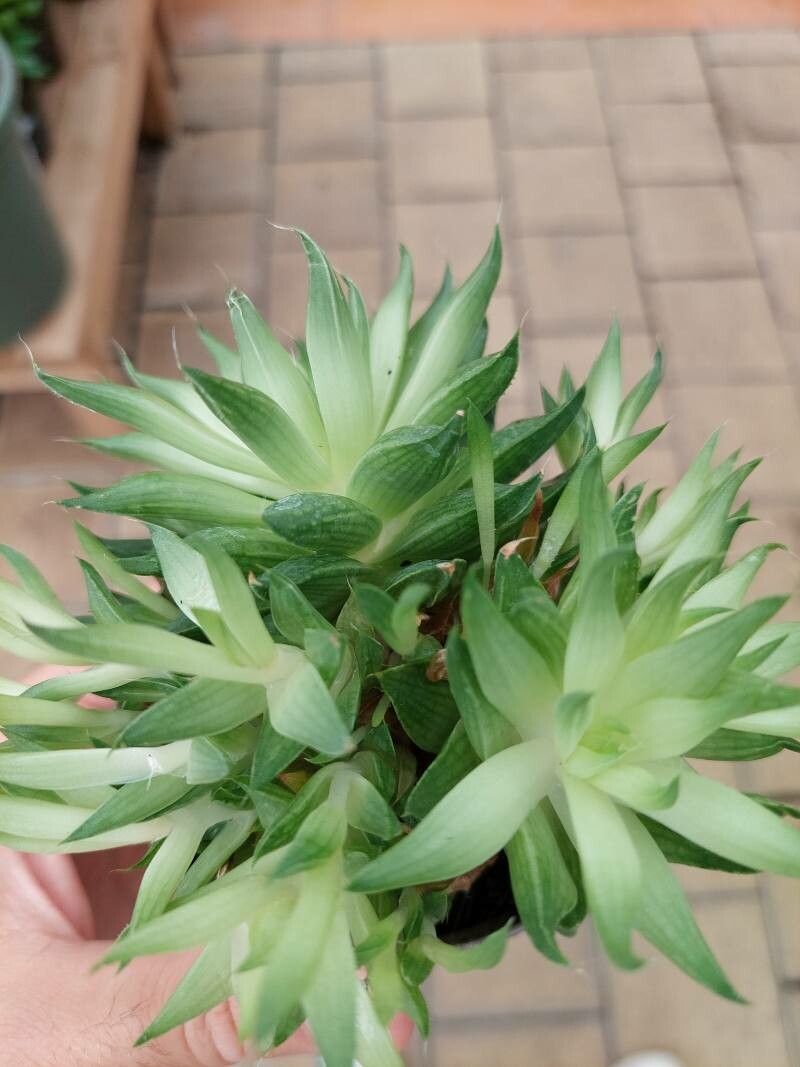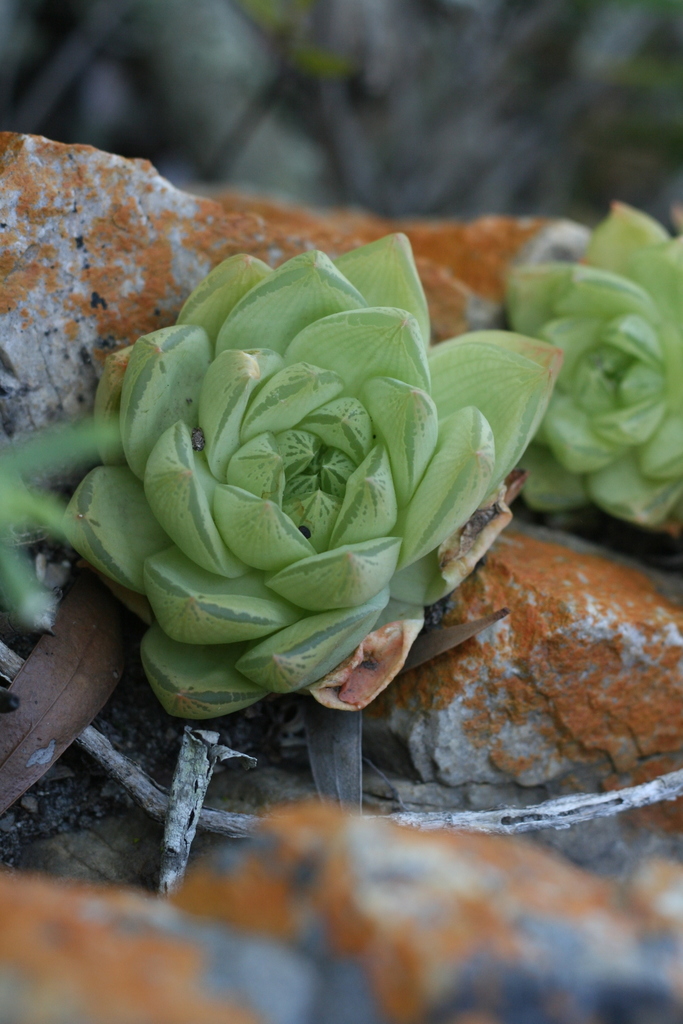
Haworthia cymbiformis is a small succulent plant that belongs to the Asphodelaceae family. Native to South Africa, it is commonly known as the Cathedral Window Haworthia due to its unique leaf arrangement. The plant features thick, fleshy leaves that grow in a rosette pattern. These triangular leaves have pointed tips and are green with white stripes or spots, giving them an attractive appearance.
Haworthia cymbiformis typically grows up to 10 cm tall and 15 cm wide, making it an ideal indoor plant for small spaces or as part of a succulent garden display. It thrives in bright but indirect sunlight and requires well-draining soil with occasional watering during the growing season.
During the summer months, the plant produces small white flowers on long stems, adding further interest to its already striking appearance.
Haworthia cymbiformis uses translucent tips as a strategy to cope with intense sunlight and maximize light absorption. This unique characteristic allows sunlight to penetrate deeply into the leaves, similar to light passing through a window, reaching the plant's inner parts. In its natural habitat, Haworthia cymbiformis retracts into the ground during the summer, yet it can still receive light through these transparent tips. FUN FACT · FROM THE LIBRARY
This succulent is easy to care for and can be propagated by separating offsets from the mother plant or through leaf cuttings. Its unique shape and attractive foliage patterns have made it popular among collectors, making it a must-have addition for any succulent enthusiast's collection.
The Cathedral Window Haworthia, or Haworthia cymbiformis, is named for its distinctive translucent leaf tips, which resemble the stained glass of a cathedral window. The semi-transparent leaves are adorned with dark lines, adding to their resemblance to ornate glasswork.
Cathedral window haworthia has moderate resistance to disease but is more sensitive to humidity. It becomes vulnerable to illness when humidity is high and is likely to develop root rot while dormant. Regarding care, Cathedral window haworthia tolerates drought but requires increased watering in its active growing season. Watering should be sharply reduced or halted entirely during its dormancy. Cathedral window haworthia is best for growers with some experience, as it can be challenging to keep, especially during the dormant period. It is particularly well suited to those who can dedicate time to its care through the winter months.
How to keep Haworthia Cymbiformis.
Light
The cathedral window haworthia is a hardy plant that grows best in moderate sunlight, yet can tolerate both intense sun and very low light. However, too much sun can cause sunburn, while too little can impede its growth. Its ancestry in habitats with varying light levels gives it this adaptable trait.
Water
The Cathedral Window Haworthia, native to South Africa, is a drought-tolerant succulent that thrives in well-draining soil. Water it every two weeks, allowing the soil to dry out in between waterings. This plant is well-suited for indoor growth and needs pots with good drainage to prevent root rot and maintain a proper moisture balance.
Humidity
This plant prefers dry conditions, so don't mist it. However, watering it less often can also thrive in higher humidity.
Temperature
Cathedral window haworthia does best in temperatures from 68 to 100 ℉ (20 to 38 ℃). In its native habitat it adjusts to both cooler and warmer conditions depending on the season. In summer it needs increased ventilation to avoid overheating. In winter it prefers cooler conditions, about 50 to 60 ℉ (10 to 15 ℃), and can withstand some frost.
Fertilizer
Cathedral window haworthia benefits from light fertilizer applications once or twice a year during the growing season. Avoid fertilizing in winter and in summer when it is dormant. Use less fertilizer on repotted plants and wait a couple of months after repotting before applying fertilizer. Fertilizing supports healthy growth and encourages flowering.
Pruning
This is very important for these plants. Use sterilized and sharp scissors and trim as many rosettes, leaves, or stems as needed. Trimming any leggy sections is also great to encourage new growth.
Pot & Repot
When repotting Cathedral window haworthia, choose a pot slightly larger than the current one that has good drainage. Use a gritty, well-draining succulent or cactus mix. Gently remove the plant from its old pot, brush off extra soil, and plant it at the same depth. Wait a few days before watering so any root damage can heal. Repot in spring or fall and place it in a brightly lit spot.
Toxicity
Haworthia cymbiformis is a non-toxic succulent. It is widely used as a houseplant not only because of its beauty but also because it is safe. It is guaranteed that these plants are safe around pets and children.
Further reading →
The toxicity and danger assessments provided are for reference only. We do not assure their accuracy, so it's crucial not to depend on them. Seek professional advice when necessary for accurate guidance.
Botanical profile.
- Plant Type
- Succulent, Herb
- Life Cycle
- Perennial
- Genus
- Haworthia
- Family
- Asphodelaceae
- Hardiness Zone
- 10-11
- Mature Height
- 8 cm
- Mature Spread
- 10 cm
- Leaf Color
- Green
- Leaf Type
- Evergreen
- Flower Color
- White
- Flower Size
- 0.51 cm to 1.02 cm
- Bloom Time
- Spring, Winter
- Planting Time
- Spring, Summer, Autumn
- Harvest Time
- Spring, Early summer
- Native Area
- South Africa
Other names.
Reader questions.
How should I water my Cathedral window haworthia plant?
To properly water your Cathedral window haworthia, follow these steps: 1. Wait until spring when new leaves are growing before watering. 2. Only water when the soil in the pot is completely dry. 3. You can use tap water or distilled water. 4. Avoid watering from overhead and instead water at the base of the plant. 5. Apply water slowly and evenly across the surface of the soil. 6. This method will moisten the soil without wetting the above-ground parts of the plant. 7. Water until you see a light stream of excess water draining from the pot's hole.
Why should I put fertilizer on my Cathedral window haworthia?
To promote healthy growth in Cathedral window haworthia, it is recommended to fertilize the growing medium. Although it already stores water and nutrients, adding plant food during the growing season provides additional support. Fertilizing also stimulates mature specimens to produce blooms during this time.
What are the sunlight requirements for Cathedral window haworthia?
Cathedral window haworthia requires partial sun, which means about 3-6 hours of sunlight a day. However, it can also thrive in conditions of full sun or full shade, with full sun requiring above 6 hours of sunlight. It's important to observe how sunlight moves through your garden and select areas that balance light and shade optimally for your plants. This ensures their health and happiness.
What temperature range is preferred by Cathedral window haworthia?
Cathedral window haworthia thrives in a temperature range of 68 to 100°F (20 to 38°C). It adapts well to varying temperatures throughout the seasons in its native habitat, requiring higher ventilation during the hotter summer months. To avoid heat stress, ensure proper airflow. In winter, cooler temperatures between 50 and 60°F (10 to 15°C) are preferable, and the plant can endure some frost. Since winter is the growing season, maintain temperatures above 20°C for optimal growth. Should the temperature fall below 5°C, it's advisable to move the plant indoors to a well-lit area, adjusting watering according to temperature changes. For plants overwintering outdoors, a sheltered spot with ample sunlight is optimal. In consistently low temperatures, consider a temporary greenhouse to protect the plant, keeping it adequately moist.
What should I do if I give my Cathedral window haworthia plant too much water or too little water?
Overwatering is a common problem for Cathedral window haworthia plants and can be very harmful to their health, even causing them to die quickly. To avoid overwatering, it is important to let the soil dry completely before watering. Many people make the mistake of watering their plant incorrectly, especially during dormancy. In this situation, we will focus on the solution to overwatering. If your Cathedral window haworthia shows signs of overwatering, it is best to remove it from its current pot. Then, examine the roots and remove any that show signs of rot or moisture-related disease. Some roots may simply need to be cleaned and will recover. Finally, repot the plant in well-draining soil to prevent future overwatering. However, underwatering can also occur, although it is less common. In this case, simply water your plant slightly more frequently, being careful not to overcorrect and overwater.
When should I fertilize my Cathedral window haworthia?
Cathedral window haworthia plants require minimal fertilizer and should only be fertilized during the growing season, which is recommended to be done 1-2 times a year. It is best to fertilize them in the spring and autumn, while avoiding fertilization during the plant's dormant periods in winter and summer. When repotting, be cautious with the amount of fertilizer used and consider reducing the quantity. It is also advised to wait a few months after repotting before applying any fertilizer.
How does Cathedral window haworthia adapt to different sunlight conditions?
The Cathedral window haworthia is known for its resilience and ability to flourish in moderate sun, withstand a lot of sun, or even adapt to very little sunlight. An excessive amount of sun can lead to sunburn, while insufficient sun might impede its growth. Originating from habitats where sunlight varies, this species has adapted to a wide range of sunlight conditions. For optimal growth indoors, especially in places with limited natural light or during winter, artificial lighting, like LED lights that mimic sunlight, can be used. These should provide 10-50W/sq ft depending on the plant's sunlight needs, be placed 12-36 inches above the plant, and turned on for 8-12 hours per day to simulate natural daylight hours.
How does Cathedral window haworthia react to low temperatures?
Cathedral window haworthia shows a preference for temperatures between 20°C and 38°C, demonstrating low tolerance for extreme cold. During the winter, temperatures should not drop below 5°C. Exposure to temperatures below 1°C can cause the leaves to appear water-soaked, leading to necrosis and wilting. Although mild frost may not immediately show symptoms, affected leaves will wilt and detach within a week. To remedy frost damage, trim the affected areas and move the plant to a warmer, well-lit indoor space, preferably near a south-facing window, or set up a makeshift greenhouse. This greenhouse should have adequate ventilation to prevent decay caused by poor air circulation.
How much water does my Cathedral window haworthia need?
The water needs of Cathedral window haworthia, a succulent plant, are lower compared to other plants due to its hot and dry native region. To care for this plant, allow the soil to completely dry out between waterings. Typically, it takes about two weeks to a month for the soil to dry completely. Watering frequency is influenced by the seasons. During spring and summer, when the plant is in a growing state, it may take 2-3 weeks for the soil to dry. In summer, the soil may dry out faster. When the temperature is below 60 degrees or above 85 degrees Fahrenheit, the plant will be dormant or semi-dormant and does not require watering. Instead, keep the soil dry until the temperature is suitable for growth and then resume watering.
When is the best time to not fertilize my Cathedral window haworthia?
The Cathedral window haworthia, like other plants, goes through a dormancy period. During this time, it's best to avoid applying fertilizer. In both summer and winter, the plant stops growing, making it important to halt fertilizer application. Additionally, after repotting in the spring, it's recommended to refrain from fertilizing for a few months.
What are common symptoms of improper light exposure in Cathedral window haworthia, and how can they be addressed?
Cathedral window haworthia exhibits several symptoms when exposed to improper lighting. Insufficient sunlight can result in pale or irregularly colored leaves, leggy growth, smaller leaves, and slowed or ceased growth, indicating a lack of chlorophyll and nutrients. Conversely, excessive sunlight can cause chlorosis (yellowing of leaves), sunscald, leaf curling, wilting, and leaf scorching. To remedy these issues, gradually adapt your plant to desired light conditions. Indoor plants can benefit from supplemental artificial lighting, while outdoor plants should be moved progressively to sunnier spots. For plants in the ground, pruning surrounding obstructions or transplanting to brighter locations can improve sunlight access. It's crucial to make changes gradually to prevent sunburn and ensure healthy new growth.
What should be done if Cathedral window haworthia is exposed to high temperatures?
During the summer months, it's crucial to keep Cathedral window haworthia's temperature below 100°F (38°C). Temperatures above 109°F (43°C) will push the plant into dormancy, increasing its susceptibility to rot, particularly in humid conditions. In such cases, remove any dry or rotten parts of the plant and relocate it to an area with partial shade, especially safeguarded from direct midday and afternoon sun. Watering should be halted until the weather cools, to prevent exacerbating the condition.