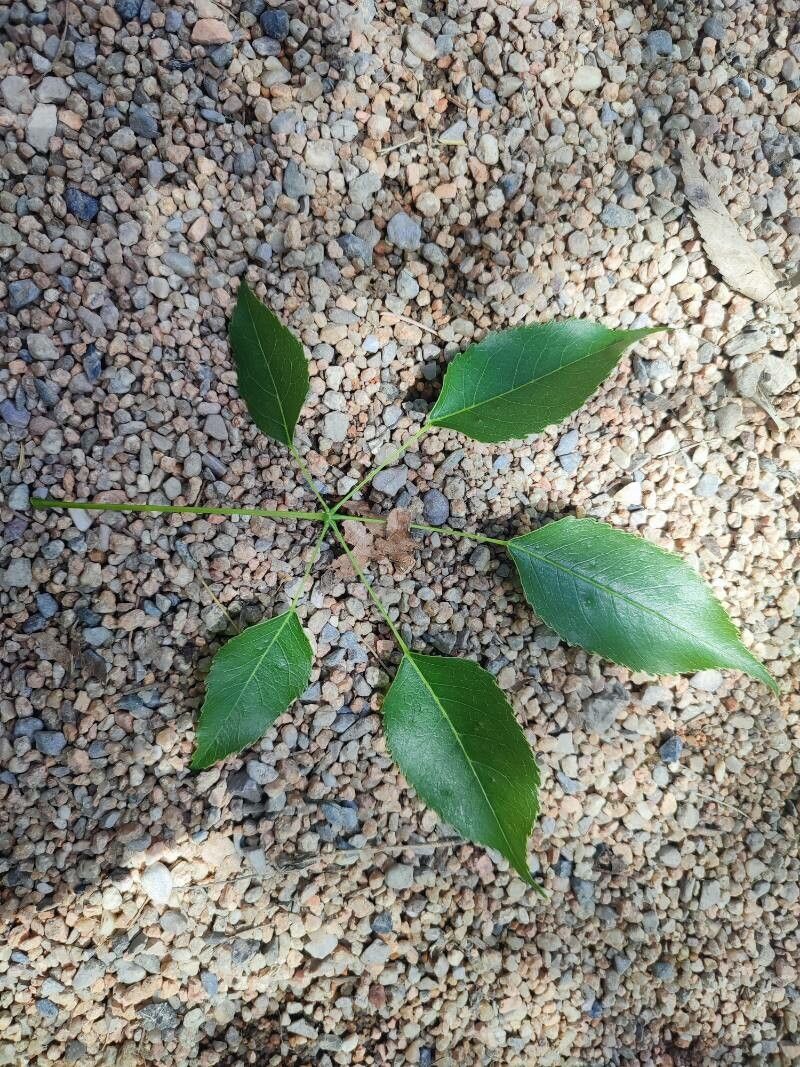
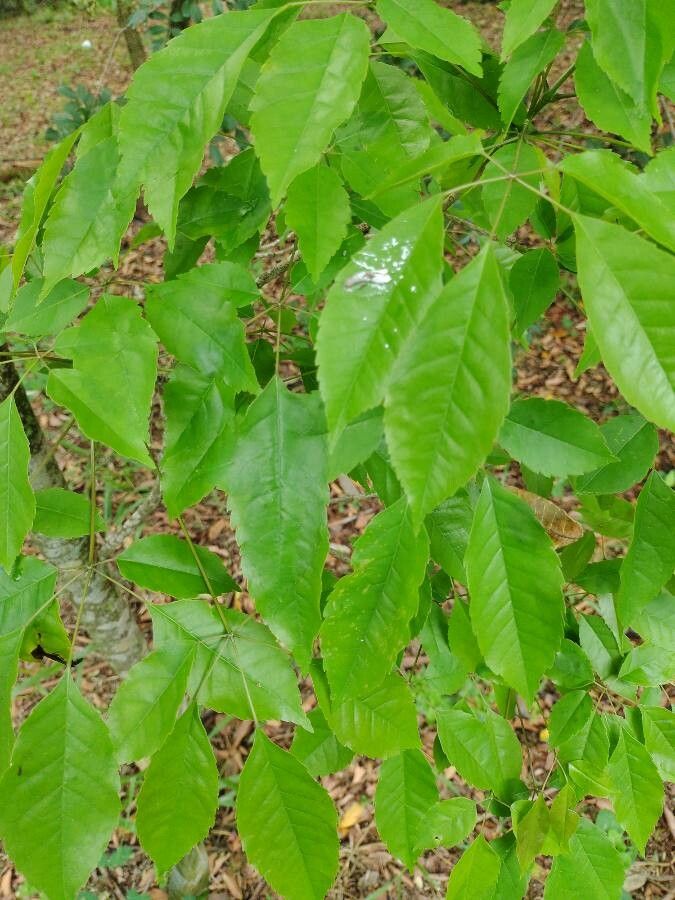
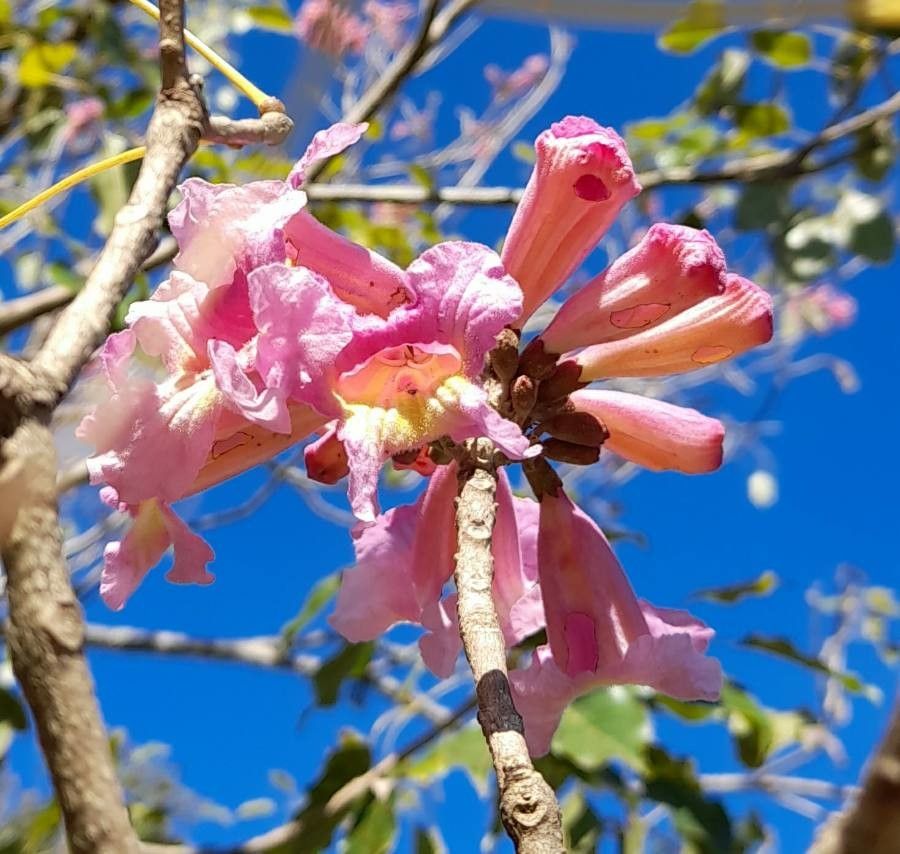
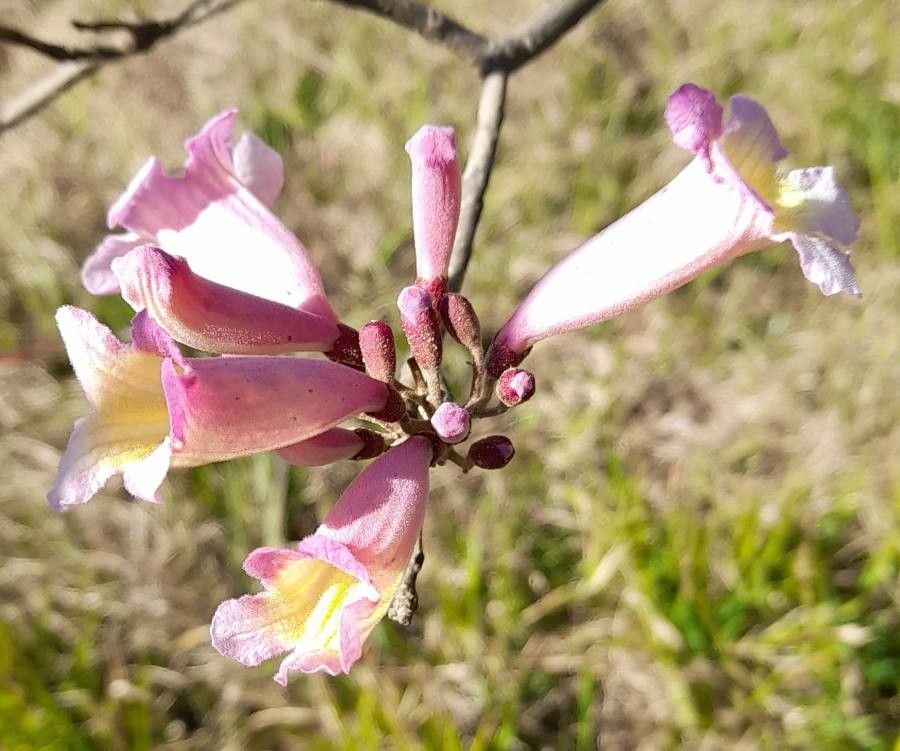
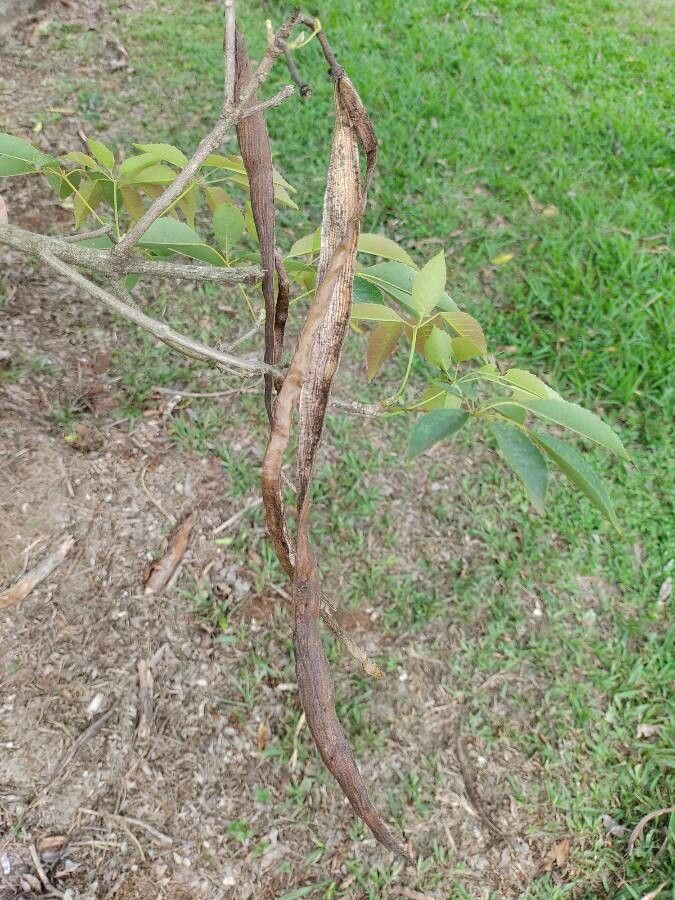
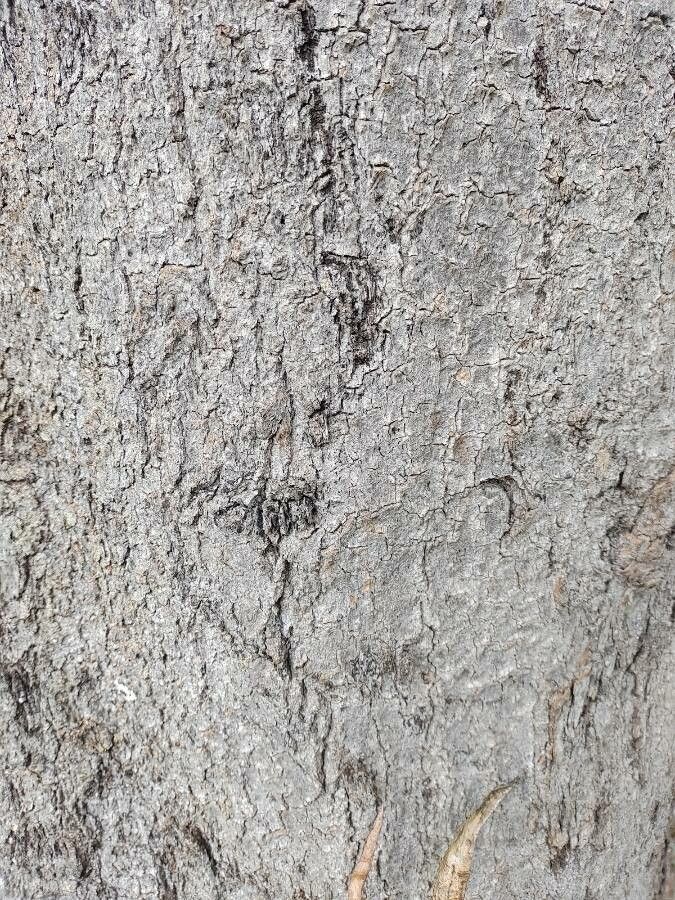
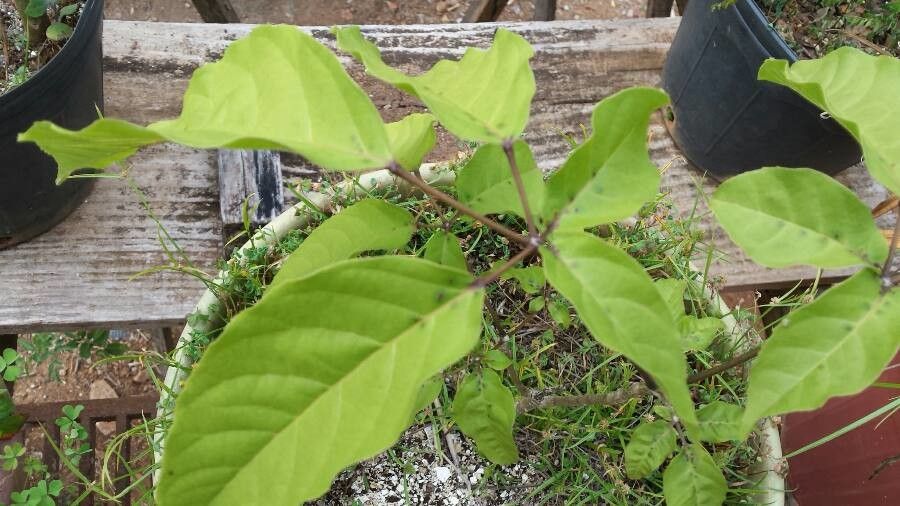
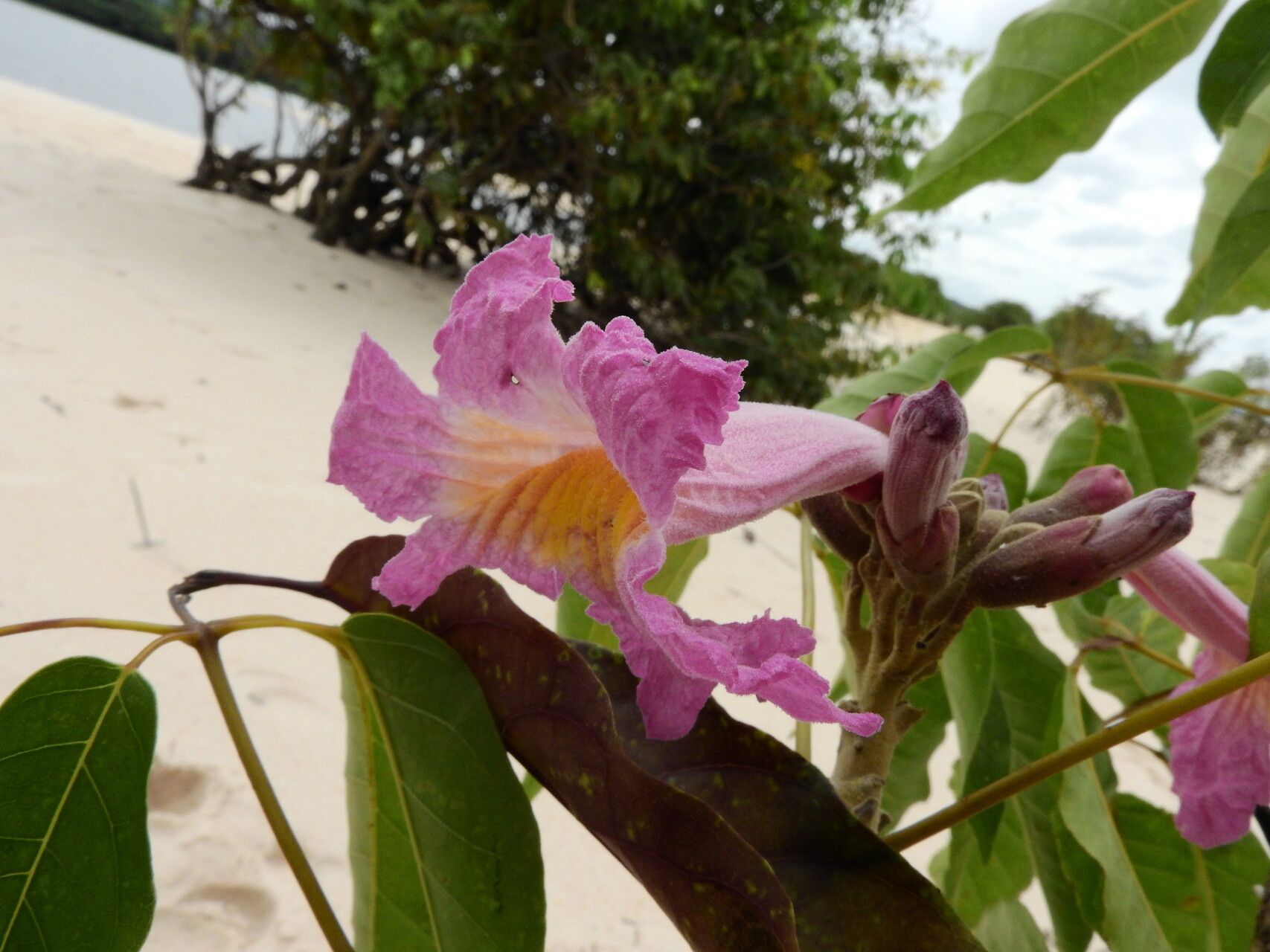
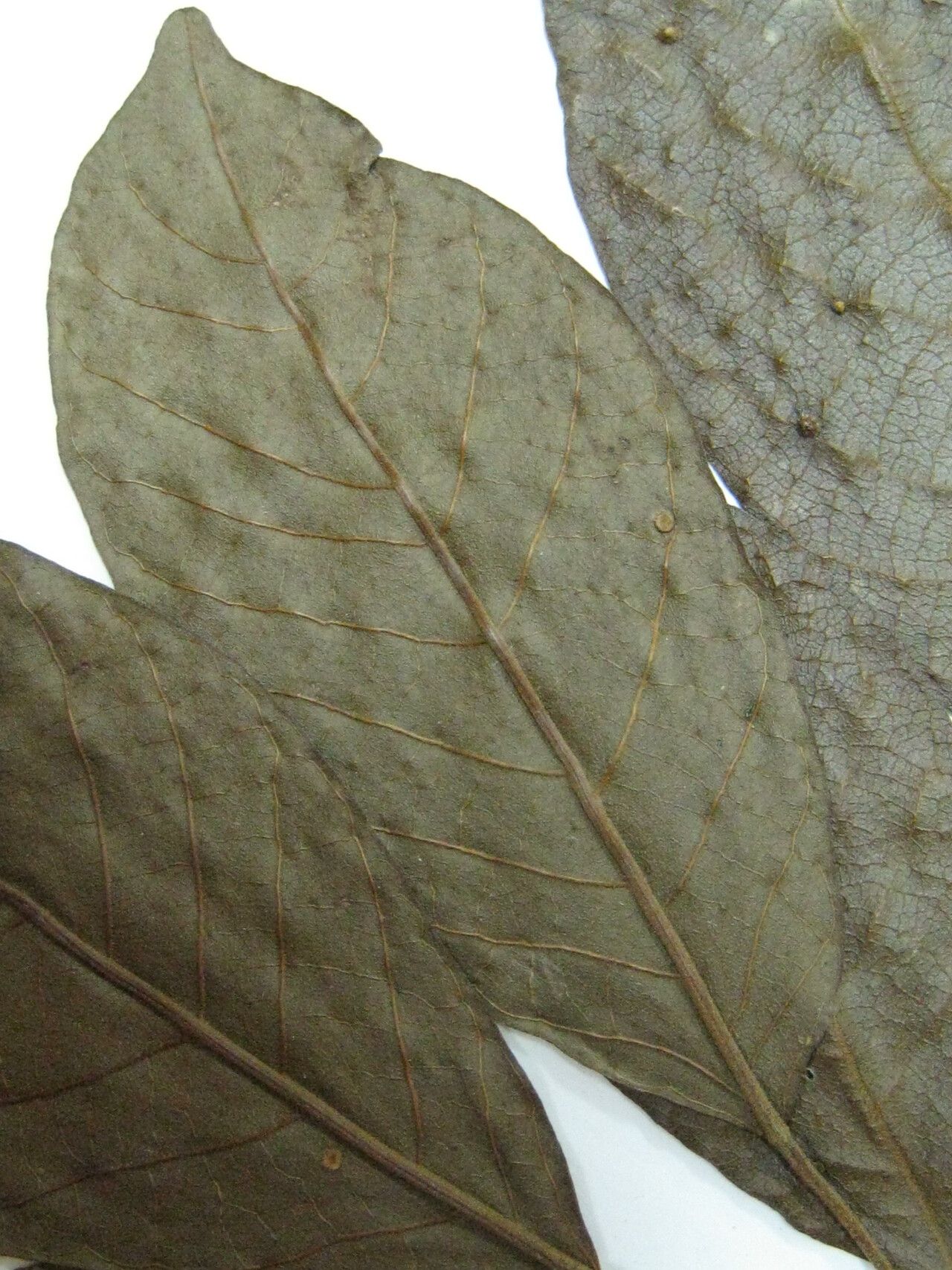
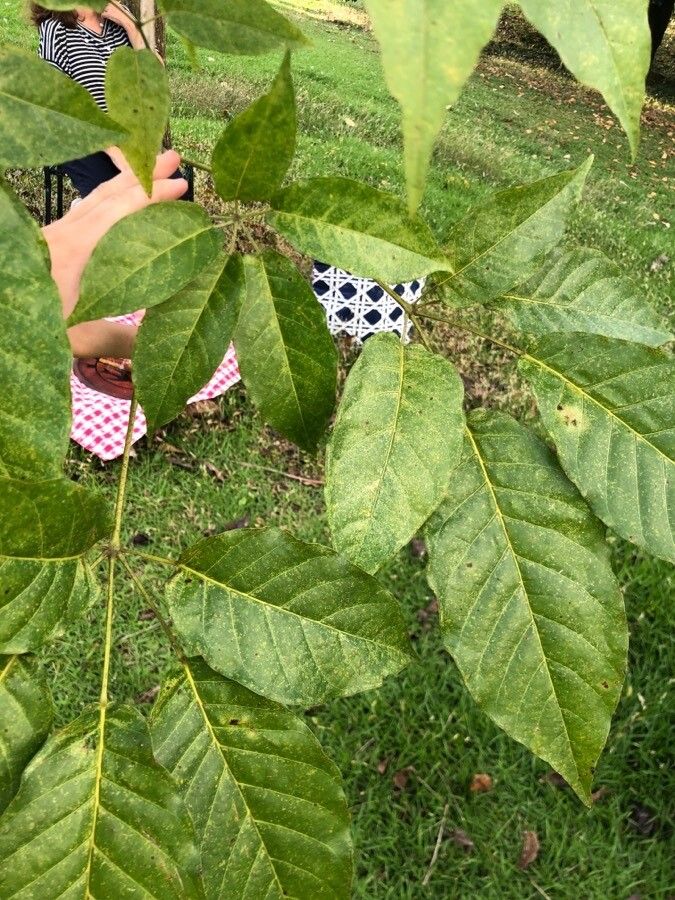
Handroanthus heptaphyllus, also known as the Pink Ipê or Pink Trumpet Tree, is a species of flowering tree indigenous to South America. It belongs to the Bignoniaceae family and can reach heights of up to 30 meters. The tree features a straight trunk with grayish-brown bark and produces large clusters of trumpet-shaped pink flowers that bloom in the spring and summer. The leaves are compound, consisting of seven dark green, glossy leaflets. The Pink Ipê is commonly found in tropical forests, savannas, and along riverbanks throughout Brazil, Paraguay, Argentina, Bolivia, Peru, and Uruguay. It is highly valued both for its ornamental beauty and its medicinal properties; extracts from its bark have been used for centuries by indigenous people to treat various ailments, such as fever. The tree requires full sun exposure but can tolerate partial shade. It prefers well-drained soils but can grow in a variety of soil types, including sandy or clay soils. Once established, the Pink Ipê is drought-tolerant but requires regular watering during its initial growth period. Due to deforestation practices in South America in recent years, this species has become threatened. However, conservation efforts are underway. Organizations, including the Brazilian government, have implemented laws to protect the species from being cut down without proper authorization. Overall, Handroanthus heptaphyllus is an ecologically significant plant for maintaining biodiversity within tropical forest ecosystems. It is culturally important for its medicinal properties used by indigenous people and is aesthetically prized for its beautiful pink flowers, making it popular among gardeners worldwide who seek exotic plants for their gardens or landscape designs.
The Pink Trumpet Tree has strong resistance to disease and is generally not likely to be affected by illnesses. In terms of care, this plant is fairly low-maintenance. When grown outdoors it needs only light watering, and larger specimens usually do not require pruning. Smaller plants, however, should be pruned after they have finished blooming. The Pink Trumpet Tree is suitable for anyone with an outdoor area, such as a garden or deck, and does not demand extensive gardening experience.
How to keep Handroanthus Heptaphyllus.
Light
The Pink Trumpet Tree is native to open habitats like sunlit meadows and forest edges, where light is abundant. It prefers full sun but will also tolerate partial sun, adapting well to different light levels.
Temperature
The Pink Trumpet Tree comes from tropical areas, where the weather is usually warm and humid. Consequently, it is adapted to high temperatures and humidity. It does not tolerate sudden temperature shifts and prefers a consistent thermal environment, so avoiding temperature fluctuations indoors is important. It generally cannot withstand cold temperatures and needs warmer conditions to grow. If the ambient temperature falls too low, the plant may stop growing or even die.
Fertilizer
The best time to fertilize a Pink Trumpet Tree is in early spring as it comes out of dormancy. This supports general growth and the development of flowers. Fertilization improves the foliage, stems, and branches, and encourages flowers that are larger, more vibrant, and longer-lasting. It helps transfer nutrients from the roots to the blooms and strengthens the plant’s health and resistance to disease.
Botanical profile.
- Plant Type
- Tree
- Life Cycle
- Perennial
- Genus
- Handroanthus
- Family
- Bignoniaceae
- Hardiness Zone
- 10-12
- Mature Height
- 20.12 m to 29.87 m
- Mature Spread
- 10.06 m to 14.94 m
- Leaf Color
- Dark Green
- Leaf Type
- Deciduous
- Flower Size
- 5.08 cm to 7.62 cm
- Bloom Time
- Mid spring, Late spring, Early summer
- Planting Time
- Spring, Summer, Autumn
- Harvest Time
- Summer
- Native Area
- Bolivia
Other names.