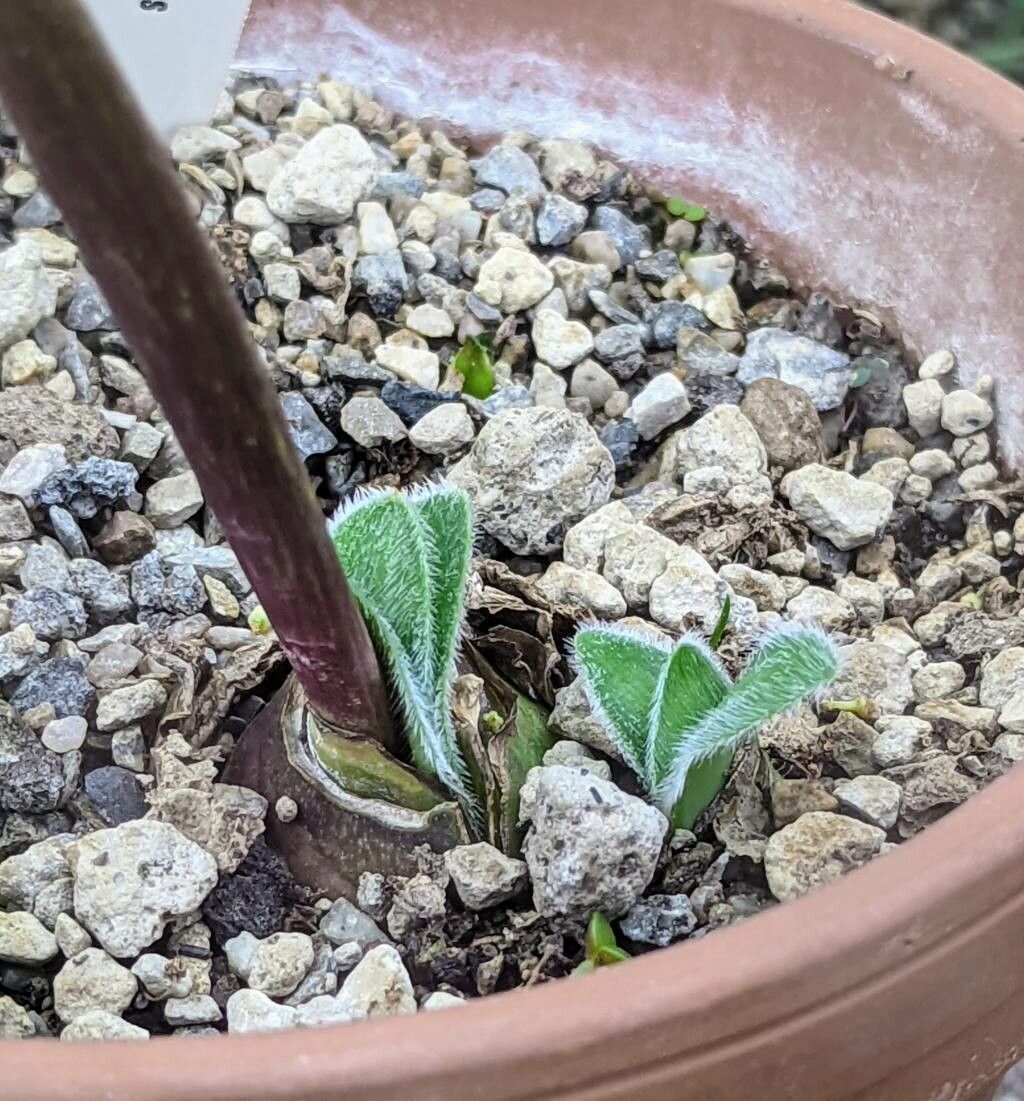
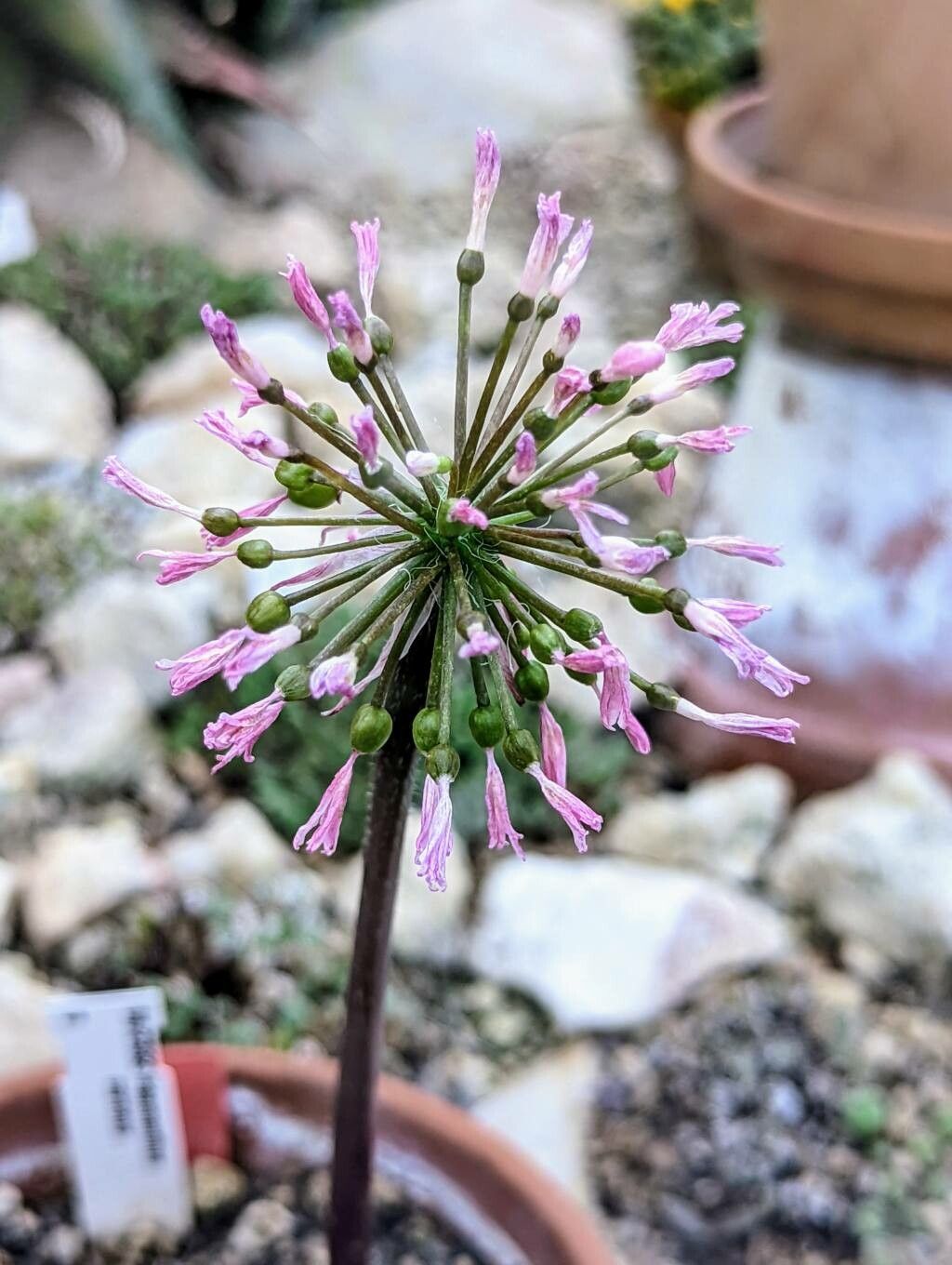
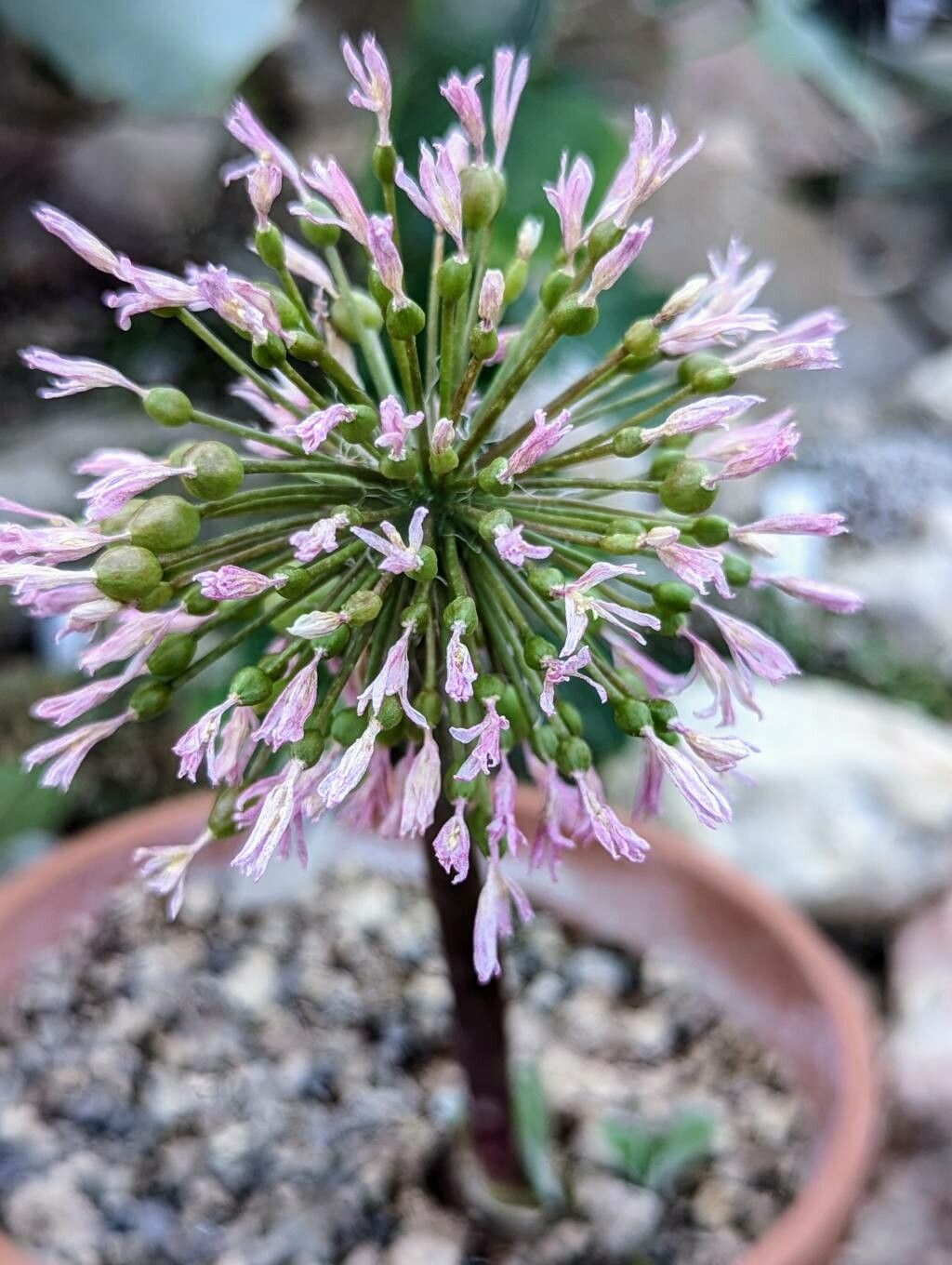
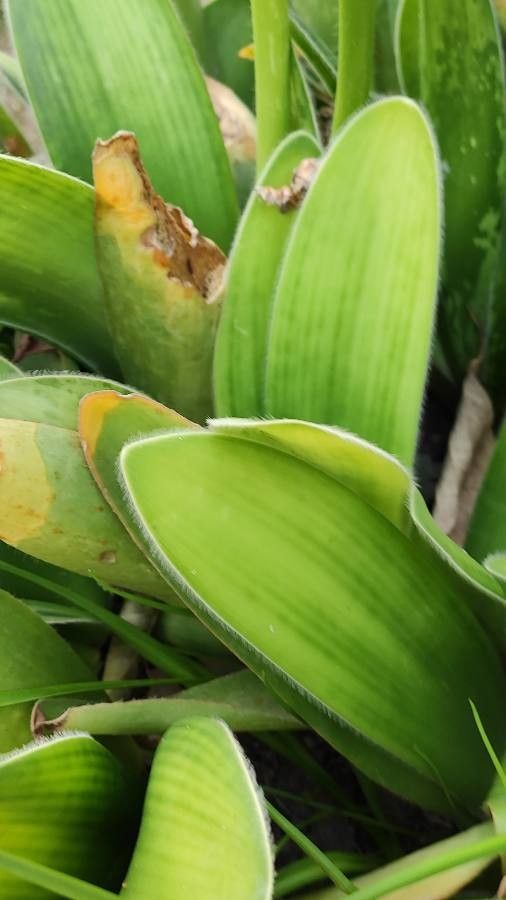
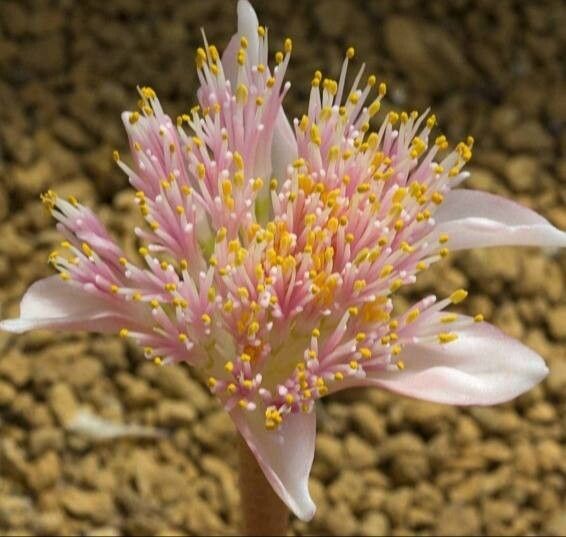
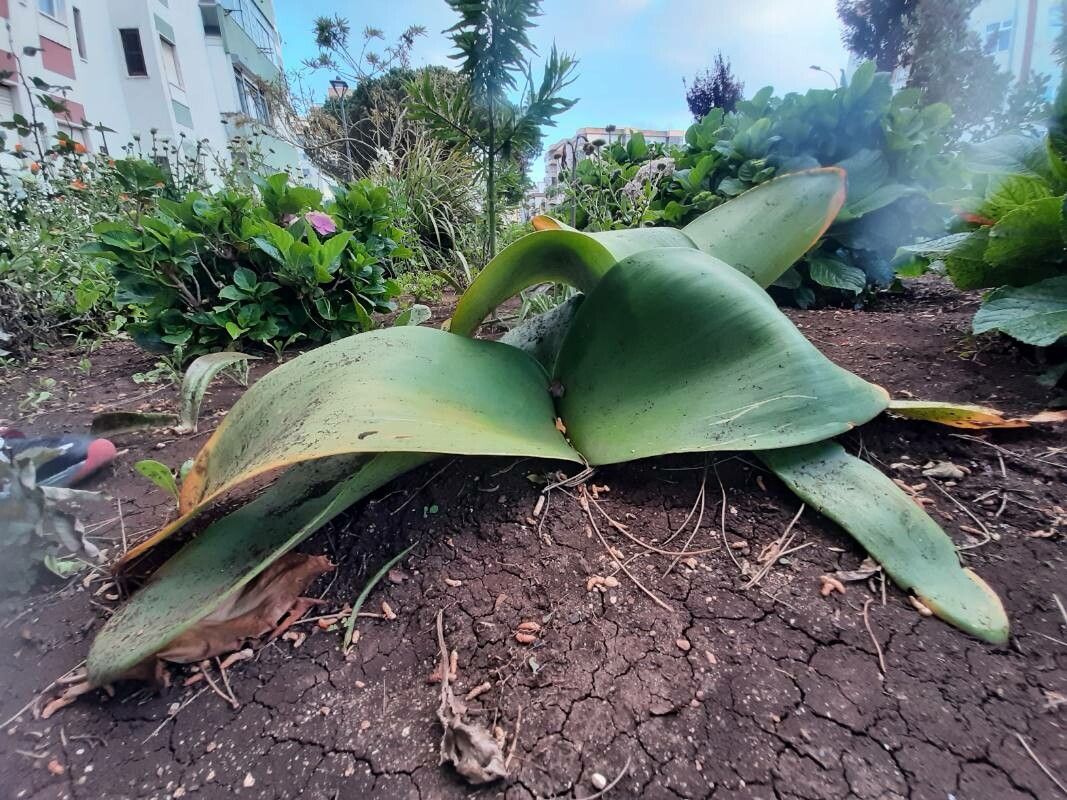
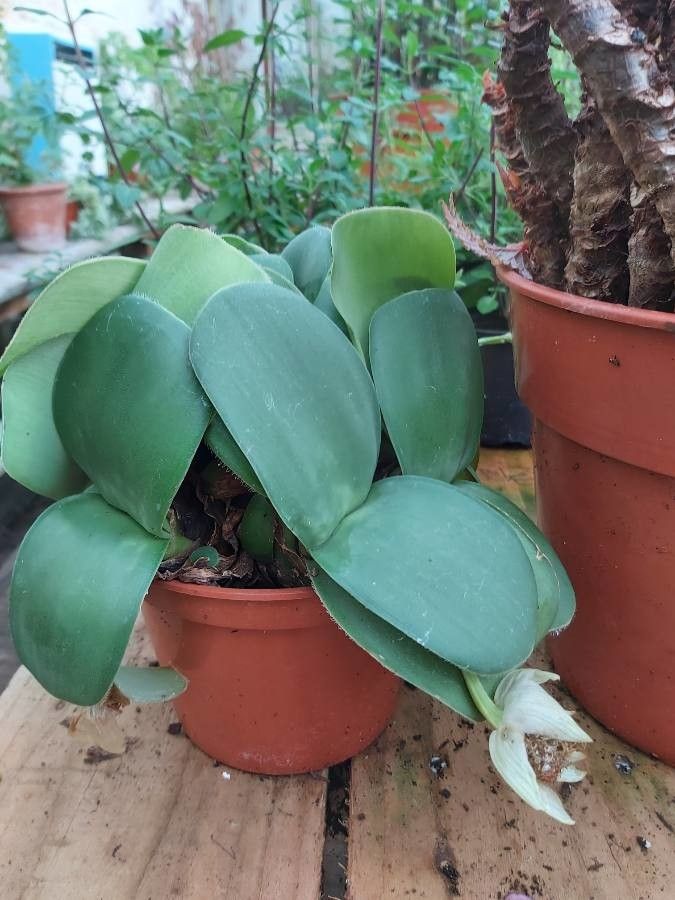
Haemanthus carneus ('carneus': Latin 'flesh-coloured') is a South African bulbous geophyte in the genus Haemanthus. Despite a fairly wide distribution, it has been collected from only a few scattered sites in the Free State, KwaZulu-Natal and the Eastern Cape near Grahamstown and Somerset East, occurring between 300 m and 1200 m above sea level. The bulbs grow in small clumps in the shelter of trees, bushes and rocks. Their tunics are more or less equal with horizontal leaf-scars. Leaves number two or three, usually flat on the ground, appearing with the flowers or following on soon. Peduncles show quite a variation in length from 100 to 200 mm long. H. carneus was first described in 1821 by the English botanist John Bellenden Ker Gawler (1764-1842), first editor of Edward's Botanical Register.
How to keep Haemanthus Carneus.
Pruning
Haemanthus carneus is known for its vibrant flowers and thick leaves. To promote healthy growth, it is best to prune the plant in early spring by removing dead leaves and spent flower stalks. Be sure to sterilize your tools to prevent the spread of disease. Proper pruning not only improves air circulation but also encourages blooming, helping to maintain both the plant's aesthetic appeal and its vitality for a thriving presence in your garden.
Botanical profile.
- Life Cycle
- Perennial
- Genus
- Haemanthus
- Family
- Amaryllidaceae
Reader questions.
What are the sunlight requirements for Haemanthus carneus?
Haemanthus carneus flourishes under specific sunlight conditions. It thrives in 'Full sun' which means it requires more than 6 hours of sunlight daily. Alternatively, it can also grow in 'Partial sun', necessitating about 3 to 6 hours of sunlight each day. It's crucial to observe how sunlight moves through your garden throughout the day. Choosing the right spots that offer a healthy balance of light and shade will significantly contribute to the well-being of your Haemanthus carneus plants.