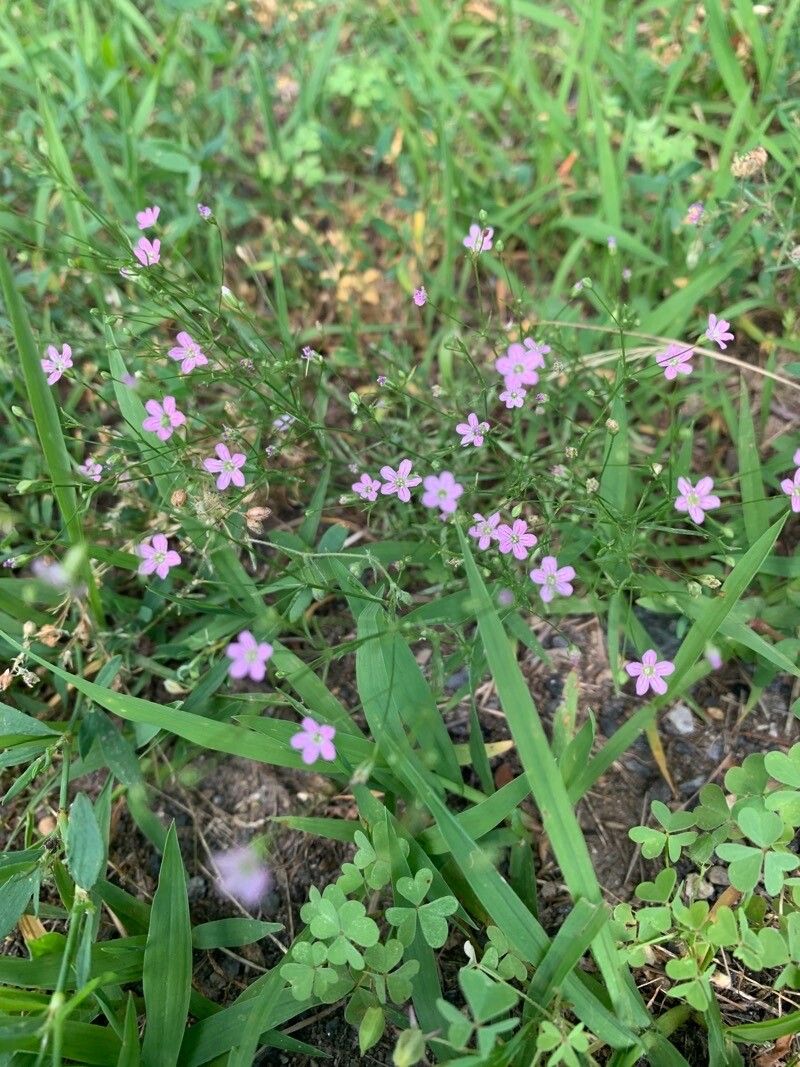
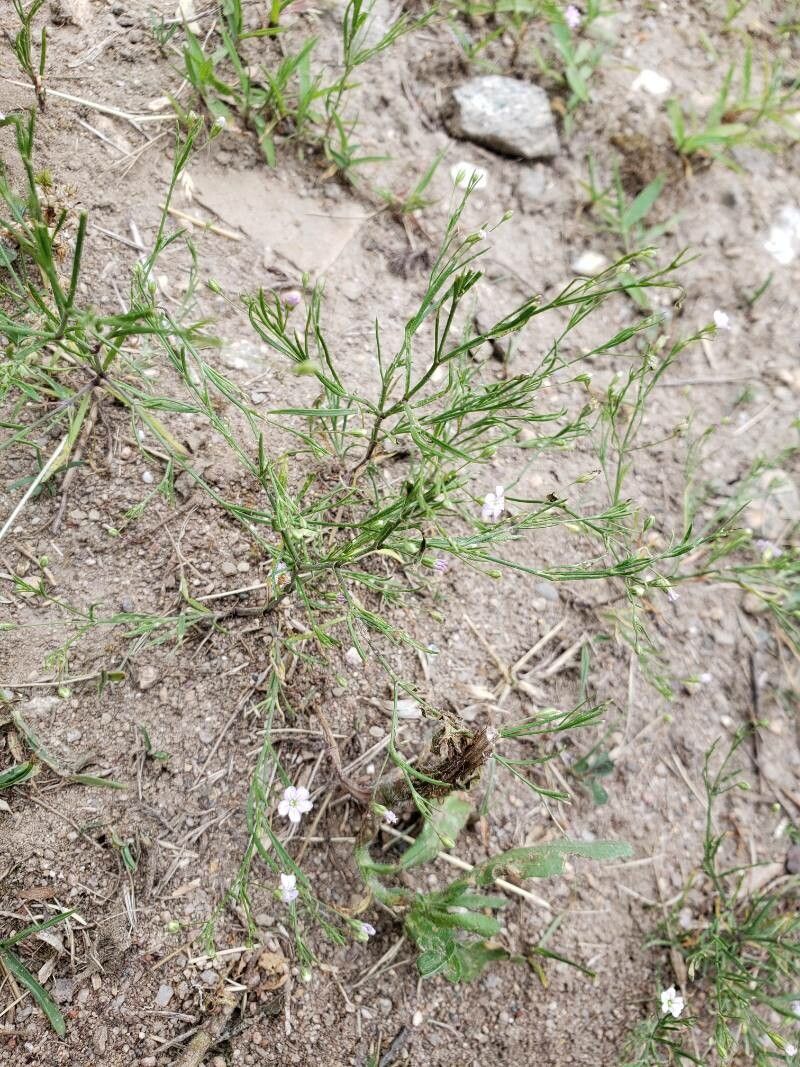
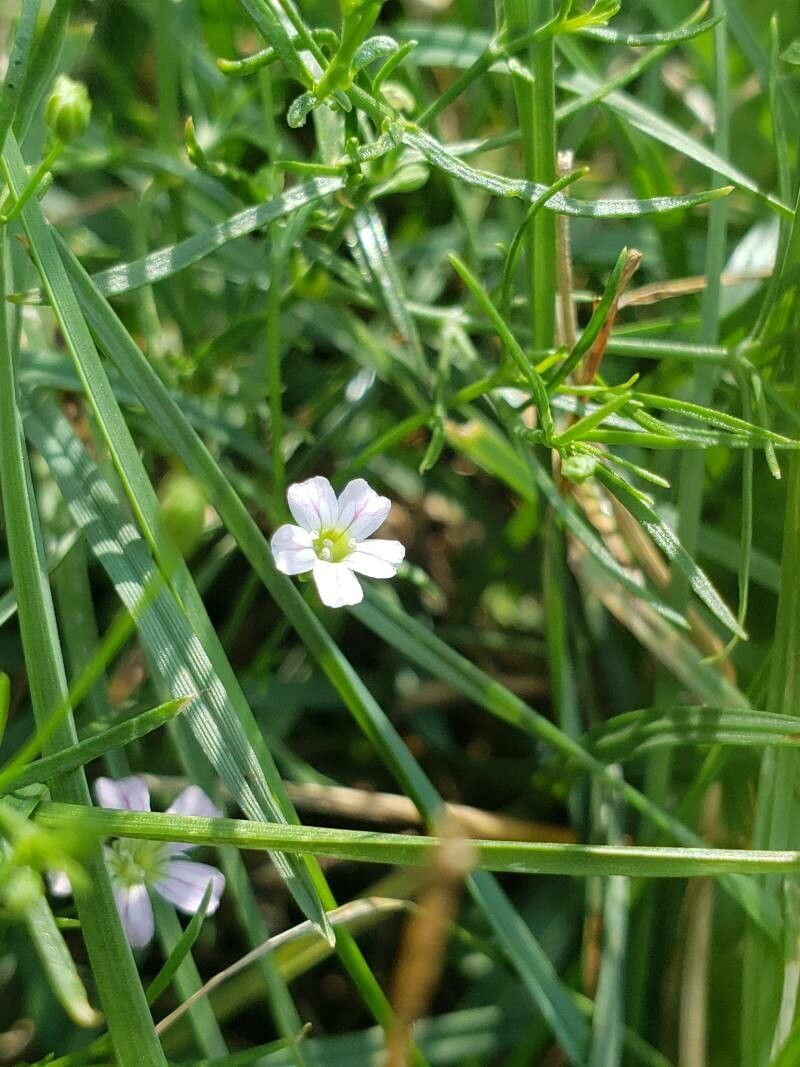
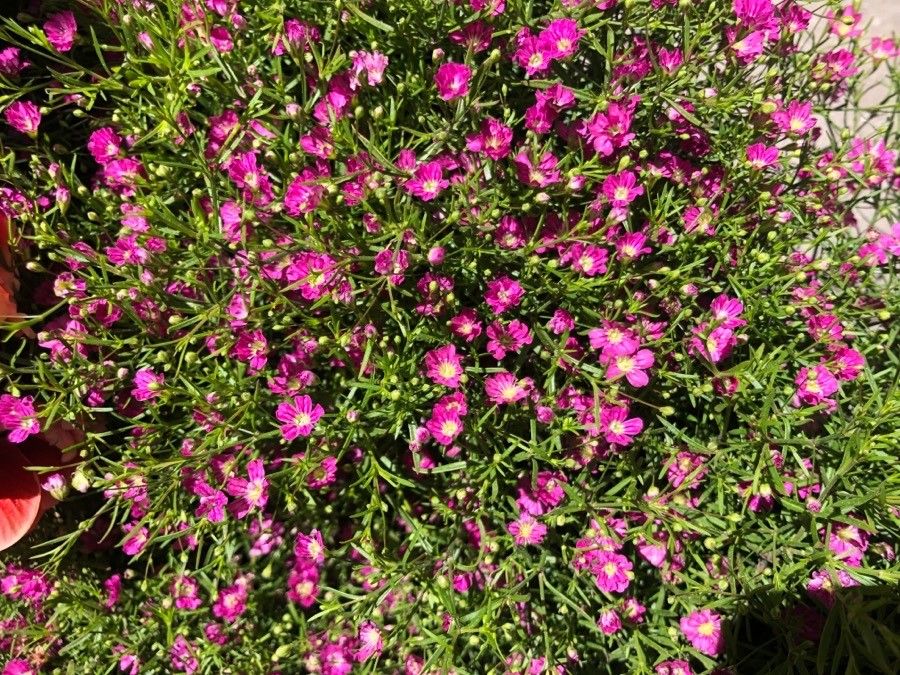
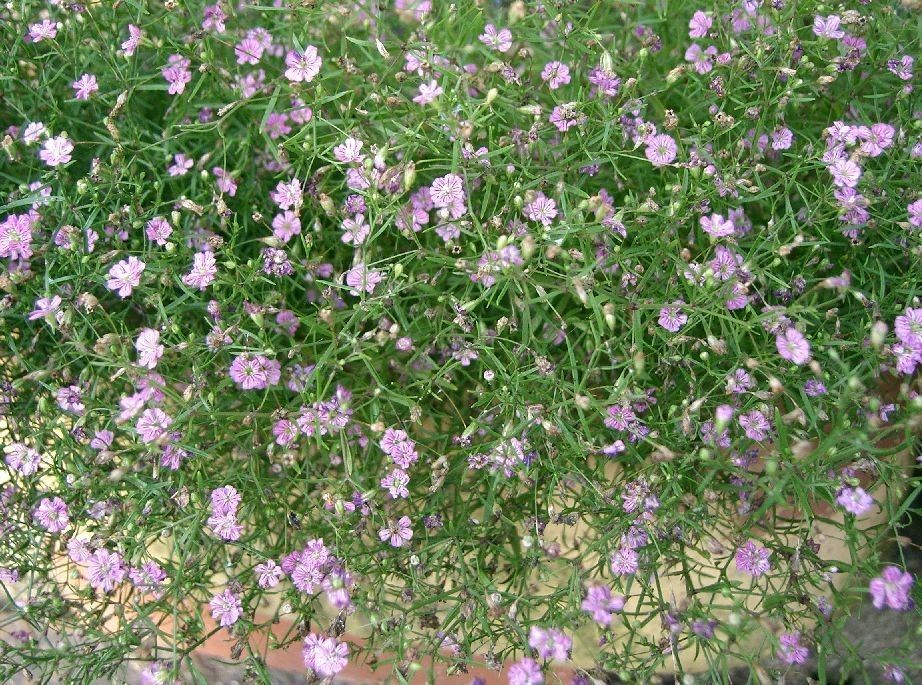
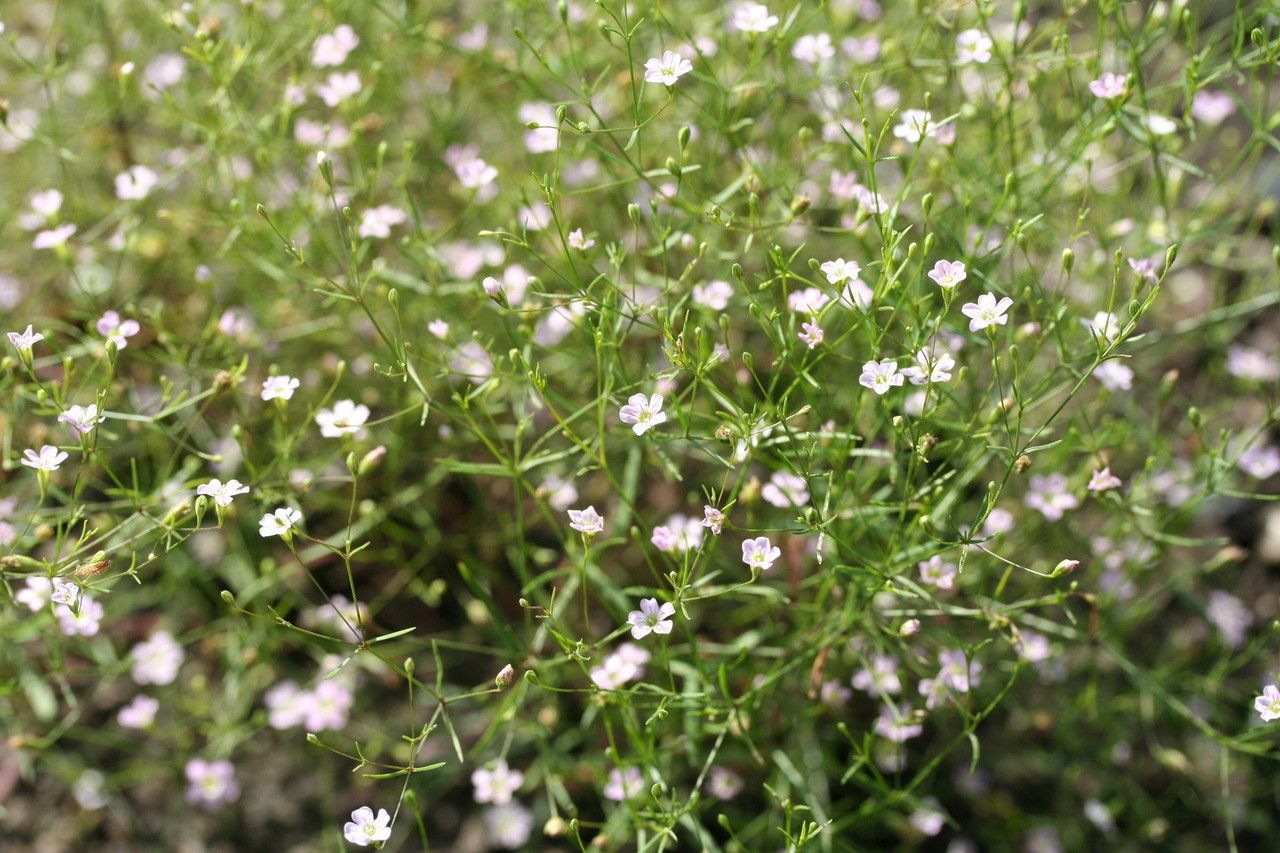
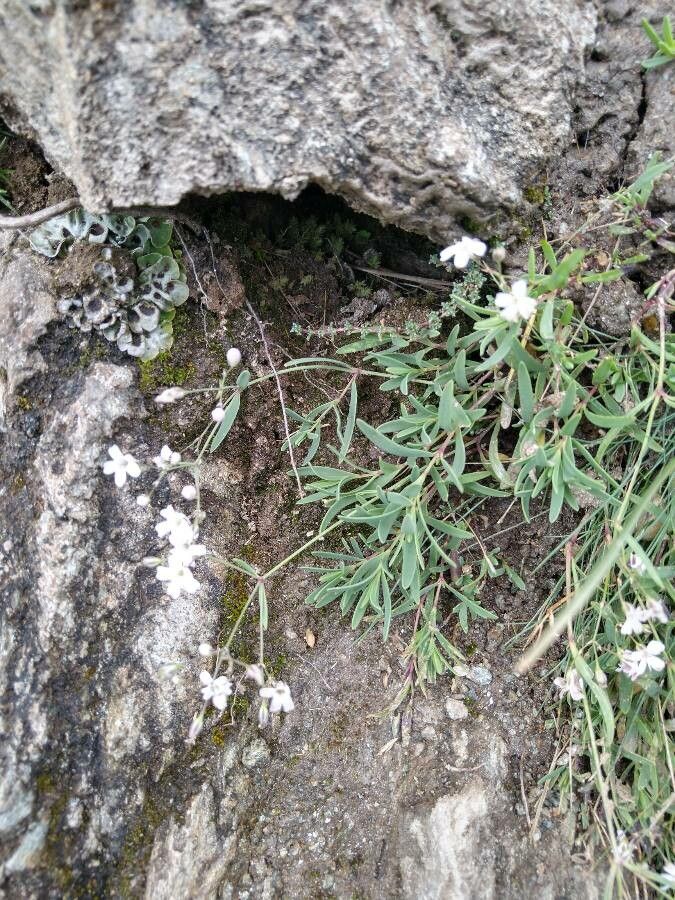
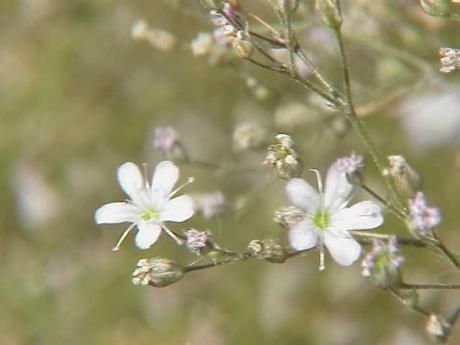
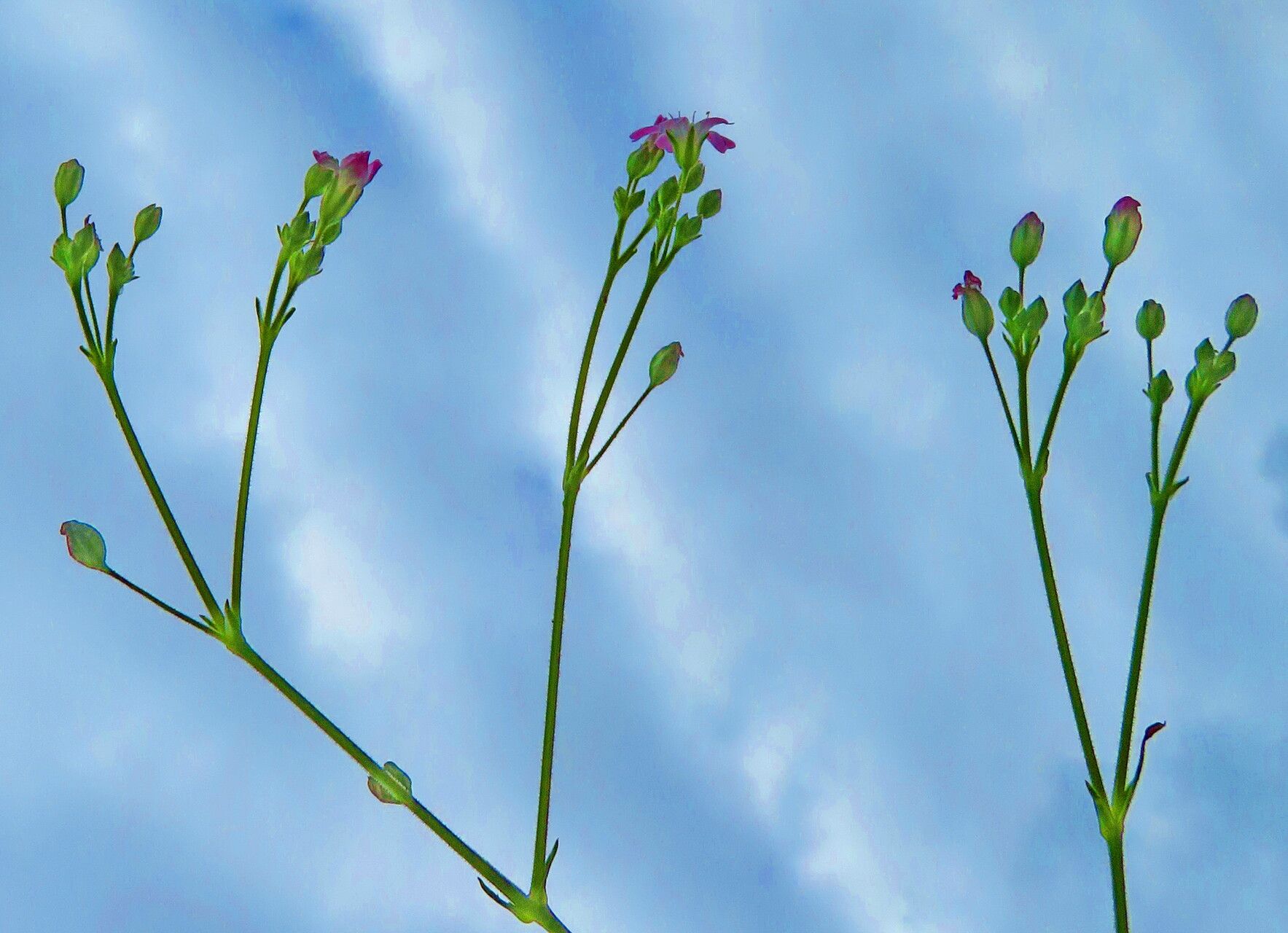
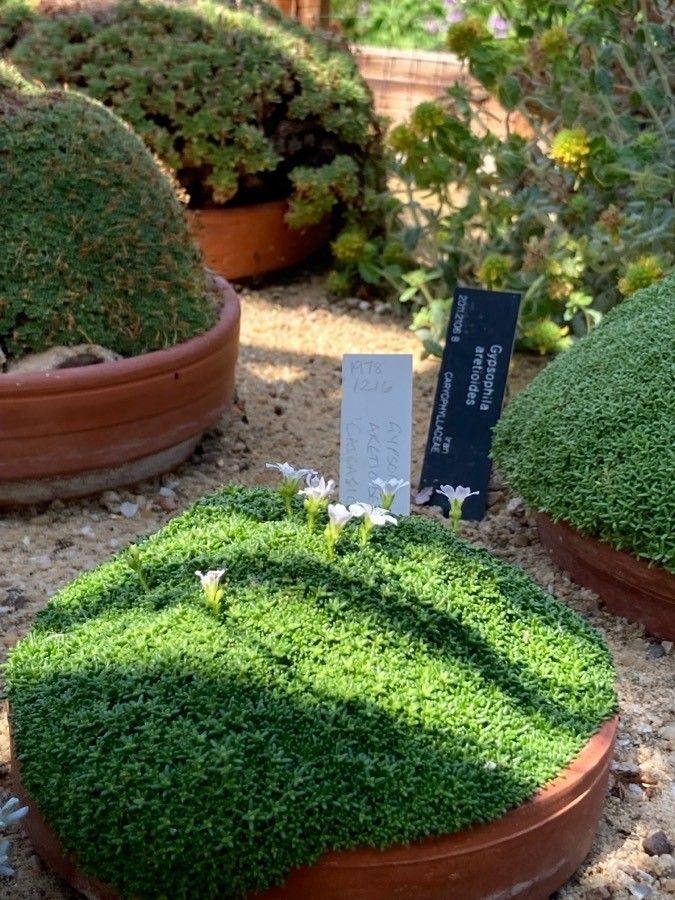
Gypsophila muralis, commonly known as baby’s breath or wall baby’s breath, is a delicate and attractive flowering plant in the Caryophyllaceae family. Native to Europe and Asia, it has been introduced to many other parts of the world as an ornamental plant.
This plant typically grows up to 30 cm in height and has slender stems with small, alternately arranged leaves. Its small flowers, which are white or pinkish-white, grow in clusters at the ends of the stems. The petals are deeply notched at their tips, giving them a frilly appearance.
Gypsophila muralis prefers well-drained soil and full sun exposure, although it can also tolerate partial shade. Once established, it is drought-tolerant but requires regular watering during its initial growth period.
Commonly used as a filler flower in floral arrangements due to its delicate appearance and long-lasting blooms, which can last up to two weeks when cut, Gypsophila muralis is a popular choice among gardeners worldwide. Its dainty flowers and slender stems add beauty to any garden or floral arrangement.
Low baby's-breath is fairly disease-resistant and typically does not suffer from illnesses. However, it can be vulnerable to pests and diseases present in its environment. Such infections are generally mild. Regarding care, the plant needs a moderate level of maintenance. Regular pruning is required to preserve an attractive appearance and encourage healthy growth. Applying fertilizer can also aid in encouraging blooms. Low baby's-breath is appropriate for anyone with outdoor areas like a garden or patio and does not demand extensive gardening experience. It may need extra attention if cultivated indoors.
How to keep Gypsophila Muralis.
Light
Low baby's-breath generally does best with abundant sunlight, which promotes strong growth and good health. Although it naturally prefers a lot of light, it can tolerate conditions with somewhat less sun. Both too little and too much light can impede its optimal development.
Water
Baby's breath requires little water and grows well on dry soil. For young plants, keep the soil wet but not soggy. However, unless there is an extended period of drought, you will not need to water established plants. Overwatering can destroy a plant by causing root rot.
Humidity
This plant will thrive in moderate humidity, which is probably the level in your home. However, misting it a few times a week can be very beneficial. Make sure the room has good ventilation.
Temperature
Low baby's-breath comes from temperate regions and shows a clear preference for temperatures between 68 and 95 °F (20 and 35 °C). Because of this, making suitable adjustments to its environment, particularly in extreme climates, is essential for optimal growth.
Fertilizer
Low baby's-breath benefits from regular, light applications of fertilizer to encourage healthy leaf development. You should feed Low baby's-breath about once per month during the summer months. Nitrogen is important for foliage, and providing nitrogen-rich sources helps Low baby's-breath thrive.
Pruning
To stimulate more blooms throughout the summer, cut off spent flower clusters and stems after they bloom down to a set of two leaves. Deadheading is the practice of cutting off flowers before they go to seed at any time during the year.
Botanical profile.
- Plant Type
- Herb
- Life Cycle
- Annual
- Genus
- Gypsophila
- Family
- Caryophyllaceae
- Hardiness Zone
- 8-10
- Mature Height
- 30 cm to 40 cm
- Mature Spread
- 15 cm to 30 cm
- Leaf Color
- Green
- Leaf Type
- Evergreen
- Flower Color
- Pink
- Flower Size
- 3.56 cm to 6.35 cm
- Bloom Time
- Late spring, Early summer, Mid summer
- Planting Time
- Spring
- Harvest Time
- Mid summer
- Native Area
- Sweden, Austria, Slovakia, Croatia, Slovenia, Belarus, Russia, Germany, Estonia, Romania, Latvia, Belgium, Netherlands, France, Czech Republic, Bulgaria, Armenia, Poland, Greece, Ukraine, Serbia, China, Lithuania, Kyrgyzstan, Kazakhstan, Italy, Spain, Switzerland, Denmark, Finland, Azerbaijan, Hungary
Other names.