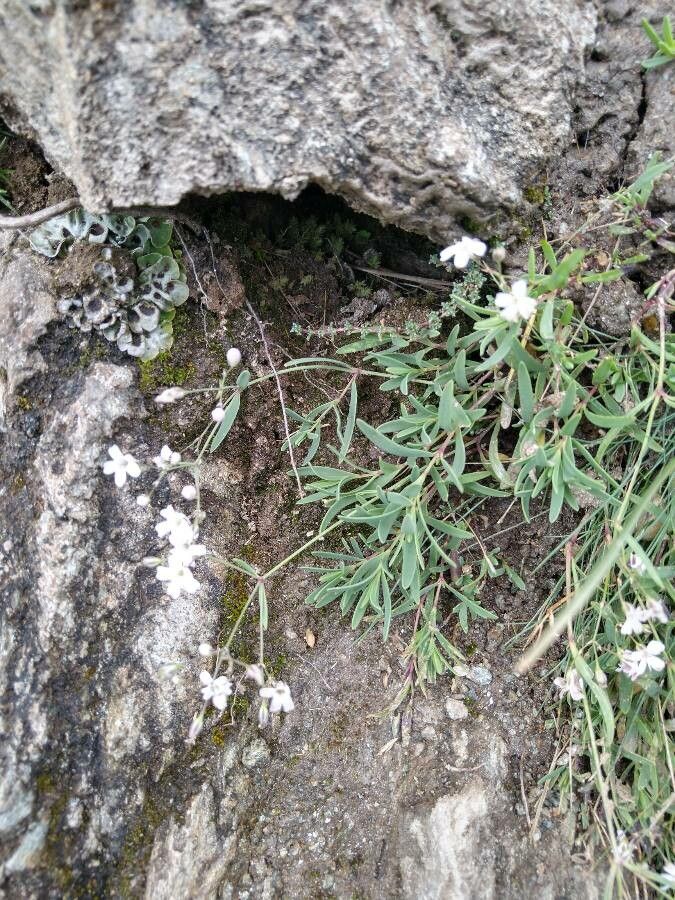
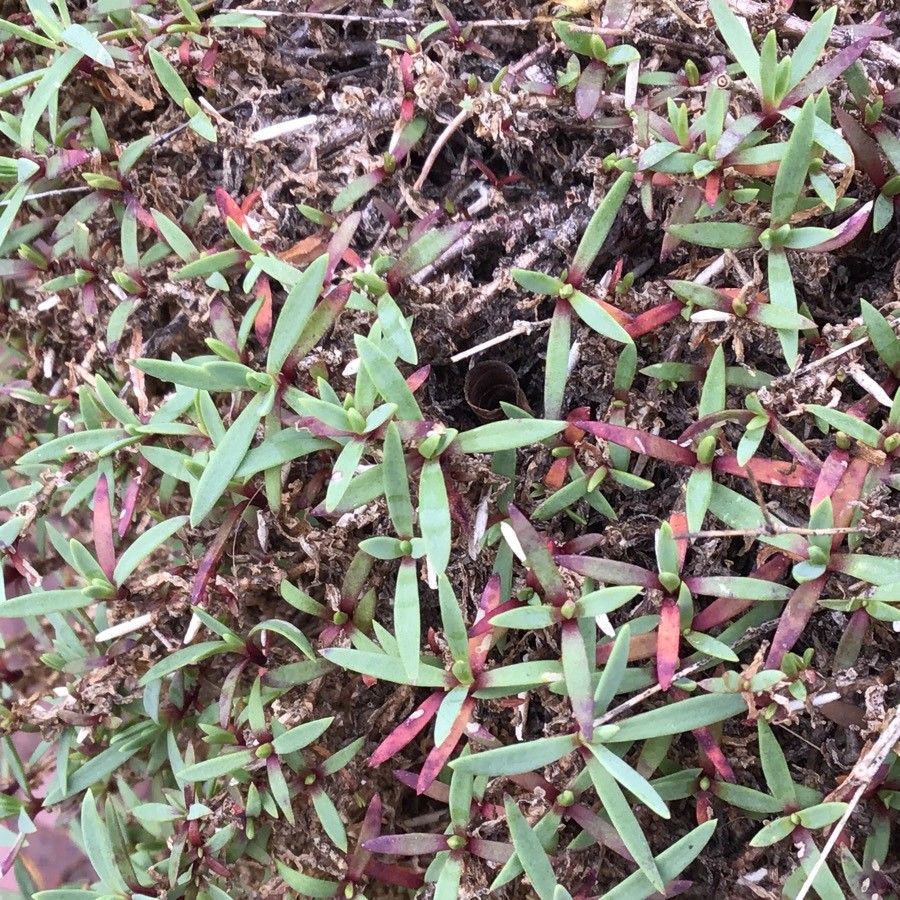
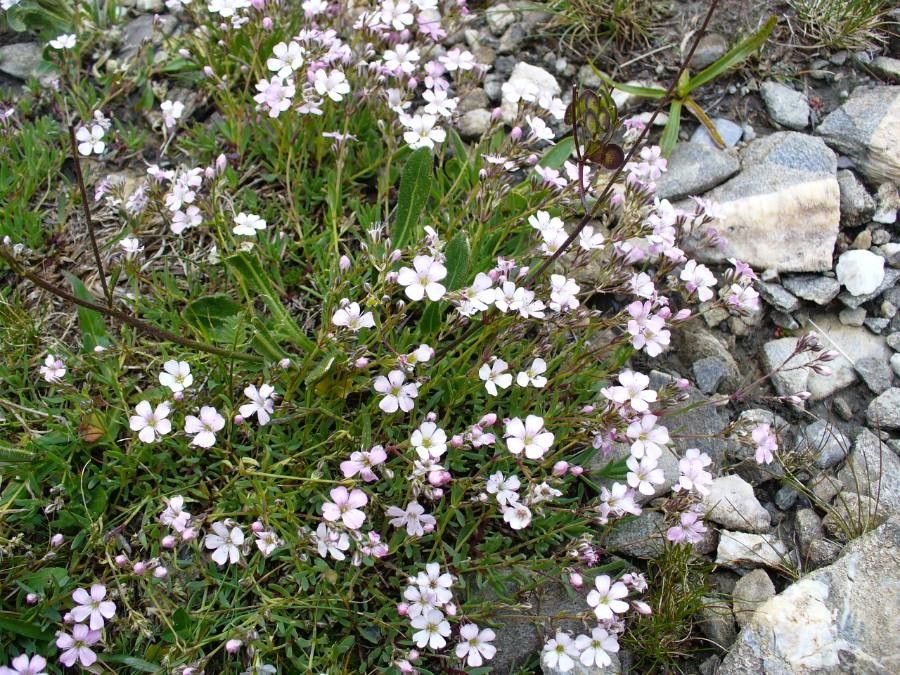
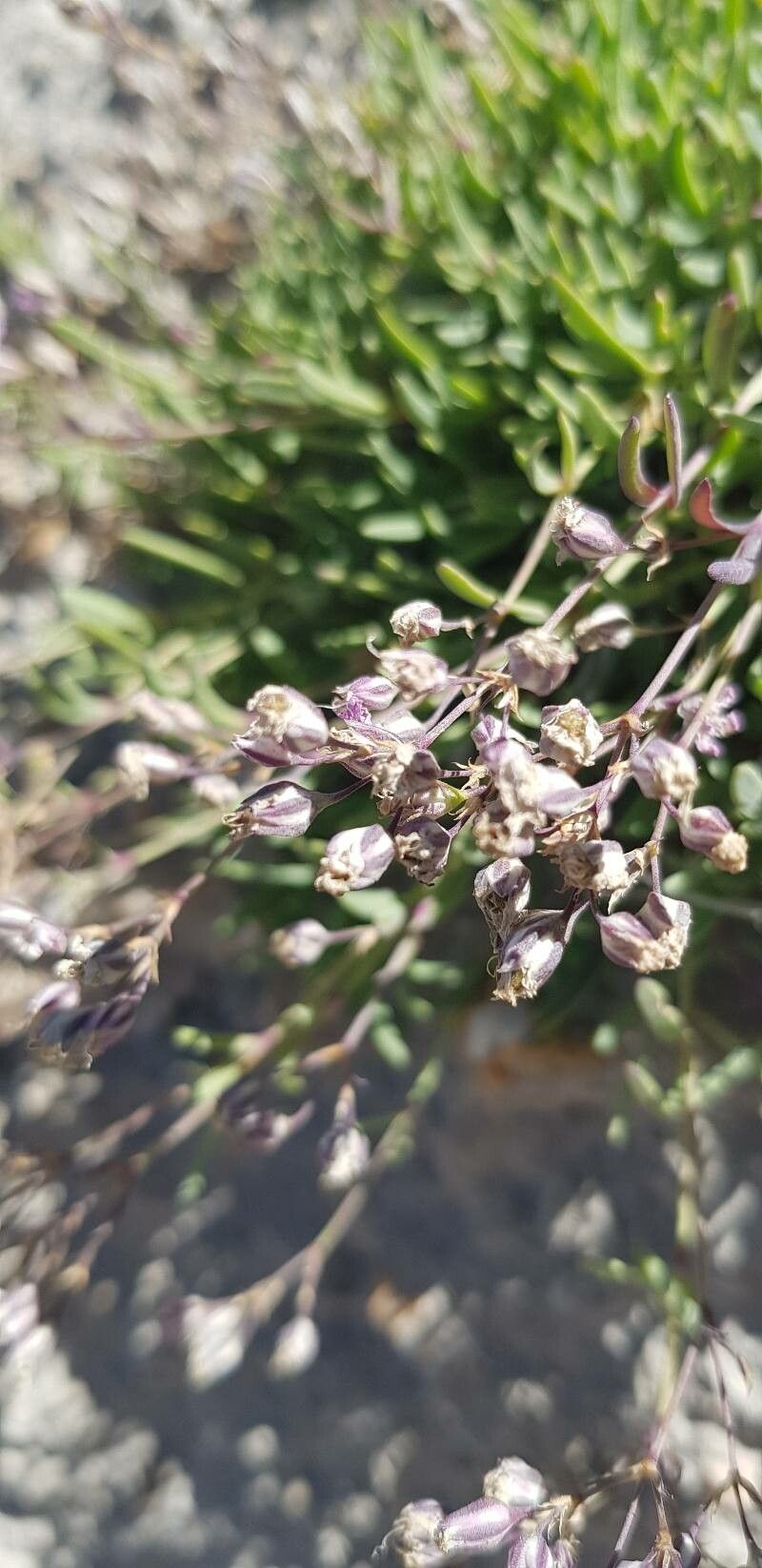
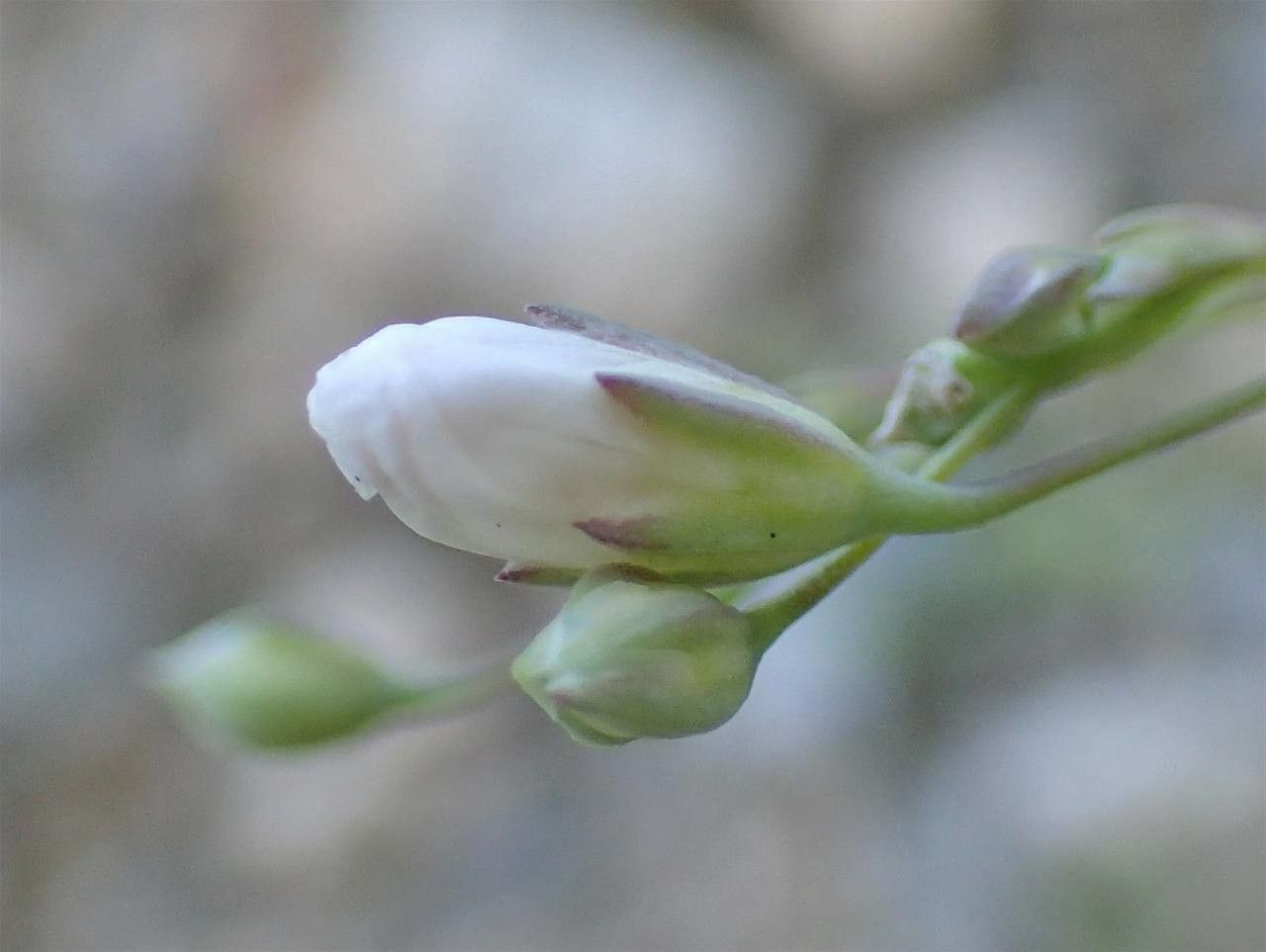
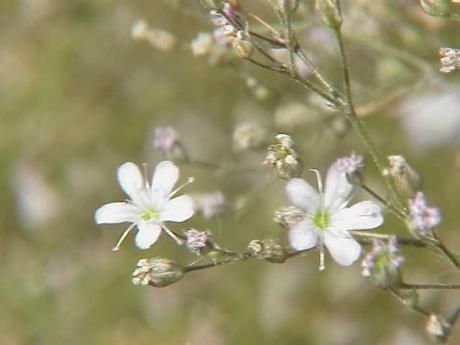
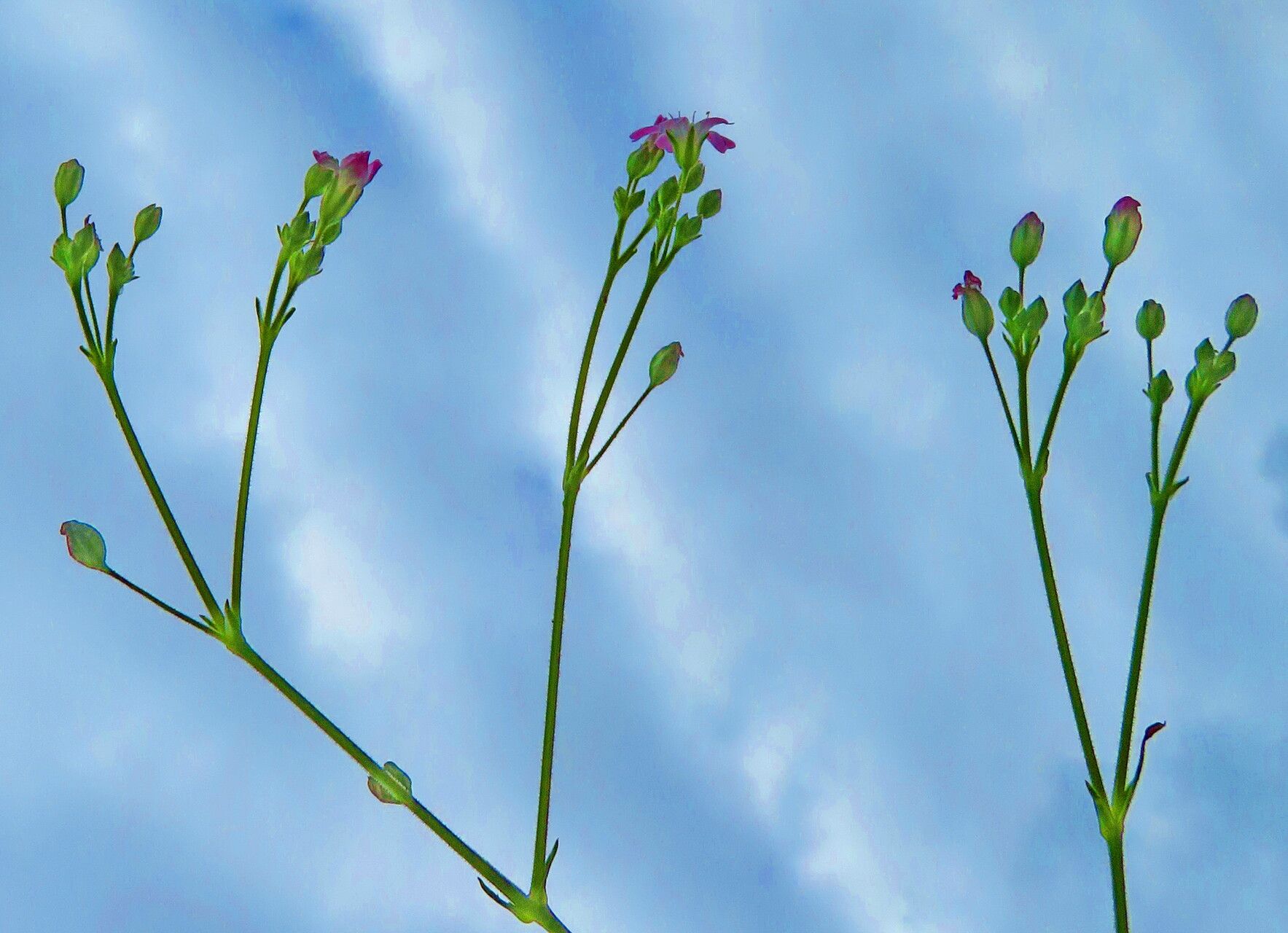
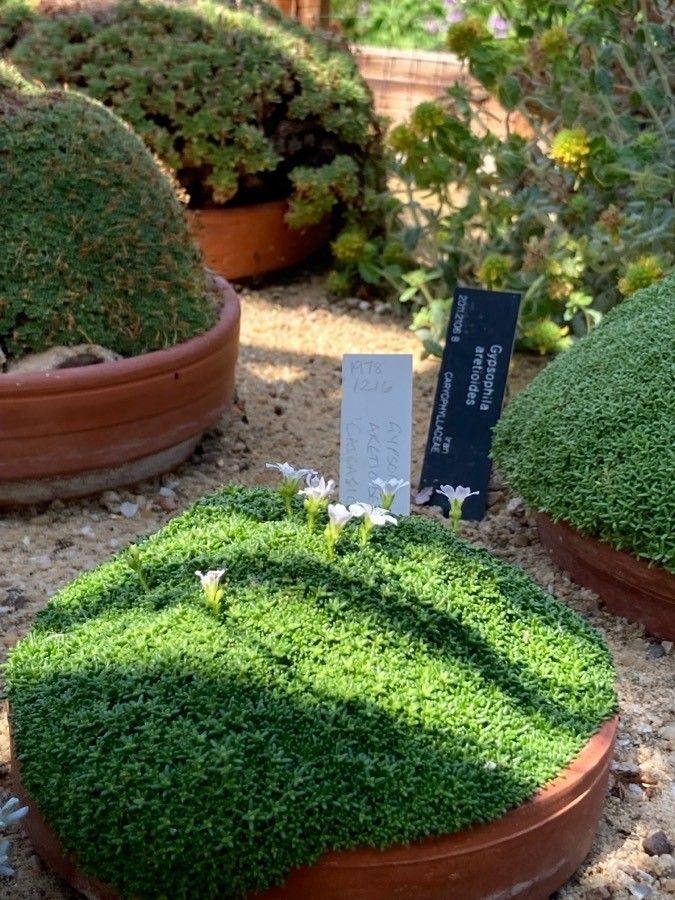
Gypsophila repens, commonly known as creeping baby's breath, is a low-growing perennial plant belonging to the family Caryophyllaceae. Native to Europe and Asia, it is widely cultivated as an ornamental plant in gardens and landscapes.
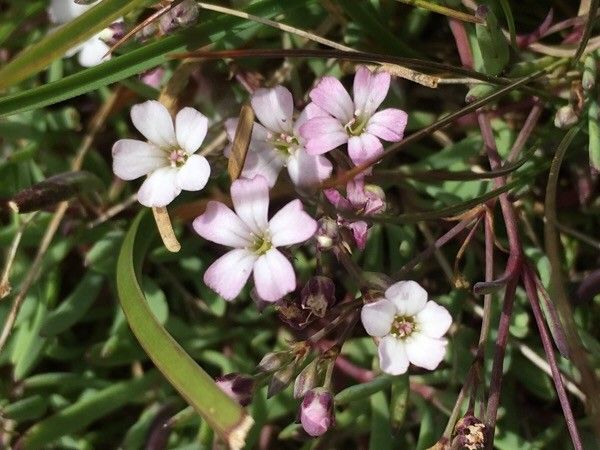
This plant typically reaches up to 15 cm in height and spreads up to 60 cm. It features small, narrow leaves that are gray-green in color, growing on thin stems. The delicate flowers, which are small and white or pinkish-white, have five petals and form clusters at the ends of the stems.
Gypsophila repens thrives in well-drained soil with full sun exposure, though it can also tolerate partial shade. While drought-tolerant once established, it requires regular watering during its initial growth period.
Commonly used as a ground cover or edging for borders due to its low-growing habit, this plant’s delicate flowers also make it an attractive addition to rock gardens or mixed borders.
In summary, Gypsophila repens is an easy-to-grow perennial that enhances any garden setting with its delicate foliage and dainty blooms, adding both beauty and charm.
Creeping baby's-breath is fairly disease-resistant and generally not prone to illnesses. Nevertheless, it can be vulnerable to pests and diseases present in its environment. These problems are typically not serious. As for care, this plant requires moderate maintenance. It should be pruned regularly to maintain a good appearance and healthy growth. Fertilizing can also help encourage flowering. Creeping baby's-breath is suitable for anyone with outdoor space, such as a garden or patio, and does not demand extensive care experience. It may need more attention when grown indoors.
How to keep Gypsophila Repens.
Light
Creeping baby's-breath flourishes with abundant sunlight, which is necessary for healthy growth. Native to habitats with strong sun exposure, it can have its development slowed by too little light. While excessive sunlight can harm some plants, creeping baby's-breath is not prone to that common issue.
Water
Creeping baby's-breath flourishes in conditions similar to alpine environments, where the soil is well-drained and receives occasional moisture. To keep the plant healthy, water it weekly. However, it is drought-tolerant, which makes it an excellent choice for rock gardens. Aim for a balanced soil moisture level, and take care not to overwater during its active growing season.
Humidity
This plant will thrive in moderate humidity, which is probably the level in your home. However, misting it a few times a week can be very beneficial. Make sure the room has good ventilation.
Temperature
Creeping baby's-breath is native to habitats where temperatures usually range from 68 to 100 °F (20 to 38 ℃). It prefers these moderately hot conditions for optimal growth. If temperatures vary with the seasons, consider providing a steady environment that mimics its native conditions.
Fertilizer
Appropriate fertilization is essential for the health and appearance of Creeping baby's-breath. Fertilize Creeping baby's-breath during the summer, repeating the application monthly throughout the season. The nutrients provide energy for growth and help maintain the plant's parts. Fertilizing improves Creeping baby's-breath's flower display, ensuring the best blooms.
Pruning
Creeping baby's-breath is a mat-forming perennial that features delicate white flowers. To promote reblooming, enhance plant health, and prevent overcrowding, prune it from early to late spring by trimming back any spent blooms and straggly growth. For effective cuts and to minimize stress on the plant, be sure to use clean, sharp tools.
Pot & Repot
Repot creeping baby's-breath every 2 to 3 years in early spring. Choose a shallow, wide pot to accommodate its spreading growth habit. Use well-draining soil and water moderately to avoid root rot. Thanks to its resilience, creeping baby's-breath is an ideal choice for rock gardens or wall plantings.
Botanical profile.
- Plant Type
- Herb
- Life Cycle
- Perennial
- Hardiness Zone
- 10-12
- Mature Height
- 15 cm
- Mature Spread
- 46 cm
- Leaf Color
- Green
- Leaf Type
- Semi-evergreen, Deciduous
- Flower Color
- Pink, White
- Flower Size
- 1.02 cm to 1.52 cm
- Bloom Time
- Late spring, Summer
- Planting Time
- Spring, Autumn
- Harvest Time
- Mid summer, Late summer, Early fall, Mid fall
- Native Area
- Germany, Austria, Italy, Spain, Switzerland, Slovakia, Poland, Croatia, Slovenia, France
Other names.
Reader questions.
How should I water my Creeping baby's-breath plant?
To properly water the Creeping baby's-breath, it is recommended to use filtered water at room temperature. Tap water should be avoided as it can contain harmful particles. It is important to use water that is neither too cold nor too hot, as the plant is accustomed to a warm environment. Overhead watering should be avoided as it can cause problems with the foliage. Instead, water the soil directly until it is completely soaked. This helps the roots absorb moisture and spread throughout the soil to gather necessary nutrients.
Why do I need to add plant food to my Creeping baby's-breath plant?
Fertilizers and soil nutrients are like fuel for your Creeping baby's-breath plant, helping it to grow healthily. Plants generally use nutrients in the soil to create new plant material and maintain their existing components. In the case of Creeping baby's-breath, fertilization is particularly important for producing beautiful flowers. Since the flowers are the main attraction of this plant, most gardeners strive to ensure they appear at their best. Fertilization is a reliable method to help your Creeping baby's-breath produce the most vibrant and impressive blooms.
What are the sunlight requirements for Creeping baby's-breath?
Creeping baby's-breath requires above 6 hours of sunlight to thrive, a condition known as full sun. It's crucial to observe how sunlight moves throughout your garden to choose locations that offer an ideal balance of light and shade, ensuring the plants' well-being. This abundant sun exposure is essential for its healthy growth, coming from environments where significant sunlight is the norm. Notably, while underexposure can stunt its growth, creeping baby's-breath is relatively resilient against the common issue of damage from overexposure.
What is the native environment and optimal temperature range for Creeping baby's-breath (Gypsophila repens)?
Creeping baby's-breath is native to environments where the typical temperature range is between 68 to 100 °F (20 to 38 °C). It thrives in these moderately hot conditions for optimal growth. To ensure the plant's well-being, especially if you're in an area with seasonal temperature fluctuations, it is crucial to simulate its native conditions as much as possible. During colder seasons, it's recommended to move the plant indoors to a location with bright light but away from direct contact with heaters, and make sure to maintain the temperature above 20°C to foster healthy growth. It's particularly important to avoid any temperatures that drop near or below 5°C, as these can be detrimental to the plant.
What should I do if I give my Creeping baby's-breath plant too much or too little water?
Overwatering is a more common issue for the health of your Creeping baby's-breath. It can cause wilting and yellowing of the stems and leaves. Prolonged overwatering can also lead to diseases like root rot, mold, and mildew, which are fatal to the plant. Underwatering is less common because this plant is drought-tolerant, but it can still happen. Signs of underwatering include brittle and brown leaves. It's important to recognize the signs of overwatering early on because some diseases, like root rot, may be irreversible if not addressed promptly. Reduce watering immediately if you notice early signs of overwatering. Check the soil quality and replace it if it drains poorly. If you see signs of underwatering, increase your watering frequency until the plant shows improvement.
When should I put fertilizer on my Creeping baby's-breath plant?
The Creeping baby's-breath plant goes through two main phases each year. The first phase, called the dormant phase, happens during the winter when the plant has minimal new growth. The second phase, known as the active growth phase, occurs in spring and fall. During this phase, fertilization is most important for the Creeping baby's-breath. It's recommended to start fertilizing in the spring and continue once per month until the end of summer. As fall approaches, you can gradually decrease the frequency of fertilization.
How can artificial lighting support the growth of indoor Creeping baby's-breath?
Indoor Creeping baby's-breath plants require adequate lighting to grow optimally, especially when natural sunlight is scarce, like during winter or in less sunny spaces. Artificial lights, such as LED lights customizable to specific plant wavelength needs, provide a vital solution. Full sun plants need artificial light intensity ranging from 30-50W per square foot, while the lights should be placed 12-36 inches above the plant and turned on for 8-12 hours per day to mimic natural sunlight conditions effectively.
What are the symptoms of low temperature exposure in Creeping baby's-breath, and how can they be addressed?
Creeping baby's-breath is not tolerant of cold and shows clear symptoms when exposed to low temperatures. Ideal growing temperatures are above 20°C, and it is crucial to keep it above 5°C during winter. Exposure to temperatures below 1°C can cause the leaves to lighten in color, and frost damage may turn them brown or black, leading to wilting and drooping. To address frost damage, you should trim away the damaged parts of the plant and immediately move it to a warmer environment indoors. Placing the plant near a south-facing window ensures it receives adequate sunlight while avoiding the placement near heaters or air conditioning vents to prevent the air from becoming excessively dry.
How often do I need to water my Creeping baby's-breath plant?
To determine if your potted Creeping baby's-breath needs water, stick your finger in the soil. If the top few inches are dry, it's time to water. The same method can be used for outdoor plants. You'll typically need to water once a week in spring and early fall, but during hot weather, you may need to increase watering to twice a week or more. However, mature Creeping baby's-breath plants are quite resilient and can withstand drought.
When is the best time to not give fertilizer to my Creeping baby's-breath?
To best support the growth of Creeping baby's-breath, be mindful of avoiding root burn. During the active growing period of spring and summer, extra nutrients are beneficial. However, when the plant enters its dormancy stage in fall and winter, it is recommended to refrain from fertilizing.
What are the symptoms of inadequate lighting in Creeping baby's-breath?
Inadequate lighting can lead to several symptoms in Creeping baby's-breath, including smaller new leaves, leggy or sparse growth, faster leaf drop, slowed or halted growth, and lighter-colored or yellow leaves indicating chlorophyll deficiency. Excessive sunlight, on the other hand, can cause sunscald, leaf curling, wilting, leaf scorching, and chlorosis, where leaves lose their green color.
How does Creeping baby's-breath react to high temperatures, and what measures should be taken for its care?
Creeping baby's-breath prefers its environment to remain below 38°C during the hotter months. It is susceptible to stress and potential sunburn when temperatures exceed 43°C, leading to the leaves lightening in color. In such instances, it is advisable to trim away any sunburned or dry parts of the plant. To protect the plant from excessive heat, move it to a shaded location, particularly away from the harsh midday and afternoon sun. Furthermore, maintaining the soil's moisture through watering in the morning and evening can help alleviate the stress caused by high temperatures.