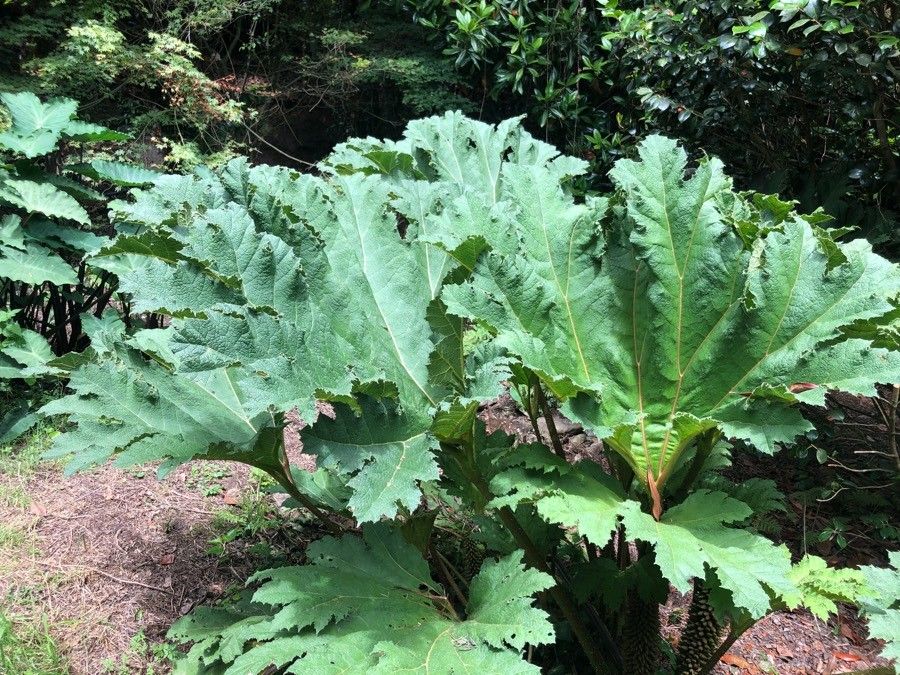
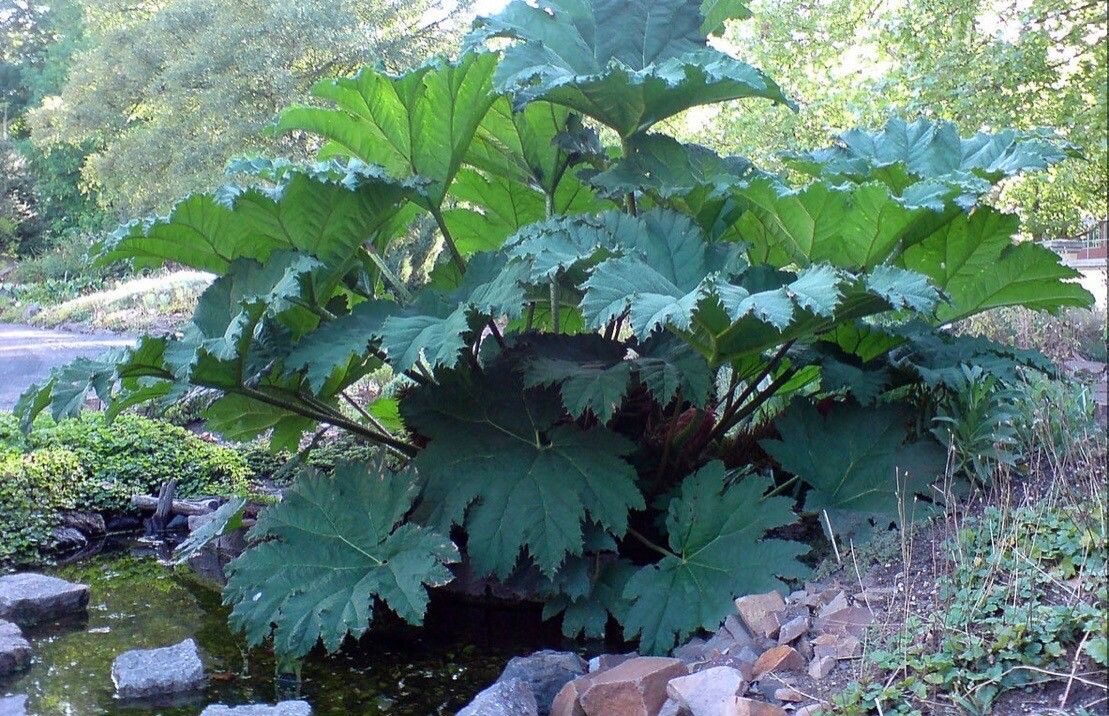
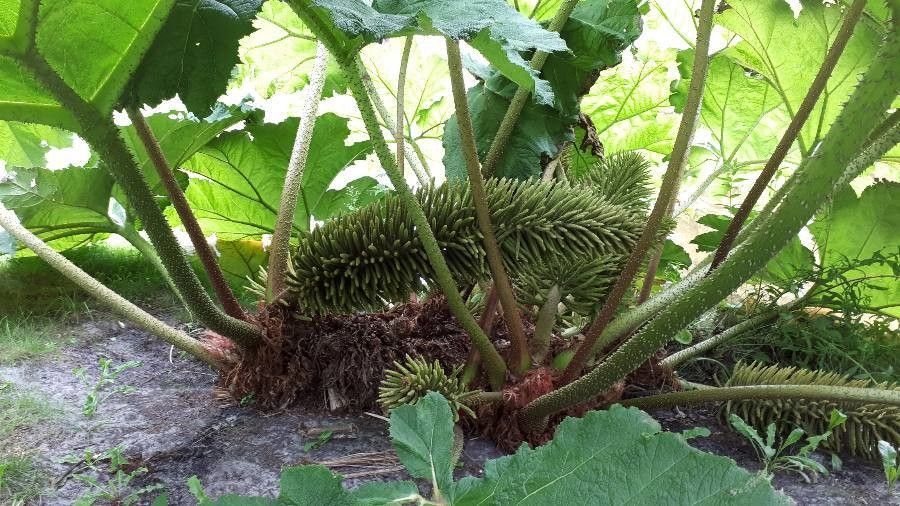
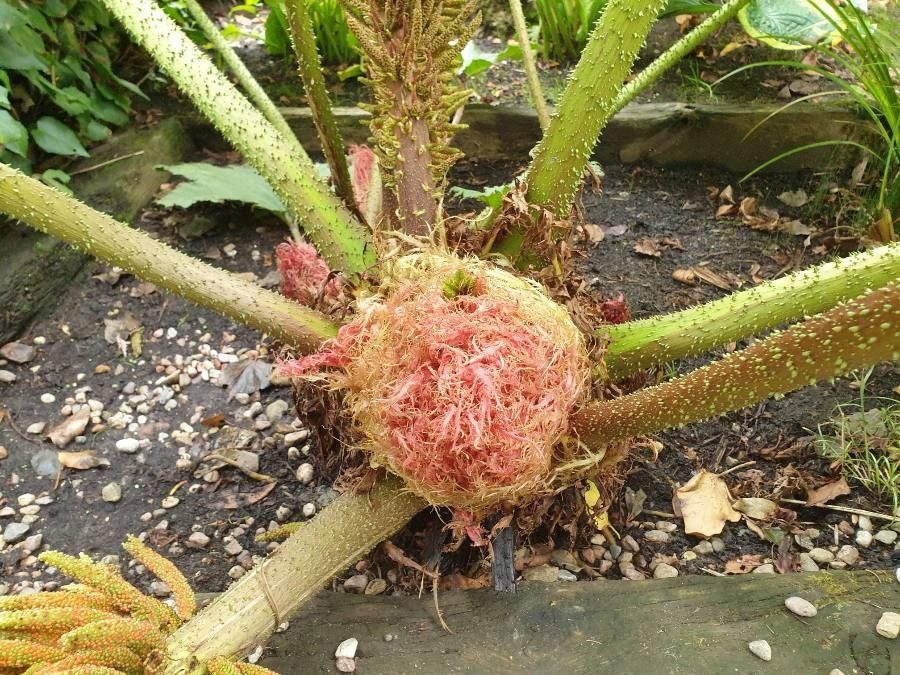
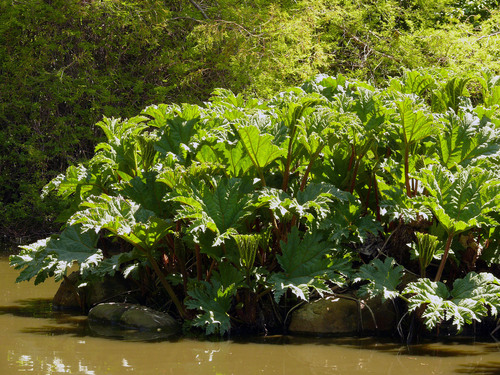
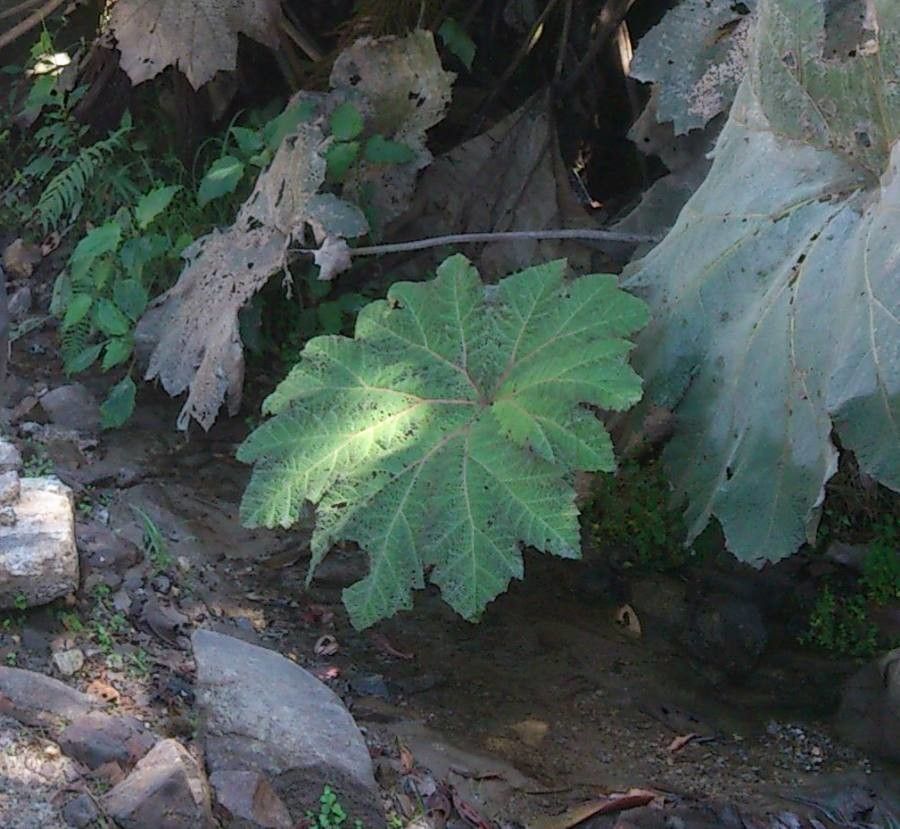
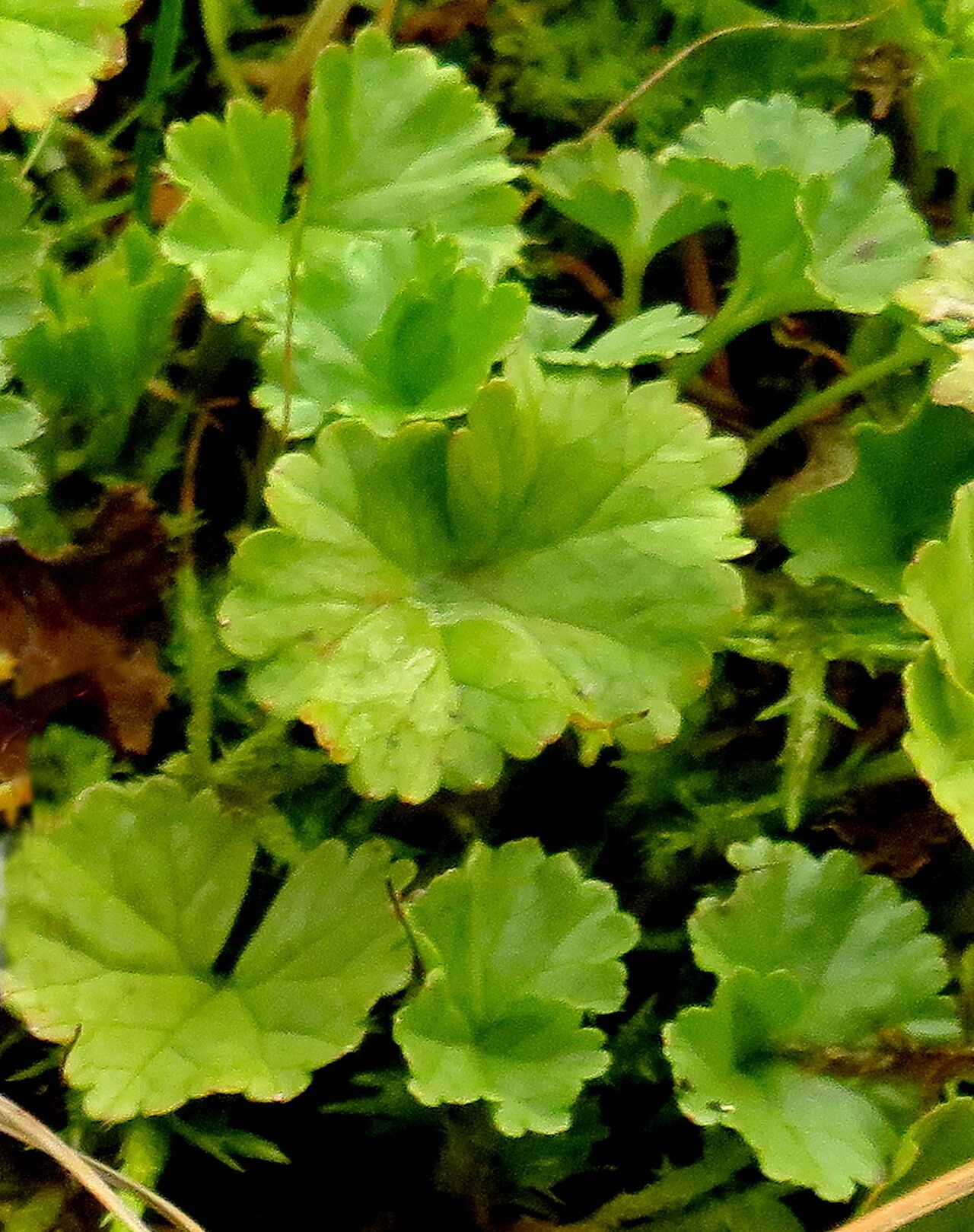
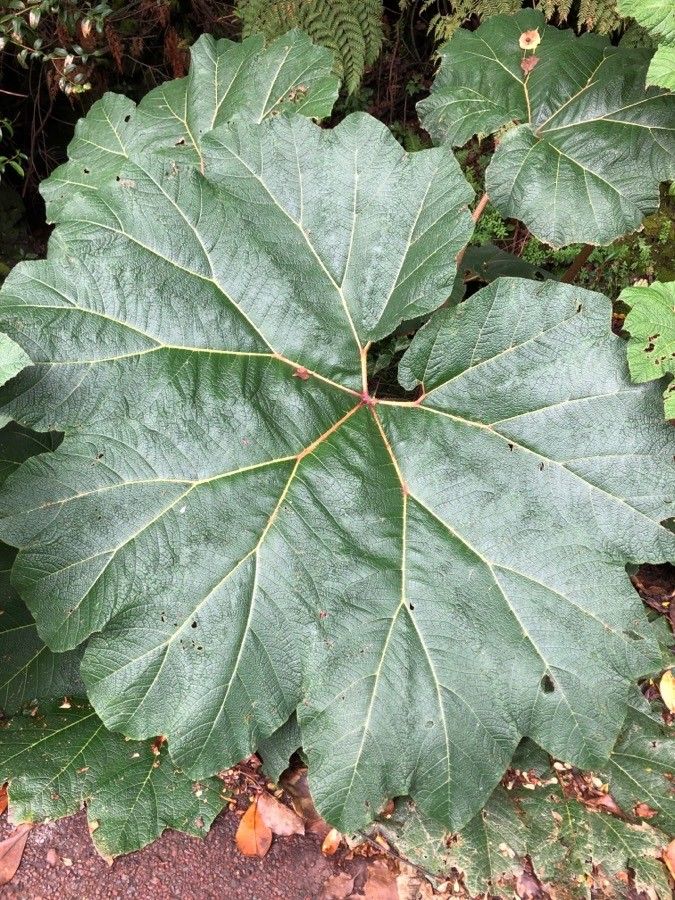
Gunnera manicata, also known as giant rhubarb or dinosaur food, is a large herbaceous perennial plant native to the damp forests of South America. It is a striking plant that can grow up to 2.5 meters tall and 4 meters wide, with leaves reaching up to 2 meters in diameter.
The leaves of Gunnera manicata are deeply lobed with a rough texture and spiky edges. They are borne on thick stalks that emerge from the center of the plant, forming an impressive rosette shape.
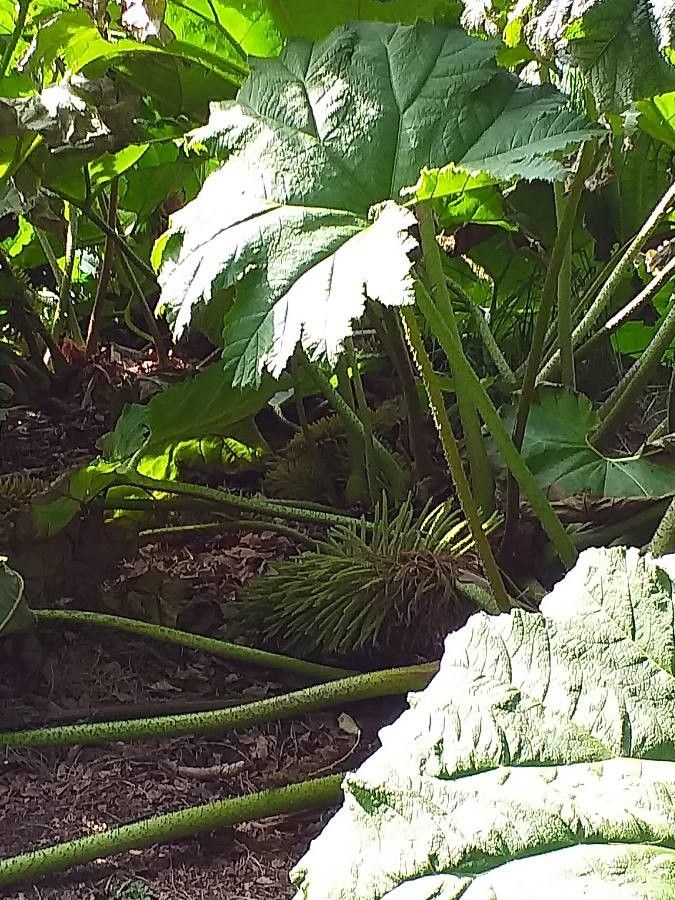
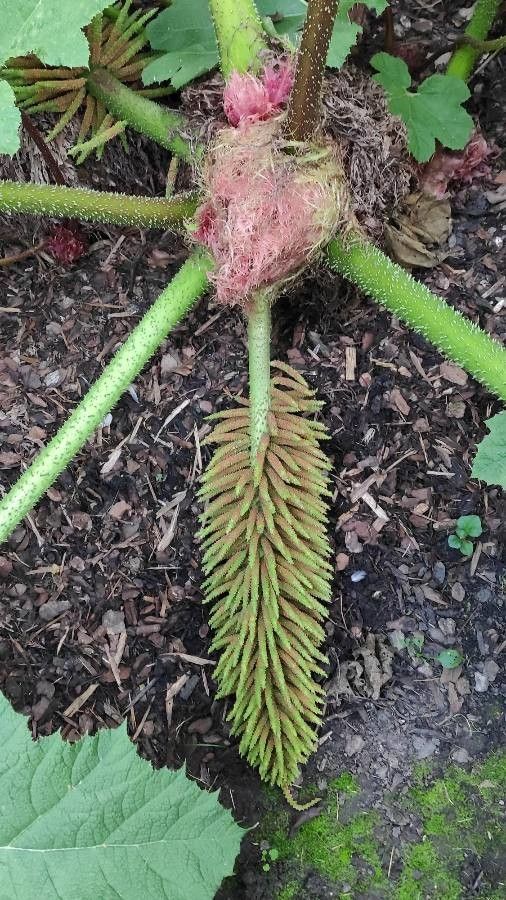
In early summer, Gunnera manicata produces tall spikes of small greenish flowers that are followed by small red fruits in autumn. The flowers attract bees and other pollinators, while the fruits provide food for birds.
Gunnera manicata prefers moist soil conditions and partial shade but can tolerate full sun if given enough water. It is commonly used as an ornamental plant in gardens due to its impressive size and unique appearance.
In addition to its ornamental value, Gunnera manicata has been used for medicinal purposes by indigenous people in South America for centuries. The roots have traditionally been used to treat various ailments, including rheumatism, fever, diarrhea, and wounds.
Overall, Gunnera manicata is an impressive plant with both ornamental and traditional medicinal uses, making it popular among gardeners around the world today!
Giant rhubarb has strong disease resistance and is generally not prone to illnesses. However, it can be affected by pests and diseases present in its environment. These infections are typically not serious. Regarding care, this plant needs moderate maintenance. It should be pruned regularly to keep a tidy appearance and support healthy growth. Feeding with fertilizer can also encourage flowering. Giant rhubarb is appropriate for anyone with outdoor space, like a garden or patio, and does not demand extensive gardening experience. It may require more attention if grown indoors.
How to keep Gunnera Manicata.
Light
The giant rhubarb favors locations with moderate sun, though it is hardy in areas that get uninterrupted sunlight. Native to habitats with variable light conditions, it does well under different light intensities. Excessive sun can cause leaf burn, while too little light can inhibit its growth.
Water
Giant rhubarb, a plant native to the cloud forests of South America, thrives in humid and moist environments. It prefers wet soil and requires watering at least once a week. As an herbaceous perennial, it grows well outdoors and benefits from abundant rainfall. Its large leaves are adept at capturing rainwater, helping the plant stay hydrated and absorb nutrients.
Temperature
Giant rhubarb is fairly adaptable to temperature, able to tolerate higher heat and larger temperature fluctuations. In hot weather, attention should be paid to watering and providing appropriate shade to avoid sunburn. However, Giant rhubarb is relatively sensitive to low temperatures; it can endure some cold, but excessively low temperatures may cause frost damage.
Fertilizer
One fertilizer application in spring is generally adequate for Giant rhubarb, though multiple feedings can boost growth. Feed every month to six weeks. Fertilization improves the leaves' appearance and function, helping maintain uniform color and healthy texture. It also encourages root development and nutrient uptake for the plant's long-term health.
Pruning
To maintain healthy growth, prune giant rhubarb from early to late spring. Focus on removing dead or damaged leaves and old flower stems to improve air circulation. Use sterilized tools and avoid excessive pruning to prevent stressing the plant, ensuring it develops healthily and robustly.
Botanical profile.
- Plant Type
- Herb
- Life Cycle
- Perennial, Annual
- Genus
- Gunnera
- Family
- Gunneraceae
- Hardiness Zone
- 6-8
- Mature Height
- 2.44 m
- Mature Spread
- 4.57 m
- Leaf Color
- Green
- Leaf Type
- Deciduous
- Flower Color
- Red, Green, Brown
- Flower Size
- 30.48 cm
- Bloom Time
- Late spring, Early summer, Mid summer
- Planting Time
- Spring
- Harvest Time
- Mid summer
- Native Area
- Brazil
Other names.
Reader questions.
How should I water my Giant rhubarb plant?
To properly water the Giant rhubarb, it is recommended to use filtered water at room temperature. Tap water may contain harmful particles that could negatively affect the plant's health. It is important for the water to be at room temperature or slightly warmer because the Giant rhubarb is accustomed to a warm environment and cold water can be a shock to its system. Avoid watering the plant from above as this can cause issues with the foliage. Instead, apply filtered room temperature water directly to the soil until it is completely soaked. This method is beneficial as it ensures the roots are adequately moisturized and allows them to continue spreading through the soil and acquiring essential nutrients.
Why should I put fertilizer on my Giant rhubarb plant?
The main structure of the Giant rhubarb is composed of its leaves. Fertilization plays a crucial role in maintaining the health and appearance of these leaves. Proper fertilization ensures that the leaves have consistent color and a healthy texture. Additionally, fertilization benefits the Giant rhubarb below the soil's surface by promoting the growth of new roots and maintaining the existing root system. This not only keeps the plant healthy in the present, but also enhances its ability to absorb soil nutrients in the future.
What are the sunlight requirements for giant rhubarb?
Giant rhubarb thrives in conditions that provide a blend of sun and shade. It requires partial sun, meaning about 3-6 hours of sunlight daily, or full sun, which is above 6 hours of sunlight each day. Observing how sunlight moves through your garden will help you find the ideal spot that offers a perfect balance for the plant, ensuring it remains healthy and happy.
What is the botanical name of Giant Rhubarb?
The botanical name of Giant Rhubarb is Gunnera manicata.
What should I do if I give my Giant rhubarb too much water or too little water?
Overwatering is a more common problem for Giant rhubarb and can cause wilting, yellowing leaves, and diseases like root rot, mold, and mildew. Underwatering is less common, but can make leaves brittle and brown. It's important to recognize the signs of overwatering and address them quickly, as some diseases may be irreversible if left untreated. Reduce watering and assess soil quality if overwatering is suspected. Increase watering if signs of underwatering are present.
What is the best time to put fertilizer on my Giant rhubarb?
To maximize the growth of your Giant rhubarb, start fertilizing when new growth appears in early spring. Generally, a single application of fertilizer is sufficient. However, if you want to further enhance its growth, you can feed the plant multiple times during the spring and early summer, about once every month to a month and a half.
How does the giant rhubarb adapt to different sunlight exposures?
Originating from environments with varied sunlight patterns, giant rhubarb shows a remarkable adaptability to different light intensities. It prefers moderate sun exposure but can also tolerate zones with constant sunshine. However, excessive sun can cause leaf burn, while too little sunlight may inhibit its growth. The plant's resilience to varying light conditions allows it to flourish under both partial and full sun exposures.
How frequently should I give water to my Giant rhubarb?
If your Giant rhubarb is in a pot, the best way to determine if it needs water is to check the soil moisture by sticking your finger into it. If the top two to three inches of soil are dry, it's time to water. For outdoor Giant rhubarb plants in the ground, you can use a similar method to test the soil. Once the top few inches of soil have dried out, it's time to water. Generally, watering once a week is sufficient during spring and early fall. However, during periods of extreme heat, you may need to water twice a week or more. It's important to note that mature, well-established Giant rhubarb plants can endure dry conditions fairly well.
When is it better not to put fertilizer on my Giant rhubarb plant?
During late fall and winter, your Giant rhubarb goes into a dormant phase and stops producing new growth. During this time, it's best to avoid fertilizing it. In spring and summer, if you choose to fertilize, start reducing the amount as summer approaches because the growth rate of the Giant rhubarb slows down too. It's never a good idea to fertilize the Giant rhubarb during extremely hot weather or when the soil is very dry. Fertilizing in those conditions can stress the Giant rhubarb and cause it to die prematurely.
What solutions are recommended for giant rhubarb experiencing light-related issues indoors?
For giant rhubarb facing insufficient light indoors, there are several solutions. Gradually shifting the plant to sunnier spots each week until it receives 3-6 hours of sunlight daily can help. If the plant is large or not easily movable, consider using artificial light, such as a desk or ceiling lamp, for at least 8 hours daily or invest in professional plant grow lights. These steps will optimize growth by providing adequate light, enabling the plant to adapt gradually to changing light conditions.
How much water does my Giant rhubarb plant need?
To ensure your Giant Rhubarb is properly hydrated, it's important to give it a generous amount of water. Make sure the top layer of soil is dry, about two to three inches deep, before watering. When you do water, soak the soil completely. The water should be enough for excess water to drain out through the pot's holes. If you don't see excess water coming out, you might not be giving enough water. However, be careful not to let water build up in the soil, as this can harm the plant. On the other hand, if water doesn't drain from the pot, it could mean the soil isn't draining well, which isn't good for the plant's health. Outdoors, about one inch of rain per week is sufficient.
What kind of fertilizer does my Giant rhubarb need?
Choosing the best fertilizer for a Giant rhubarb plant is simple. Opt for a general-purpose garden fertilizer with equal amounts of nitrogen, phosphorus, and potassium (10-10-10 or similar ratio). Avoid fertilizers with excessive nitrogen. Granular slow-release fertilizers are ideal for Giant rhubarb. Applying them to the soil is easy. Additionally, consider using organic soil amendments like compost to feed your Giant rhubarb.