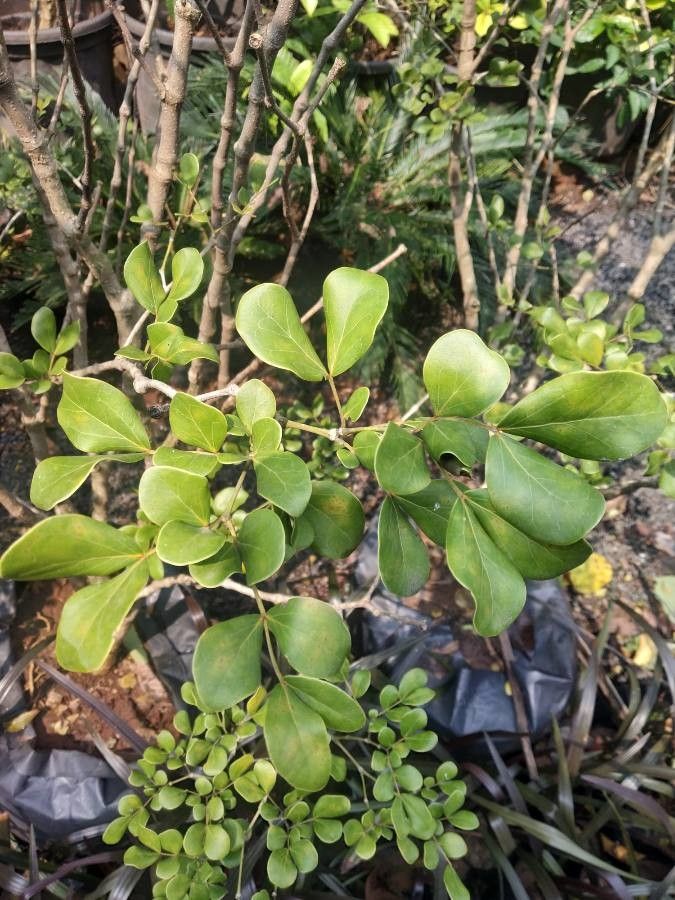
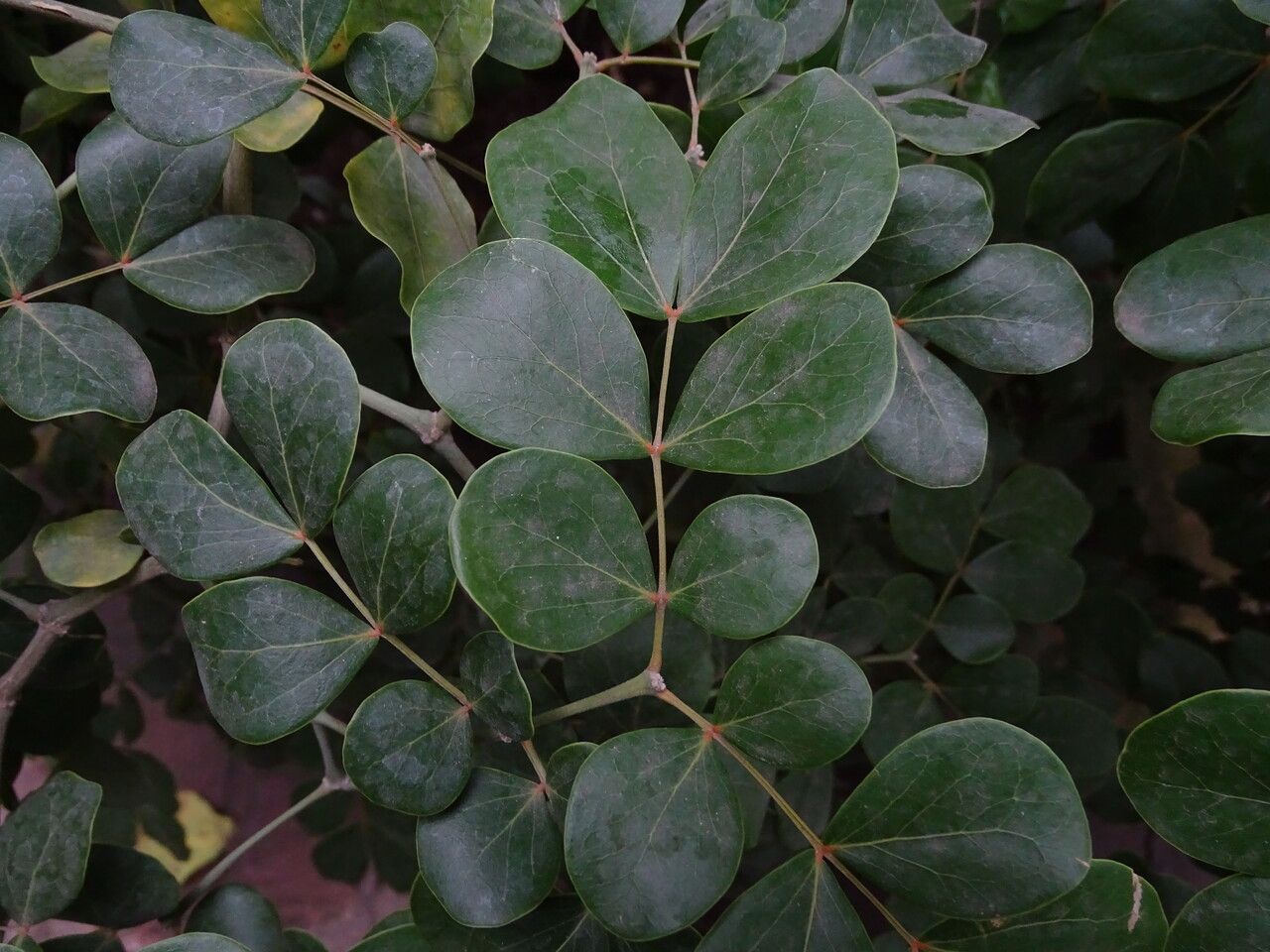
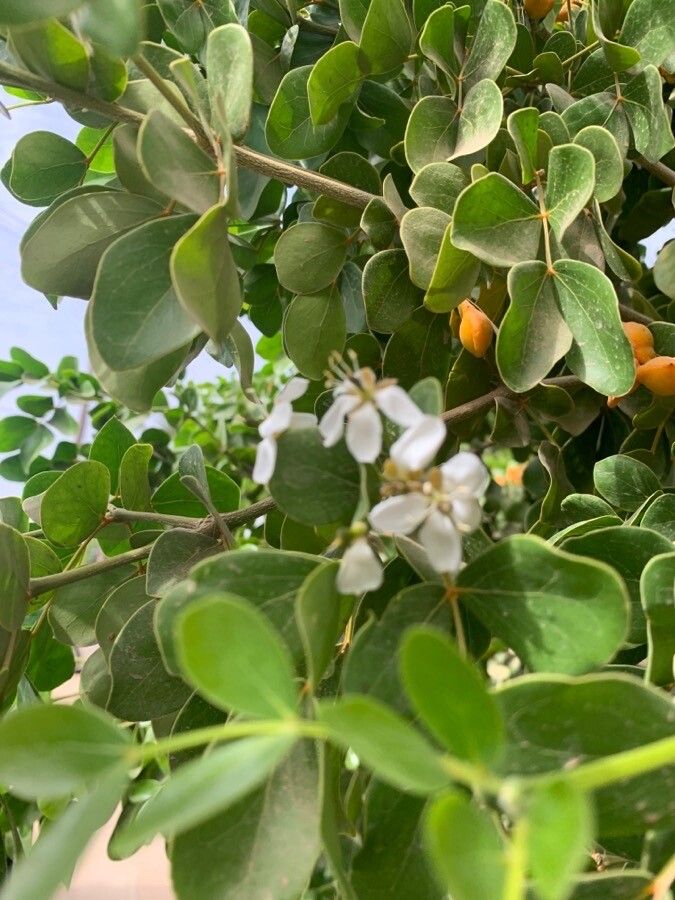
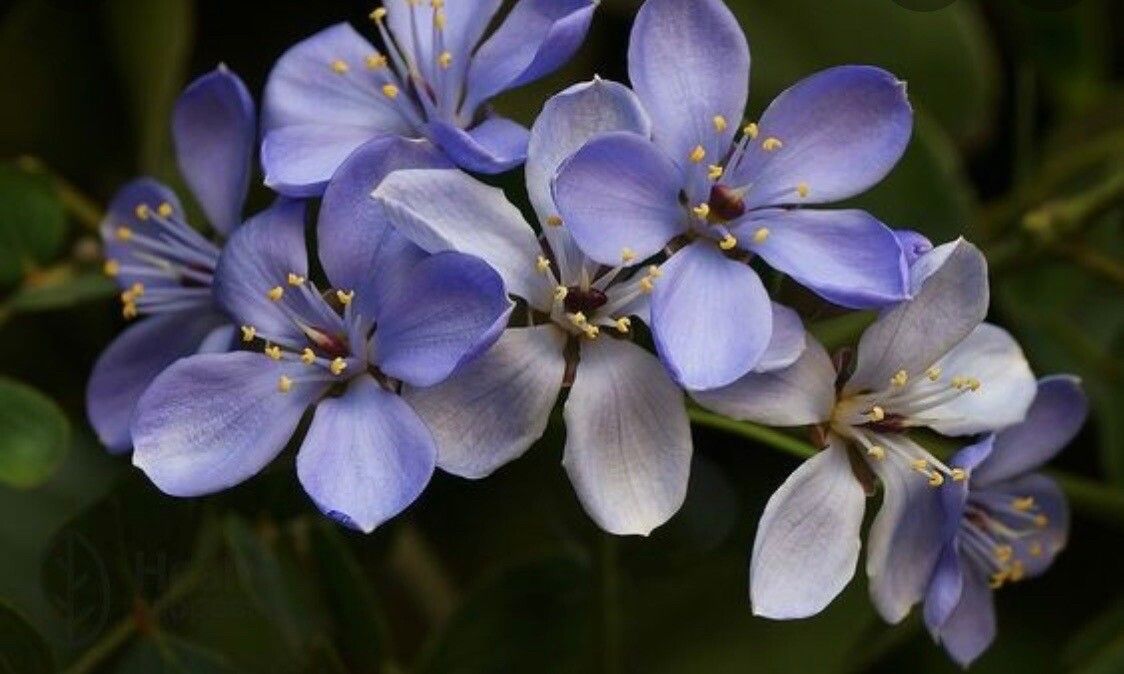
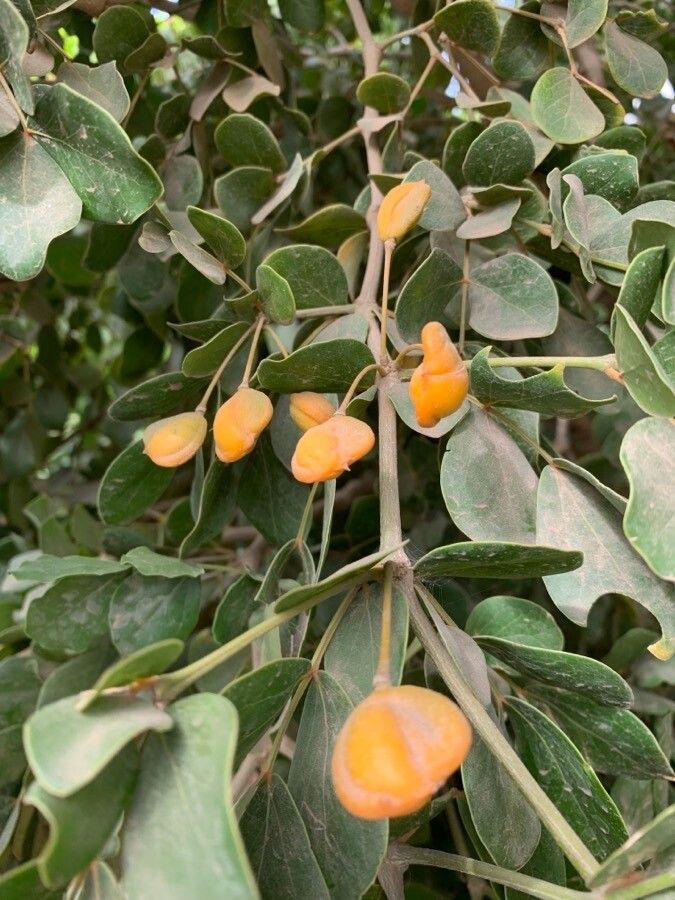
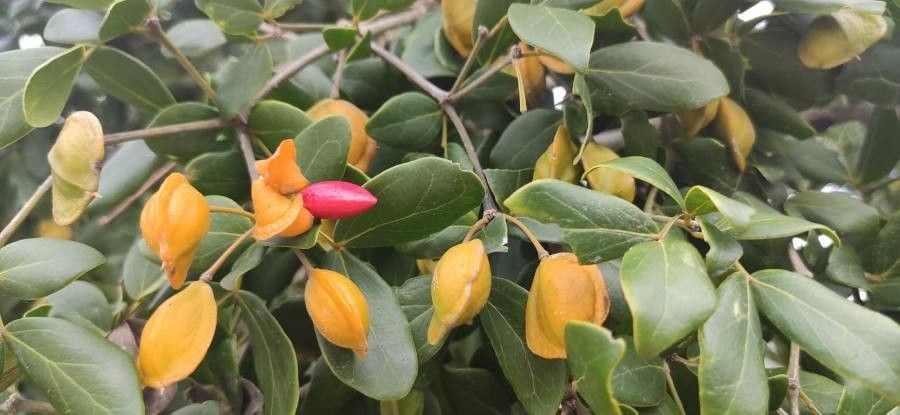
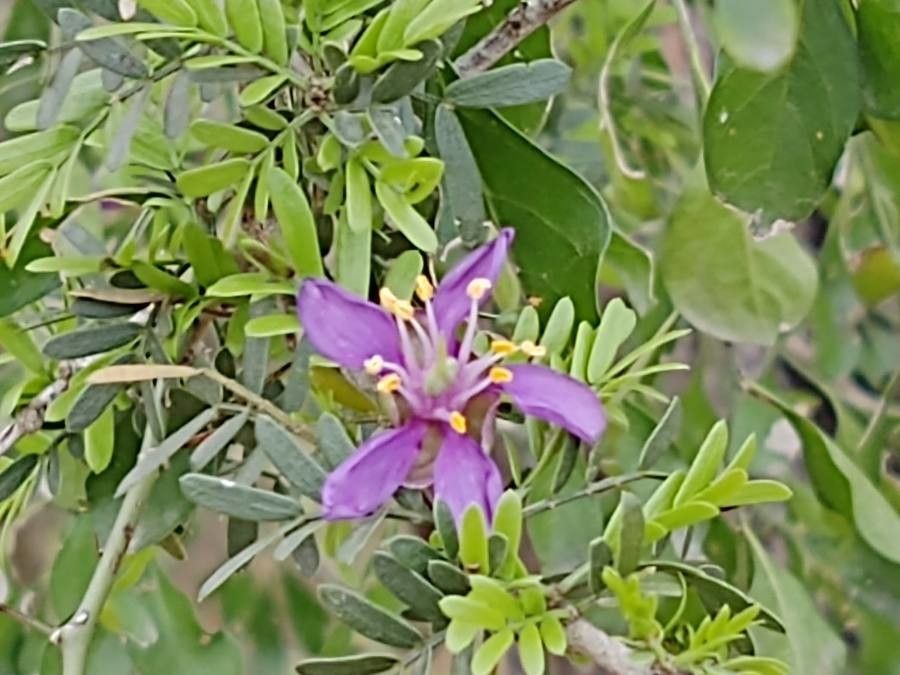
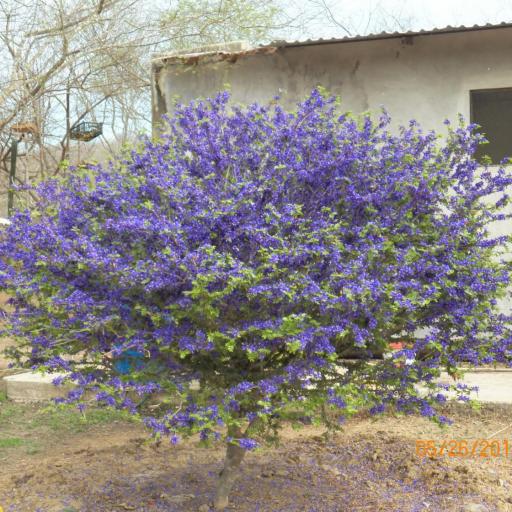
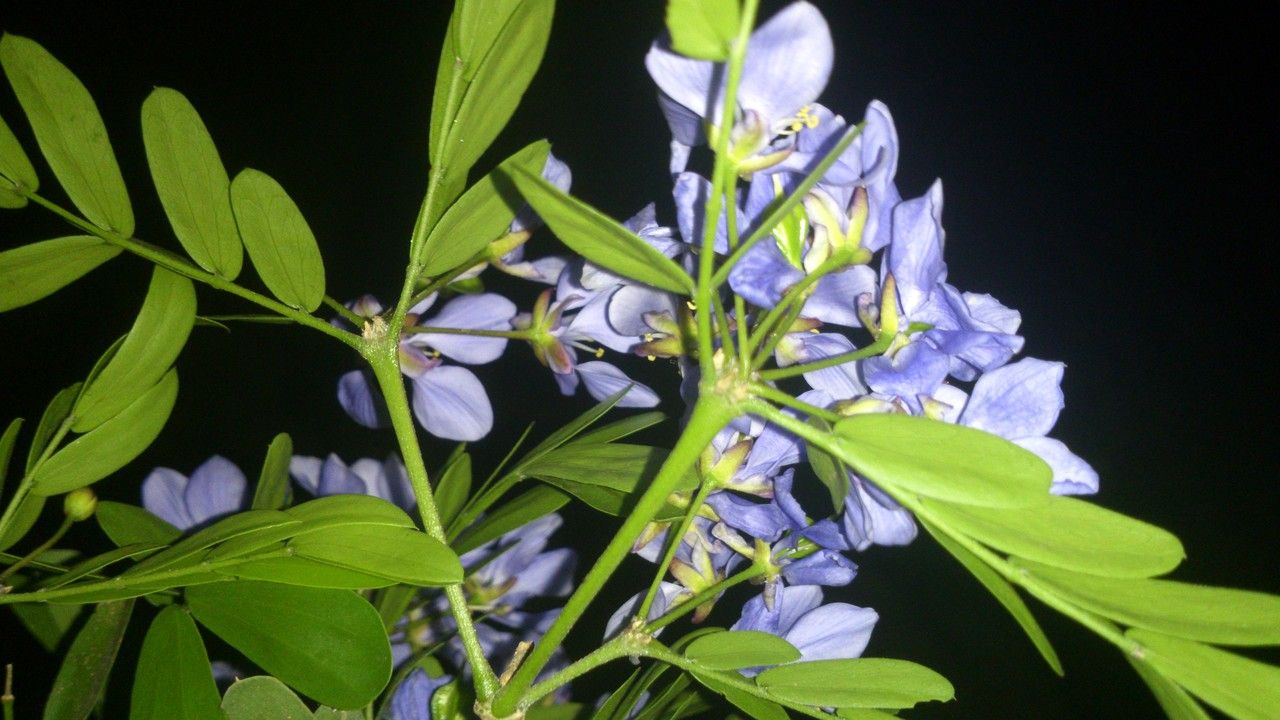
Guaiacum officinale, commonly known as Lignum vitae or Guaiacum, is a slow-growing evergreen tree that belongs to the Zygophyllaceae family. Native to the Caribbean and South America, this tree can reach a height of 10-15 meters. It features a dense crown of dark green leaves arranged in pairs along its branches. The most distinctive feature of Guaiacum officinale is its wood, noted for being one of the hardest and densest in the world. Historically, this wood has been used to craft various tools, furniture, and musical instruments such as maracas and castanets. Additionally, the plant produces beautiful blue flowers that bloom from December through April. These blooms are followed by small green fruits that turn yellow when ripe. For centuries, Guaiacum officinale has been utilized in traditional medicine for its anti-inflammatory properties. It was believed to have healing effects on various ailments, including arthritis, syphilis, and respiratory infections. In modern times, it continues to be used in herbal medicine and has also found applications in contemporary medical practices. Research has confirmed its anti-inflammatory properties, making it useful for conditions like rheumatoid arthritis and osteoarthritis. Overall, Guaiacum officinale remains an important cultural symbol throughout Latin America. It holds significant historical and contemporary importance, particularly in traditional herbal remedies that are still widely practiced in many communities today.
Roughbark lignum-vitae is well resistant to disease and is generally not susceptible to illnesses. Regarding care, this plant is fairly low-maintenance. Planted outdoors it needs little watering, and larger specimens typically do not require pruning. Smaller plants, however, should be pruned after they have bloomed. Roughbark lignum-vitae is appropriate for anyone with an outdoor area, such as a garden or deck, and does not demand much gardening experience.
How to keep Guaiacum Officinale.
Light
Roughbark lignum-vitae prefers locations that receive sunlight for most of the day. In its natural setting, it is found in open, well-lit areas. Insufficient sunlight can cause poor growth, whereas excessive sunlight rarely does significant harm to the plant.
Water
The roughbark lignum-vitae is native to arid regions and is remarkably drought-tolerant, thriving with minimal moisture. It only needs watering every two to three weeks, and the soil should be allowed to dry out between each watering. Ideally grown outdoors, this plant flourishes in well-draining soil that closely resembles its natural habitat.
Temperature
Roughbark lignum-vitae originates from habitats with temperatures of 68 to 100 °F (20 to 38 ℃). It prefers warmer conditions, so cooler seasons may require temperature adjustments to maintain healthy growth.
Fertilizer
The best time to fertilize a Roughbark lignum-vitae is in early spring, as it breaks dormancy. This encourages overall growth and flower development. Fertilizing improves foliage, stems, and branches, while encouraging larger, more vibrant, and longer-lasting flowers. It helps transfer nutrients from the roots to the flowers and boosts the plant's health and resistance to disease.
Pruning
The roughbark lignum-vitae is known for its durable wood and striking blue flowers. To manage its size and control diseases, it's best to prune the plant from early to late winter while it is dormant. This encourages growth in the spring and improves airflow around the plant. Make sure to use clean, sharp tools to make precise cuts near buds or branch junctions for the plant's optimal health.
Botanical profile.
- Plant Type
- Tree
- Life Cycle
- Perennial
- Genus
- Guaiacum
- Family
- Zygophyllaceae
- Hardiness Zone
- 10-12
- Mature Height
- 3.05 m to 9.14 m
- Mature Spread
- 2.44 m to 3.66 m
- Leaf Color
- Green
- Leaf Type
- Evergreen
- Flower Color
- Purple, White, Blue
- Flower Size
- 2.54 cm
- Bloom Time
- Late spring, Summer, Early fall, Mid fall
- Planting Time
- Spring, Summer, Autumn
- Harvest Time
- Late summer, Fall, Early winter
- Native Area
- Colombia, Bahamas, Cuba, Venezuela, Guyana
Other names.
Reader questions.
How should I water my Roughbark lignum-vitae plant?
When watering your Roughbark lignum-vitae, you have flexibility in your choice of watering tools. Watering cans, hoses, or even cups can all be used effectively. It is important to apply the water directly to the soil, ensuring that all areas are evenly moistened to provide water to the entire root system. Using filtered water is recommended to avoid harmful particles in tap water. It is also beneficial to use water that is at or slightly above room temperature to prevent any shock to the plant. However, the Roughbark lignum-vitae generally responds well to any type of water you use.
Why should I fertilize my Roughbark lignum-vitae?
Fertilization plays a crucial role in promoting the overall health and well-being of a Roughbark lignum-vitae. By providing the right amount of energy and nutrients, the plant can develop lush foliage and strong stems and branches. Additionally, fertilization is particularly beneficial for enhancing the beauty of the plant's flowers, making them larger, more vibrant, and longer-lasting. This is because the right fertilizer facilitates the efficient transfer of nutrients from the roots to the flowers. Furthermore, proper fertilization helps maintain the plant's overall health, making it more resistant to diseases.
What are the sunlight requirements for Roughbark lignum-vitae?
Roughbark lignum-vitae requires full sun, which means it needs above 6 hours of sunlight per day to thrive. It's vital to watch how sunlight moves through your garden throughout the day to find spots that offer the perfect balance of light and shade, ensuring the plant's happiness. This species flourishes in environments where it can bask in the sun's rays for most of the day, typically in open, well-lit areas. However, it is important to note that too little sun exposure may lead to suboptimal growth, though the plant usually doesn't suffer significant harm from overexposure to sunlight.
What is the native climate for Roughbark lignum-vitae?
Roughbark lignum-vitae, with its botanic name Guaiacum officinale, thrives in environments where temperatures range between 68 to 100°F (20 to 38°C). This plant prefers warmer climates and is extremely heat-loving. During cooler seasons or in climates that do not naturally meet these temperature requirements, special care must be taken to ensure the plant remains within its ideal temperature range to promote healthy growth.
What should I do if I give my Roughbark lignum-vitae plant too much or too little water?
When planting outdoor plants, especially new or seedling ones, it's important to remember that they can easily become dehydrated. To avoid this, be sure to water them consistently for the first few months, even if they are small or recently planted. This is because once the roots are established, Roughbark lignum-vitae plants can generally rely on rainfall. On the other hand, when growing Roughbark lignum-vitae in pots, overwatering is a common issue. If you accidentally overwater your plant, there are steps you can take to remedy the situation. Immediately stop watering the plant to minimize the effects. Then, carefully remove the plant from its pot and inspect the roots for any signs of root rot. If there is no root rot, you can return the plant to its pot. However, if root rot is present, trim away the affected roots and consider applying a fungicide. Lastly, make sure to repot the plant in well-draining soil. Underwatering is an easier problem to fix. If you notice that your Roughbark lignum-vitae is underwatered, its leaves may droop, dry out, and fall off. Simply water the plant more frequently and you should see the leaves return to their fullness quickly. Remember to adjust your watering frequency promptly if you notice underwatering occurring.
When should I fertilize my Roughbark lignum-vitae?
For optimal growth and flower development of a Roughbark lignum-vitae, it is recommended to fertilize the plant in early spring, when it is coming out of its dormant phase and preparing to bloom. This ensures that the plant has sufficient energy for overall growth. However, fertilizing in the fall can also benefit the plant, although a smaller amount of fertilizer is needed. Additionally, some gardeners choose to fertilize the Roughbark lignum-vitae during planting, but this is not always required.
How can artificial lighting be used for Roughbark lignum-vitae indoors?
Indoor Roughbark lignum-vitae plants require adequate lighting for optimal growth, especially when natural sunlight is insufficient, such as during winter or in less sunny spaces. Artificial lights are a necessary solution, promoting healthier and faster growth. For indoor lighting, LED lights are a popular option as they can be customized to provide specific light wavelengths needed by plants. Full sun plants should have 30-50W/sq ft of artificial light, partial sun plants need 20-30W/sq ft, and full shade plants require 10-20W/sq ft. The light source should be placed 12-36 inches above the plant to mimic natural sunlight, and most plants benefit from 8-12 hours of light per day.
How should Roughbark lignum-vitae be cared for in the autumn and winter?
In the autumn, it's advisable to bring Roughbark lignum-vitae plants that are grown outdoors indoors to protect them from the cold. They should be placed near a bright window to ensure they receive sufficient light, but at a safe distance from heaters to avoid damage from excessive dryness. To ensure the plant's health through winter, temperatures above 20°C (68°F) are beneficial, and it is crucial to prevent exposure to temperatures near or below 5°C (41°F), as these can be detrimental to the plant.
How often do I need to water my Roughbark lignum-vitae?
Most outdoor plants can rely on rainfall for their water needs. However, if your area doesn't receive enough rain, you should consider giving your plants a good watering every 2 weeks in the spring and fall. In the summer, when plants need more water, you'll need to water them more frequently. In the winter, when plants grow slower and require less water, you can water them sparingly or not at all. If you have a young or newly planted Roughbark lignum-vitae, you should water it more often to help it establish and grow into a more adaptable and drought-tolerant plant. For potted plants, there are two main ways to determine how often to water your Roughbark lignum-vitae. One approach is to follow a predetermined schedule, such as watering once a week or every other week. However, this may not always be effective as it doesn't take into account the specific conditions of your growing environment. Another option is to base your watering frequency on the moisture level of the soil. It's generally best to wait until the top two to four inches of soil have completely dried out before watering again.
When is it not a good idea to add fertilizer to my Roughbark lignum-vitae plant?
During the winter, Roughbark lignum-vitae does not require fertilization. This is because it is in a dormant phase and does not need much energy from the soil for new growth. Fertilizing in winter can lead to the negative effects of overfertilization. The ideal times to feed a Roughbark lignum-vitae are early spring and fall. This means that during most of the spring and summer, fertilization is not necessary. It is also advisable to refrain from fertilizing if the plant is exposed to excessively hot or dry conditions.
What are the symptoms of inadequate lighting in Roughbark lignum-vitae?
Roughbark lignum-vitae shows several symptoms when exposed to inadequate lighting. These include smaller new leaves compared to mature ones, leggy or sparse growth, faster leaf drop to conserve resources, slower or halted growth, paler new leaves indicating a lack of chlorophyll, chlorosis leading to yellowing leaves, sunscald causing damage from intense light exposure, leaf curling as a defense mechanism against excessive sunlight, wilting due to increased water loss, and leaf scorching characterized by brown, dry edges on leaves from too much sun. These symptoms help in identifying when the plant is not receiving its ideal light conditions.
What are the symptoms of low temperature exposure in Roughbark lignum-vitae?
Roughbark lignum-vitae shows clear signs of stress when exposed to temperatures below its preferred range. Low temperatures can cause the leaves to lighten in color, and exposure to temperatures below 1°C (34°F) can lead to frost damage, evidenced by leaf discoloration turning brown or black, wilting, and drooping. These symptoms indicate that the plant needs immediate attention to mitigate cold damage.