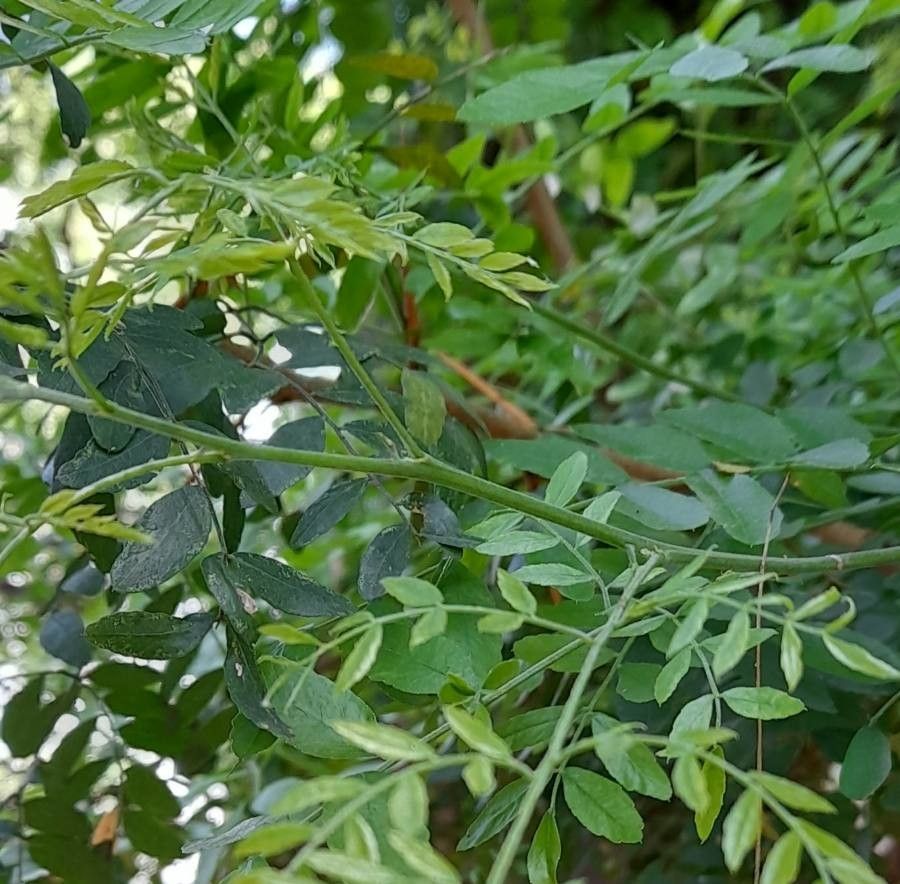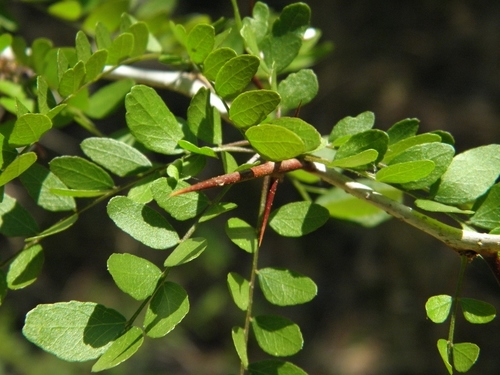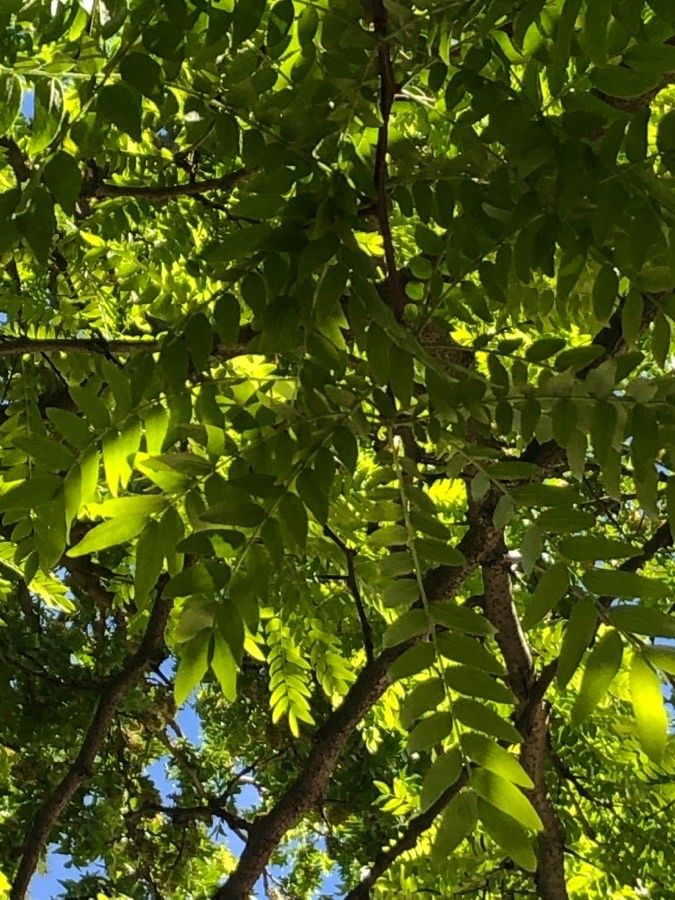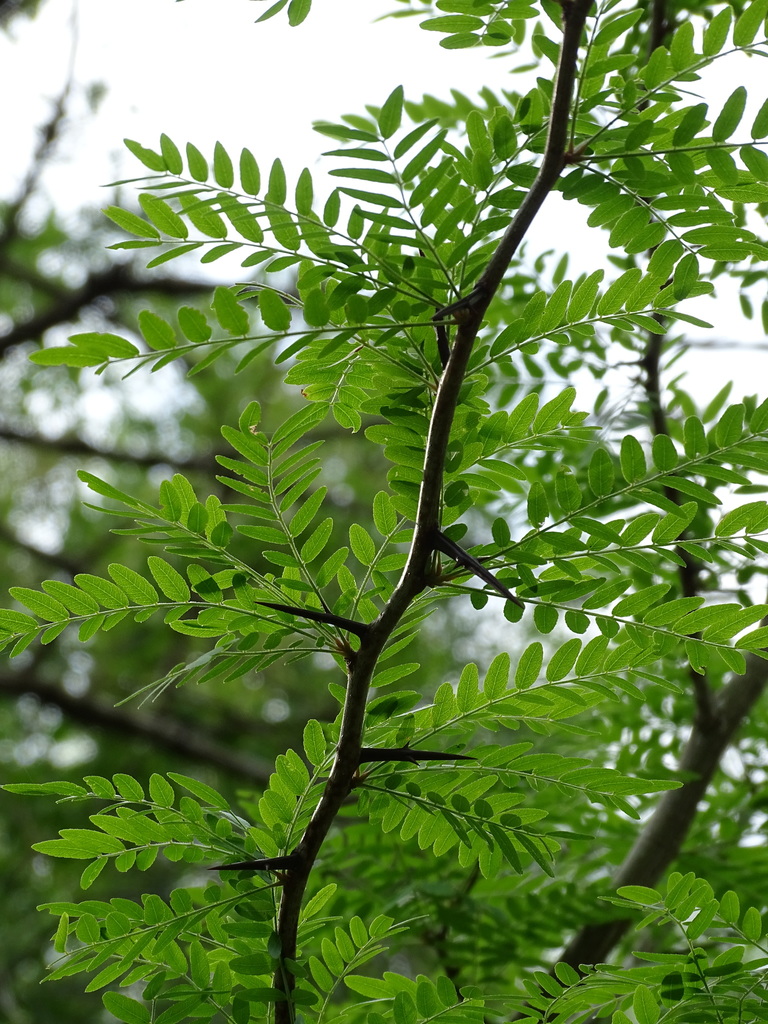
The honey locust (Gleditsia triacanthos), also known as the thorny locust or thorny honeylocust, is a deciduous tree in the family Fabaceae, native to central North America where it is mostly found in the moist soil of river valleys. Honey locust is highly adaptable to different environments, has been introduced worldwide, and can be an aggressive, invasive species outside of its native range.
Honey locust: In the Anglo-Saxon language, locust refers to prickly plants. The word "honey" is used to describe the fruit, which is sweet and sticky, resembling the sensation of honey. Thus, the plant is called the honey locust.
Honey locust has strong resistance to disease and is generally not prone to illnesses. In terms of care, this plant is fairly low maintenance. When grown outdoors it needs little watering, and larger plants typically do not require pruning. However, smaller plants should be trimmed after they finish blooming. Honey locust is appropriate for anyone with outdoor space, such as a garden or a deck, and does not demand a lot of care experience.
How to keep Gleditsia Triacanthos.
Light
Honey locust prefers places with plenty of light, which aids its photosynthesis. It can thrive in locations where sunlight is not constant but still filters through. If it receives too much sun, or is deprived of light, the plant's health can decline.
Water
The honey locust tree is drought-tolerant and prefers a balance of moisture with moderate water requirements. It should be watered every one to two weeks, adjusting the frequency during its dormant period in the colder months.
Humidity
This plant prefers dry conditions, so don't mist it. However, watering it less often can also thrive in higher humidity.
Temperature
The honey locust plant does best with temperatures between 41 and 95 ℉ (5 and 35 ℃). It is native to North America and typically grows in places with mild winters and hot summers. In summer, some shade can help the plant avoid heat stress. In winter, it is advisable to protect the plant from frost.
Fertilizer
Fertilize your Honey locust in early spring to encourage healthy growth. Regular feeding boosts its overall health, producing vigorous growth, better tolerance of harsh conditions, and increased resistance to diseases and pests. Follow a specific fertilization schedule for your Honey locust to maintain foliage that is vibrant, richly colored, and lush.
Pruning
To encourage the healthy growth of a honey locust tree, it's beneficial to prune it strategically in early spring. This helps shape the tree's size and remove any dead branches, which in turn reduces the risk of disease. Pruning at this time allows more sunlight to penetrate and improves air circulation, fostering a healthier canopy. Be sure to focus on opening up the center of the tree to enhance growth and vitality.
Toxicity
Honey locust can produce numerous thorns that are capable of puncturing implement tires. Though not listed as a toxic plant, contact with thorns often results in sore wounds that are slow to heal. Non-Toxic to Dogs, Non-Toxic to Cats, Non-Toxic to Horses.
Further reading →
The toxicity and danger assessments provided are for reference only. We do not assure their accuracy, so it's crucial not to depend on them. Seek professional advice when necessary for accurate guidance.
Botanical profile.
- Plant Type
- Tree
- Life Cycle
- Perennial
- Genus
- Gleditsia
- Family
- Fabaceae
- Hardiness Zone
- 4-9
- Mature Height
- 14.94 m to 39.93 m
- Mature Spread
- 14.94 m
- Leaf Color
- Green, Yellow
- Leaf Type
- Deciduous
- Flower Color
- Green, Yellow, White
- Flower Size
- 0.51 cm to 0.76 cm
- Bloom Time
- Late spring, Early summer
- Planting Time
- Spring, Autumn
- Harvest Time
- Mid summer, Late summer, Early fall
- Native Area
- Mexico
Other names.
Reader questions.
When Should I Water My Honey Locust?
Timely watering is crucial for the health and growth of honey locust trees, ensuring they're hydrated enough for vital processes like photosynthesis while preventing diseases like root rot. Check the soil moisture; if the soil is dry at a depth of 1 to 2 inches, it's time to water. The leaves can also indicate the tree's need for water through wilting, drooping, or a decline in vibrancy. Watering frequency should increase in spring and summer, reflecting the tree's growth phase and higher evaporation rates, and decrease during the dormant winter months. Newly transplanted honey locusts require more frequent watering until they're well established. It's important to recognize the risks of incorrect watering, as both over and underwatering can lead to significant health issues for the tree.
Why should I put fertilizer on my Honey locust tree?
No matter the type of Honey locust you have, regular fertilization is important to ensure that your plant stays healthy. Providing the proper nutrients will result in stronger growth and increased resilience to challenging growing conditions. This will also enhance its ability to fight off diseases and pests. The foliage of your Honey locust is a standout feature, so it's crucial to maintain its health. To achieve this, create and follow a regular fertilization schedule that is tailored to your specific Honey locust. By doing so, you will encourage the growth of vibrant, lush leaves with a deep color.
What are the sunlight requirements for honey locust plants?
Honey locust plants require full sun, which means they should receive above 6 hours of sunlight daily, but they can also adapt to partial sun conditions, with about 3-6 hours of sunlight. Observing how sunlight moves through your garden can help you find the ideal spot that offers a balance of light and shade, ensuring your plants grow healthy and strong.
What are the optimal growth conditions for honey locust?
The honey locust (Gleditsia triacanthos), native to North America, thrives in temperatures ranging from 41 to 95 °F (5 to 35 °C), flourishing in areas with mild winters and hot summers. Though the plant has a strong resistance to cold, it benefits from some shade during the summer to prevent heat stress and should be protected from frost in winter. Interestingly, special frost protection measures are typically not required due to its cold resistance. However, in anticipation of temperatures dropping below its tolerance limit, protecting the plant by wrapping its trunk and branches can be beneficial. Additionally, watering the plant abundantly before the first freeze of autumn to keep the soil moist helps in preventing drought and water scarcity throughout the winter and early spring.
How Should I Water My Honey Locust?
Watering a honey locust correctly involves employing a deep-watering technique, which encourages the growth of deep roots, making the tree more drought-resistant. Use a watering can with a shower spout to evenly distribute the water without eroding the soil. For optimal hydration, a moisture meter can be helpful, especially in hot, dry months. Focus on watering at the base of the trunk to ensure that the water reaches the deep root system while avoiding watering the foliage to prevent potential fungal growth.
When should I put fertilizer on my Honey locust plant?
To ensure healthy growth and resilience, it is recommended to fertilize your Honey locust twice a year. The first time should be in late winter or early spring, providing essential nutrients for growth when the weather gets warmer. Additionally, if you live in a warm climate region, it is beneficial to apply fertilizer again in early fall. This will supply extra nutrients for the following growing season and help your Honey locust withstand the winter cold without foliage damage. Early fall fertilization is particularly crucial as it allows new branches enough time to grow and strengthen before the arrival of winter.
How does sunlight affect honey locust plants, and what are the essentials for their growth?
Honey locust plants have a strong preference for environments with ample sunlight, which is crucial for their photosynthesis process. Although they can grow in areas with less abundant sunlight, their health may decline if they are overexposed to sunlight or deprived of it. In scenarios where natural sunlight is insufficient, especially during winter or in less sunny locations, artificial lighting can be a vital solution for indoor plants. Proper artificial lighting, such as LED lights, should be tailored to the specific needs of the plants, with considerations for the type of light, the distance from the plants, and the duration of exposure to ensure optimal growth.
How does low temperature affect honey locust and what are the solutions?
Honey locust is notably cold-tolerant and thrives best at temperatures above its minimum growth threshold. In winter, it's crucial to maintain temperature levels above its cold tolerance minimum. Should temperatures dip below this critical limit, the plant might not show immediate distress during winter. However, come spring, branches may appear brittle and dry, failing to produce new shoots. The solution to this issue is relatively straightforward—pruning away any dead branches that have failed to produce new leaves come spring is advised to encourage healthier growth.
How Much Water Does Honey Locust Really Need?
The amount of water a honey locust needs depends on its size, the pot size (if applicable), and the depth of its roots. A medium-sized honey locust requires enough water to moisten the top 12-16 inches of soil. Signs of adequate watering include robust growth and vibrant foliage. Conversely, yellowing leaves may signal under-watering, while brown, wilting leaves might indicate over-watering. Be mindful not to over-water to prevent root rot and other diseases, and allow the soil to dry between watering sessions.
When is not a good time to add fertilizer to my Honey locust plant?
To ensure the proper care of your Honey locust tree, it is important to know when to fertilize and when to avoid it. There are certain periods throughout the year when fertilization should be withheld. The first is during the winter months, particularly early and mid-winter, when the tree is dormant and does not require nourishment. Additionally, it is not advisable to fertilize the tree during late spring and summer. This is because the weather during this time tends to be hotter and drier, which can have a negative impact on the tree if it is fertilized. To maintain the health of your Honey locust, it is best to follow a fertilization schedule that involves feeding only during early spring and early fall.
What are some symptoms of inappropriate sunlight exposure for honey locust plants?
Honey locust plants can show several symptoms if they are not receiving appropriate sunlight. Lack of sunlight can result in smaller new leaves, leggy or sparse growth, faster leaf drop, slower or no new growth, and lighter-colored new leaves. Excessive sunlight can cause chlorosis, sunscald, leaf curling, wilting, and leaf scorching. These symptoms indicate either a deficiency or excess of sunlight, which negatively affects the plant's ability to photosynthesize and maintain good health.
How does high temperature affect honey locust and what are the solutions?
During summer, the temperature around a honey locust should ideally remain below its maximum tolerated level. Surpassing this temperature can lead to symptoms such as lighter leaf color, dry and withered tips, and an increased susceptibility to sunburn. To counter these effects, it's recommended to trim away any sunburned or dried-up parts of the plant. Relocating the plant to a spot with ample shade during the midday and afternoon sun or using a shade cloth can offer protection. Moreover, keeping the soil moist through watering in the morning and evening can alleviate some of the stress caused by high temperatures.