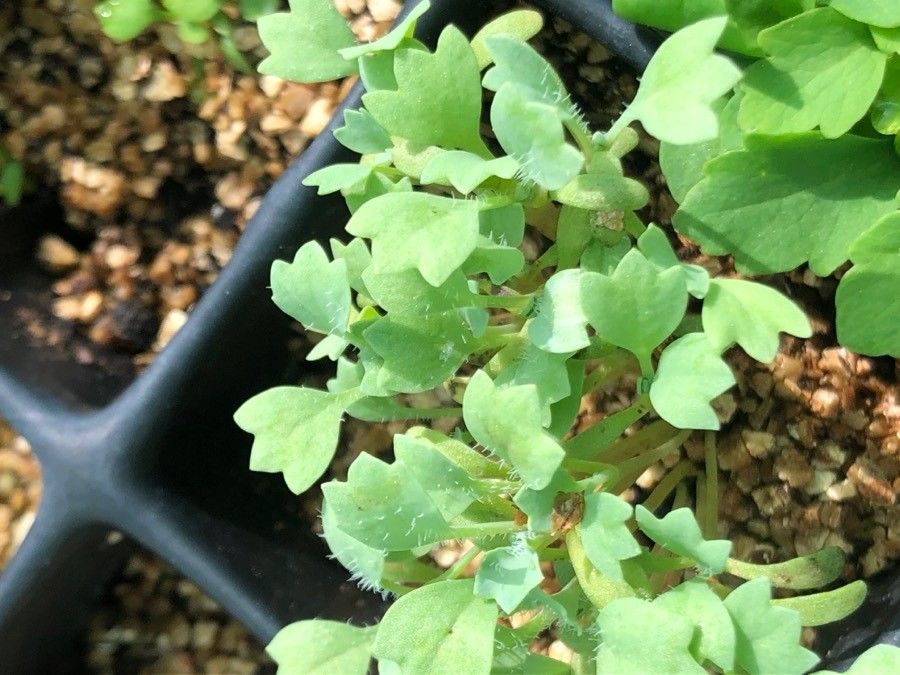
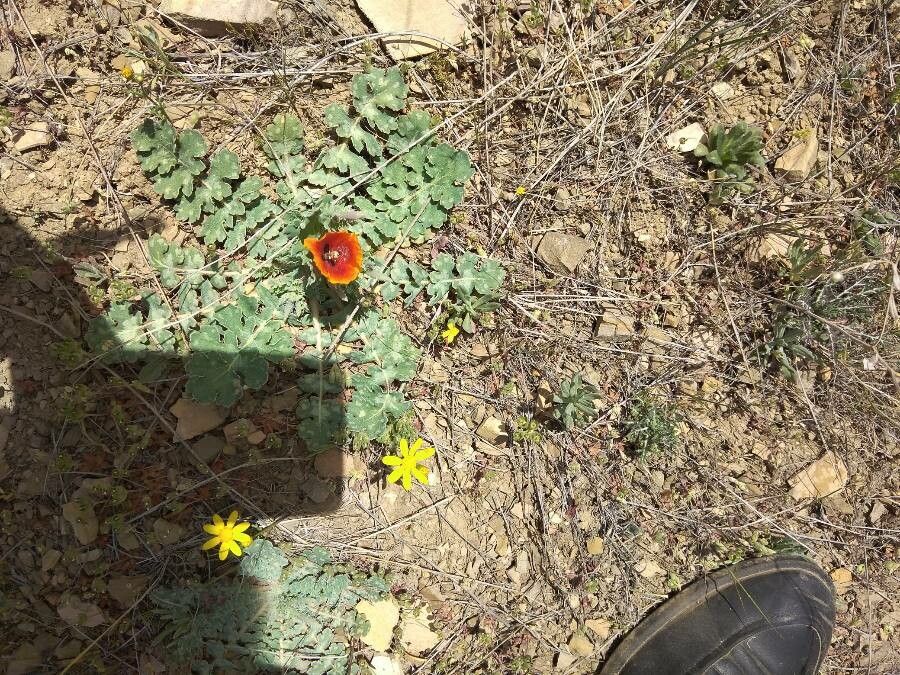
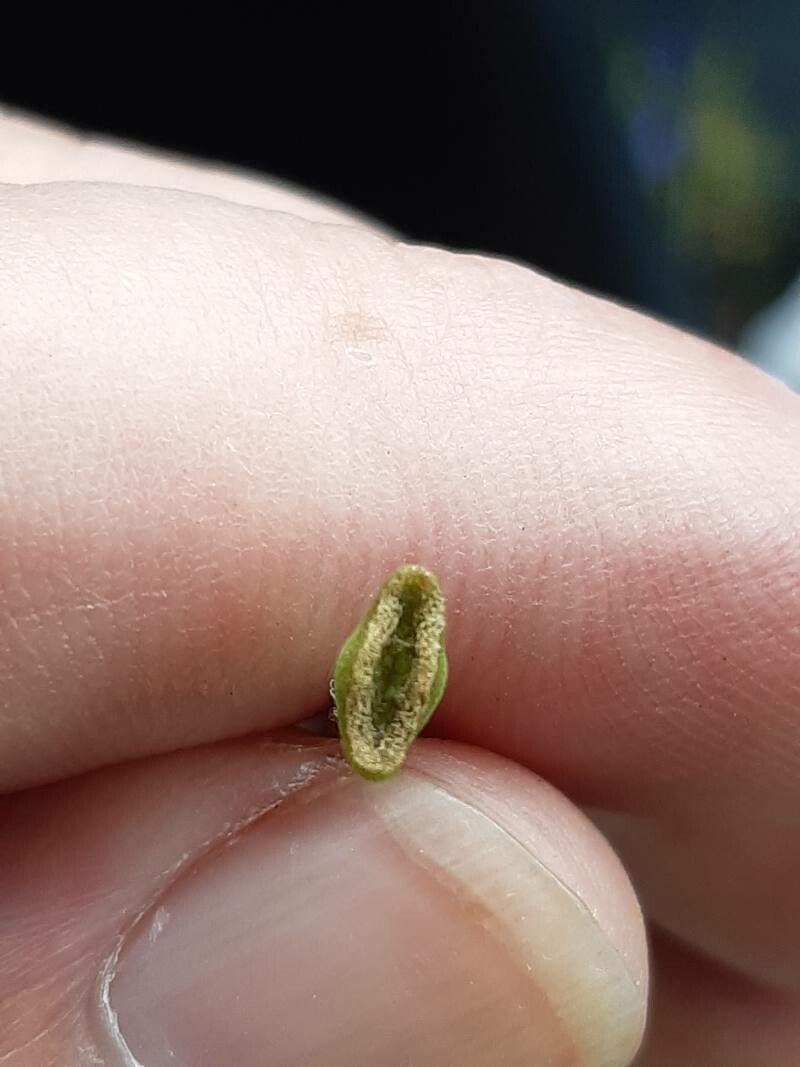
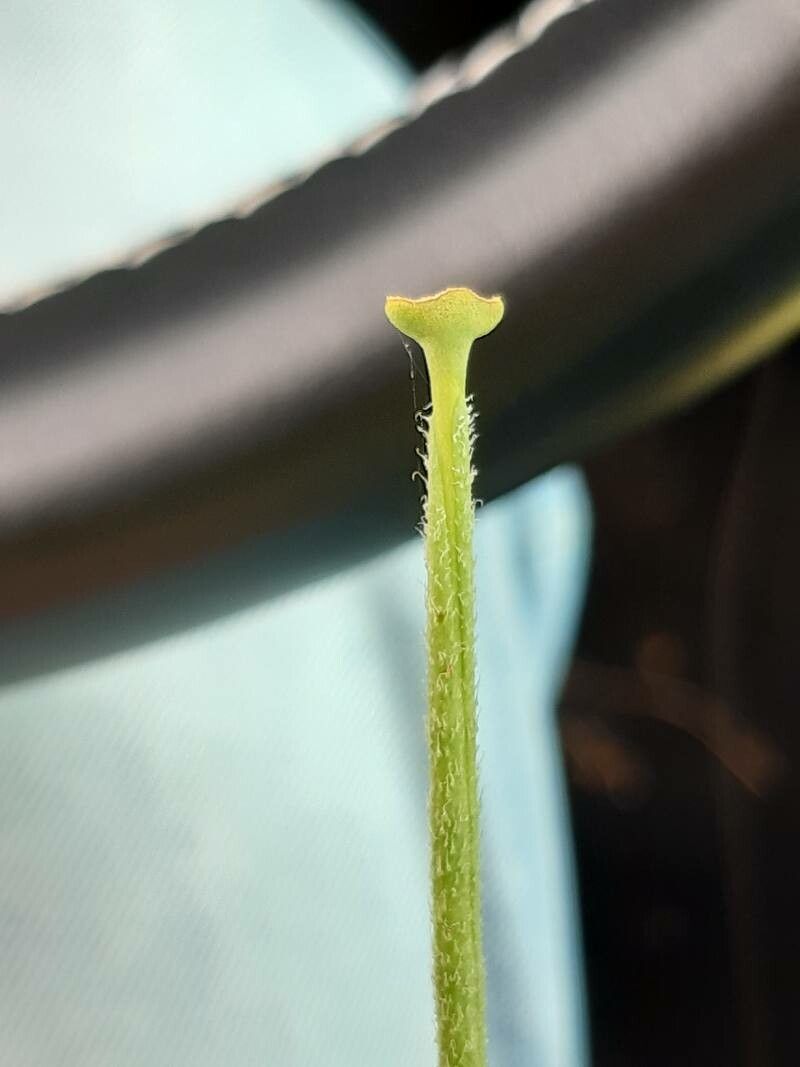
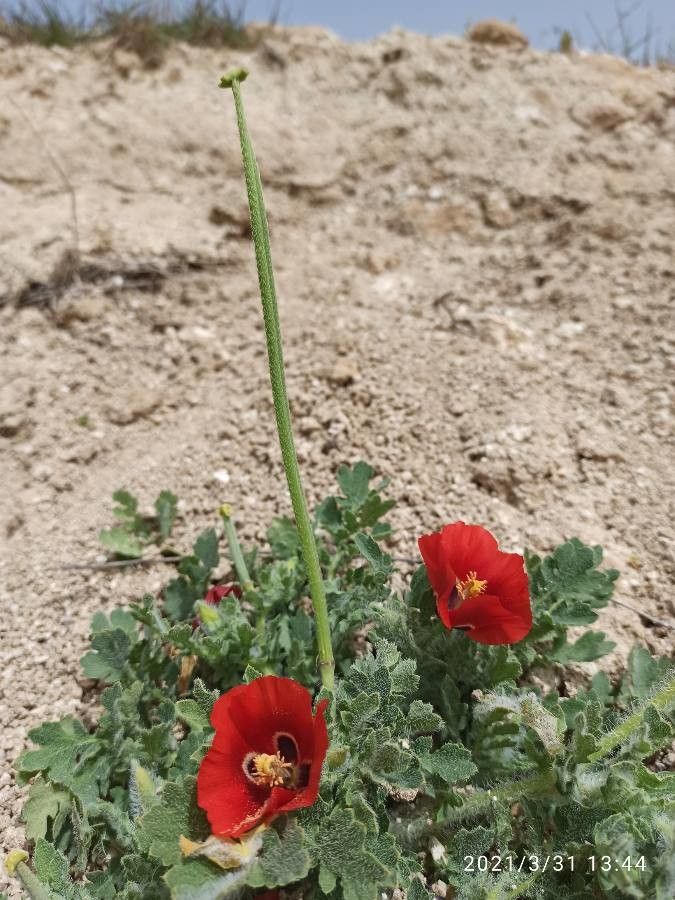
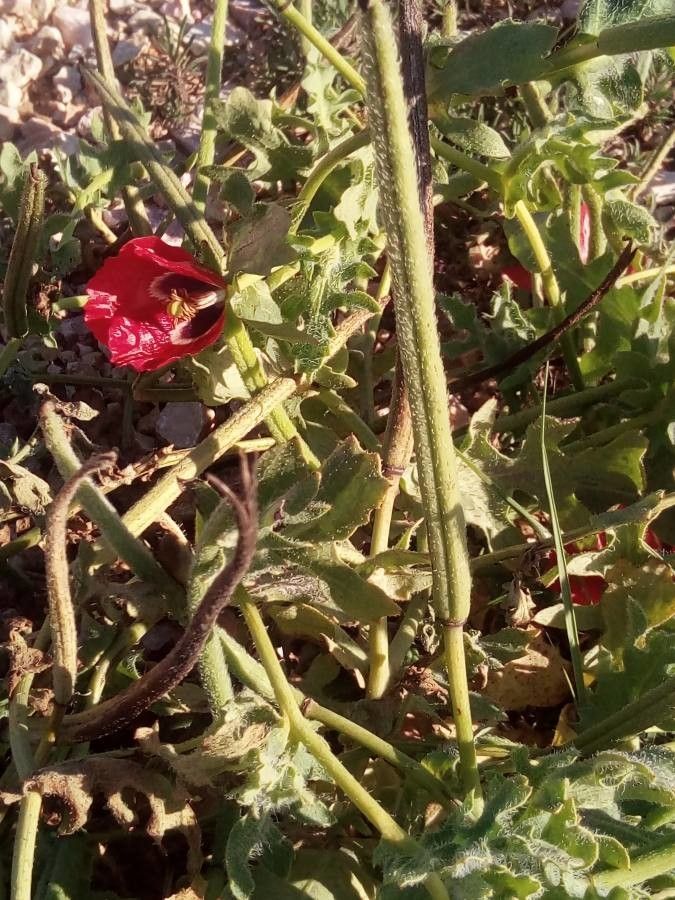
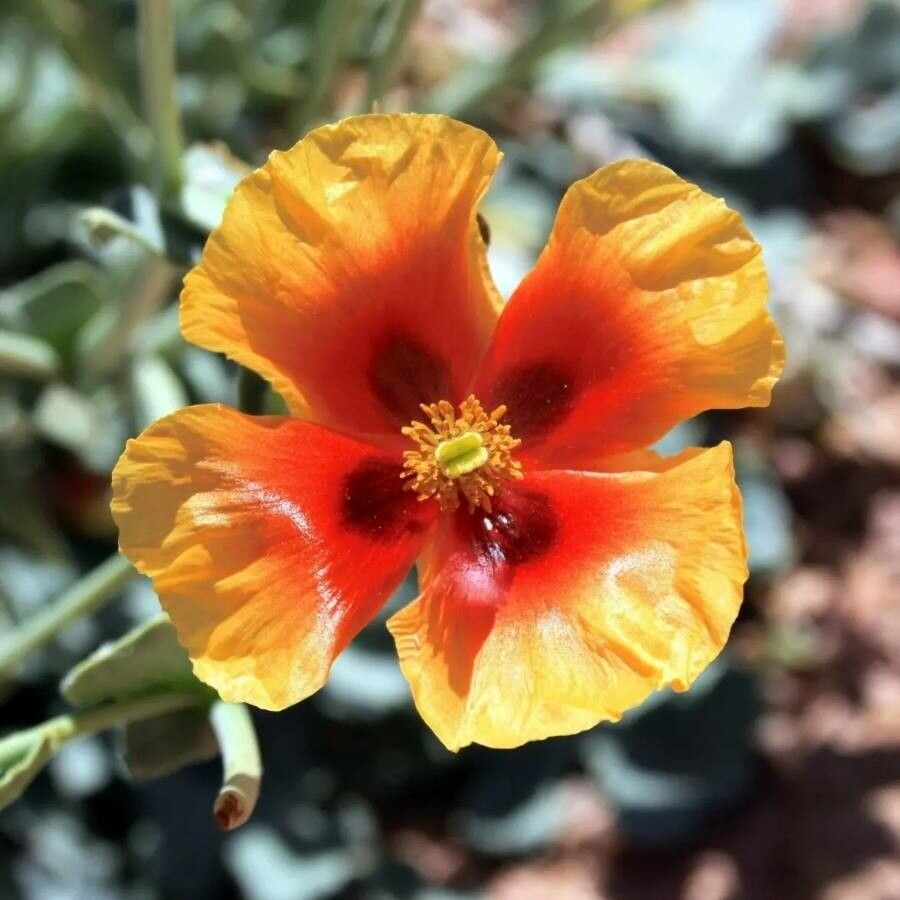
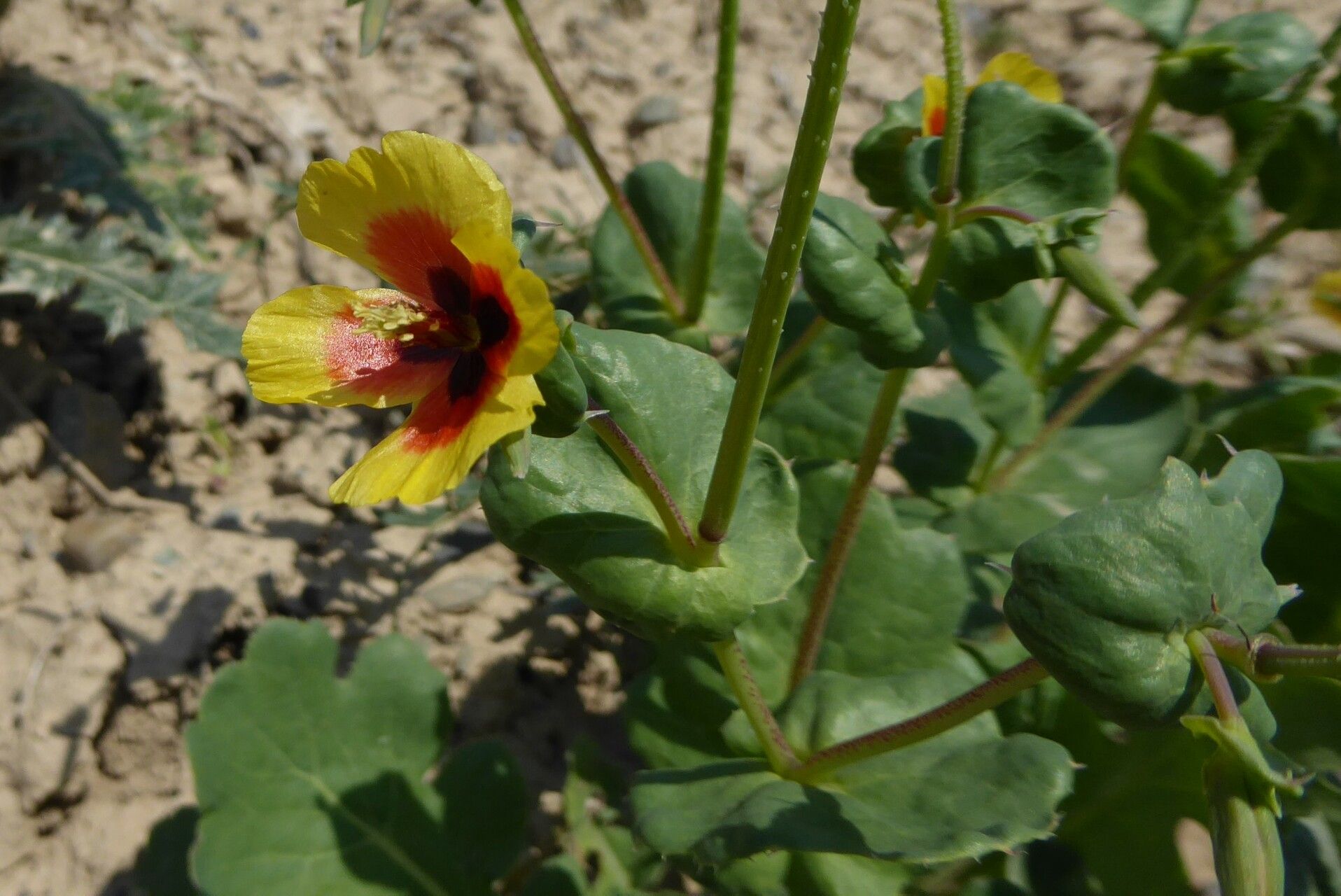
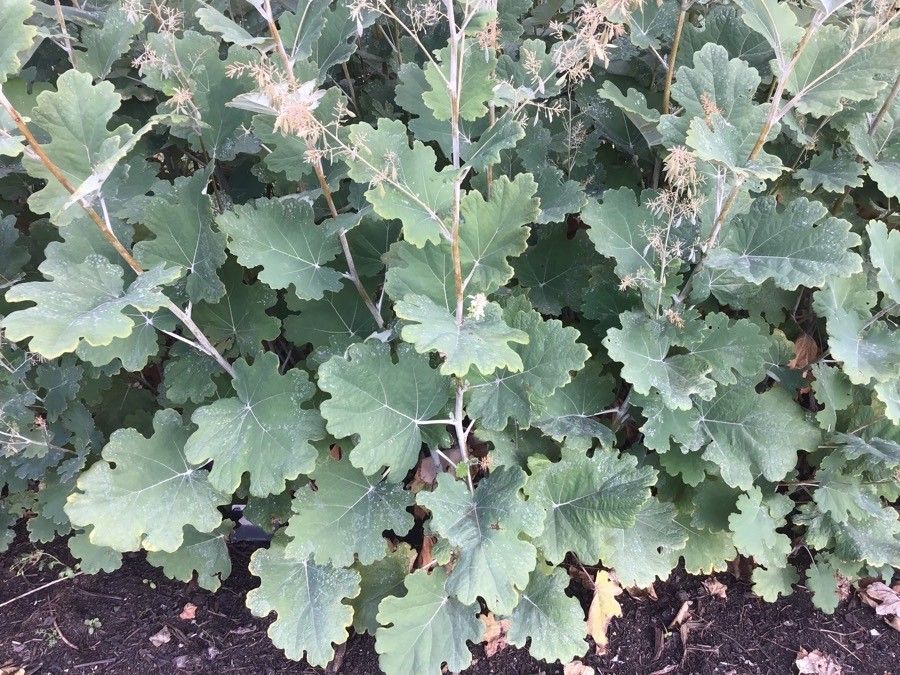
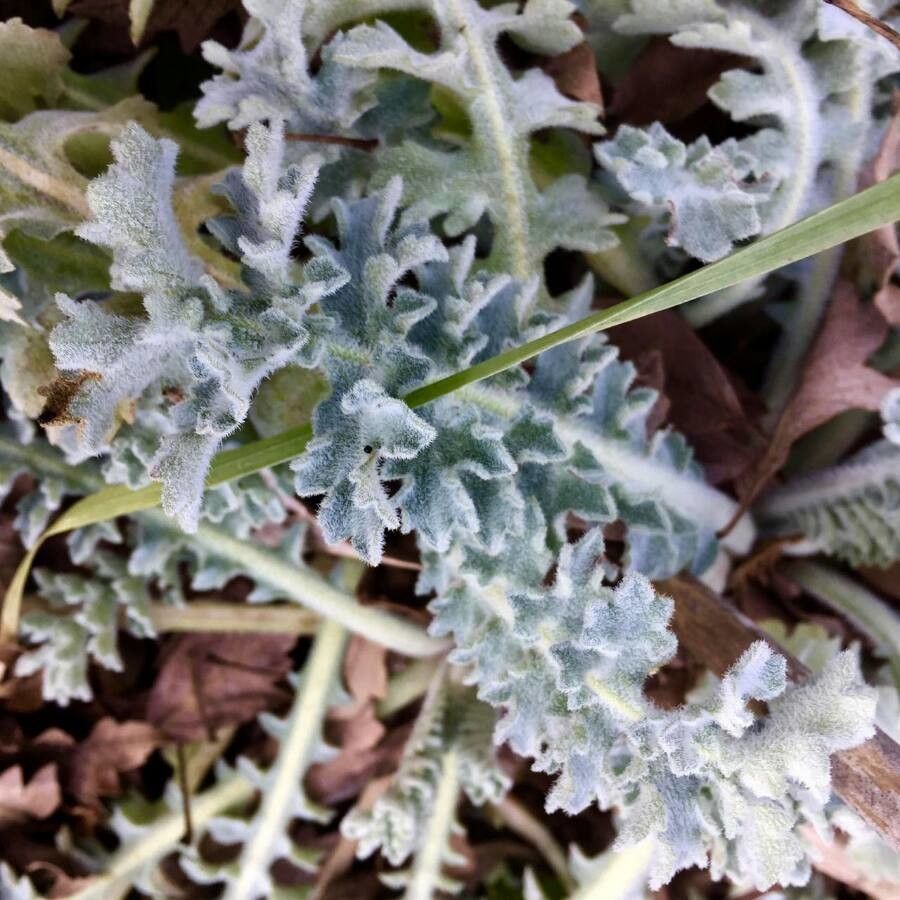
Glaucium corniculatum, the blackspot hornpoppy or red horned-poppy, is a species of the genus Glaucium in the poppy family (Papaveraceae). It is an annual flowering plant, occurring in southern Europe, and grows up to 1 foot (30 cm) high. The stem and leaves are hairy, the capsule fruit is covered with stiff hair, the flower is red, with a black spot on the base of the tepal bract, which has a yellow margin around it. The flower appears from June until August.
Red horned poppy has good disease resistance and is generally not prone to diseases. However, it can be affected by pests and diseases present in its environment. These problems are typically not serious. Regarding care, this plant requires moderate maintenance. It should be pruned regularly to maintain a neat appearance and healthy growth. Fertilizing can also help promote flowering. The red horned poppy is suitable for anyone with outdoor space, such as a garden or patio, and does not require extensive care experience. It may need more attention when grown indoors.
How to keep Glaucium Corniculatum.
Light
The red horned poppy does best with plentiful sunlight, reflecting the open, unshaded habitats where it naturally occurs. Both seedlings and mature plants need that light exposure to reach optimal growth. Strong light sustains its health and vigor, while too little light can limit growth and harm its overall wellness.
Water
The red horned poppy, which originates from coastal habitats, is drought-tolerant and prefers moderate watering every 1-2 weeks. It thrives outdoors in well-draining soil and requires infrequent but thorough watering to stay healthy.
Temperature
Red horned poppy is a plant native to habitats with temperatures between 68 and 95 °F (20 to 35 ℃). It flourishes in this range, and adjusting the temperature to match seasonal variations is essential for optimal growth.
Fertilizer
When most of Red horned poppy's blooms have opened to full size, resume fertilizing. Around the time the flowers are at peak production, begin feeding again every three to four weeks, as weather permits. Then, once the poppy starts producing fewer new blooms, stop fertilizing; there's no need to add fertilizer when the plant can no longer produce more blooms.
Pruning
The red horned poppy is known for its vibrant red-orange flowers and distinctive horn-shaped seed pods. To promote growth, light pruning in early spring is recommended—simply remove any dead stems. Avoid heavy pruning, as it can reduce the number of blooms. Regular grooming helps ensure good air circulation, lowers the risk of disease, and improves the plant's overall health. For optimal results, always use sterilized tools.
Botanical profile.
- Plant Type
- Herb
- Life Cycle
- Annual, Biennial, Perennial
- Genus
- Glaucium
- Family
- Papaveraceae
- Hardiness Zone
- 6-10
- Mature Height
- 20 cm to 40 cm
- Mature Spread
- 40 cm
- Leaf Color
- Gray, Green, Silver
- Leaf Type
- Deciduous
- Flower Color
- Red, Orange, Black
- Flower Size
- 5.08 cm to 7.62 cm
- Bloom Time
- Mid spring, Late spring, Early summer
- Planting Time
- Spring, Autumn
- Harvest Time
- Summer
Other names.
Reader questions.
How should I water my Red horned poppy?
Watering Red horned poppy is quite flexible and can be done with various tools such as a garden hose with a spray nozzle or a watering can. The type of water, whether it's rainwater, tap water, or filtered water, doesn't matter too much to this plant. However, it's generally recommended to avoid watering from above as it can harm the leaves and flowers and potentially cause disease. Using a drip irrigation system is often the preferred method as it provides even and direct water to the soil. If you have a container-grown Red horned poppy, you can apply water directly to the soil using a cup, watering can, or tap.
Why should I put fertilizer on my Red horned poppy?
Plants, including Red horned poppy, require nutrients to survive. This is common knowledge among gardeners, regardless of their experience. Without food, the Red horned poppy will die off shortly after the first pollination. To ensure the plant thrives and produces large, beautiful flowers throughout the blooming season, it is crucial to provide the right nutrients in the right amounts. Fertilizer is particularly beneficial for the Red horned poppy as it helps build a strong and healthy root system. Since this plant's root system is thin and easily damaged, it can greatly benefit from the assistance. By fertilizing at planting, the Red horned poppy can establish a sturdy root structure that not only provides stability but also sets the stage for an impressive flowering display. Additionally, when timing the fertilization correctly, the flowering period of the Red horned poppy can be significantly prolonged.
What are the sunlight requirements for the Red Horned Poppy?
The Red Horned Poppy, or Glaucium corniculatum, thrives best in environments that mirror its native, open, and unshaded habitats. For optimal growth and health, both seedlings and mature plants require abundant sunlight, specifically more than 6 hours of direct sunlight per day. Lack of sufficient light can hinder the plant's growth and overall wellness. It's essential to observe how sunlight moves through your garden, choosing locations that provide the perfect balance of light and shade to ensure your plants thrive.
What is the ideal temperature range for growing Red horned poppy?
The Red horned poppy, scientifically known as Glaucium corniculatum, is a plant that thrives in environments with temperatures ranging from 68 to 95°F (20 to 35°C). This temperature range is optimal for its growth, and adjusting temperatures according to seasonal changes is crucial for the plant's development. Despite its strong cold resistance, special frost protection measures are not typically necessary. However, in conditions where temperatures are expected to drop below -25°C, precautions should be taken to protect the plant from the cold.
What should I do if I give my Red horned poppy too much water or not enough?
If your Red horned poppy is underwatered, simply start watering it more regularly when you notice it lacks moisture. Overwatering, on the other hand, can be more serious, as it can lead to diseases and the decline and death of your plant. To prevent this, choose a suitable location for your plant that gets plenty of sunlight and has good drainage. If your plant is in a pot and you have overwatered it, consider transferring it to a new pot with better soil drainage and ensure the pot has drainage holes. When repotting the overwatered plant, use loose soil and an efficiently draining pot.
When should I fertilize my Red horned poppy?
Red horned poppy experiences rapid growth in the early part of the growing season, after the threat of frost has passed. It is advisable to fertilize the plant during this period, specifically during planting. This means applying fertilizer when the plant is initially placed in the ground or in planters. It's important to note that this will be the only time to use fertilizer until later in the year when the blooms are fully developed. Once the season is underway and the Red horned poppy has opened most of its blooms to their full size, it's time to resume fertilizing. This should be done every three to four weeks, depending on the weather, when the blooms are at their peak. However, once the Red horned poppy begins to produce fewer new blooms, it's no longer necessary to fertilize. There's no need to provide fertilizer when the plant is unable to produce any additional blooms.
How should indoor Red Horned Poppies be lit with artificial lighting?
Indoor Red Horned Poppies require proper lighting to grow optimally, especially in conditions where natural sunlight is insufficient—like in winter or less sunny spaces. Artificial lighting, such as LED lights, can offer a vital solution by providing the specific wavelengths of light that plants need. The requirements vary by plant type: full sun plants need 30-50W/sq ft, partial sun plants need 20-30W/sq ft, and full shade plants need 10-20W/sq ft of artificial light. The light source should be placed 12-36 inches above the plant to mimic natural sunlight, and the typical duration of light exposure should mimic natural daylight hours, generally 8-12 hours per day for most plants.
How do you protect Red horned poppy in winter?
To protect the Red horned poppy during winter, especially in conditions where temperatures might drop below -25°C, it is advisable to cover the plant with protective materials such as soil or straw. Additionally, watering the plant abundantly before the first freeze in autumn is recommended. This ensures that the soil remains moist and enters a frozen state, which helps prevent drought and water scarcity for the plant during the winter and early spring months.
How many times a week should I water my Red horned poppy?
To properly care for your Red horned poppy throughout the growing season, it is important to water it regularly. In spring, watering once a week should suffice. As the weather gets warmer, you may need to increase the frequency to two or three times a week. However, exceeding this rate can harm the plant. It is crucial to maintain the soil moisture at a relatively moist level, but not overly wet, regardless of the watering frequency. When it comes to watering a Red horned poppy in a pot, the approach is slightly different. Potted plants tend to dry out faster due to the heat and limited soil volume. Therefore, you should water a container-grown Red horned poppy a few times a week, as opposed to just once a week for a plant in the ground.
When is it not a good idea to add fertilizer to my Red horned poppy?
Regular fertilizing is important for Red horned poppy, but it is crucial to apply it at the right time. There are certain situations that call for holding back on fertilizing. These situations are usually related to climate, but they can also be influenced by certain controllable factors. When there is something wrong with the plant, soil, or climate, it is best to wait until things have improved and the plant has recovered before applying fertilizer. One example of when not to fertilize is when there are severe or unexpected changes in the weather. If there is a sudden cold snap in the middle of summer, it is advisable to wait until it warms up again before starting to fertilize. Similarly, if the soil is too dry or compacted to absorb anything, it is not a good idea to apply fertilizer. In this situation, the fertilizer will go straight to the roots instead of being properly diffused by the soil. The roots of Red horned poppy do not appreciate this. When temperatures are soaring into the 90-degree Fahrenheit range during the hottest parts of the day, it is also not recommended to apply fertilizer. This is because the fertilizer can break down at different speeds depending on the temperature, and it is important to prevent rapid breakdown caused by high temperatures. Additionally, it is necessary to treat and clear up any pests or diseases before re-applying fertilizer.
What symptoms indicate insufficient sunlight for Red Horned Poppies?
Red Horned Poppies show several symptoms when they don't receive enough sunlight, including smaller new leaves, leggy or sparse growth due to longer spaces between leaves or stems, early leaf drop to conserve resources, slower or halted growth, pale or irregularly colored new leaves indicating a lack of chlorophyll, chlorosis (leaves turning yellow), sunscald (damage from intense sunlight exposure), leaf curling as a defense mechanism against excessive sunlight, wilting from loss of water through excessive transpiration, and leaf scorching causing brown, dry edges on leaves. These symptoms highlight the plant's need for adequate sunlight.
What should you do if the Red horned poppy experiences low temperatures?
The Red horned poppy is cold-tolerant and grows best when the temperature remains above 20°C. During winter, it should be kept above 0°C. In instances where temperatures fall below -25°C, while there may not be noticeable changes during the winter, there could be a decrease in sprouting or even no sprouting at all during spring. To address this, in spring, it's recommended to remove any parts of the plant that have failed to sprout.