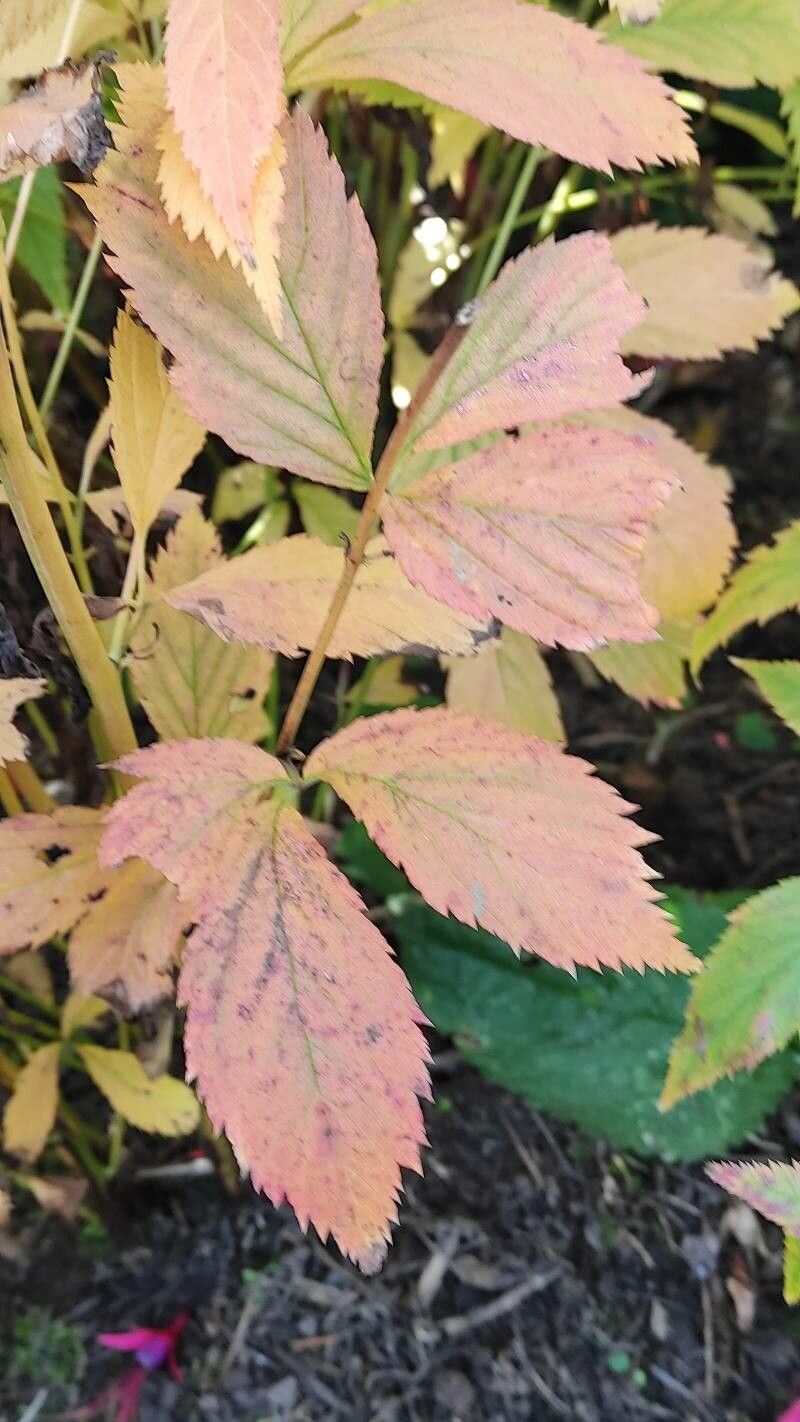
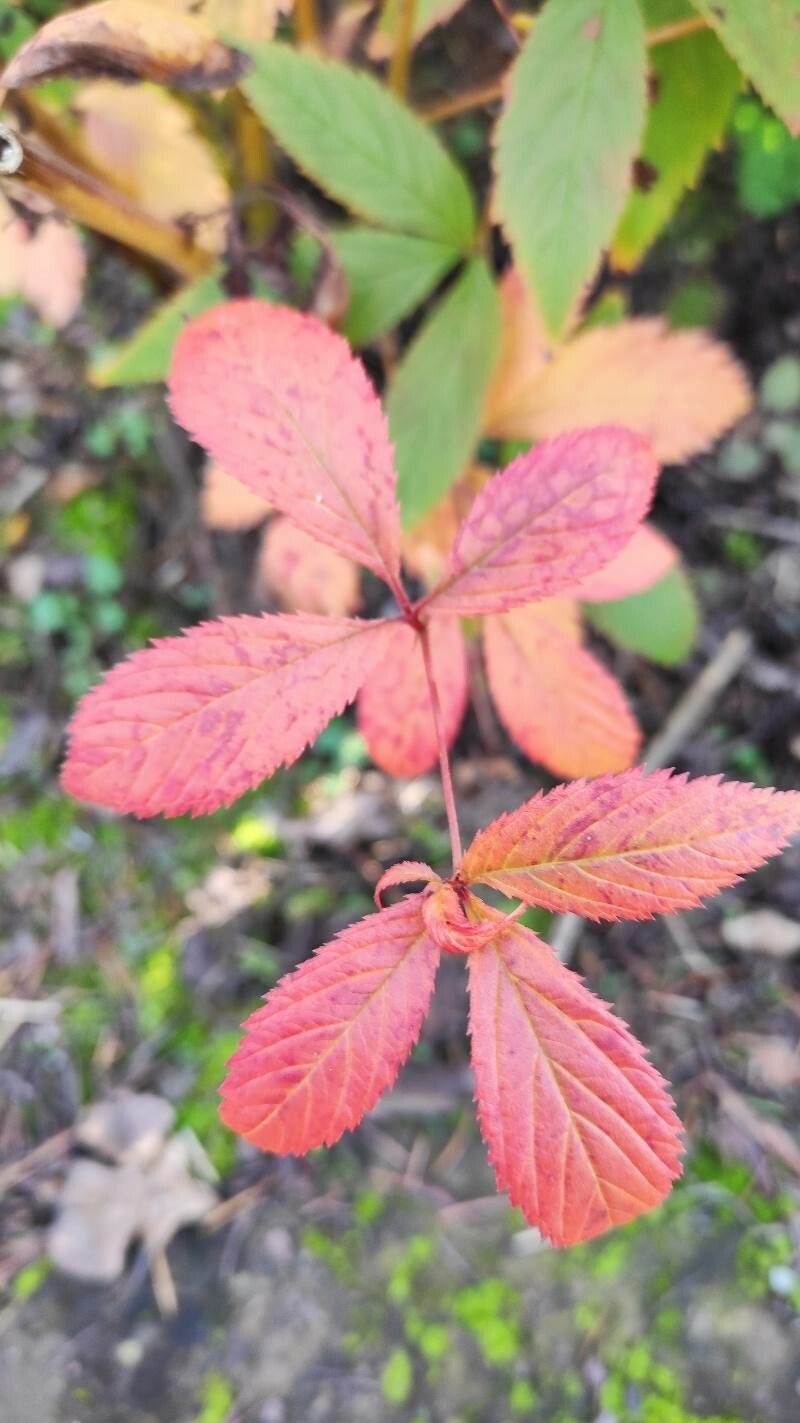
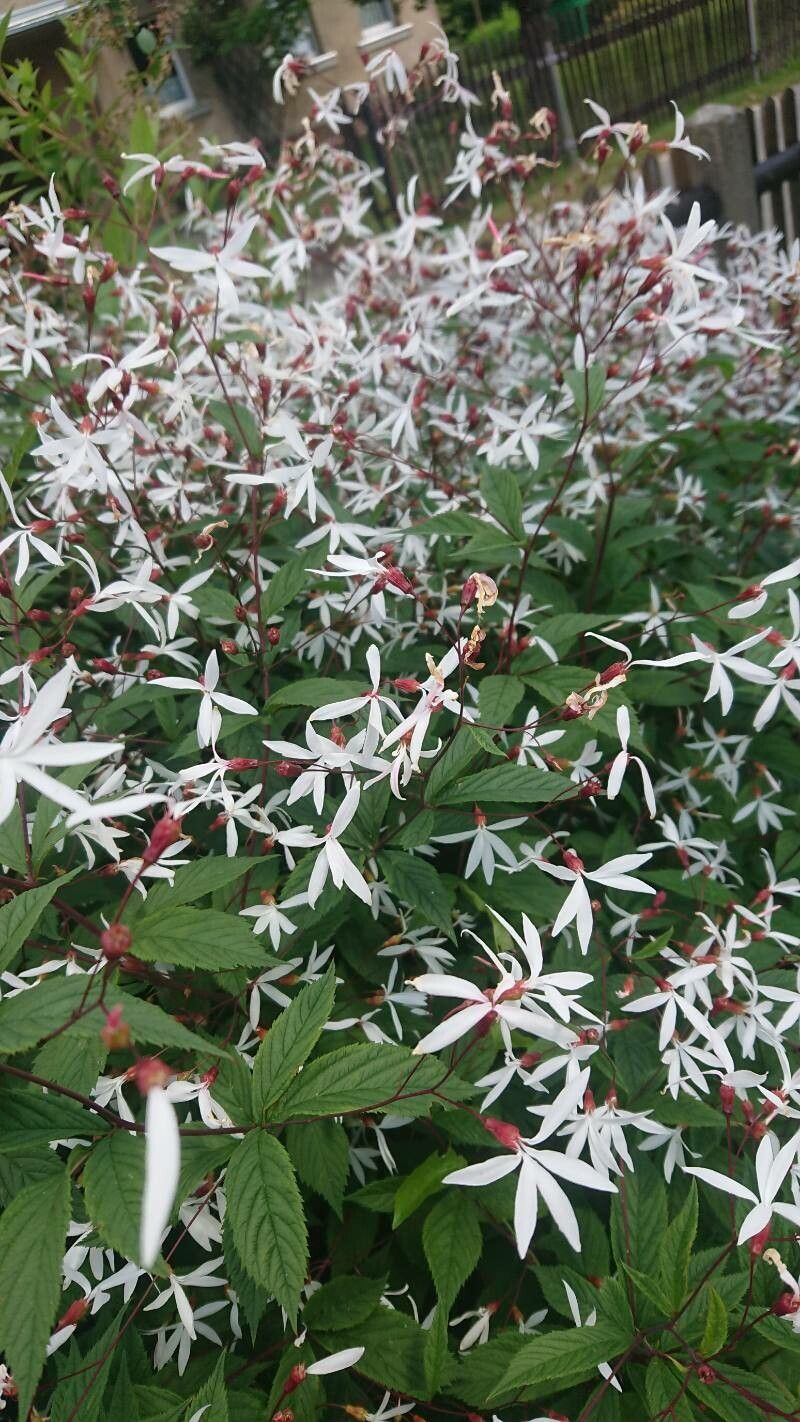
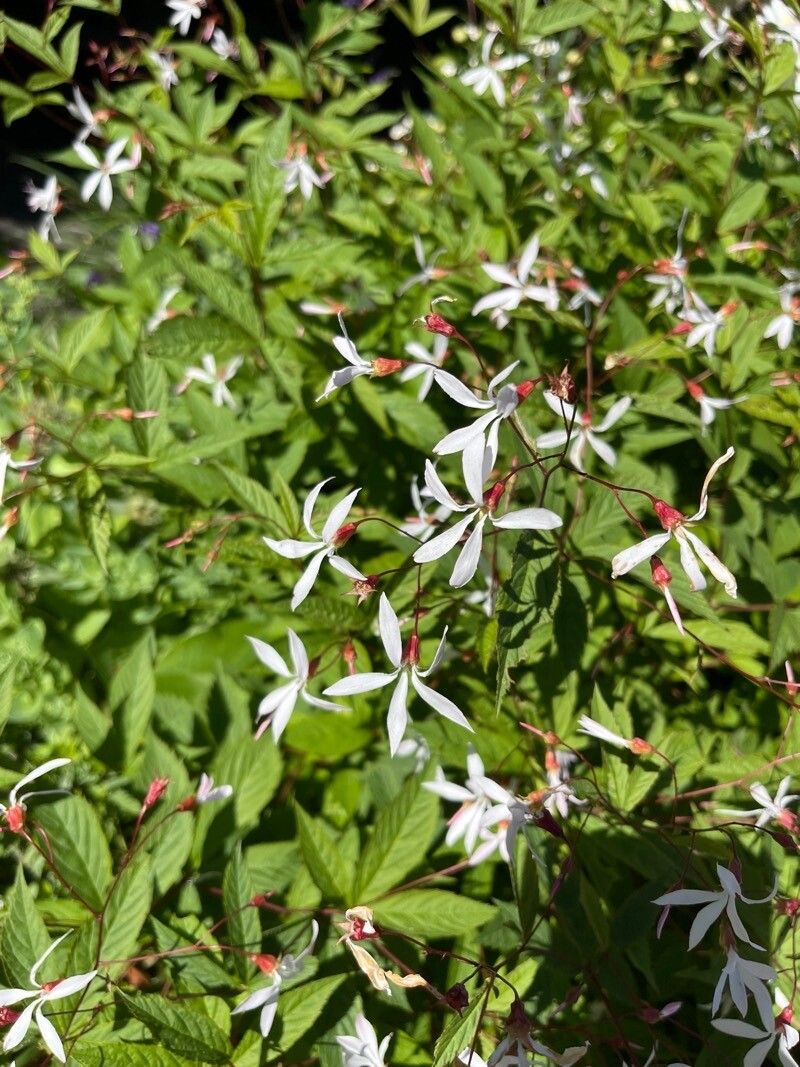
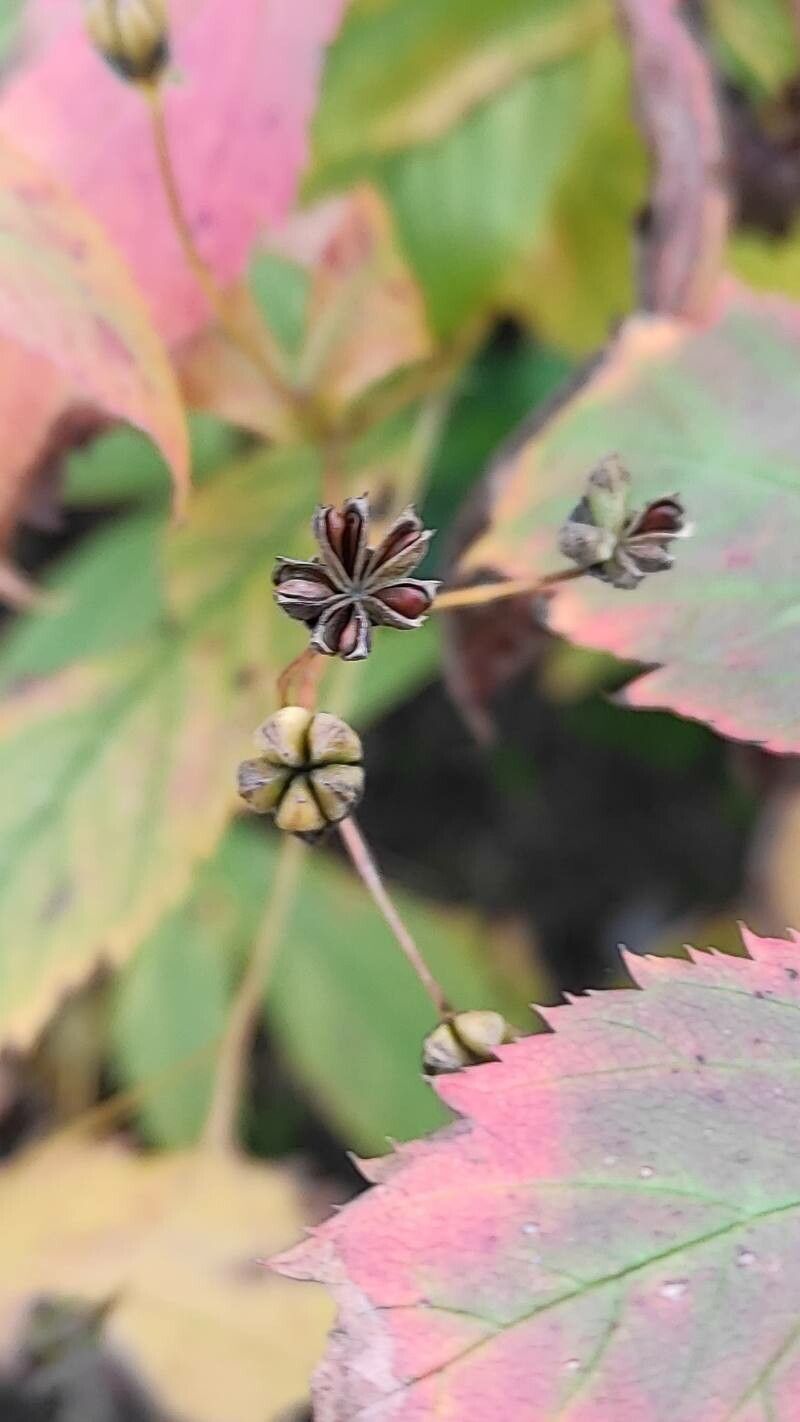
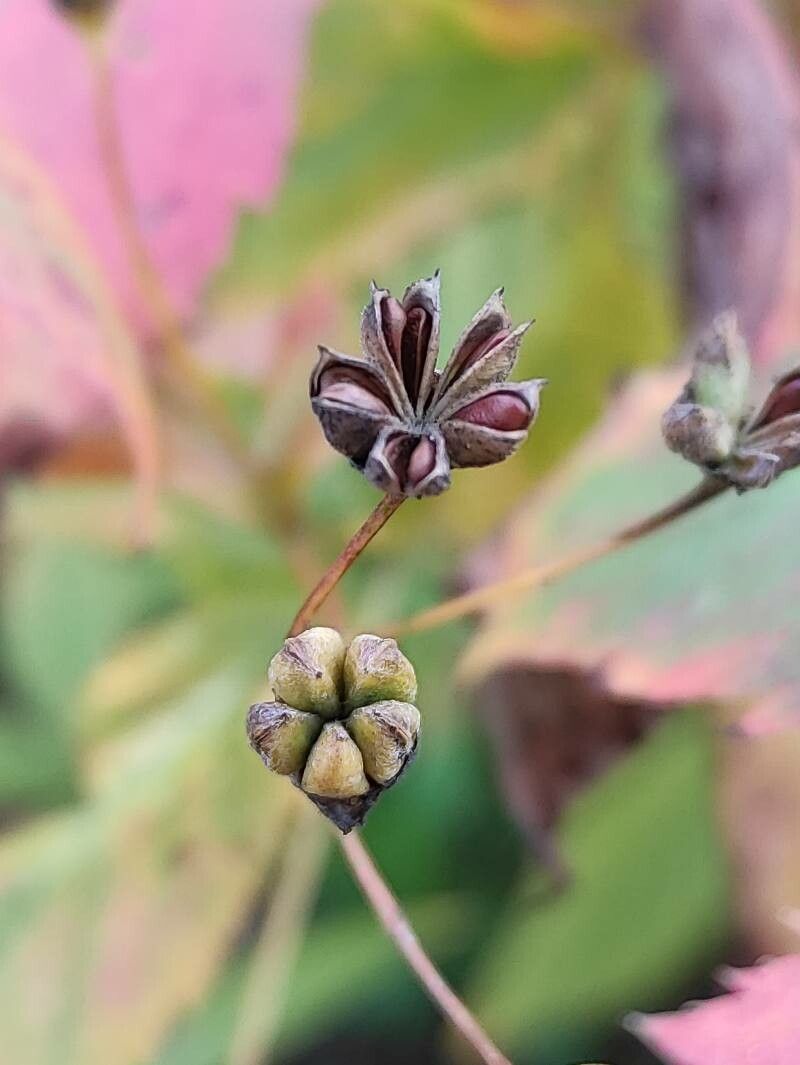
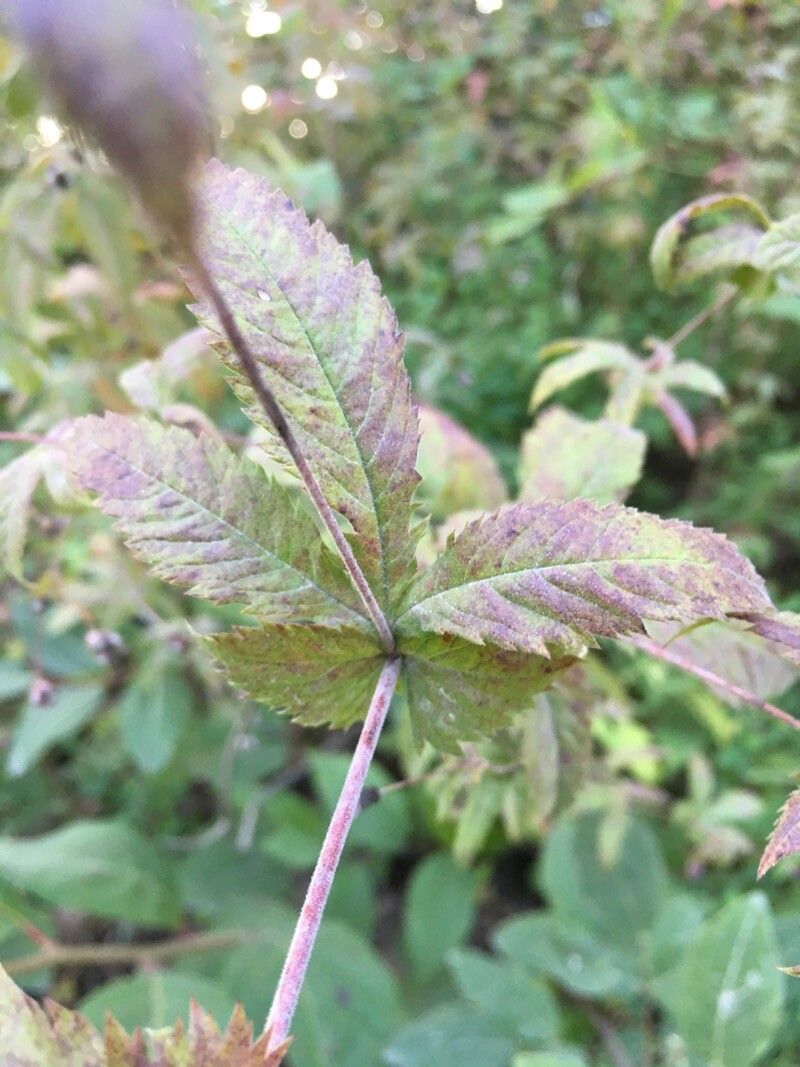
Gillenia trifoliata, common name Bowman's root or Indian physic, is a species of flowering plant in the family Rosaceae, native to eastern North America from Ontario to Georgia. It is an erect herbaceous perennial growing to 100 cm (39 in) tall by 60 cm (24 in) wide, with 3-palmate leaves and pale pink flowers with narrow petals and reddish calyces above red coloured stems in spring and summer.In cultivation, this plant has gained the Royal Horticultural Society's Award of Garden Merit. It is very hardy to −20 °C (−4 °F) or lower, but requires a sheltered position in partial shade, with acid or neutral soil. The root was dried and powdered by Native Americans and used as both a laxative and emetic.
Bowman's root is fairly disease-resistant and generally not prone to illnesses. However, it can be vulnerable to pests and diseases present in its environment. These problems are typically not severe. For care, the plant requires a moderate level of maintenance. It should be pruned regularly to preserve a tidy appearance and healthy growth. Fertilizing can also help encourage flowering. Bowman's root is suitable for anyone with outdoor space, such as a garden or patio, and does not demand extensive plant-care experience. It may need extra attention when grown indoors.
How to keep Gillenia Trifoliata.
Light
For healthy development, bowman's root needs a moderate amount of sunlight, although it can tolerate stronger sun if required. Native to environments where light is filtered through overhead foliage, bowman's root may suffer issues like leaf scorch and halted growth from too much sun, or form weak stems and small leaves when it lacks sufficient light.
Water
Bowman's root thrives with moderate weekly watering, reflecting the conditions of its native habitat. Although it can withstand drought, it grows best outdoors where it can benefit from natural rainfall. As a deciduous plant, Bowman's root requires less water during its winter dormancy.
Temperature
Bowman's root is native to temperate environments and prefers temperatures between 41 and 95 °F (5 and 35 ℃). In warmer seasons, it may need occasional shading to prevent overheating and maintain optimal growth conditions.
Fertilizer
The best time to fertilize a Bowman's root is in early spring, as it comes out of dormancy and starts active growth. Fertilization supplies essential nutrients for healthy development. While Bowman's root has fairly low fertilizer requirements, an annual feeding can improve its survival and encourage better, longer-lasting flowers.
Pruning
To help Bowman's root thrive, it should be pruned annually from early to late spring, before any new growth begins. Remove any dead stems and thin out overcrowded areas for improved air circulation. After the plant has flowered, additional pruning can encourage a second bloom, which enhances both its health and appearance while also preventing disease.
Botanical profile.
- Plant Type
- Herb, Shrub
- Life Cycle
- Perennial
- Genus
- Gillenia
- Family
- Rosaceae
- Hardiness Zone
- 4-9
- Mature Height
- 0.61 m to 1.22 m
- Mature Spread
- 46 cm to 91 cm
- Leaf Color
- Green
- Leaf Type
- Deciduous
- Flower Color
- White
- Flower Size
- 2.54 cm to 7.62 cm
- Bloom Time
- Late spring, Early summer, Mid summer
- Planting Time
- Spring, Summer, Autumn
- Harvest Time
- Late summer, Early fall, Mid fall
Other names.
Reader questions.
How should I water my Bowman's root plant?
To ensure the health of the Bowman's root when watering, it is advisable to use filtered water at room temperature. Tap water may contain harmful particles, so filtered water is a better option. The root is accustomed to warm environments, so cold water can be a bit of a shock. Additionally, it is recommended to avoid overhead watering as it can cause issues with the foliage. Instead, it is best to thoroughly soak the soil with filtered, room temperature water. This helps moisten the roots and aids in their spread through the soil to gather necessary nutrients.
Why is it important to fertilize my Bowman's root?
The main structure of the Bowman's root is made up of its leaves. Fertilization is important for both the appearance and function of these leaves. Proper fertilization will ensure that the leaves of your Bowman's root maintain a consistent color and a healthy texture. Additionally, fertilization works beneath the soil's surface to promote the growth of new roots and maintain existing ones. This means that fertilization not only keeps your plant healthy in the present, but also improves its ability to absorb soil nutrients in the future.
What type of sunlight is required for Bowman's root to grow?
Bowman's root needs moderate levels of sun to flourish but can withstand more intense solar conditions if necessary. It’s accustomed to environments where sunlight is filtered through overhead vegetation, but exposure to too much sunlight can cause leaf scorching and stalled growth, whereas insufficient sunlight may lead to weak stems and small leaves.
What is the indigenous climate for Bowman's Root?
Bowman's root, scientifically known as Gillenia trifoliata, is indigenous to temperate environments. It thrives best in a temperature range between 41 to 95 °F (5 to 35 °C). In warmer seasons, the plant may need some shading to avoid overheating, ensuring it maintains optimal growth conditions. Due to its strong cold resistance, special frost protection measures are generally unnecessary during winter. However, in extremely cold conditions where temperatures might drop below -30°C, providing some form of cold protection with materials like soil or straw is advisable. Additionally, it's beneficial to water the plant abundantly before the first freeze in autumn, keeping the soil moist to help prevent drought and water scarcity during winter and early spring.
What do I do if I give too much or too little water to my Bowman's root?
Overwatering is a common issue for Bowman's root, while underwatering is less likely. When overwatered, the plant's stems and leaves may wilt and turn yellow, and prolonged overwatering can lead to diseases like root rot, mold, and mildew that can kill the plant. Bowman's root has decent drought tolerance, but underwatering can still occur, resulting in brittle and brown leaves. It's important to recognize the signs of overwatering early to prevent irreversible damage. If overwatering is detected, reduce the watering schedule immediately and consider replacing poorly draining soil with a loose, well-draining potting mix. If signs of underwatering are present, simply increase watering until the signs improve.
When should I put fertilizer on my Bowman's root plant?
When you grow your Bowman's root outdoors, it will start new growth in early spring. This is a signal to start fertilizing for the year. Usually, one round of fertilizer in the spring is enough for the plant to thrive. But if you want to maximize growth, you can fertilize multiple times throughout spring and early summer. In this case, feed your Bowman's root once every month to a month and a half.
What are the benefits of using artificial lighting for indoor plants?
Artificial lighting is crucial for indoor plants' growth, especially when natural sunlight is insufficient such as in winter or less sunny spaces. LED lights are preferred since they can provide specific wavelengths of light needed by plants. Full sun plants require 30-50W/sq ft, partial sun plants need 20-30W/sq ft, and full shade plants 10-20W/sq ft of artificial light. The lights should be placed 12-36 inches above the plant for 8-12 hours per day to mimic natural daylight conditions, promoting faster, healthier growth.
What are the cold resistance characteristics of Bowman's Root?
Bowman's root is particularly cold-tolerant, thriving best when the temperature is above 5°C. Throughout winter, ideally, the temperature should remain above -25°C. Although the plant shows a remarkable resilience to cold, experiencing temperatures below -30°C can affect its vitality, evident by a decrease in sprouting or a complete lack of sprouting come spring. To manage these issues, in spring, gardeners are advised to remove any parts of the plant that have failed to sprout, helping it to recover and grow effectively during the warmer months.
How often do I need to water my Bowman's root plant?
If your Bowman's root plant is in a pot, you can check if it needs water by putting your finger into the soil. If the top two to three inches of soil are dry, it's time to water it. If you're growing your Bowman's root plant outdoors, you can use the same method. Once the top few inches of soil have dried out, it's time to water. During spring and early fall, you'll likely need to water this plant about once a week. In extremely hot weather, you might need to water it twice or more per week. However, mature and well-established Bowman's root plants can handle drought well.
When is it not a good idea to fertilize my Bowman's root?
During the late fall and winter, your Bowman's root goes into a dormant phase where it stops producing new growth. It is important to avoid fertilizing your Bowman's root during this time. In the spring and summer, if you decide to fertilize, gradually reduce the rate as summer approaches because the growth rate of your Bowman's root will also slow down. It is not recommended to fertilize your Bowman's root when the weather is unusually hot or the soil is extremely dry as this can stress the plant and lead to premature death.
How does insufficient light affect Bowman's root when grown indoors?
When Bowman's root is grown indoors with insufficient light, several subtle symptoms may appear, including smaller new leaves, leggy or sparse growth, early leaf drop, slower or halted growth, lighter-colored new leaves indicating a lack of chlorophyll and essential nutrients, chlorosis (leaves turning yellow), sunscald, leaf curling as a protective measure against too much sunlight, wilting due to increased water loss, and leaf scorching from excessive sunlight exposure.
How does Bowman's Root respond to high temperatures?
During the summer months, keeping Bowman's root at temperatures below 35°C is critical for its health. Exposure to temperatures exceeding 38°C can lead to various stress signs, including leaves becoming lighter in color, curling, and becoming prone to sunburn. Severe heat stress may cause the plant to wilt and dry out entirely. To mitigate these issues, gardeners should trim away any sunburned or dried parts of the plant. Moving the plant to a shadier location or using a shade cloth can protect it from the more intense midday and afternoon sun. Additionally, watering the plant in the morning and evening can help maintain the necessary soil moisture to support its growth during high temperatures.