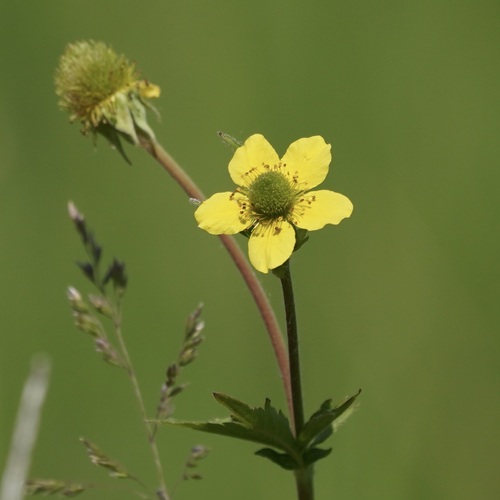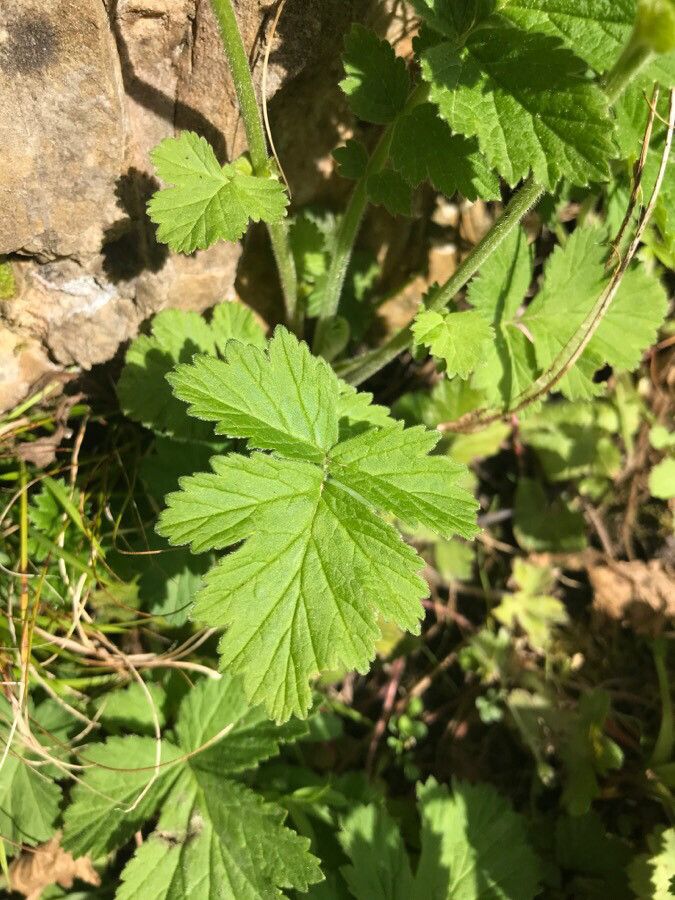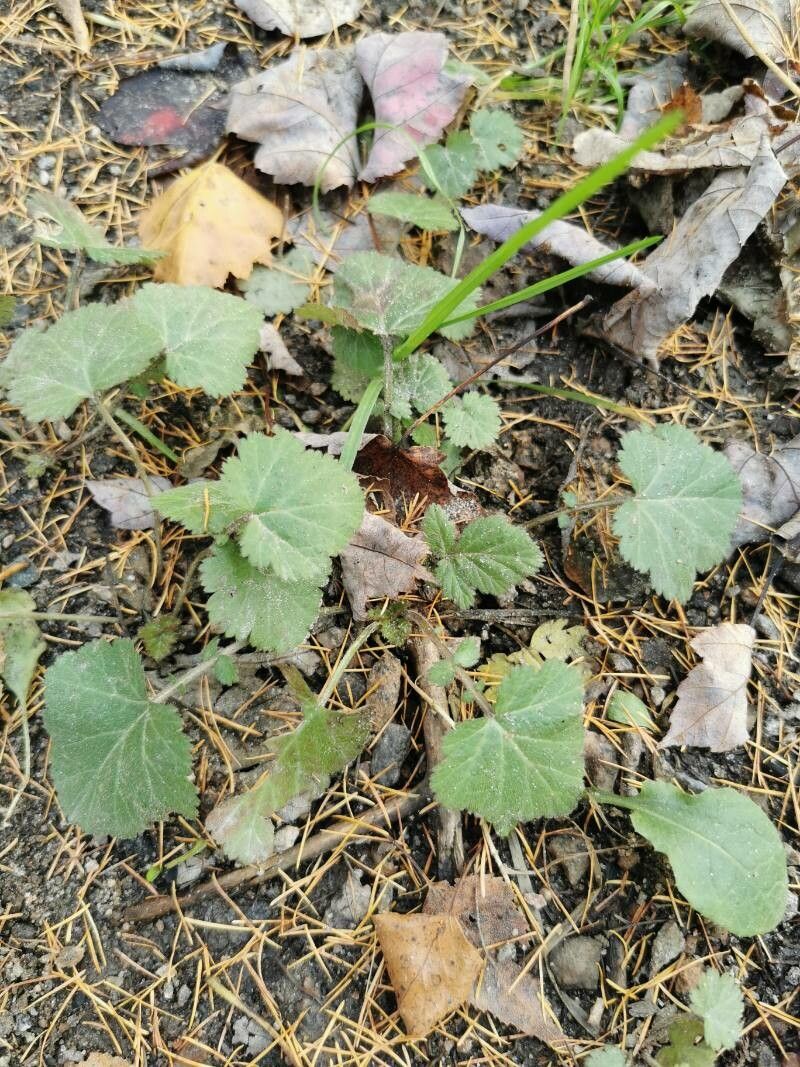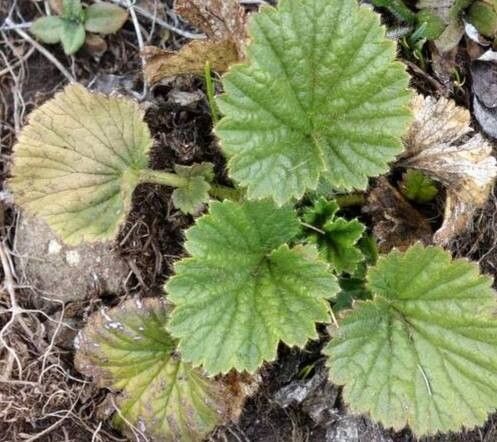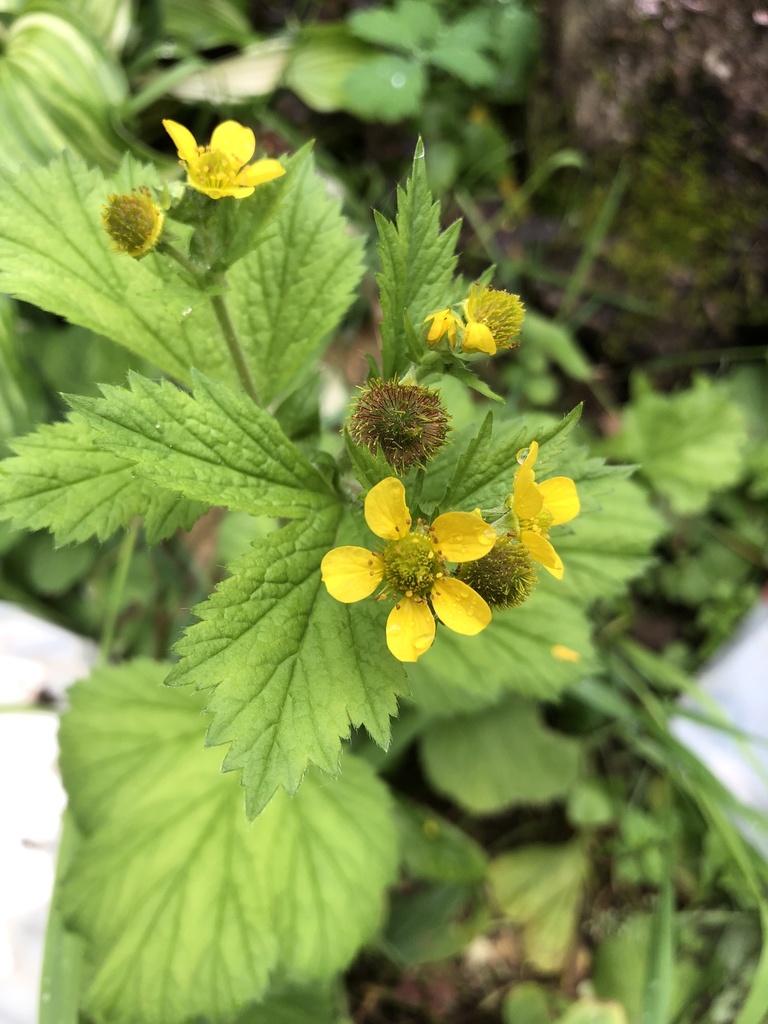
Geum macrophyllum, commonly known as large-leaved avens, is a perennial herbaceous plant in the Rosaceae family. Native to western North America, it thrives in moist meadows, open woods, and along streams, from sea level to subalpine elevations.
This plant can grow up to 60 cm tall and is characterized by large basal leaves that are deeply lobed with toothed edges. The smaller stem leaves feature fewer lobes. Its bright yellow-orange flowers bloom from late spring to early summer on tall stems that rise above the foliage.
Geum macrophyllum serves as a vital food source for pollinators such as bees and butterflies. Additionally, it possesses medicinal properties due to its tannin content, which has astringent qualities useful for treating diarrhea and sore throats.
The plant prefers moist soil conditions but can also tolerate some drought once established. It is easy to grow in gardens or naturalized areas, adding vibrant color and interest with its striking flowers throughout the growing season.
Large-leaved avens has strong resistance to diseases and typically does not suffer from many ailments. However, it can be vulnerable to pests and diseases found in its surroundings. These infections are generally minor. Regarding care, this plant requires a moderate amount of upkeep. It should be pruned regularly to keep a neat appearance and support healthy growth. Fertilizing can also help encourage flowering. Large-leaved avens is well suited to anyone with an outdoor area, such as a garden or patio, and does not demand extensive experience in plant care. It may need more attention when grown indoors.
How to keep Geum Macrophyllum.
Light
Large-leaved avens does best in filtered light but can tolerate full sun or low light. In its native habitat it would do well across a range of lighting conditions. Still, both strong sunbeams and poor illumination can affect the plant’s health, resulting in stunted growth or weaker foliage.
Water
Large-leaved avens thrives in moist woodland environments and prefers soil that is well-hydrated but not waterlogged. When grown outside its natural habitat, it benefits from weekly watering to meet its needs. The plant is sensitive to rainfall patterns and relies on these conditions for its growth and blooming phases.
Temperature
The large-leaved avens plant originates from temperate regions and prefers temperatures between 32 and 95 ℉ (0 to 35 ℃). In winter, it is advisable to set indoor temperatures to about 60 to 70 ℉ (15 to 21 ℃) for optimal growth.
Fertilizer
One fertilizer application in spring is typically enough for Large-leaved avens, though repeated feedings can encourage maximum growth. Apply fertilizer every month to six weeks. Fertilization improves the leaves' appearance and function, helping maintain even color and a healthy texture. It also promotes root development and nutrient uptake for the plant's long-term health.
Pruning
Large-leaved avens are characterized by their large, toothed leaves and bright yellow flowers. For best results, prune them in early spring. This helps maintain their shape, removes dead stems, and encourages dense foliage. Regular trimming not only enhances their appearance but also supports vigorous flowering and improves air circulation. These practices reduce the risk of disease and help control the plant's spread.
Botanical profile.
- Plant Type
- Herb
- Life Cycle
- Perennial
- Genus
- Geum
- Family
- Rosaceae
- Hardiness Zone
- 3-9
- Mature Height
- 30 cm to 91 cm
- Mature Spread
- 15 cm to 91 cm
- Leaf Color
- Green
- Leaf Type
- Evergreen
- Flower Color
- Yellow
- Flower Size
- 2.54 cm
- Bloom Time
- Late spring, Early summer, Mid summer
- Planting Time
- Spring
- Harvest Time
- Early summer, Mid summer
- Native Area
- Russia, Japan
Other names.
Reader questions.
How should I water my Large-leaved avens to keep them healthy?
To properly water the Large-leaved avens, it is important to use filtered water that is at or around room temperature. Tap water may contain harmful particles, so filtered water is recommended. Considering that the Large-leaved avens originates from a warm environment, it is best to avoid shocking the plant's system with cold water. Additionally, it is preferable to avoid overhead watering as it can lead to foliage complications. Instead, it is advisable to directly apply the filtered room temperature water to the soil until it is completely soaked. This practice is beneficial as it nourishes the roots and facilitates their spread through the soil to acquire essential nutrients.
Why is it necessary to add fertilizer to my Large-leaved avens?
The Large-leaved avens relies heavily on its leaves for both structure and function. Fertilizing the plant is a crucial way to not only improve the appearance of the leaves, but also their ability to perform their duties effectively. By providing proper fertilization, the leaves of the Large-leaved avens will maintain a consistent color and a healthy texture. Additionally, fertilization also has important effects beneath the surface of the soil. It enables the plant to develop new roots and sustain existing ones, enhancing the overall health of the root system. This means that fertilization is not just beneficial in the present, but it also ensures that the plant can efficiently absorb nutrients from the soil in the future.
What are the sunlight requirements for large-leaved avens?
Large-leaved avens requires partial to full sun, with about 3-6 hours of sunlight being ideal for partial sun conditions and above 6 hours for full sun or full shade. It's important to monitor how sunlight moves through your garden to ensure you're choosing the best spots that provide the right balance of light and shade for your plants, for their optimal growth and happiness.
What is the native environment and preferred temperature range for large-leaved avens?
Large-leaved avens, or Geum macrophyllum, thrives in temperate environments and prefers a temperature range of 32 to 95°F (0 to 35°C). During winter, it is advisable to maintain indoor temperatures between 60 to 70°F (15 to 21°C) to support optimal growth. This plant has a strong resistance to cold, suggesting that special frost protection measures are usually unnecessary. However, adequate preparation is essential when winter temperatures are expected to drop below -35°C.
What should I do if I give too much or too little water to my Large-leaved avens?
Overwatering is a more common problem for Large-leaved avens and can cause wilting, yellowing, and diseases like root rot. Underwatering is less common but can still happen, resulting in brittle and brown leaves. It's important to detect overwatering early to prevent irreversible damage. Reduce watering if you notice signs of overwatering and check the soil drainage. If underwatering occurs, simply increase watering until the signs improve.
When should I fertilize my Large-leaved avens for best results?
If you grow your Large-leaved avens outdoors, you will notice new growth in early spring. This is when you should start fertilizing the plant for the year. Typically, one application of fertilizer is sufficient for the plant to thrive. However, if you want your Large-leaved avens to grow as much as possible, you can fertilize it multiple times during the spring and early summer. In this case, you can feed it every month or month and a half.
What are the indoor and outdoor essentials for growing large-leaved avens?
Large-leaved avens thrives under filtered light conditions but can also endure either full light exposure or little light, adapting well to diverse lighting conditions typical of its native habitat. For indoor plants, artificial lighting such as LED lights is essential, especially when natural sunlight is insufficient, with requirements varying based on the plant's sunlight needs (30-50W/sq ft for full sun, 20-30W/sq ft for partial sun, and 10-20W/sq ft for full shade plants). The light source should be positioned 12-36 inches above the plant to mimic natural sunlight, ensuring that the plant receives 8-12 hours of light per day to promote optimal growth.
How should large-leaved avens be cared for during winter to prevent damage from cold temperatures?
To safeguard large-leaved avens during cold winters, especially if the temperature is expected to plummet below -35°C, it's recommended to cover the plant with protective materials such as soil or straw. Before the autumn freeze, water the plant abundantly to keep the soil moist, which helps in preventing drought and water scarcity during the colder months and early spring. This care is crucial for the plant's survival and vitality through winter and into the next growing season.
How often do I need to water my Large-leaved avens?
If your Large-leaved avens is in a pot, the most precise way to determine if it needs water is to check the soil by plunging your finger into it. If the top two to three inches of soil feel dry, then it's time to water the plant. For those who have Large-leaved avens planted outside in the ground, you can use a similar method to test the soil. Once again, if the first few inches of soil have become dry, it's time to give it some water. Typically, during the spring and early fall, following this method will result in watering your plant approximately once a week. However, during extremely hot weather, you may need to water it two or more times a week. It's worth noting that mature and well-established Large-leaved avens have the ability to tolerate periods of drought.
When is the best time to not use fertilizer on my Large-leaved avens?
During the late fall and winter, your Large-leaved avens goes into a dormant phase and stops producing new growth. It's important to avoid fertilizing it during this time. In the spring and summer, if you do choose to fertilize, start reducing the amount as summer approaches since the growth rate of your Large-leaved avens will slow down. It's generally not recommended to fertilize your Large-leaved avens during hot weather or when the soil is very dry, as it can cause undue stress and premature death.
What symptoms indicate insufficient or excessive sunlight exposure in large-leaved avens?
Symptoms of insufficient light include smaller new leaves, leggy or sparse growth, faster leaf drop, slower or halted new growth, and lighter-colored or chlorotic leaves. Excessive sunlight can lead to chlorosis, sunscald, leaf curling, wilting, and leaf scorching, all of which can significantly affect the plant's health and growth. Observing these symptoms can help diagnose whether your plant is receiving too much or too little sunlight, allowing you to adjust its lighting environment accordingly.
What are the symptoms of exposure to low and high temperatures for large-leaved avens, and how can they be addressed?
Large-leaved avens shows remarkable cold tolerance, best thriving above 0°C and requiring protection from temperatures below -30°C. Exposure to temperatures below -35°C may not show immediate damage but could result in decreased or absent sprouting in spring. In such cases, removing parts that failed to sprout is advised. Conversely, during summer, temperatures above 35°C can cause the leaves to lighten, curl, suffer sunburn, and in severe cases, lead to the wilting and drying of the plant. Mitigation involves trimming sunburned or dried-up parts, relocating the plant to a shaded area away from midday and afternoon sun, or using a shade cloth, along with watering the plant in the morning and evening to maintain soil moisture.