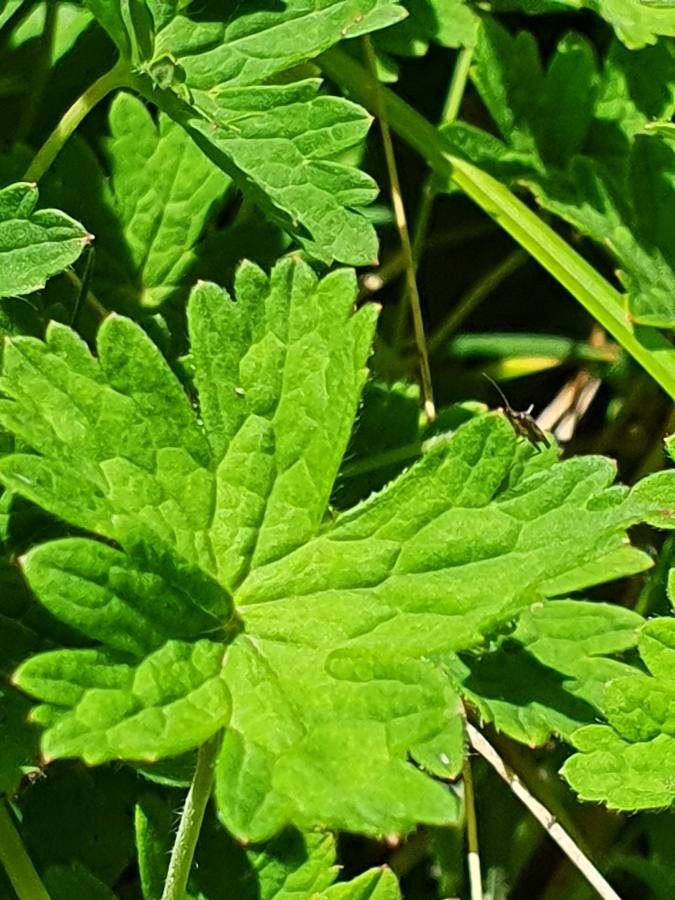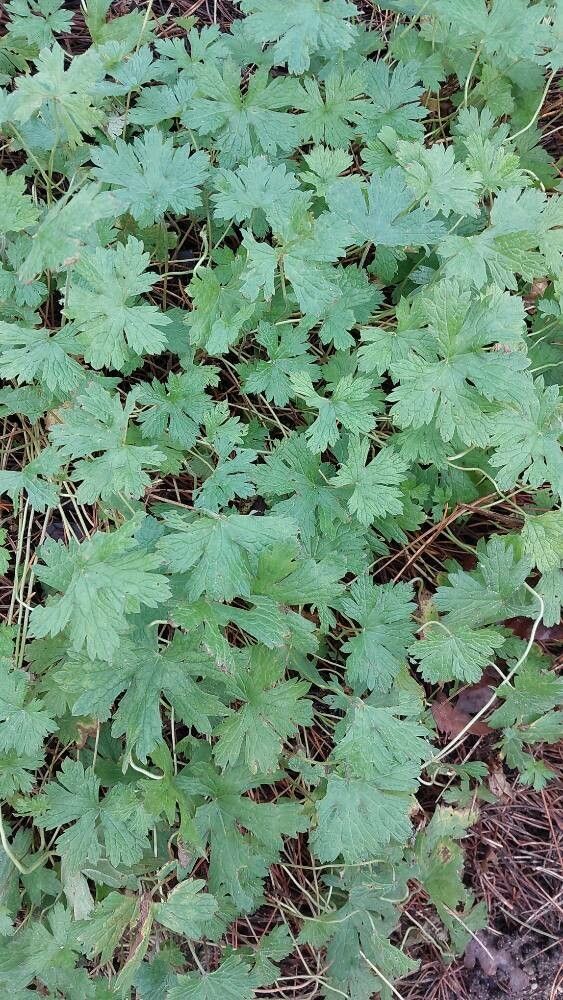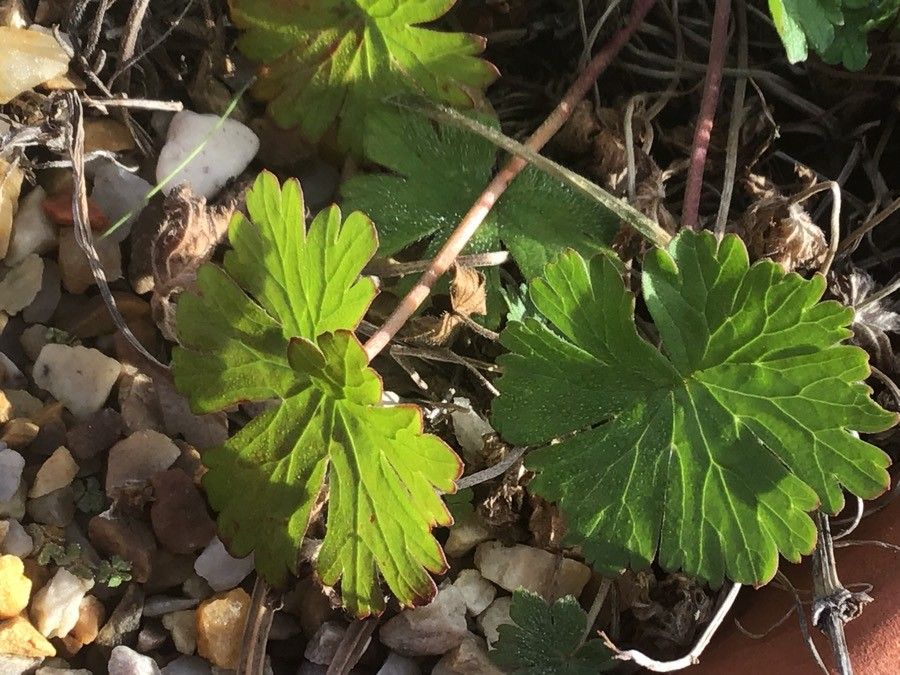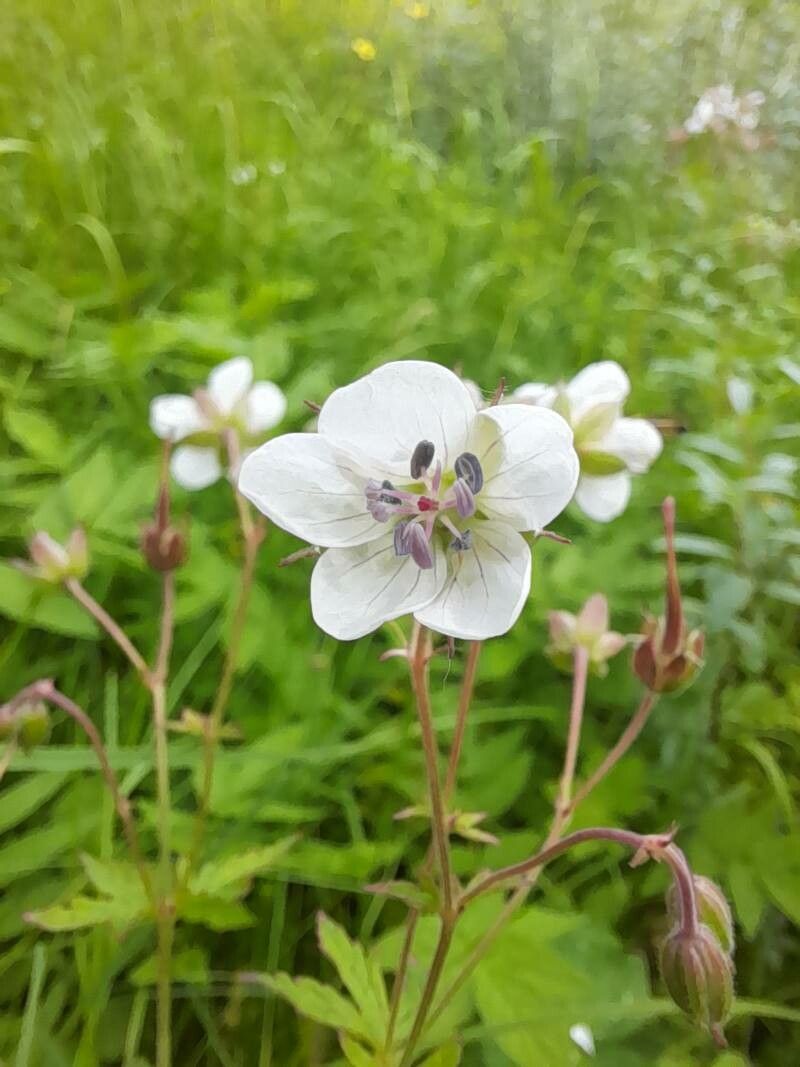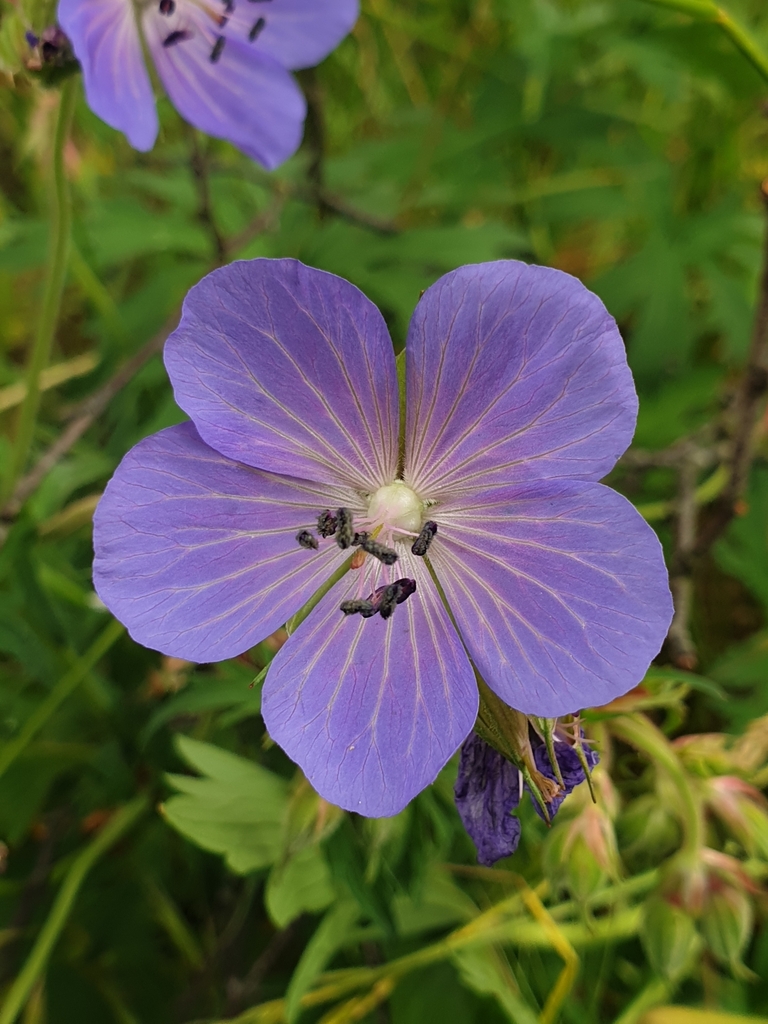
Geranium pratense, commonly known as meadow cranesbill, is a perennial flowering plant in the family Geraniaceae. Native to Europe and Asia, it has become naturalized in many parts of North America. The plant can grow up to 1 meter tall and features deeply lobed, green leaves. Its large, showy flowers range in color from blue-violet to pinkish-purple, often displaying darker veins. Meadow cranesbill prefers moist soils but can adapt to a wide variety of soil types as long as they are well-drained. It thrives in both full sun and partial shade and can be grown from seeds or propagated through division. This plant is often used ornamentally due to its attractive flowers, which bloom from late spring through summer. Additionally, it attracts pollinators such as bees, butterflies, and hummingbirds. In traditional medicine, Geranium pratense has been valued for its anti-inflammatory properties, making it useful for alleviating arthritis pain and treating digestive issues like diarrhea. Overall, Geranium pratense is a beautiful addition to any garden, offering both aesthetic appeal and medicinal benefits.
Meadow crane's-bill is fairly disease-resistant and typically does not suffer from illnesses. However, it can be vulnerable to pests and diseases present in its surroundings. Such infections are generally not serious. Regarding care, the plant needs moderate maintenance. It should be pruned regularly to maintain a tidy appearance and support healthy growth. Applying fertilizer can also help encourage flowering. Meadow crane's-bill is suitable for anyone with an outdoor area, such as a garden or patio, and does not demand extensive gardening experience. It may require extra care when cultivated indoors.
How to keep Geranium Pratense.
Light
The meadow crane's-bill flourishes in conditions with abundant daily sunlight, however, it can adapt to environments with moderate solar coverage. Rooted in meadow environments, its development can be stunted by too much shade and sun deprivation, resulting in frail stems and reduced blossoming. An overabundance of shading can likewise result in a decrease in vitality and a reduction in flowering.
Water
Meadow crane's-bill, which originates from temperate regions, thrives best in evenly moist soil and benefits from weekly watering to stay hydrated. Although it has some tolerance for drought, this plant does particularly well in gardens that consider and plan for seasonal water availability. Ensuring it has adequate moisture during its growing season is key to its success.
Temperature
The meadow crane's-bill is indigenous to regions with a temperate climate, prospering in temperature ranges from 68 to 95 °F (20 to 35 ℃). With the changing of the seasons, it's recommended to modify its environmental temperature within this spectrum to enhance its growth.
Fertilizer
The optimal period to enrich a Meadow crane's-bill is in the onset of spring, when it transitions from a dormant state to an active growing phase. The process of fertilization supplies the plant's necessary nutrients for robust growth. Despite relatively modest fertilization requirements of the Meadow crane's-bill, its longevity and the quality of its flowers could be improved by yearly fertilization.
Pruning
Meadow crane's-bill is known for its vibrant, lobed leaves and striking blue to purple flowers. To encourage bushier growth, prune the plant between early and late spring. Trim back old stems and remove any spent flowers using clean tools to make precise cuts just above healthy buds. This practice will improve blooming and enhance air circulation.
Pot & Repot
To encourage healthy growth, repot meadow crane's-bill every two years in the spring. Use a larger pot filled with well-draining soil, and water the plant moderately. During its recovery, provide indirect light. After four weeks, begin a feeding schedule to promote robust health and vibrant blooms.
Toxicity
Perennial geraniums are toxic to pets. They contain several components that can cause mild-severity toxicity symptoms, such as skin rashes, loss of appetite, low blood pressure, and lethargy.
Further reading →
The toxicity and danger assessments provided are for reference only. We do not assure their accuracy, so it's crucial not to depend on them. Seek professional advice when necessary for accurate guidance.
Botanical profile.
- Plant Type
- Herb
- Life Cycle
- Perennial, Annual
- Genus
- Geranium
- Family
- Geraniaceae
- Hardiness Zone
- 6-9
- Mature Height
- 30 cm to 49 cm
- Mature Spread
- 61 cm to 76 cm
- Leaf Color
- Green
- Leaf Type
- Deciduous
- Flower Color
- Blue, Lavender
- Flower Size
- 2.54 cm to 5.08 cm
- Bloom Time
- Early summer, Mid summer
- Planting Time
- Spring
- Harvest Time
- Mid summer
- Native Area
- Eastern North America
Other names.
Reader questions.
How should I water my Meadow crane's-bill?
To properly care for the Meadow crane's-bill plant, use filtered water at room temperature. Tap water may contain harmful particles, so it's best to avoid it. The plant prefers warm water because it is native to warm environments, and cold water can be a shock. Additionally, avoid overhead watering as it can cause issues with the foliage. Instead, slowly pour the filtered room temperature water onto the soil until it is completely soaked. This method helps moisten the roots and supports their growth and nutrient absorption.
Why do I have to add plant food to my Meadow crane's-bill plant?
The Meadow crane's-bill relies heavily on its leaves for structure, and fertilization is key to keeping them healthy and functional. When properly fertilized, these leaves will maintain consistent color and a vibrant texture. Fertilization also benefits the plant below the soil's surface, helping it produce new roots and sustain existing ones. This not only ensures the plant's current health but also allows it to efficiently absorb nutrients from the soil in the future.
What are the sunlight requirements for Meadow crane's-bill?
Meadow crane's-bill requires a significant amount of sunlight each day to thrive, ideally flourishing in full sun conditions, which means it needs more than 6 hours of sunlight daily. However, it can also accommodate to situations with partial sun, which translates to about 3-6 hours of sunlight. It's essential to observe how sunlight moves throughout your garden to find spots that offer the right mix of light and shade, as this will ensure the plant's well-being and lead to optimal growth.
What is the native climate for Meadow crane's-bill?
Meadow crane's-bill, scientifically known as Geranium pratense, thrives in the temperate regions, ideally in temperatures ranging from 68 to 95 °F (20 to 35 °C). To optimize growth, it's important to adjust the surrounding temperatures within this range as the seasons change.
What should I do if I give my Meadow crane's-bill plant too much water or too little water?
Overwatering is a more common problem than underwatering for Meadow crane's-bill plants. Too much water can cause wilting and yellowing of the stems and leaves. It can also lead to diseases like root rot, mold, and mildew that can be deadly for the plant. Meadow crane's-bill plants are fairly drought tolerant, so underwatering is less likely. However, if underwatering does occur, the leaves may become brittle and brown. It is important to spot the signs of overwatering early to prevent irreversible damage. Reduce watering immediately if you notice these signs and consider replacing poorly draining soil with a well-draining potting mix. If the plant is not receiving enough water, simply increase your watering frequency until the signs improve.
When should I fertilize my Meadow crane's-bill plant?
If you grow your Meadow crane's-bill outdoors each year, it will start sending out new growth in early spring. This is when you should start fertilizing it for the year. Usually, applying fertilizer once in the spring is enough. However, if you want to maximize its growth, you can fertilize it multiple times throughout the spring and early summer. In this case, you can feed it approximately every month to a month and a half.
How does inadequate sunlight affect Meadow crane's-bill?
When Meadow crane's-bill is exposed to less than optimal sunlight, it experiences several growth challenges. Weak stems and fewer blooms are common due to overshadowing and insufficient sun exposure. Excessive shade can further reduce the plant's vigor and flowering potential. To counteract these conditions, the plant may show symptoms like smaller new leaves, leggy or sparse growth, faster leaf drop, slower or no new growth, lighter-colored new leaves, chlorosis, sunscald, leaf curling, wilting, and leaf scorching.
Does Meadow crane's-bill require frost protection measures during winter?
Meadow crane's-bill possesses strong cold resistance, making special frost protection measures generally unnecessary during winter. However, in regions where winter temperatures are expected to fall below -25°C, it's crucial to provide cold protection. This can be achieved by covering the plant with soil or straw. Additionally, watering the plant abundantly before the first freeze in autumn ensures that the soil remains moist and enters a frozen state, helping to prevent drought and water scarcity for the plant during the colder months.
How frequently should I water my Meadow crane's-bill plant?
To determine if your Meadow crane's-bill plant needs water, follow these steps depending on whether it is in a pot or grown outdoors in the ground. If it is in a pot, insert your finger into the soil and check if the top two to three inches feel dry. If they do, it's time to water the plant. If it is grown outdoors in the ground, use a similar method by checking the top few inches of soil for dryness. This is usually an indication that the plant needs water. During spring and early fall, you may need to water the plant once a week using this method. In extremely hot weather, you might need to increase the watering frequency to around twice or more per week. However, it's worth noting that mature and well-established Meadow crane's-bill plants have a remarkable ability to withstand drought.
When is it best to not use fertilizer on my Meadow crane's-bill?
During the late fall and winter, your Meadow crane's-bill enters a dormant phase and stops producing new growth. Therefore, it is important not to fertilize it during this time. If you choose to fertilize it in the spring and summer, remember to reduce the amount of fertilizer you use as summer approaches, as the plant's growth rate decreases. It is never a good idea to fertilize your Meadow crane's-bill during extremely hot weather or when the soil is very dry. Doing so can cause stress and premature death of the plant.
What are the solutions for light deficiency in indoor and outdoor settings for Meadow crane's-bill?
For light-deficient Meadow crane's-bill, gradually increasing sunlight exposure is key. Indoors, move your plant weekly to sunnier spots until it achieves at least 6 hours of direct sunlight daily, ideally near a south-facing window. Use artificial lighting, such as plant grow lights or keeping lamps on for at least 8 hours a day, for large or immobile plants. Outdoors, similarly, transition your plants to sunnier areas gradually to prevent sunburn. If physical obstructions like trees block sunlight, consider pruning or transplanting smaller plants to sunnier locations during their dormant periods for better sunlight access and growth.
How does Meadow crane's-bill react to low temperatures?
Meadow crane's-bill is cold-tolerant and performs best when the temperature stays above 20°C. Throughout the winter, it's advised to keep it above 0°C. Exposing the plant to temperatures below -25°C may not show noticeable changes during winter, but could lead to reduced or absent sprouting in spring. The recommended solution for parts of the plant that fail to sprout in spring is to remove them.