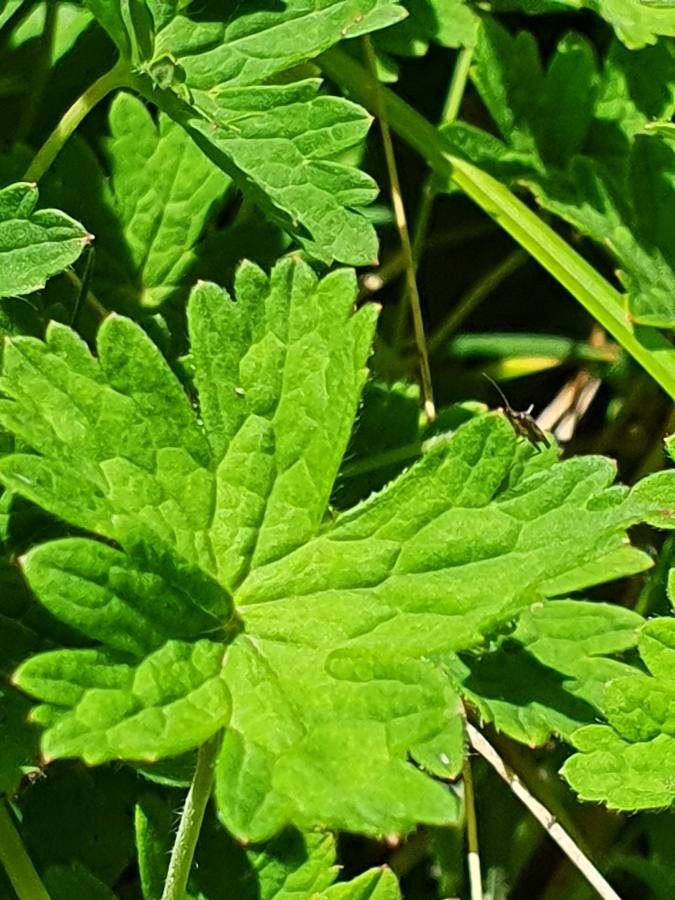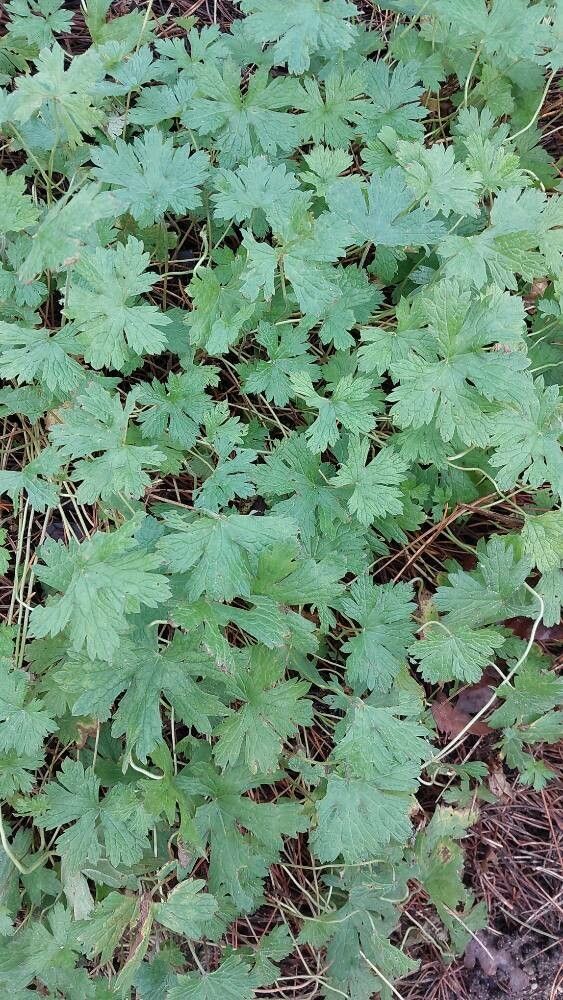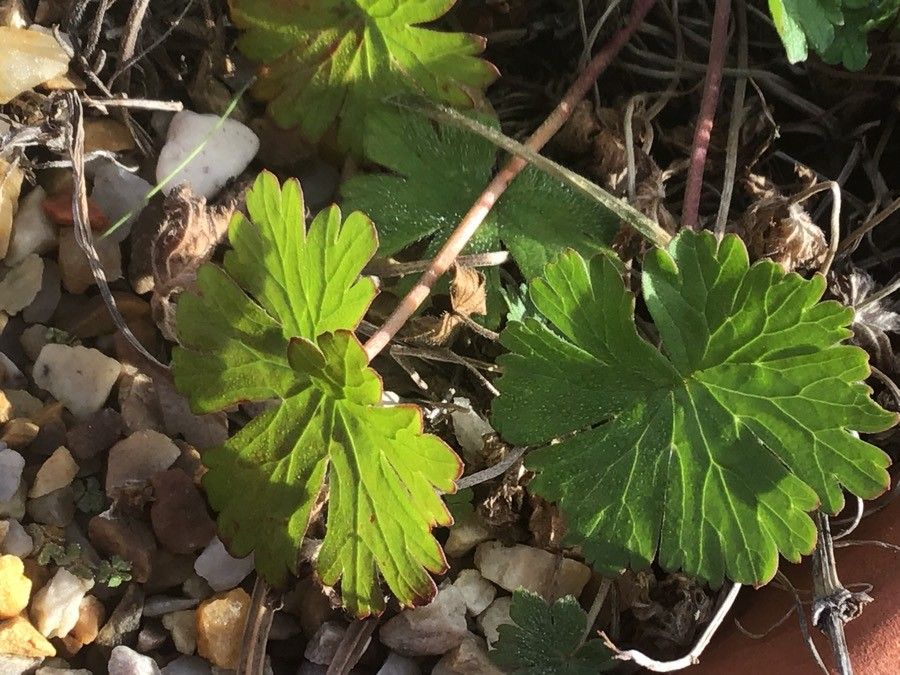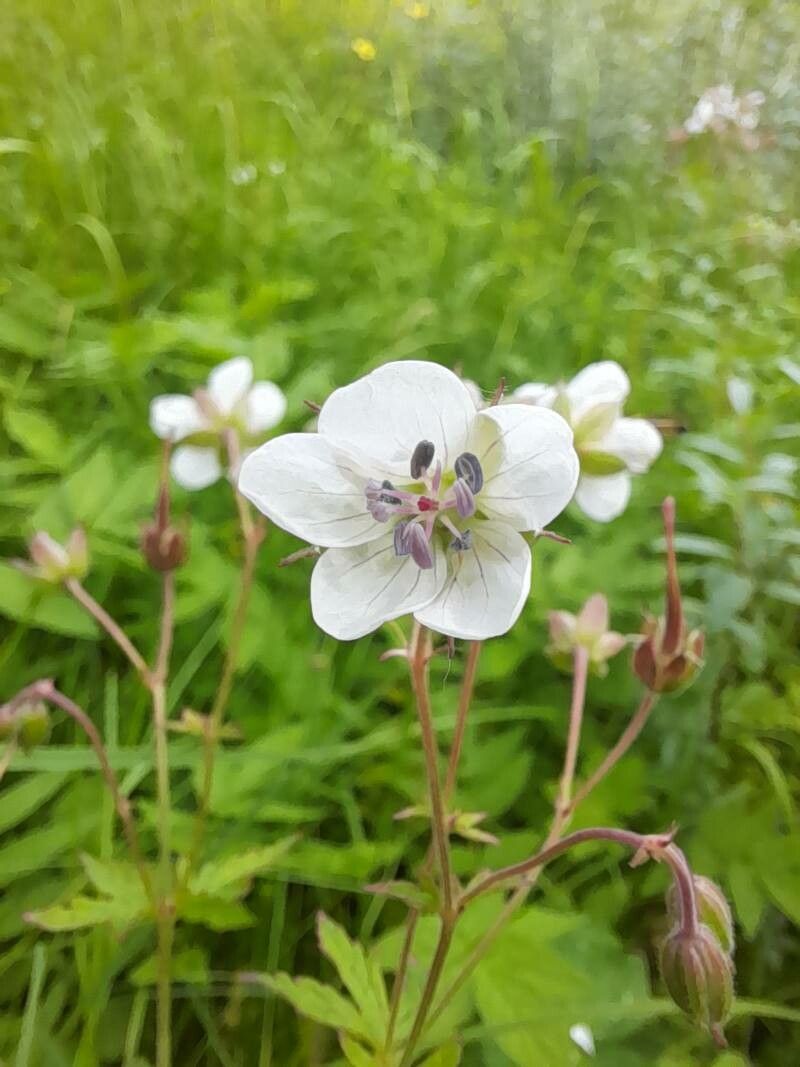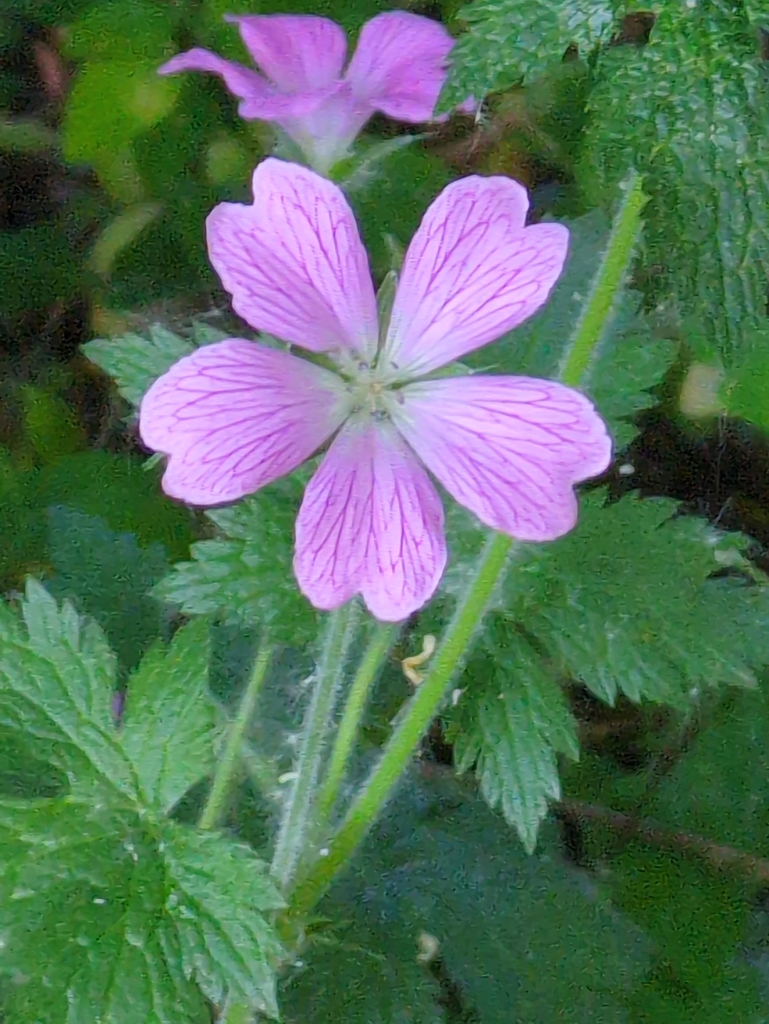
Geranium endressii, commonly called Endres cranesbill or French crane's-bill, is a species of hardy flowering herbaceous or semi-evergreen perennial plant in the genus Geranium, family Geraniaceae.It is native to the Western Pyrenees in Spain, and is cultivated as a garden subject. Growing to 75 cm (30 in) tall and broad, it has a mounding to sprawling habit, therefore is useful as groundcover in light shade. The leaves are deeply divided and the flowers are soft pink with red veins. It is very hardy, down to at least −20 °C (−4 °F) and possibly less. The cultivar ‘Castle Drogo’ has gained the Royal Horticultural Society's Award of Garden Merit.
Endres cranesbill, also known as French crane’s-bill and scientifically named Geranium endressii, was named after the French botanist Auguste R. Endres. Despite its name, this plant actually originates from Spain. The genus name "Geranium" is derived from the Greek word "géranos," meaning "crane," which refers to the shape of the plant's seed column.
Endres cranesbill is well resistant to disease and, overall, is not highly prone to illnesses. However, it can be affected by pests and diseases present in its surroundings. Such infections are generally mild. In terms of care, this plant requires moderate maintenance. Regular pruning is necessary to maintain a neat appearance and healthy growth. Fertilizing can also help encourage flowering. Endres cranesbill is suitable for anyone with outdoor space, such as a garden or patio, and does not require extensive care experience. It may need more attention when grown indoors.
How to keep Geranium Endressii.
Light
Endres cranesbill performs best when given full sun for most of the day. It tolerates partial shade but only to a limited degree. In its native habitat the plant grows in places where it can capture as much sunlight as possible. If it receives too little light, growth can be stunted and its health worsened, while excessive light may cause scorching.
Water
Endres cranesbill thrives in moist conditions and needs consistent watering to keep the soil evenly moist. To mimic its natural habitat, water it weekly. As an herbaceous perennial, it benefits from mulch to help retain moisture during the growing season.
Temperature
Endres cranesbill naturally occurs in habitats with temperatures between 41 and 95 °F (5 to 35 ℃). Its ideal temperature conditions reflect those of its native habitat. In seasons with extreme temperatures, minor adjustments may be necessary to keep conditions within the specified range.
Fertilizer
An Endres cranesbill is best fertilized in early spring, as it breaks dormancy and begins active growth. Fertilizing supplies essential nutrients for healthy growth. Although the Endres cranesbill has relatively low fertilizer needs, an annual application can enhance its survival and promote better, longer-lasting flowers.
Pruning
Endres Cranesbill showcases beautiful clusters of pink flowers and lobed leaves. Regular pruning helps this plant thrive. To maintain its health and appearance, focus on removing dead stems and spent flowers. For the best results, prune between late winter and early spring. This practice promotes optimal growth, improves air circulation, and reduces the plant's susceptibility to disease.
Pot & Repot
To ensure healthy growth, repot Endres cranesbill every 2-3 years in early spring. Choose a slightly larger pot to accommodate its rhizomatous roots. After repotting, water the plant thoroughly and place it in partial shade. Endres cranesbill thrives in consistently moist, well-draining soil. Handle the plant carefully, as it has delicate foliage.
Botanical profile.
- Plant Type
- Herb
- Life Cycle
- Perennial
- Genus
- Geranium
- Family
- Geraniaceae
- Hardiness Zone
- 5-9
- Mature Height
- 76 cm
- Mature Spread
- 76 cm
- Leaf Color
- Green, Red
- Leaf Type
- Evergreen, Semi-evergreen, Deciduous
- Flower Color
- Pink
- Flower Size
- 2.54 cm
- Bloom Time
- Late spring, Summer
- Planting Time
- Spring
- Harvest Time
- Summer, Early fall
- Native Area
- France
Other names.
Reader questions.
How should I water my Endres cranesbill plant?
To properly water the Endres cranesbill plant, it is recommended to use filtered water at room temperature. Tap water may contain harmful particles that can negatively affect the plant. It is important to use room temperature water or slightly warmer because this plant is accustomed to warm environments and cold water can be a shock to its system. It is also advised to avoid overhead watering as it can lead to issues with the foliage. Instead, it is best to apply filtered room temperature water directly to the soil until it is completely soaked. This method is beneficial as it ensures the roots are moistened and able to continue spreading through the soil to gather necessary nutrients.
Why is it important to add fertilizer to my Endres cranesbill?
Fertilization is important for the Endres cranesbill because it provides essential nutrients for the plant's growth. Although the fertilization needs of the Endres cranesbill are relatively low, annual fertilization can greatly benefit the plant. It helps keep the plant alive and encourages the growth of beautiful, long-lasting flowers. Therefore, those who want their Endres cranesbill to thrive should make sure to fertilize it annually.
What are the sunlight requirements for Endres cranesbill?
Endres cranesbill thrives in full sun, requiring above 6 hours of sunlight daily to flourish. It can also grow in partial sun, which means about 3-6 hours of sunlight. To ensure your plants are content and healthy, observe the sunlight patterns in your garden to find spots that offer the right balance between light and shade. This plant has adapted to maximize sun absorption in its natural habitat, and insufficient sunlight can stunt its growth or lead to health issues, while too much direct exposure might cause leaf scorching.
What is the ideal temperature range for Endres cranesbill?
Endres cranesbill, scientifically known as Geranium endressii, thrives in a temperature range of 41 to 95 °F (5 to 35 °C), which reflects the conditions of its native habitat. The plant has a robust cold resistance, typically not requiring special frost protection in winter. However, in regions where winter temperatures may dip below -25°C, protective measures such as covering the plant with soil or straw are recommended. To aid in winter survival, it's advisable to water the plant generously before the first freeze of autumn, ensuring the soil remains moist and enters the winter in a frozen state. This preparation helps prevent drought and water scarcity for the plant during the colder months and into early spring.
What should I do if I give too much or too little water to my Endres cranesbill plant?
Both overwatering and underwatering can harm the health of your Endres cranesbill, but overwatering is typically a bigger problem. If you give this plant too much water, its stems and leaves may wilt and turn yellow. Long-term overwatering can also lead to diseases like root rot, mold, and mildew, which can kill the plant. Underwatering is less common for the Endres cranesbill because it can tolerate some drought. However, it can still happen, and if it does, the leaves may become dry and brown. It's important to recognize the signs of overwatering early on when caring for your Endres cranesbill. Some diseases caused by overwatering, like root rot, may not be fixable if you wait too long. If you notice signs of overwatering, reduce your watering schedule and check the quality of the soil. If the soil doesn't drain well, replace it with a loose, well-draining potting mix. If you see signs of underwatering, simply water the plant more regularly until the signs fade.
When should I put fertilizer on my Endres cranesbill plant?
The best time to fertilize an Endres cranesbill is in the late winter to early spring when the plant is coming out of its dormant phase and beginning to actively grow. Fertilizing at this time promotes healthy growth and sets the plant up for a successful season. Although it is generally recommended to fertilize in the early spring, fertilizing in the fall is also acceptable. However, it is not advisable to fertilize during the summer or winter seasons.
Can Endres cranesbill benefit from artificial lighting and how should it be implemented?
Yes, Endres cranesbill can benefit from artificial lighting, especially when natural sunlight is insufficient. This is often necessary during winter or in less sunny spaces. Artificial lights, particularly LED lights that can provide specific wavelengths, promote healthier and faster growth. For full sun plants, 30-50W per square foot is recommended; partial sun plants need 20-30W per square foot, while full shade plants require 10-20W per square foot. The light source should be positioned 12-36 inches above the plant and kept on for 8-12 hours per day to mimic natural daylight hours.
How does Endres cranesbill respond to low temperatures, and what are the recommended solutions?
Endres cranesbill is notably cold-tolerant and generally thrives best when temperatures are maintained above 5°C. In winter, it's important to ensure temperatures stay above -20°C for optimal health. At temperatures dipping below -25°C, the plant might not show immediate distress, but these conditions can lead to reduced sprouting or a complete lack of sprouting come spring. The advised solution for springtime care includes removing any plant parts that failed to sprout, which helps the plant to regenerate and focus its energies on new growth.
How much should I water my Endres cranesbill plant?
If your Endres cranesbill is in a pot, the most accurate way to determine if it needs water is to stick your finger into the soil. If you find that the top two to three inches of soil are dry, it's time to water your plant. If you have your Endres cranesbill growing outdoors in the ground, you can use a similar method to test the soil. Once again, if you discover that the top few inches of soil have dried out, it's time to water. During the spring and early fall, you will likely need to water this plant about once a week using this method. However, during extremely hot weather, you may need to increase your watering to about twice a week or even more. Nevertheless, mature and well-established Endres cranesbill plants have an impressive ability to endure drought.
When is it not a good idea to add fertilizer to my Endres cranesbill?
To ensure optimal growth of your Endres cranesbill, it is important to fertilize it only during the late winter and early spring. This plant has low fertilization needs, so a single annual feeding is enough. Fertilizing during spring, summer, and fall can lead to overfertilization and complications. The only exception is if you missed fertilizing in spring, then it is acceptable to feed it in fall. Also, it is unnecessary to fertilize during winter when the plant is in a dormant phase and not producing new growth.
What are the symptoms of inadequate lighting for Endres cranesbill?
Symptoms of inadequate lighting in Endres cranesbill include small leaves, leggy or sparse growth, faster leaf drop, slower or no new growth, lighter-colored new leaves, and signs of chlorosis, which indicates a breakdown of chlorophyll. Sunscald, leaf curling, wilting, and leaf scorching are signs that occur with overexposure to sunlight. These symptoms help identify whether the plant needs more or less sunlight exposure.
How should I care for Endres cranesbill in high temperatures?
During the summer months, it is crucial to keep the temperature below 35°C to ensure the health of Endres cranesbill. Exposure to temperatures above 38°C can cause the leaves to lighten in color, curl, become susceptible to sunburn, and in severe cases, lead to the wilting and drying out of the plant. To mitigate these effects, it's advisable to trim away the sunburned and dried parts of the plant. Moving the plant to a shaded area during the midday and afternoon sun or using a shade cloth can provide relief. Additionally, maintaining soil moisture by watering the plant in the morning and evening can help prevent heat-related stress.