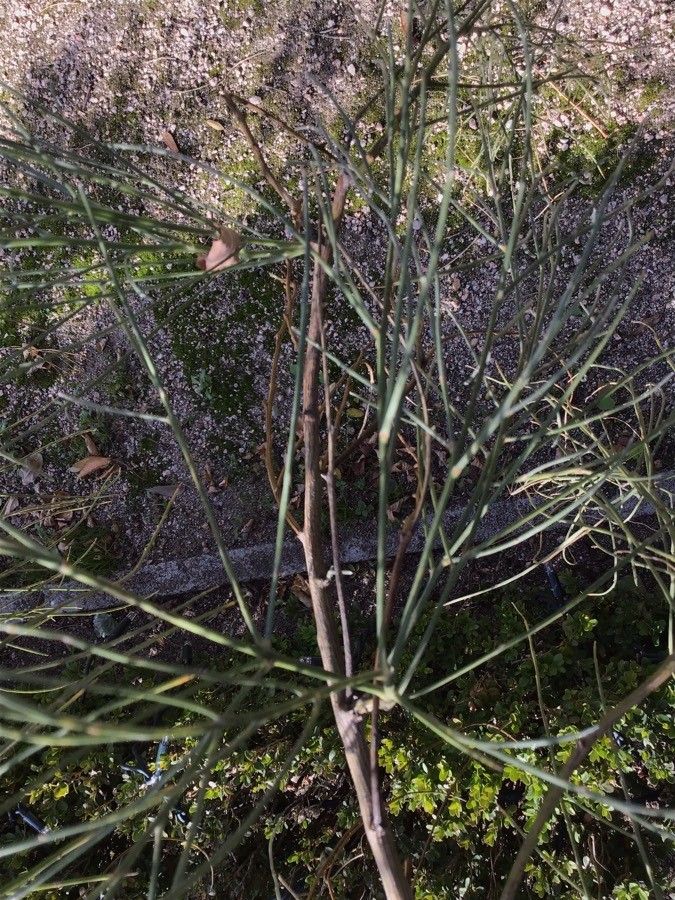
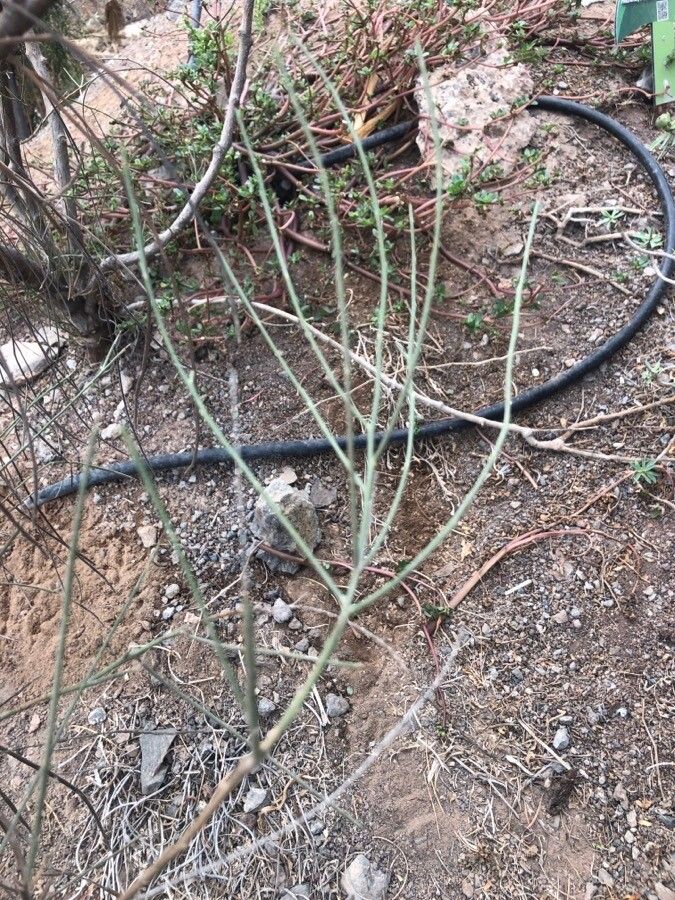
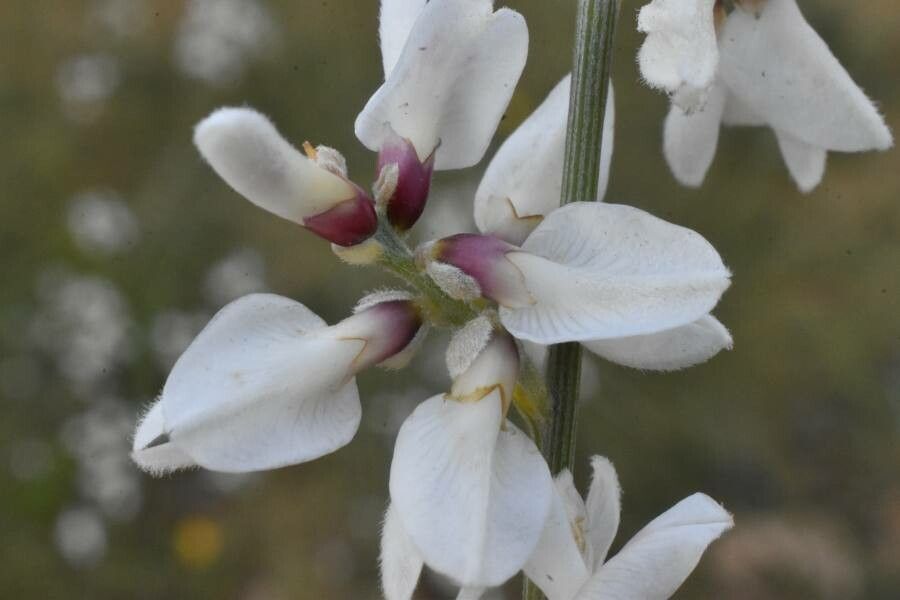
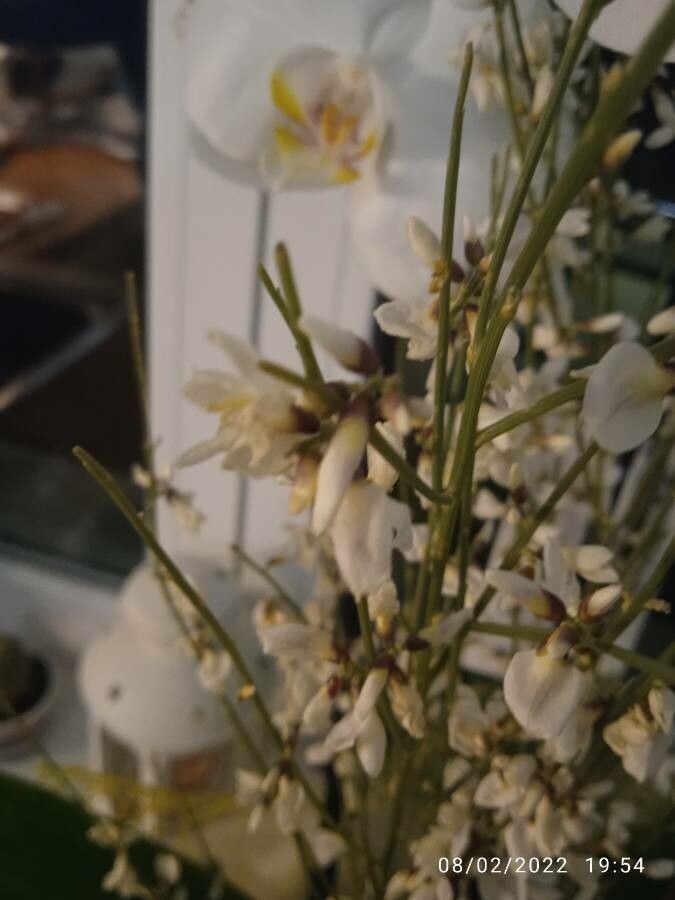
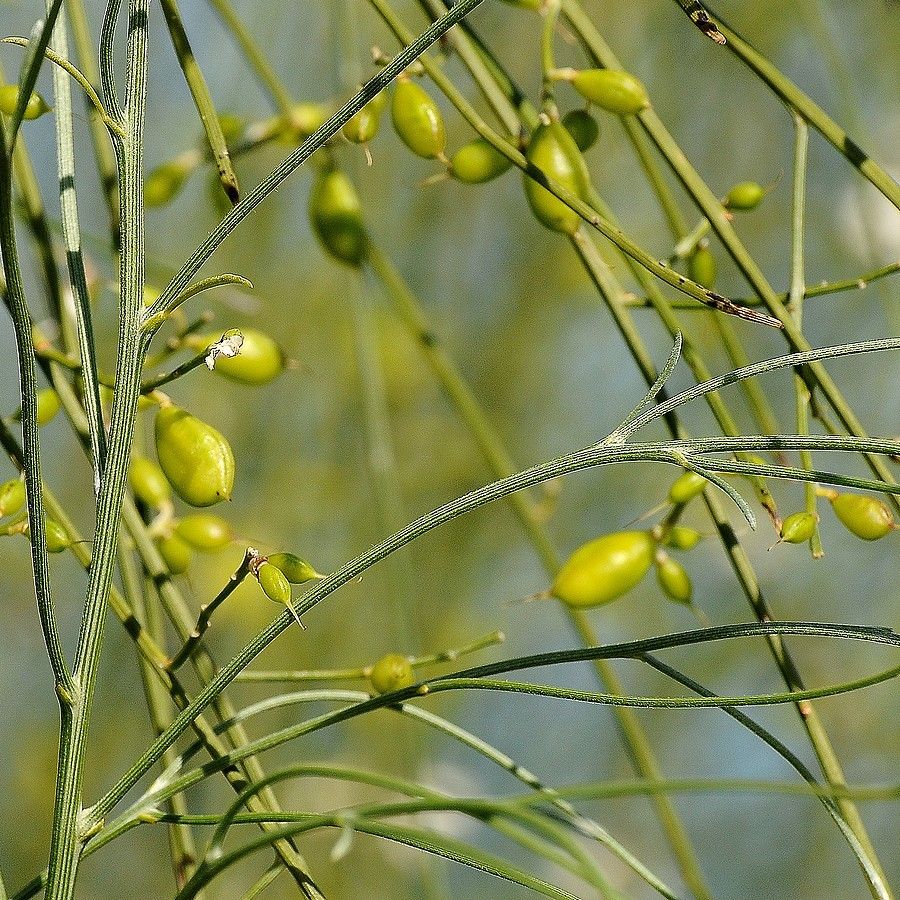
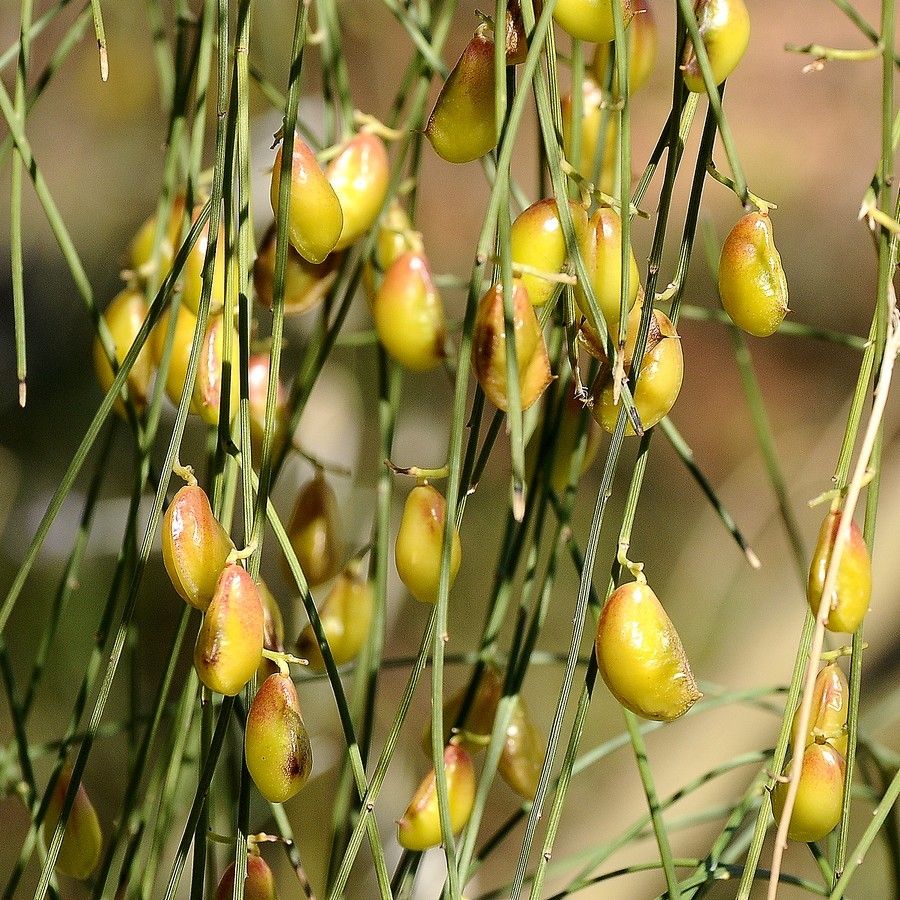
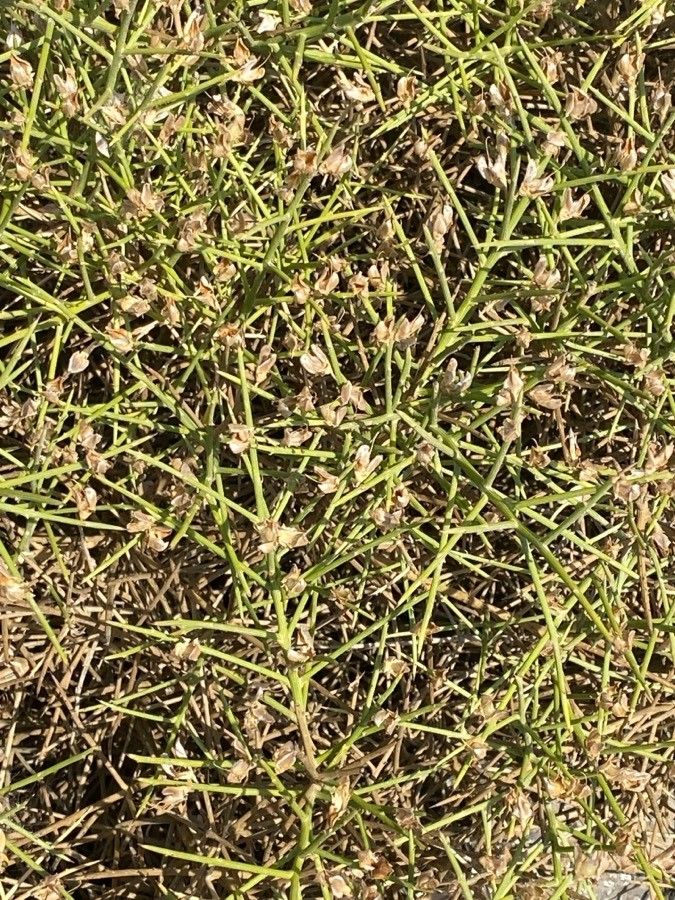
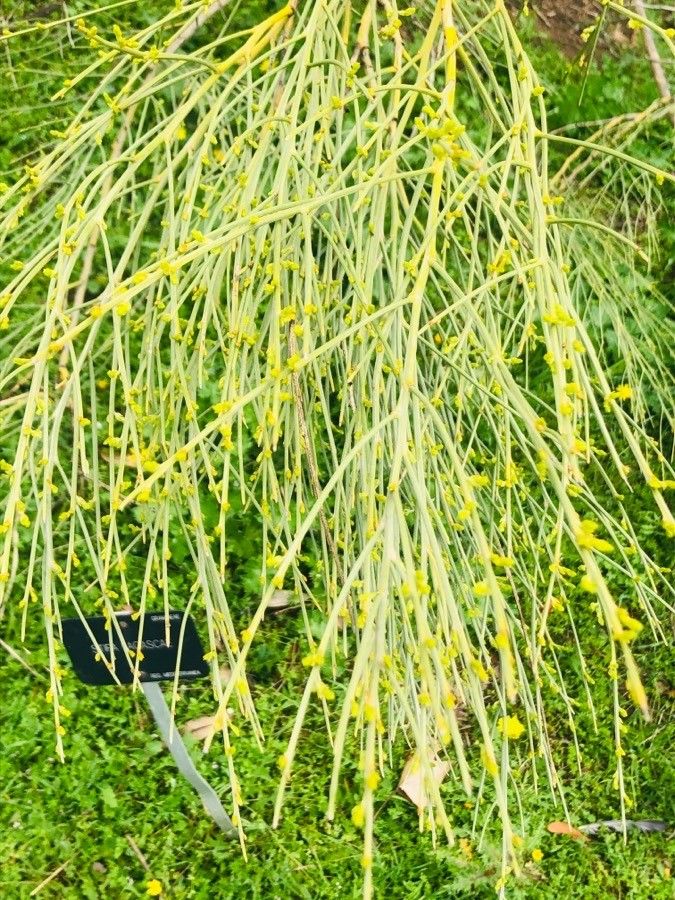
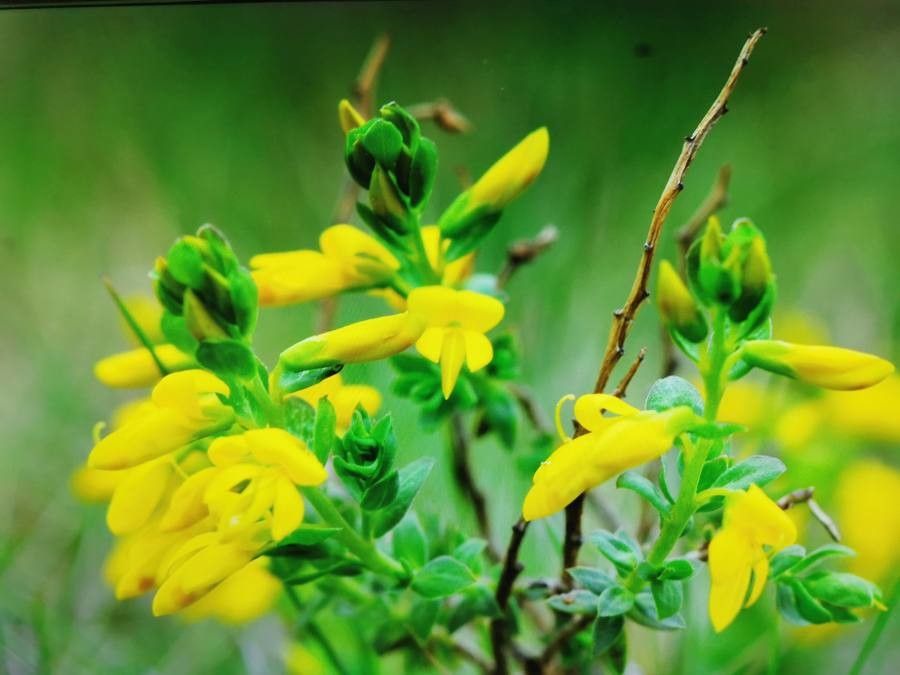
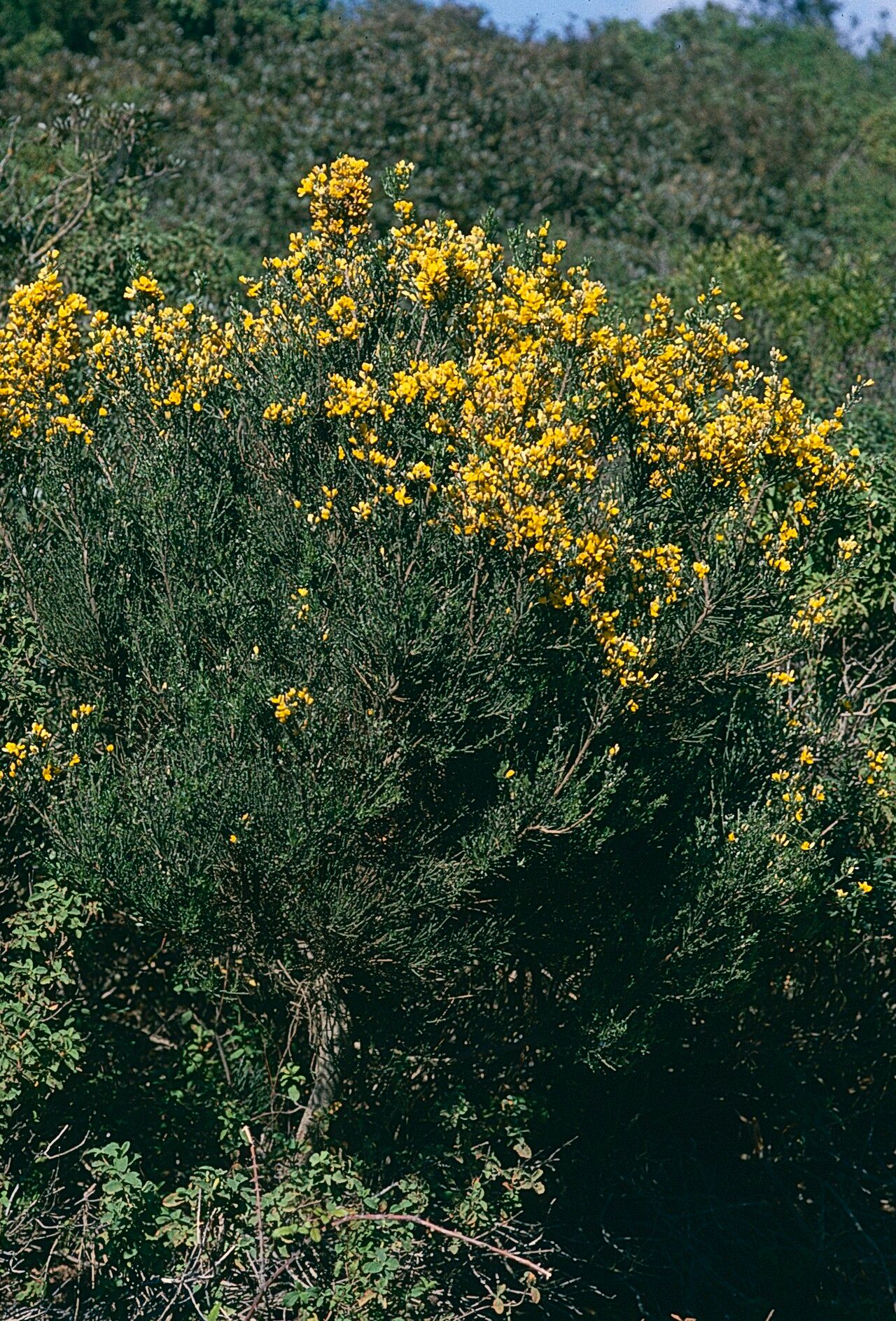
Retama monosperma, the bridal broom or bridal veil broom, is a flowering bush species in the genus Retama, native to the western Mediterranean Basin (from Portugal, Morocco and Canary Islands to Italy and Egypt).Retama monosperma forms root nodules with Ensifer fredii. The larvae of the moths Phyllonorycter hesperiella and Phyllonorycter spartocytisi feed on R. monosperma. The seeds contain cytisine, a toxic alkaloid. Fifteen other quinolizidine and three dipiperidine alkaloids can also be isolated from different parts of the plant. In particular, the presence of (+)-sparteine, α- and β-isosparteine, (+)-17-oxosparteine, (-)-lupanine, 5,6-dehydrolupanine, (-)-anagyrine, (-)-N-methylcytisine and (+)-ammodendrine can be detected.
Bridal veil broom has strong disease resistance and is usually not susceptible to diseases. Regarding care, this plant is fairly low-maintenance. When grown outdoors it needs little watering, and larger plants typically do not require pruning. Smaller plants, however, should be pruned after they finish blooming. Bridal veil broomt is suitable for anyone with an outdoor space, such as a garden or deck, and does not demand much care experience.
How to keep Genista Monosperma.
Light
Bridal veil broom prefers abundant sunlight and performs best when exposed to bright sun for most of the day. It tolerates partial shade, though that may slow its growth. The plant originates from sun-drenched habitats, reflecting its preference for ample light. Insufficient sunlight can result in a dull appearance, while too much can scorch the leaves.
Temperature
Bridal veil broom originates from habitats where temperatures commonly range from 68 to 95 °F (20 to 35 ℃). It does best within that temperature band. If temperatures move outside this range, relocating the plant is recommended to recreate its native climate conditions.
Fertilizer
Timing is important when fertilizing Bridal veil broom. Apply fertilizer in early spring and continue monthly until early summer. Fertilizer promotes attractive blooms and supplies energy during both dormant and active growth phases.
Botanical profile.
- Plant Type
- Shrub
- Life Cycle
- Perennial
- Genus
- Genista
- Family
- Fabaceae
- Hardiness Zone
- 9-10
- Mature Height
- 3.96 m
- Mature Spread
- 3.05 m
- Leaf Color
- Green, Blue, Gray, Bronze
- Leaf Type
- Evergreen, Deciduous
- Flower Color
- White
- Flower Size
- 1.02 cm to 1.78 cm
- Bloom Time
- Early spring, Mid spring
- Planting Time
- Autumn, Spring
- Harvest Time
- Early summer, Mid summer
Other names.