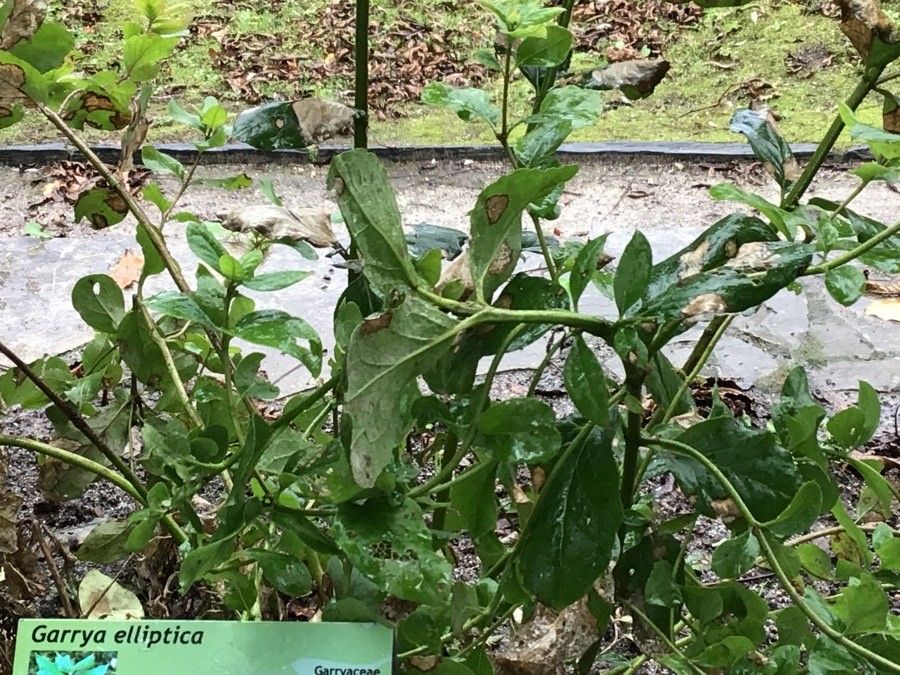
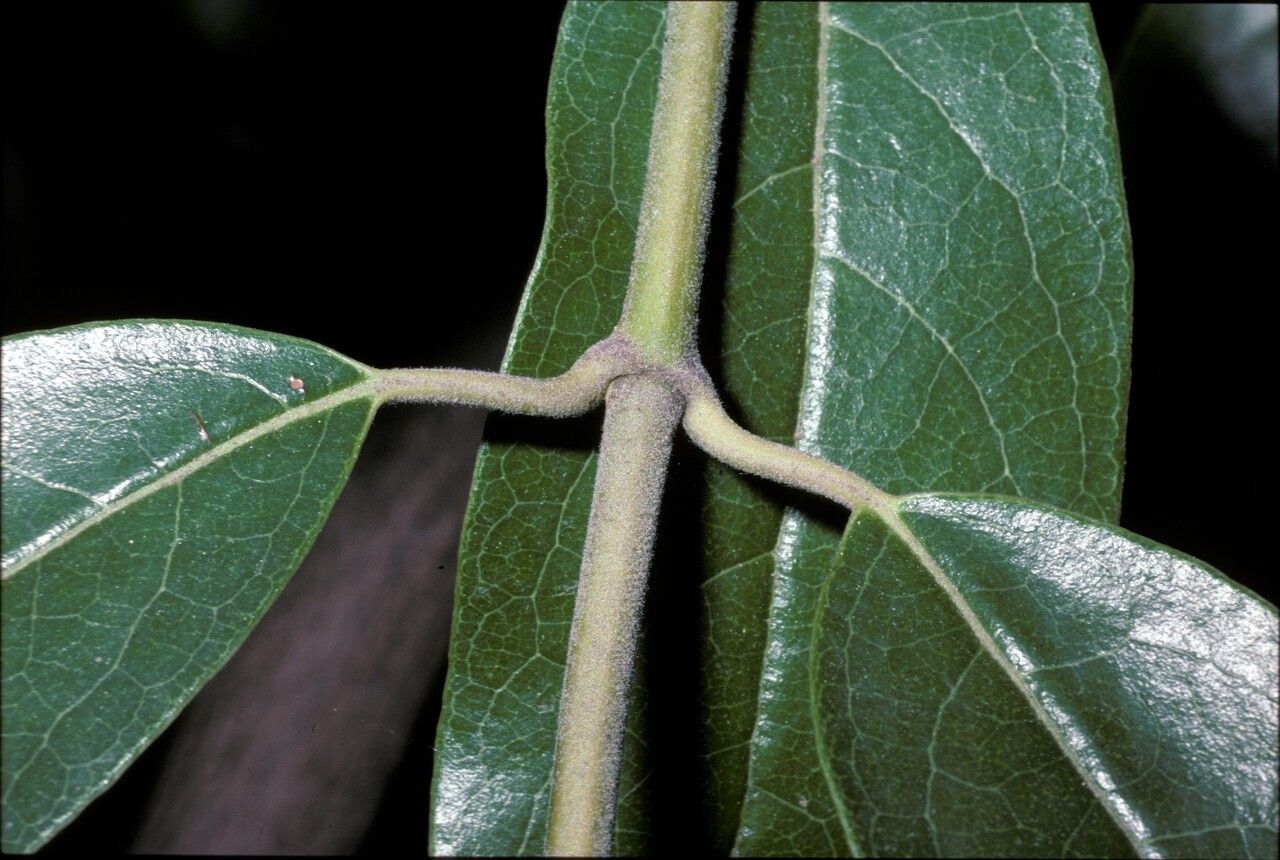
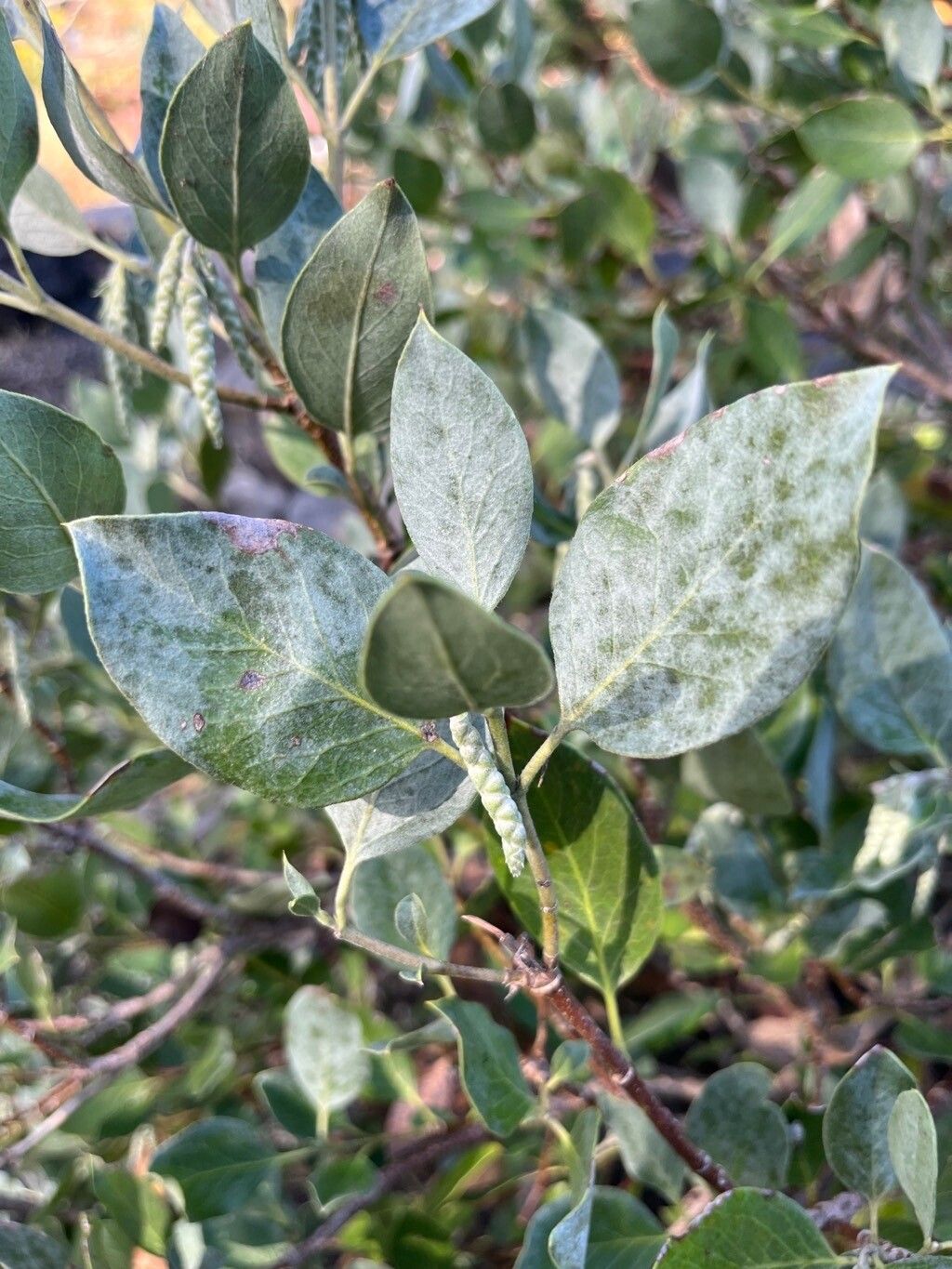
Garrya wrightii, commonly known as Wright's silktassel, is a species of flowering plant in the family Garryaceae. It is native to the southwestern United States and northern Mexico, typically growing in rocky canyons and on slopes at elevations up to 2,500 meters. This large shrub or small tree can reach heights of up to 6 meters and spread up to 4 meters wide. Its dark green leaves are leathery, glossy, and have serrated edges.
The most distinctive feature of Garrya wrightii is its long clusters or tassels, which can grow up to 30 cm long. These tassels consist of numerous small flowers that bloom from late winter through early spring. The tassels are covered in silky hairs, which is why the plant is commonly referred to as "silktassel". The plant is dioecious, meaning it has separate male and female plants. The male flowers are generally more showy than the female ones.
Garrya wrightii prefers well-drained soils and full sun exposure but can tolerate some shade and drought conditions once established. Its deep root system helps stabilize soil on slopes, making it useful for erosion control.
Overall, Garrya wrightii is an attractive ornamental plant for gardens. Its unique tassel-like blooms add visual interest during the winter months when few other plants are flowering.
Wright's silktassel shows good disease resistance and is generally not susceptible to diseases. Regarding care, this plant is relatively low-maintenance. Planted outdoors it needs minimal watering, and larger specimens typically do not require pruning. However, smaller plants should be pruned after they have finished blooming. Wright's silktassel is suitable for anyone with an outdoor space, such as a garden or deck, and does not require extensive experience in plant care.
How to keep Garrya Wrightii.
Light
Wright's silktassel is found naturally in settings like forest understories or rocky sites, where it is subject to natural shade. It prefers partial sun but can adapt to either full sun or full shade, illustrating its hardy, versatile character.
Water
Wright's silktassel is a plant well-suited to arid environments, thanks to its strong drought tolerance. It requires watering only every 2 to 3 weeks. As an evergreen, it retains its foliage throughout the year, which helps minimize water loss through transpiration and supports its survival in dry climates.
Temperature
Wright's silktassel is a plant native to climates where temperatures range between 59 and 89.6 °F (15 and 32 ℃). It thrives best in those warm conditions. If placed in colder or hotter environments, make seasonal adjustments to satisfy its temperature preferences.
Fertilizer
Fertilize your Wright's silktassel in early spring to encourage healthy growth. Regular feeding improves its overall health, leading to robust growth, better tolerance of harsh conditions, and greater resistance to pests and diseases. Stick to a consistent fertilization schedule for your Wright's silktassel to maintain foliage that is vivid in color and lush in appearance.
Pruning
Wright's silktassel is an evergreen shrub with catkin-like flowers and leathery leaves. To maintain its health and encourage blooming, it's best to prune the plant in early spring. This allows you to remove any dead wood, improve air circulation, and shape the shrub. Make sure to use sharp, clean tools to prevent disease and ensure the plant heals quickly.
Botanical profile.
- Plant Type
- Tree, Shrub
- Life Cycle
- Perennial
- Genus
- Garrya
- Family
- Garryaceae
- Hardiness Zone
- 8
- Mature Height
- 3.66 m to 10.97 m
- Mature Spread
- 0.91 m to 2.74 m
- Leaf Color
- Dark Green, Gray
- Leaf Type
- Semi-evergreen
- Flower Color
- Yellow, Green
- Flower Size
- 0.25 cm to 0.51 cm
- Bloom Time
- Mid spring, Late spring
- Planting Time
- Spring, Summer, Autumn
- Harvest Time
- Late summer, Early fall, Mid fall
- Native Area
- Mexico
Other names.
Reader questions.
What is Wright's silktassel?
Wright's silktassel, botanically known as Garrya wrightii, is a plant that is native to climates with temperature ranges between 59 to 89.6 °F (15 to 32 °C). It thrives best in warm conditions and has strong cold resistance. Despite its cold tolerance, in environments where winter temperatures are expected to drop below -10°C, special frost protection measures are recommended to ensure the plant's health and vitality.
How does Wright's silktassel respond to low temperatures?
Wright's silktassel is cold-tolerant, performing best above 15°C and preferably kept above -5°C during winter. If temperatures fall below -10°C, the plant might not show immediate distress, but its branches can become brittle and dry, with a noticeable lack of new shoots in spring. To manage this, it is advised to prune away any dead branches that have failed to produce new leaves once warmer spring temperatures arrive.
What should I do if Wright's silktassel is exposed to high temperatures?
During summer, it's crucial to ensure that Wright's silktassel remains below 32°C. Exposure to temperatures above 35°C may cause the leaves to lighten in color and become dry, with the tips possibly withering and the plant becoming susceptible to sunburn. To mitigate these effects, trim the sunburned and dried parts, relocate the plant to a shaded area away from the midday and afternoon sun, or use a shade cloth. Additionally, watering the plant in the morning and evening will help keep the soil appropriately moist.
How should I care for Wright's silktassel in cold winters?
For cold winters, especially when temperatures are forecasted to drop below -10°C, wrapping the trunk and branches with non-woven fabric or cloth provides necessary cold protection for Wright's silktassel. It is also beneficial to water the plant abundantly before the first freeze in autumn. This practice ensures that the soil remains moist and enters a frozen state, which plays a crucial role in preventing drought and water scarcity for the plant during winter and the early spring period.