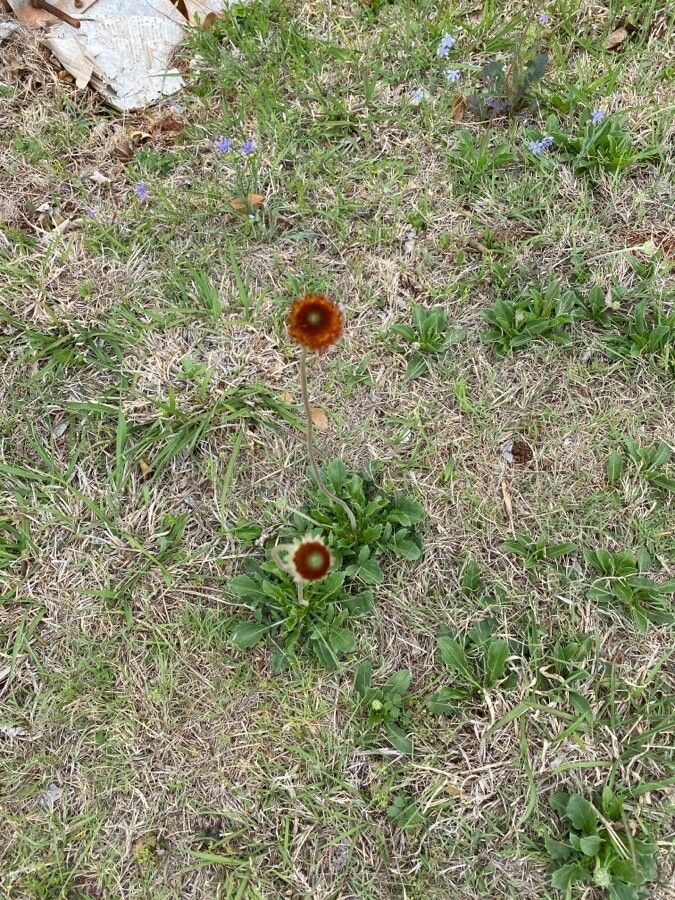
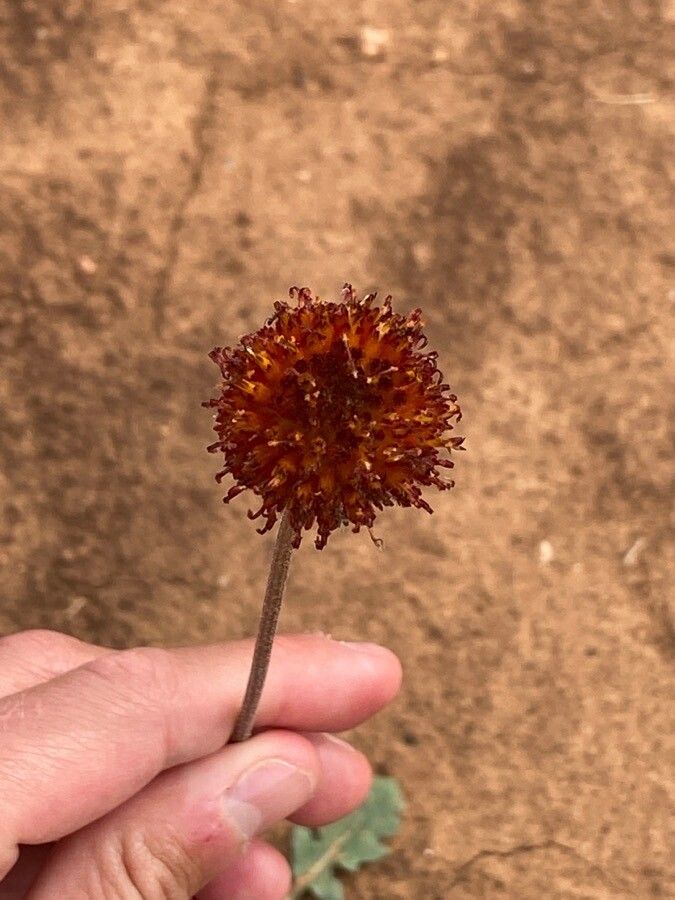
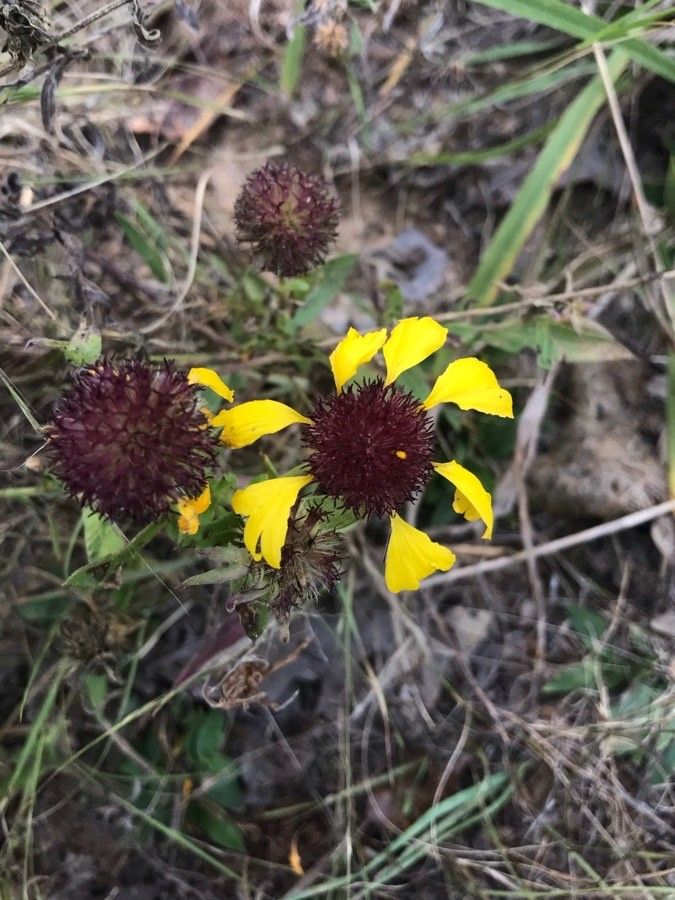
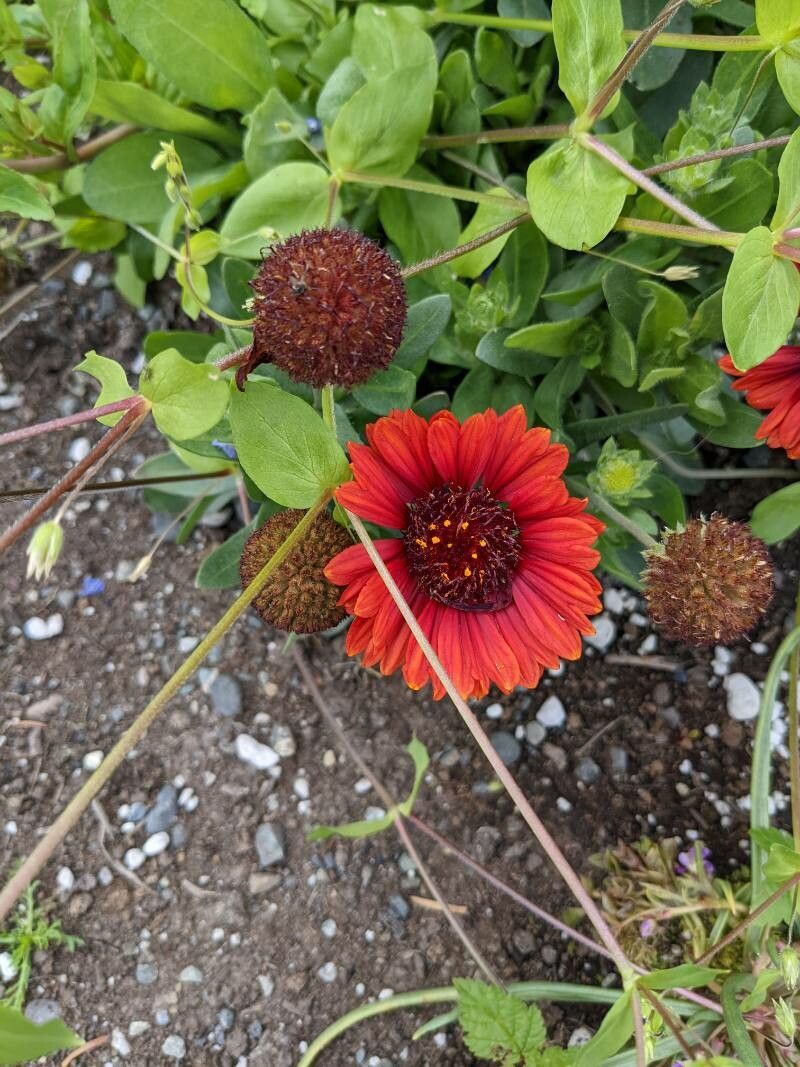
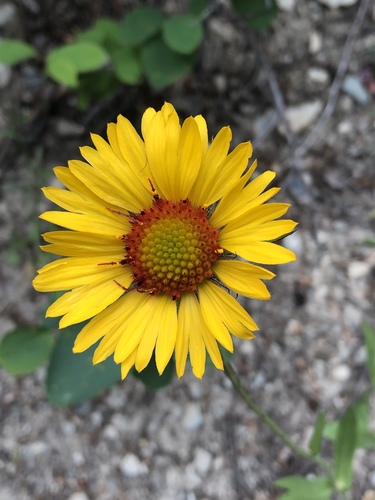
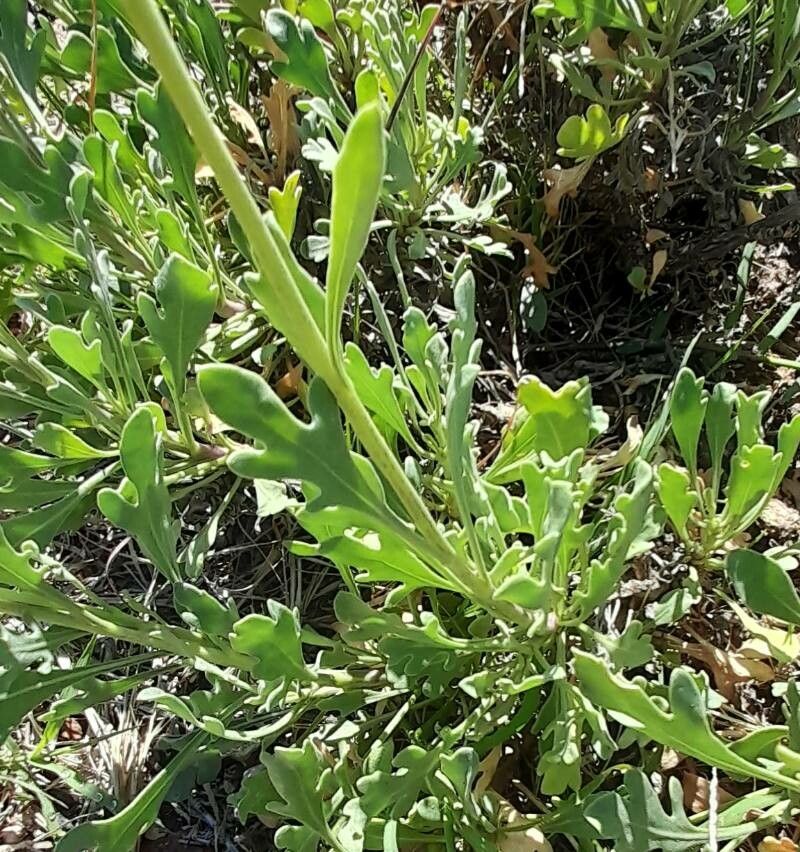
Gaillardia suavis, commonly known as the Pincushion or Firewheel, is a perennial flowering plant that belongs to the Asteraceae family. Native to North America, it thrives in diverse habitats such as prairies, meadows, and open woodlands. The plant typically grows up to 2 feet tall, with a spread of 1 to 2 feet, and features narrow, green leaves with toothed edges.
The flowers of Gaillardia suavis are its most striking feature. They have bright red or orange petals with yellow tips, arranged around a central disk that is brownish-red. Blooming from late spring through summer, these vibrant flowers attract pollinators like bees and butterflies.
Gaillardia suavis prefers full sun exposure but can tolerate partial shade in hot climates. It requires well-drained soil and can withstand drought conditions once established.
The Pincushion plant is easy to grow from seed or by dividing established plants in early spring or fall when temperatures are cooler.
Overall, Gaillardia suavis is an attractive perennial flowering plant that adds vibrant colors to any garden while also providing food for pollinators during its blooming season.
Perfumeballs is fairly disease-resistant and usually not prone to illnesses. However, it can be affected by pests and diseases present in its surroundings. These infections are generally mild. For care, the plant needs moderate maintenance. It should be pruned regularly to maintain a neat appearance and healthy growth. Fertilizing can also help encourage flowering. Perfumeballs is suitable for anyone with an outdoor area, such as a garden or patio, and does not require extensive care experience. It may need more attention when grown indoors.
How to keep Gaillardia Suavis.
Light
Perfumeballs grows best with gentle yet abundant sunlight, which is essential for its healthy development. Its native habitat consists of areas with dappled sunlight. Prolonged exposure to intense sun can cause wilting, while insufficient light can impede its growth.
Water
Perfumeballs, native to dry prairie regions, thrive in drier conditions and are drought-tolerant. They require weekly watering, especially in areas where rainfall is just enough to meet their moderate needs, which in turn affects their flowering schedule.
Temperature
Perfumeballs is native to moderate environments, preferring temperatures from 59 to 90 °F (15 to 32 ℃). Seasonal temperature adjustments may be required to keep it within its comfort range.
Fertilizer
The best time to feed a Perfumeballs is in early spring, when it is coming out of dormancy and starting active growth. Fertilizing supplies essential nutrients for healthy development. Although Perfumeballs needs relatively little fertilizer, giving it an annual feeding can improve its survival and encourage better, longer-lasting flowers.
Pruning
Perfumeballs display fragrant, daisy-like flowers that add a lovely touch to any garden. To encourage healthy growth and extended blooming, prune these plants from early to late spring by removing any spent or damaged stems. Light trimming helps promote bushiness while maintaining their natural shape. Regular maintenance not only enhances the ornamental appeal of the plants but also improves airflow and reduces the risk of disease.
Botanical profile.
- Plant Type
- Herb
- Life Cycle
- Perennial
- Genus
- Gaillardia
- Family
- Asteraceae
- Hardiness Zone
- 7
- Mature Height
- 76 cm
- Mature Spread
- 30 cm
- Leaf Color
- Green, Dark Green
- Leaf Type
- Semi-evergreen
- Flower Color
- Yellow, Red, Brown, Orange
- Flower Size
- 5.08 cm to 6.35 cm
- Bloom Time
- Mid spring, Late spring, Early summer
- Planting Time
- Spring, Summer
- Harvest Time
- Summer
- Native Area
- Mexico
Other names.
Reader questions.
What are the sunlight requirements for Perfumeballs?
Perfumeballs plants require partial sun, meaning they thrive best with about 3-6 hours of sunlight per day. It's crucial to observe how sunlight moves through your garden to select spots that offer the ideal balance of light and shade. This ensures that your plants remain healthy and happy. Perfumeballs originates from habitats that feature mild yet ample sunlight, and while it can adapt to both full sunlight and partial shade, both excessive sunlight and insufficient light can cause issues, leading to either wilting or stunted growth.
What is the ideal temperature range for Perfumeballs?
Perfumeballs thrives in moderate environments, favoring temperatures between 59 to 90 °F (15 to 32 °C). To ensure the plant remains healthy, seasonal temperature adjustments may be necessary to keep it within this comfort range.
How should I use artificial lighting for my indoor Perfumeballs plants?
Indoor Perfumeballs plants benefit significantly from adequate lighting, especially when natural sunlight is lacking. During winter or in less sunny spaces, artificial lights can be a critical solution for promoting healthier and faster growth. LED lights are recommended due to their ability to be customized to the specific light wavelengths your plants need. Full sun plants require 30-50W/sq ft, partial sun plants require 20-30W/sq ft, and full shade plants need 10-20W/sq ft of artificial light. Position the light source 12-36 inches above the plant and ensure it receives 8-12 hours of light per day to mimic natural daylight hours.
Does Perfumeballs require frost protection during winter?
Perfumeballs has strong cold resistance, so it generally does not require special frost protection measures in winter. However, if temperatures are expected to drop below -15°C, it's important to provide additional cold protection using soil or straw coverings. Additionally, watering the plant abundantly before the first freeze in autumn helps ensure the soil stays moist, preventing drought and water scarcity during the winter and early spring.
What are the symptoms of insufficient light for Perfumeballs?
When Perfumeballs do not receive enough light, several symptoms may appear, including smaller new leaves, leggy or sparse growth, faster leaf drop, slower or no new growth, and lighter-colored new leaves. Insufficient sunlight leads to these issues by disrupting the plant's natural growth patterns and reducing chlorophyll levels, essential for photosynthesis. Excessive sunlight exposure can also cause chlorosis, sunscald, leaf curling, wilting, and leaf scorching, indicating that finding the right balance of light is key to the health of your Perfumeballs.
How does low temperature affect Perfumeballs, and what are the solutions?
Perfumeballs is cold-tolerant and performs best when temperatures stay above 15°C, with a critical low threshold of -10°C. When temperatures fall below -15°C, the plant’s sprouting may decrease or not occur at all during spring. The solution for any parts that fail to sprout in spring due to low temperature is simply to remove them.
What solutions can address light-related issues in Perfumeballs?
To address light-related issues in Perfumeballs, indoor plants should be gradually moved to sunnier spots to receive 3-6 hours of direct sunlight daily, allowing them to adapt gradually. For large or stationary plants, consider using artificial light like desk or ceiling lamps for at least 8 hours daily, or invest in professional plant grow lights. Outdoors, it's crucial to move plants progressively to sunnier spots while avoiding sudden changes in light intensity to prevent sunburn. Reducing obstructions such as pruning trees can also help, as can transplanting smaller plants during their dormant period to a location with better sunlight and drainage. Note that areas affected by insufficient sunlight may not recover fully, but new growth should be healthy with increased light exposure.
What impact do high temperatures have on Perfumeballs, and how can these issues be mitigated?
During summer, it's important to keep Perfumeballs below 32°C as exposure to temperatures above 35°C can cause the leaves to lighten in color, curl, become prone to sunburn, and, in severe cases, the plant may wilt and dry out. To mitigate these issues, trim away sunburned and dried parts, relocate the plant to provide shade from midday and afternoon sun or use a shade cloth, and water the plant in the morning and evening to keep the soil moist.